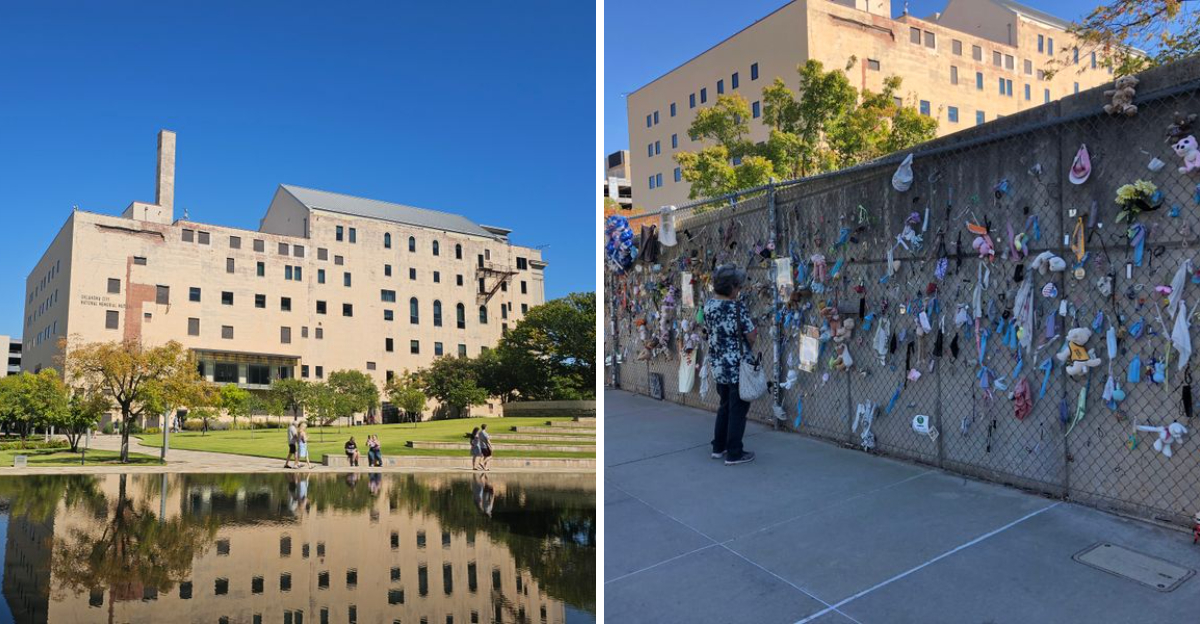
You arrive in downtown Oklahoma City and immediately feel the quiet pull of a place shaped by memory and community.
The Oklahoma City National Memorial & Museum invites you to slow down, look closer, and connect with stories that still echo across Oklahoma.
Thoughtful design, deeply researched exhibits, and compassionate storytelling create a moving path from tragedy to resilience.
Whether it is your first visit or a return, you will discover new layers in every corner. Come with curiosity, leave with perspective.
The Gates of Time and the Reflecting Pool
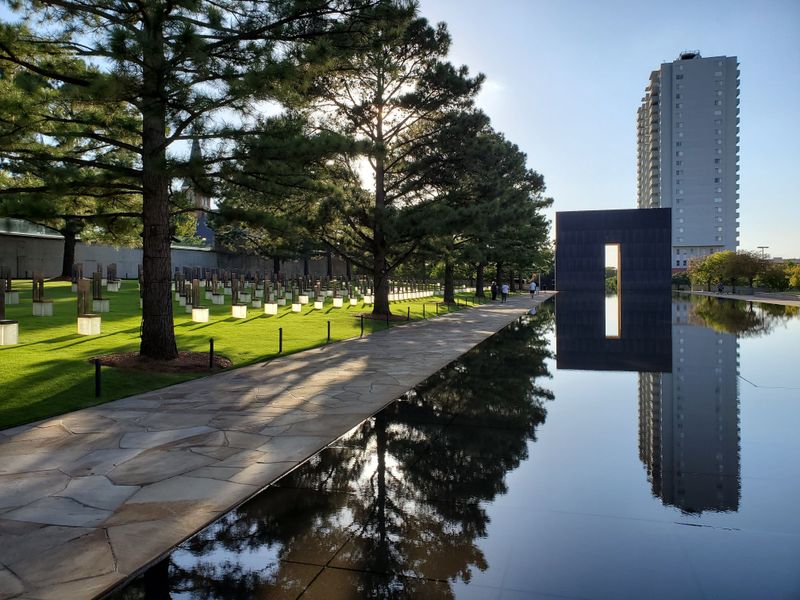
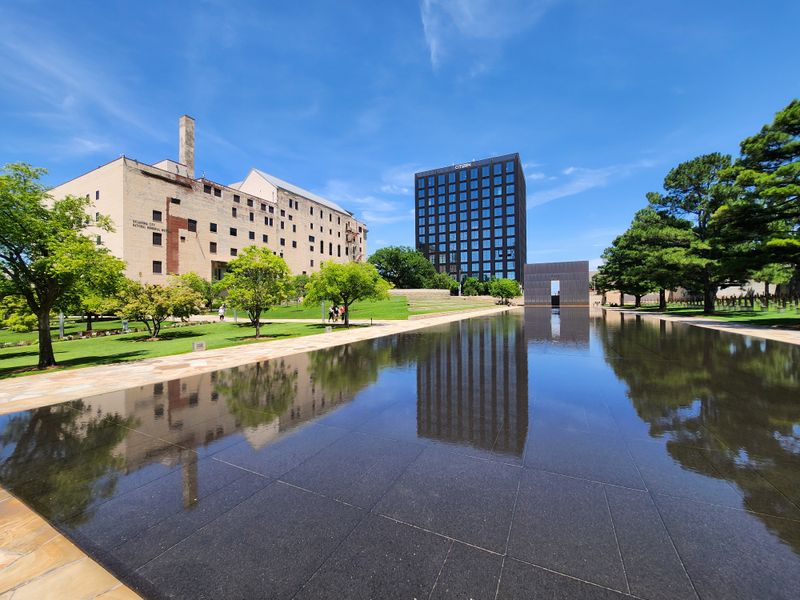
The Gates of Time frame your visit with two moments, 9:01 and 9:03, inviting quiet reflection as you step beside the shallow pool where the street once ran.
Water flows across dark granite, creating a mirror that softens city sounds and steadies your breathing as you move between remembrance and renewal.
The design holds space for contemplation without telling you exactly how to feel.
Photographers love the way light slides along the water in early morning and late afternoon, and you can catch crisp reflections of the skyline on windless days.
The pool encourages slow footsteps, and the edges are low enough that children can peer over safely with guidance.
The setting balances openness with intimacy so everyone can find a comfortable rhythm.
Guides often suggest beginning here, since this axis orients you to the memorial grounds and the wider story.
You will notice interpretive plaques that offer concise context without overwhelming the moment.
After a few minutes, most visitors naturally turn toward the Field of Empty Chairs and the museum entrance.
Accessibility is thoughtfully addressed with smooth surfaces that make rolling or walking easy, and benches along the perimeter offer places to pause.
Subtle lighting at night keeps the mood calm while preserving reflection quality for photographers.
Tripods are usually welcome outdoors if you remain considerate of others.
Seasonal changes reward repeat visits, with winter clarity, spring blossoms, summer glow, and autumn color all shifting the pool’s character.
Oklahoma sunsets can paint the gates with soft pink and copper tones that feel cinematic yet gentle.
You will likely leave this spot speaking a little more softly than when you arrived.
The Field of Empty Chairs
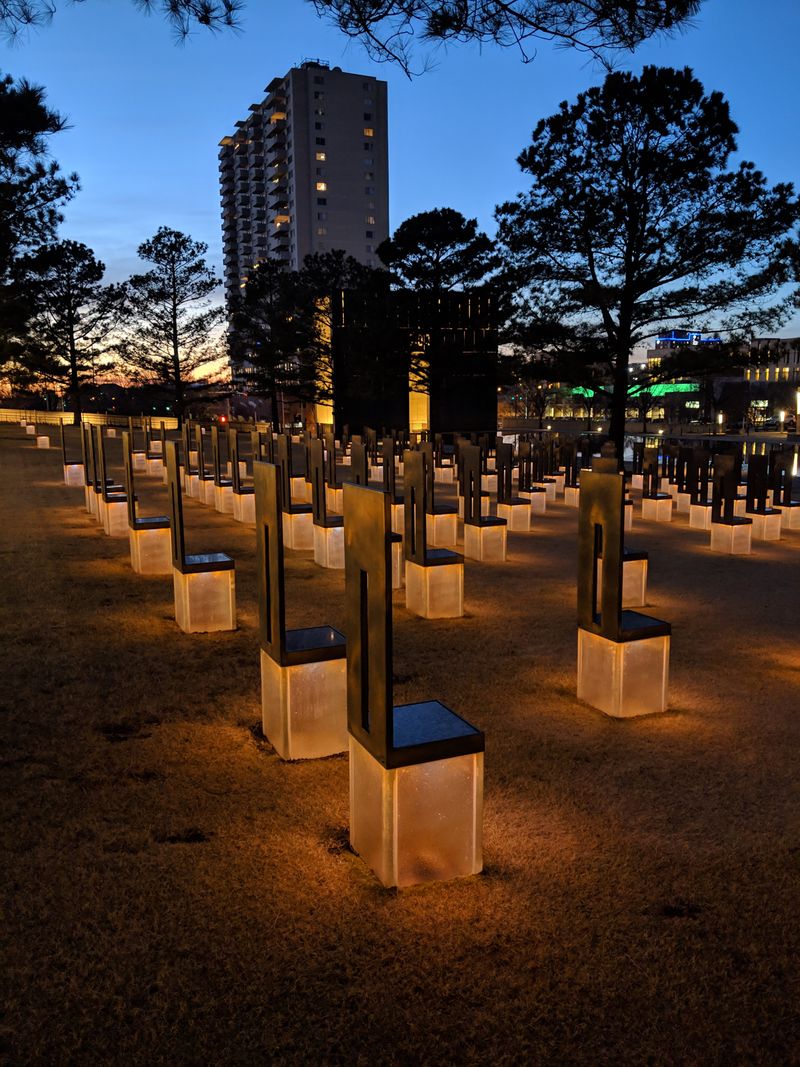
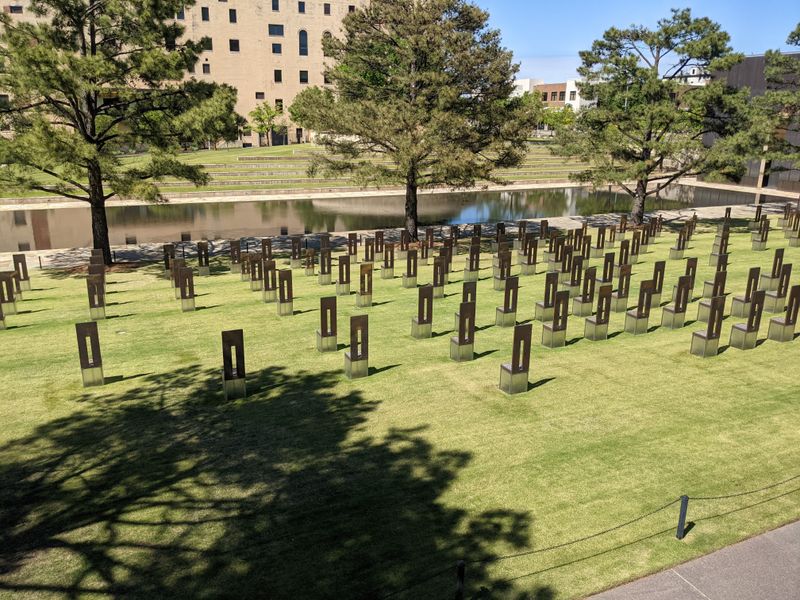
The Field of Empty Chairs stretches across the former footprint of the Alfred P. Murrah Federal Building, with one chair representing each life lost.
Rows correspond to building floors, and smaller chairs honor the children, which many visitors find especially poignant.
The design is simple, exacting, and quietly unforgettable.
At dusk the chairs illuminate from within, creating a warm glow that feels like a vigil carried by light.
Photographers often compose along diagonal lines to show depth while leaving room for the lawn and sky. You can walk among the chairs respectfully, reading names etched into glass bases.
Docents sometimes share how the field was conceived to be experienced up close rather than from a distance.
That choice places you within the story and encourages careful, mindful steps.
The effect is powerful without leaning on loud or graphic elements.
Seasonal maintenance keeps the lawn even and welcoming, though you should still watch footing on dewy mornings.
Spring breezes can ripple the grass and introduce gentle motion to long exposures around sunset.
The scene changes subtly with clouds and shadows across Oklahoma’s big sky.
Many visitors choose to pause here after the museum, letting new context shape the meaning of each name.
You may notice how the chairs’ transparency shifts with light, sometimes bright and sometimes muted.
The field remains a quiet anchor for the entire site and a lasting image you will carry home.
The Survivor Tree and the Rescuer’s Orchard
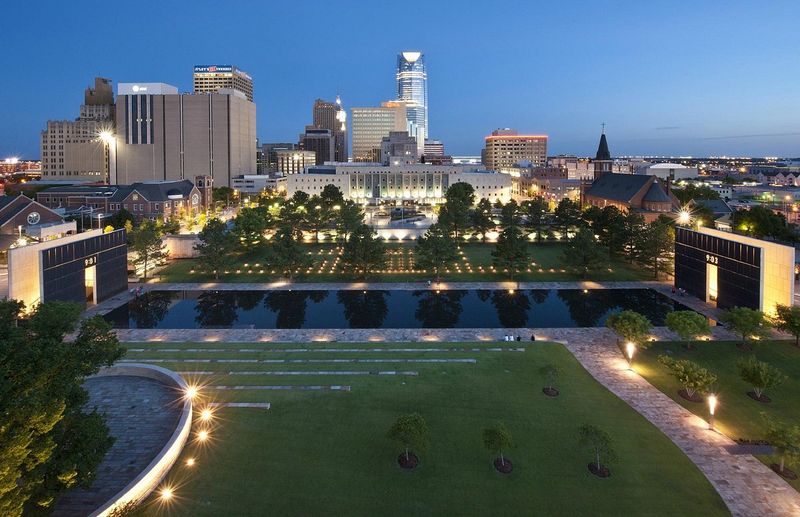
The Survivor Tree, a resilient American elm, stands at the heart of the memorial as a living witness that endured the 1995 blast.
Beneath its canopy, a low wall invites you to sit and consider how ordinary life can outlast extraordinary shock.
The inscription nearby frames the tree as a symbol of strength, comfort, and renewal.
Landscaping around the tree guides movement in a gentle circle so you can see its bark, branching structure, and seasonal shape. In spring the elm leafs out with a fresh canopy, and in autumn it burns softly gold across the plaza.
Photographs work best from slightly elevated angles to include the protective wall and museum facade.
Arborists continue to care for the tree with pruning, support, and soil protection, keeping this living element healthy for future generations.
The Rescuer’s Orchard surrounding the area honors those who helped, using trees as a quiet chorus rather than a single voice.
That choice makes the grove feel communal and grounded in everyday nature.
Benches and smooth paths make this zone accessible to visitors using mobility devices or strollers.
Morning light filters beautifully through leaves, painting dappled shadows that drift across the pavement.
Windy Oklahoma days add soft motion and an easy soundtrack of rustling.
Take a moment to read the marker and then close your eyes, because the ambient sounds here often deepen the experience.
You might hear the city at the edges, but the tree creates a calm pocket that softens everything.
The Survivor Tree leaves you with a hopeful image that complements the reflective mood of the pool and chairs.
Inside the Memorial Museum
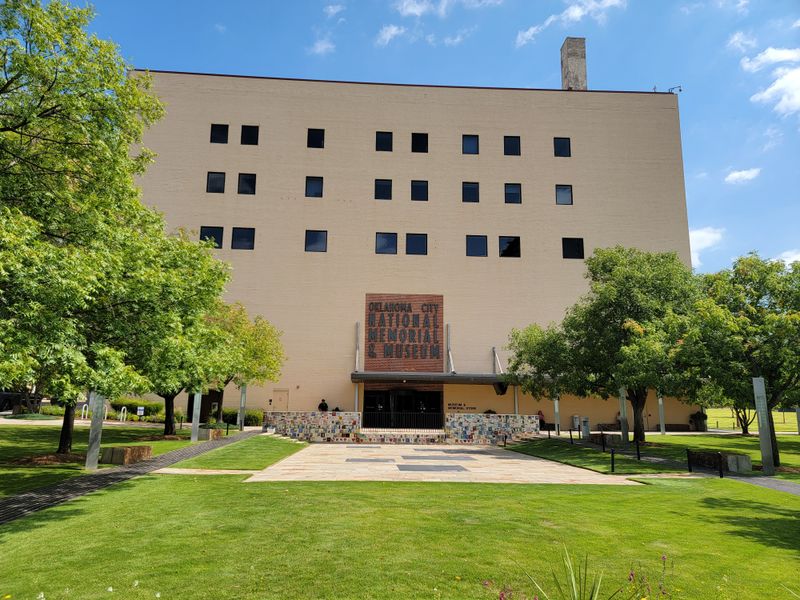
The Memorial Museum at 620 N Harvey Ave, Oklahoma City, OK 73102, presents a carefully sequenced narrative that helps you understand events, response, and recovery.
Galleries use authentic artifacts, oral histories, and interactive media to create a layered experience.
The flow is intuitive, with clear wayfinding and helpful staff nearby.
You begin with everyday context before moving into the morning of April 19, 1995, and the immediate community response.
Audio and video elements are thoughtful and precise, and they are supported by content warnings so you can choose your comfort level.
Families often plan short breaks in quiet nooks to process and regroup.
Exhibit designers balance specificity with respect, avoiding sensational detail while grounding every scene in verified facts.
Timelines and maps situate the story within Oklahoma and the nation, bridging local memory with broader civic understanding.
Placards are concise, and deeper dives are available through scannable links and staff insights.
Photography is permitted in many spaces, though flash rules vary by room and staff guidance is best.
Accessibility features include elevators, seating zones, and readable typefaces for low light.
Ticketing is straightforward at the front desk or online through the official website.
Allow at least ninety minutes, and more if you like to read every caption and listen to full recordings.
The last galleries highlight resilience, service, and ongoing education programs that extend far beyond the building.
You exit with maps that point you back to the outdoor memorial where the story continues in the open air.
Hours, tickets, and planning basics
The museum operates Monday through Saturday from 9 AM to 5 PM, and Sunday from 12 PM to 5 PM, with seasonal holiday adjustments posted on the official site.
It is wise to check the calendar before you go, since special events or maintenance can affect gallery access.
Morning entry often feels quieter and easier for thoughtful pacing.
Tickets are available on site and online, and timed entries help distribute crowds during school visits and peak seasons.
Budget a bit of time for the security check so you can breeze in without stress.
Discounts may be available for youth, seniors, and military, and current details are best confirmed directly.
Parking options include nearby garages and surface lots around downtown, with clear signage and pay stations.
Walkability is excellent from most central hotels, and rideshare drop-off points are straightforward along Harvey Avenue.
Public restrooms and water fountains are available in the museum and on the grounds.
Photography is welcome outdoors throughout the memorial, and staff can answer specific questions about indoor policies.
Tripods may be limited inside, but handheld gear works well in the existing light.
Respectful behavior is essential, and quiet voices help everyone share the space.
Consider layering clothing, since Oklahoma weather can shift quickly from bright sun to stiff breeze.
The official website at memorialmuseum.com posts current notices, educational resources, and upcoming programs.
This simple planning will help you focus on the experience rather than logistics.
Children’s experiences and family tips
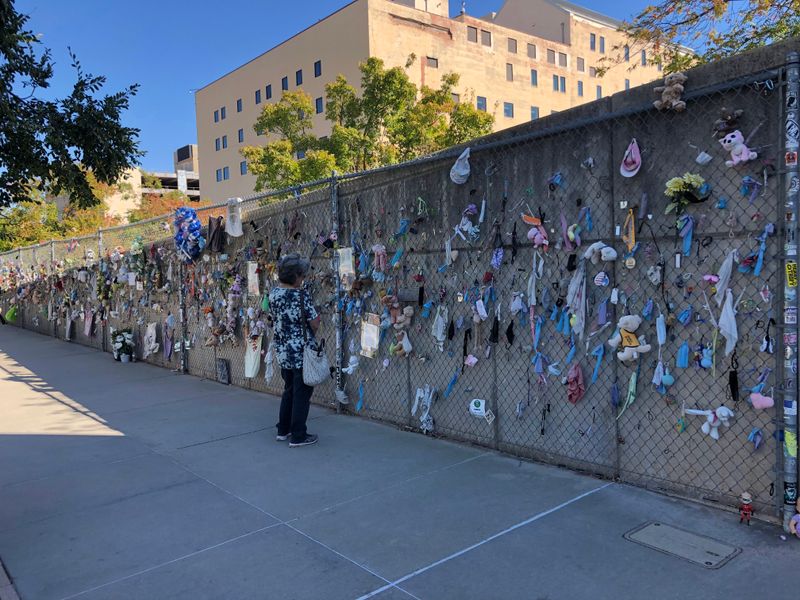
Families often wonder how to approach a site of remembrance with kids, and the museum supports thoughtful visits with age-appropriate guidance.
Staff recommend starting outdoors at the Reflecting Pool to set a gentle tone and answer early questions.
Clear signage signals sensitive content so caregivers can make informed choices.
Inside, interactive elements focus on civic learning, service, and community resilience rather than graphic detail.
Short videos and oral histories are presented with context that encourages empathy and understanding.
Seating nooks let you pause for conversation and reset before moving on.
Many families plan a loop that alternates between indoor galleries and outdoor spaces to balance emotions and energy.
The Survivor Tree area provides a breather where children can observe nature and feel grounded again. Restrooms, water, and elevators are convenient and clearly marked for easy access.
Consider setting expectations before arrival, explaining that this is a place for listening, learning, and kindness.
You can invite kids to look for symbols of hope, such as light, reflections, and trees, and then share what they notice.
A quiet moment by the Field of Empty Chairs can be meaningful if approached patiently and at a child’s pace.
Docents welcome questions and can point you toward family-friendly materials that align with school curricula.
The museum store often stocks age-appropriate books that frame difficult topics with care and clarity.
With planning and empathy, a family visit can be both educational and comforting.
Photography and respectful etiquette
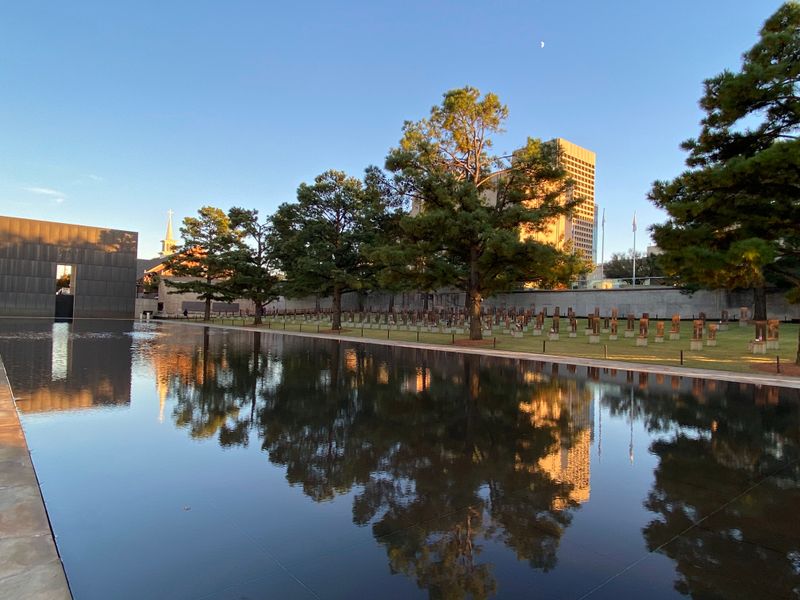
Photography at the memorial rewards patience, soft light, and a respectful mindset that keeps people’s experiences first.
Sunrise and sunset give the Gates of Time and Reflecting Pool a gentle glow that complements clean compositions.
Overcast days work beautifully for even tones across the Field of Empty Chairs.
Tripods are acceptable outside if you avoid walkways and stay mindful of other visitors and ceremonies. Inside the museum, follow posted signs and staff guidance about flash and restricted areas.
Silent shutter modes help maintain the calm environment and reduce distraction.
Compose with leading lines that begin at the pool edge or chair rows and flow toward the skyline.
Reflections are strongest on still days when wind is low, especially in cooler months.
Night lighting is balanced so highlights do not blow out easily with careful exposure.
Wear neutral clothing if you plan to be in group shots, since bright tones can reflect onto the water surface.
Bring a microfiber cloth to manage condensation when moving between cool galleries and warm Oklahoma air.
Long lenses let you frame details like inscriptions without stepping too close.
Always yield to families and survivors who may need space for quiet remembrance.
If a ceremony is underway, step back and suspend shooting until it concludes.
A considerate approach preserves the memorial’s purpose while still allowing beautiful, meaningful images.
Education, programs, and community events
The museum hosts year-round education programs that explore civic responsibility, resilience, and the history of the 1995 attack.
Teachers can request standards-aligned materials and guided tours that adapt to grade levels and learning goals.
Professional development workshops model difficult conversation strategies and trauma-informed approaches.
Student groups often pair the galleries with reflection activities outdoors to connect lessons with lived space.
Virtual resources support classrooms across Oklahoma and beyond with curated clips and discussion prompts.
Registration details and calendars are maintained on the official website with current schedules.
Community events include commemorative observances each April that draw residents, visitors, and volunteers into shared remembrance.
Participation guidelines keep the focus on respect and accessibility while welcoming diverse audiences.
Accessibility services may include captioning and assistive listening by request with advance notice.
Museum staff collaborate with local partners to expand dialogue about service, public safety, and civic engagement.
Exhibits occasionally rotate in new artifacts or media to keep learning fresh and relevant.
You can subscribe to updates to catch seasonal programs and special talks.
Many attendees say the most valuable takeaway is confidence to lead thoughtful conversations back home. The site’s calm design helps people process complex topics without rushing through them.
Programs and events extend the memorial’s mission into everyday life across Oklahoma communities.
Accessibility and visitor comfort
Designers prioritized accessibility so people of many abilities can experience the memorial and museum with comfort.
Pathways are smooth and generously wide, and ramps connect grade changes across the grounds.
Benches appear at steady intervals for rest and observation.
Inside the museum, elevators serve all floors, and seating zones let you pause between exhibits.
Text panels use readable fonts and contrast suitable for dimmer light, with additional audio options in select areas.
Staff can offer guidance on quieter routes if you need a break from crowds.
Wayfinding signs are consistent and intuitive, helping you navigate without feeling rushed.
Restrooms and water fountains are easy to find, and family facilities support caregivers with small children.
Service animals are welcome, and policies follow standard guidelines for access.
Climate control inside provides steady comfort, which helps after time outdoors in bright Oklahoma sun or wind.
If you are sensitive to sound, consider bringing ear protection for specific galleries that include audio.
Ask at the desk about sensory-friendly recommendations for a smoother visit.
Lighting at night is gentle rather than harsh, preserving safe movement while maintaining a reflective mood.
The memorial remains open to the public grounds, with museum hours posted clearly for planning.
You can expect a welcoming culture where questions are answered with patience and care.
Respectful routes and timing your visit
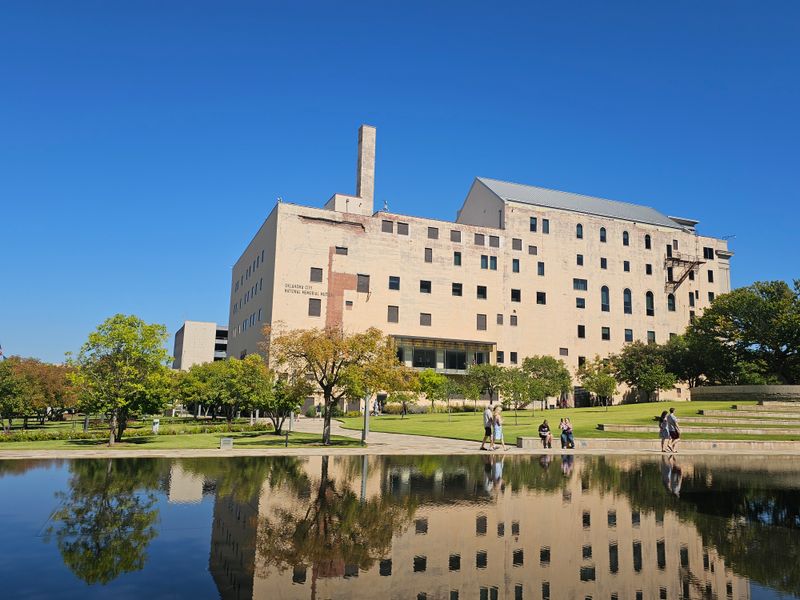
Many visitors start at the outdoor memorial, move through the museum, and return to the grounds for a final pause.
This route provides context up front, deepens understanding indoors, and then gives space to reflect again.
It also helps balance emotions with movement and fresh air.
Early morning offers quiet pathways and fewer crowds, making it easier to hear water and birds.
Midday can be brighter and warmer, but shade near the Survivor Tree remains comfortable.
Evening brings gentle lighting that transforms the Field of Empty Chairs into a soft constellation.
Plan at least two hours if you hope to see everything without hurry, and longer if you like to read deeply. Consider weekday visits during the school year for a calmer flow, especially in winter.
If Oklahoma weather turns brisk, the museum interior becomes a welcome retreat.
Wayfinding is simple, and staff can suggest detours if you want to avoid busy pockets.
Keep voices low along the Reflecting Pool and near the chairs to honor the space.
Small groups that stay together move more smoothly and keep pathways open.
When you finish, take a final look back at the Gates of Time to close the loop from 9:01 to 9:03.
The sequence underscores resilience and community across Oklahoma and beyond.
You leave with a steadier sense of how memory and place can work together.
Dear Reader: This page may contain affiliate links which may earn a commission if you click through and make a purchase. Our independent journalism is not influenced by any advertiser or commercial initiative unless it is clearly marked as sponsored content. As travel products change, please be sure to reconfirm all details and stay up to date with current events to ensure a safe and successful trip.
