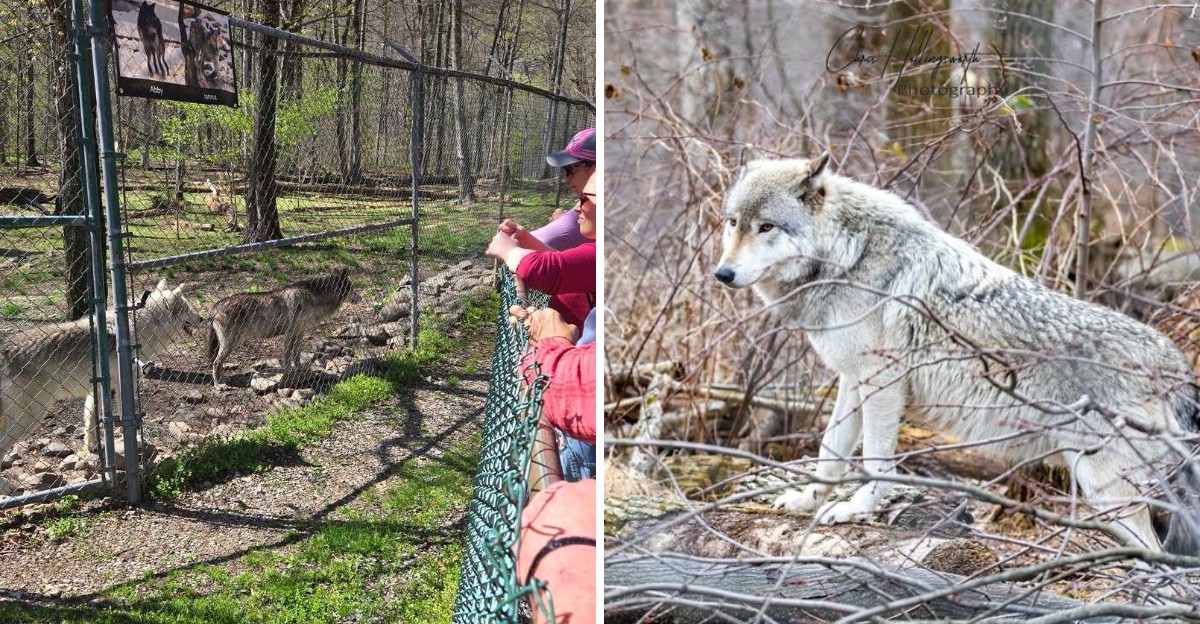
Listen, you are not supposed to want to get close to a wolf. But at this New Jersey preserve, that is exactly the point.
A half-mile walk through the woods leads you to a viewing area where timber, arctic, and tundra wolves roam freely, and you get to watch them just being wolves.
The guides are passionate, the animals are stunning, and yes, you will hear them howl.
It is the kind of place that makes you forget you are in the Garden State and not somewhere deep in the wilderness.
There is also a bobcat and a fox who call the preserve home, but the wolves are the main event.
You will learn about pack behavior, conservation, and why these animals are so misunderstood. And you will leave with a story you cannot stop telling people.
The Half-Mile Climb Through The Woods
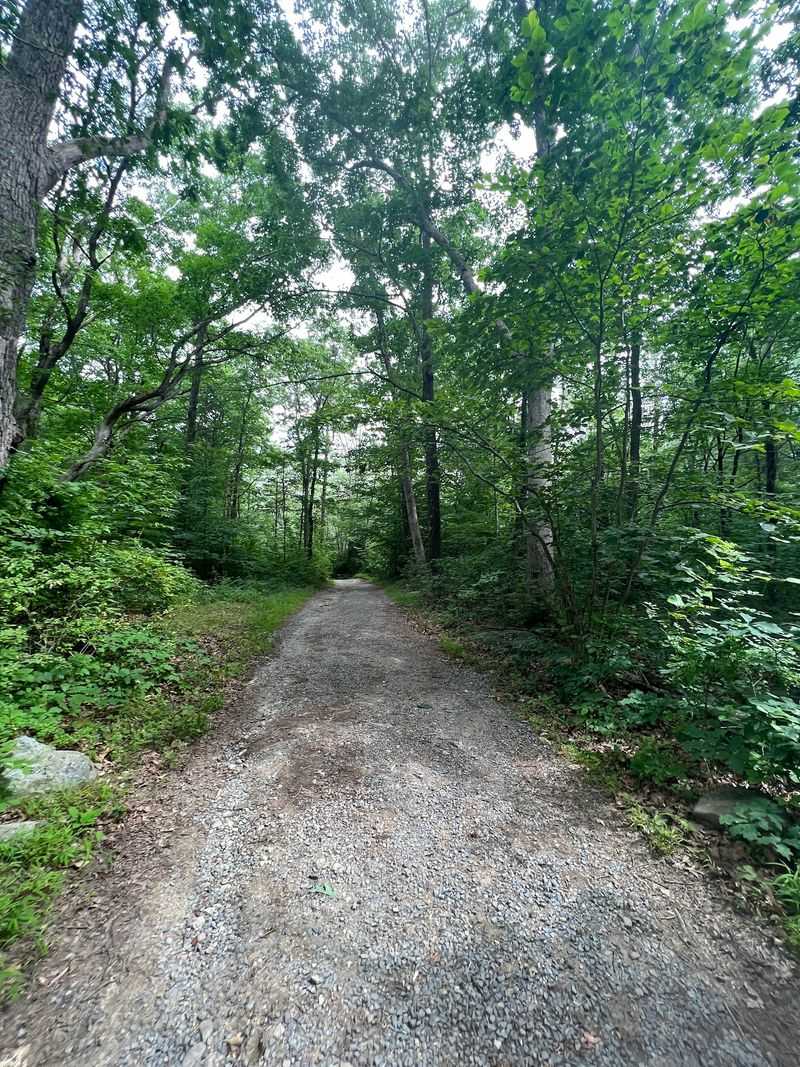
The walk at Lakota Wolf Preserve starts right past the parking area, and it climbs steadily rather than sharply. Hardwoods lean over the path, roots poke through the dirt, and the sound of traffic disappears within about a minute.
Half a mile does not sound like much until you are doing it uphill, so pace yourself and wear real shoes. Sneakers with grip beat sandals, especially after rain when the surface turns soft and slick in patches.
What makes the trek fun is the anticipation. Somewhere above you, wolves are moving around ten acres of forest, and you can occasionally catch a distant howl drifting down through the trees before you ever see a single animal.
A shuttle runs between the lot and the entrance for anyone who would rather ride, and plenty of visitors walk up and ride down, or the other way around. No shame either way.
Give yourself extra minutes for the climb so you arrive relaxed instead of rushed and out of breath.
Four Wolf Packs, One Observation Area
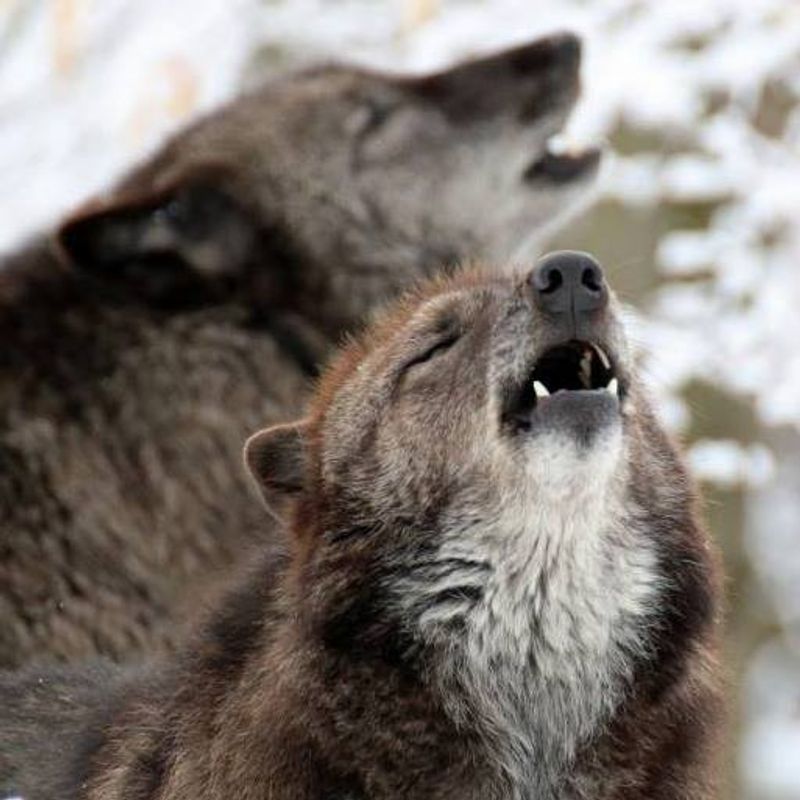
Instead of walking past a row of pens, New Jersey visitors are brought into an observation area that sits in the middle of everything. Large enclosures fan out around you on all sides.
Four separate packs live here: Timber, Arctic, Tundra, and British Columbian wolves. Each group has its own look, from thick creamy coats to darker gray and black mixes that vanish against tree bark.
Being surrounded rather than lined up changes the whole feeling of the visit. Turn one direction and a pale Arctic wolf is trotting the fence line.
Turn again and a Timber wolf is flopped in the shade, watching you with mild interest.
The enclosures are big and wooded, so the animals genuinely choose whether to come close. Some stroll right over out of curiosity, while others keep their distance and nap under the pines.
Patience pays off here. Stand still, stay quiet for a few minutes, and the packs usually start moving in ways you would never see at a typical zoo exhibit.
When The Howling Starts
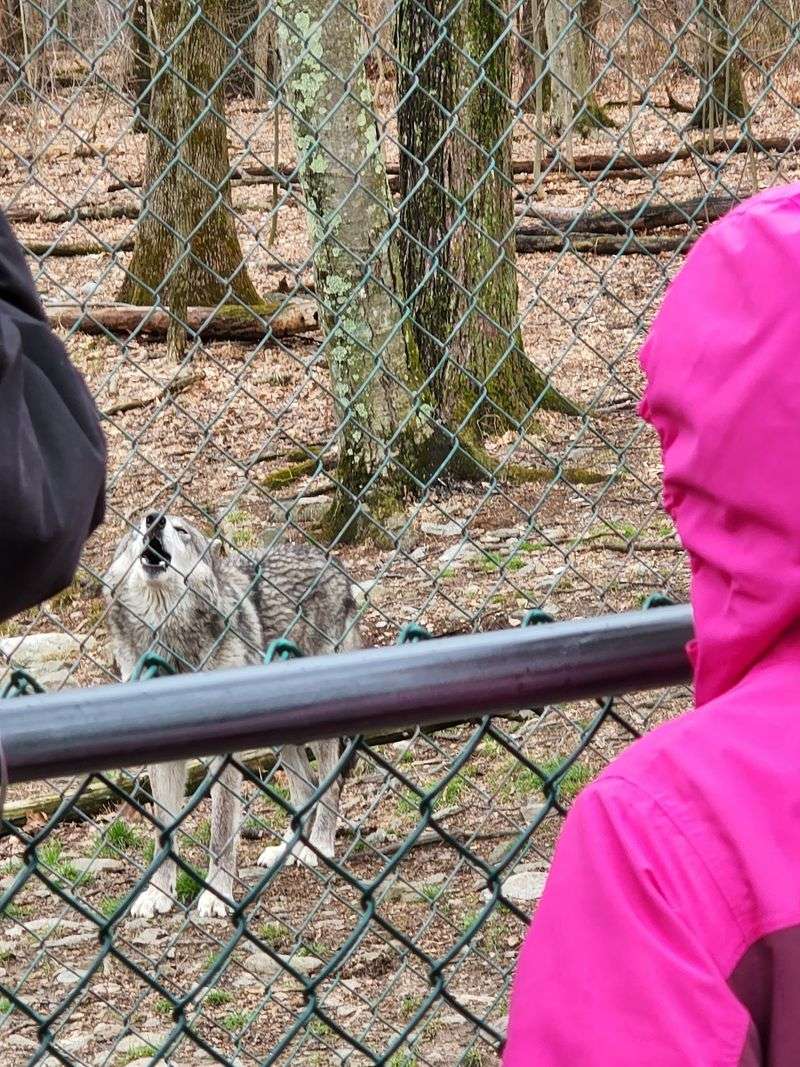
Nothing prepares you for it. One wolf lifts its head, lets out a low note that climbs, and then the rest of the pack joins in from every direction at once.
The sound layers on itself. Some voices go high and thin, others stay deep and rolling, and because four packs share the same hillside, the chorus bounces between enclosures until the whole ridge seems to be singing.
It lasts maybe thirty seconds, sometimes longer, then drops off just as suddenly as it began. Everyone standing in the observation area tends to go completely silent afterward.
Howling is not a performance on command, so there is no guarantee of timing. It often happens naturally during tours, though, since the packs communicate with each other throughout the day.
If you have headphones and love recording sounds, bring your phone with plenty of storage. A video of a full wolf chorus rolling through the woods is a souvenir worth far more than anything from a shelf.
Guides Who Explain What You Are Actually Seeing
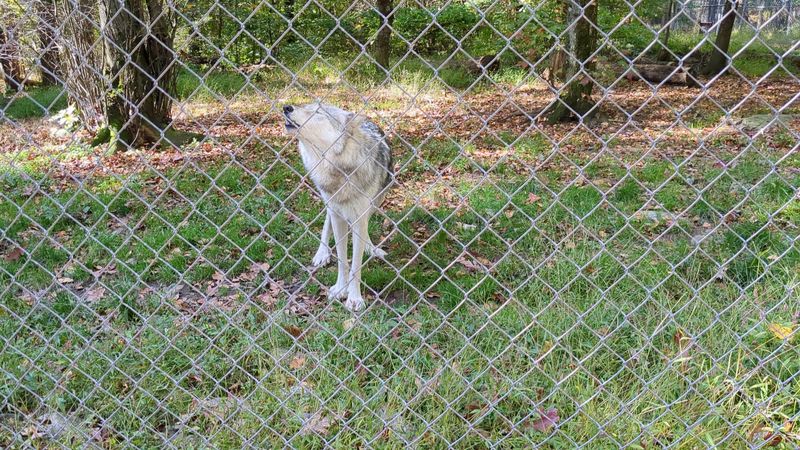
Watching wolves is one thing. Understanding what they are doing is what makes the visit to Lakota Wolf Preserve stick with you.
Tours here are educational by design. Guides walk through pack structure, body language, feeding habits, breeding behavior, and the survival skills wolves rely on in the wild, and they point out those exact behaviors as they happen a few feet away.
You learn why one wolf drops its shoulders while another stands tall, and why tail position says more than a bark ever could. A lot of what people assume about wolves comes from movies, and the talks gently correct that.
Questions are welcome throughout, which makes the whole thing feel more like a conversation than a lecture. Kids ask the best ones, honestly.
The Lakota Wolf Preserve leans hard into education as its purpose, and it shows. By the time the group heads back down the hill, most visitors know more about wolf behavior than they ever expected to learn in a single afternoon outdoors.
Foxes, Bobcats, And Lynx Round Out The Visit
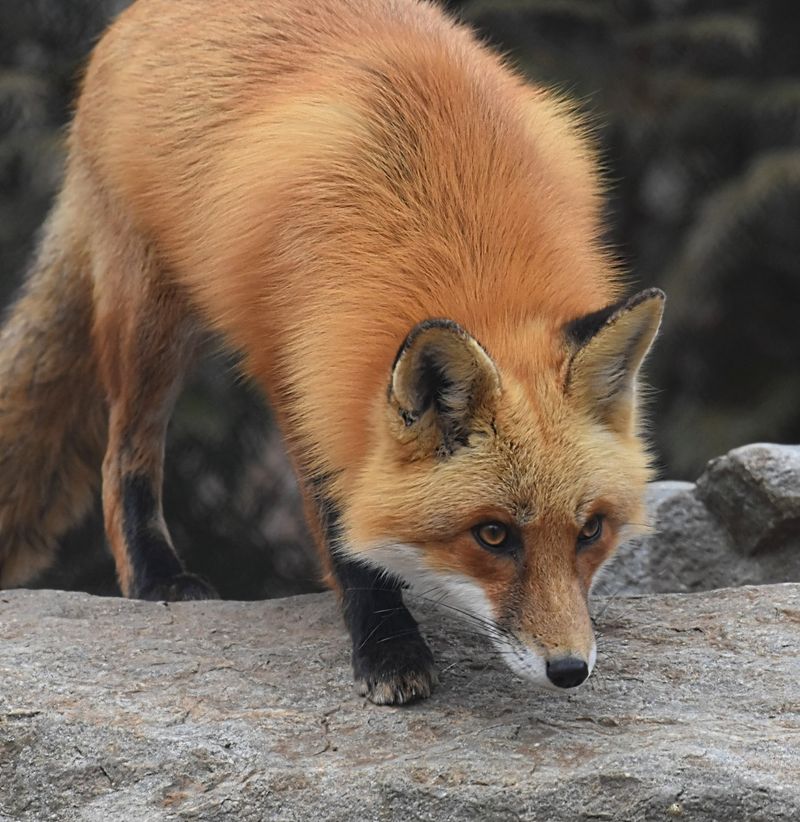
Wolves get the headlines, but the smaller residents steal a surprising amount of attention. After the main observation session, tours continue along an outer section where foxes, bobcats, and lynx live.
Foxes are the comedians of the group. They bounce, pounce at nothing, and sometimes refuse to come out at all, which is very much a fox thing to do.
The bobcat and lynx bring a completely different energy. Compact, muscular, and totally unbothered, they lounge on platforms with the confidence of animals that know they look incredible.
Lynx paws are the detail most people notice first. Oversized and thickly furred, they work like natural snowshoes across deep winter drifts.
Guides share background on each animal, including how they came to live at the preserve and what makes their species distinct.
Do not rush this part of the tour. Standing quietly by the fox area for a few extra minutes often rewards you with the most entertaining moment of the whole trip.
A Home For Animals That Cannot Return To The Wild
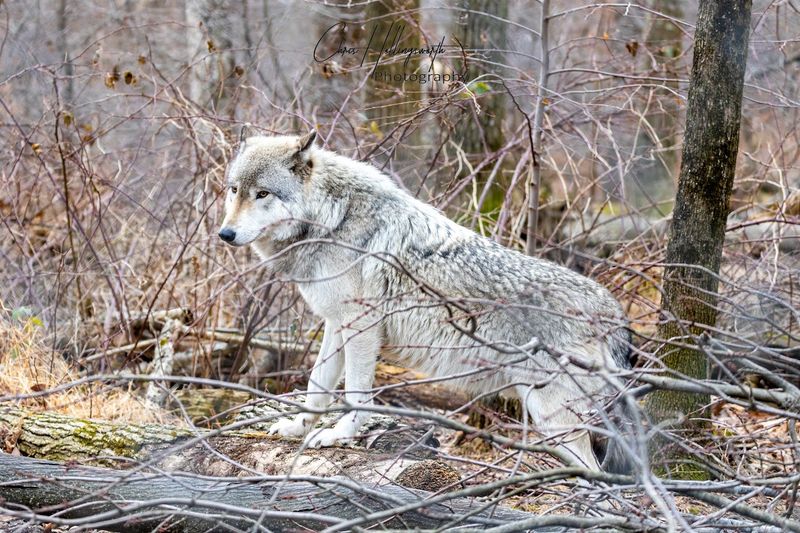
Every animal on this hillside was born in captivity. That single fact shapes everything about how the place operates.
Wolves raised around humans never develop the hunting instincts and pack survival skills needed to make it in the wild, so releasing them would be a death sentence. The preserve exists as a permanent home instead.
Operating as a nonprofit focused on care and education, the property sits in the mountains of the Delaware Water Gap in Warren County, New Jersey, spread across wooded acreage rather than concrete pens.
The name itself carries meaning. Lakota translates roughly to friend, or an alliance of friends, which fits a place built around long-term commitment to animals with nowhere else to go.
Enclosures are large and tree-filled, giving each pack room to roam, dig, and retreat out of sight when they feel like it.
Knowing the backstory changes how the visit lands. You stop thinking of it as an attraction and start seeing it as a sanctuary that happens to welcome guests.
Photography Portals And Why They Matter
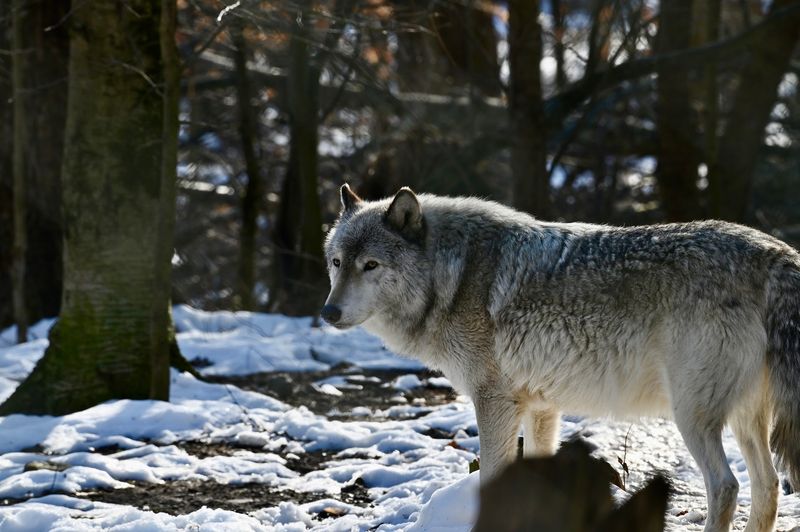
Camera lovers, listen up. Regular fencing does wonderful things for animal safety and terrible things for photographs.
Standard tours allow photography, and plenty of visitors get great shots with phones and zoom lenses. The wolves often come close, and the light filtering through the trees can be gorgeous in the late afternoon.
For anyone chasing cleaner images, private photography sessions are available. These use specialized portal openings built into the fencing, giving lenses an unobstructed view without any barrier lines cutting across the frame.
Bring a lens with some reach if you have one, plus a lens cloth, because forest air and dust do their thing.
Overcast days are secretly excellent for wolf portraits. Soft light keeps white Arctic coats from blowing out and brings detail into darker fur.
Even without fancy gear, you will leave with images worth keeping. A wolf mid-howl, a fox peeking from behind a log, a lynx staring straight down your lens.
Those frames are hard to beat.
No Contact, And That Is A Good Thing
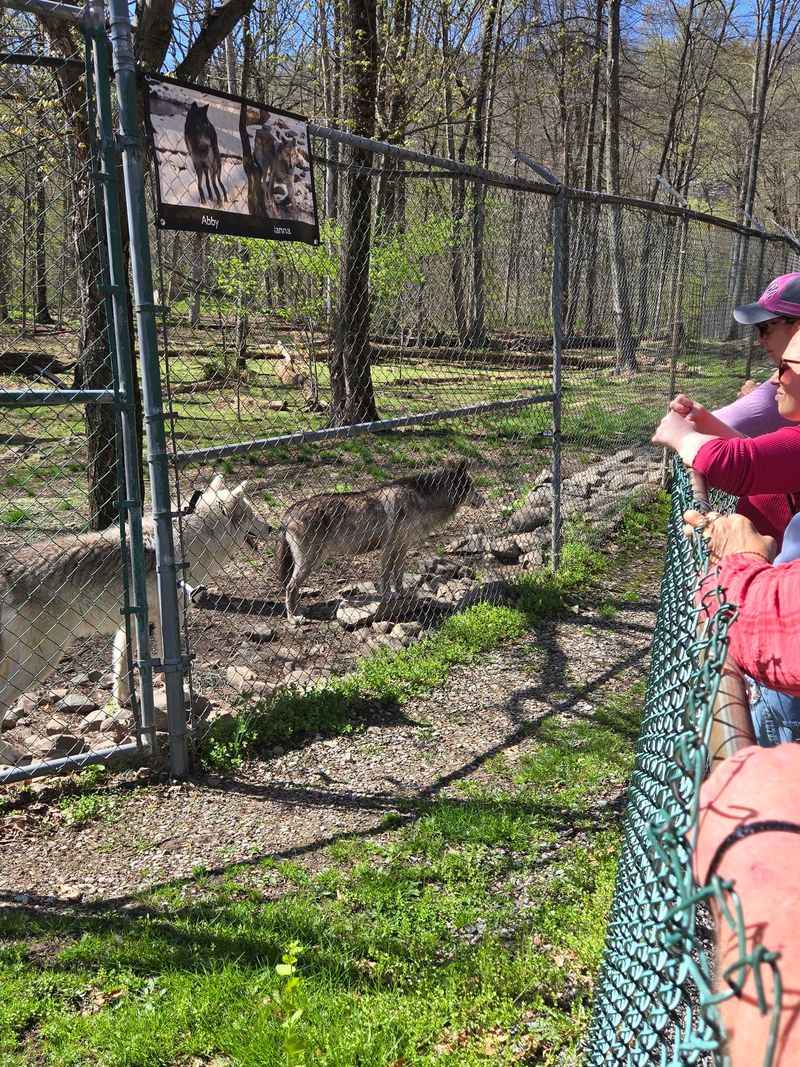
Some visitors arrive hoping to pet a wolf. That is not how things work here, and the reason makes sense once you hear it.
A strict no contact policy means guests do not touch, pet, or feed any animal on the property. Wolves are not dogs, and treating them like pets teaches the public exactly the wrong lesson.
Keeping distance also protects the animals. Human food, unfamiliar hands, and stress from constant handling all take a toll on wild species, even ones born in captivity.
The trade-off is honestly better. Instead of a quick photo op, you get to watch wolves behave like wolves, moving through their pack in ways that would never happen with people inside the enclosure.
Bring hand sanitizer, keep snacks packed away, and remind kids ahead of time so nobody is disappointed.
Respecting that boundary is part of what makes the experience feel honest. You are a guest in their space, watching without interfering, and that is a rare thing to be offered.
Timing Your Tour And Booking Ahead
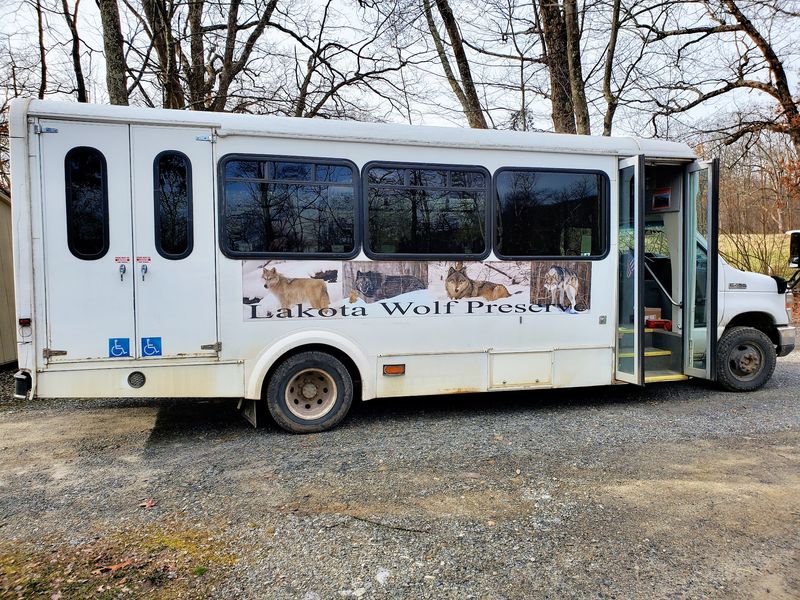
A little planning saves a lot of frustration. Tours run at scheduled times, commonly around 10:30 in the morning and 3:00 in the afternoon, and each one lasts roughly 75 minutes.
Advance booking is generally required, so reserve your spot before driving out. Showing up unannounced and hoping for a walk-in slot is a gamble you do not need to take.
The preserve closes on Mondays, which catches some travelers off guard when planning a long weekend trip through the region.
Morning tours tend to feel cooler and quieter, while the later slot often brings warmer light for photos. Both have their charm.
Arrive early enough to handle parking, paperwork, and either the shuttle or the uphill walk without watching the clock.
Since the whole visit takes about an hour and a quarter, it pairs nicely with other stops around the Delaware Water Gap area. Plenty of visitors build a full day around it, starting here and then heading off to explore nearby trails and overlooks.
Dress For The Weather, Because Everything Is Outside
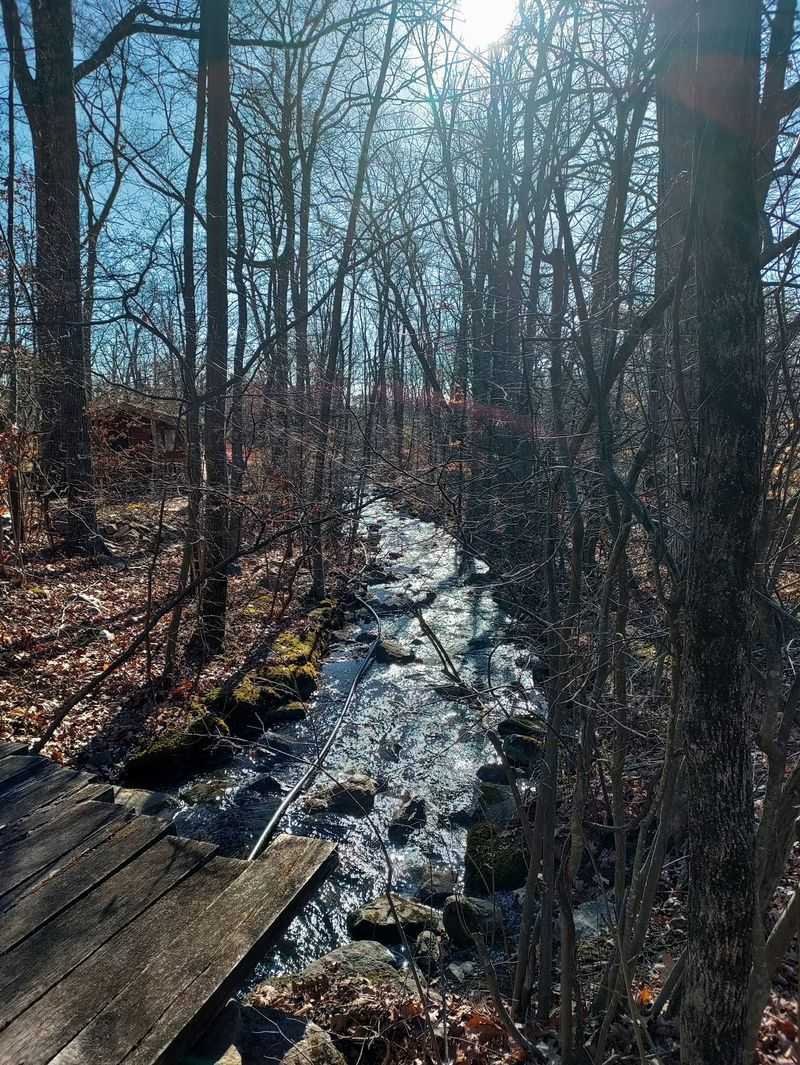
There is no indoor gallery, no heated viewing room, no glass window to stand behind. Every part of the visit happens outdoors on a wooded mountainside.
Winter turns the place magical, since wolf coats thicken into full plush glory and snow highlights every track in the enclosures. It also gets genuinely cold up on that ridge, so layers, hats, gloves, and warm socks are not optional.
Summer brings the opposite challenge. Shade helps, but bug spray, water, and a hat make the difference between comfortable and cranky.
Rainy days still deliver. Animals often move around more in cool drizzle, and a decent rain jacket handles the rest.
Sturdy footwear matters year-round because of the uphill trail and uneven ground near the observation area.
Check the forecast, then dress for one step colder than you expect. Coming prepared means you can focus on the wolves instead of your frozen fingers, and that alone is worth packing an extra layer into the car.
Lakota Wolf Preserve is located at 89 Mt Pleasant Rd, Columbia, NJ 07832.
