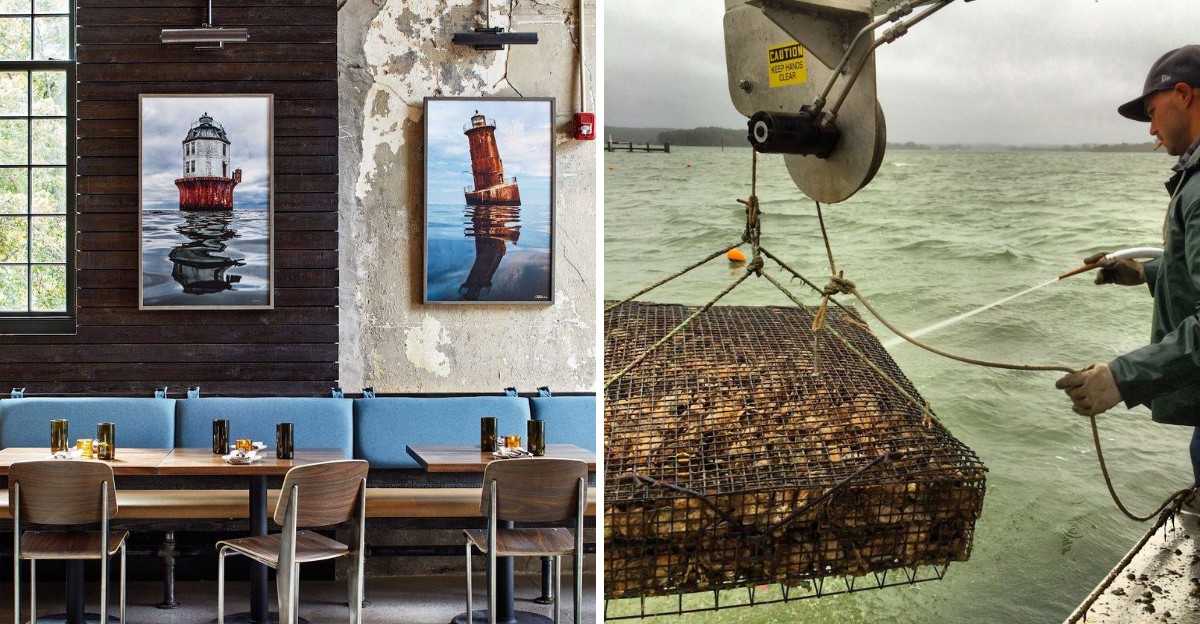
Fresh oysters are a beautiful thing. But oysters that come from the restaurant’s own farm?
That is a different level entirely. This Maryland spot sources its oysters straight from the Chesapeake, skipping the middlemen and delivering the kind of freshness that is hard to beat.
The shells arrive on ice, the meat is plump and briny, and you can taste the difference in every bite. The menu goes beyond oysters too, with seafood dishes that reflect the same commitment to quality.
The setting is relaxed and inviting, the kind of place where you can settle in for a long meal. A restaurant that understands the value of knowing exactly where your food comes from.
The kind of spot worth seeking out.
The Journey from Creek to Table
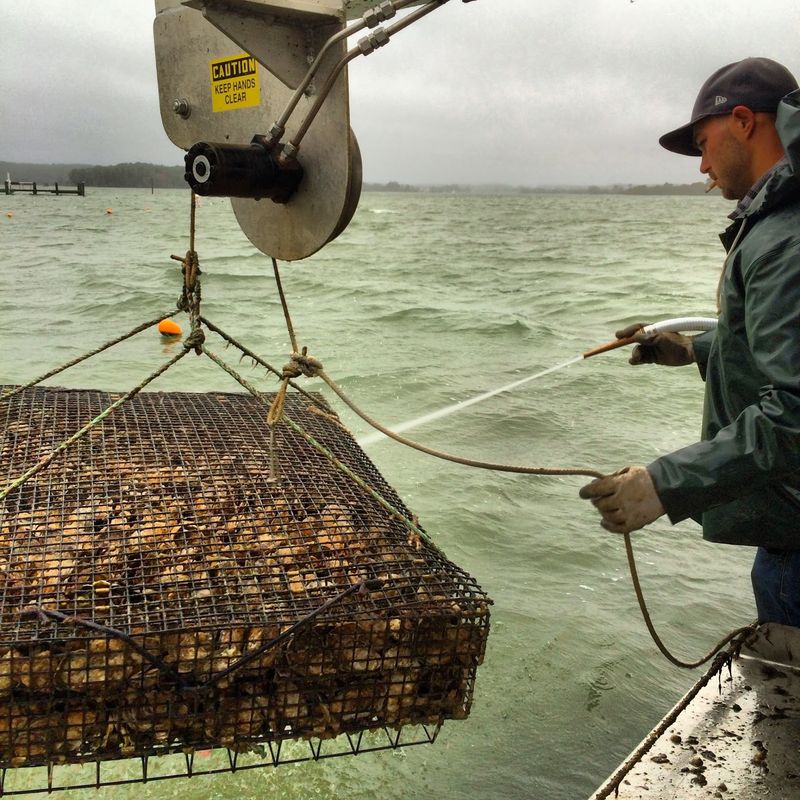
Most oyster restaurants source from a distributor. True Chesapeake Oyster Co. skips that entirely, pulling its oysters directly from its own beds in St. Jerome Creek, a quiet stretch of brackish water in Southern Maryland that has been home to the farm since 2010.
The conditions in St. Jerome Creek are precisely what make these oysters special. The blend of fresh and saltwater creates a flavor profile that is clean, briny, and subtly sweet, qualities that are nearly impossible to replicate from a generic supply chain.
The farm has been carefully cultivating these beds for well over a decade, and the results are unmistakable on the plate.
At any given moment, more than five million oysters are living in the water at this farm. That is not a small operation.
The sheer scale of cultivation means the restaurant never has to compromise on freshness, and diners benefit directly from that consistency. The farm also attracts crabs, grass shrimp, and juvenile fish, turning the oyster beds into a thriving underwater habitat.
Varieties like Skinny Dippers, Huckleberries, and Chunky Dunkers each carry distinct flavor notes shaped by the creek’s unique water chemistry.
Understanding where these oysters come from adds a layer of appreciation that goes well beyond the first slurp, making the meal feel like a genuine encounter with the Bay itself rather than just a seafood dinner.
A Baltimore Welcome at Whitehall Mill
Finding True Chesapeake Oyster Co. for the first time feels a little like discovering a secret.
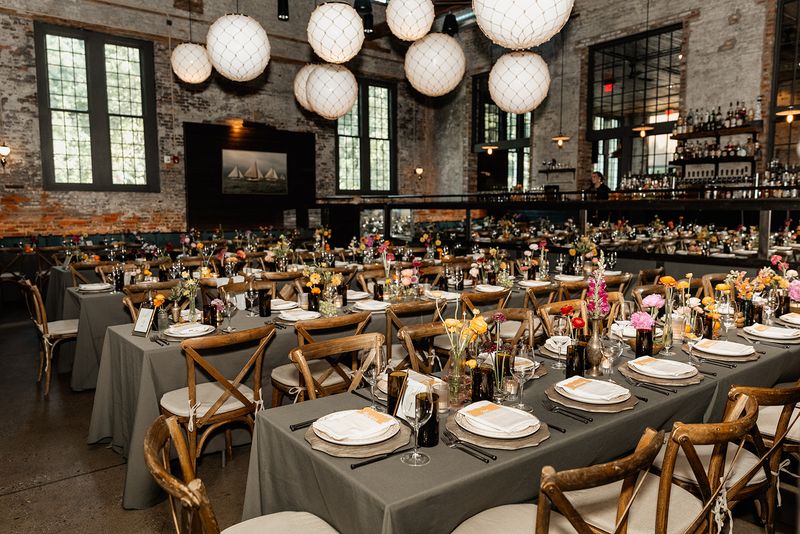
The restaurant sits inside the beautifully renovated Whitehall Mill at 3300 Clipper Mill Rd Suite 400, Baltimore MD 21211, a former sailcloth factory with thick stone walls and a history that predates most of the city’s modern landmarks.
The Woodberry neighborhood has a particular energy to it, industrial and creative at the same time, and the mill fits right in. Arriving here, there is an immediate sense that this place was designed for people who appreciate something with a story behind it.
The building’s bones are original, and the renovation was thoughtful enough to keep them visible rather than cover them up.
Guests often linger outside for a moment before heading in, taking in the Jones Falls that runs nearby and the quiet charm of the surrounding area. It is the kind of neighborhood that rewards slow exploration.
The restaurant occupies a corner of the original boiler building, and the transition from the street into the dining space feels deliberate, almost like crossing a threshold into a different era.
Baltimore has no shortage of historic buildings repurposed for modern use, but few pull it off with this much coherence between the building’s past and the food being served inside.
The setting alone makes a strong case for the visit, even before the oysters arrive.
Architectural Echoes of an Oyster’s Home
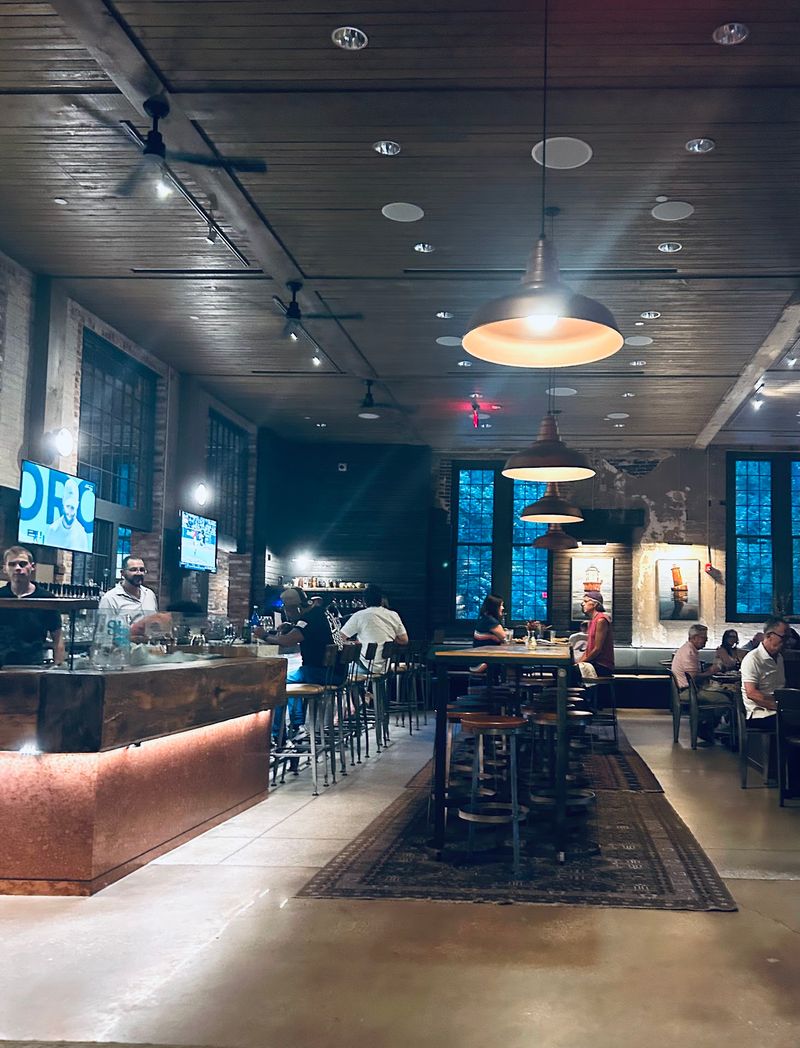
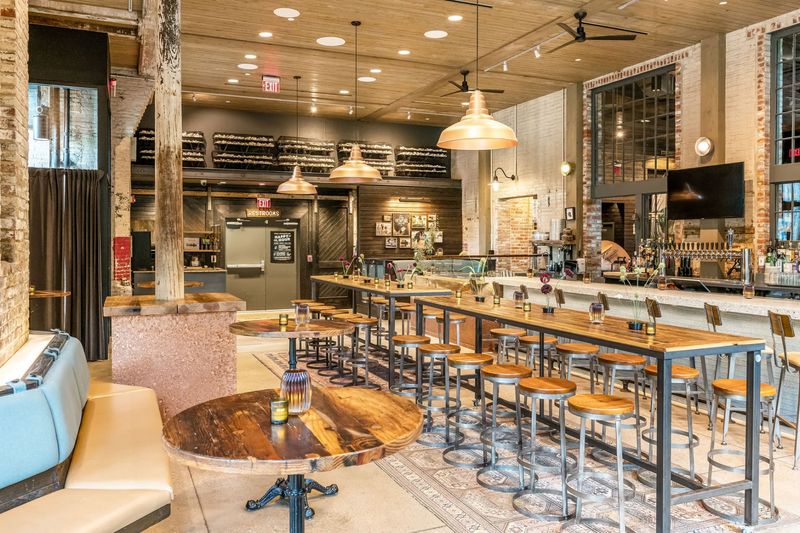
The design of this restaurant does not just reference the Bay, it is physically built from it. The wraparound bar is crafted from oyster-shell terrazzo, made using crushed shells sourced directly from the True Chesapeake farm.
Running a hand along that surface, it becomes clear that every decision in this space was made with intention.
An elevated shucking station clad in weathered copper anchors the room and draws the eye immediately. It is both a functional workspace and a visual centerpiece, putting the craft of shucking on full display rather than hiding it in a back kitchen.
The vaulted ceilings overhead give the space a generous, open feeling that keeps things from ever feeling cramped, even on a busy evening.
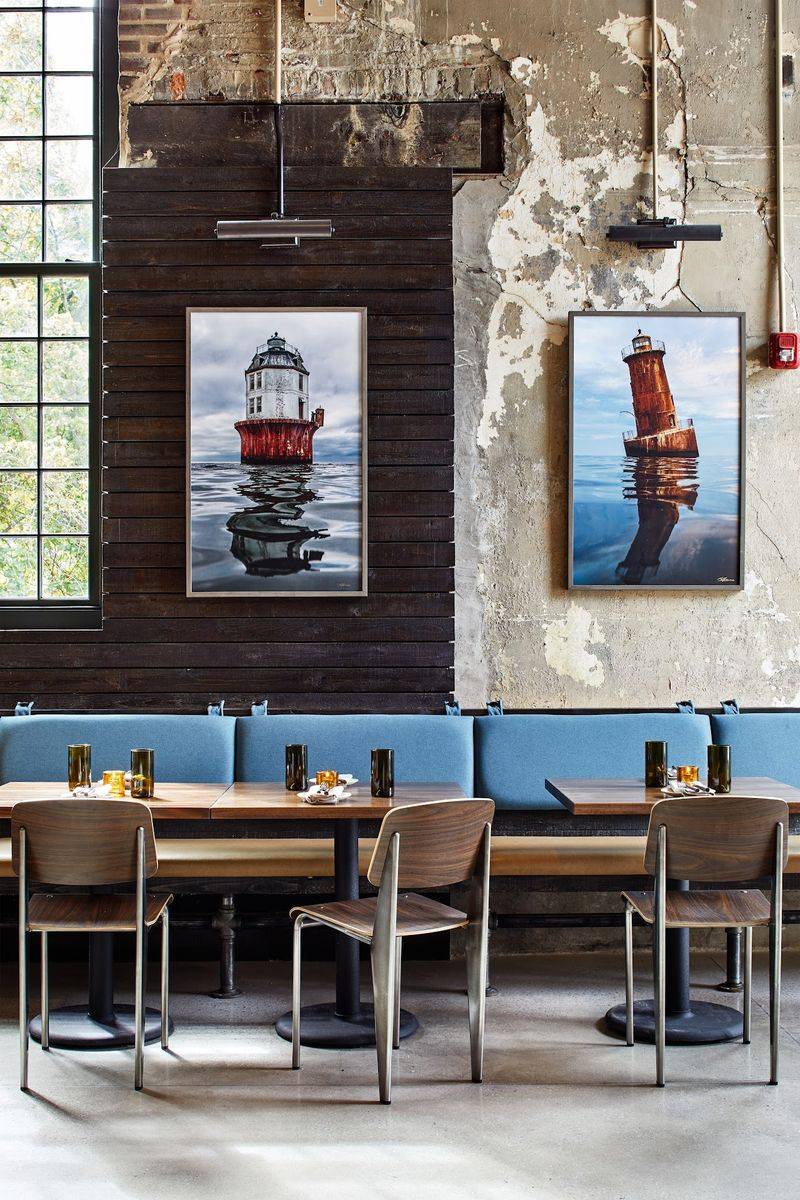
Photography by Jay Fleming lines the walls, capturing Chesapeake Bay lighthouses and waterscapes with a quiet reverence that suits the atmosphere perfectly.
The original mill architecture peeks through at every turn, in the exposed brick, the aged timber, and the structural bones that no renovation could fully conceal.
Outside, a large patio overlooks the Jones Falls, offering a second dining environment that feels completely different from the interior but equally appealing.
On a warm evening, sitting outside with the sound of water nearby and a plate of freshly shucked oysters in front of you, it becomes difficult to think of a better place to be in Baltimore.
The space earns its atmosphere honestly.
The Oyster Varieties Worth Knowing
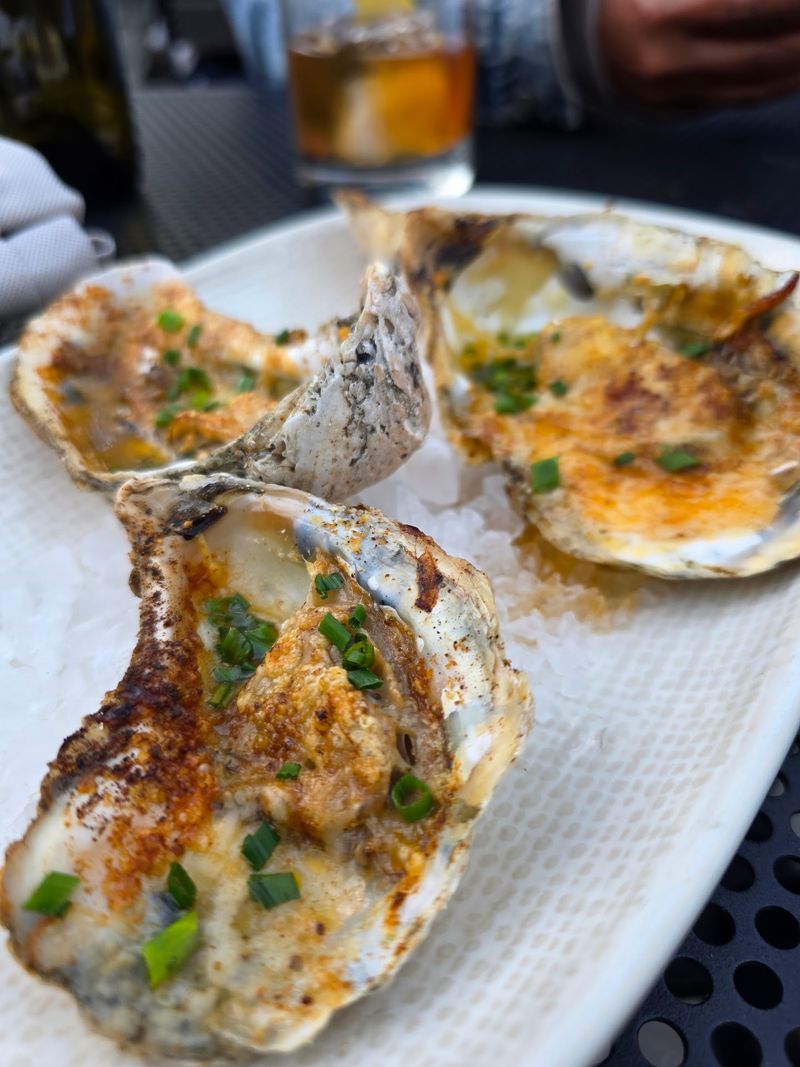
Ordering oysters here is not a one-size-fits-all experience. The farm produces three distinct house varieties, and each one behaves differently on the palate.
Huckleberries are petite and balanced, offering a mild brine with a clean finish that makes them an easy starting point for anyone new to raw oysters.
Chunky Dunkers live up to their name. They are fuller, meatier, and carry a more pronounced flavor that oyster enthusiasts tend to gravitate toward.
Then there are the Skinny Dippers, elegant and delicate, with a lighter texture that practically dissolves. Having all three on a single plate is the best way to understand what the farm is actually doing out on that creek.
Beyond the raw bar, these oysters appear in roasted preparations and signature dishes that highlight the kitchen’s creativity without overshadowing the ingredient itself.
A classic Rockefeller preparation shows up in a refined form, and the kitchen finds ways to complement rather than compete with the oyster’s natural character.
The fact that every variety comes from the same body of water, yet tastes noticeably different, says something meaningful about the care and precision involved in the cultivation process. Freshness is the common thread running through all of them.
There is no lag time between farm and plate, and that immediacy is something no amount of clever cooking can manufacture. It simply has to be built into the supply chain from the start, and here it genuinely is.
A Menu Rooted in the Chesapeake Region
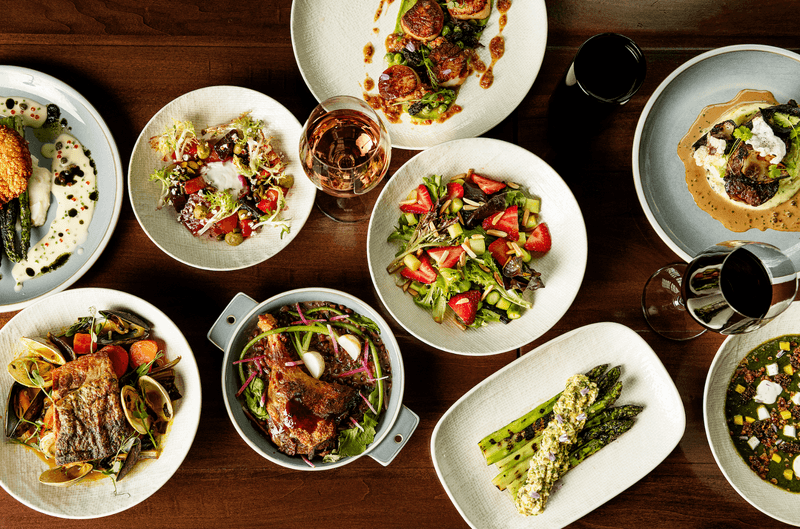
Oysters may be the headliner, but the menu at True Chesapeake Oyster Co. tells a much broader story about the region.
Chef Zack Mills, recognized as the 2025 Chef of the Year by the Restaurant Association of Maryland, builds seasonal menus that stay firmly rooted in Maryland’s culinary traditions.
Crab soup, rockfish, and oyster stew all appear in forms that feel both familiar and carefully considered.
One of the more surprising menu choices involves featuring invasive species like Maryland Blue Catfish and Snakehead. These fish cause real ecological damage in the Bay, and putting them on the menu is a practical way to reduce their populations while also feeding people well.
It is a clever solution that aligns the kitchen’s goals with the farm’s environmental mission.
Local Maryland farms supply produce and poultry, ensuring that even the non-seafood options carry the same regional integrity as the oysters. Maryland fried chicken and thoughtfully constructed vegetarian dishes round out a menu that never feels like it is trying too hard to be everything at once.
The seasonal rotation keeps things fresh and gives regulars a reason to return throughout the year, because the menu in spring looks quite different from what arrives in autumn. Every dish connects back to a place, a season, or a tradition that feels genuinely Maryland.
That specificity is what separates this kitchen from restaurants that simply claim a farm-to-table identity without fully committing to what that actually requires.
The Philosophy of Restorative Dining
The phrase “restorative dining” gets used at True Chesapeake Oyster Co. with a specific meaning behind it, not as marketing language, but as a genuine framework for how the restaurant operates. The idea is that a meal here should nourish more than just hunger.
It should connect diners to a place, a tradition, and a moment worth remembering.
Chef Mills has spoken about wanting food to evoke the kind of nostalgic comfort associated with a grandmother’s crab soup or a family rockfish dinner on the water. That is a specific emotional target, and the kitchen works toward it consistently.
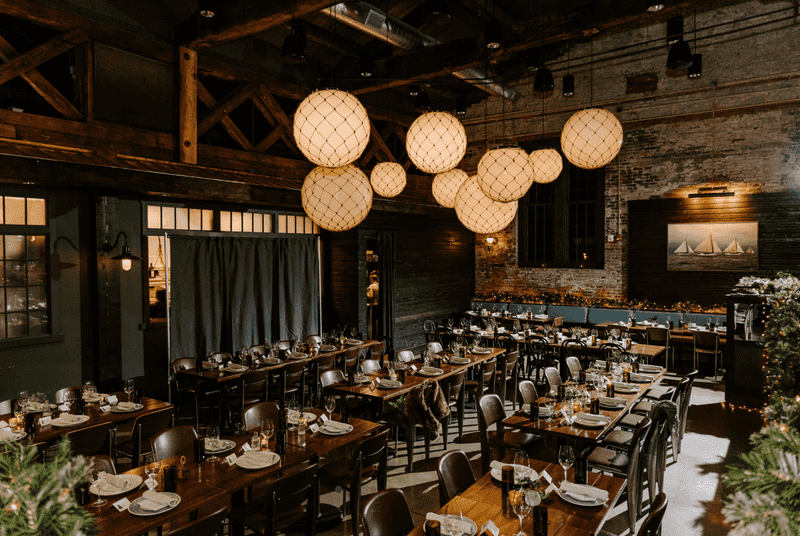
The warmth of the dining room supports this, making the space feel welcoming rather than performative.
Restorative dining also extends outward to the Bay itself. The farm’s oysters actively filter water and create habitat, meaning that every oyster consumed contributes in a small but real way to the health of the Chesapeake ecosystem.
Diners are, in effect, participating in a restoration project simply by showing up for dinner. That is a genuinely unusual thing to be able to say about a meal.
The concept ties together the environmental mission, the culinary vision, and the community focus into something coherent and purposeful. It avoids feeling preachy because the food itself makes the argument more convincingly than any explanation could.
The philosophy only works because the execution backs it up completely, and at True Chesapeake Oyster Co., it does.
The Dedicated Team Behind the Vision
Every great restaurant has a founding story, and this one involves three people whose individual expertise happened to align perfectly. Patrick Hudson started oyster gardening alongside his father, and that early passion eventually grew into Maryland’s leading oyster farm.
His deep understanding of the Bay and its tidal rhythms informs every cultivation decision made at St. Jerome Creek.
Nick Shauman grew up in Baltimore with Maryland seafood as a constant presence. His background includes years of professional shucking experience and a stint with The Local Oyster, giving him a technical fluency with bivalves that is immediately apparent at the shucking station.
He brings a hometown energy to the operation that keeps things grounded.
Chef Zack Mills came to this partnership through the food itself. His culinary career included time in Washington D.C. fine dining kitchens before his Maryland roots pulled him back.
He became one of Hudson’s first major restaurant clients after discovering the farm’s oysters, and that culinary relationship eventually deepened into a full business partnership.
His 2025 Chef of the Year recognition from the Restaurant Association of Maryland reflects a consistent commitment to seasonal, sustainable, and deeply local cooking.
The three of them bring complementary skills to a shared mission, and the restaurant benefits from that alignment in ways that are difficult to fake.
When the farmer, the shucker, and the chef are all genuinely invested in the same outcome, the result is a dining experience that feels unified from the water to the plate.
A Commitment to Restoration and Community
The mission at True Chesapeake Oyster Co. does not stop at the restaurant’s front door.
The farm’s oyster beds play an active role in filtering the Chesapeake Bay’s water and creating habitat for fish, crabs, and other marine species that have seen their populations decline over generations of overharvesting.
Growing oysters here is not a passive act.
Community engagement takes a concrete form through initiatives like the fall Eco-Market, organized in partnership with Greater Goods.
Local artists, small businesses, environmental organizations, and community groups come together at this event in a way that reflects the restaurant’s broader sense of responsibility to the neighborhood and the Bay alike.
It is the kind of event that turns a restaurant into something closer to a gathering place.
Local farms supplying the kitchen are highlighted rather than quietly acknowledged, reinforcing the idea that the regional food network matters and deserves recognition.
Supporting those farms strengthens the entire ecosystem of producers that makes this style of cooking possible in the first place.
The restaurant functions as a kind of hub, connecting diners to the Bay, to local agriculture, and to the communities that depend on both. For visitors making the trip to Baltimore specifically to eat here, that broader context adds genuine depth to the experience.
A meal at True Chesapeake Oyster Co. becomes a small act of participation in something larger than lunch, and that is a rare quality worth seeking out whenever the chance presents itself.
