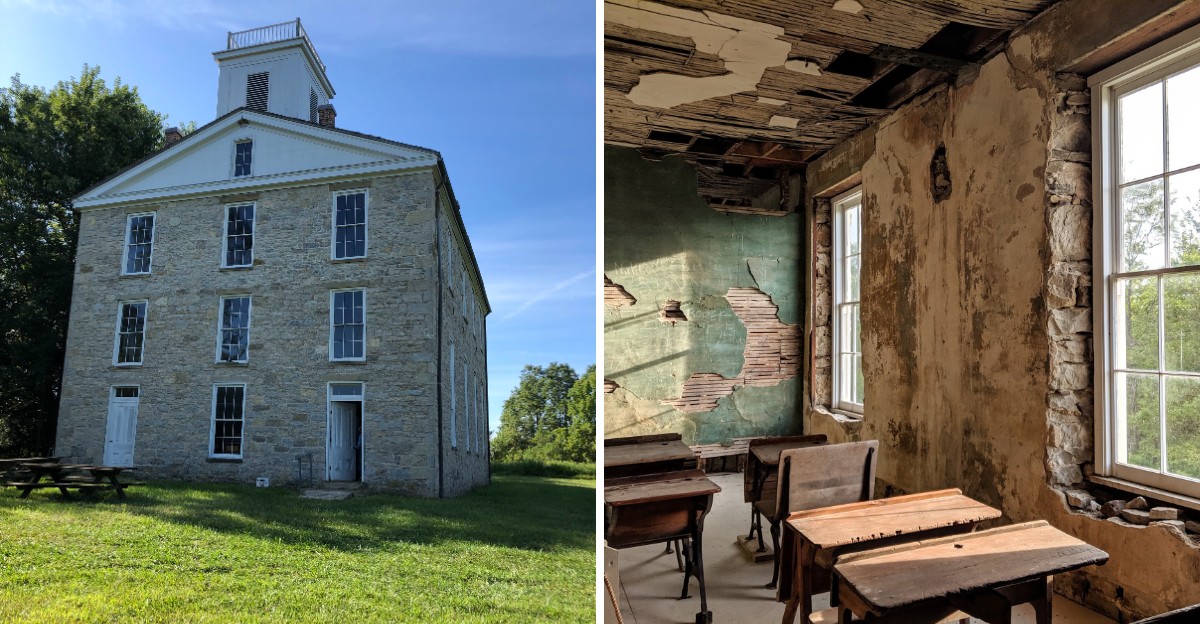
Hundreds of students signed their names right onto the plaster walls of an old stone school. The oldest date you can still read says 1858.
That school did something bold for its time. It taught students regardless of race or gender, including people who had escaped slavery.
The families who built it were helping freedom seekers move north on the Underground Railroad.
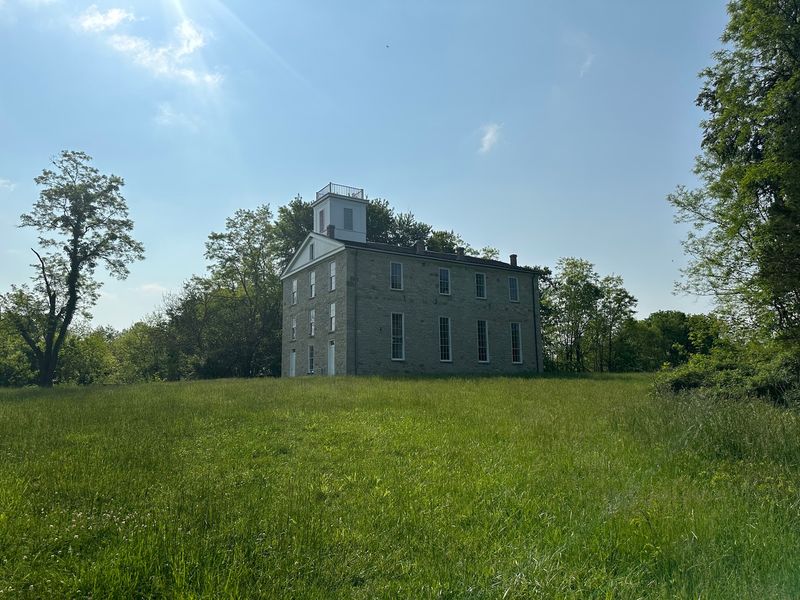
I like how the building still sits on its quiet hill in southern Indiana. The limestone walls, the bell tower, and those faded signatures are all still there.
I can’t imagine running my hand past a name written before the Civil War.
So who were these students? What did they hope for when they climbed those stairs?
I believe their story deserves a closer look, and the building is ready to tell it.
A School Named For Freedom Itself
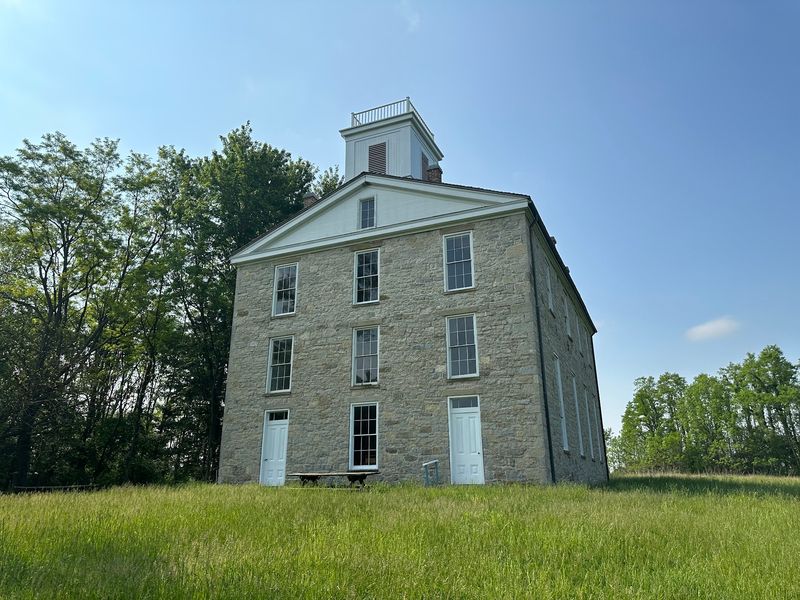
Greek words don’t usually show up on country roads in Indiana. Eleutherian College is the happy exception.
The name comes from the Greek word eleutheros, which points to freedom and equality.
That name was no accident. Local anti-slavery Baptists founded the school in 1848 as Eleutherian Institute.
Many belonged to the Neil’s Creek Anti-Slavery Society and the Neil’s Creek Abolitionist Baptist Church.
These founders wanted their beliefs on full display. A school that welcomed everyone was a loud statement in the years before the Civil War.
It told the whole region exactly where they stood on slavery.
In 1854, the school began offering college-level courses. That’s when it officially became Eleutherian College.
It was a big step for a small rural community.
I love that the mission is baked right into the name. Every time someone said it out loud, they were saying freedom.
That’s a pretty clever way to make a point without a single speech.
Today, the site carries the name Historic Eleutherian College. The building is now a local history museum.
It’s cared for by Historic Eleutherian College Inc., a nonprofit group devoted to restoring it and sharing its story.
The First Indiana College To Open Its Doors To Everyone
Eleutherian College made history in a way few schools ever do. It was the first college in Indiana to teach students regardless of race or gender.
It was also the second west of the Allegheny Mountains to do it.
Think about how rare that was in the 1850s. Many schools shut out women entirely.
Even more refused Black students.
Here, freed people and freedom seekers who had escaped slavery could sit in class. Men and women learned in the same building.
That simple idea was radical at the time.
Some families still treasure their links to this place. Graduates included sisters Virginia and Lettie Harris.
Their father, Rev. Joseph Harris, supported the Neil’s Creek Anti-Slavery Society.
I believe that’s the real heart of this site. It wasn’t just a nice building with a big idea.
Real students showed up, studied hard, and earned their education.
When you stand near the doors, it helps to remember those first classes. Every student who walked in was proof that the founders meant what they said.
Not bad for a school on a hill in the countryside.
Brave Neighbors Ran A Secret Network Nearby
Secret routes, coded help, and late-night journeys were part of daily life around here. The founders of Eleutherian College and their neighbors were active in the Underground Railroad.
Many served as conductors and station masters.
The location made this work especially meaningful. Southern Indiana sat just across the Ohio River from Kentucky, a slave state.
Freedom seekers crossing that river needed safe places and trusted people.
Families in the Lancaster area stepped up. They offered shelter, food, and guidance to people heading north.
Doing this was risky and against the law at the time.
The college itself sent a public message. It openly spoke out against slavery while the quieter work went on nearby.
One was a bright sign, and the other was a hidden helping hand.
That mix is what makes the site feel so powerful. You’re not just looking at a school.
You’re looking at the center of a brave community that chose to act.
I find it moving that the surrounding fields still look so peaceful. It’s hard to picture the courage it took to live here then.
The quiet landscape keeps those stories close.
Rough Limestone Walls Built To Outlast Everyone
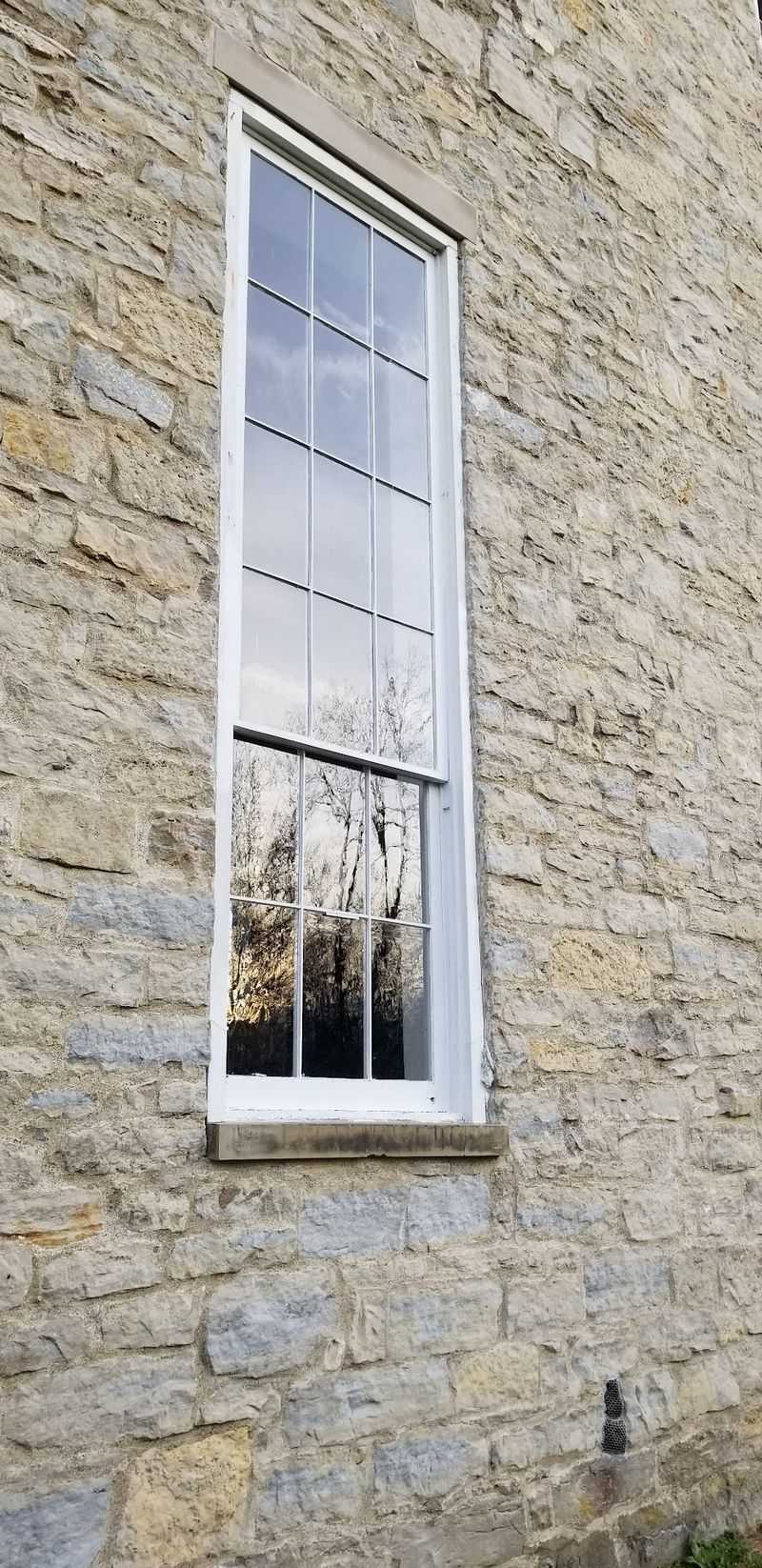
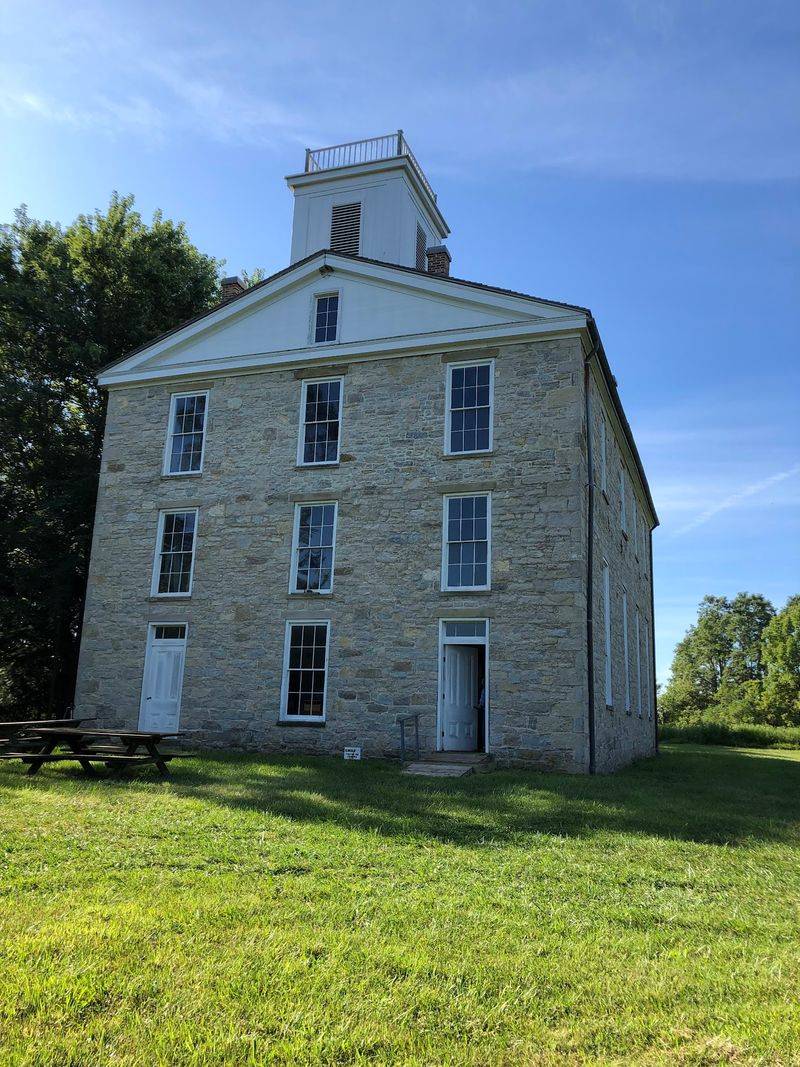
Local stone gives this building its rugged good looks. Workers built the main classroom and chapel building between 1854 and 1856.
They used rough-cut limestone from nearby quarries.
The style is Greek Revival, which was popular for important buildings back then. The structure stands three stories tall in a neat rectangle.
It measures roughly 65 feet by 42 feet.
Look closely at the details. Limestone windowsills, lintels, and corner quoins frame the walls.
Quoins are those sturdy stone blocks stacked at the corners.
The main entrance sits under a gable front. Above it rises a square bell tower.
It’s the kind of feature that makes a building look proud from the road.
I like that the materials came from the land right around it. The school was literally built from local ground.
That feels fitting for a project powered by a local community.
Photographers will want to circle the whole building. Each side shows off the texture of the stone in a different way.
Morning and late afternoon light make those rough walls really stand out.
Names On The Walls Still Whisper From The 1800s
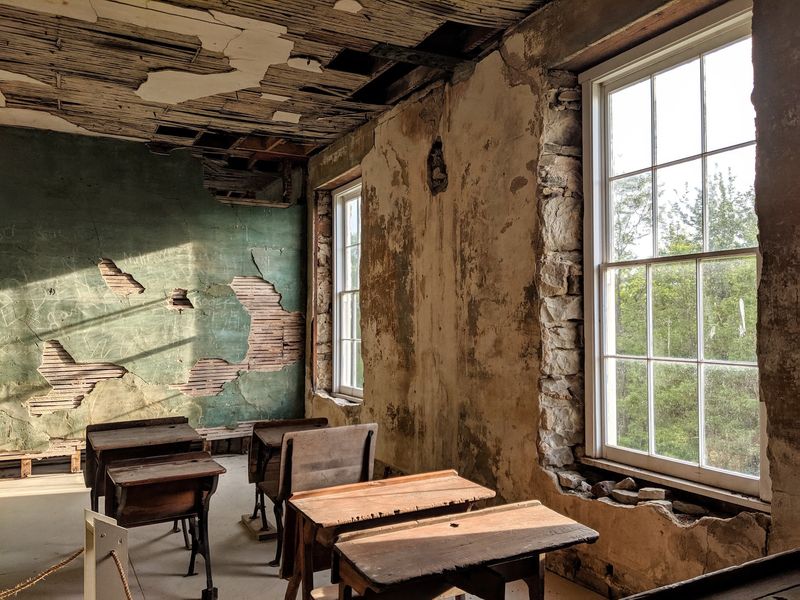
Students got away with writing on the walls here, and we’re all better for it. The old plaster on the upper floors carries hundreds of signatures.
The oldest readable date is 1858.
That’s what gives Eleutherian College its haunting feel. These aren’t fancy plaques.
They’re names scribbled by real young people who once climbed these stairs.
The second and third floors first served as classrooms. Generations of students passed through them over the years.
Many left a small piece of themselves behind.
Reading those names feels a bit like time travel. You might spot a careful signature or a quick scrawl.
Each one hints at a person with hopes, friends, and homework.
I can’t think of a better museum display than this one. Nobody planned it.
It simply happened, one student at a time.
Please remember these walls are fragile. Look closely, but keep your hands to yourself unless your guide says otherwise.
Those names have lasted well over a century, and they deserve many more years. Bring a sharp eye and some patience, because new details seem to appear the longer you look.
Tall Windows Fill The Chapel With Light
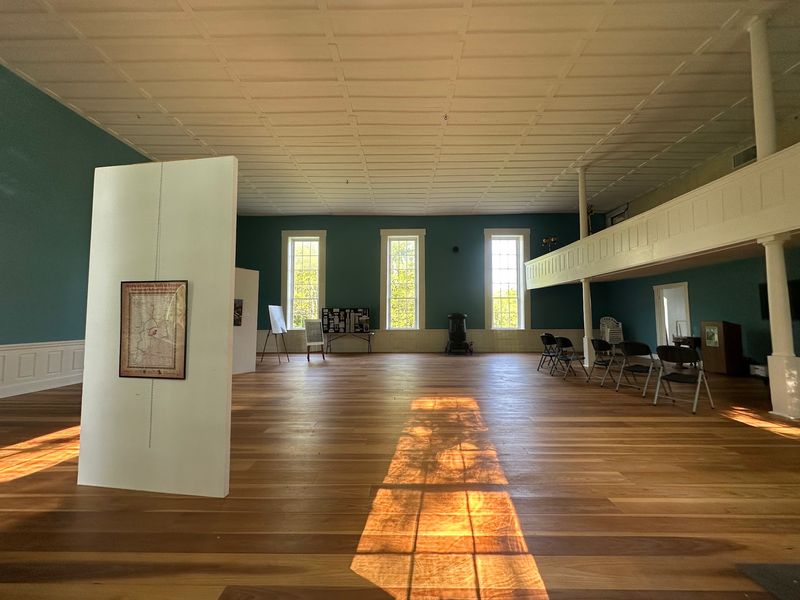
Six windows stretch two full stories in the chapel. That design fills the first floor with natural light.
It’s a simple feature, but it makes a big impression.
The chapel takes up the ground level of the main building. A balcony overlooks the room from above.
It gave the space room for larger gatherings.
Back in its day, this room mattered a lot. Chapel was a regular part of school life for many colleges.
It was also a place where the community could come together.
Today the chapel still helps the site connect with people. Historic Eleutherian College hosts concerts, history talks, and storytelling sessions.
A room built for gathering still does its job.
I love when old spaces keep their original purpose. Music and voices echoing here just feel right.
It’s hard to beat that kind of setting for hearing a good story.
Take a moment to stand still in the middle of the room. Look up at the balcony and those towering windows.
You’ll get a real sense of how proud the builders were of their work. It’s a space that rewards slowing down.
School Bells Kept Ringing Long After 1874
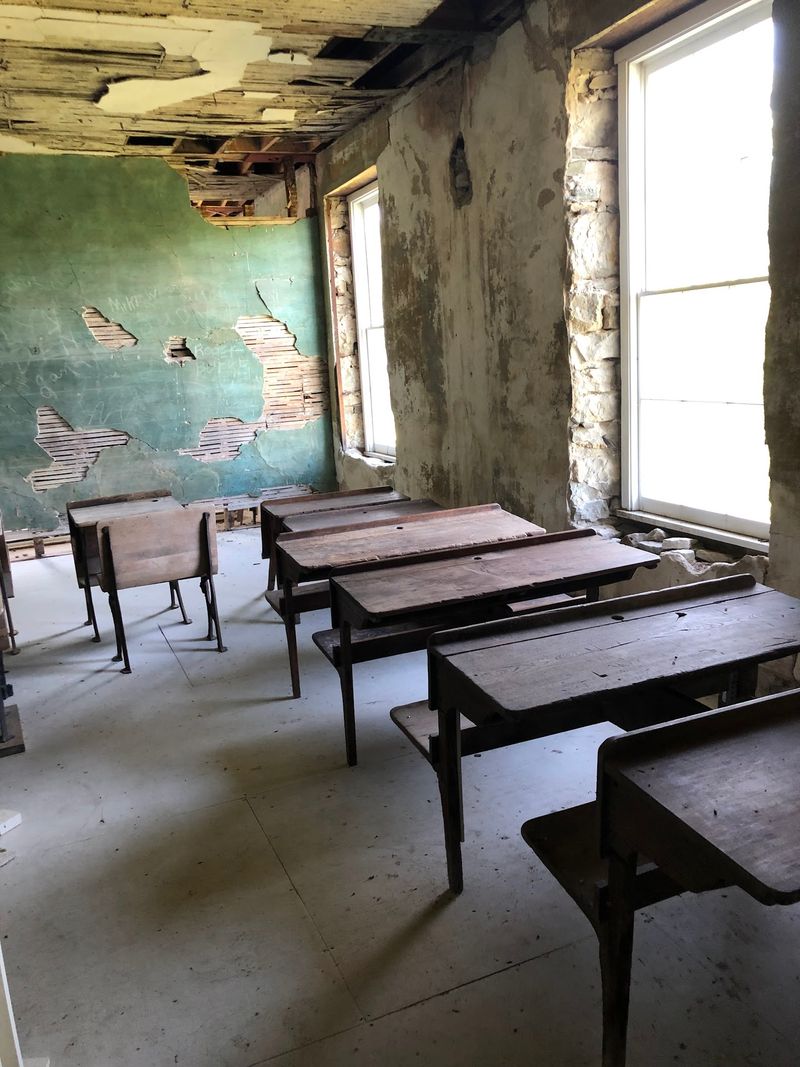
Plenty of colleges fade away when they close. This one simply changed jobs.
Eleutherian College shut down as a college in 1874, but the building kept teaching.
First, it became a private high school. Later, it served as a public school.
Students kept filling its rooms until 1938.
That’s a long career for one building. Counting from the first classes, it served students for about nine decades.
Talk about job security.
The years before that brought big changes too. During the Civil War, the college grounds were used for military training.
The quiet hill saw a very different kind of activity for a while.
All those chapters add layers to the visit. You’re seeing a pioneering college, a community school, and a piece of Civil War history.
It’s like three museums in one sturdy package.
I find it fitting that the building never stopped serving its neighbors. The founders wanted education for all.
Long after they were gone, kids from the area were still learning here.
Today, the building teaches in a new way. Instead of lessons from textbooks, it shares lessons from its own past.
Call Ahead Or You’ll Only See The Outside
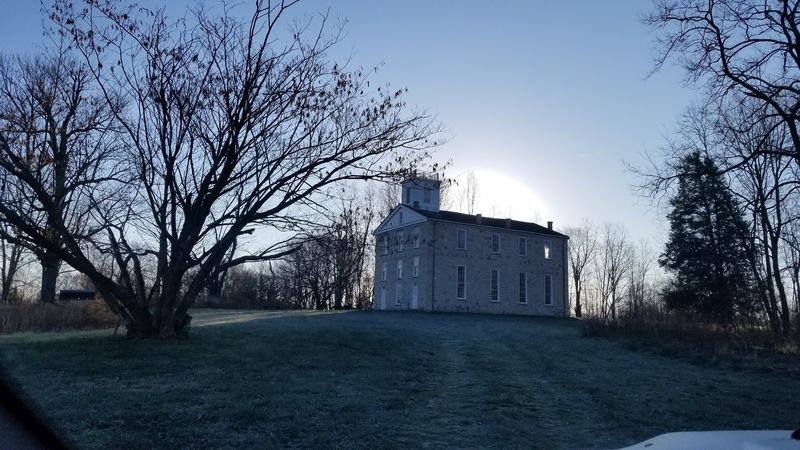
Planning matters for this trip. Historic Eleutherian College offers tours by advance appointment only.
Show up unannounced and you’ll likely just admire the stone walls from outside.
The good news is that the tours are personal. Knowledgeable volunteer guides lead private or group visits.
That means you can ask questions and go at a comfortable pace.
You’ll find the site at 6927 West State Road 250, Madison, IN 47250. It sits in rural Lancaster in Jefferson County, Indiana.
The building rests on a rise known as College Hill.
Country roads lead the way, so give yourself extra time. GPS should get you there, but slow and steady is smart out here.
The scenery makes the drive pleasant anyway.
I’d suggest booking well before your trip. Volunteer schedules can be limited.
A little planning turns a quick roadside photo stop into a full visit.
Group outings work well here too. Schools, families, and history clubs can arrange visits together.
Sharing these stories with others makes them stick even longer. Plus, a group tour gives everyone a chance to hear questions they might not have thought to ask.
Fall Gatherings Bring The Hill Back To Life
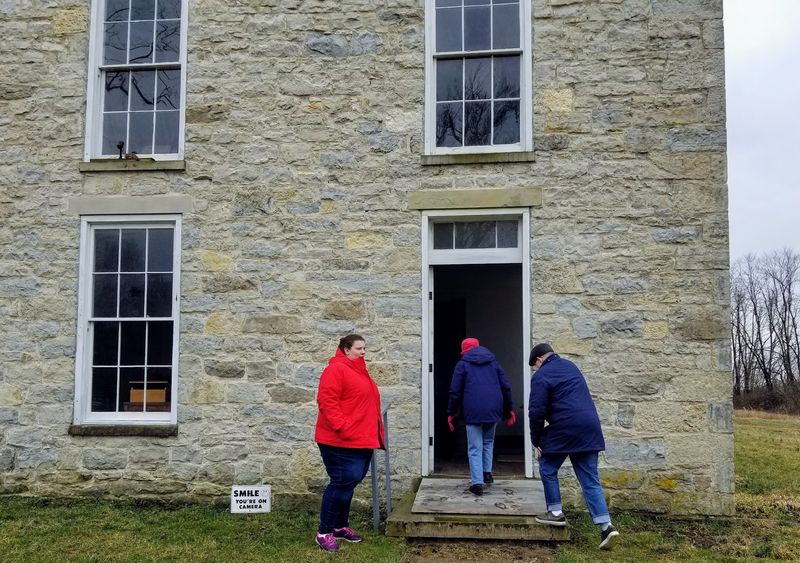
Autumn might be the best excuse to visit. Historic Eleutherian College hosts an annual Fall Gathering.
It brings together tours, historic programming, art, and music.
That’s a great chance for first-timers. You get to explore the building and enjoy the community feel at once.
Southern Indiana’s fall colors make a lovely backdrop too.
Other events pop up throughout the year. The group offers concerts, storytelling sessions, history talks, and art events.
Each one gives the old building a fresh reason to welcome people.
These programs also support the bigger goal. Restoring a building from the 1850s takes steady work and care.
Events help keep interest, and support, flowing.
I think that’s a beautiful way to honor the founders. They built a place where everyone was welcome.
Opening the doors for music and stories keeps that spirit alive.
Watch the organization’s announcements for upcoming dates. Event schedules can shift from year to year.
Catching one of these gatherings might be the easiest way to fall for this place. And once you hear those stories under that bell tower, you might just find yourself planning a return trip.
