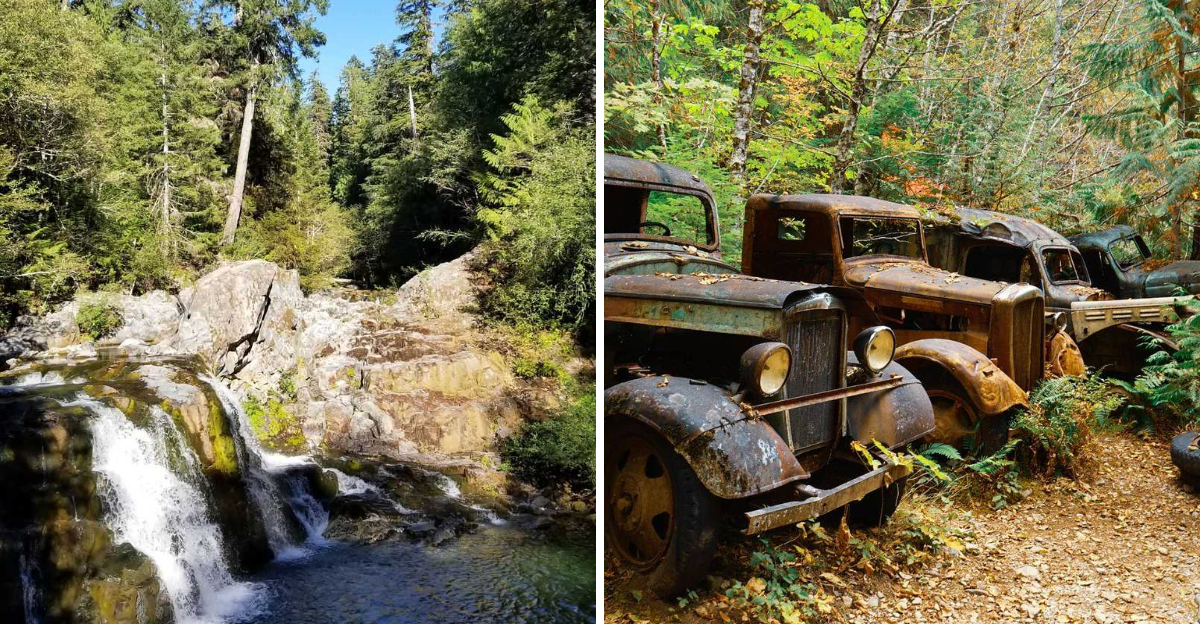
Most people picture Oregon as a land of dramatic coastlines and volcanic peaks, but tucked deep in the Cascade foothills lies something entirely different. Opal Creek Wilderness feels like stepping into an ancient world where time quietly pauses.
Towering old-growth trees rise overhead, some standing for centuries, while emerald-green pools shimmer like gemstones beneath the forest canopy.
This isn’t the kind of place built for quick stops or crowded viewpoints. Instead of packed trails and selfie lines, there’s silence, filtered light, and the steady sound of water moving through untouched terrain.
Opal Creek protects one of the largest uncut watersheds in the state, and you can feel that wildness in every step.
Trails twist through moss-covered logs, abandoned mining remnants peek through the greenery, and the landscape unfolds slowly, rewarding patience rather than speed. It’s the kind of place that reminds you nature doesn’t rush, and neither should you.
Ancient Forest Canopy
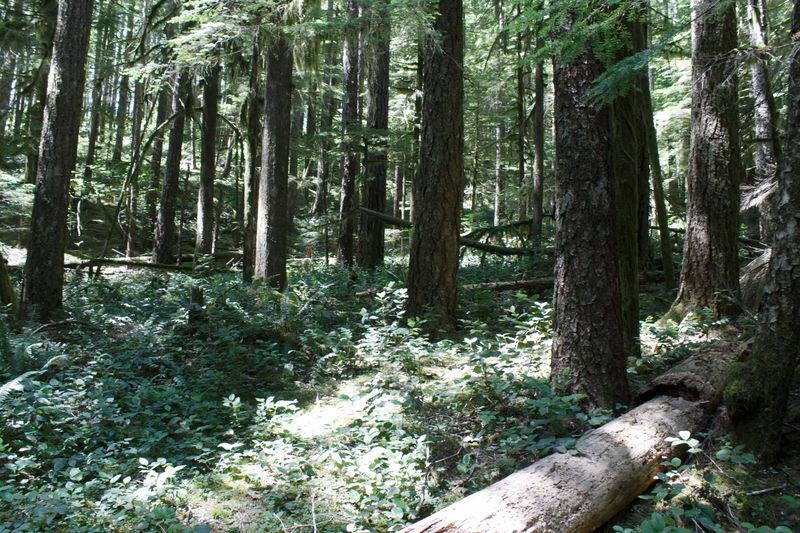
Walking beneath trees that have witnessed five centuries of history changes your perspective on time itself.
The ancient forest canopy at Opal Creek Wilderness creates a living cathedral where Douglas fir, western hemlock, and western red cedar stretch skyward in impossible proportions.
Some of these giants predate European settlement in Oregon by hundreds of years. Their massive trunks require several people linking hands to encircle them, and their branches form intricate patterns against the sky that block out most direct sunlight.
The forest floor stays cool and damp year-round thanks to this natural umbrella. Moss drapes from branches like green curtains, and ferns carpet every available surface in shades ranging from emerald to jade.
I found myself constantly looking up, trying to spot the tops of these behemoths. The scale feels almost impossible until you’re standing there, dwarfed by trunks wider than most cars.
This isn’t just woodland. It’s a functioning ecosystem that has remained largely unchanged for generations, offering a window into what Oregon looked like before modern development transformed the landscape.
Emerald Swimming Holes
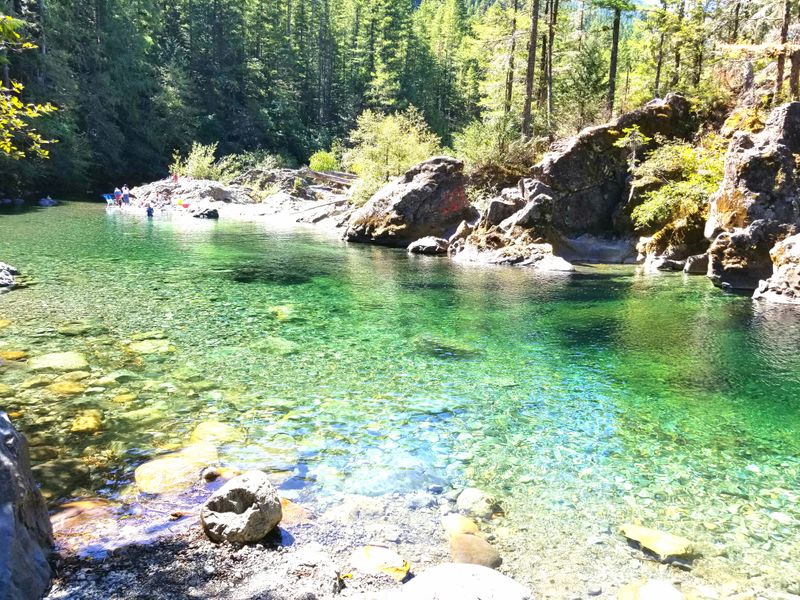
Nothing quite prepares you for the first glimpse of Opal Pool.
The water glows with an otherworldly turquoise hue that seems lifted from a tropical paradise, yet you’re standing in the heart of Oregon’s Cascade Range.
The clarity is astounding. You can see every pebble on the bottom, every fish darting between rocks, every detail magnified through water so pure it barely seems real.
Temperature is another story entirely. Even on scorching summer days, the creek maintains a bracing chill that takes your breath away on first contact.
Fed by mountain snowmelt and underground springs, these pools rarely warm beyond refreshing.
I watched brave swimmers leap from smooth boulders into the deepest sections, their shouts echoing through the canyon. Others waded cautiously from sandy edges, gasping as the cold crept up their legs.
The pools form naturally where the creek widens and slows, creating perfect basins polished smooth by centuries of flowing water. Surrounding rocks provide natural seating areas where you can dangle your feet and marvel at nature’s handiwork.
Jawbone Flats Historic Mining Town
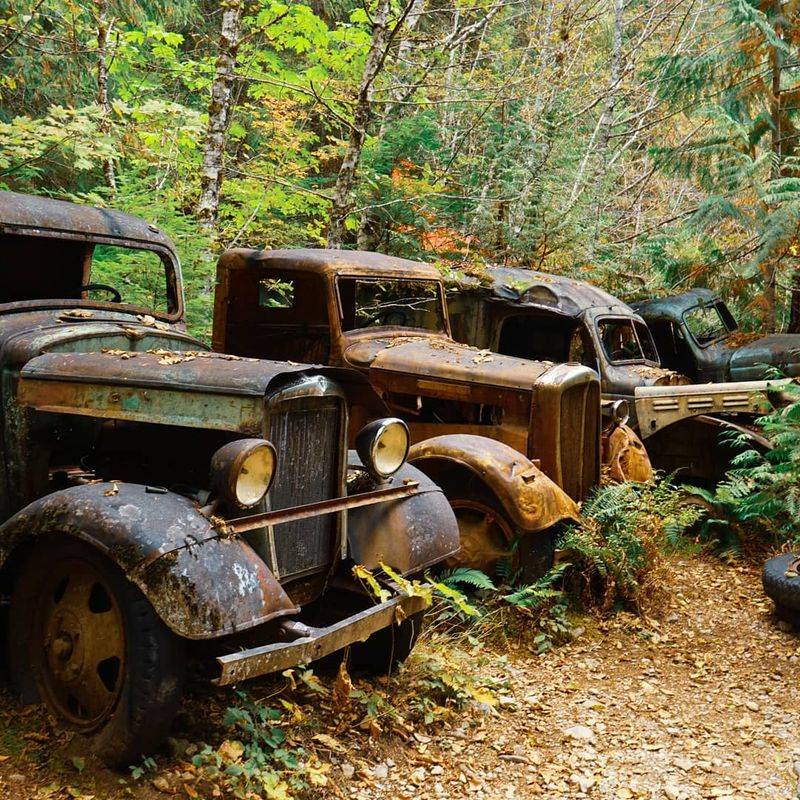
History comes alive in unexpected ways at Jawbone Flats, a privately owned mining settlement that stands frozen in time within the wilderness boundaries.
Weathered cabins and remnants of mining operations tell stories of the rugged individuals who once extracted wealth from these mountains.
The town dates back to the early 1900s when mining fever gripped Oregon’s Cascade region. Miners carved out an existence in this remote location, hauling equipment miles into the forest and building a self-sufficient community.
Today, the structures remain remarkably intact. Wooden buildings with hand-hewn beams still stand, their walls bearing the marks of saw blades and axes wielded over a century ago.
Access and tours have been limited since the 2020 wildfires, but the town’s presence adds a human dimension to the wilderness experience.
It reminds visitors that this landscape has always attracted people seeking something valuable, whether precious metals or precious solitude.
I found the contrast fascinating. Modern hikers pass through seeking natural beauty, while earlier generations came seeking mineral riches, yet both groups recognized something special about this hidden corner of Oregon.
Largest Uncut Watershed in Oregon
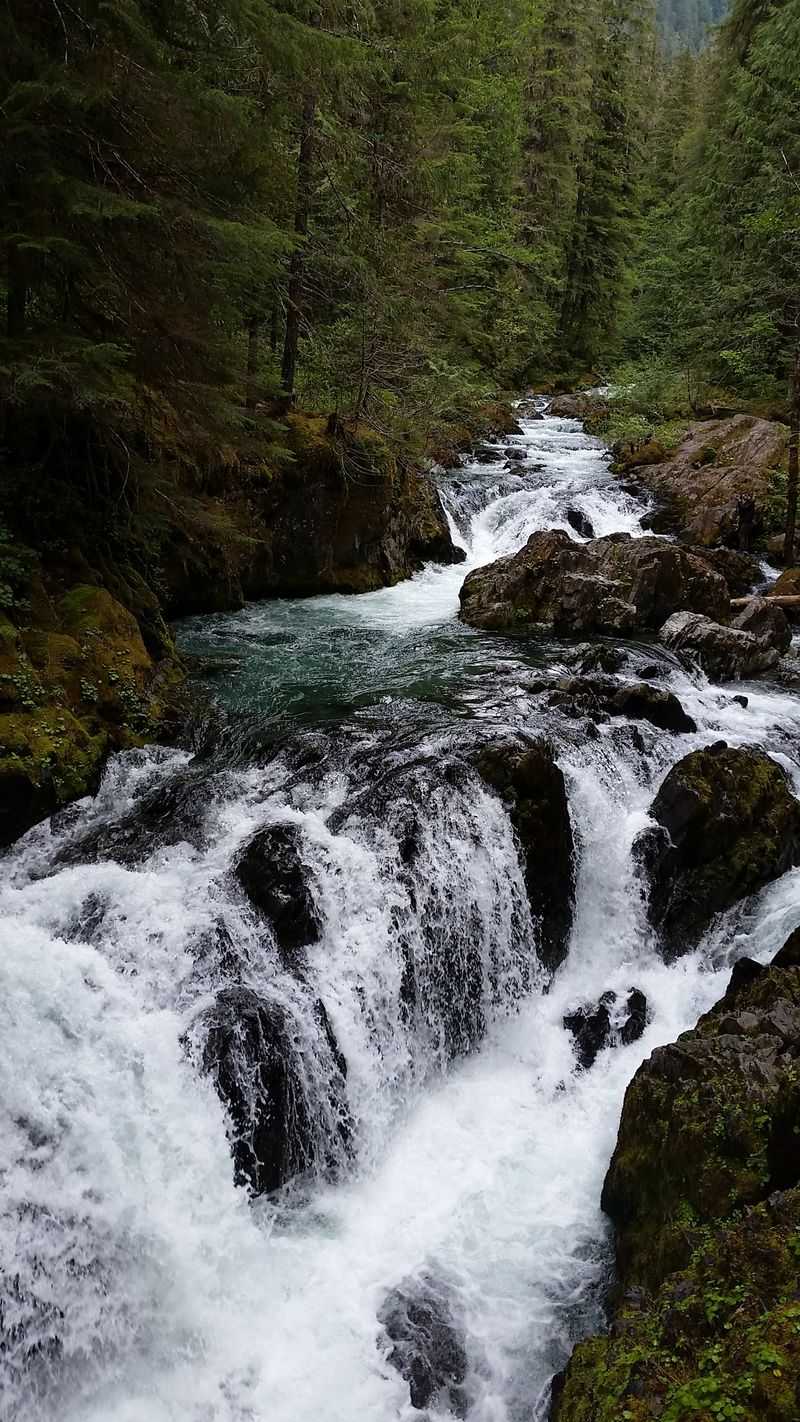
Rarity takes on new meaning when you realize Opal Creek represents the largest remaining uncut watershed in Oregon.
Virtually every drop of water flowing through this system travels through old-growth forest that has never felt a chainsaw’s bite.
Watersheds function as nature’s filtration systems, and this one operates at peak efficiency. Water percolates through layers of organic matter, over ancient root systems, and between moss-covered rocks, emerging incredibly pure.
The ecological significance extends far beyond water quality. Intact watersheds provide habitat for species that can’t survive in fragmented forests, maintain stable stream temperatures for fish populations, and regulate water flow to prevent flooding.
Standing beside the creek, I tried imagining this same scene repeated upstream for miles in every direction, uninterrupted by clearcuts or development.
The continuity feels almost miraculous in our modern era.
Conservation efforts have protected this watershed from logging interests for decades, though the battle required persistent advocacy. Today’s visitors benefit from those hard-fought protections, experiencing a landscape that functions exactly as nature designed it over millennia of patient work.
Recovery from Beachie Creek Fire
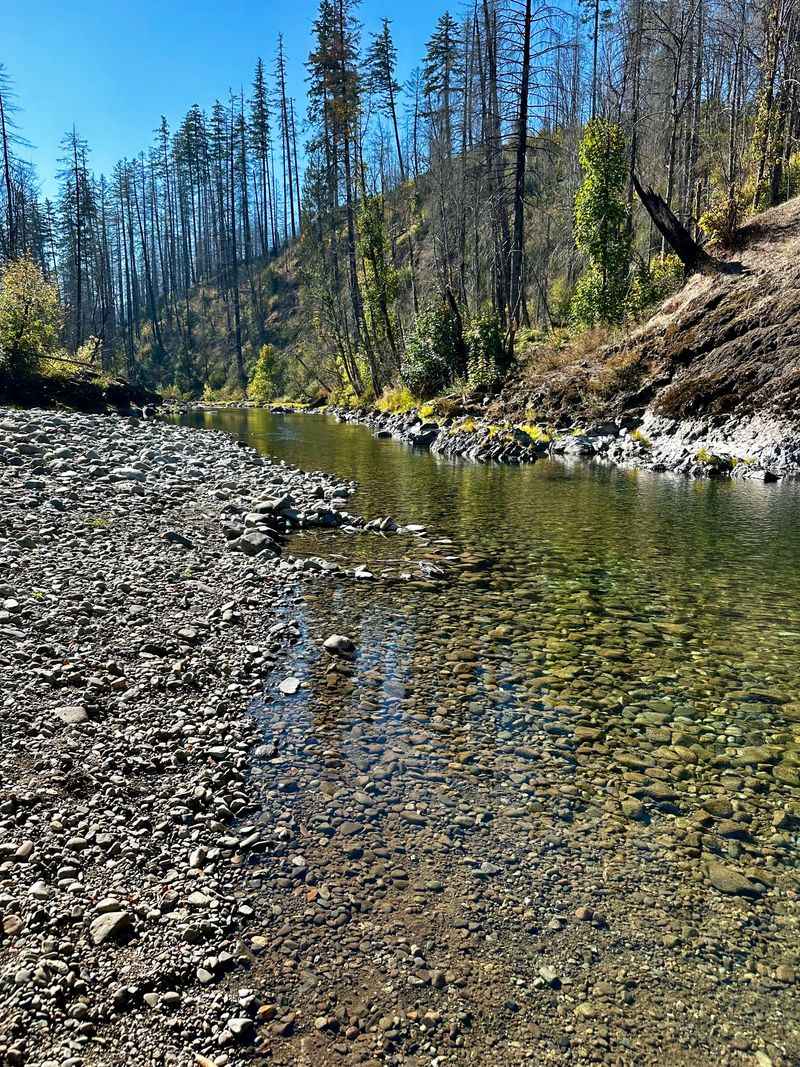
Devastation arrived in September 2020 when the Beachie Creek Fire tore through portions of the wilderness, forever altering landscapes that had remained unchanged for centuries.
The fire’s impact continues to shape visitor experiences and access years later.
Entire hillsides transformed overnight from green cathedral to blackened skeleton. Ancient trees that survived countless natural challenges fell victim to a fire intensified by drought and extreme winds.
Current access restrictions reflect ongoing safety concerns. Burned trees continue falling without warning, trails have been damaged or destroyed, and the Forest Service maintains closures in heavily impacted areas until restoration work can be completed.
Yet nature demonstrates remarkable resilience. On partially burned slopes, I spotted new growth pushing through ash-enriched soil.
Wildflowers bloomed in sunlight that now reaches the forest floor. Birds nested in standing snags that provide perfect habitat.
The fire revealed Oregon’s wild side in a different way than intended, showcasing nature’s cycles of destruction and renewal. While tragic for those who knew the pre-fire landscape, the recovery process offers its own compelling story about forest ecosystems and their capacity to heal given time and protection.
Remote Wilderness Experience
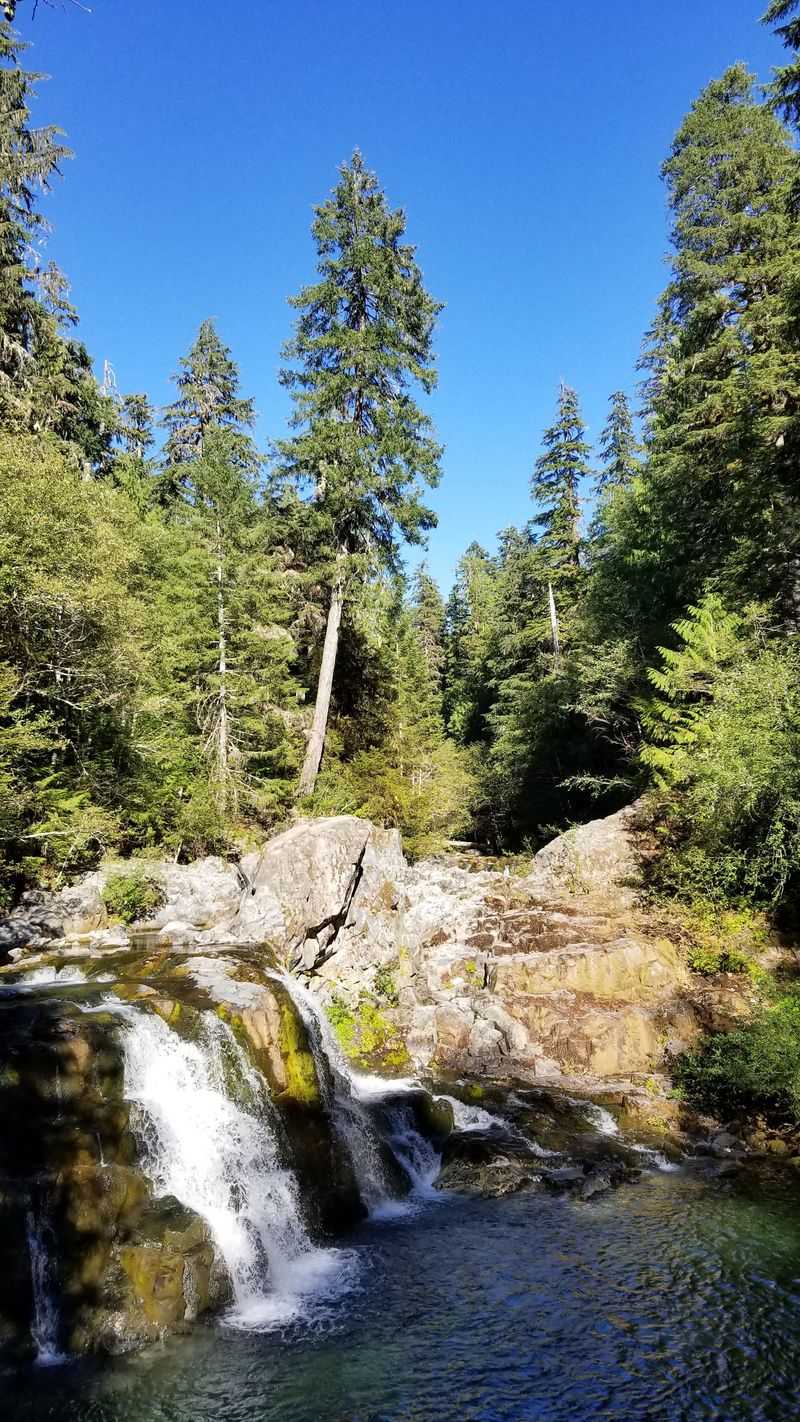
Getting to Opal Creek requires commitment, which keeps crowds manageable even during peak season. The journey begins with a rough, pothole-riddled access road that tests both vehicle and driver patience for nearly nine miles.
Once you park and shoulder your pack, the real adventure begins. The trail follows an old mining road for the first section, gradually transitioning to narrow footpath as you penetrate deeper into the wilderness.
Cell service vanishes almost immediately. The sounds of modern life fade until only rushing water and birdsong remain.
This disconnection from technology feels jarring at first, then increasingly liberating.
I encountered far fewer hikers than on popular Oregon trails like those in the Columbia River Gorge. Those I did meet shared a certain mindset, people willing to drive rough roads and hike several miles for an experience worth the effort.
The remoteness provides benefits beyond solitude. Wildlife behaves more naturally when human presence remains minimal.
The forest maintains an undisturbed quality that’s increasingly rare. You feel like a visitor in nature’s domain rather than a tourist at a managed attraction, which changes the entire dynamic of the experience.
Crystal Clear Creek Waters
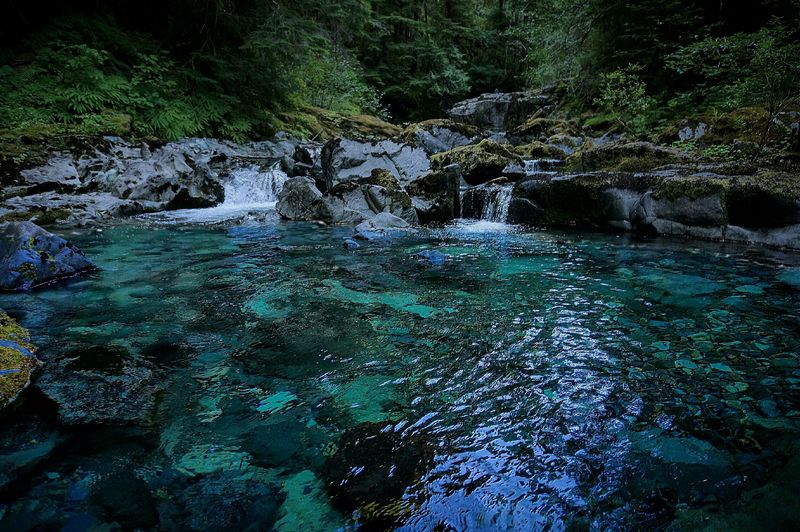
Transparency reaches almost unbelievable levels in Opal Creek’s main channel. The water clarity rivals anything I’ve seen in protected marine reserves or high-altitude alpine lakes, yet this creek flows through dense forest at relatively low elevation.
You can watch trout holding position in the current, their fins making subtle adjustments to maintain their spot. Individual grains of sand are visible on the streambed even in pools several feet deep.
The creek’s name comes from this optical quality. In certain light conditions, the water takes on an opalescent sheen, shifting between shades of green, blue, and crystal depending on depth and surrounding vegetation.
Mineral content plays a role in the coloration. Water filtered through old-growth forest picks up tannins and minerals that create the distinctive emerald tones without compromising clarity.
I spent considerable time simply watching the creek flow, mesmerized by the way light played through moving water. Rapids created white foam that contrasted beautifully with the green depths.
Calm sections acted as mirrors, reflecting the canopy overhead in perfect detail and creating visual confusion about where forest ended and water began.
A Different Side of Oregon
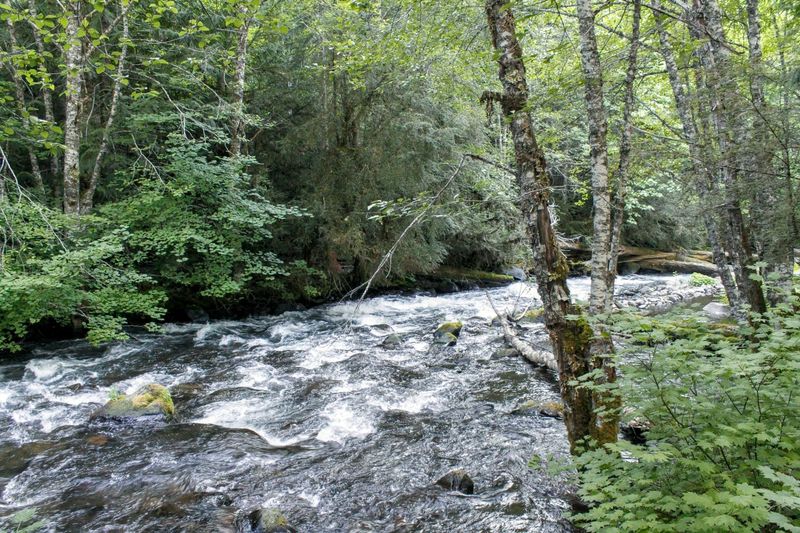
Oregon’s reputation rests largely on coastal drama and volcanic landscapes like Crater Lake or Mount Hood. Opal Creek offers something completely different, a wet, green, deeply forested heart that represents the state’s less-publicized natural heritage.
This is Oregon as it existed before widespread logging transformed the landscape. The density of vegetation, the size of trees, the complexity of the ecosystem all harken back to a time when old-growth forests stretched unbroken across the Cascades.
The experience feels more intimate than standing at a coastal overlook or mountain summit. You’re surrounded rather than elevated, enclosed by forest rather than exposed to expansive views.
Moisture defines everything here. Moss grows on every surface.
The air tastes green. Even in summer, the forest maintains a damp coolness that contrasts sharply with the dry east side of the state or the wind-swept coast.
I came away understanding Oregon differently. The state’s identity encompasses more than the postcards suggest.
Hidden places like Opal Creek preserve ecological and experiential diversity that’s just as valuable as the famous landmarks, offering those willing to seek them out a richer, more complete picture of what Oregon truly contains.
Dear Reader: This page may contain affiliate links which may earn a commission if you click through and make a purchase. Our independent journalism is not influenced by any advertiser or commercial initiative unless it is clearly marked as sponsored content. As travel products change, please be sure to reconfirm all details and stay up to date with current events to ensure a safe and successful trip.
