A three-story mill built in 1848 still grinds grain with creek power on select Saturdays. Its frame sits on hand-hewn, pegged timbers, and some of its limestone foundation holds up without mortar.
I love that detail. Those old builders stacked rock so well that it has outlasted floods, a lost village, and nearly two centuries of Missouri weather.
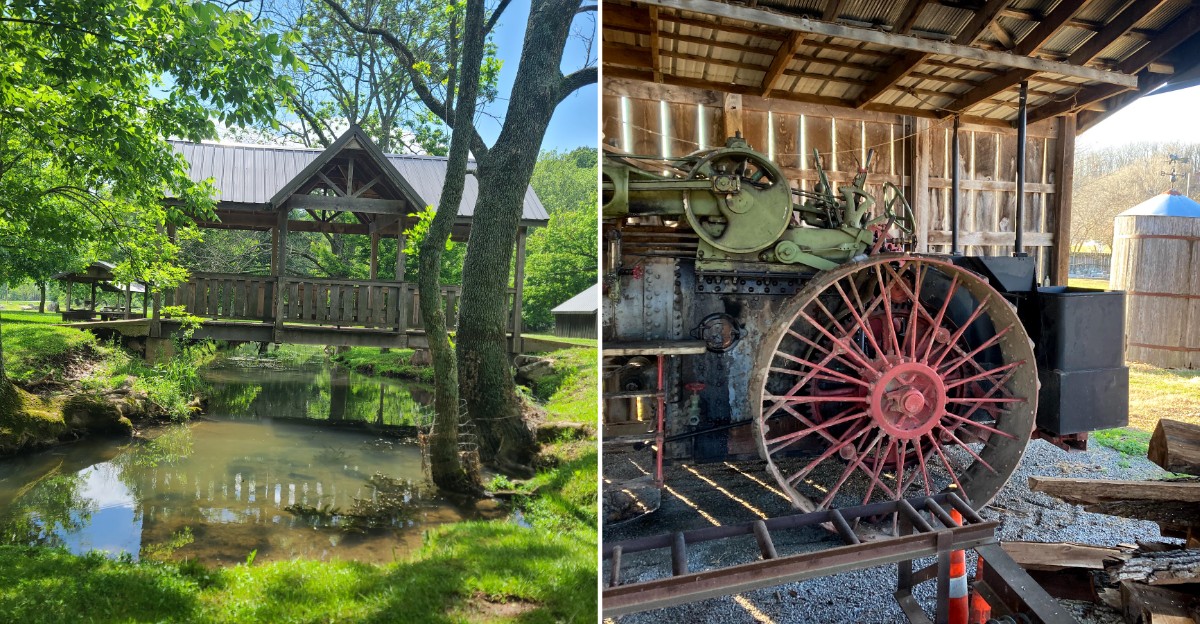
Around the mill, a spring-fed creek runs cold and clear past a small waterfall. Trout swim in it, crawdads hide under the rocks, and old relocated buildings stand nearby like a village trying to remember itself.
I can’t imagine a better spot for an afternoon with no agenda. Pack a lunch, slow way down, and let the water set the pace for once.
Built In 1848 And Still Standing Tall Beside The Water
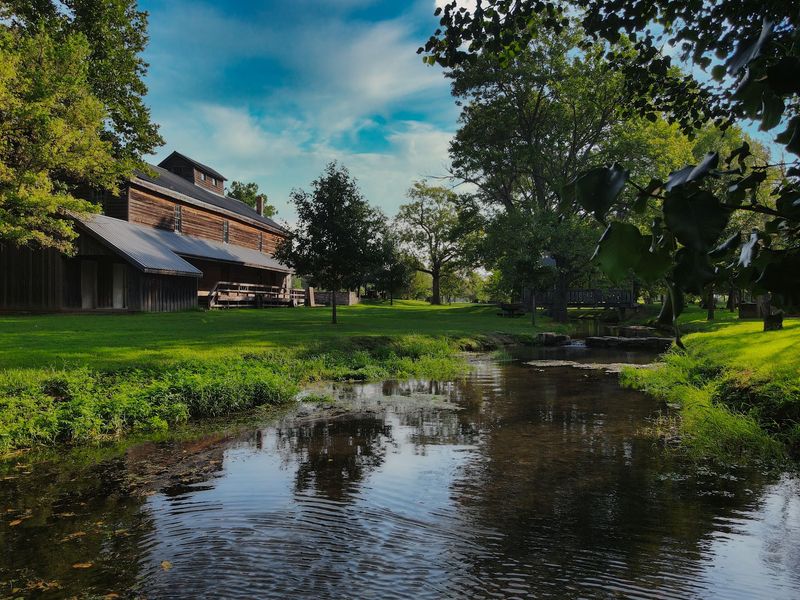
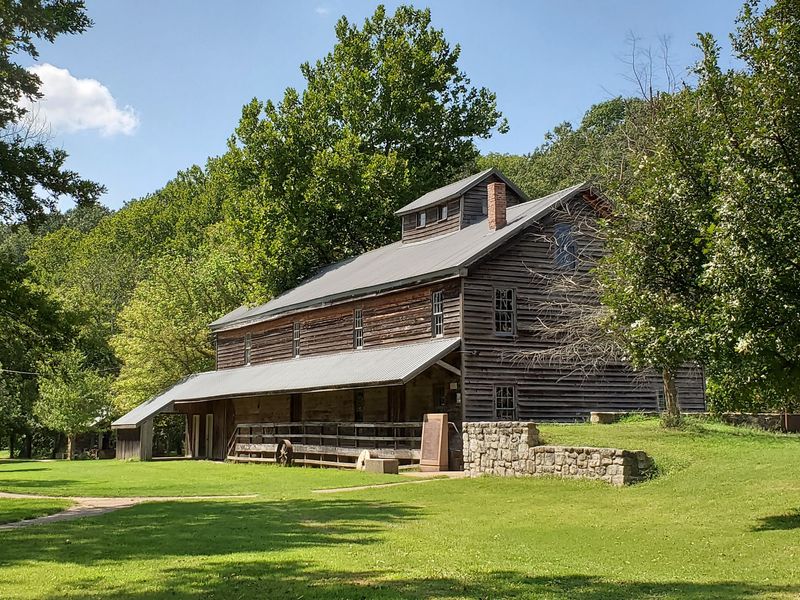
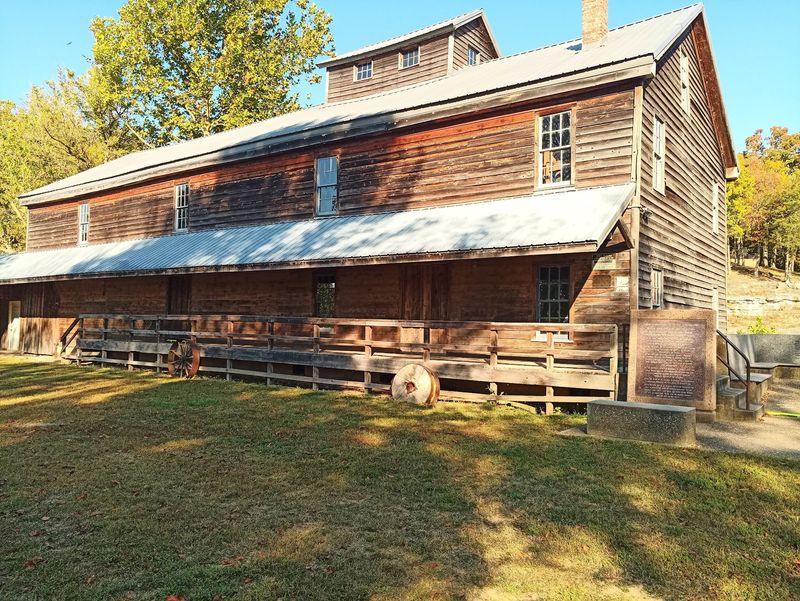
Thomas Isbell and his son John built this mill on Capps Creek back in 1848. Today it stands as the heart of Jolly Mill Park, and it looks every bit of its long story.
The structure rises three stories high. Its framing timbers were shaped by hand and joined with wooden pegs, not modern nails or bolts.
Look down at the base, too. The mill rests on limestone slab foundations, and some of those slabs were laid without any mortar.
That kind of craftsmanship makes you rethink the word old-fashioned. These builders had no power tools, yet their work still holds firm after more than 175 years.
The mill was first known as Isbell’s Mill. Over time, it worked as a grist mill, grinding grain for the area until production stopped in the 1970s.
In 1983, the building earned a spot on the National Register of Historic Places. That listing recognizes it as a piece of Missouri history worth protecting.
Bring a camera and walk slowly around all sides. The weathered wood, stone base, and rushing creek make a scene that rarely looks the same twice.
Morning and late afternoon light both treat it kindly. Pick your favorite angle and take your time.
Plan Around The First Saturday For The Best Show In Town
Grinding day is the reason to circle a calendar. On the first Saturday of each month from April through October, the mill comes alive at 1 p.m.
Water from the creek powers the machinery, just as it did in the 1800s. You get to watch an actual working grist mill do the job it was built for.
Grist milling is simple to explain. Grain goes in, heavy stones crush it, and flour or meal comes out the other end.
Seeing it happen is a whole different thing. The gears, the sound, and the motion turn a history lesson into something kids will actually remember.
The machinery sat quiet for years after the mill stopped production in the 1970s. Restoration wrapped up in 1998, and demonstrations returned after that.
Arrive a little early so you aren’t rushing from the parking area. A short stroll along the creek beforehand is a nice warm-up anyway.
Missed the first Saturday? The mill is still a treat to see from the outside, but the demo is the real bonus round.
Mark your calendar now. Seven chances a year sounds like plenty until summer flies by.
A Whole Village Once Grew Up Around This Mill
Jollification. That was the real name of the small village that grew around the mill in the 1850s.
It’s hard to top a town name like that. Honestly, it sounds like an invitation more than a place on a map.
Back then, the village worked as a rest stop and resupply point. Wagon trains and stagecoaches stopped here before heading on down the road.
Travelers could rest, fix gear, and stock up on supplies. The mill gave the settlement its reason to exist.
Then the railroad came through the region in 1870 and skipped the village. Without that connection, Jollification slowly faded away, while the mill kept on working.
Today, Jolly Mill Park aims to bring back the look and feel of that lost village. Walking the grounds, you can sense how life once moved at a slower pace.
I believe that’s part of the charm. The park isn’t only about pretty scenery, because it also keeps the memory of a whole community alive.
Kids may giggle at the village name, and that’s fine. A good laugh is a solid start to any history lesson.
Read the signs and take a few minutes to soak it in. The name alone deserves a smile.
Peek Inside A Schoolhouse And Sawmill That Moved Here
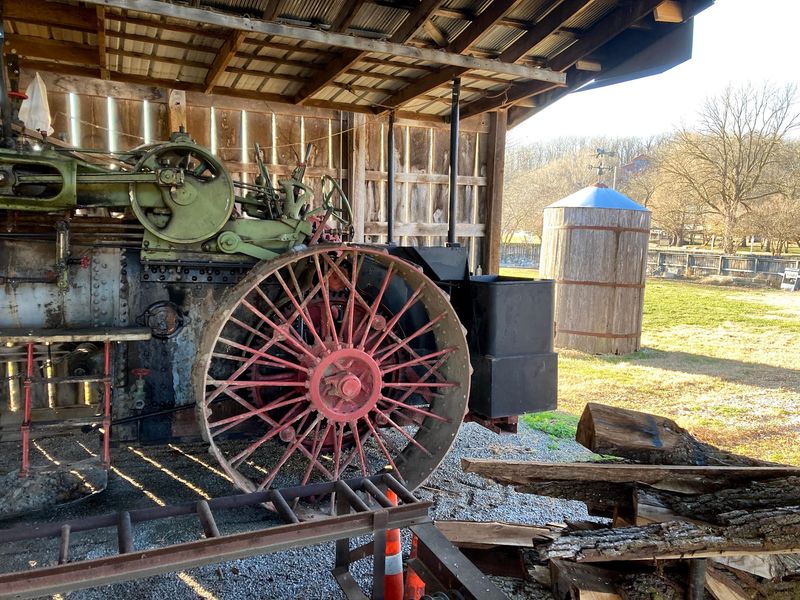
Not every old building at the park started out here. Several historic structures were moved to the grounds to help rebuild the village atmosphere.
The Chapman School is a standout. Built in 1884, it first went by the name Hazel Hill School.
In 1985, the schoolhouse was donated to the Jolly Mill Park Foundation. It was then moved to the park and restored.
Country schools like this once served rural families across the region. Comparing it with a modern classroom makes a fun conversation starter with your own kids.
Then there’s the Shepherd Sawmill, established in 1915. It adds a different flavor of history, showing how timber became lumber for homes and barns.
Put the mill, the school, and the sawmill together, and the grounds start to feel like a small village again. Each building tells a slightly different part of the story.
Take your time wandering between them. Read the markers, look closely at the woodwork, and let the kids guess what each building was used for.
That guessing game works surprisingly well. You might learn a thing or two yourself along the way.
The buildings also make great photo backdrops. Old wood and creekside greenery are a pretty easy combination to love.
Pack Your Fishing Gear Because The Trout Are Waiting
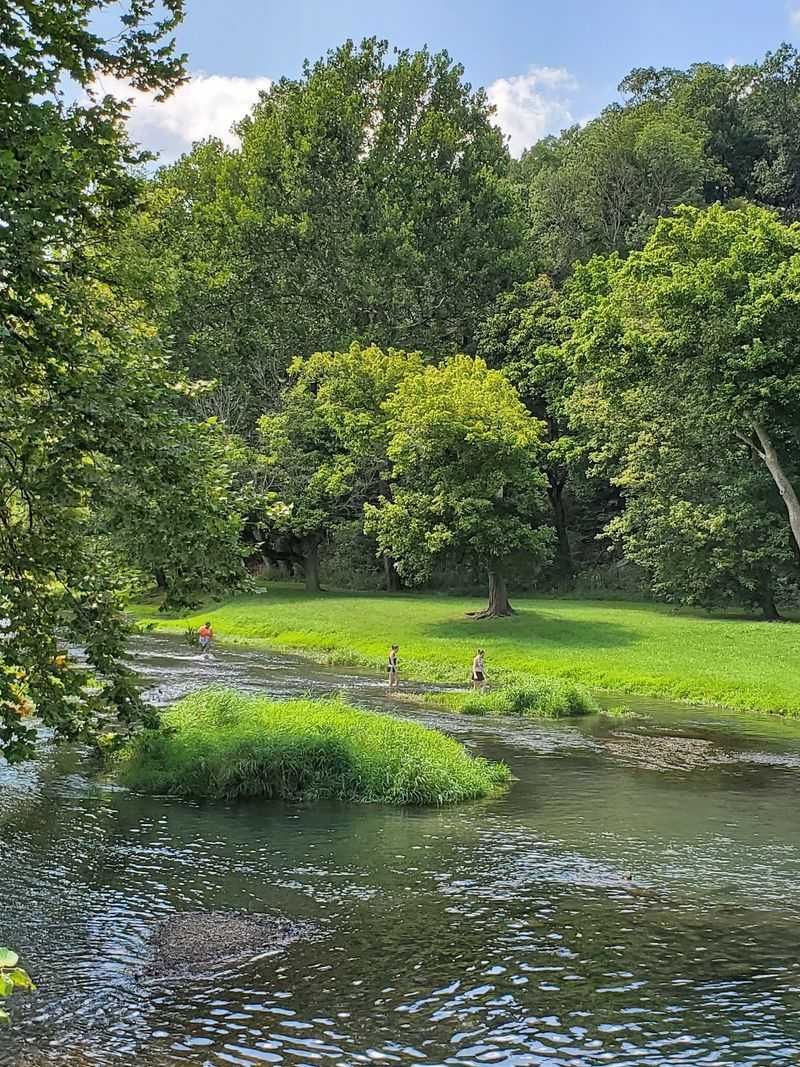
Capps Creek carries a special label from the Missouri Department of Conservation. It’s designated a White Ribbon Trout Area, which is big news for anglers.
About four miles of the stream get stocked with rainbow and brown trout from time to time. That makes the creek a popular fishing spot.
The water is spring-fed, so it stays cool and clear. Trout love that kind of water, and so will you on a warm afternoon.
Before you cast, check the current Missouri fishing rules. Trout areas often come with their own regulations, so a quick look keeps your day stress-free.
A fishing permit may also be needed depending on your age. Sorting that out ahead of time beats a scramble at the creek bank.
Fly fishing and spinning gear can both work on a stream like this. Bring the setup you’re most comfortable with and enjoy the scenery between bites.
Not every trip ends with a full stringer. Even so, standing by a clear creek beside an 1848 mill is not a bad consolation prize.
Early mornings can feel especially calm along the bank. The park opens at dawn, so early risers get first dibs on a quiet spot.
Patience helps here. So does a snack in your pocket.
Kick Off Your Shoes For Crawdads, Cool Water, And A Waterfall
Crawdad catching might be the most underrated sport in America. At Jolly Mill Park, kids and grown-ups try it from one of the bridges.
The idea is simple. Spot a crawdad near the rocks, move slowly, and try not to shriek when it scoots backward.
Wading is another favorite way to cool off. The creek is spring-fed, so expect water that feels refreshingly cold even on a hot day.
Swimming is also allowed in the creek. Keep a close eye on little ones, and wear water shoes for the slippery stones.
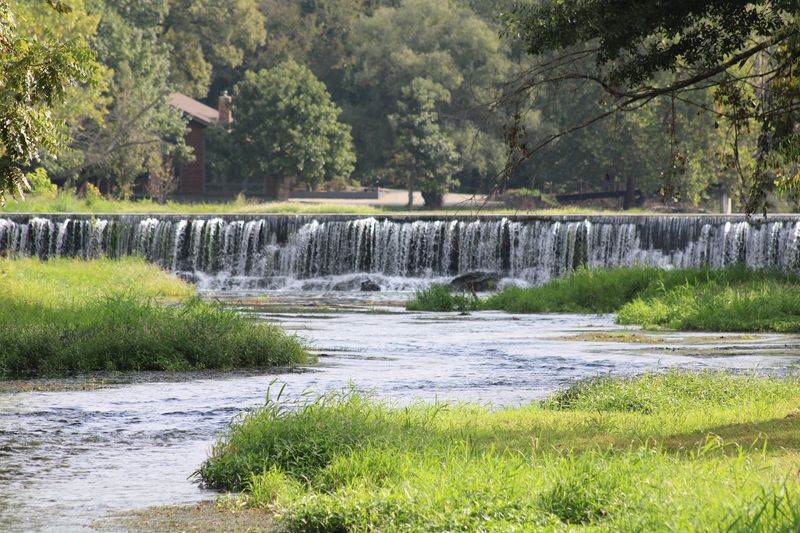
A waterfall sits near the mill and makes a lovely spot to pause. The sound alone is enough to slow your heartbeat a little.
Watch where you step on rocks and in tall grass. Snakes live along Ozark creeks, so staying alert is just good sense.
A small bucket helps with crawdad viewing. Just return each little critter to the creek before you leave.
Bring a towel and a change of clothes. Someone in your group will end up wetter than planned, and it probably won’t be the youngest.
That’s half the fun. A soggy pant leg is a small price for a great afternoon.
Volunteers Brought This Place Back When The Creek Fought Hard
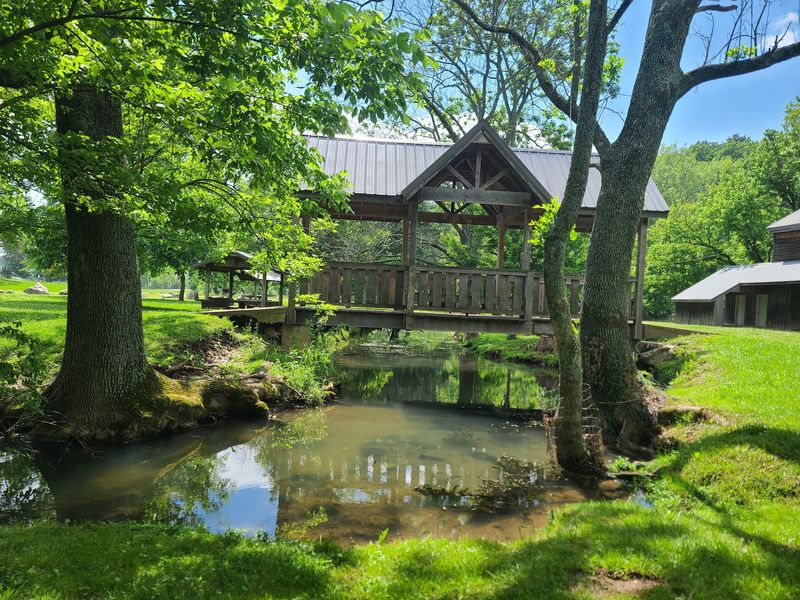
December 2015 tested this park like few things ever had. A major flood damaged the covered bridge and filled the mill with mud.
That could have been the end of the story. Instead, volunteers rolled up their sleeves and restored the historic buildings and infrastructure.
Community care runs deep here. The Friends of Jolly Mill purchased the mill back in 1983, the same year it joined the National Register of Historic Places.
That support helped finish a full restoration in 1998. The effort let water-powered grinding return to the old mill.
The Jolly Mill Park Foundation keeps things moving today. It hosts an annual history day and other public events.
When you visit, you’re seeing the results of many hands and many hours. That makes the place feel more personal than a typical park.
Knowing the backstory changes how the grounds look. Every repaired beam and tidy path suddenly carries a little more meaning.
The entry fee helps support the grounds. Think of it as a small thank-you to the folks who keep the mill turning.
History survives when people decide it matters. At this little park, plenty of people clearly decided just that.
Know These Simple Tips Before You Pull Into The Lot
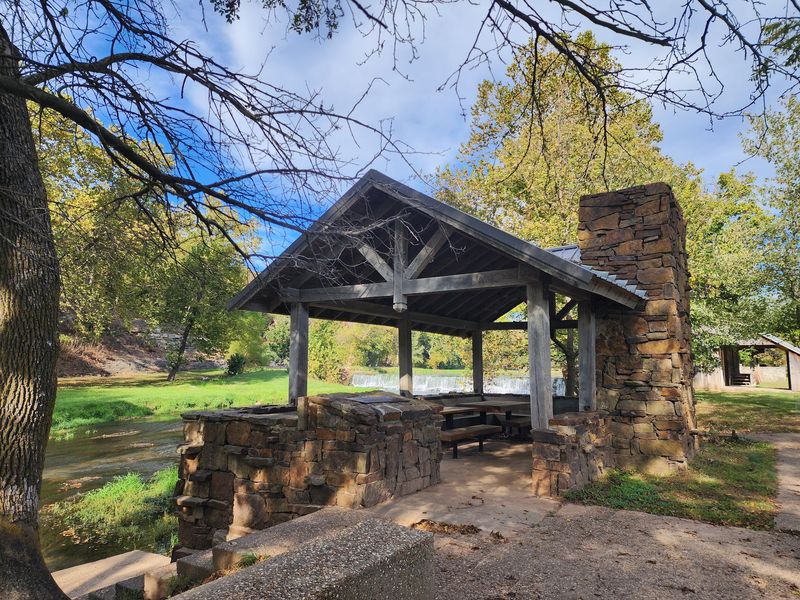
Finding the park is easy once you set your GPS. Jolly Mill Park sits at 31630 Jolly Mill Dr, Pierce City, MO 65723, southwest of town.
The grounds stay open year-round from dawn until dusk. That gives you plenty of daylight for fishing, wandering, and a long, lazy lunch.
Expect a small per-car entrance fee. Bring cash just in case, since finding an ATM out in the countryside can be tricky.
Leave pets at home for this trip. Dogs and other pets aren’t allowed in the park, so plan ahead.
Wear sturdy shoes for trails, bridges, and rocky creek banks. Sunscreen and bug spray are smart additions in warmer months.
Weddings and private events are held here, too. The mill and creek make a scenic backdrop, so check ahead if you’re hoping for quiet.
Pack snacks and water before leaving town. Services can be limited once country roads take over.
Try to time your visit with a first-Saturday grinding demo between April and October. The 1 p.m. show turns a pretty outing into a memorable one.
After that, there’s no reason to hurry home. Southwest Missouri doesn’t get much more relaxing than this.
