A road trip for bread sounds excessive right up until the bakery smell hits, and then suddenly the mileage feels completely reasonable.
Texas has Mennonite-run markets and country stops where fresh baked goods, bulk foods, preserves, produce, deli staples, and handmade items can make an ordinary grocery run feel pleasantly old-school.
The appeal is not flashy entertainment or a carefully staged tourist experience; it is the chance to browse practical, family-run places where simple products and familiar recipes do most of the talking.
That can mean leaving with bread you did not plan to buy, pie you definitely did not need, and enough pantry goods to justify the drive after the fact.
For Texas travelers who enjoy low-key stops with good food and very little fuss, these places offer a refreshingly different kind of day trip.
The 1855 Limestone Mansion Built by Abner Cook
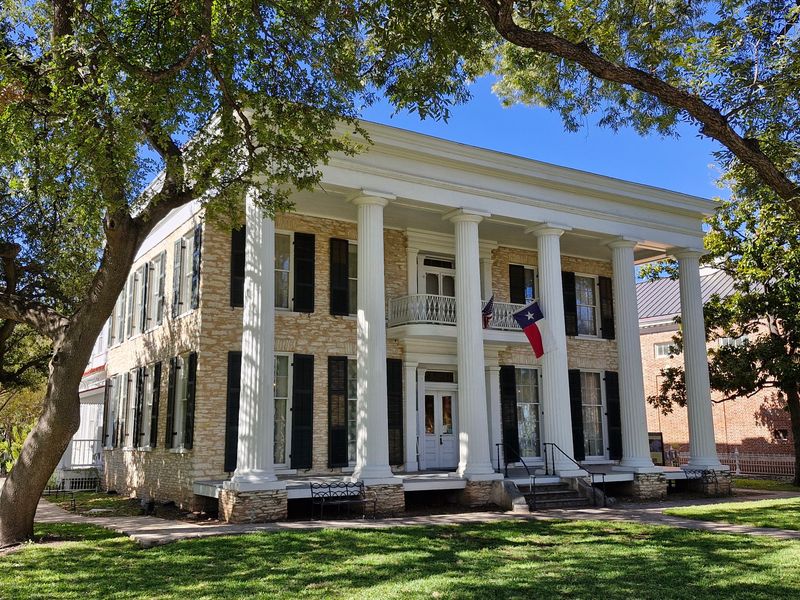
Master builder Abner Cook left his fingerprints all over early Austin, and this house is one of his finest survivors. He is the same craftsman who built the Texas Governor’s Mansion, so the family resemblance between the two buildings is easy to spot once someone points it out.
The mansion rises two stories in limestone rubble, with a massive porch ceiling held up by wooden Doric columns that stretch about 26 feet tall. Cook also added his signature touch, the sheaf of wheat balusters, a pattern he used on several Austin landmarks.
Getting the materials here in the 1850s was no small job. Lumber traveled by barge up the Colorado River, a reminder that Austin was still a rough frontier town when workers first set these stones in place.
Money problems shaped the design too. Plans for the dining room were scaled back partway through construction, and sharp-eyed visitors can still see windows that barely fit inside their walls.
Photographers tend to love the front elevation in late afternoon, when the columns cast long shadows across the porch. Standing back near the sidewalk gives the best full view of the facade.
Before heading inside, take a slow lap around the outside of the building. Details like the stonework joints, the shuttered windows, and the deep shaded porch explain why Greek Revival architecture caught on across the American South and West during the mid-1800s.
Few structures in the city can claim this much original fabric still standing.
Walnut Furniture the Neill Family Brought Home in 1876
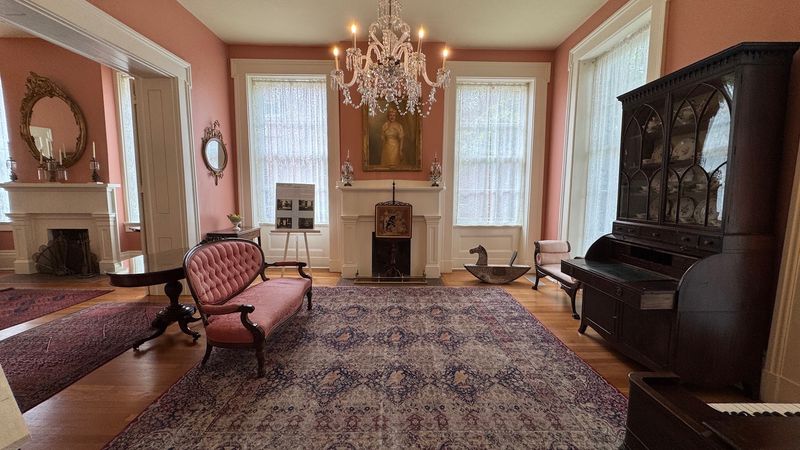
Picture a couple returning from the 1876 Centennial Exposition in Philadelphia, heads full of the newest fashions, then furnishing an Austin house to match. That is roughly how Colonel Andrew Neill and his wife Jennie Chapman Neill set the tone for this home after buying it in 1876.
Their purchase included an impressive suite of walnut furniture, and it gave the interiors a polished Victorian look that still defines several rooms today. Dark wood, carved details, and heavy proportions were the height of taste in that decade.
Andrew Neill was an attorney and a Confederate veteran, and he built a large personal library inside the house. The room drew influential men of his era who came to talk law and politics.
The Neills also became known for hosting large gatherings, which suited a house with wide parlors and a deep front porch built for warm Texas evenings.
Jennie stayed in the residence after her husband died, remaining until 1893. That single detail helps explain why the collection spans decades rather than one narrow moment.
Guides often use the walnut pieces to show how quickly furniture styles traveled from East Coast showrooms to Texas homes. Railroads and river shipping made national trends available faster than most people assume.
Look closely at joinery, carved crests, and original surfaces. Those small clues separate genuine period furniture from later reproductions and make the rooms far more interesting.
Sixty-Five Years of Cochran Family Life
Very few American houses stay with one family for more than six decades, yet that is exactly what happened here. Judge Thomas Beauford Cochran and his wife Elizabeth, called Bessie, first rented the mansion from Jennie Neill in 1893 when Thomas accepted a federal bench appointment.
They arrived with three young children, along with Thomas’s mother and Bessie’s father, filling the large rooms quickly. In 1895 the family bought the property outright.
What followed was 65 years of continuous occupancy across four generations. Births, weddings, and funerals all happened within these walls.
The family also lived through enormous outside events while in residence, including World War I, the Spanish Flu pandemic, the Great Depression, and World War II. Their choices about the house reflect all of it.
They expanded and modernized as decades passed, adding conveniences that Victorian builders never imagined. Plumbing, wiring, and additional rooms arrived over time, which is why the museum interprets the site through 1930 rather than freezing it in 1855.
Most of the furnishings and decorative objects on the second floor belonged to the Cochrans. Three preserved bedrooms are open for viewing: the Cochran Bedroom, the Cochran Girls’ Bedroom, and the 1855 Bedroom.
Take time upstairs instead of rushing. Personal items such as fans, handbags, portraits, and miniature paintings turn a grand house into a record of ordinary daily life stretching across generations.
An 1885 Renaissance Revival Dresser With a Marble Drop-Well Top
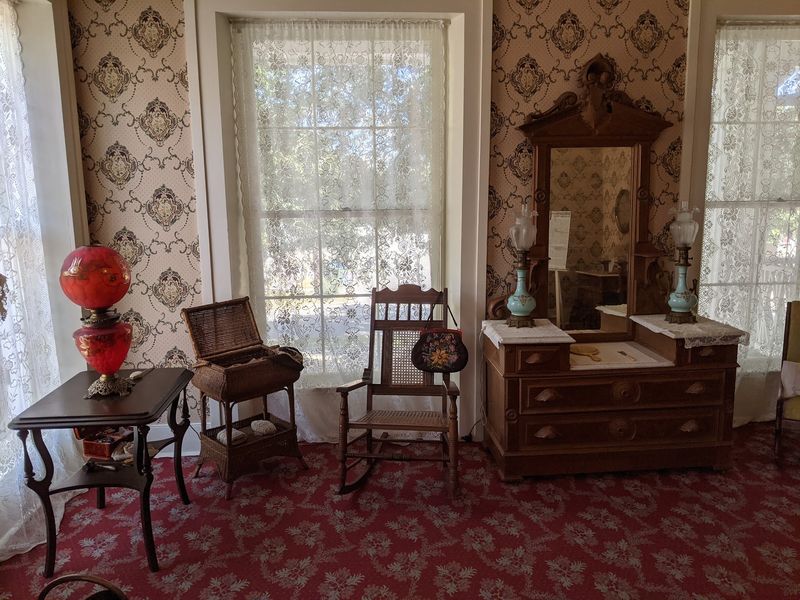
Furniture nerds tend to stop cold in front of this piece, and for good reason. Dating to about 1885, the walnut dresser is a textbook example of Renaissance Revival style, a look that borrowed grandeur from European palaces and shrank it to fit American bedrooms.
The tall superstructure rises with a pediment across the top, decorated with an applied cartouche and bosses that support the mirror. Everything about it says the owners wanted visitors to notice.
Its top uses a white marble drop-well design, meaning the center section sits slightly lower than the sides. That dip was practical, giving space for a wash basin or grooming items without knocking them over.
Square candle shelves flank each side, a helpful feature in years before electric lighting reached every room. Drawers carry carved medallions and wooden pulls rather than metal hardware.
The dresser is not a lone survivor either. It belongs to a matching suite that includes a bed and a washstand, all part of the Cochran Collection.
Matching bedroom sets became a status symbol in the late 1800s, since buying a complete suite cost far more than assembling mismatched pieces over time.
Ask a docent about the marble and the mirror mounting if the chance comes up. Small construction details reveal how furniture makers of the period balanced showy decoration with everyday usefulness inside a working family home.
A Convertible High Chair From Around 1885
Clever design is not a modern invention, and one small piece of furniture here proves it. The high chair dating from roughly 1885 to 1890 is built in the Eastlake style, with straight lines and shallow carving instead of heavy curves.
It has a caned seat and small metal wheels, which made moving a fussy child around the room much easier for adults.
The real trick is in the legs. They pivot, allowing the tall high chair to fold down and convert into a low rocking chair with proper rails.
Two pieces of furniture for the price and floor space of one made excellent sense in a busy household with several children. Families of the era valued items that could change jobs as kids grew.
Museum records suggest the chair was likely used in the Cochran family kitchen, probably after an addition was built around 1900. That places it right in the middle of ordinary family routines rather than in a formal show room.
Kids visiting the museum often connect with it faster than the fancy parlor furniture, since a high chair is something they immediately understand.
Charles Eastlake, whose ideas inspired the style, argued that honest construction beat fussy decoration. Looking at this chair, that philosophy makes perfect sense.
Small everyday objects like it often teach more about the past than the grandest showpiece in the building.
Parlor Treasures: Marble Turtle-Top Tables and Carved Benches
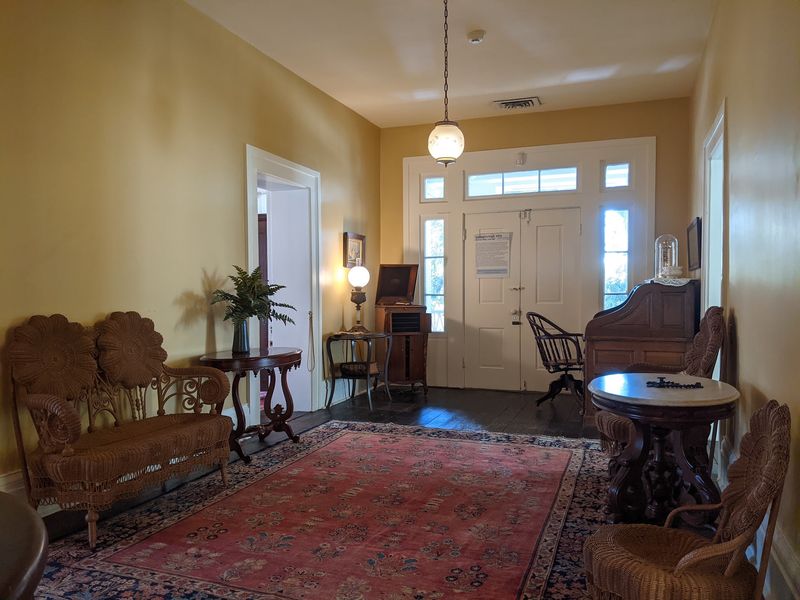
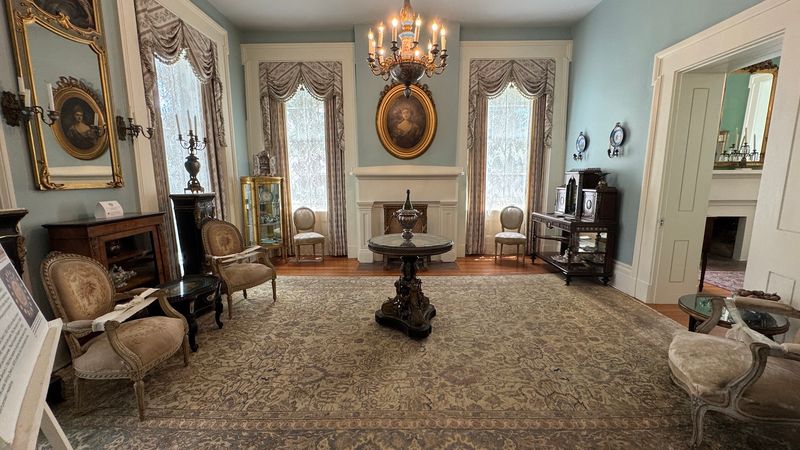
The parlors are where 1890s households showed off, and the surviving furniture makes that obvious. A late 19th century Victorian Rococo Revival center table anchors the room, built from mahogany with a frame heavily carved in elaborate floral sprays and cartouches.
Its white marble surface curves into what collectors call a turtle-top, named for the rounded shape. Tables like it usually held oil or kerosene lamps, making them the brightest spot in a room after dark.
Nearby sits a window bench from around 1890, an Empire style mahogany piece with swept arms carved into a cornucopia of fruit. Benches like that gave guests a place to perch near natural light.
Other late 1800s items fill in the picture, including a side chair, a fire screen in the front parlor, and a mirror in the back parlor. Shield back chairs from about 1880 round out the front room.
Fire screens were more useful than decorative. They shielded faces and delicate fabrics from the heat of an open fireplace.
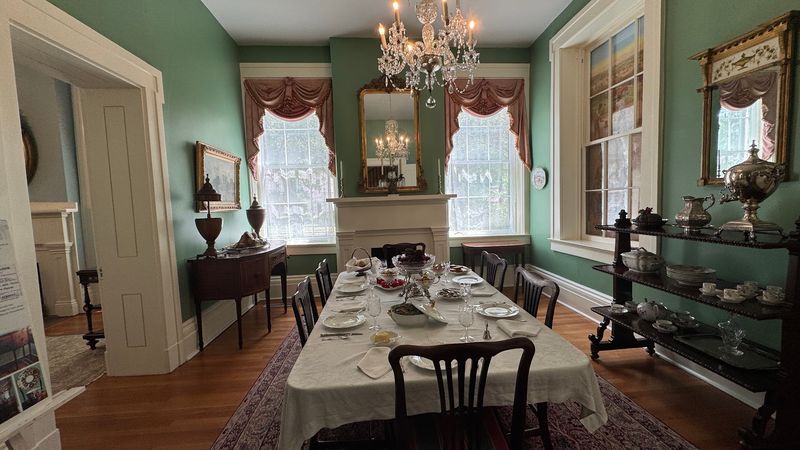
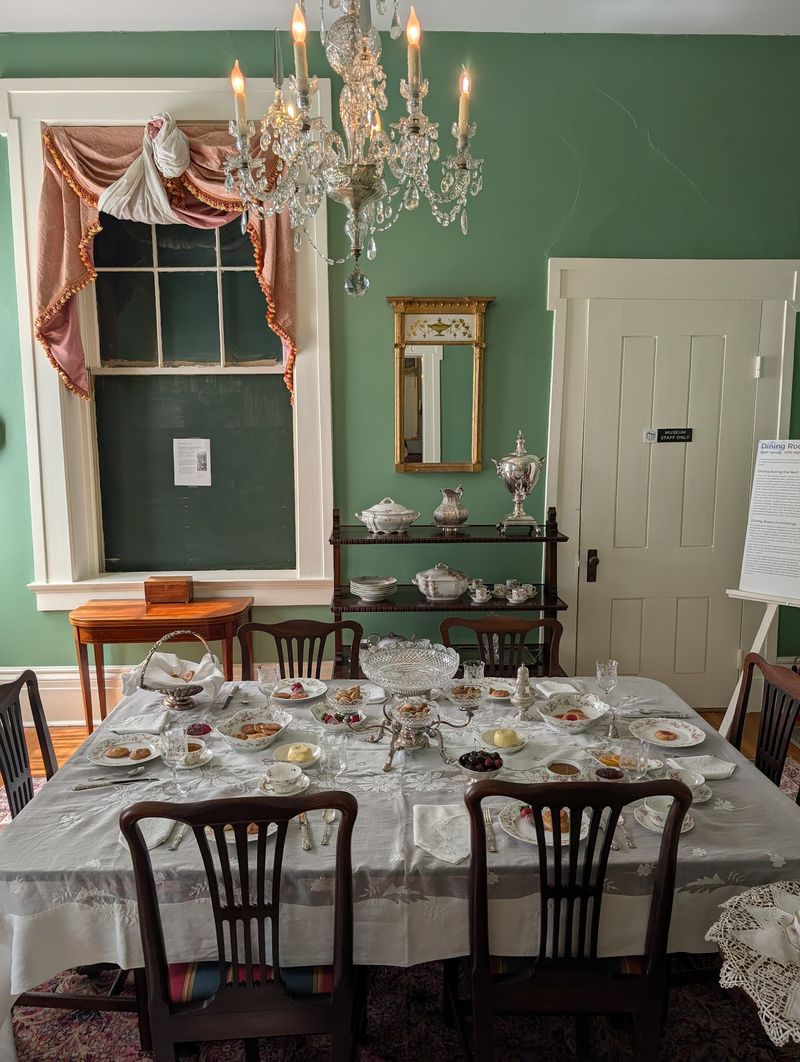
The dining room continues the story with 19th century mahogany knife boxes shaped like classical urns and a Sheffield silver coffee urn. Both were standard equipment for entertaining in that era.
Spend a few extra minutes here comparing carving styles across pieces. Each one signals a slightly different decade of taste, layered together the way real families actually furnished their homes.
Austin’s Only Intact Slave Quarters, Restored and Interpreted
Standing behind the mansion is a two-story building that carries some of the most important history on the property. It is the only intact and accessible slave dwelling still remaining within Austin’s original townsite.
Constructed at the same time as the main house, it likely housed the laborers who built the mansion itself. That connection ties the grand columns out front directly to the people whose work made them possible.
The building served as living and working space for enslaved people during the Hill family’s ownership, and again while the property housed the Texas Institute for the Blind.
Its use did not end with Emancipation in June 1865. The structure continued as living space for free laborers well into the 20th century, and Lillie Kelley, who worked for the Cochrans, lived there as late as 1940.
Between 2022 and 2024, the museum completed a 24-month restoration project to return the building to its antebellum appearance. The work also allowed staff to fully interpret its function and the complicated influence of slavery on Austin’s growth.
Visiting this outbuilding changes how the main house reads. Grand architecture and forced labor existed side by side on the same small lot.
Allow real time here rather than treating it as a quick stop. The interpretation offers context that is difficult to find anywhere else in the city.
Planning a Visit: Tours, Exhibitions, and the Teaching Garden
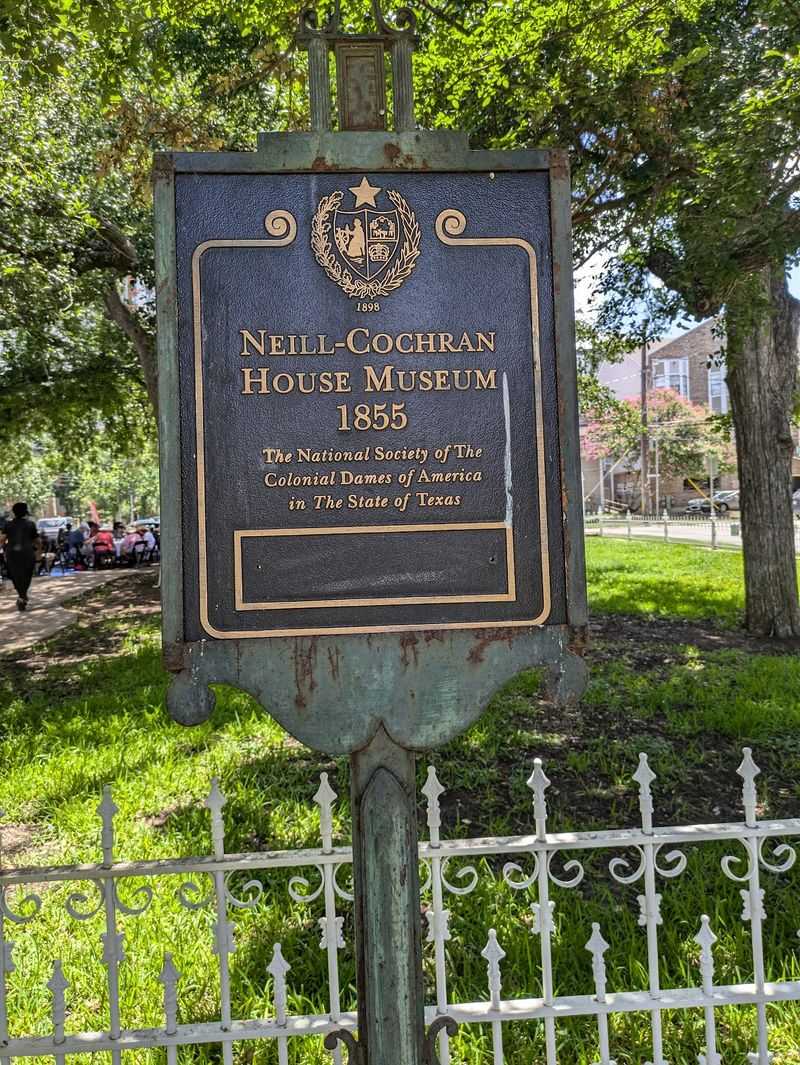
Getting the most out of this site takes a little planning, and the options are flexible. Both self-guided and docent-led tours are available, so visitors can move at their own pace or follow a guide who fills in details about the collection.
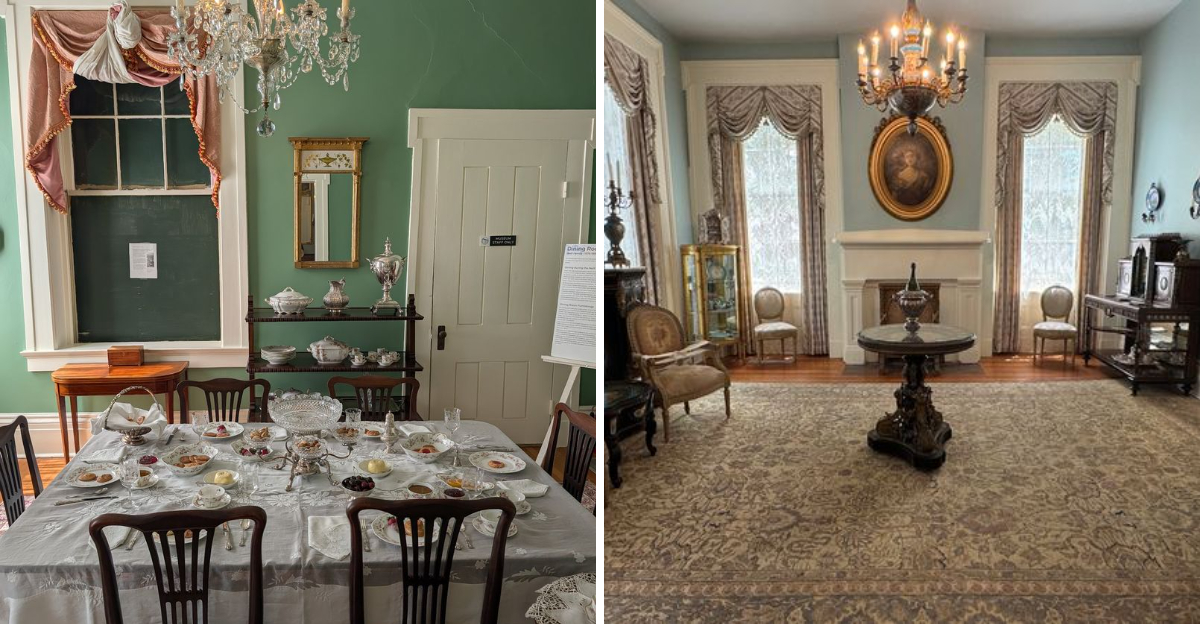
The main house tour covers historically furnished rooms including the 19th century French parlor, the dining room, and three preserved bedrooms.
Rotating art and history exhibitions appear alongside the permanent collection. Those shows explore Austin, Texas, and broader American history from angles that change throughout the year, which gives repeat visitors something new to see.
Smaller collection items reward careful looking. Fans, handbags, portraits, and miniature paintings are displayed in ways that reveal personal taste and family memory.
Outside, a historic teaching garden grows herbs, vegetables, and ornamental plants associated with the property. It shows how households once produced food and medicine steps from the kitchen door.
The overall story spans 1855 through the early 20th century, tracing cultural, economic, and architectural change in a growing capital city. Collections reflect that same range rather than a single decade.
Check current hours and tour times before heading over, since a historic house museum operates on a smaller schedule than large institutions. Comfortable shoes help, and the location near the University of Texas campus makes it easy to combine with other stops.
Address: 2310 San Gabriel St, Austin, TX
