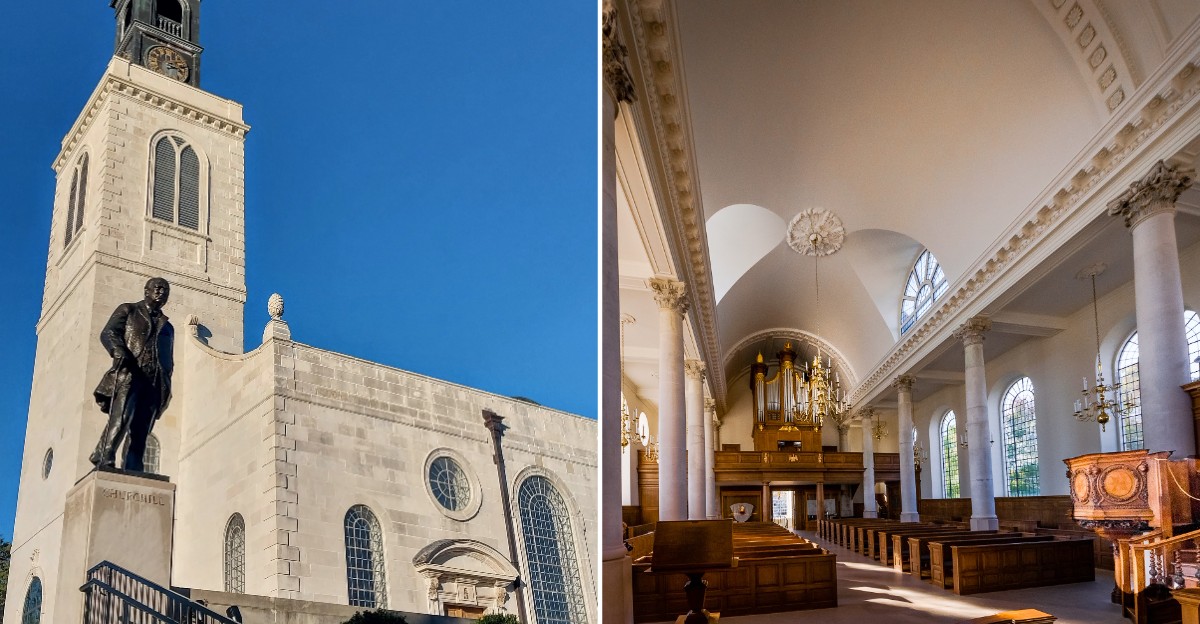
Workers spent an entire day hunting for just two stones. That was step one of rebuilding a 17th-century London church in the middle of Missouri.
The stones had been carefully numbered before they crossed the Atlantic. Then they showed up in total disarray.
A London newspaper called it perhaps the biggest jigsaw puzzle in the history of architecture.
I’ll admit, that surprised me. Numbering 7,000 stones sounds like the hard part.
Apparently, keeping them in order was harder.
What stands out to me is how far this building traveled, and how many times it got a second chance. It survived a famous fire, a bombing raid, and an ocean crossing.
Getting those stones across the Atlantic was only half the challenge; turning the scrambled shipment back into a London landmark took some remarkable detective work.
The Jigsaw Puzzle Nobody Asked For
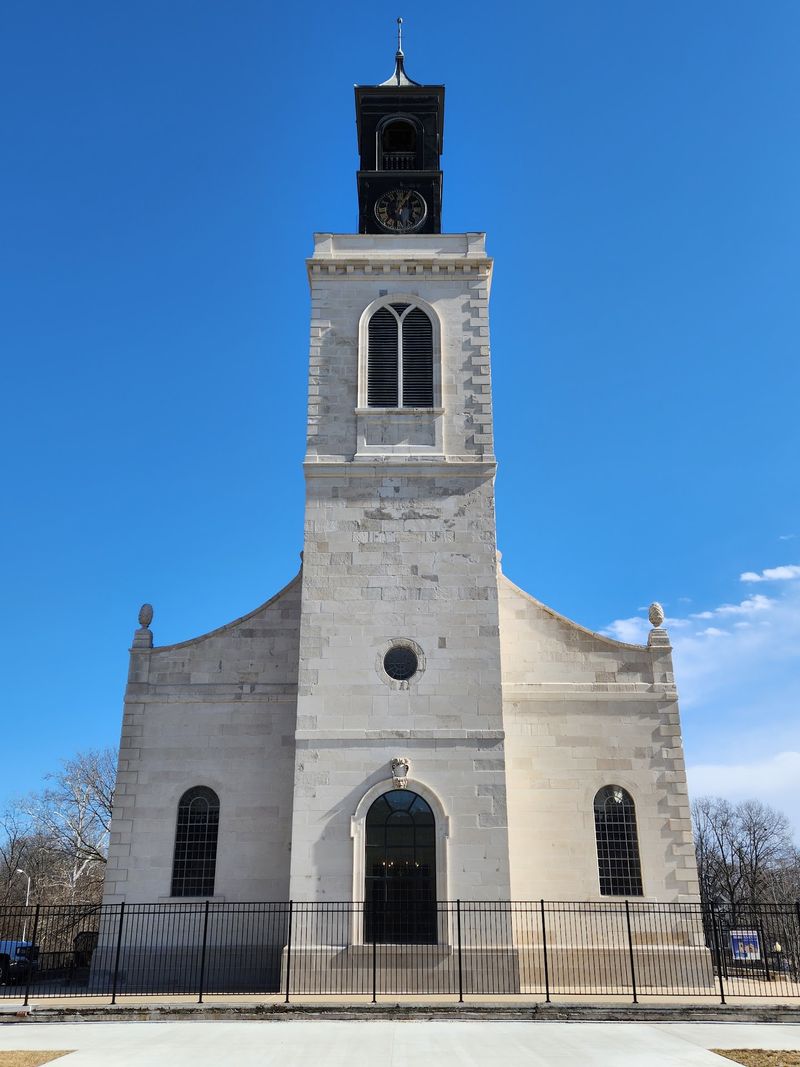
Seven thousand stones arrived in Fulton, and almost none of them were where anyone expected. The Church of St. Mary the Virgin, Aldermanbury, had been taken apart in London with real care.
Every stone was cleaned and numbered before shipping. That system should have made rebuilding simple, like following a very heavy instruction manual.
Instead, the pieces landed in what was described as total disarray. The London Times called the project perhaps the biggest jigsaw puzzle in the history of architecture.
Workers spent a whole day just finding the first two stones. Think about that for a second.
Two stones, one day, and thousands more waiting.
Chief mason Eris Lytle had to learn Renaissance craft techniques to pull it off. Modern building tricks didn’t fit a design from the 1600s.
The crew stayed faithful to the original plan and dimensions. That meant every arch and wall had to match what stood in London centuries earlier.
I like that the mess became part of the legend. Today the church looks calm and orderly, giving no hint of the chaos behind it.
Seriously, the next time you lose a puzzle piece under the couch, remember this crew. They had it far worse and still finished the job.
Its Story Starts Way Back In 1181
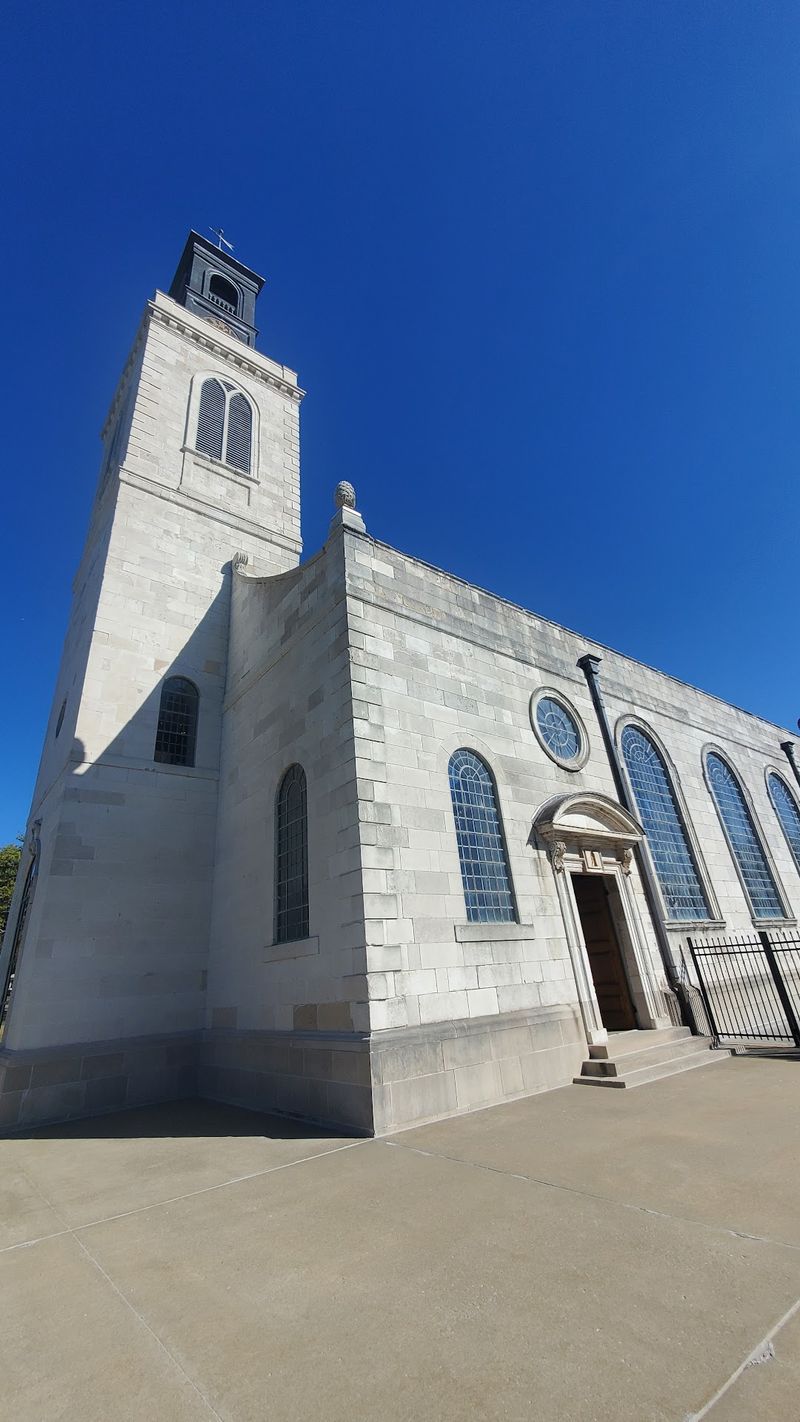
London first mentioned this church in 1181. That’s more than eight centuries ago, long before anyone dreamed of Missouri.
The medieval building had a long run in the heart of the city. Then the Great Fire of London swept through in 1666 and destroyed it.
Plenty of buildings never came back from that blaze. This one did, thanks to one of the most famous architects in English history.
The church collected some impressive neighbors over the years. William Shakespeare lived nearby in London.
The second wife of poet John Milton was a member of the congregation. That’s a lot of literary star power for one parish.
Here’s another fun connection. The Robinett Family Association gathers at Westminster College every two years to remember a wedding held at the church in 1653.
That family line includes Joseph Robinette Biden. So a London wedding from the 1600s still draws people to a Missouri campus today.
I find that kind of thread really fun to follow. One building ties together Shakespeare’s neighborhood, Milton’s family, and a modern American family reunion.
Not many churches can claim a guest list like that. Fewer still could claim it on two different continents.
Sir Christopher Wren Drew Up The Comeback
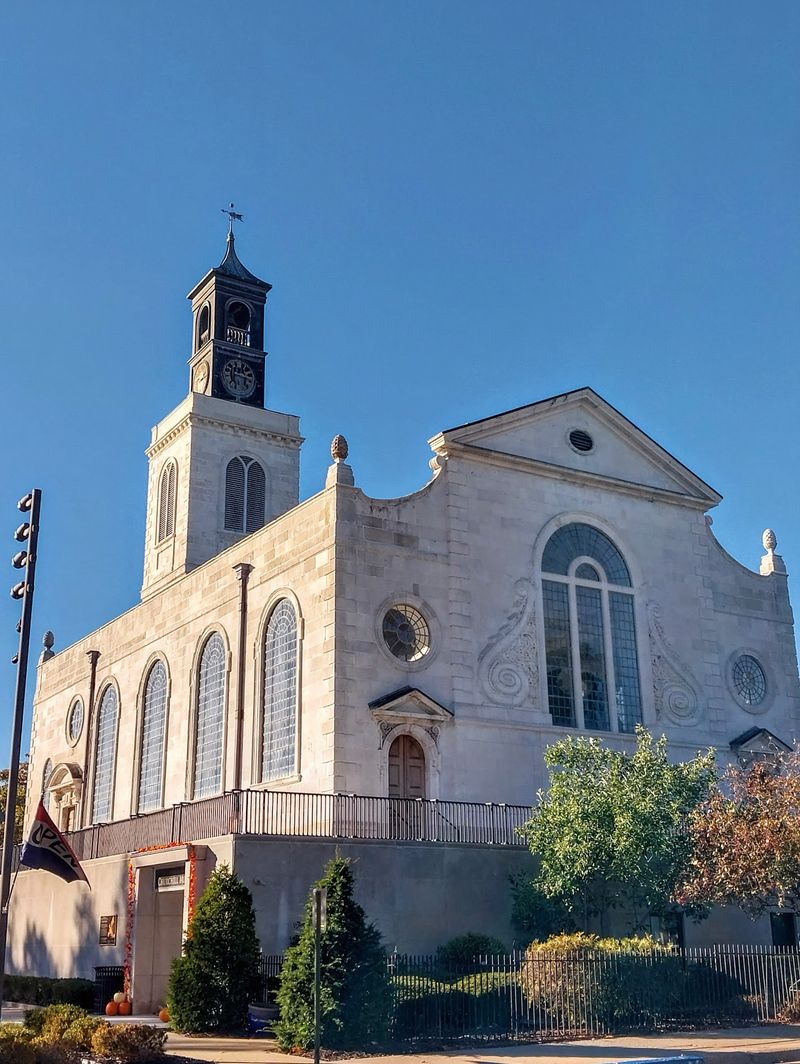
After the Great Fire, Sir Christopher Wren got to work. He rebuilt the church, and the job wrapped up in 1677.
Wren is the architect behind St. Paul’s Cathedral in London. He also rebuilt dozens of city churches after the fire, so this one has serious design credentials.
His version stood proudly for nearly 300 years. Generations of Londoners walked past it without guessing it would someday live in the Midwest.
The Missouri rebuild followed Wren’s 1677 design and dimensions. Builders didn’t take shortcuts or modernize the look.
That means you see the church much as Wren intended it. The proportions, the tower, and the overall shape all trace back to his plans.
I can’t imagine the pressure of copying a master like that. One wrong measurement and you’ve edited a famous architect’s work.
Okay, that’s impressive. A design from the 1670s now stands on a college campus in Fulton.
For architecture fans, this is a rare treat. You don’t have to cross an ocean to see a genuine Wren church up close.
Just cross a parking lot. Much easier on the budget.
The Blitz Left Only A Shell Behind
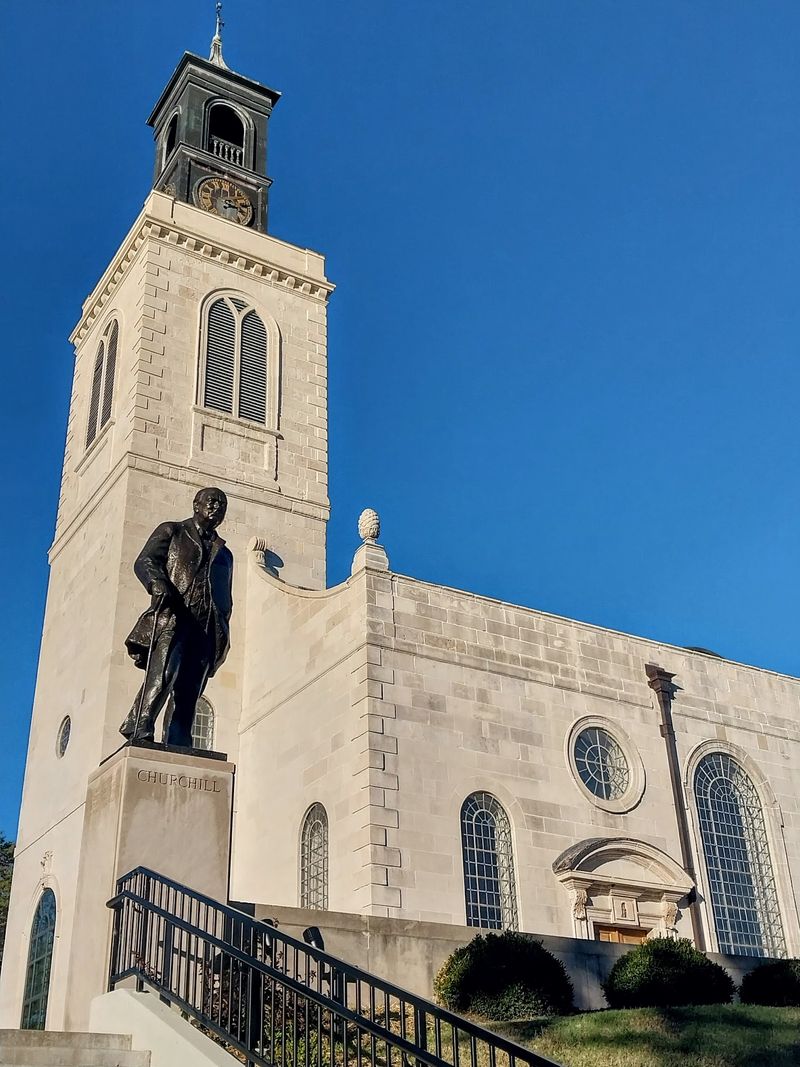
December 29, 1940, changed everything for this church. A bombing raid during the London Blitz left it badly damaged.
Only the outer walls, eight columns, and the bell tower survived. The roof and interior were gone.
For years, the ruins just stood there. Eventually, the British government planned to demolish what was left.
That could have been the end. Plenty of damaged buildings in London quietly disappeared after the bombing.
But a college president in Missouri heard about the plan. He had a very different idea for those battered stones.
I find this part of the story moving. A building that seemed finished got rescued by people thousands of miles away.
The surviving walls carried centuries of history. Saving them meant keeping a piece of Wren’s work and London’s past alive.
Well, that changes things. Instead of a pile of rubble, those stones became the heart of a new memorial.
When you stand inside today, you’re surrounded by stone that lived through fire and bombing. That gives the quiet space extra weight.
It’s hard not to respect a building that stubborn. Some structures just refuse to give up.
A Churchill Speech Sparked The Whole Move
Winston Churchill came to Westminster College in 1946. He gave his famous Iron Curtain speech right there in Fulton, Missouri.
Years later, in 1961, college president Dr. Robert L. D.
Davidson wanted a lasting memorial to that moment. He learned the bombed London church faced demolition.
Davidson saw the perfect match. An English church saved from wartime ruin could honor an English leader’s historic visit.
He launched a fundraising campaign and raised about 1.5 million dollars. British authorities also had to sign off before anything could move.
Churchill himself gave the project his blessing in the early 1960s. Sadly, he didn’t get to see the finished church.
I like how one speech led to such a bold idea. Most memorials are plaques or statues, not entire relocated churches.
The historic gymnasium where Churchill spoke is still part of the museum complex. You can connect the speech and the church in a single visit.
That link makes the trip feel complete. You see where the words were spoken and the remarkable building they inspired.
Not bad for one afternoon on a small college campus.
Stones Crossed The Ocean As Ship Ballast
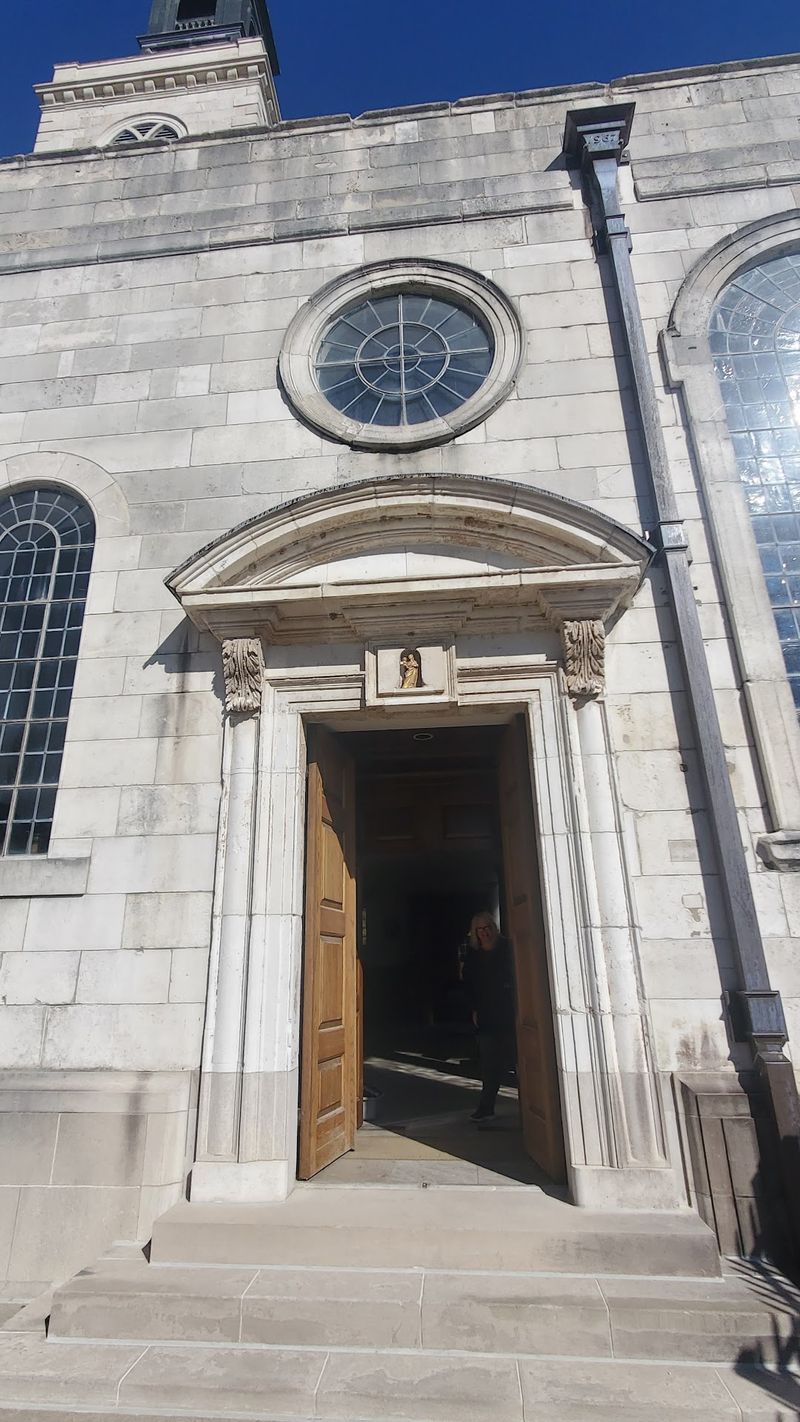
Shipping a church sounds complicated, and it was. In 1965, the stones sailed across the Atlantic as ballast on a ship bound for Virginia.
Ballast is weight that helps keep a ship steady. So the church literally helped balance the boat that carried it.
That’s a clever two-for-one deal. The stones got a ride while doing a job.
From Virginia, the cargo continued by railroad car. The trains carried everything west to Fulton.
Somewhere along this long journey, the careful numbering system fell apart. Nobody arriving in Missouri found neat, ordered stacks.
I’m curious how that happened, honestly. Between ships, ports, and trains, there were plenty of chances for things to get shuffled.
The trip covered thousands of miles of sea and land. Each stone made that whole journey before ever being set back in place.
Yep, the church has more travel miles than most people. It went from London to the Virginia coast to the middle of Missouri.
When you touch the walls today, remember the route. Those blocks have seen an ocean, a railroad, and a very confused construction crew.
White Walls And A Barrel-Vault Ceiling Steal The Show
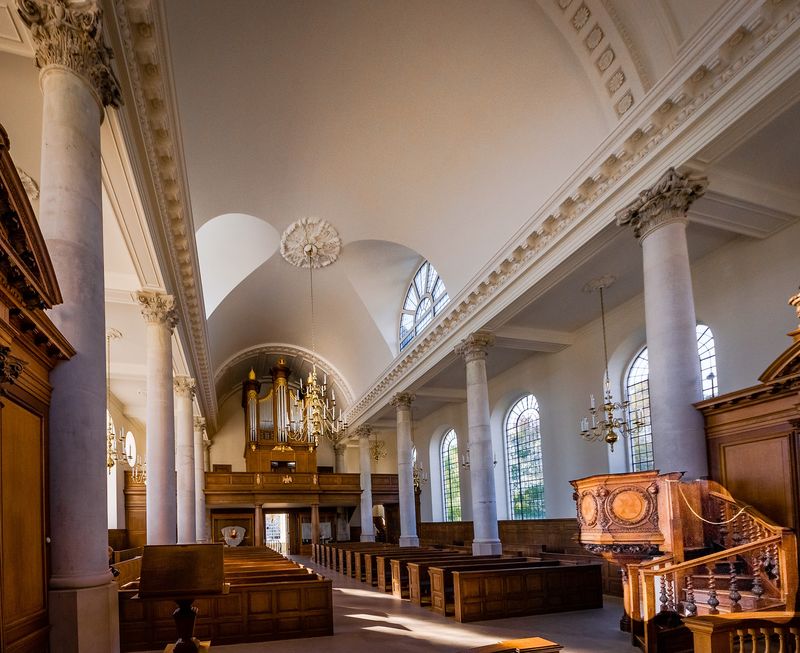
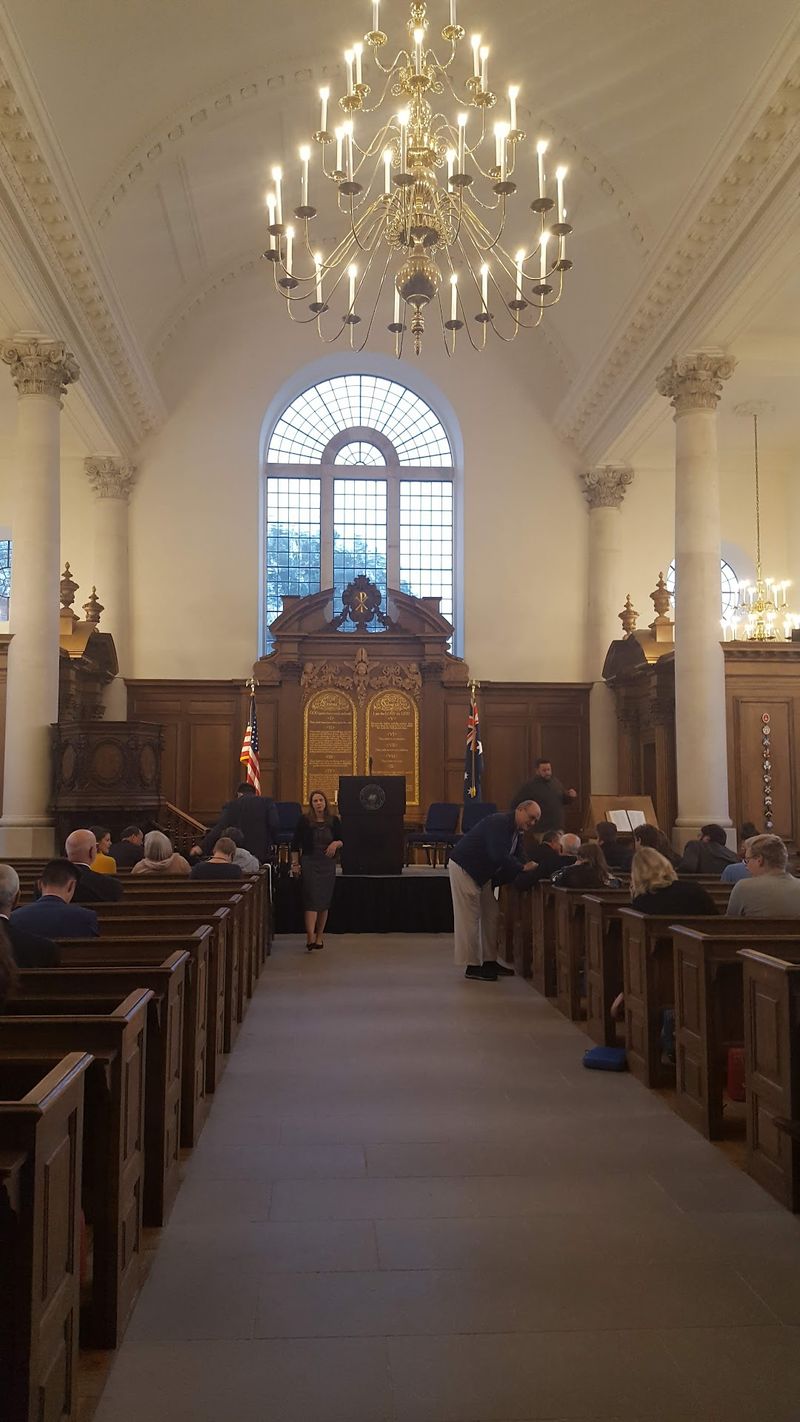
Simple grace is the best way to describe the inside. White walls, stately columns, and a graceful barrel-vault ceiling fill the room with calm.
Natural light pours through plain glass windows. The windows are replacements made with clear, hand-blown glass manufactured by the Blenko Glass Company.
Look closely at the columns. Seven of the capitals are original, while five replacements came from the same quarry Wren used in the 1600s.
That’s a thoughtful detail. Even the new stone shares the old stone’s roots.
Wood carving plays a big role here. The carvings above the vestry doors came from another Wren church in London and follow the style of Grinling Gibbons.
The altar table dates to 1983 and copies the Wren-era style. A black and white marble floor adds crisp contrast.
Near the altar, the Ten Commandments are on display. Up in the choir loft sits a large pipe organ.
What stands out to me is the restraint. Nothing feels flashy, yet every piece seems chosen with care.
Take your time in here. The quiet details reward anyone who slows down and looks up.
Thousands Showed Up When The Doors Reopened
Rebuilding took most of the 1960s. The foundation stone was laid in October 1966, and the last exterior stone was placed in May 1967.
Then crews spent two more years recreating the interior. Matching Wren’s look inside took just as much patience as the walls.
On May 7, 1969, the church was officially rededicated. About 10,000 people attended the ceremony.
That’s a huge crowd for a small Missouri town. Clearly, folks understood they were seeing something special.
The church opened alongside the Winston Churchill Memorial and Library. It was re-hallowed as a place of worship that same year.
Fair warning, the honors kept coming. In 1992, it became the official chapel of the Eagle Squadrons Association.
Those squadrons were American pilots who flew with Britain’s Royal Air Force before the United States formally joined in. The link fits the church’s transatlantic story nicely.
I can understand why the opening drew so many. After years of puzzling over stones, the finished church must have felt like a celebration.
And the church still hosts special moments today. It’s even a lovely setting for weddings.
A Museum Hides Right Under Your Feet
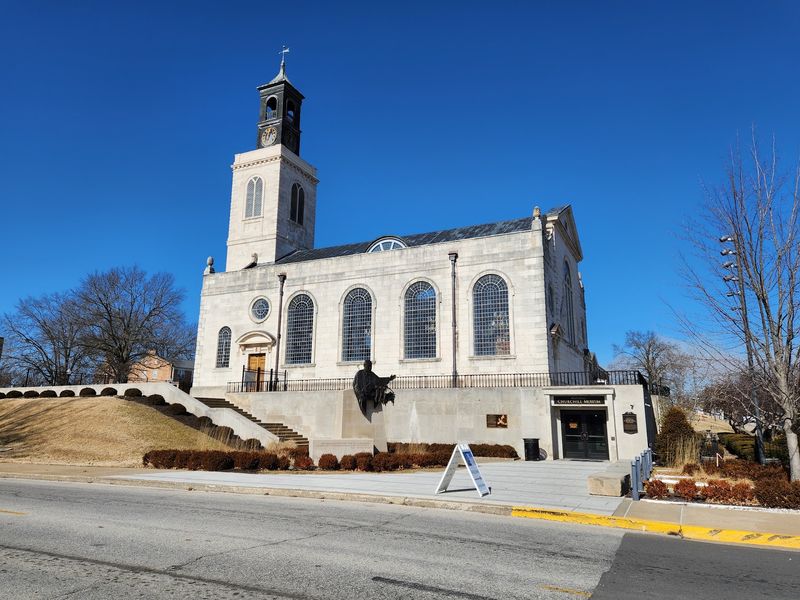
Head downstairs, and the visit keeps going. America’s National Churchill Museum sits directly beneath the church.
Its interactive exhibits cover Churchill’s life and the Cold War era. It’s a smart pairing with the building overhead.
You’ll find everything at 501 Westminster Avenue in Fulton, on the Westminster College campus. The setting is easy to explore on foot.
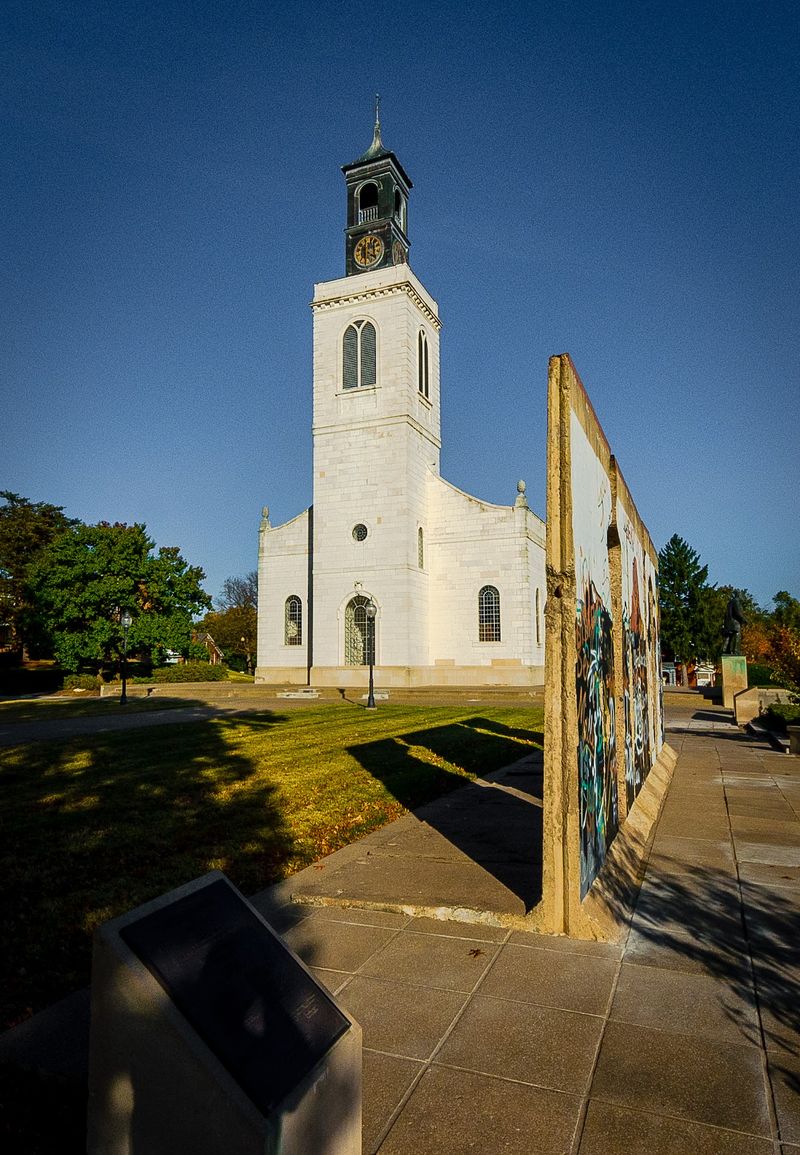
Right next to the church stands Breakthrough, a sculpture made from eight sections of the original Berlin Wall. Edwina Sandys, Churchill’s granddaughter, created it.
That’s worth a second look. A London church and pieces of the Berlin Wall share the same Missouri lawn.
The museum complex also includes the historic gymnasium where Churchill gave his Iron Curtain speech. So the whole story sits within a short walk.
Plan enough time to see it all. Rushing through would mean missing the connections between each stop.
Touring the museum and church involves an admission fee. Check hours before you go so the day runs smoothly.
I believe this is one of Missouri’s most surprising history stops. Where else can you stand inside a Wren church, then walk downstairs into Churchill’s world?
