Some trails are about the view at the end. This one is about what you pass along the way.
A Maryland path winds through the ruins of a 19th century flour mill and the remains of a forgotten river town. Stone walls stand where buildings once did, and the quiet feels heavier knowing what used to be here.
You can walk at your own pace, imagining the industry and daily life that once filled these spaces. The trail itself is gentle, easy to follow, and suitable for most skill levels.
Locals know the history well, while visitors often leave surprised they had never heard of it. A reminder that some of the best hikes come with a story attached.
The kind of walk that makes you think about what came before.
A Paved Path Between River and Rails
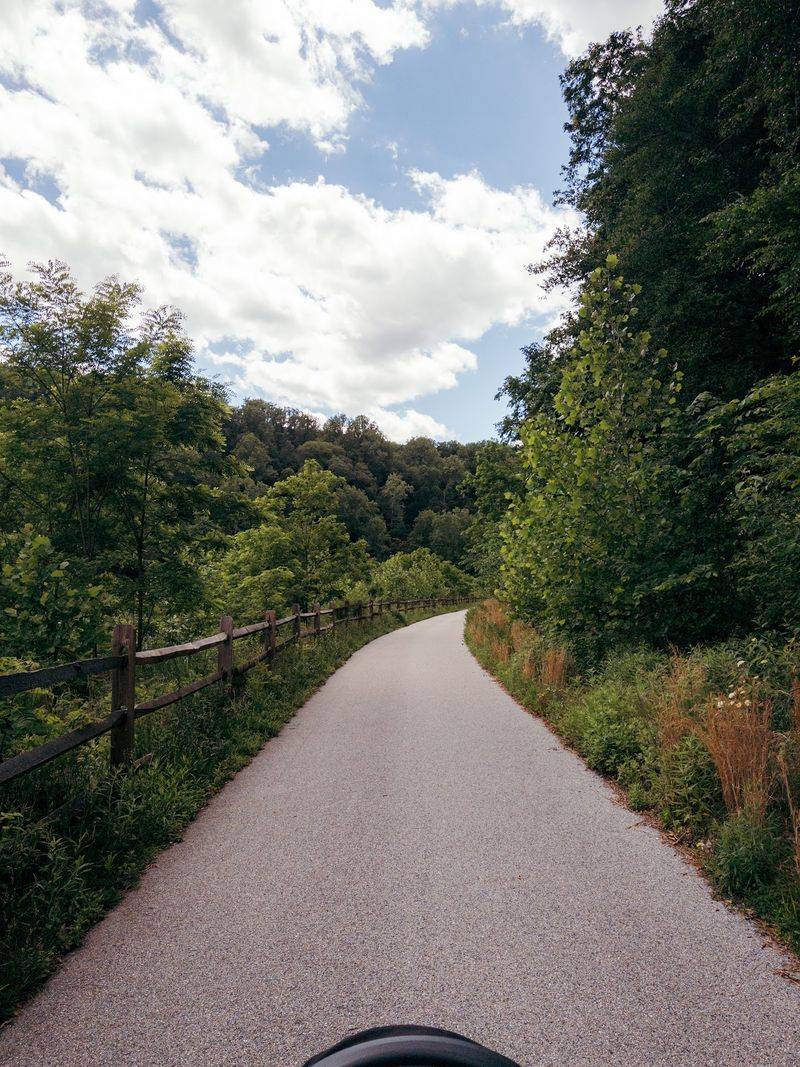
Few trails manage to squeeze a river and a railroad into the same view, yet this one pulls it off with ease. The Patapsco River runs along the south side, shallow and cheerful over its rocks.
To the north sits the old Baltimore and Ohio Railroad line, still busy after all these years.
The Grist Mill Trail is a paved multi-use path inside the Avalon, Glen Artney, and Orange Grove areas of Patapsco Valley State Park.
Depending on which section gets measured, it stretches roughly 2.5 miles between Ilchester Road and Lost Lake, with longer counts reaching about five miles when connecting routes are included.
Either way, it stays flat and friendly the whole time.
That flatness matters. The trail is wheelchair accessible, so families with strollers, older walkers, and new cyclists can all enjoy it together.
Bikes roll along without much effort, and joggers get a steady surface without roots trying to trip them.
Some visitors like to think of the trail as a hallway with two very different walls. One wall sparkles and splashes.
The other hums and shakes when a freight train comes through, which can happen at almost any hour.
For a relaxed first visit, plan on an out-and-back walk and turn around whenever legs start asking questions. Bring water, since the shade is lovely but summer humidity in Maryland is no joke.
A light jacket helps in spring and fall, when the valley holds onto the morning chill longer than expected. Comfortable sneakers are all anyone really needs here.
Granite Bones of the Orange Grove Mill
Back in 1856, builders started work on a mill that would become a true giant. The Orange Grove Mill, also known as Mill C of the C.A.
Gambrills Manufacturing Company, rose five stories tall on land first bought from the Ellicott family. At its peak, it could turn out about 1,000 barrels of flour every single day.
That is a lot of pancakes. In fact, the mill was once called the largest flour mill east of Minneapolis, which was a big deal in an age when Minneapolis ruled the flour world.
The location was no accident. Builders picked the spot for the strong water power of the Patapsco River and for the railroad sitting right next door, ready to haul flour to cities and ports.
Its brands, Patapsco Superlative Patent and Orange Grove flour, became popular across the United States and even in Europe.
Ownership passed through several hands over the years. George Baily and George Worthington were early owners, Charles A.
Gambrill took over in 1860, and R.G. and P.H. MacGill bought the mill in 1869.
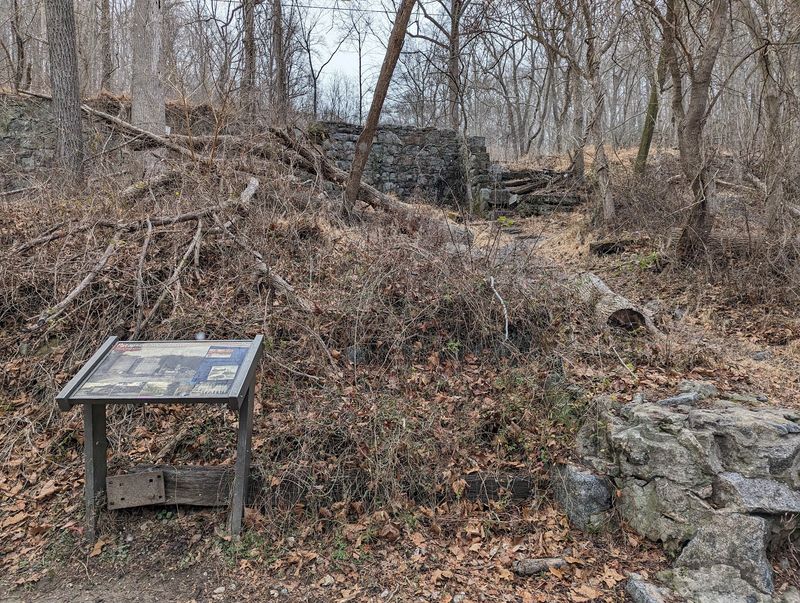
Today, most of that grand building is gone. What remains are sturdy granite foundations, including a long wall that once held up the mill warehouse, plus an overgrown square brick structure close to the paved path.
Slow down near these spots. The stones are easy to miss when moving fast, but once spotted, they make it much easier to imagine huge wheels turning and flour dust drifting through the air.
Tracing the Lost Town of Orange Grove
Somewhere under the leaves and the parking spaces lies a whole community that most drivers never think about. Orange Grove grew up around the mill as a home for the workers who kept its machines running.
By the late 1800s, the town spread across both banks of the Patapsco River.
Most workers lived across the water on the Howard County side. In the early 1900s, the village held seven houses and a single building that worked as both church and school, and the mill owned most of the property.
It sounds tiny, and it was. Still, it is easy to picture kids heading to lessons in the same room where families gathered on Sundays, with the sound of the mill always in the background.
Things changed quickly after the fire of 1905. The mill was never rebuilt, jobs disappeared, and families moved on to find work elsewhere.
By 1920, the town was gone for good, and its land became part of the Patapsco Forest Reserve, which later grew into Patapsco Valley State Park.
Here is the quirky part. The spot where Orange Grove once stood is now the Orange Grove parking lot inside the park.
So the next time a car door slams there, remember that front porches and garden paths may have filled that same ground long ago. Take a moment to look around the edges of the lot and along the river, and let imagination fill in the missing houses.
Crossing the Swinging Bridge
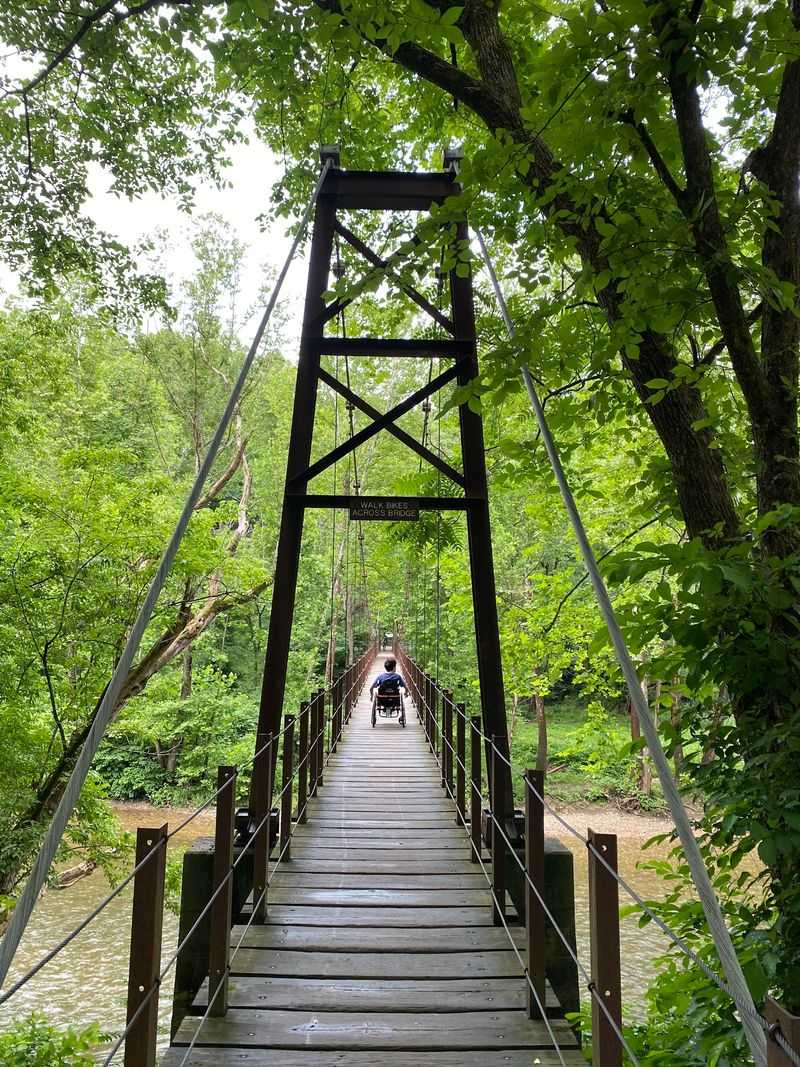
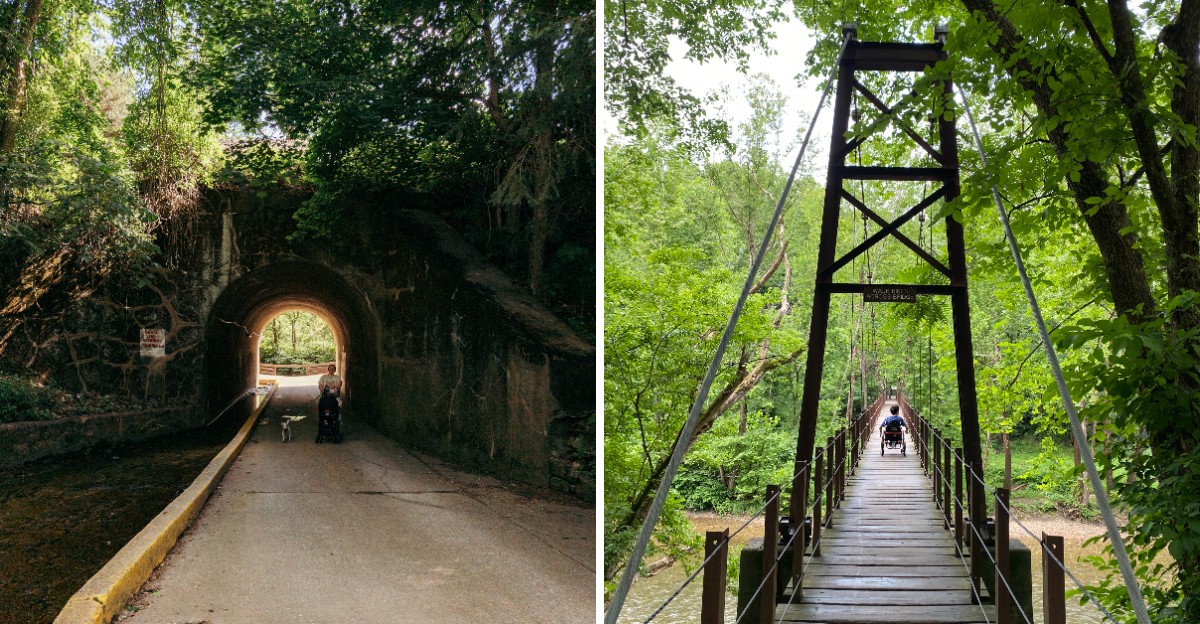
Nothing wakes up the senses quite like a bridge that moves a little under every step. The Patapsco Swinging Bridge, also called the Orange Grove Swing Bridge, sits right where mill workers once crossed the river on their daily commute.
Kids tend to love it, and grownups usually grin too, even if they pretend not to.
Charles Gambrill sponsored the first suspension bridge here so workers living on the Howard County side could reach the mill. Fires and floods eventually destroyed that original, but a modern bridge now stands in the same place.
It carries park visitors instead of flour workers, yet the purpose feels much the same.
The Grist Mill Trail links this bridge to the Lost Lake area, so it makes a natural goal for a walk. Reaching it gives a satisfying sense of arrival.
From the middle of the span, the river opens up in both directions. Rocks break the surface, sunlight dances on shallow ripples, and the trees lean in from both banks like curious neighbors.
Some quick tips help. Hold onto little hands, keep dogs close, and step aside to let others pass since the deck is narrow.
Photos from the center of the bridge often turn out wonderful, especially in autumn when the leaves blaze orange and gold. On busy weekends, try arriving early to enjoy a quieter crossing.
The gentle sway is part of the fun, so relax and let the bridge do its thing.
Floods and Fire That Shaped the Valley
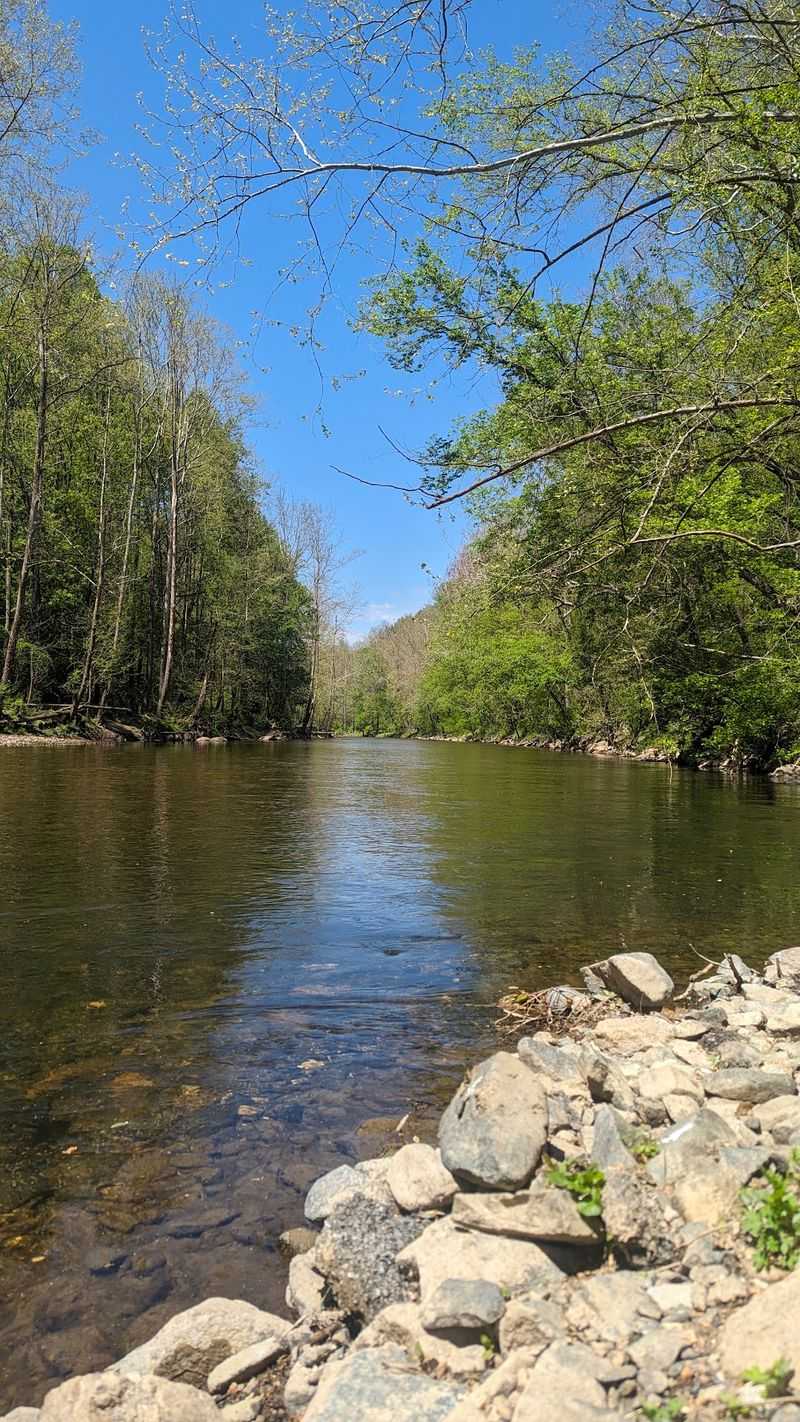
Rivers can be generous neighbors, and they can also be terrible ones. The Patapsco gave mill owners the power they needed, but it also brought some of the worst disasters Maryland has seen.
Knowing this history makes the quiet ruins feel much more meaningful.
The Great Flood of 1868 slammed the valley hard. The Orange Grove Mill was hurt, though it managed to reopen for a time, while the nearby Avalon Iron and Nail Works was wiped out entirely.
Then came May 1905. A fire tore through the mill complex and the worker homes close by, and the owners chose not to rebuild.
That single choice sealed the fate of the whole community.
Still, the story did not end there. In 1972, Hurricane Agnes pushed massive floodwaters through the valley and washed away most of what remained of the mill.
The granite pieces seen today are the stubborn survivors of more than a century of trouble.
Floods are not just old news here either. The trail has closed for repairs in recent years, and newer work aims to make the path more flood resistant.
Before heading out, check the Maryland Department of Natural Resources website for trail updates, especially after heavy rain. Stay back from the water when it runs high and muddy, because the current can be much stronger than it looks.
Respect for the river is the best souvenir anyone can take home from this place.
Trains Rumbling Beside the Trail
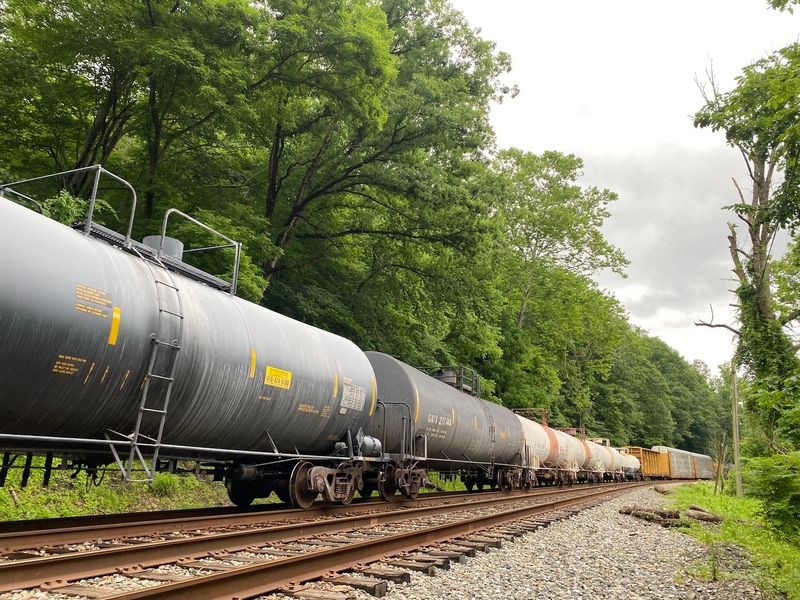
Train lovers, get ready. Freight trains roll along the tracks beside the path often, and some of them go on and on for what feels like forever.
The ground hums, the horn echoes through the valley, and suddenly every kid on the trail is waving.
The railroad here is part of the famous Baltimore and Ohio line, one of the oldest in the country. Some visitors describe the trail itself as the original B&O route between Baltimore City and Ellicott City, which gives the path a nice rail trail feel.
That connection explains why the mill was built here in the first place. Flour needed to reach buyers fast, and a railroad sitting right outside the door made shipping simple.
So, in a way, the trains are the one part of the old mill story still fully alive. Every passing engine is a small echo of those busy days.
A short drive or ride away stands another railroad treasure, the Thomas Viaduct. Built in 1835, this curved, multi-arched stone bridge is still in use and is a national landmark.
It is worth a detour for anyone who likes big, beautiful stonework.
For the best train watching, pick a safe spot on the trail and keep well away from the tracks. Never climb onto rails or bridges for photos.
Earplugs are not needed, but little ones may appreciate a heads-up before the horn blasts.
Lost Lake and the Old Iron Works
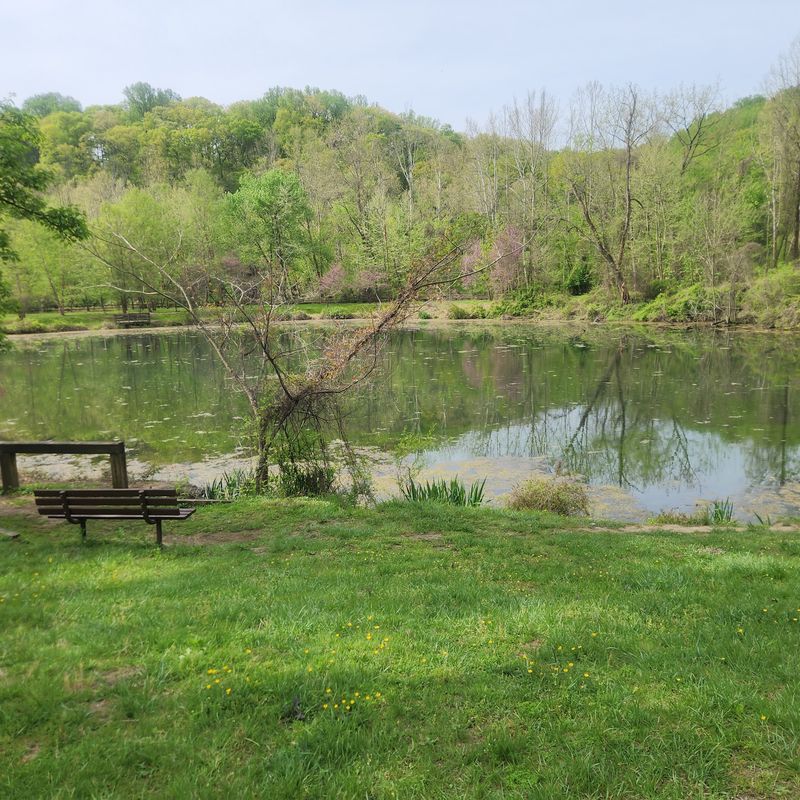
Fishing poles and history books make surprisingly good partners at Lost Lake. This small pond near the start of the trail is a special fishing area, and it has a backstory most anglers never hear.
Long ago, it served as a reservoir for the Avalon Iron and Nail Works.
That iron works was destroyed by the Great Flood of 1868. What was once part of a noisy industrial site is now a peaceful spot where people cast lines and watch for ripples.
Lost Lake also makes a smart starting point. Parking on this side is a good idea, since the far end of the trail has little or no parking to offer.
Starting here means an easy walk toward the Swinging Bridge and the mill ruins beyond.
Winter visits can be interesting. The lake sometimes stays partly frozen well into the cold months, so catching dinner may turn into simply enjoying the quiet.
Anyone planning to fish should check Maryland fishing rules first, since special fishing areas can have their own guidelines. Bring a small folding chair, snacks, and patience.
Even without a rod, the pond is a lovely place to pause. Ducks drift by, trees reflect on the surface, and the pace of the day slows down nicely.
It is a gentle warmup before the history-heavy stretch ahead. Pack out any trash, including fishing line, so wildlife stays safe.
Planning a Visit to Glen Artney and Beyond
A little planning goes a long way on this trail, and the payoff is a calm, easy day outside. The trail sits at Glen Artney Rd, Halethorpe, MD 21227, inside Patapsco Valley State Park.
Posted hours usually run from 7 AM to 7 PM, but gate times can change, so it pays to double check with the park before driving over early.
Patapsco Valley State Park has an impressive record. Founded in 1907 as the Patapsco Forest Reserve, it became Maryland’s first state park and now covers more than 16,000 acres along 32 miles of river.
That means plenty more to explore. Near the Ilchester Road end, visitors can see another swinging bridge above the remains of the Patterson Viaduct.
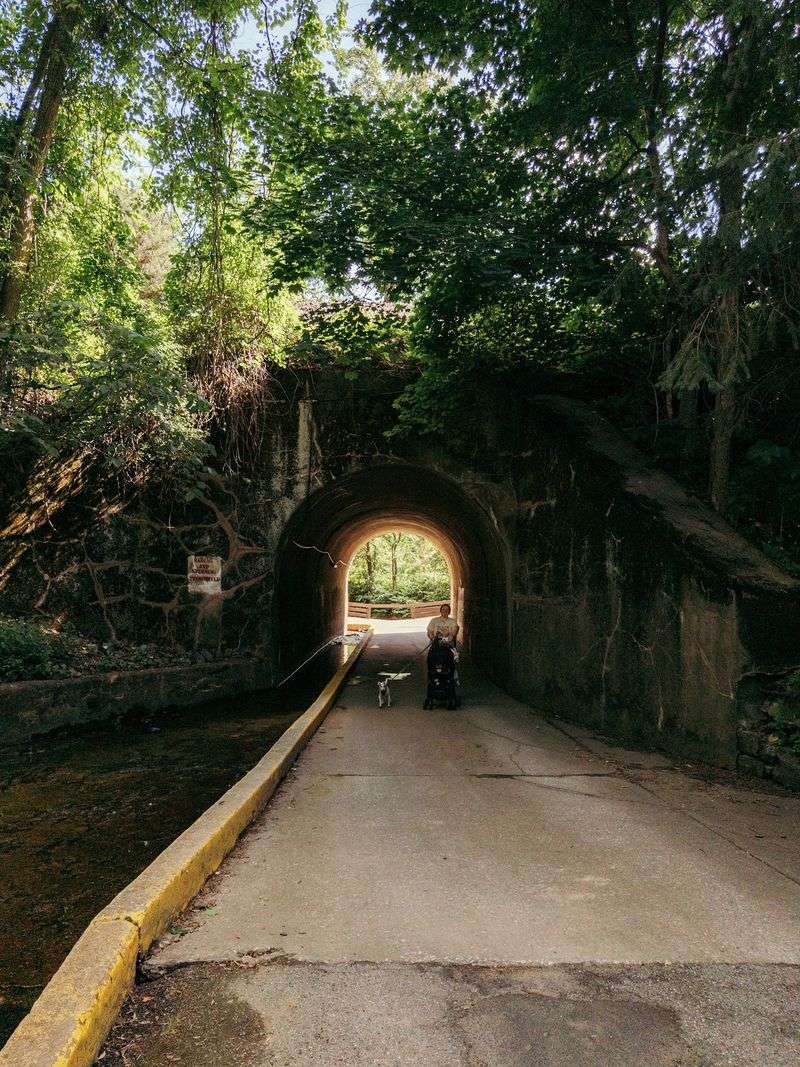
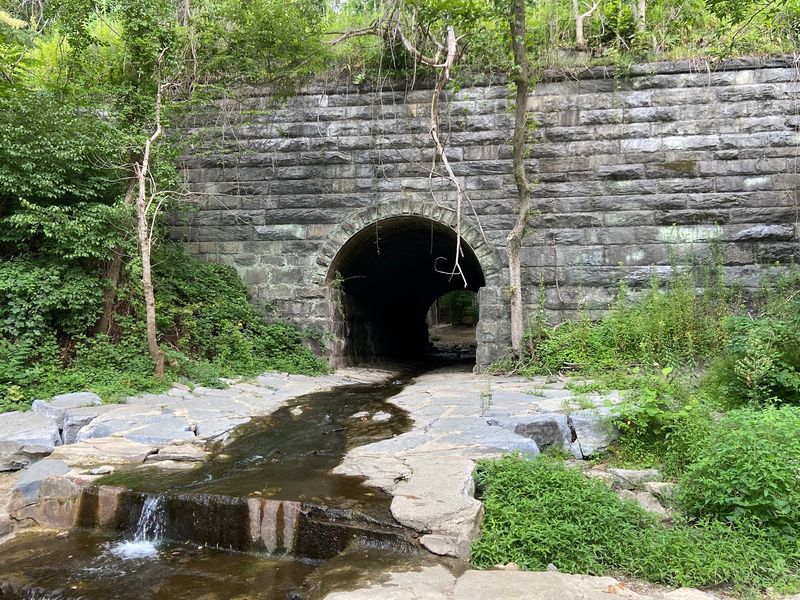
The ruins of old St. Mary’s College, a former seminary, and the Ilchester Train Tunnel are also nearby, and both are tied to spooky local legends.
History fans may also enjoy learning about Bloede Dam. Built in 1907, it was the world’s first underwater hydroelectric plant, although it has since been removed.
Pack smart for the day. Water, sunscreen, bug spray, and a charged phone for photos cover most needs, and a trail map from the Maryland Department of Natural Resources helps with the bigger picture.
Restroom options are basic, so plan ahead. Arrive early on nice weekends.
Most of all, leave time to stop at the ruins and listen, because the valley still has plenty of stories to share.
