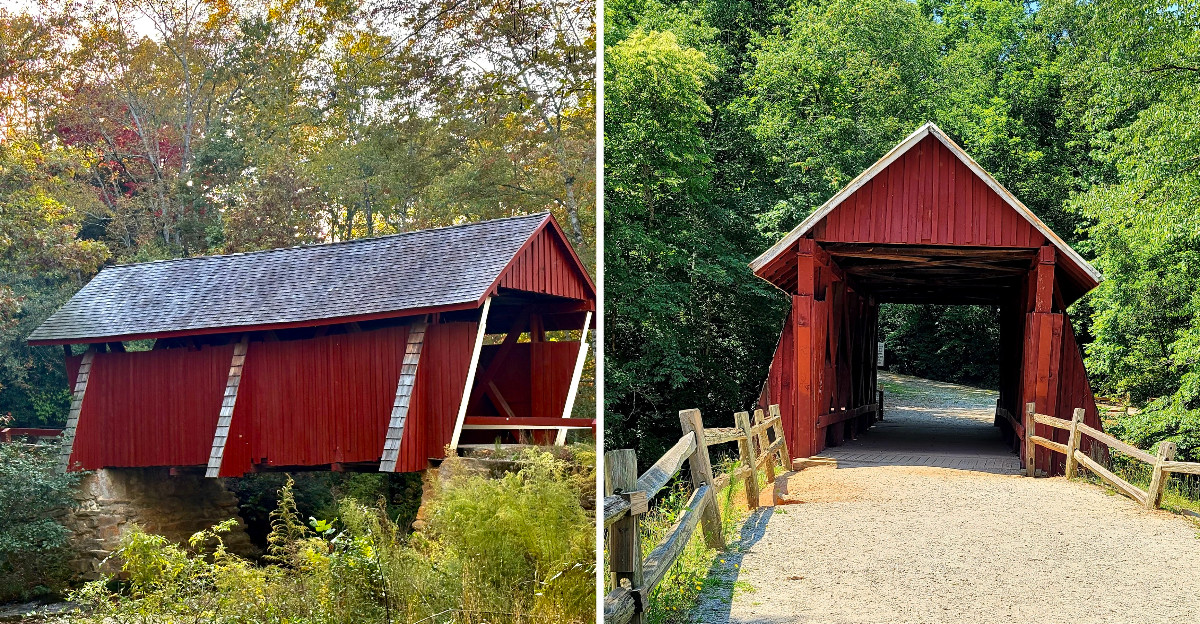
Laughter comes easily when a red wooden roof appears through the trees and a creek rushes softly beneath it. That reaction happened on a quiet road in South Carolina, where the very last covered bridge in the state still stands.
Built in 1909, it has watched more than a century of wagons, cars, kids, and curious travelers pass by. A quick photo stop turned into hours of wading in the creek and poking around old mill stones.
The water moves cold and clear over smooth rocks, and the wooden walls hold the smell of old timber and shade. Time slows here in the best possible way.
History you can touch and walk through is rare, and this little bridge delivers it without any fanfare. The afternoon slips away before you notice.
South Carolina keeps this survivor hidden in its hills, and it is worth every mile of the drive.
A Bridge Born From a Flood
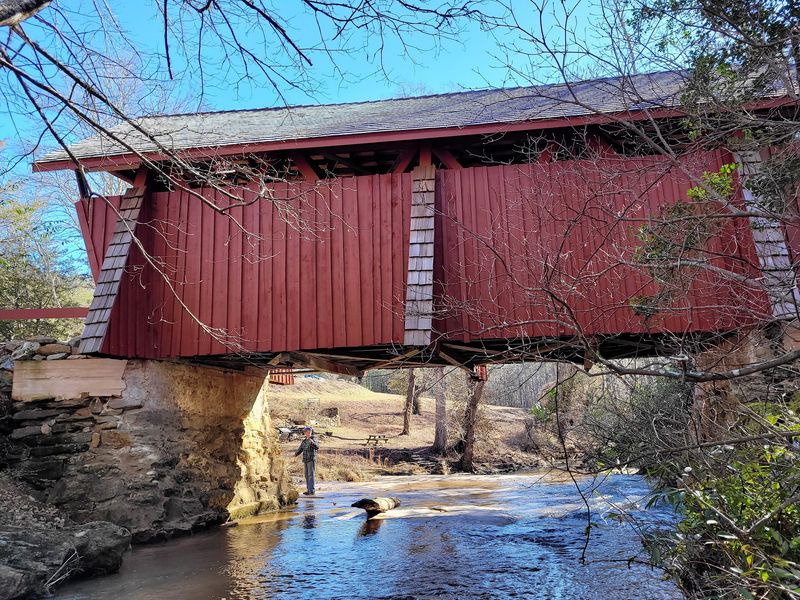
History buffs, you are going to love this origin story. Back in 1908, a big flood came roaring down Beaverdam Creek and swept away the old flat bridge that local families depended on.
People suddenly had no easy way to cross, and in rural South Carolina, that was a serious problem.
The next year, a builder named Charles Irwin Willis stepped in and put up the covered bridge that still stands today. I found it amazing to think that the sturdy wood under my feet was raised as an answer to disaster.
A roof was a smart choice too, since covering a bridge protects the wooden beams from rain and helps them last much longer.
The bridge took its name from Alexander Lafayette Campbell, who owned the land around it and ran a corn grist mill nearby. Farmers would bring their corn to be ground, so the bridge was part of everyday life.
It cut down travel time and linked small communities that were once pretty isolated.
Before you visit, read the historical markers on site. They fill in details that make the whole trip richer.
Knowing the backstory turned my quick stop into something that felt much more personal and meaningful.
Peeking Inside the Howe Truss
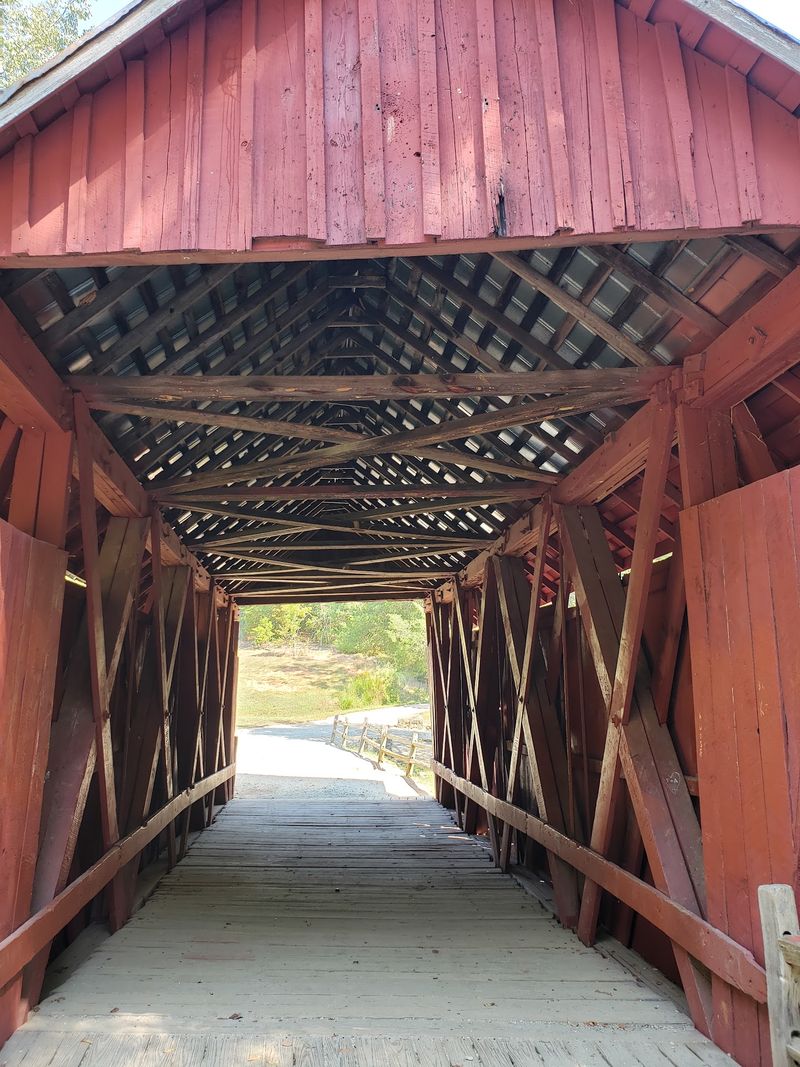
My neck got a little sore from staring up at the ceiling, and honestly, it was worth it. Inside the bridge, you can see a pattern of crisscrossing wooden beams held together with tall iron rods.
That design is called a Howe truss, and the four-span version used here is fairly rare.
Here is the simple idea behind it. The diagonal timbers push and share the weight, while the vertical iron rods pull everything tight.
Together they make the bridge strong enough to carry loads across the creek without sagging in the middle.
The bridge is only about 35 to 38 feet long and 12 feet wide, so it feels cozy rather than grand. I liked that I could take in the whole structure in one look.
Light slips through the boards in thin stripes, and the wood has that warm, slightly dusty smell old barns have.
Bring your phone or camera and try shooting straight down the middle toward the far opening. The lines of the beams lead your eye right through the frame.
Kids enjoy counting the rods too, which turns a quick look into a fun little engineering lesson without anyone noticing they are learning.
Wading Into Beaverdam Creek
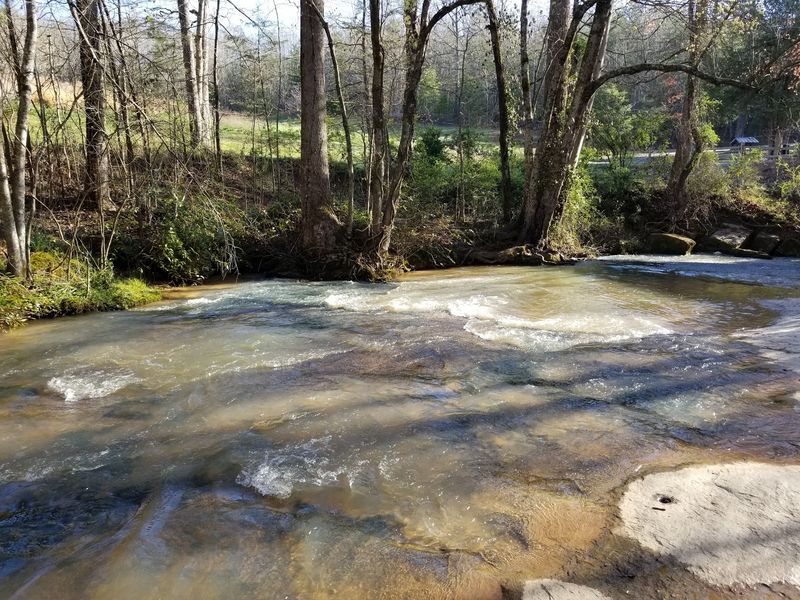
Cold water on a hot South Carolina afternoon is pure happiness, and I learned that within five minutes of arriving. Beaverdam Creek runs right under the bridge, shallow and clear, with smooth rocks scattered along the bottom.
On warm days, families slip off their shoes and wander in without a second thought.
The creek is calm in most spots, which makes it great for little explorers. Kids flip rocks looking for tiny critters while grownups sit on the bank and dip their toes.
I spent a silly amount of time just watching the water ripple around the stones.
A few practical tips will help you enjoy it more. Wear water shoes or old sneakers, because the rocks can be slippery and some have sharp edges.
Pack a small towel and a dry change of clothes, especially if you have young ones who tend to end up soaked.
The view from down in the creek is also one of the best angles of the bridge. Looking up at the red siding with sunlight on the water makes a picture you will want to frame.
Just remember to keep the creek clean by carrying out anything you bring in.
Ghosts of the Old Grist Mill
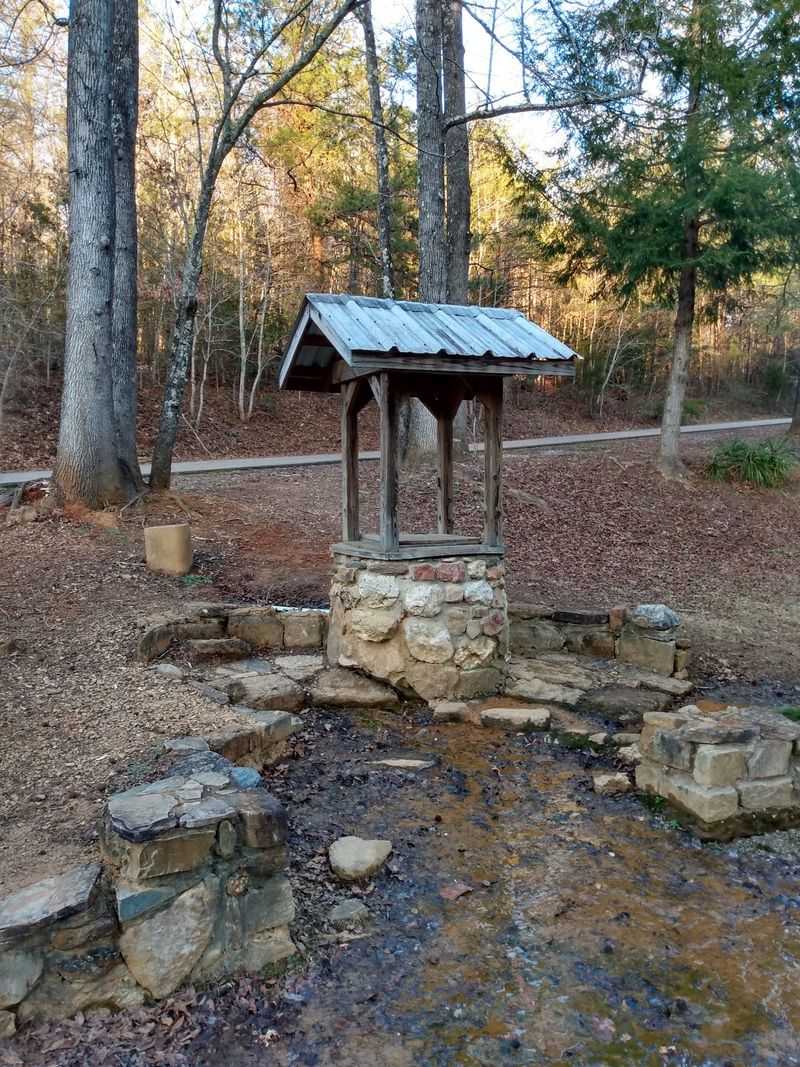
Old stones have a way of making you whisper, even when nobody else is around. Near the bridge, you can find the foundations of the grist mill that Alexander Lafayette Campbell once operated.
The walls are long gone, but the stonework still outlines where the work happened.
A grist mill used the power of moving water to turn heavy millstones. Farmers brought in their corn, and the stones ground it into meal for cornbread, grits, and other everyday foods.
It was a busy, noisy hub for the surrounding farms, and the bridge helped people reach it.
Standing among the ruins felt like reading a book with half the pages missing. I tried to picture wagons lined up, the creek rushing through a wheel, and the dusty smell of fresh cornmeal.
My imagination did a lot of the work, and I loved that part.
Fun fact for curious kids: grits and cornbread are classic Southern foods that often started at mills just like this one. Ask them to look for signs of where water might have flowed.
Please treat the foundations gently, since they are part of the protected history here.
The Women Who Saved It
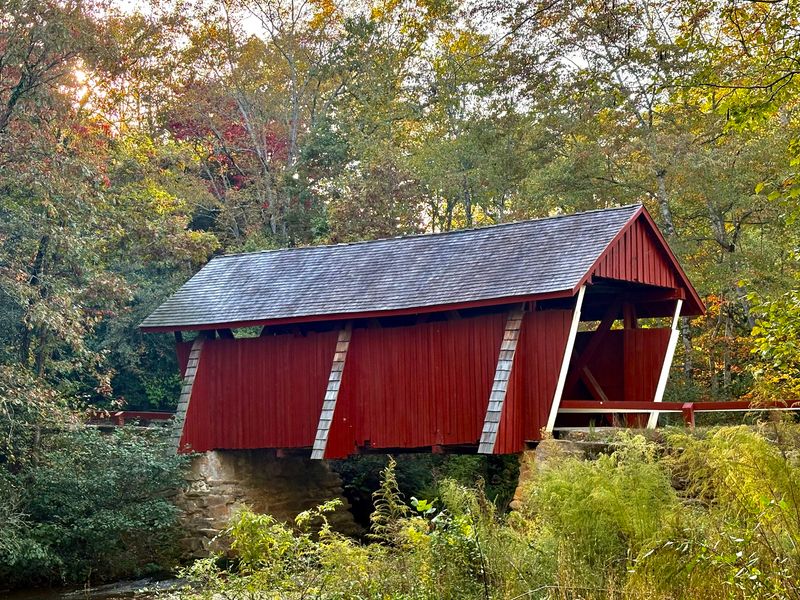
Some bridges survive by luck, but this one survived because people cared. Cars rolled across it until 1984, and the years of use took their toll.
Without help, it could easily have fallen apart like so many others across the state.
In 1975, a woman named Stella M. Atkins bought the bridge and the land around it.
Her goal was simple and generous: save it for future generations. Her daughter, Sylvia A.
Pittman, carried that mission forward.
Their dedication paid off in 2008, when the Greenville County Recreation District acquired the bridge along with 10 acres of land. That step made sure the landmark would stay protected for good.
The bridge is also listed on the National Register of Historic Places.
Repairs have played a big role too. Major restorations happened in 1964 and again in 1990, and more recent careful repair work earned a Preservation Honor Award.
When I ran my hand along the railing, I felt thankful for every person who chose to fix rather than replace.
It is a good reminder that one determined family can change what a whole state gets to keep. That thought stuck with me long after I left.
Trails, Picnics, and Lazy Hours
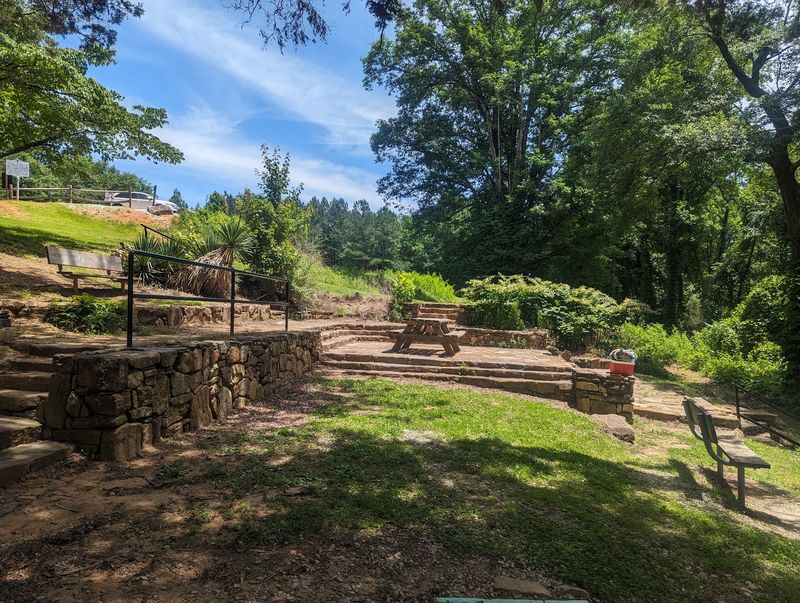
Pack a sandwich, because you will probably want to stay longer than planned. The bridge sits inside an 18.65-acre park with plenty of room to spread out.
Picnic tables and benches offer shady spots to rest and snack.
A short nature trail of about 0.8 miles loops through the woods nearby. It is an easy walk for most ages, with dirt paths, birdsong, and the sound of the creek drifting through the trees.
I strolled it slowly and still finished with energy to spare.
Dogs are welcome here, so feel free to bring your furry sidekick on a leash. Open grass makes room for tossing a ball or a frisbee after lunch.
Photographers also love the setting, especially in fall when the leaves turn gold and red around the bridge.
One helpful heads-up: there are no restrooms on site, so plan a stop before you arrive. Some visitors have noticed grounds improvements and parking updates in progress, so be patient if things look a little busy with work crews.
Bring water, sunscreen, and bug spray in summer. With those basics covered, the park becomes a lovely spot to simply sit and do nothing at all.
Planning Your Visit
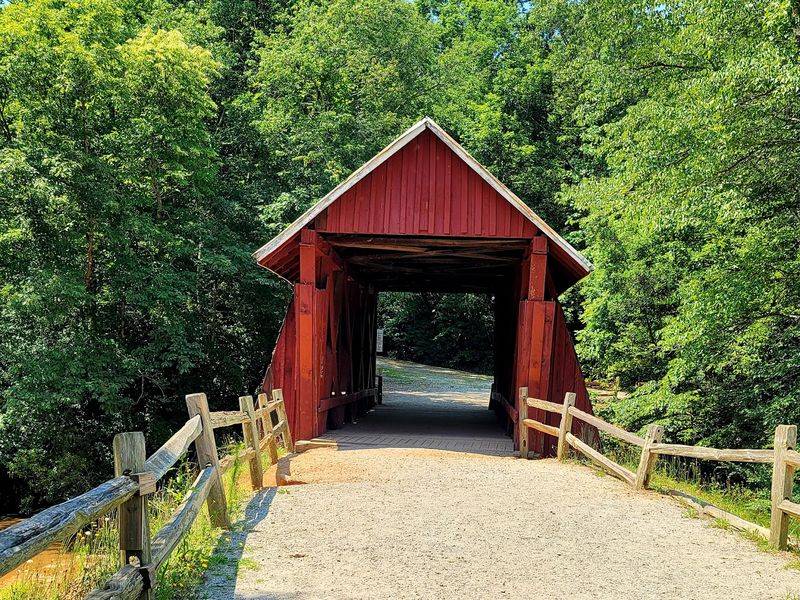
Getting here is half the fun, with winding country roads rolling through the foothills of upstate South Carolina. The bridge is a short drive from Greenville, which makes it an easy half-day trip.
Many people combine it with a scenic drive through the area.
Timing matters a little. Hours change with the seasons, and the park typically stays open later in spring and summer than in fall and winter.
Check the Greenville County Recreation District website before heading out, since schedules and construction updates can shift.
I found that early mornings were wonderfully quiet, with mist hanging over the creek. Late afternoons bring warm light that makes the red wood glow.
Weekdays usually feel calmer than weekends if you want peaceful photos.
Plan for about an hour if you just want to see the bridge, or longer if you will hike, picnic, and wade. Wear comfortable shoes, because the path down to the bridge has a gentle slope.
Visiting is free, which makes it a budget-friendly outing for families.
Leave no trace, keep pets leashed, and enjoy every quiet minute at this one-of-a-kind spot.
Address: 171 Campbell Covered Bridge Rd, Landrum, SC 29356
