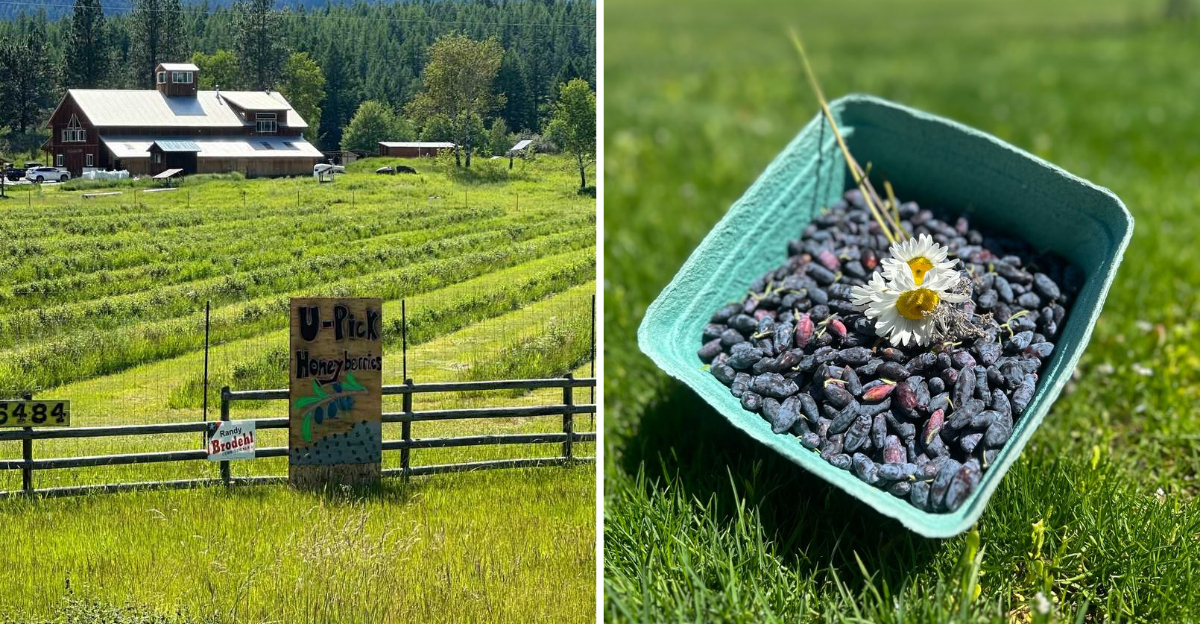
I had never heard of a honeyberry until a friend mentioned a farm in Montana, and now I cannot stop talking about them. That drive out Farm to Market Road felt like the kind of detour you take on purpose, with green fields on both sides and mountain ridges holding up an enormous sky.
When I stepped out of the car, the first thing I noticed was how quiet it was, just insects humming and a light wind moving through long rows of low green hedges. Someone handed me a container, pointed toward the bushes, and that was pretty much the whole orientation.
Within ten minutes my fingers were stained purple and I was eating more berries than I was collecting, which I suspect is normal here. The farm has roughly 10,000 bushes planted across eight miles of hedgerows, and the U-pick season runs from late June through the first week of August.
If you are anywhere near the state during summer, this is the sort of small farm stop that ends up being the story you tell when you get home.
Meeting the Berry Locals Call the Fruit of Long Life
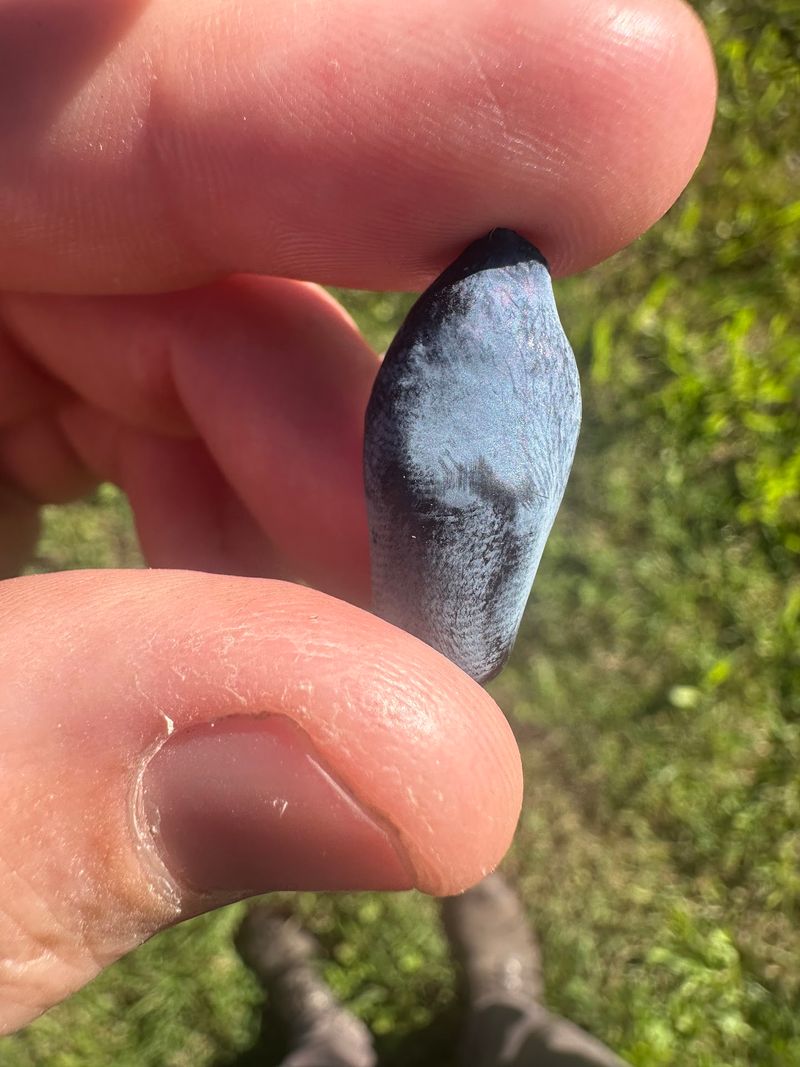
My first honeyberry went straight from bush to mouth, and the flavor caught me off guard. Sweet at first, then a bright tart snap, somewhere between a blueberry and a raspberry with a hint of something darker like plum.
Honeyberries, also called haskaps, are not the huckleberries most visitors come to Montana hunting for. They grow in long oval or cylindrical shapes, deep bluish-purple, with skin so thin the berry almost pops when you bite it.
On the Japanese island of Hokkaido they are known as the berry of long life, a nickname earned through generations of use. The seeds are tiny and soft, so there is nothing to spit out or pick from your teeth.
What surprised me most was the nutrition side of things. Pound for pound, honeyberries carry more antioxidant value than blueberries, oranges, or apples, and they are loaded with anthocyanins and Vitamin C.
Those anthocyanins are what create that intense purple color, and they are also the reason your fingertips look like you lost a fight with a marker.
Wild versions of this berry grow across the circumpolar boreal forests, where Indigenous peoples have gathered them for centuries. Commercial growing in the United States is still fairly new, which makes tasting one here feel a little like getting early access.
Fifteen acres of bushes stretch across roughly eight miles of hedgerows at this farm, so there is plenty of chance to compare berries from row to row.
I found the ones deeper in the shade tasted noticeably tarter, which turned into a fun little tasting game.
From Bare Ground to Eight Miles of Hedgerows
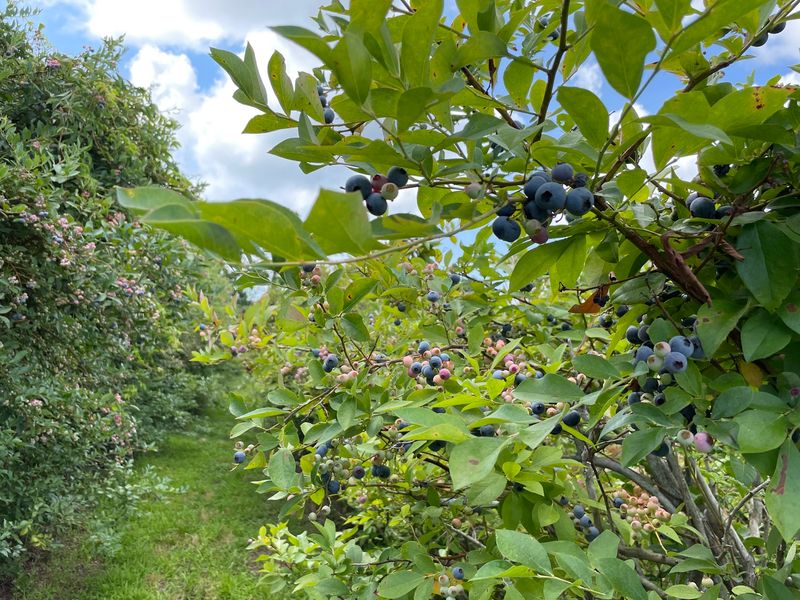
Learning how this place came together changed the way I looked at those tidy rows. The land was raw ground when it was purchased back in 2012, nothing but open acreage waiting for an idea.
That idea arrived in 2018, when owner David Dunn was introduced to honeyberries by Brian Jackson. What sounded like an unusual experiment turned into a full mission to prove the fruit could thrive in Montana soil.
The preparation is the part that impressed me most, honestly. An Oswalt 320 feed mixer was rebuilt specifically to blend custom soil, mixing thirty-year mulch, biochar, and other rich organic material.
Eight miles of rows were then trenched and filled with that nutrient-dense blend, followed by drip lines and a cover crop to hold everything together.
Then came the summer of 2021, when 10,000 honeyberry starts were planted by hand over three straight months. Three months of bending, digging, and setting young plants into the ground, one at a time.
Dunn has described hand-watering those seedlings at dusk, a nightly routine that says more about commitment than any brochure could.
Standing between the rows, I kept doing quick math on how many hours that represents, and I gave up.
There is something grounding about knowing a farm was not bought finished. Every bush I picked from started as a fragile little start that somebody personally carried out to its spot.
You taste the fruit differently once you know that story, and I think that is the whole point of visiting a working farm.
Farming Choices You Can Actually See in the Field
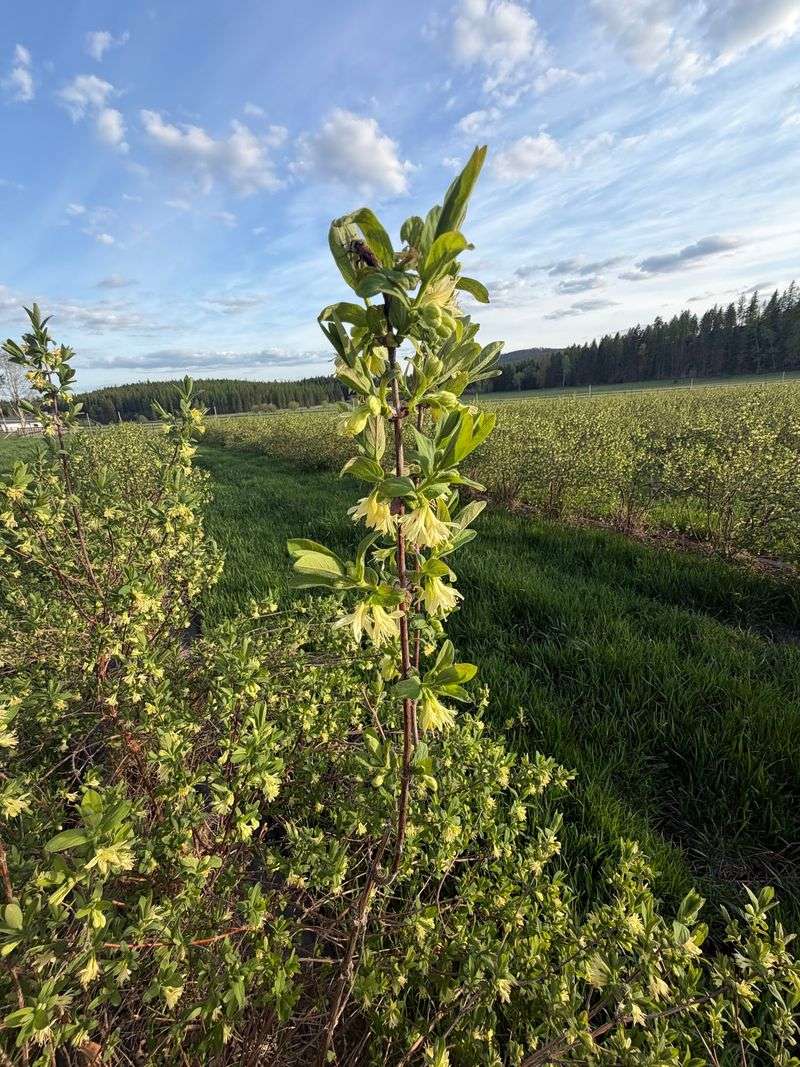
Rows this clean usually mean chemicals, so I asked. The answer was hand-weeding, fifteen acres of it, across two full summers.
Big Sky Honeyberries follows organic practices without holding official certification, and the bushes are never sprayed with pesticides. That choice trades convenience for labor, which is a real decision when you are managing eight miles of plants.
Soil health sits at the center of the whole operation. Rather than working with whatever was already in the ground, the team built their own blend and filled every trench with it before a single plant went in.
Cover crops between the rows keep the soil covered and alive, while drip lines deliver water right where the roots need it instead of soaking everything.
Visitors have mentioned liking the natural feel of the bushes, and I understand why. Nothing here looks manicured into submission, it just looks healthy.
There is also a bigger goal at work. The farm wants to help establish honeyberry production across Montana, sharing what they have learned with other growers instead of guarding it.
Plans include supporting co-ops and building partnerships for value-added products such as jams and ice creams, which keeps more of the value in the local food system.
Jam turns out to be a natural fit, since honeyberries carry their own pectin and set beautifully without much help.
Picking fruit from bushes you know have never been sprayed is a small thing, but it makes eating handfuls straight off the plant feel completely guilt-free.
Filling a Container and Losing Track of Time
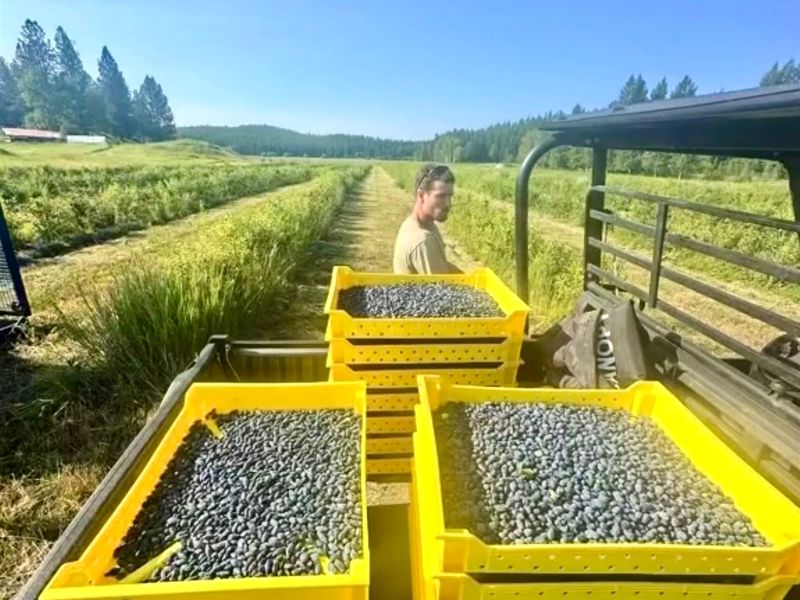
Nobody tells you how fast honeyberry picking becomes addictive. The bushes were absolutely loaded when I visited, and you can strip a section without moving your feet.
U-pick season here typically runs from the last week of June through the first week of August, with hours usually Monday through Friday from 9:00 AM to 1:00 PM. Containers are provided, so you can show up empty-handed and still leave with pounds of fruit.
The picking itself is easy on your body, which I appreciated. These are low bushes, no ladders, no reaching overhead, just steady work at waist height.
I fell into a rhythm quickly, cupping a hand under a cluster and letting the ripe ones drop. Warm berries in the sun have a smell that is faintly floral and a little jammy.
Kids do well here for the same reasons adults do. Everything is within reach, the rows are wide and clean, and the reward is immediate.
One family who stopped in on the very last day of the season still gathered more than a pound and a half without trying hard, which tells you how generous the bushes are.
Freezing is where honeyberries really earn their keep. They hold up beautifully in the freezer, so you can pull summer fruit into January smoothies and oatmeal.
Bring a cooler if you have a drive ahead of you, and pick more than you think you need. I regretted my restraint by about day three.
Kitchen Experiments That Made the Drive Worth It
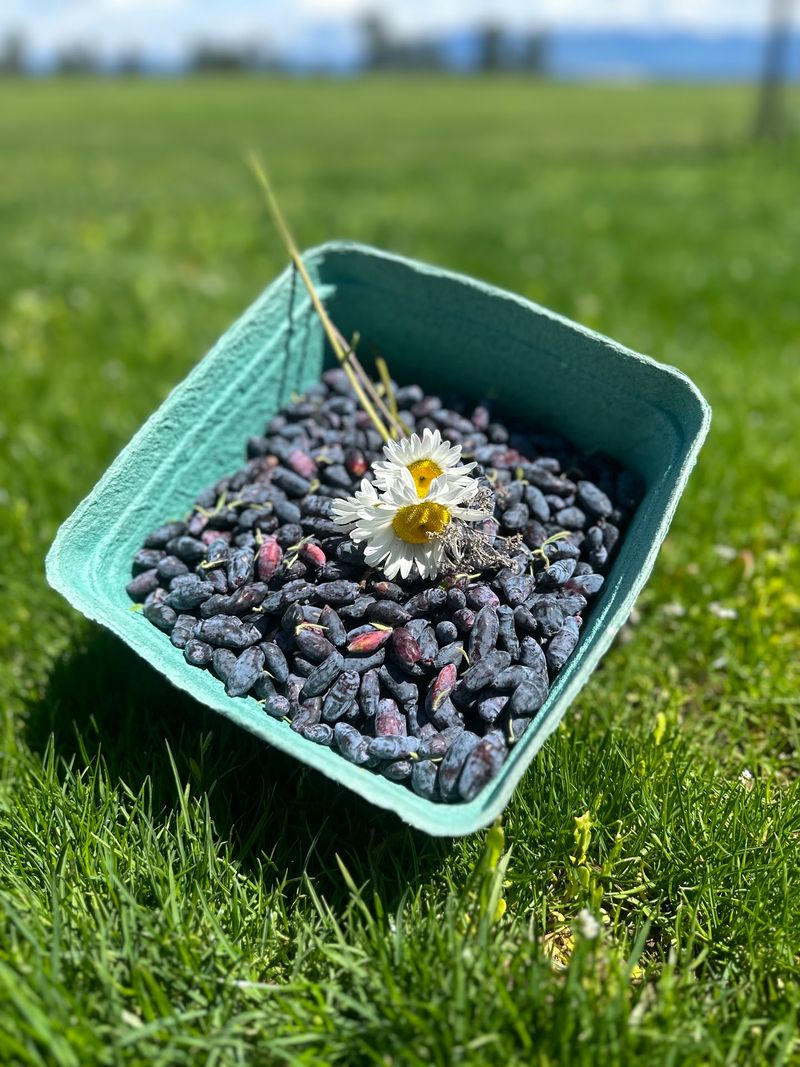
Half the fun happens after you get home. Honeyberries do things in the kitchen that ordinary grocery fruit simply cannot.
Jam is the obvious starting point, and it barely requires skill because the berries bring natural pectin to the party. Mine set thick and glossy on the first attempt, which almost never happens to me.
Syrup was next, poured over crepes, and it turned everything a shade of purple that looked slightly unreal. Visitors have made pies, crisps, cheesecake toppings, and stirred the berries fresh into creamy oatmeal.
That sweet-tart balance is what makes them so flexible. Tart enough to cut through cream or custard, sweet enough to eat plain by the handful.
Baking mellows the tartness and deepens the color into something close to elderberry. A honeyberry crisp with a heavy oat topping might be the single best use I found.
Juices and sauces work well too, especially spooned over yogurt or roasted meats if you want to get adventurous.
The farm sells honeyberry jam alongside fresh and frozen berries, which is handy if your kitchen ambitions do not match your schedule. Frozen bags travel well and thaw into perfectly usable fruit.
Honeyberries also show up at area farmers markets, where the owner has noted that people are genuinely surprised by the flavor. I was one of those people.
My advice is simple, freeze half your haul immediately and experiment with the rest before you overthink it.
Practical Notes Before You Point the Car Down Farm to Market Road
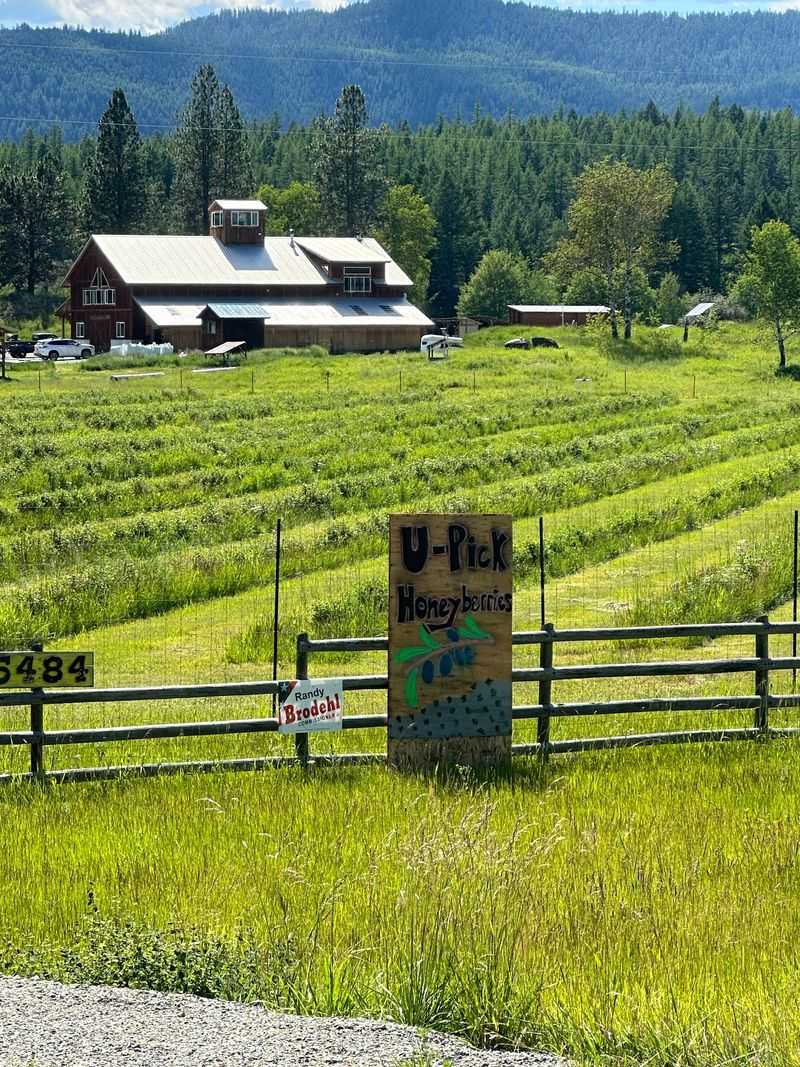
A quick geography note, because the name Yellowstone can be misleading. Big Sky Honeyberries sits in northwest Montana, in the Flathead Valley, a long way from Yellowstone National Park.
The farm lies roughly eight miles southwest of Whitefish and about fifteen miles northwest of Kalispell, which makes it an easy add-on to a Glacier National Park trip. Plenty of visitors stop here on the way to or from the Kalispell airport.
The drive alone justifies the detour. Open farmland, big pastures, and mountain ridges lining the horizon the whole way out.
Timing matters most. Aim for the last week of June through the first week of August, and check ahead since the final picking day shifts with the season.
Wear closed-toe shoes that cover your feet, because nettles do turn up in the fields. Long pants are not a bad idea either.
Containers are supplied at the farm, so all you really need is a cooler, sunscreen, and a bit of patience for the purple stains on your hands.
What I did not expect was how conversational the visit felt. Questions about the berries get real answers, and the whole place runs at a friendly, unhurried pace that suits a working farm.
Families, road trippers, and cyclists all seem to find their way here, and everyone leaves with fruit and a new word in their vocabulary.
Call ahead at 406-212-3479 if you are planning a longer drive.
Address: 5484 Farm to Market Road, Whitefish, Montana
