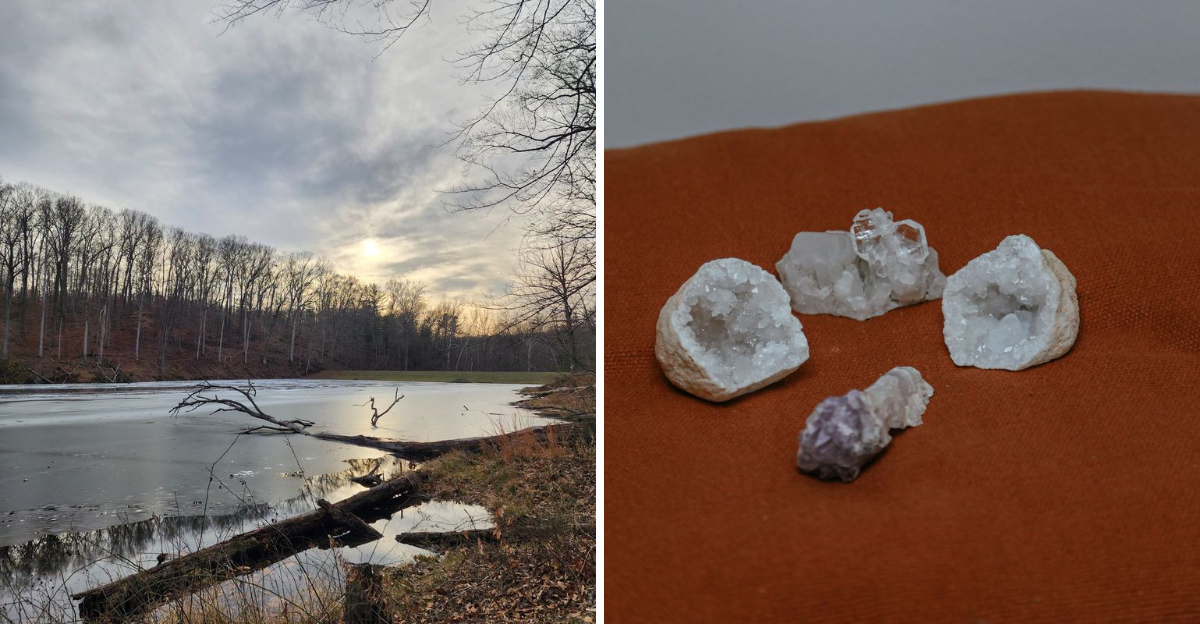
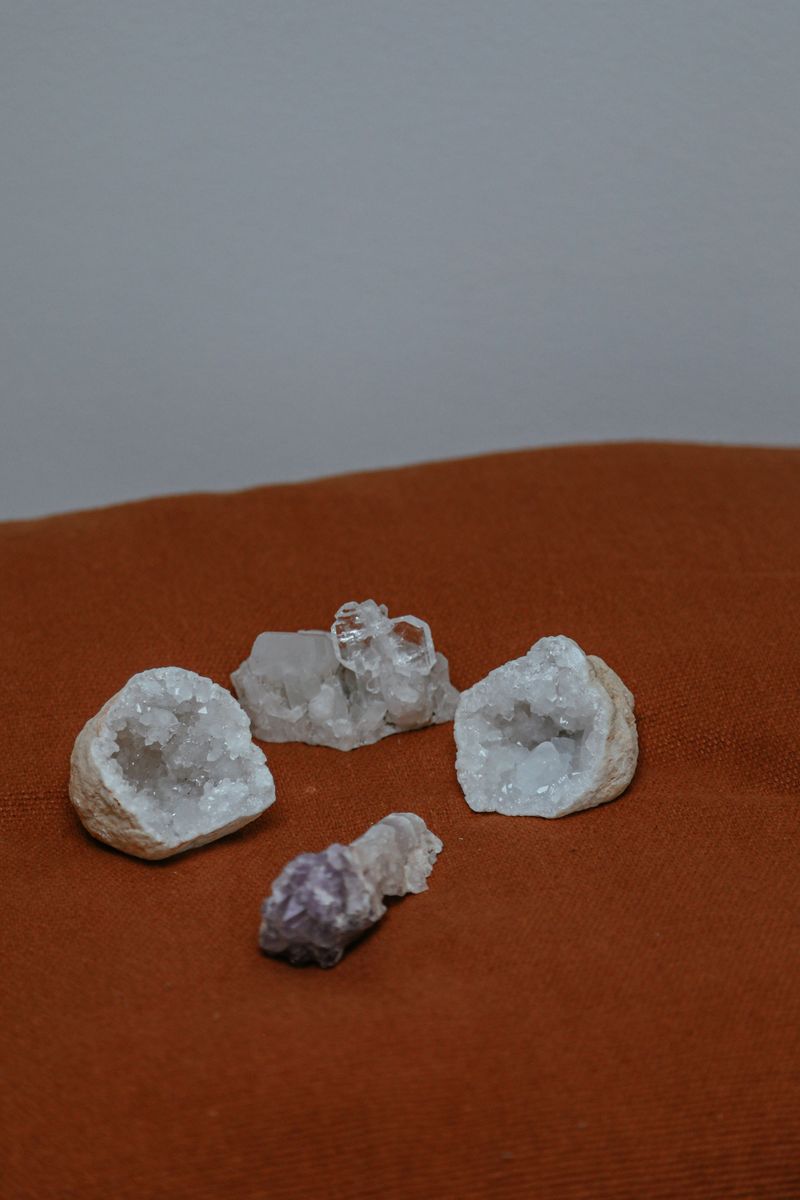
I picked up a lumpy gray rock in a creek bed, and it turned out to be a fossilized time capsule. A friend cracked it open with a rock hammer, revealing quartz crystals sealed inside for millions of years.
That was my first geode, found along a rugged trail buried deep in an Indiana forest. The full loop stretches close to 10 miles, climbing steep ridges, dropping into shady ravines, and crossing more water than I expected.
This is not a paved stroll. My legs made that clear for two days afterward.
What stayed with me most was the silence, since I barely passed another soul the entire hike. Trails like this are rare to find anywhere in this state, especially ones hiding literal treasure underfoot.
If hiking with a built-in scavenger hunt sounds appealing, lace up for this one.
Creek Beds Packed With Prehistoric Geodes
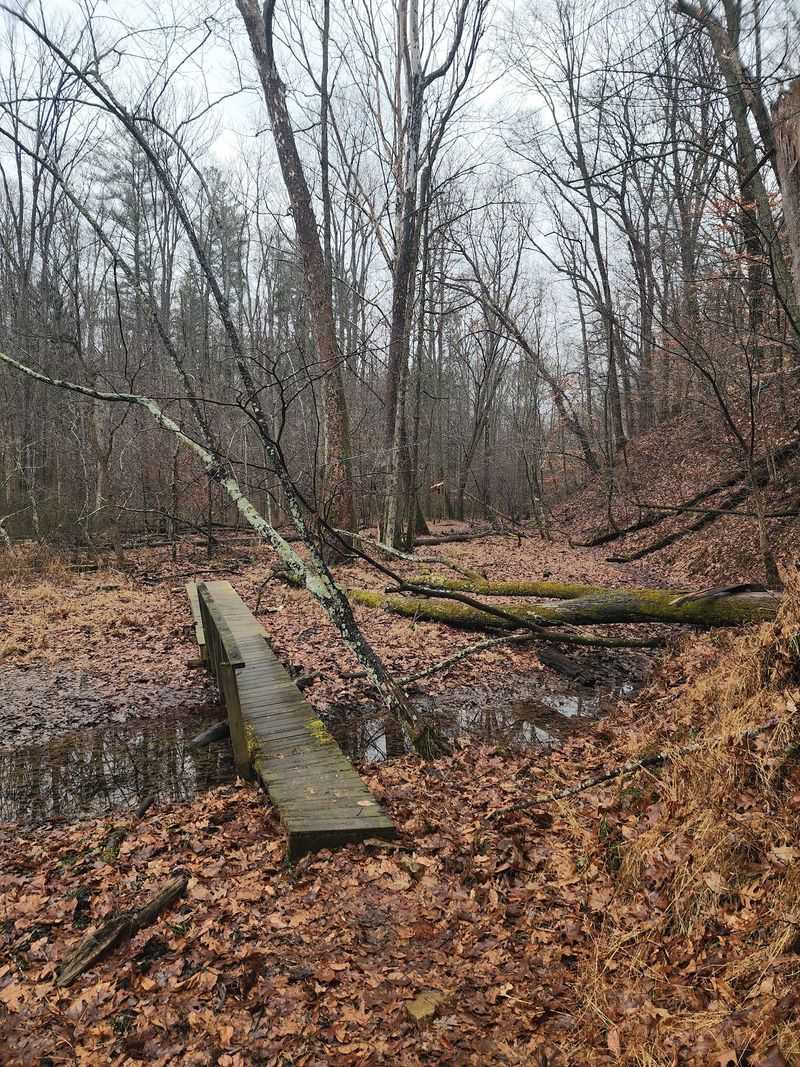
Geodes look boring on the outside, which is exactly why so many hikers walk right past them. They resemble knobby cannonballs, sometimes rough and bumpy, sometimes almost perfectly round.
South-central Indiana happens to be one of the best geode regions in the country. The limestone formations here, including the Harrodsburg and Edwardsville, weather away over long stretches of time, and the tougher geodes tumble loose and settle in streambeds.
Along Three Lakes Trail, the ravines and small creek crossings are where I had the most luck. Beanblossom Creek, tied historically to the trail’s vanished third lake, is especially known for geodes lined with quartz crystals.
Sizes vary wildly. Some are smaller than a walnut, while others reach close to two feet across and are far too heavy to haul out on a long loop.
Crack one open and you might find quartz, amethyst, barite, celestite, strontianite, or millerite hiding inside. Not every geode is hollow, either, so expect a few solid duds mixed in with the winners.
My advice is simple. Slow down at every water crossing and scan the gravel bars instead of the middle of the channel, because the current sorts rocks and leaves the round ones stacked along the edges.
Half the fun is the guessing game before you ever swing a hammer.
A Ten Mile Loop That Actually Works Your Legs
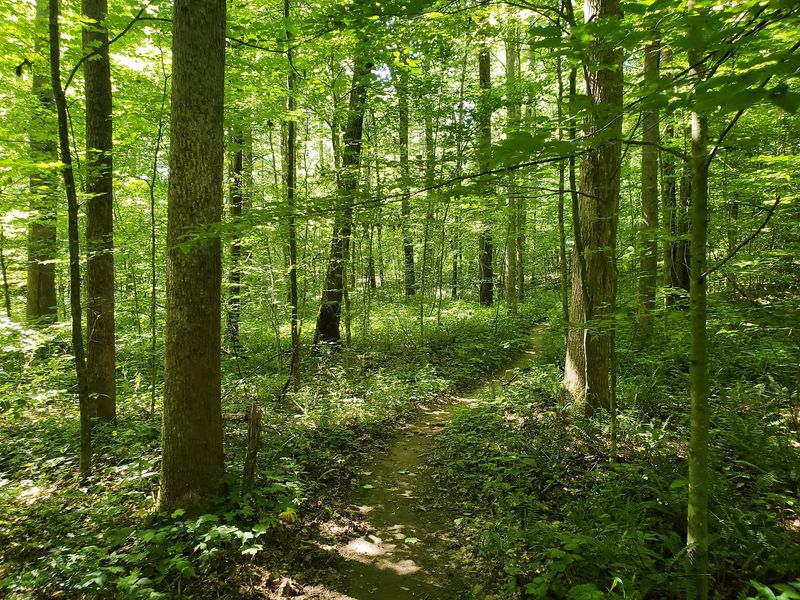
Ten miles sounds manageable until you meet the hills. The loop runs somewhere between 10 and 10.6 miles depending on which trailhead you start from and how many side spurs you wander down.
Elevation gain adds up fast, with reports of well over a thousand feet across the circuit. Trail runners rate it as intermediate to difficult, and I understand why after a couple of steep climbs that had me stopping to catch my breath.
What I liked is the variety. Long stretches of narrow single track roll along ridgelines, then the path drops sharply into a ravine, crosses water, and grinds back up the other side.
There are genuinely flat sections too, which give your knees a break before the next descent.
Footing is the part people underestimate. Roots, loose rock, and slick leaves in autumn all demand attention, so trekking poles are worth carrying if you have them.
Plan on four to six hours at a normal hiking pace, and add extra time if you stop to hunt geodes. Start early rather than late.
Water is heavier than you want on a climb, but bring more than feels necessary anyway, because there is no reliable place to refill once you commit to the loop.
Cherry Lake And Bryant Creek Lake, Two Quiet Water Stops
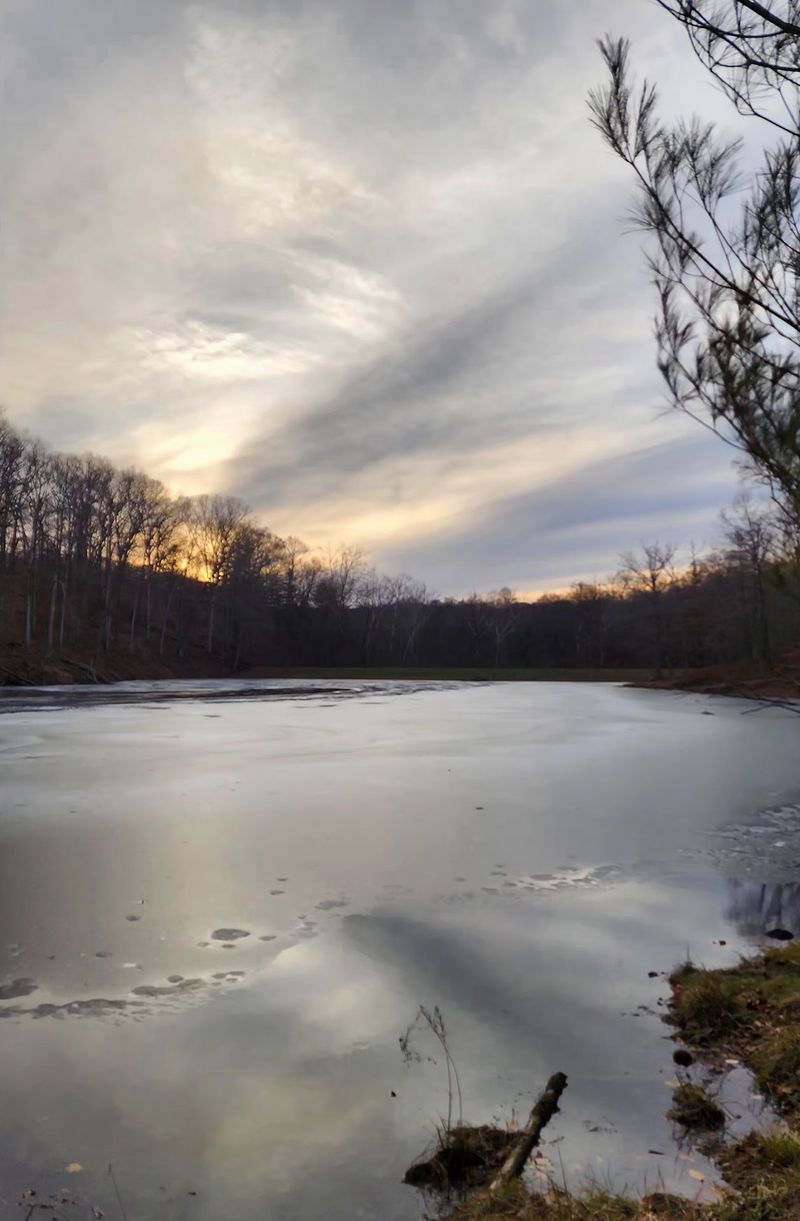
Both lakes on this loop are small, still, and completely unhurried. Cherry Lake sits close to the forest headquarters, and its shelter serves as the trailhead most hikers choose.
Bryant Creek Lake anchors the other end, with its own shelter and parking area. I found it the more peaceful of the two, partly because fewer cars seem to make it out that far.
Neither one is dramatic in a postcard way. What they offer instead is a reflective surface framed by hardwoods, the kind of scene that looks different every hour as light shifts through the canopy.
Frogs, herons, and the occasional splash of a fish break the silence.
Both lakes make natural rest stops, so I used them as checkpoints, snacking at one and stretching at the other. The shelters are handy if a summer storm rolls through unexpectedly.
Anglers show up here too, casting from the banks in the early hours before hikers arrive.
If you only have a short window and cannot commit to the full loop, parking at either shelter and walking a mile or two out and back gives you lakeside time plus a taste of the forest interior without the punishing hills.
It is a solid warm-up for a future full attempt.
The Third Lake That Disappeared Decades Ago
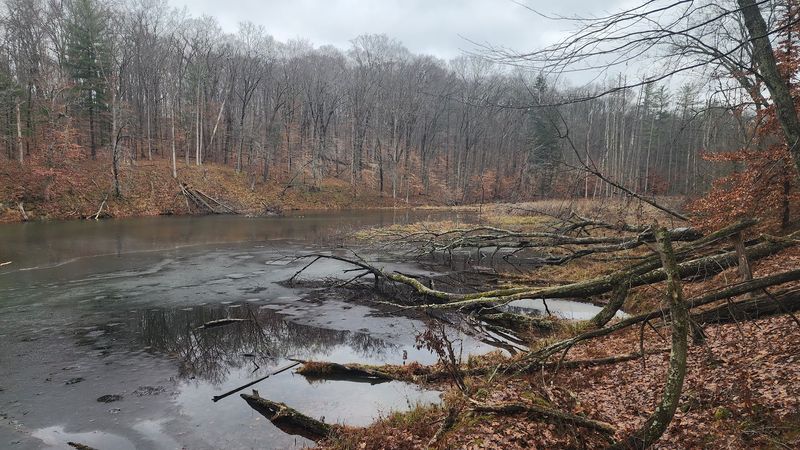
Here is the detail that hooked me. The trail is called Three Lakes, but only two lakes exist today.
Bean Blossom Lake was the missing third. It was drained decades ago following a dam failure, and the name stayed on the map long after the water left.
Walking through that area feels a little strange once you know the backstory. The ground shows the shape of a basin that no longer holds anything, with a creek threading through where open water once sat.
Vegetation has reclaimed most of it, so the change is subtle rather than obvious.
Beanblossom Creek, connected to that former lake, is one of the better geode spots on the whole route. Old water systems have a habit of concentrating interesting rocks, and this one delivers.
I spent longer here than anywhere else on the loop, mostly because the gravel beds were so easy to sift through.
There is something quietly satisfying about a trail that keeps a name for a place that vanished. It turns an ordinary hike into a bit of local history you can walk through.
Keep your eyes open for signs of the old dam structure as you pass, since traces of human engineering hide under all that green.
Nature reclaims things fast around here.
Gear That Makes Geode Hunting Way Easier
Wet feet ruined my first geode outing, and I have never made that mistake again. Waterproof boots or dedicated water shoes belong at the top of your packing list, because you will be standing in creeks whether you plan to or not.
A rock hammer or a chisel handles the actual opening. Swinging a regular claw hammer works in a pinch, though safety glasses matter more than the tool you choose, since fragments fly unpredictably.
Carrying capacity is the part people forget. Geodes are dense and heavy, so a sturdy bucket or a reinforced bag beats a flimsy tote every time.
Ten miles with a sagging sack of rocks is a lesson you only need once.
Newspaper or bubble wrap protects delicate crystal interiors on the drive home. Freshly cracked geodes can shed tiny crystals if they rattle around loose.
Gloves save your knuckles. Add a small brush for cleaning mud off your finds.
One honest tip from experience is to be selective. It is tempting to grab everything round, but hauling five pounds of solid duds up a steep ridge takes the joy out of the whole day, so give each candidate a quick tap test before committing.
A light pack keeps the hike enjoyable.
Know The Collecting Rules Before You Fill Your Bucket
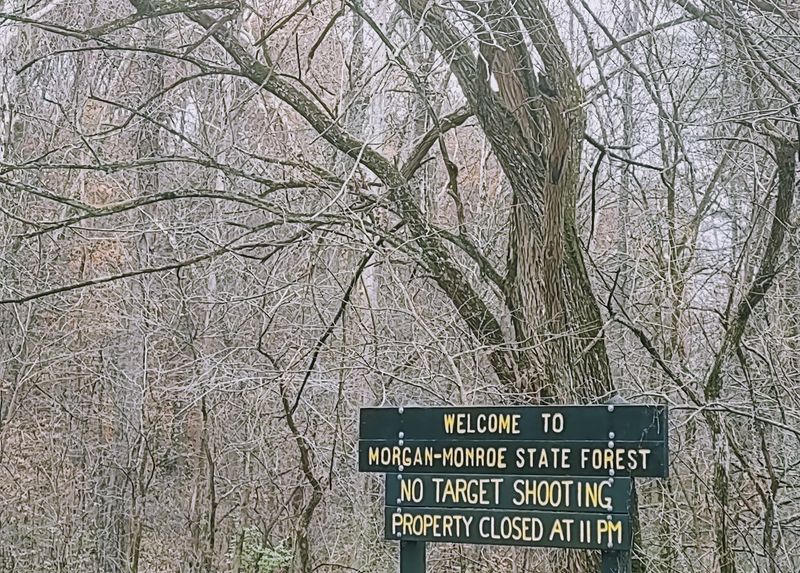
Rules around rock collecting in Indiana confuse a lot of first-timers, and I get why. The short version is that state parks and state forests follow different playbooks.
Collecting is prohibited in Indiana state parks. On national forest land, personal mineral and rock collecting for non-commercial use is generally allowed.
State forest land sits in between, and gathering may be possible with permission. Morgan-Monroe State Forest operates under state forest regulations, which is why the smartest move is a quick stop at the property office before you start hunting.
Staff can tell you what is currently permitted and where.
Calling ahead saves a wasted trip. Regulations get updated, and what applied a few seasons ago may not apply now.
I would rather ask a ranger a simple question than guess wrong.
Keep collecting personal and modest either way. Selling what you find crosses a line that recreational rockhounds should never approach, and respecting limits keeps these creek beds productive for the next curious visitor.
Also worth remembering is that a geode left in place is not wasted. Photographing an especially large specimen and walking away is a perfectly good outcome, especially when it weighs forty pounds and you have six miles to go.
Ask first, hunt second.
Solitude, Fall Color, And Diamond Blazes
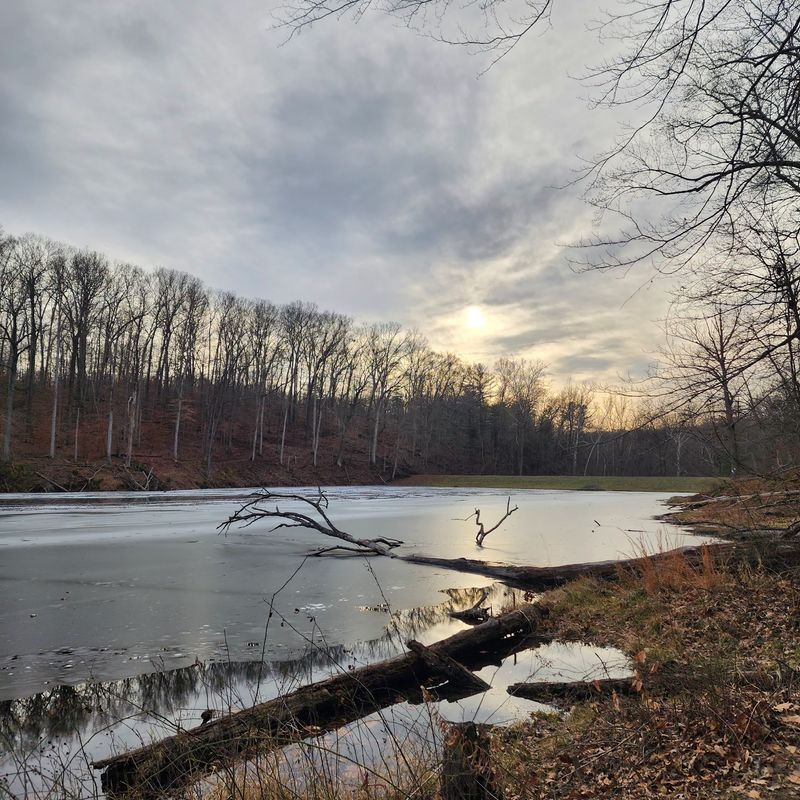
Nobody. That was the headcount for most of my time on this loop, and it is the trail’s quietest superpower.
Despite being a favorite among hikers and trail runners, Three Lakes rarely feels busy. Mature hardwoods swallow sound, and the ridge-and-ravine layout means you often cannot see or hear anyone even when they are nearby.
Autumn is the showstopper. Oaks, maples, and hickories turn the whole canopy gold and rust, and the leaf litter makes even the climbs feel softer underfoot.
Spring brings wildflowers and mushrooms, while winter opens up long views through bare branches.
Navigation runs on white diamond blazes, and they are consistent throughout. I still recommend downloading a map, because a few junctions near the cemetery area have tripped up hikers before.
If you lose the blazes, backtrack instead of improvising.
Cell service is spotty, so tell someone your plan. The forest is open year round, and mornings are the sweet spot for both light and quiet.
What makes this place stick in my memory is not one big overlook but the accumulation of small things, the creek crossings, the crunch of leaves, the odd thrill of pocketing a rock that might be full of crystals.
Address: 6220 Forest Rd, Martinsville, Indiana
