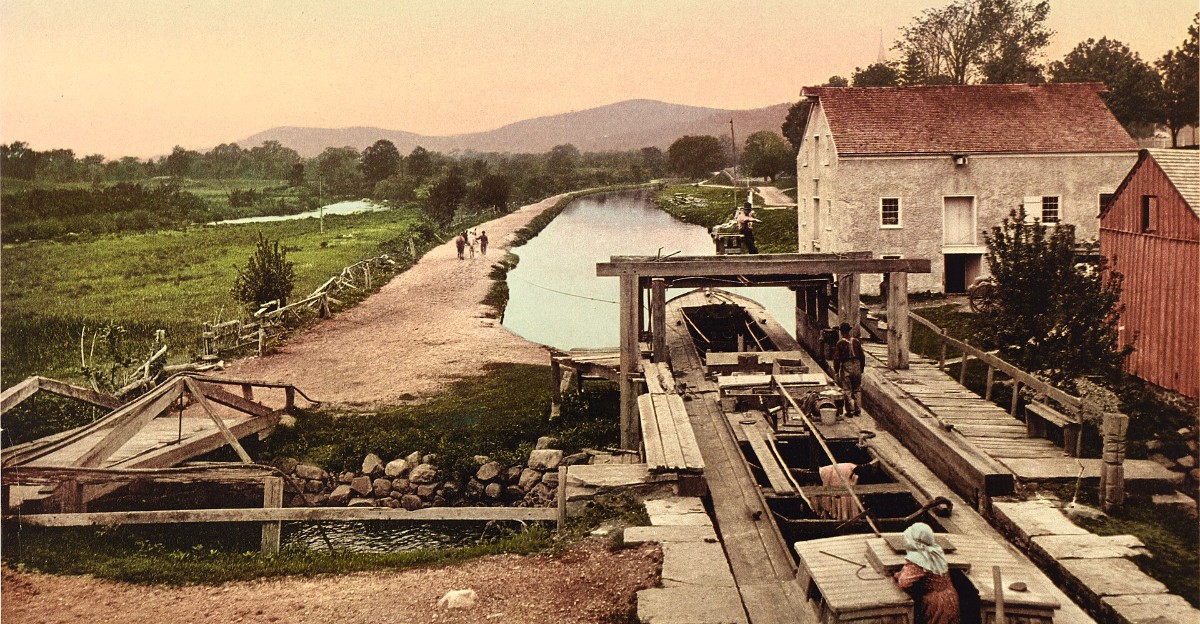
Boats climbing hills sounds like somebody got their transportation plans seriously mixed up.
Yet that was the clever idea behind a remarkable piece of canal engineering that helped shape an old farming community.
Instead of forcing boats through endless conventional locks, the historic system used inclined planes to move them between different elevations.
Pretty impressive for an era without modern engines and computers doing the heavy lifting.
In New Jersey, remnants of this transportation story survive alongside old buildings, rural scenery, and traces of the community that developed around the waterway.
The village has the kind of atmosphere that makes history feel surprisingly close.
Even better, its past involves an invention that sounds almost impossible until you learn how it actually worked.
Boats That Climbed Hills on Rails
Picture a heavy wooden boat full of coal, rolling up a hill on rails like a toy train. That sounds made up, but it really happened on the Morris Canal, the waterway that shaped Waterloo Village.
The canal stretched across northern New Jersey, linking the Delaware River at Phillipsburg to the Hudson River area through Jersey City and Newark. Hills were a big problem, since water does not flow uphill.
Engineers solved it with 23 locks and 23 inclined planes, which were basically short railways built on slopes.
Boats floated onto wheeled cradle cars. Strong wrought iron cables, powered by water-driven turbines, then hauled them up or eased them down.
A single plane could move a boat anywhere from about 35 to 100 feet in height.
Across its whole route, the canal handled a total climb of roughly 1,674 feet. That earned it a reputation as one of the greatest climbing canals anywhere.
Pretty wild for a ditch full of water.
I love how simple the idea seems once you see it explained. Gravity met its match here, and the village grew right alongside that clever solution.
Long Before the Canal, the Lenape
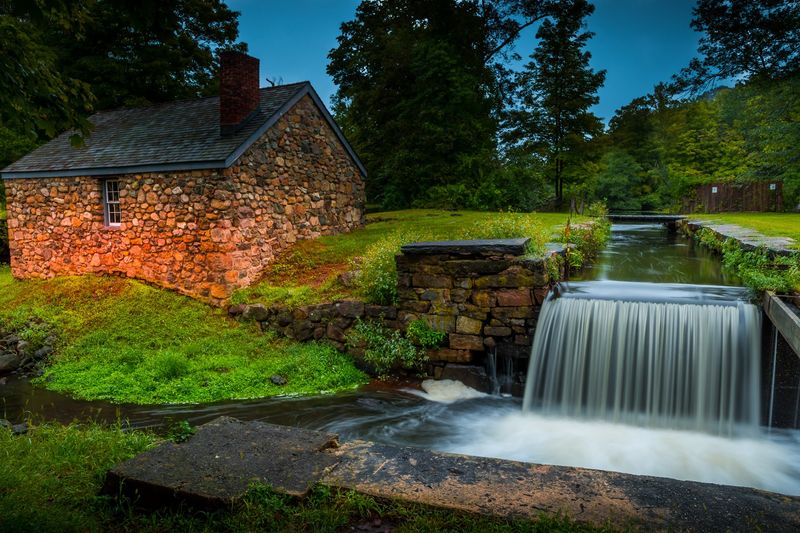
Quiet mornings by the Musconetcong River make it easy to understand why people chose this valley first. The Lenape lived across this region for thousands of years, long before any canal was dug.
They used the river for travel and fishing. The surrounding land gave them food, materials, and shelter, and the forest offered plenty to work with through every season.
Today, Waterloo Village includes a re-created Lenape village that helps visitors picture daily life from that earlier time. You can see how homes were shaped and how the landscape supported a whole community.
My tip? Start your visit here if you can.
It sets the stage nicely. Everything else in the village, from the mills to the canal, makes more sense once you understand that this valley was already home to people who knew it deeply.
Programs focused on Native American heritage are sometimes offered at the site, so keep an eye on event schedules before you go. Kids especially seem to connect with this part of the story, since it feels hands-on and very different from the later buildings.
It is a thoughtful beginning to the whole visit.
Iron Forges and Open Farmland
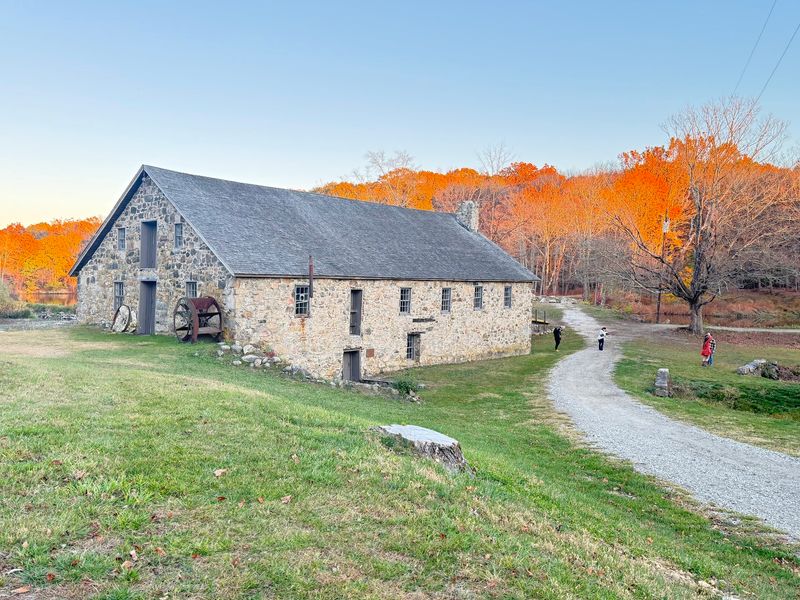
Fun fact for your next trivia night. The farms here exist partly because iron makers cut down so many trees.
During the 1700s, the Andover Iron Works operated in the area, and iron production needed huge amounts of charcoal. Forests were cleared to make it.
When the iron work faded, the bare, open land turned out to be great for farming.
The Smith family stepped in and focused on agriculture. By 1831, they owned more than 2,000 acres, which is a lot of ground to plow with old-fashioned tools and animals.
The area was known back then as Andover Forge Farm. Sometime in the middle of the 1800s, the Smiths renamed it Waterloo, and that name stuck around.
I find it fascinating how one industry quietly set up the next. Iron cleared the hills, farming filled them, and then the canal arrived to carry goods out to bigger markets.
As you wander, look at how open some of the land still feels compared to the thick woods nearby. Those clearings hint at the working past.
The fields are calm now, but they were once very busy.
A Halfway Stop Full of Mules and Motion
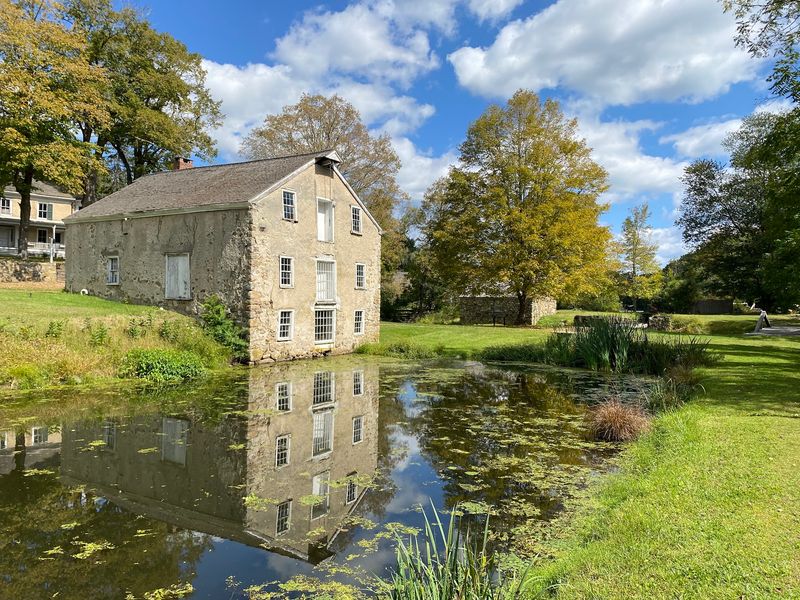
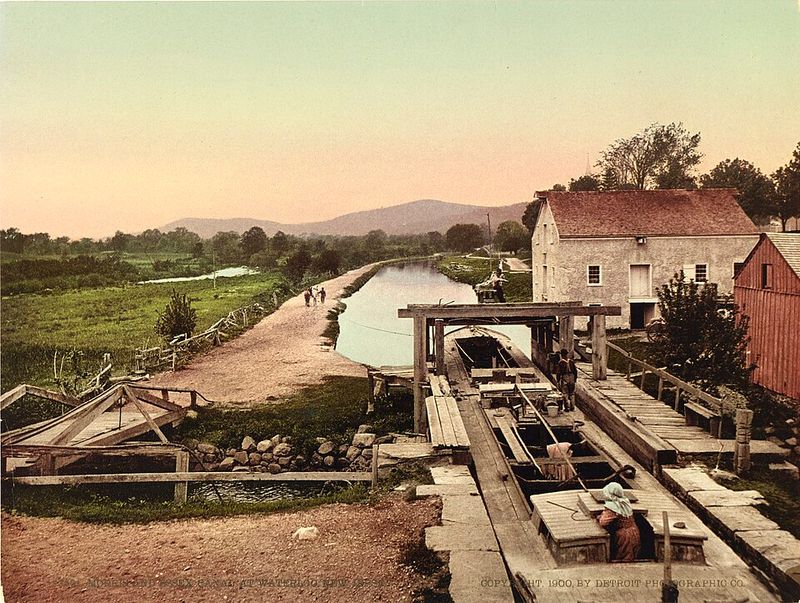
Mules were the real heroes of canal life, and Waterloo gave them a well-earned break. Sitting roughly halfway along the Morris Canal, the village became a natural rest stop.
Boats were towed by mule teams walking on a path beside the water. Here, the animals could rest, and boats could be checked and serviced before heading on.
That steady traffic helped the community grow quickly. When the canal opened, the Smith land became more valuable, and new businesses popped up to serve passing crews.
A general store sold supplies. A blacksmith shop kept mules shod and tools working.
There were homes for canal workers, a lock tender house, an inn, a church, a gristmill, and a sawmill too. Basically, everything a small working town needed was packed into this little valley.
Close your eyes for a second near the water. You can almost imagine shouting boat crews, clanking metal, and hooves on dirt.
The canal traffic peaked in the late 1860s, mostly carrying anthracite coal from Pennsylvania. For a while, this sleepy spot was right in the middle of a very important route across the state.
The Blacksmith Shop and General Store
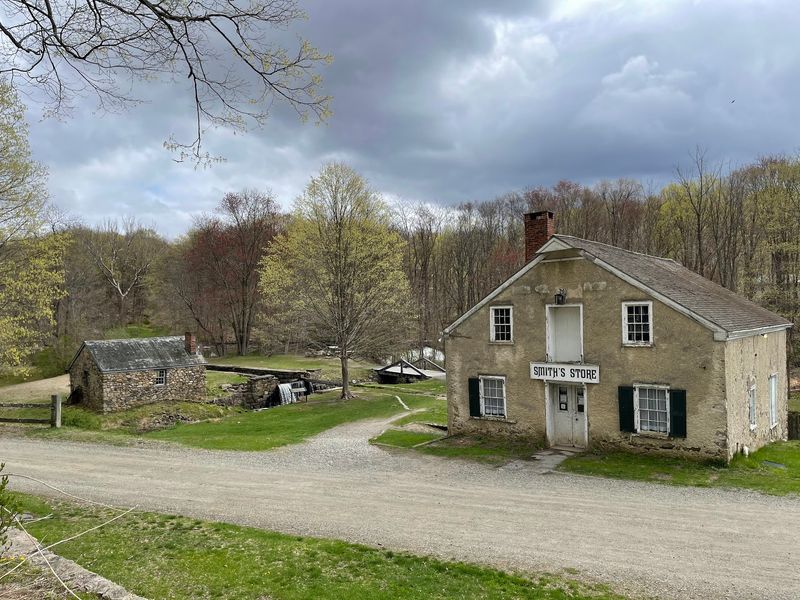
Some buildings just feel useful, even when they sit quiet. The blacksmith shop at Waterloo Village is one of them.
Back in the canal days, this was where mules got their shoes and broken tools got fixed. Without a good blacksmith, the whole canal operation would have slowed down fast.
Think of it as the repair shop for an entire transportation system.
Nearby, the general store tells a different kind of story. Canal crews, farm families, and local workers all needed supplies, and this was the place to find them.
Inside the buildings, you get a feel for how small spaces held so much daily activity. Not every structure is always open, but guided tours and open house days are the best way to see interiors.
Quick heads up. Photos are not allowed inside the structures, so plan to soak in the details with your eyes instead.
Honestly, that is not the worst thing.
I like pairing these two stops together. One shows how things were made and repaired, while the other shows how people shopped and traded.
Together, they paint a clear picture of village life.
When Trains Won the Race
Every clever invention eventually meets a faster one. For the Morris Canal, that rival was the railroad.
Trains could move goods quicker and more reliably. They also kept running in winter, while the canal often froze solid right when people needed coal the most.
That was a tough problem to overcome.
After traffic peaked in the late 1860s, business slowly faded. By the early 1900s, very few boats used the canal at all.
It was officially abandoned in 1924, and much of its structure was taken apart in the years that followed.
Waterloo felt the change hard. Owners moved away, and the village grew quiet and mostly empty by the time of the Great Depression.
Here is a surprising twist. During the 1930s and 1940s, travelers passing through on the move found shelter in the empty buildings.
Their presence helped keep some structures from falling apart completely.
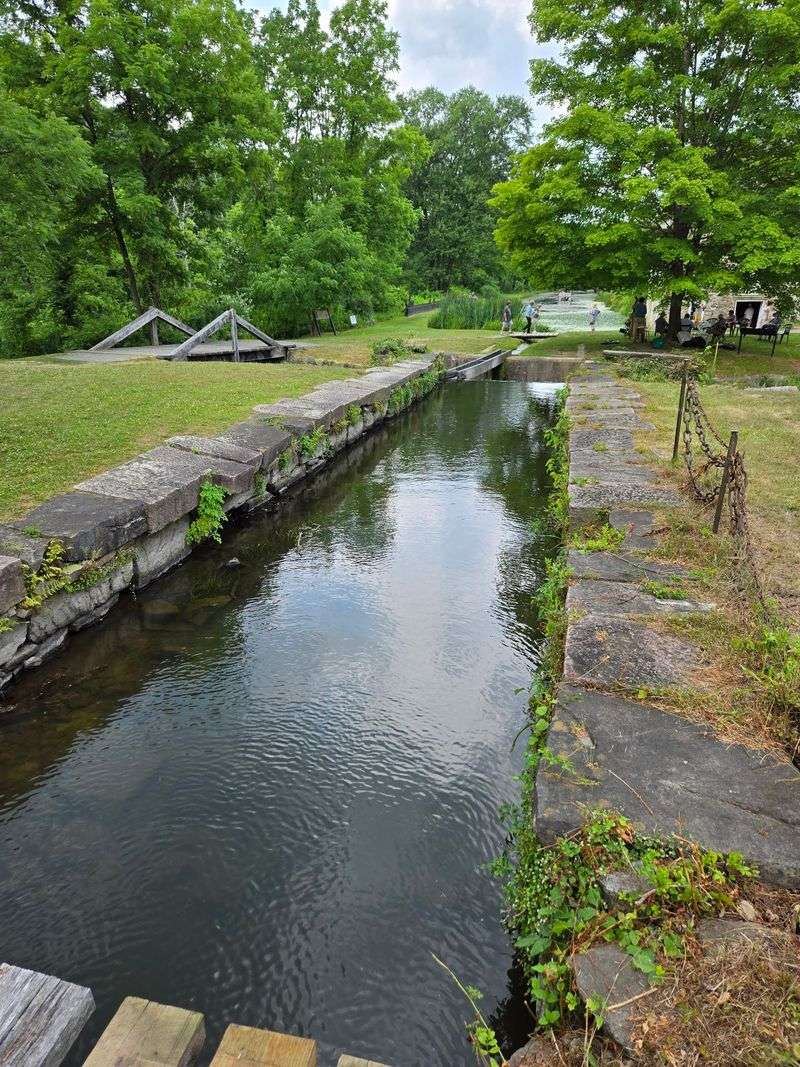
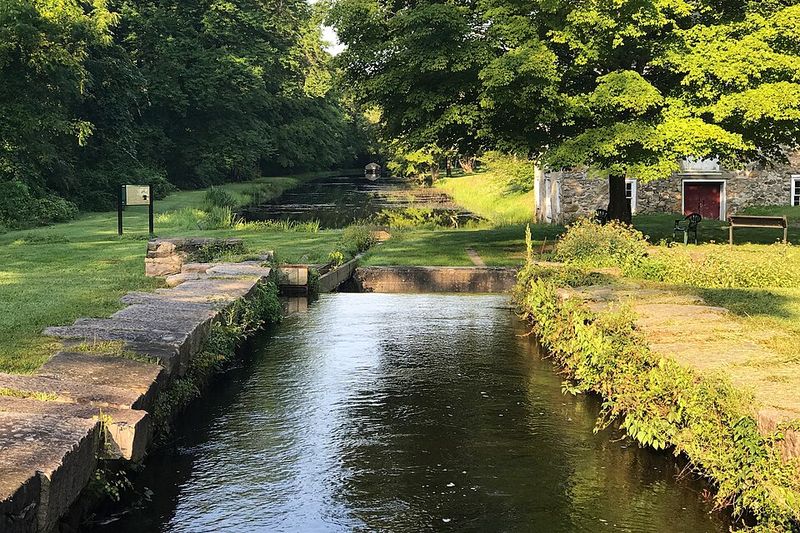
It is a bittersweet chapter, but an important one. Standing beside the old canal section today, the quiet water holds a reminder that progress can leave lovely places behind, waiting patiently to be noticed again.
A Museum Full of Canal Secrets
History nerds, this one is for you. And everyone else too, honestly.
The Canal Society of New Jersey runs a museum at Waterloo Village packed with artifacts, photos, and exhibits about the Morris Canal. It does a great job explaining how the whole system worked, from locks to those famous inclined planes.
One highlight is a model of Inclined Plane 9 West, which makes the boat-lifting idea much easier to picture. Seeing it in miniature helped everything click for me.
Old photographs show real canal scenes, with boats, workers, and towns along the route. They add faces and texture to the story.
You will also find information about the original canal boat connected to the site.
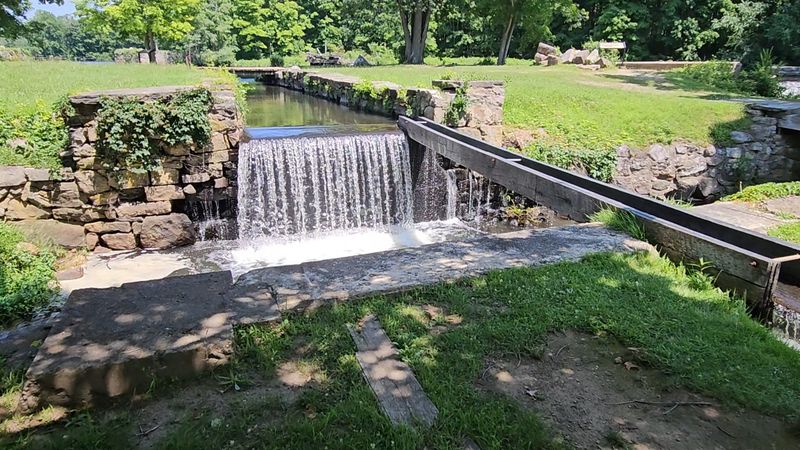
A surviving section of the canal and a lock gate sit nearby, so you can step outside and compare the exhibits to the real thing. That back and forth makes the visit feel complete.
Special canal history days are sometimes held here as well. Check the schedule ahead of time, since these events open up more of the site.
Give yourself enough time, because this museum rewards slow, curious browsing.
Wildflowers, Alpacas, and Fall Colors
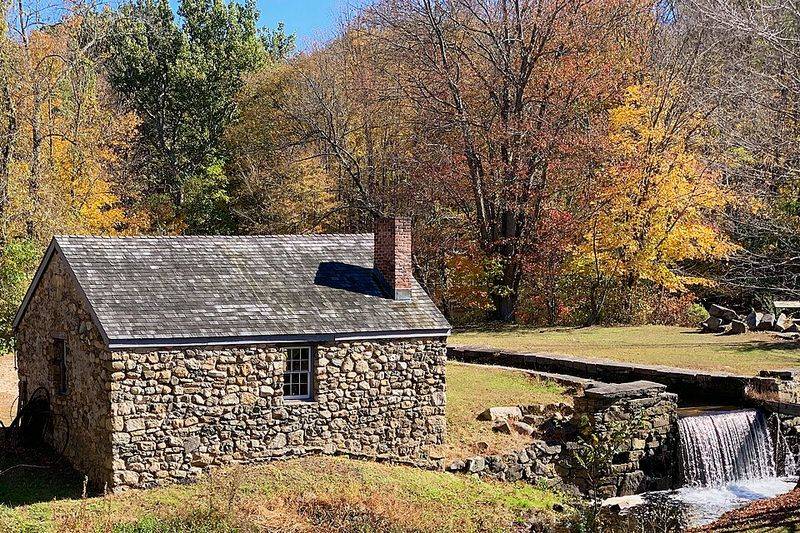
Autumn here is a showoff, and nobody is complaining. Bright leaves frame the old houses and reflect off the canal water.
The village sits inside Allamuchy Mountain State Park, so nature is everywhere. Trails wind through the woods, wildflowers pop up in warmer months, and deer sometimes wander through in summer.
Small critters scurry along the paths too.
Then there are the alpacas. Yes, really.
The site keeps alpacas and birds, and they tend to steal attention from even the most impressive old buildings.
Shady spots with benches make it easy to sit and rest. A picnic area is a nice option for families who want to bring lunch and stay awhile.
Practical tip time. Paths are unpaved and can be uneven or hilly, so wear sturdy shoes.
Strollers and wheelchairs may find some areas challenging.
Dogs on leashes are a common sight, which makes the place feel relaxed and friendly. Whether you come for history or just a peaceful walk, the scenery adds a whole extra layer to the day.
Bring a camera for the outdoor views.
Planning a Visit to the Old Canal Town
A good visit here starts with a little planning and a lot of curiosity. Lucky for you, both are easy.
The grounds are typically open from early morning into the evening, which makes this a flexible stop for a weekend walk. Parking is convenient, and the visitor center is a handy first stop.
Clean restrooms are available too.
Want to see inside the buildings? Aim for a scheduled tour or an open house day.
Without one, you can still stroll past the houses, mills, and shops and peek at plenty from outside.
Seasonal events bring extra life to the village. Over time, these have included Civil War reenactments, heritage programs, and canal history celebrations.
The site also works as an event and wedding venue, so you might spot a celebration in progress.
I would budget a few hours at least. Rushing here feels wrong.
For a lovely mix of engineering, farming history, and quiet nature in New Jersey, this place truly delivers. You can find Waterloo Village Historic Site at 526 Waterloo Rd, Stanhope, NJ 07874.
