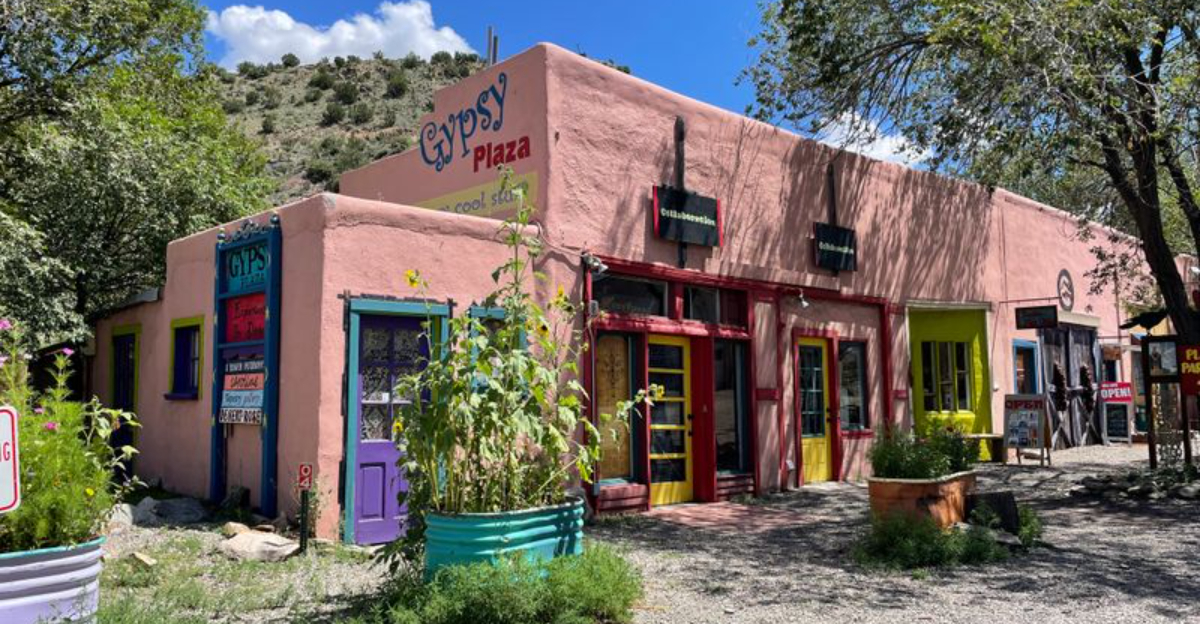
Tucked into the Ortiz Mountains along the scenic Turquoise Trail, Madrid is a tiny New Mexico town that refuses to blend into the desert landscape.
Once a coal mining hub that nearly vanished after its mines closed, this quirky community has transformed into an explosion of color, creativity, and delightful unpredictability.
Artists, free spirits, and wanderers have claimed the old mining buildings and turned them into galleries, studios, and shops that line the main road through town.
Visitors come here not for polished tourist attractions, but for the raw energy of a place where imagination runs wild and every corner offers something unexpected.
The Ghost Town That Refused to Die

Madrid’s story reads like a phoenix tale written in desert dust and determination.
Coal mining operations brought life to this remote mountain location in the 1800s, and by the 1920s, the town was booming with miners and their families.
The Oscar Huber Ballroom hosted dances, and the company even installed elaborate Christmas light displays that attracted visitors from across the state.
When the mines shut down in the 1950s, Madrid became a genuine ghost town with empty buildings slowly surrendering to the elements.
Most expected the desert to reclaim what remained, but something remarkable happened instead.
Artists and counterculture seekers discovered these abandoned structures in the 1970s and saw potential where others saw ruins.
They purchased old company buildings for almost nothing and began the transformation that continues today.
Walking through Madrid now, you can still spot remnants of its mining past tucked between vibrant murals and repurposed structures.
Old mining equipment sits as outdoor sculpture, and some galleries occupy buildings that once housed miners and their equipment.
This layering of history creates a fascinating texture throughout the town.
The contrast between Madrid’s gritty industrial bones and its current artistic soul gives the place an authenticity that purpose-built tourist towns cannot replicate.
Every weathered board and rusted relic tells part of a larger story about resilience and reinvention.
Understanding this history makes exploring Madrid more meaningful because you are witnessing an ongoing transformation rather than a static attraction.
The town serves as living proof that communities can evolve and survive by embracing radical change.
Galleries Packed Into Every Available Space
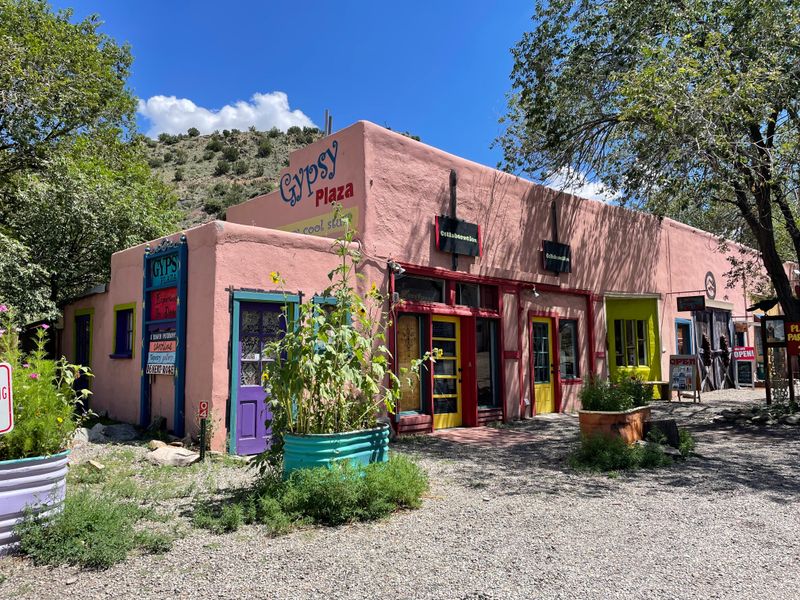
Art is not just displayed in Madrid; it bursts from every doorway and spills onto sidewalks in a glorious jumble of creativity.
More than forty galleries and studios crowd along State Road 14, each one occupying a former mining building or company house.
The variety astounds first-time visitors because there is no single aesthetic or style dominating the scene.
One gallery might showcase intricate turquoise jewelry and traditional Southwestern pottery, while the next door neighbor displays abstract paintings or whimsical metal sculptures.
Leather workers, glass blowers, photographers, and painters all claim their corner of this creative community.
Many artists actually live in the spaces behind or above their galleries, blurring the line between workspace and living area.
This arrangement gives Madrid an authentic feeling because you are often buying directly from the person who created what catches your eye.
Conversations with artists reveal their stories of how they ended up in this unlikely spot.
Some arrived decades ago as part of the original wave of settlers, while others discovered Madrid more recently and felt immediately drawn to its unconventional energy.
The town welcomes experimentation and oddity in ways that more established art communities sometimes resist.
Budget constraints and the rustic nature of the buildings mean displays often have a DIY quality that adds to the charm.
You might find paintings propped against exterior walls, sculptures arranged in former coal yards, or jewelry displayed in repurposed mining equipment.
This informal presentation style creates an accessible atmosphere where browsing feels relaxed rather than intimidating.
Even visitors who do not typically enjoy gallery hopping find themselves drawn into Madrid’s creative spaces.
Colors That Challenge the Desert Palette
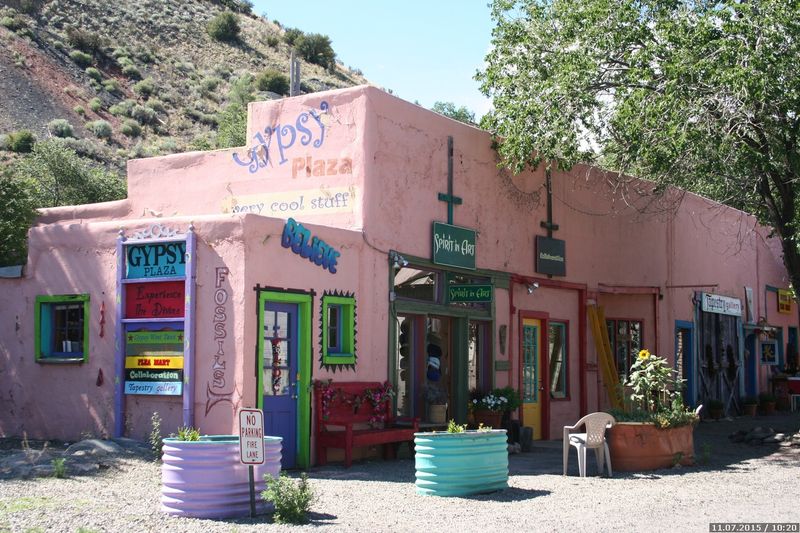
Madrid attacks your expectations of what a desert town should look like with an explosion of hues that would make a rainbow jealous.
Turquoise, magenta, lime green, electric blue, and sunset orange cover buildings that might otherwise blend into the surrounding landscape.
This riot of color serves as both rebellion and celebration, a visual declaration that Madrid operates by its own rules.
The painting choices seem intentionally bold, as if the residents collectively decided that subtlety had no place in their community.
Murals sprawl across entire building facades, depicting everything from abstract patterns to portraits to fantastical creatures.
Some structures wear multiple colors at once, with different sections painted in contrasting shades that somehow work together.
Even utilitarian objects like fences, benches, and trash cans receive decorative treatment.
The visual impact hits you the moment you round the curve and Madrid comes into view along the highway.
Against the muted tones of juniper-dotted hills and dusty earth, these vibrant buildings pop with almost startling intensity.
Photographers find endless subjects here because the light interacts with these surfaces in constantly changing ways throughout the day.
Morning sun brings out different qualities than afternoon shadows, and the low angle of winter light creates effects impossible to capture in summer.
This commitment to color extends beyond buildings to vehicles, signs, and personal decorations that residents add to their spaces.
The cumulative effect creates an environment that feels almost dreamlike in its intensity.
Some might find it overwhelming at first, but most visitors quickly embrace the joyful chaos of Madrid’s chromatic choices.
The Mine Shaft Tavern’s Legendary Atmosphere
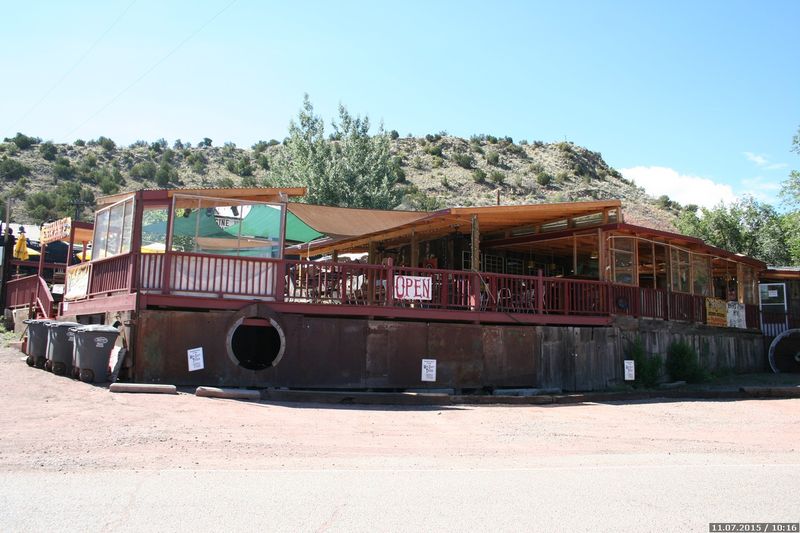
Stepping into the Mine Shaft Tavern at 2846 State Road 14 feels like entering a time capsule that someone filled with beer and good stories.
This legendary watering hole occupies a building constructed in 1947 and retains an authenticity that modern bars cannot manufacture.
The longest stand-up bar in New Mexico stretches forty feet, offering plenty of room for travelers and locals to settle in.
Walls display an eclectic collection of mining memorabilia, old photographs, and curious objects that accumulated over decades.
The tavern serves as Madrid’s unofficial community center where artists, bikers, tourists, and longtime residents mix freely.
Live music fills the space on weekends, with blues, rock, and country acts performing for enthusiastic crowds.
The outdoor patio provides relief during warmer months and offers views of the surrounding hills.
Menu offerings include burgers, sandwiches, and other straightforward fare that pairs well with the cold beer selection.
Nobody comes here for fancy cocktails or trendy small plates; the appeal lies in the unpretentious atmosphere and the characters you might encounter.
Conversations at the bar range from local gossip to philosophical debates to tales of how various people ended up in Madrid.
The tavern welcomes everyone but maintains a distinctly local flavor that reminds you this is a real community, not a theme park.
Visiting the Mine Shaft Tavern provides essential context for understanding Madrid’s social dynamics and the bonds that hold this unconventional town together.
The place embodies the relaxed, slightly rough-around-the-edges character that defines the entire community.
Whether you stop for a quick beer or end up staying for hours, the tavern offers a genuine slice of Madrid life.
Outdoor Sculpture Gardens That Defy Explanation
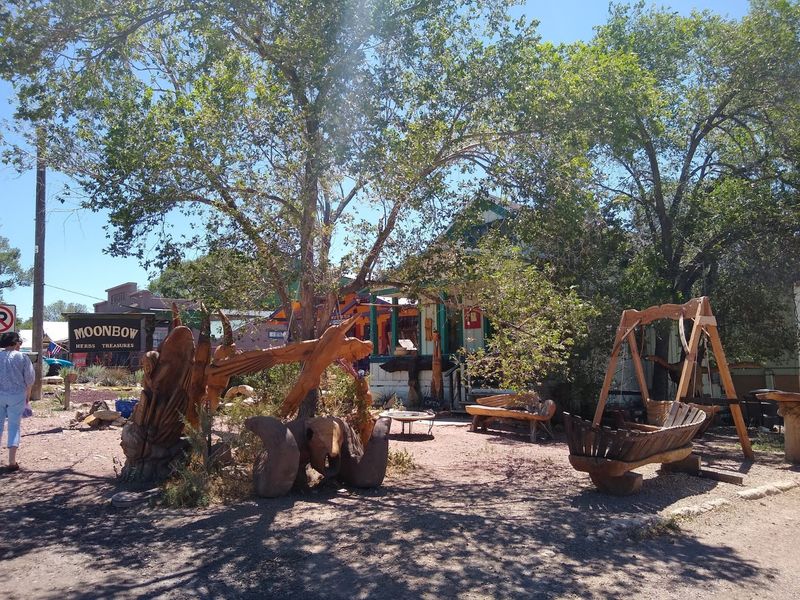
Wander behind the main street galleries and you will discover outdoor spaces where art takes three-dimensional form in the most unexpected ways.
Madrid’s sculpture gardens range from carefully curated displays to gloriously chaotic collections that seem to have grown organically over time.
Metal workers transform old car parts, mining equipment, and industrial scraps into creatures, abstract forms, and kinetic pieces that move with the wind.
One yard might feature towering metal flowers reaching toward the sky, while another displays a menagerie of animals welded from found objects.
The desert environment provides the perfect backdrop for these installations, with clear skies and dramatic light enhancing their visual impact.
Some sculptures incorporate humor, like oversized insects or cartoon characters constructed from unlikely materials.
Others take a more serious approach, creating pieces that comment on environmental themes or human nature.
The informal nature of these outdoor galleries means boundaries between public and private space sometimes blur delightfully.
Artists welcome visitors to wander through their yards and examine works up close, though respecting property lines remains important.
Photography opportunities abound because the combination of industrial materials, creative vision, and natural surroundings produces striking compositions.
Seasonal changes affect the gardens differently than traditional indoor galleries, with summer heat, winter snow, and spring winds all becoming part of the artistic experience.
Some pieces develop rust patinas or weather in ways that become part of their character.
These outdoor spaces reveal how Madrid’s creative spirit extends beyond commercial galleries into personal expression and environmental art.
Taking time to explore these areas provides a fuller picture of the town’s artistic ecosystem.
The Turquoise Trail’s Most Photogenic Stop
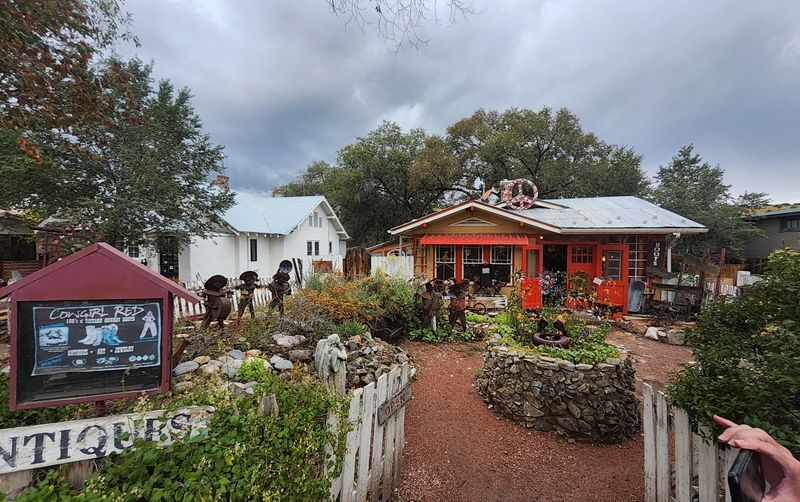
Madrid occupies a prime position along the Turquoise Trail National Scenic Byway, the route connecting Albuquerque and Santa Fe through stunning high desert terrain.
Travelers cruising this road often plan their journey specifically to include a Madrid stop because the town delivers visual rewards unlike anywhere else on the route.
The contrast between the natural landscape and the human-created color explosion makes Madrid irresistible to anyone with a camera.
Photographers arrive during golden hour to capture how late afternoon light warms the already vibrant building colors.
The surrounding Ortiz Mountains provide dramatic backdrop, especially when storm clouds gather or snow dusts the higher peaks.
Spring brings wildflowers that add another layer of color to compositions, while autumn cottonwoods contribute golden accents.
Social media has amplified Madrid’s reputation as a must-photograph location, with distinctive buildings and murals becoming recognizable backdrops.
The compact nature of the town means you can capture its essence in a relatively short visit, though lingering reveals more nuanced details.
Architectural photographers appreciate the quirky building styles and creative renovations that characterize Madrid’s structures.
Street photography enthusiasts find endless subjects among the eclectic mix of visitors and residents who populate the main drag.
The town’s visual abundance means even casual smartphone photographers leave with memorable images.
Madrid understands its photogenic qualities and generally welcomes photographers, though asking permission before photographing individuals or private property shows proper respect.
This photographic appeal has helped spread awareness of Madrid beyond regional travelers to international visitors seeking authentic Southwestern experiences.
The town appears frequently in travel features and social media feeds, building its reputation as a destination worth the detour.
Seasonal Events That Embrace the Eccentric
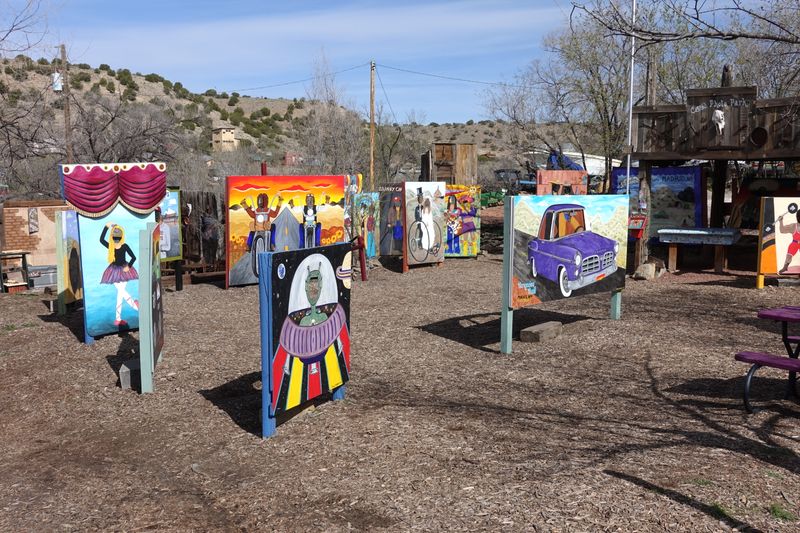
Madrid celebrates its unconventional character through events that range from traditional to wonderfully weird.
The annual Fourth of July parade has earned legendary status for its anything-goes approach that encourages creativity over formality.
Participants might include vintage cars, decorated bicycles, costumed walkers, and homemade floats that defy easy categorization.
The parade route follows the main street, with spectators lining both sides to cheer the procession.
Christmas transforms Madrid into a twinkling wonderland that recalls the town’s historic reputation for elaborate holiday light displays.
Modern residents continue this tradition with decorations that cover buildings, trees, and every available surface.
The Madrid Christmas Open House draws visitors who browse galleries while enjoying the festive atmosphere and often purchasing unique gifts directly from artists.
Studio tours occur periodically throughout the year, offering behind-the-scenes glimpses into how Madrid’s artists create their work.
These events allow deeper engagement with the creative community and reveal the techniques and inspirations behind finished pieces.
Live music happens regularly at the Mine Shaft Tavern and occasionally in outdoor spaces when weather permits.
The town’s small size means events feel intimate and accessible rather than overwhelming.
Visitors can easily strike up conversations with artists, performers, and fellow travelers.
Checking Madrid’s event calendar before visiting can enhance your experience, though the town offers plenty to explore even during quieter periods.
The community’s enthusiasm for celebration reflects a broader philosophy about making joy and creativity central to daily life rather than occasional diversions.
The Reality of Life in an Artists’ Colony

Behind Madrid’s colorful facade lies the practical reality of building a life in a remote former mining town with limited infrastructure.
Artists here trade conventional comforts for creative freedom and affordable space, accepting challenges that would deter less committed individuals.
Many buildings lack modern insulation, making winters cold and summers hot despite the moderate elevation.
Water and utilities can be unpredictable, and reliable internet remains a relatively recent addition.
The nearest grocery stores and essential services require a drive to nearby communities.
Making a living solely from art sales proves difficult even in this artist-friendly environment, so many residents supplement income through other means.
Some teach workshops, others work remotely in unrelated fields, and a few have retirement income that supports their creative pursuits.
The small population means everyone knows everyone, which creates both supportive community bonds and occasional friction.
Privacy becomes a negotiated concept when your neighbors are also your business district and social circle.
Despite these challenges, residents express fierce loyalty to Madrid and the lifestyle it enables.
They value the freedom to pursue creative visions without conforming to mainstream expectations.
The town attracts people who prioritize authenticity and self-expression over material comfort or conventional success.
Understanding these realities adds depth to appreciating what Madrid represents and what residents sacrifice to maintain this unusual community.
Visitors gain richer perspective when they recognize that Madrid’s charm emerges from genuine commitment rather than calculated tourist appeal.
Where Old West Meets Counterculture
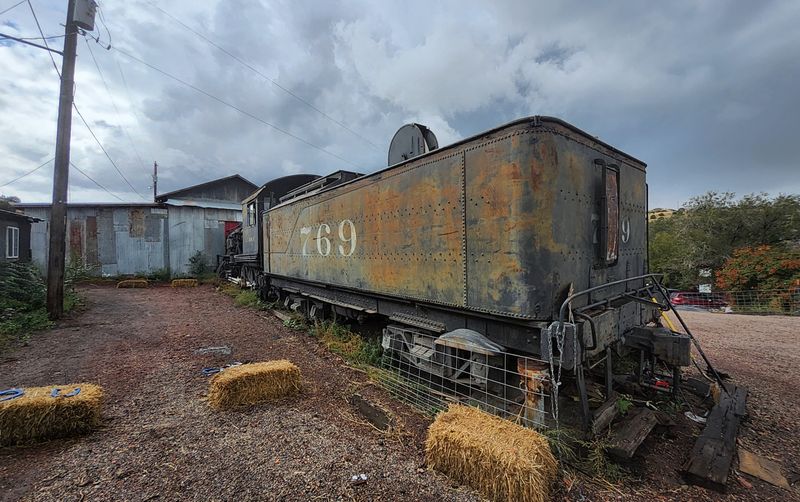
Madrid occupies a fascinating cultural crossroads where mining town heritage collides with 1970s counterculture and contemporary artistic sensibilities.
This collision creates a unique atmosphere that defies simple categorization.
Elements of Old West aesthetic persist in the weathered wooden buildings and mining equipment scattered throughout town.
Simultaneously, the free-spirited ethos of the hippie era remains visible in political bumper stickers, peace symbols, and an overall tolerance for alternative lifestyles.
Contemporary art trends mix with traditional Southwestern crafts, creating juxtapositions that surprise visitors expecting either pure Western kitsch or exclusively modern gallery art.
The population includes aging original settlers who arrived during Madrid’s revival alongside younger artists drawn by affordable space and creative community.
Bikers rumble through on weekend rides, stopping at the Mine Shaft Tavern alongside tourists from around the world.
This demographic and cultural mixing produces an environment where seemingly contradictory elements coexist comfortably.
A gallery selling fine art pottery might sit next to a shop offering tie-dye clothing and crystals.
Classic country music from one establishment might blend with rock from another venue down the street.
Madrid embraces these contradictions rather than trying to resolve them into a coherent brand identity.
The resulting atmosphere feels genuinely eclectic rather than artificially curated.
Visitors appreciate this authenticity because it reflects how real communities evolve through layers of history and changing populations.
Madrid demonstrates that places need not choose single identities but can celebrate multiple influences simultaneously.
Planning Your Madrid Adventure
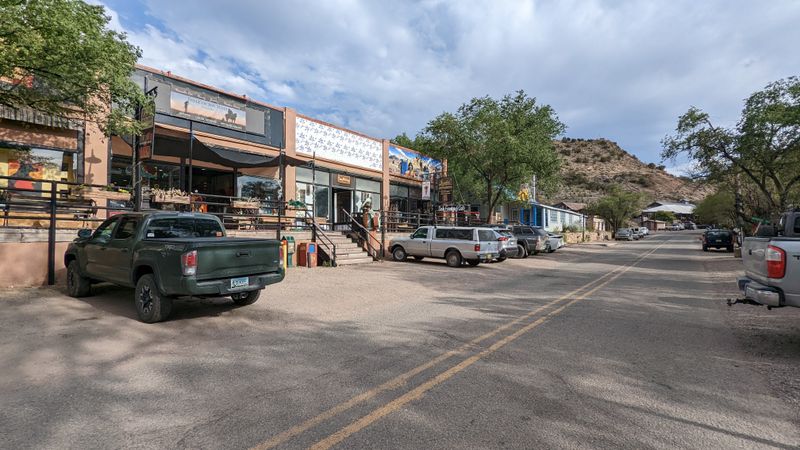
Madrid rewards spontaneous exploration, but a little planning helps maximize your experience in this compact but content-rich destination.
Most galleries and shops open around ten in the morning and close by five or six in the evening, with some variation depending on season and individual owner schedules.
Weekends see more activity and fuller hours than weekdays, when some establishments might close or keep irregular schedules.
Allocate at least two hours for a meaningful visit, though art enthusiasts and photographers could easily spend half a day.
The entire town stretches along a single main road, making navigation simple and parking generally available along the street.
Comfortable walking shoes prove essential because you will cover ground on foot exploring galleries and outdoor spaces.
Summer brings intense sun and heat, so sunscreen, hats, and water bottles become necessary accessories.
Spring and fall offer ideal visiting conditions with moderate temperatures and often dramatic skies.
Winter can be quite cold, especially when wind sweeps down from the mountains, but the town takes on a different character worth experiencing.
Madrid sits roughly thirty miles from both Albuquerque and Santa Fe, making it an easy day trip from either city.
Combining your Madrid visit with other Turquoise Trail stops creates a fuller day exploring the scenic byway.
Bring cash because some smaller galleries and vendors may not accept cards despite increasing digital payment adoption.
Respect that this is a real community where people live and work, not just a tourist attraction.
Madrid offers a refreshing alternative to more polished destinations, rewarding visitors who appreciate authenticity, creativity, and a healthy dose of beautiful chaos.
Dear Reader: This page may contain affiliate links which may earn a commission if you click through and make a purchase. Our independent journalism is not influenced by any advertiser or commercial initiative unless it is clearly marked as sponsored content. As travel products change, please be sure to reconfirm all details and stay up to date with current events to ensure a safe and successful trip.
