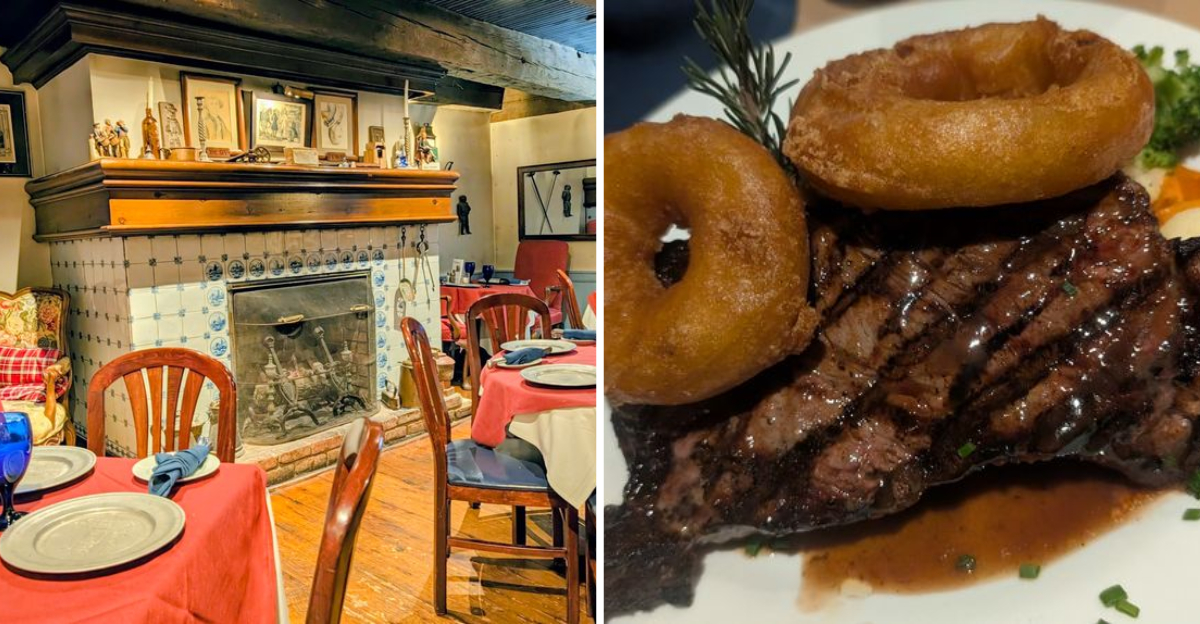
Stone front that looks like it was built by hand, dark heavy beams, fireplaces that are actually lit, and floorboards that creak in a way that feels earned rather than staged. That is what I found behind the low doorway of a New York restaurant on a gray afternoon, and I had only planned to stay for a quick bite.
The building predates the country itself, and I have eaten in plenty of old places, but this one is a different level of old. I ducked through the door and the smell of woodsmoke hit me before anyone said hello.
The beams are original, the fireplaces are working, and the menu leans into the kind of hearty fare that would have satisfied a traveler arriving by carriage in the 1700s.
I sat at a table near the hearth and watched the flames flicker against the stone, trying to imagine the conversations that had taken place in that same room over two centuries.
By the time my plate arrived, I had stopped thinking of it as a restaurant and started thinking of it as a place I got to sit inside of.
The Stone Front on Main Street That Stops You in Your Tracks
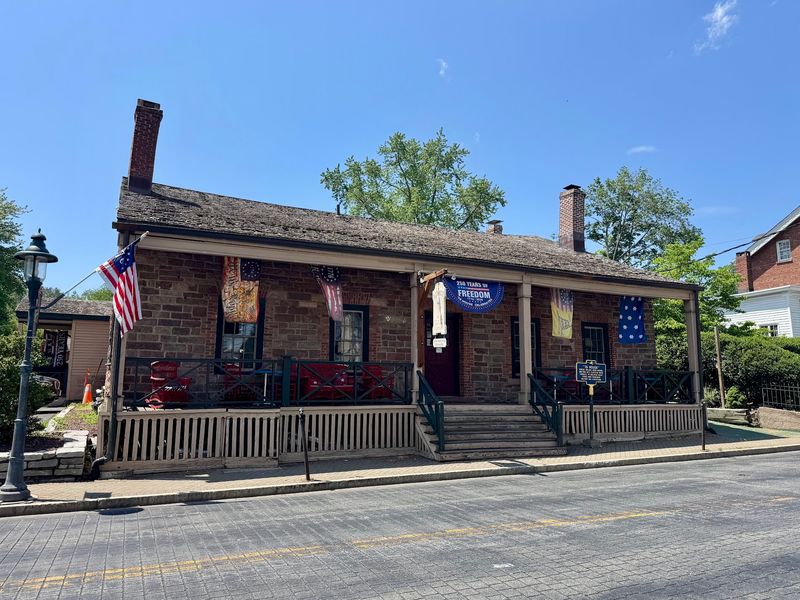
My first reaction pulling up was that I had somehow taken a wrong turn into a living history museum. The building is low, wide, and made of stacked stone with weathered clapboard, sitting close to the road the way old structures do.
Records point to construction either in 1668 or somewhere between 1752 and 1754, built as both a home and a tavern by Casparus Mabie. Either way, it was standing long before New York AND United States existed as a country.
It is listed on the National Register of Historic Places and marked as an official Path Through History Site, which explains the small plaques you will spot near the entrance.
There is a large parking lot, which surprised me for a building this old on a village street. That practical detail makes a visit far easier than I expected.
Take a minute outside before you go in. Look at the roofline, the thickness of the walls, the way the doorway sits lower than modern doors because people were shorter then.
I have driven past prettier facades, but I have rarely stood in front of one that felt this heavy with time.
Washington Ate Here, and the Building Has Not Forgotten
History nerds, this is your section. General George Washington dined in these rooms, along with other Continental Army generals, and the tavern served as a meeting spot for local Patriots during the Revolutionary War.
The most repeated story here involves a small watercolor portrait of Benedict Arnold on the tap room mantel, said to have been turned upside down after Arnold’s betrayal came to light. It still hangs that way.
Whether every detail of every legend holds up perfectly, the documented core is remarkable enough on its own. Real figures from the Revolution genuinely passed through this doorway.
Standing near that mantel got to me more than I expected. I am not usually sentimental about old buildings, but there is something about occupying the same square of floor as people you read about in school.
Bring anyone in your life who loves American history and watch them light up. My advice is to let them talk.
The nickname of America’s oldest tavern gets tossed around a lot, and here it comes with paperwork, plaques, and a National Register listing to back it up.
Four Fireplaces, Low Beams, and Rooms That Glow
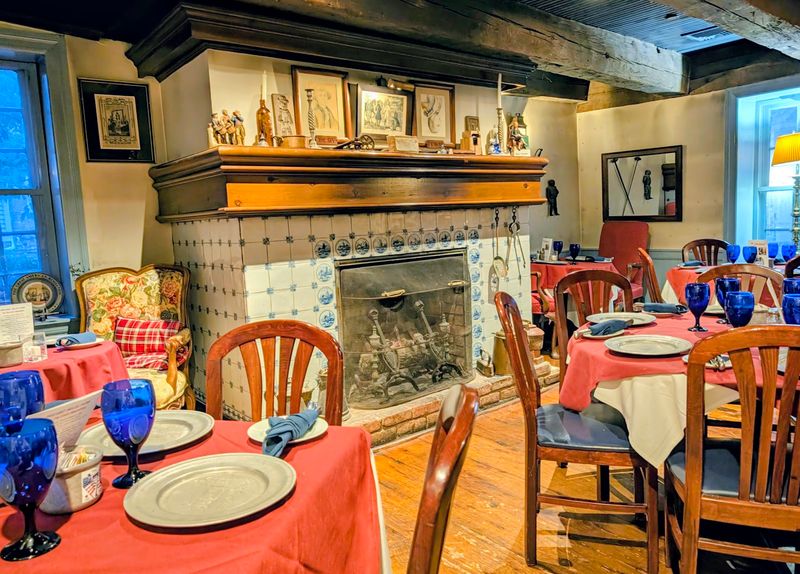
Warmth is the first thing you register once the door closes behind you. Four fireplaces are spread through the building, and on a cool day they are glowing, which does something to a room that no thermostat can copy.
Ceilings are beamed and low, plaster walls are uneven, and candles sit on the tables even at lunch. The lighting stays soft all day long.
There are four dining rooms, each styled a little differently, and together they can seat around 150 guests. The Tap Room, with original Delft tiles set around one of the fireplaces, was where I ended up, and I would ask for it again.
Tables are spaced reasonably well, so you are not eating in someone else’s conversation.
My honest advice is to arrive a few minutes early and just wander a bit before sitting down. Every room has something worth a slow look.
What struck me most was how lived-in it feels rather than roped off. Nothing is behind glass, nothing is trying too hard, and the whole place carries that quiet hum of a building that has never really stopped being used.
America’s Spy Prison and the Story of Major John Andre
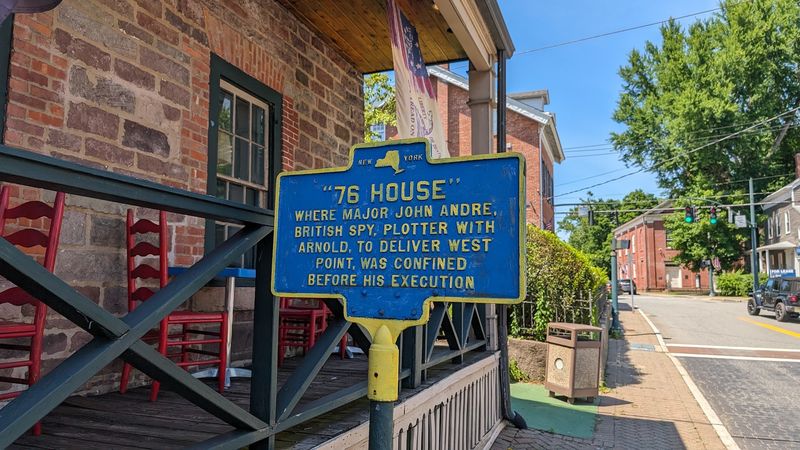
Few restaurants can say a prisoner of war was held inside them. In 1780, Major John Andre, the British officer who conspired with Benedict Arnold, was kept here for several days before his trial and execution as a spy.
That episode earned the building its second nickname, America’s Spy Prison, which is not a phrase you see on many menus.
Tappan itself carries the rest of the story. The execution site nearby is known today as Treason Hill, and it sits a short distance from the tavern.
Learning that while sitting at a table with a fireplace crackling behind me was a strange mix of cozy and sobering. I kept picturing the rooms upstairs.
If you want the full weight of it, read a bit about Andre before you go. The details land harder when you already know the outline.
Rockland County has done a nice job marking these sites, so a visit can easily turn into a small self-guided history walk around the village afterward.
It is rare for a lunch stop to send you home wanting to look something up.
Artifacts, Portraits, and Documents on Nearly Every Wall
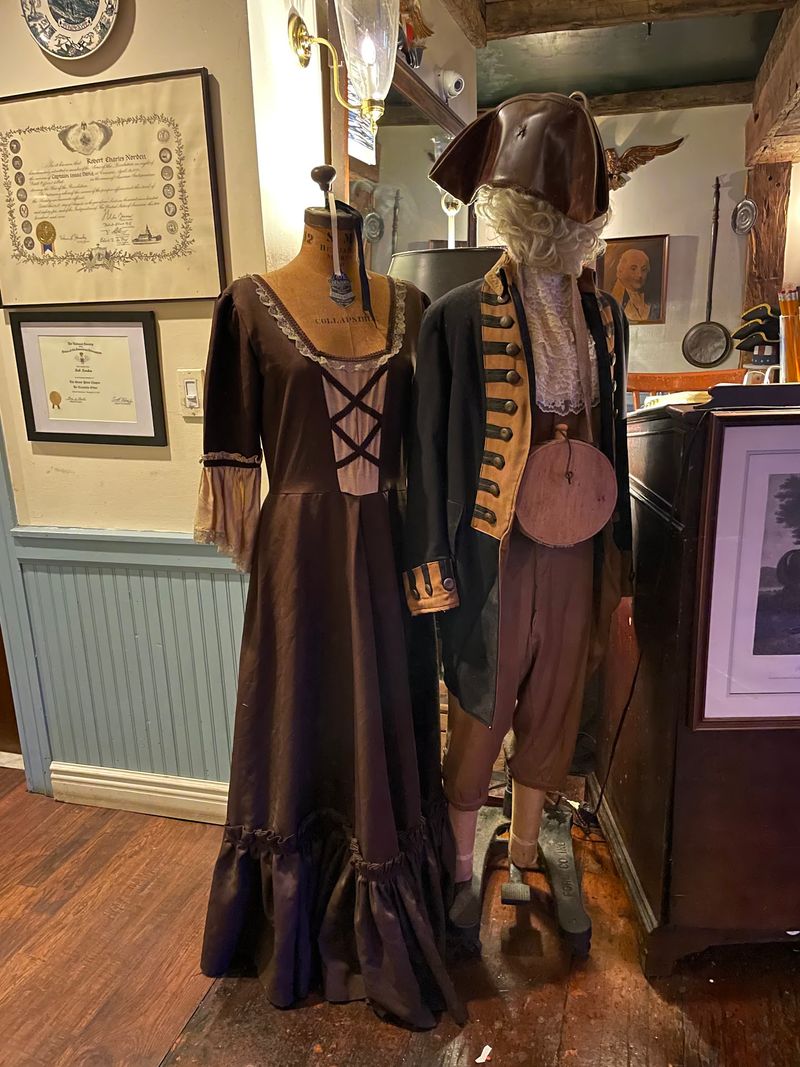
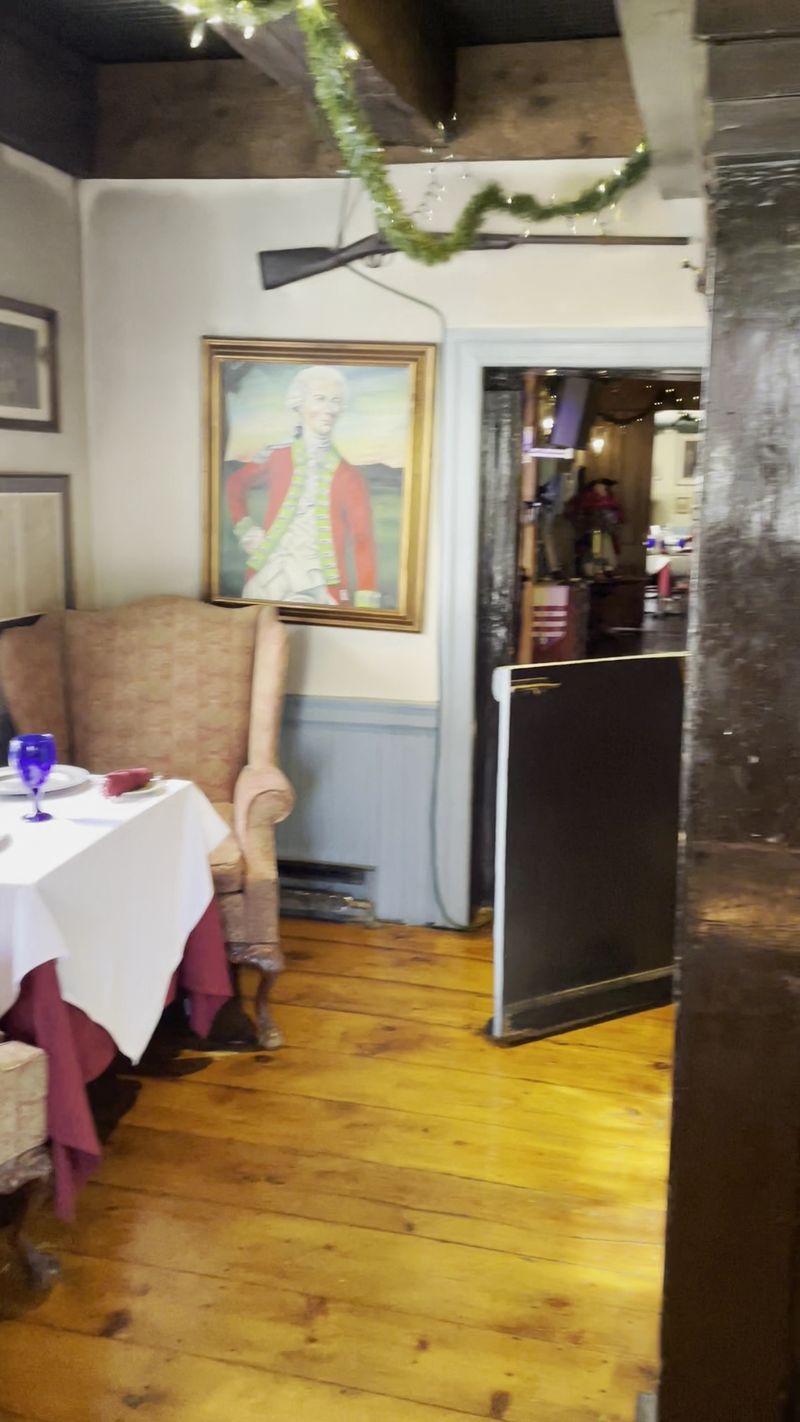
Somewhere between the appetizer and the main course, I got up to look at the walls, and I was not the only one doing it. Vintage portraits, framed historical certificates, old documents, period costumes, and Revolutionary War artifacts fill the dining rooms.
Guests are welcome to walk around and take it all in, which is part of what makes the visit feel generous rather than fussy.
The Norden family has owned and run the place, with Robert Norden leading substantial restoration work to bring the structure back to its original condition without scrubbing away its character.
You can see that balance everywhere. Things are clean and cared for, but nothing looks brand new.
My practical tip is to give yourself an extra twenty minutes beyond your meal. Rushing through means missing half of what makes this stop worthwhile.
Guests have been shown period muskets and colonial hats on occasion, and the staff clearly enjoy sharing what they know when the room is not slammed.
I left with about four photos of food and roughly thirty of walls, which tells you exactly how the afternoon went.
Hearty American Plates With a Colonial Accent
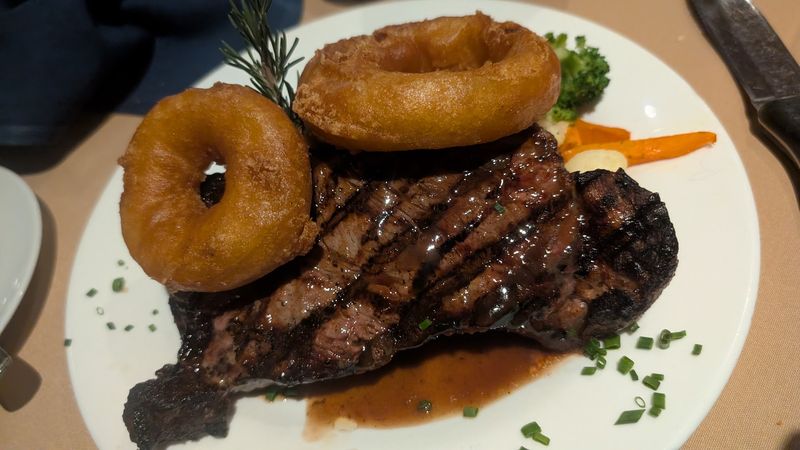
Comfort food is the through line here, and it fits the building perfectly. Lunch leans on classic American sandwiches and tavern staples, including the Thanksgiving Sandwich, a Reuben on rye, the ’76 Best Tavern Burger, fish and chips, chicken pot pie, shepherd’s pie, and traditional American meatloaf.
Dinner shifts a little richer. The Famous Yankee Smoked Pork Roast is a signature, and the Yankee Pot Roast arrives with sweet and sour cabbage and mashed potatoes.
Broiled filet mignon, double-cut lamb chops, and Baked Faroe Island Salmon round things out, and there are vegan choices too, including a Vegan Moussaka.
Onion Soup Lafayette, buried under melted cheese, gets ordered constantly, and I understand why after one spoonful.
The kitchen also keeps a few unusual options around, with duck showing up regularly on the menu.
Portions run generous, so pace yourself if dessert interests you at all. Apple crunch, bread pudding, and creme brulee are all in circulation.
None of it is fussy or overworked. It is the kind of cooking that suits a room with a fireplace and a floor that creaks.
Sunday Brunch, Weekend Music, and Planning Your Visit
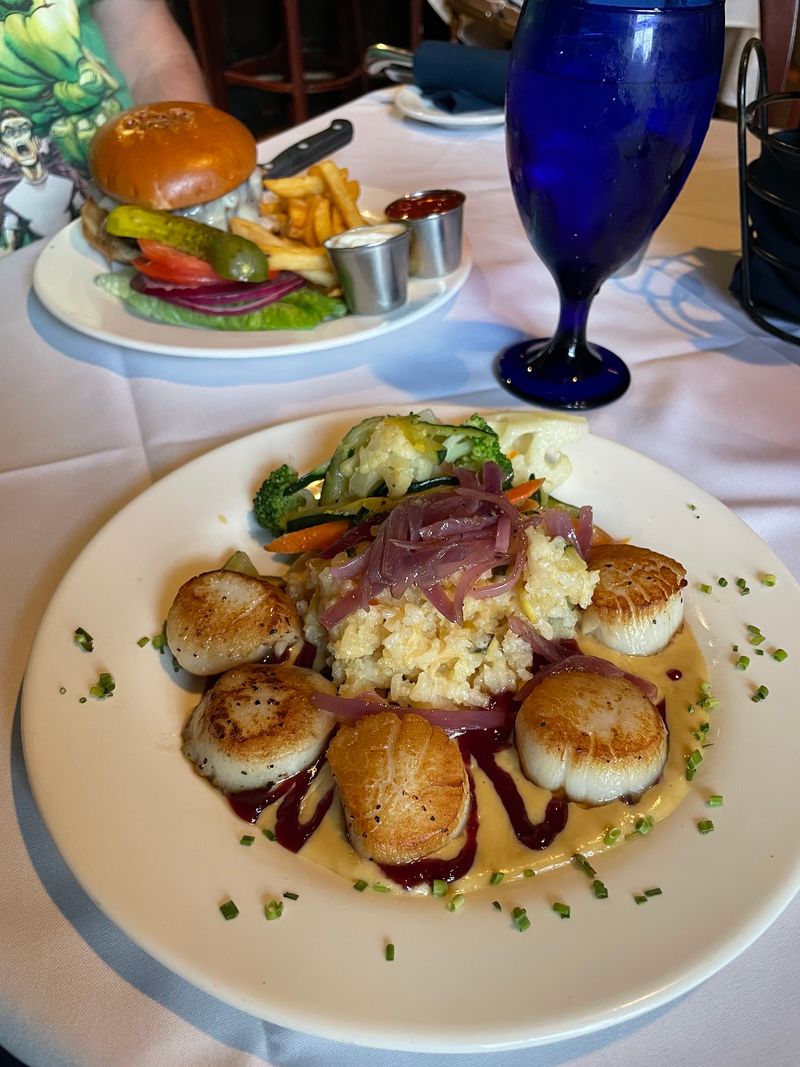
Sundays are the sweet spot if you can swing it. Brunch here skips the buffet entirely and leans into comfort cooking with a historical wink, including pot roast with potatoes and red cabbage alongside a popover.
Playful items show up too, like Traitorous Eggs Benedict Arnold and a cornflake-crusted Nutella stuffed French toast that I would happily split with someone.
Live music runs on weekends, often jazz, and it suits the low-ceilinged rooms beautifully. When the place fills up, sound does carry, so a quieter evening is the move if conversation matters most to you.
Warm months open up a garden patio and porch for outdoor seating, which gives you a completely different angle on the property.
Sunday hours run 11:30 in the morning to 8 in the evening, while other days center on a midday service, so check ahead before driving out.
Go once for the food, then go back for the history, because one visit genuinely is not enough.
Address: 110 Main Street, Tappan, New York
