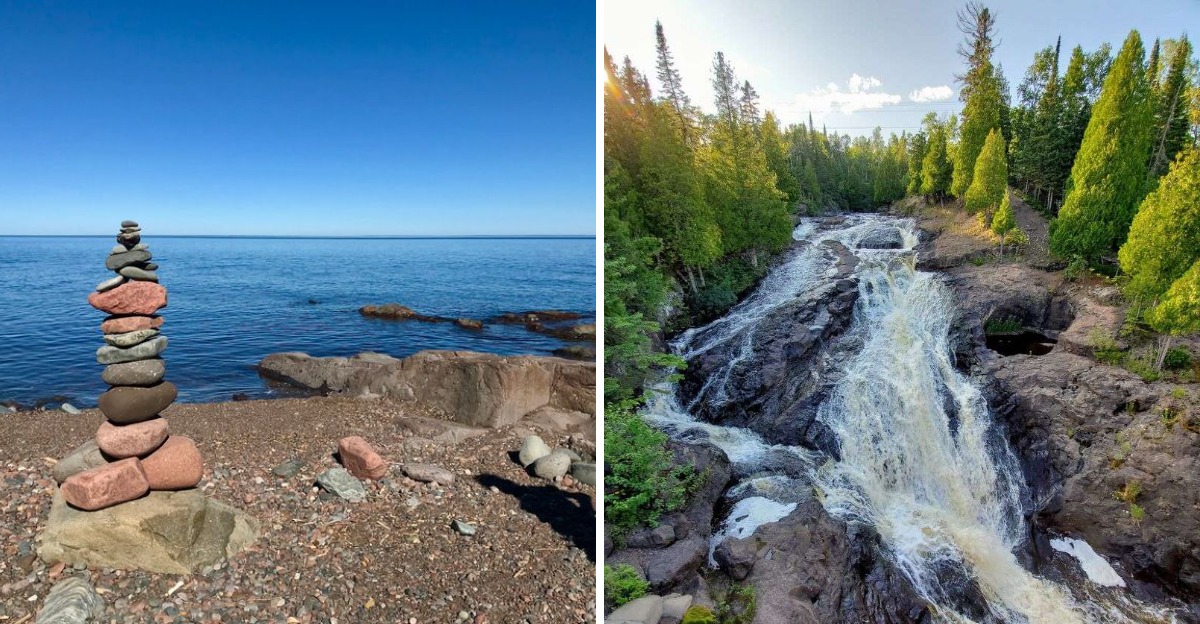
Some places don’t need a welcome sign to tell you you’ve arrived somewhere different, you just feel it. The air gets quieter, the pace slows down without anyone asking it to. There’s a stretch of shoreline in Minnesota where this happens almost instantly, and once you notice it, you can’t unnotice it.
No crowds pushing past you, no lines wrapping around corners. Just water, rocks, and enough silence to hear your own thoughts again. People who usually avoid small towns keep ending up here anyway, drawn in by something they can’t quite explain until they’ve stood on that shore themselves.
Minnesota holds a lot of quiet corners, but this one seems to be catching on. Word is spreading slowly, the way good secrets always do. Visit before everyone else figures out what you already know.
Cross River Falls Tumbles Right Beside The Highway
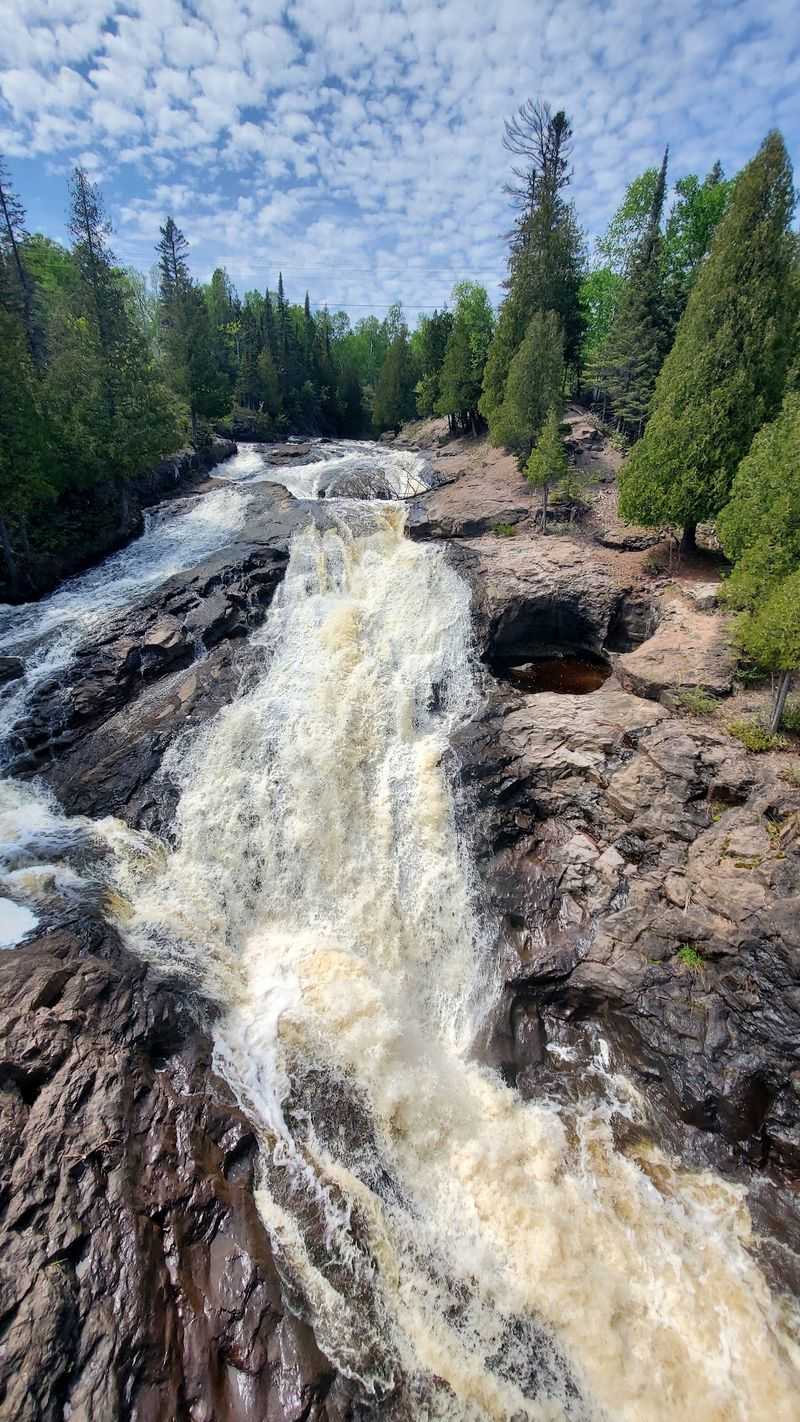
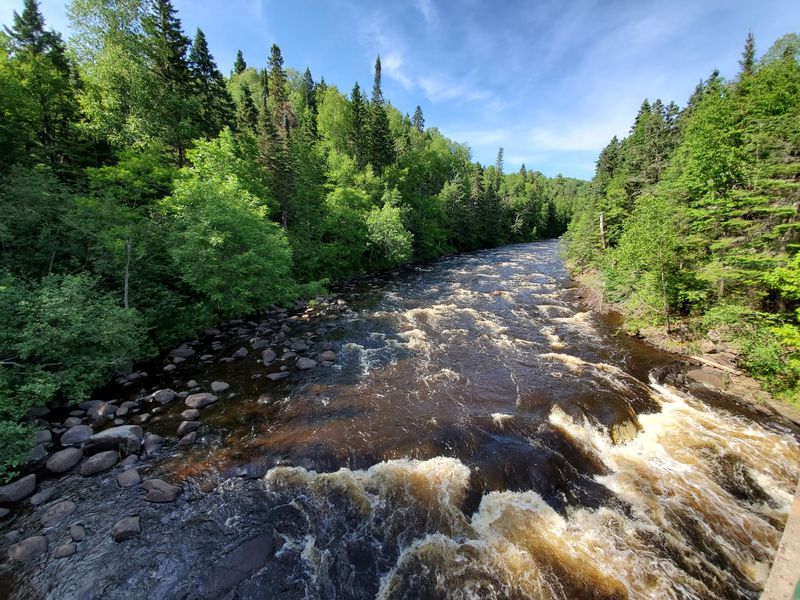
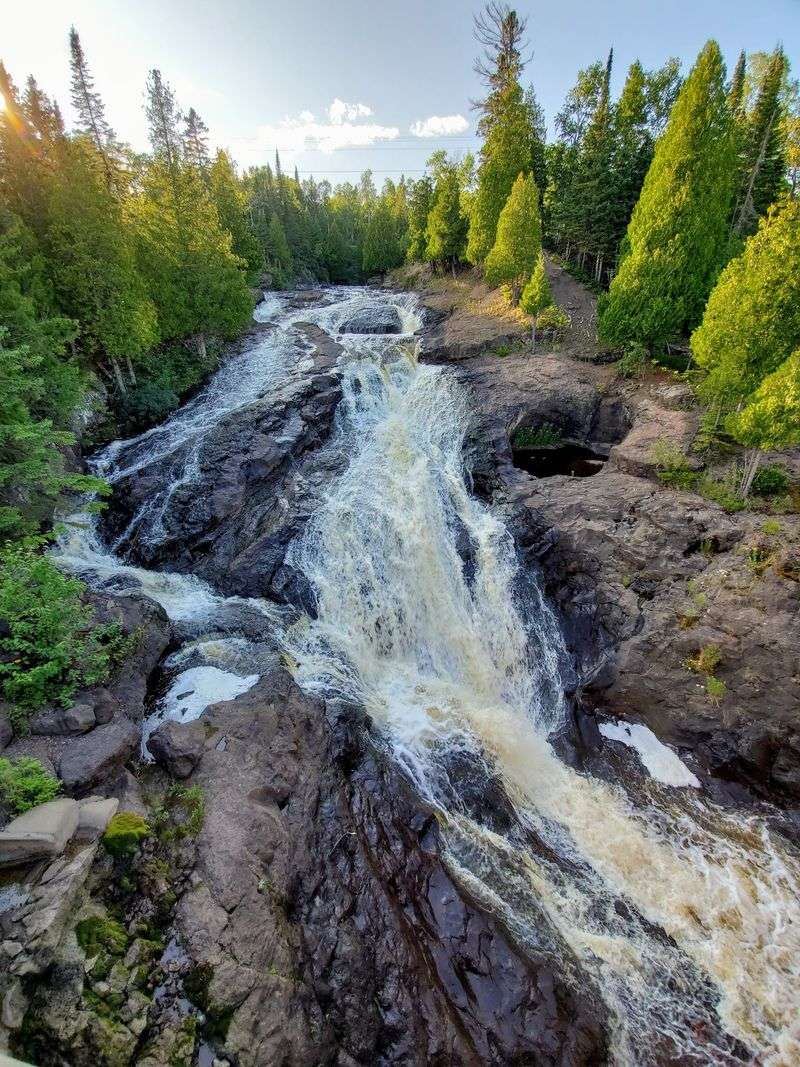
Most waterfalls ask you to hike for them. Cross River simply shows up beside Highway 61, sliding under a weathered stone bridge while traffic rolls past above.
The first time I stopped at the little wayside, the sound reached me before the view did, a low steady rush that filled the whole gravel lot. Water pours over dark volcanic rock in wide stair steps, then drops into a pool rimmed with twisted cedar roots.
A low stone wall gives you a safe place to lean and stare for a while.
Spring runoff makes the whole thing loud and foamy. By late summer the flow thins into silver ribbons, which honestly makes the shapes in the rock easier to appreciate.
Shoes with grip help, because spray keeps the stone slick even on dry days. Stay behind the barriers, since that rock is far smoother than it looks.
Ten minutes here explains why so many travelers stop in Schroeder instead of racing north toward Grand Marais. Bring a light jacket, since the mist drifts farther than you expect.
Temperance River Gorge Feels Like A Secret Canyon
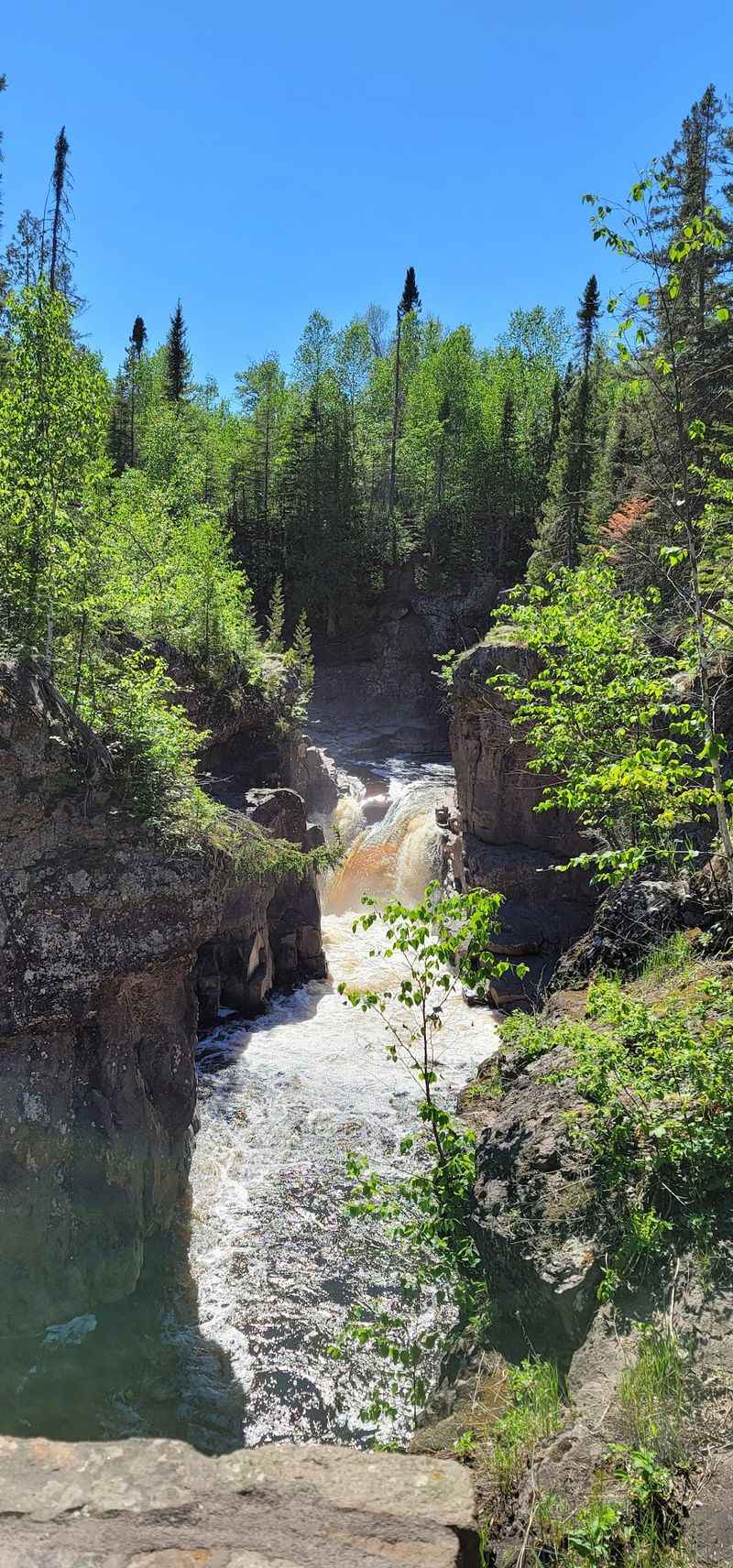
Just west of town, the Temperance River saws its way through solid rock, and the result is one of the strangest, most beautiful walks on the North Shore. The gorge narrows so tightly in places that you can hear the water echo off the walls before you spot it.
Trails run along both banks, with footbridges crossing at good camera angles.
What surprised me most were the potholes, round bowls drilled into the rock by centuries of swirling gravel. Some are deep enough to swallow a person, which is exactly why the fencing exists.
The lower section, closer to Lake Superior, is easy and flat. Keep climbing and the path gets rootier, steeper, and much more rewarding.
Come early and you may have entire overlooks to yourself, even in July. Fun detail worth knowing, the river got its name because it lacked a sandbar at its mouth, meaning no bar.
Father Baraga’s Cross Guards A Windswept Point
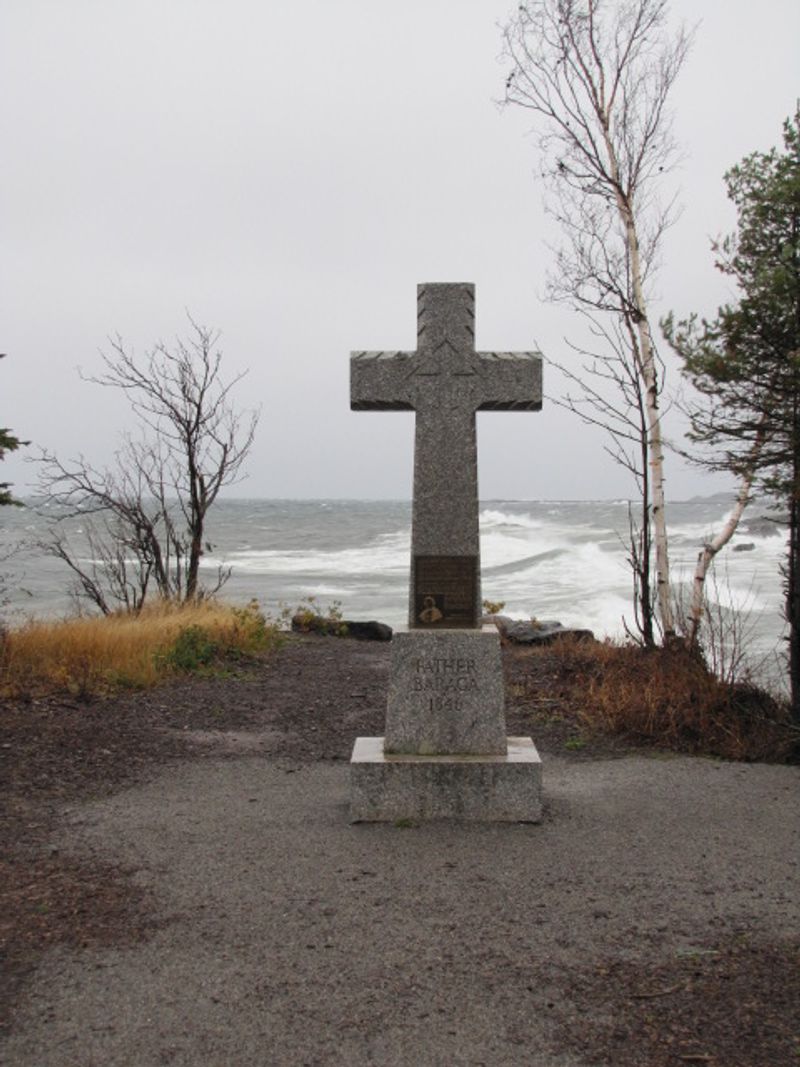
Down a short gravel road near the river mouth stands a granite cross facing straight out at Lake Superior. It marks the spot where a missionary is said to have come ashore safely during a violent storm in the 1840s, and the original wooden cross was later replaced with stone.
The setting does most of the storytelling. Waves slap against black rock, gulls hang in the wind, and the lake stretches out until water and sky blur together.
I stood there maybe fifteen minutes and never saw another visitor.
The little parking area is easy to miss, so watch for the sign as you leave the falls wayside. Footing near the shoreline is uneven, with loose cobbles that shift underfoot.
On calm mornings the water goes glassy and the whole point feels peaceful. During a fall gale, it feels like the edge of the world, which is arguably the better show.
Sugarloaf Cove Rewards A Short Walk Through The Woods
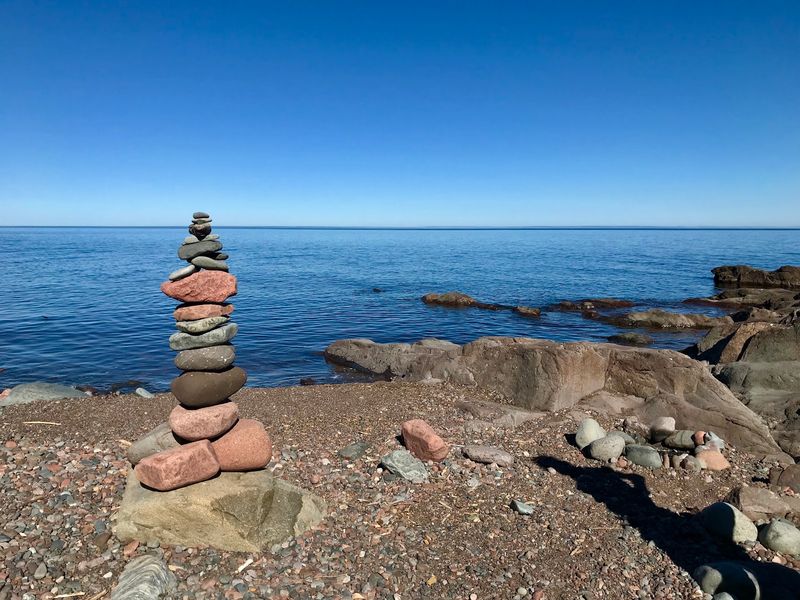
A trail through birch and balsam leads to one of the prettiest little curves of shoreline in Cook County. Sugarloaf Cove sits at the end of a modest loop walk, and the payoff is a crescent beach paved with smooth grey cobbles that clink softly when the waves pull back. That sound alone is worth the trip.
Interpretive signs along the way explain the volcanic rock underfoot and the logging history that once filled this bay with floating timber. It is a nature preserve now, run as an education site, with a small building open seasonally.
Plan on an hour if you walk slowly, longer if you sit on the driftwood and lose track of time.
Bugs can be enthusiastic in early summer, so pack repellent. Sturdy shoes matter here, since loose stones roll under your feet near the water. Sunrise turns the cove pink and gold, and mornings are when solitude is nearly guaranteed.
Cross River Heritage Center Holds The Town’s Memory
Small museums can be hit or miss, but this one stuck with me. Housed in a historic building near the highway, the heritage center collects the story of how a lumber company reshaped this stretch of shoreline more than a century ago.
Photographs, tools, maps, and household objects fill the rooms.
The logging chapter is the heart of it. Crews once sent enormous quantities of timber down the Cross River and out into Lake Superior, and the displays help you picture a busy working village where quiet cedar woods now stand.
Local artwork usually shares the space, which makes a visit feel less like a lecture and more like dropping by a neighbor’s front room. Hours run seasonally, mostly in the warmer months, so check before you count on it.
Give yourself thirty or forty minutes. Afterward, walk back toward the river and the landscape reads completely differently, which is exactly what a good small museum should do.
Carlton Peak Delivers The Big View
Some climbs make you work, then hand you a view so wide you forget the burning in your legs. Carlton Peak, reachable by the Superior Hiking Trail running inland from the Temperance River, is that kind of climb.
The route weaves through mossy forest before breaking out onto bare rock near the top.
From up there, Lake Superior fills the whole southern horizon while the Sawtooth ridgeline rolls away in green and grey waves. Rock climbers sometimes work the cliffs below, which adds an unexpected soundtrack of chalky hands and quiet coaching.
Expect a few hours round trip depending on where you start and how often you stop to catch your breath. Carry more water than feels necessary. The final stretch involves scrambling over boulders, so leave the flip flops in the car.
Weekday mornings are blissfully empty. Wind on the summit can be sharp even in August, so tuck a layer in your pack before heading up.
Beachcombing Turns Into A Slow Obsession
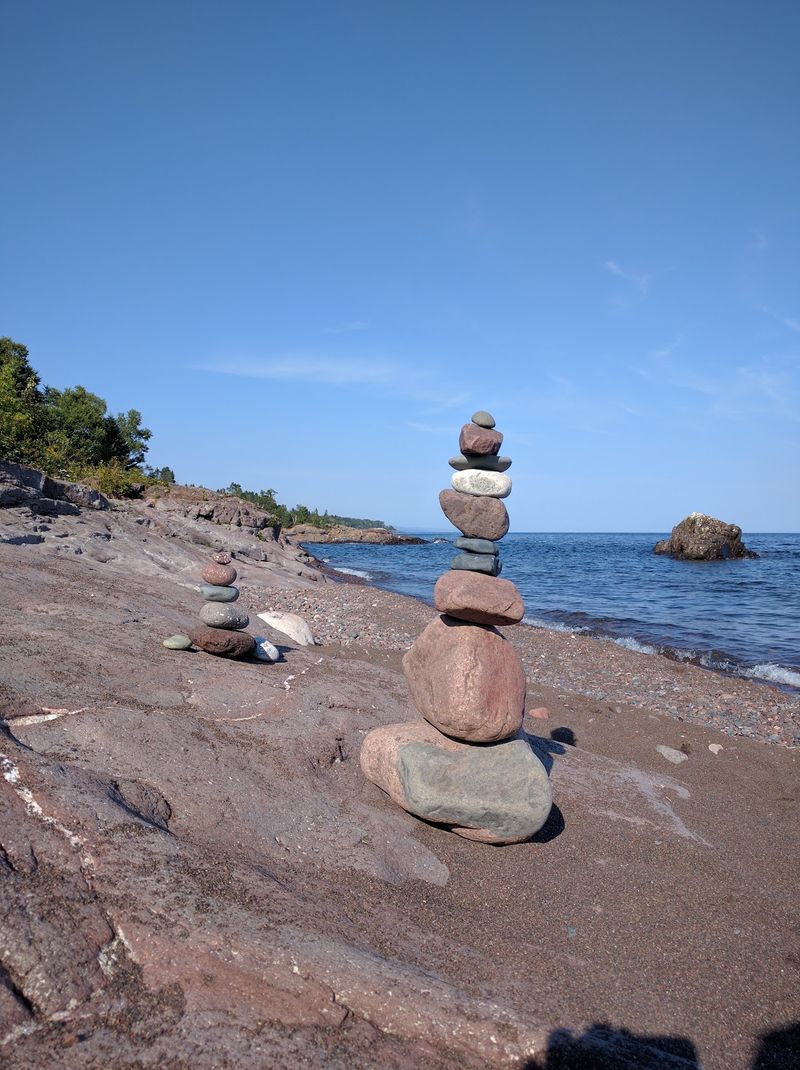
Nobody warns you that stone hunting on Lake Superior is addictive. One minute you are strolling the cobbles below the river mouth, the next you are crouched over a wet patch of gravel comparing two nearly identical pebbles. Agates are the prize, though the ordinary stones are gorgeous too.
Wet rock shows its colors best, so hunt along the waterline right after a wave pulls back. Look for banded patterns and a waxy shine, and do not be discouraged if all you find are pretty basalt ovals.
Storms rearrange the beach constantly, meaning the same spot can look entirely new after a windy week.
Superior is bitterly cold year round, so keep your footing and never turn your back on incoming waves. Rules about collecting differ between state park land and other shoreline, so ask locally before filling your pockets.
An hour disappears fast here. Bring a small cloth bag, and maybe a thermos, because sitting on warm stones watching the swell is its own reward.
Autumn Sets The Backroads Glowing
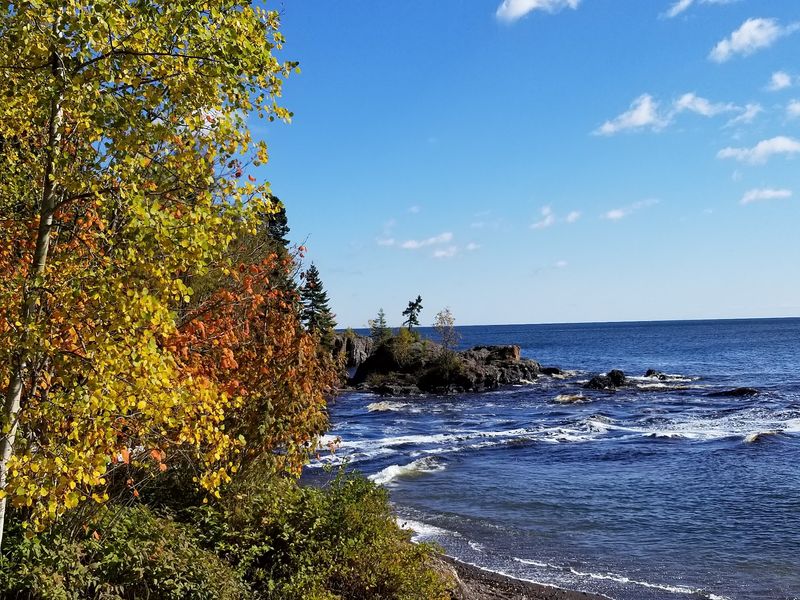
Fall is when this corner of the North Shore quietly shows off. Inland from Schroeder, gravel and forest roads climb away from the lake into stands of birch, aspen, and maple that turn gold and orange sometime between late September and early October.
Driving them slowly with the windows down is half the pleasure.
Color usually peaks earlier up on the ridges than down along the water, so a single day can give you two different seasons. Pull-offs appear without much warning, and many have no signs at all.
The Temperance River trails are especially good now, with yellow leaves floating through the gorge.
Weekends draw more visitors than any other time of year, though it still never feels packed by big-park standards. Weather flips quickly, so keep a warm layer and rain gear handy.
Fill your gas tank before heading inland, since services are thin. Cell coverage fades fast out there, which some people consider a bug and others consider the entire point.
Winter Muffles Everything In The Best Way
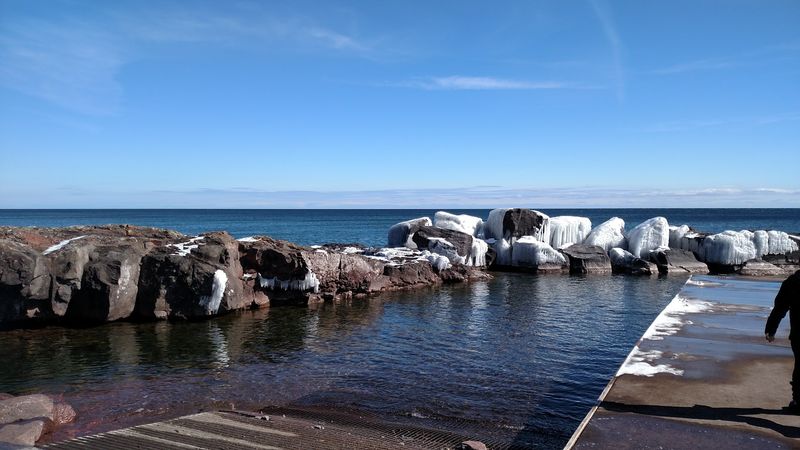
Snow changes the personality of this place completely. The falls freeze into strange blue and white sculptures, the river hisses under crusted ice, and shoreline rocks grow thick coats of frozen spray shaped by the wind. Sound seems to vanish. You notice your own footsteps.
Snowshoeing near the river is straightforward if you stick to packed routes, and cross country skiing options exist a short drive away. Ice on trails near moving water can be treacherous, so traction cleats belong in your bag.
Daylight is short in December and January, which means planning walks around midday rather than late afternoon.
Lodging along this stretch of Highway 61 stays open through the cold months, and evenings tend to be spectacularly quiet. Dress in layers, since lake wind cuts through anything thin.
Winter visitors are the ones who most often describe Schroeder as their favorite discovery. Empty parking lots, steaming coffee, frozen waterfalls, and nobody in the photo but you.
Night Skies Put On A Free Show
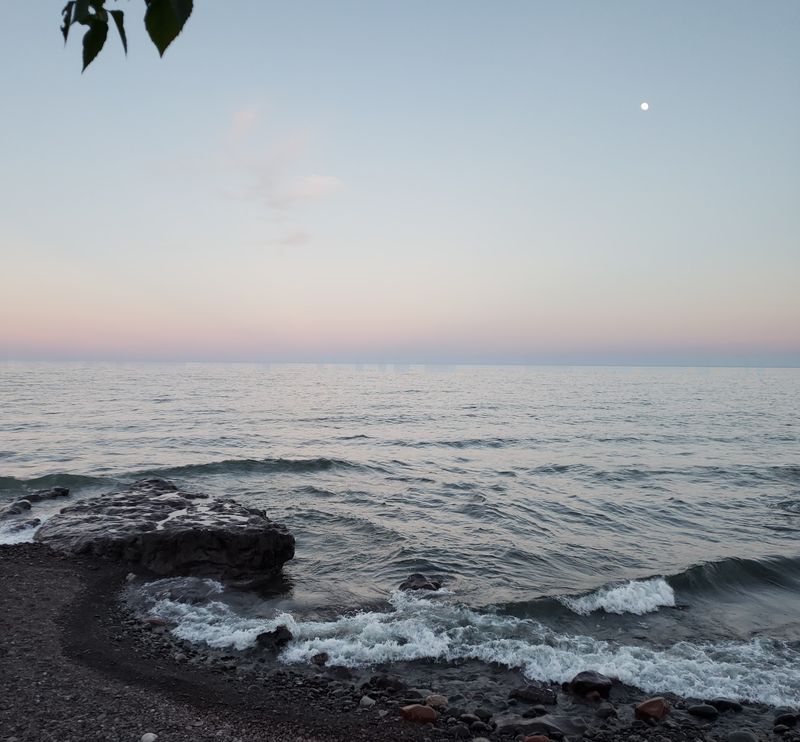
Stepping outside after dark here is a small shock, in a good way. With so few streetlights and a huge dark lake to the south, the stars come out in numbers that city visitors rarely see. The Milky Way shows up clearly on moonless nights.
Northern lights are possible too, most often in spring and fall when solar activity cooperates, and the open shoreline gives you an unobstructed view north over the trees. Checking an aurora forecast before bed is a habit worth adopting.
Campgrounds and cabins along the water make late-night stargazing easy, since you barely have to walk anywhere.
Bring a red-light headlamp so your eyes stay adjusted. A folding chair and a warm blanket beat standing around, and mosquito repellent matters in summer.
Give your eyes twenty minutes to adapt before deciding the sky is not impressive. That patience is basically the whole philosophy of this township, quiet, slow, and unexpectedly generous.
