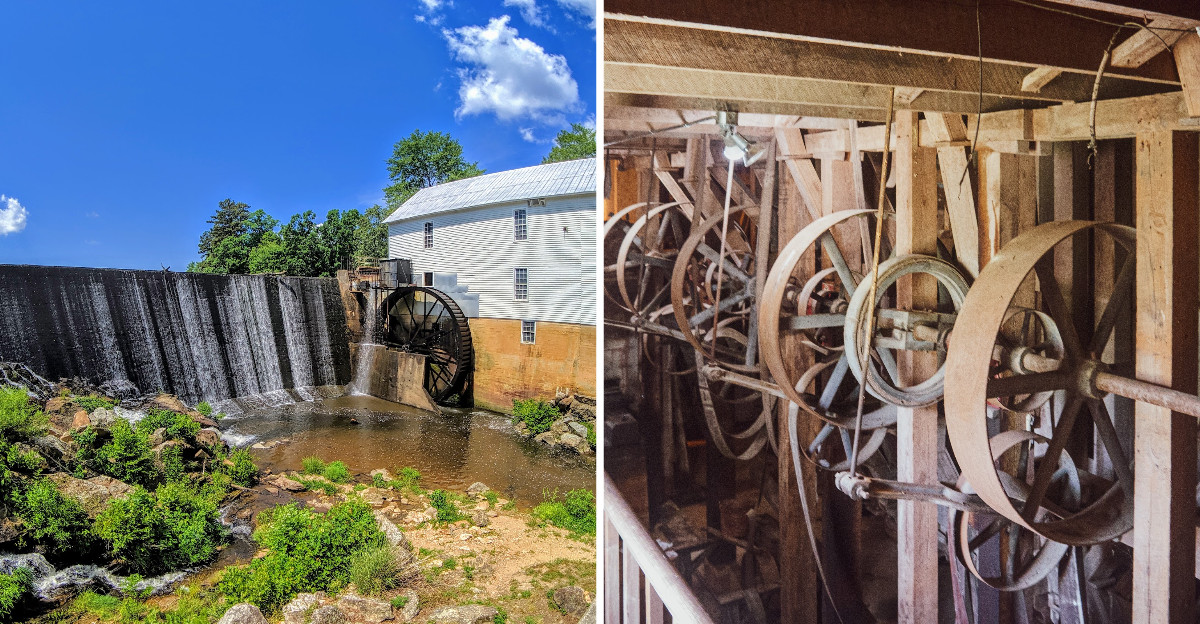
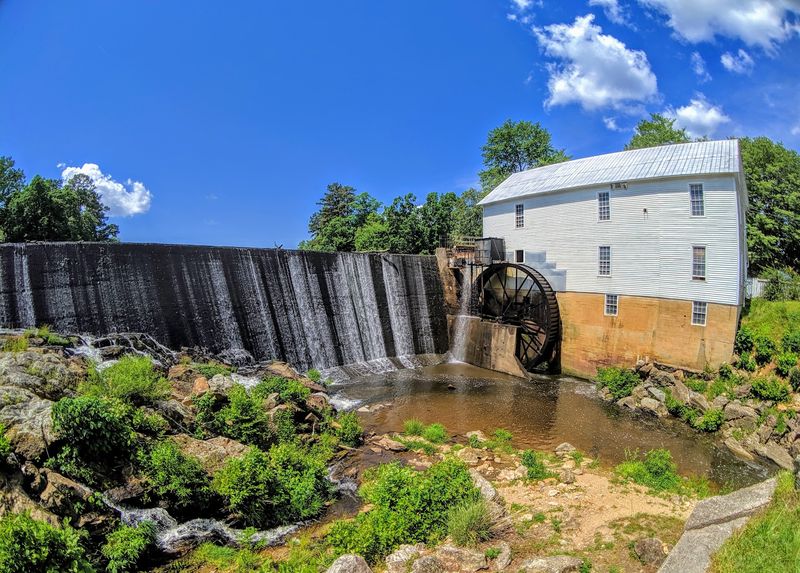
Water spills over the dam in a steady rush, and a giant wooden wheel turns beside a still pond where the reflection barely ripples. A random turn off a country road in North Carolina led to this quiet spot, where the only sounds are the creek and your own footsteps on the gravel.
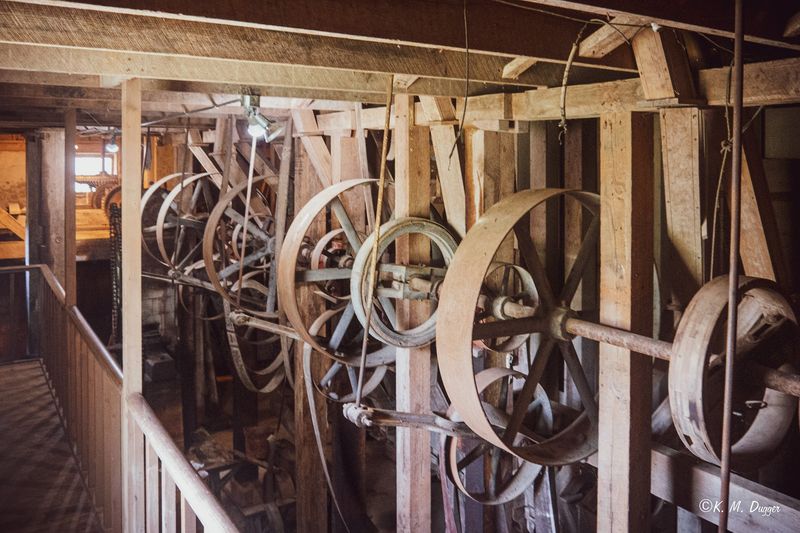
Inside the mill, grinding machinery sits bolted in place, exactly where three generations of one family left it.
What was supposed to be a quick photo stop turned into most of an afternoon, wandering trails, poking through a general store, and reading about a business that fed this community until 1967.
The old millstones are still there, the belts still hang from the ceiling, and the wooden floors are worn smooth by decades of boots.
Places that hold onto their history this tightly are rare, and this one refuses to let go.
The Murray Family’s Century Along Balls Creek
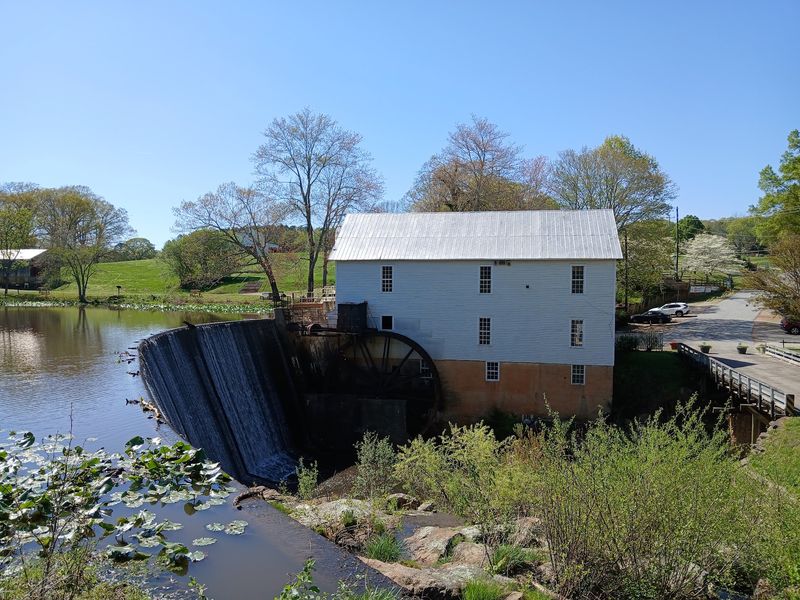
Three generations is a long run for any family business, and the Murrays managed it right here on Balls Creek. William Murray built the first mill on this spot in 1883, choosing the location for the reliable water flowing through eastern Catawba County.
In 1906 he handed the property to his sons, John and Oley, and the operation kept growing from there. John replaced his father’s original building in 1913 with the two-story gristmill visitors walk through today.
Later, John’s son Lloyd took over and made his own improvements, raising the dam and upgrading the wheel. Reading the dates on the interpretive signs, I kept doing the math in my head, and it really does add up to nearly a century of one family serving the same farmers.
The mill finally closed in 1967 when Lloyd faced rising taxes and growing red tape. That ending feels abrupt after so many decades of steady work.
What strikes me most is how little the site was stripped afterward. Instead of being sold off piece by piece, the buildings stayed put, which is exactly why there is something worth visiting now.
Original Millstones Still Sitting Where They Worked
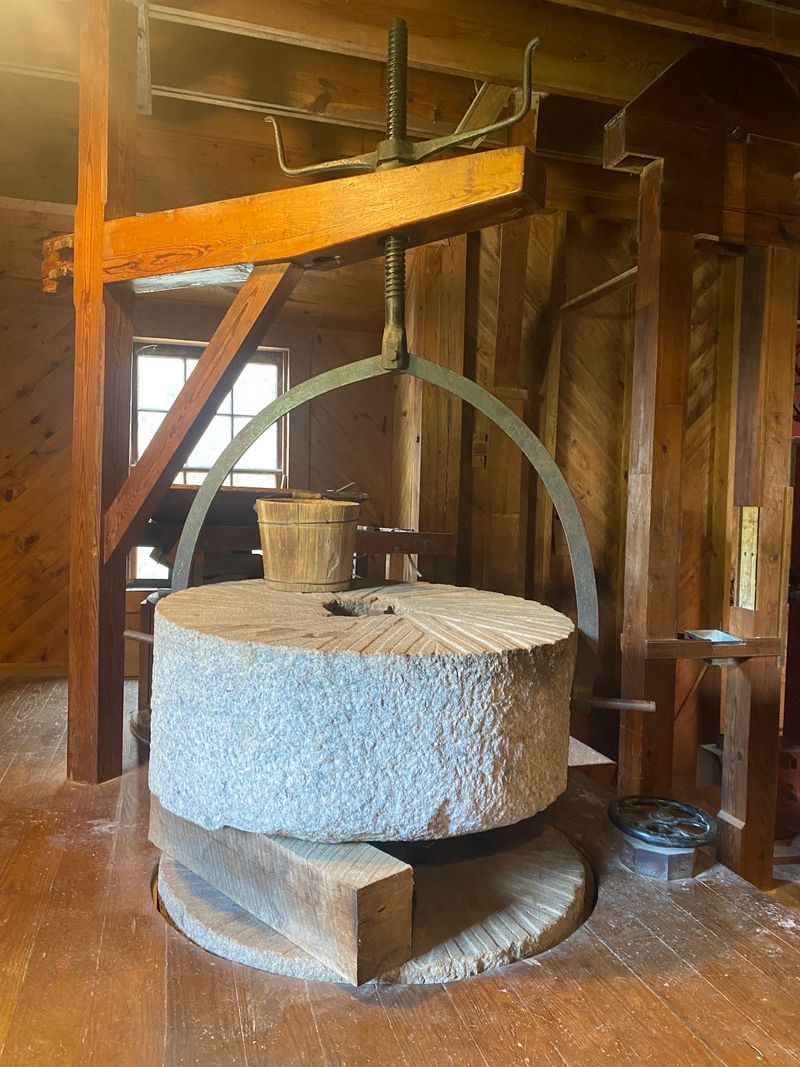
One-ton millstones are not something you see every day, and William Murray’s original French buhr stones are still inside the building. They were used for grinding corn, which was the everyday grain for families across this part of North Carolina.
Seeing them up close changes how you think about bread and cornmeal. These enormous discs did the work that machines now handle quietly in factories nobody visits.
The stones were imported stone, shaped and dressed to grind grain evenly without scorching it. Millers had to maintain the grooves by hand, a skilled job that took real patience and a good eye.
I leaned in close and could still see the pattern cut into the surface. It looks almost decorative until you realize every groove had a purpose in moving meal outward toward the edge.
Standing beside something this heavy makes the whole building feel different. The floors, beams, and framing all had to be strong enough to hold machinery that never stopped shaking during operation.
Small detail, big impression. That is pretty much the whole visit in one sentence.
Roller Mills That Brought Flour to Catawba County
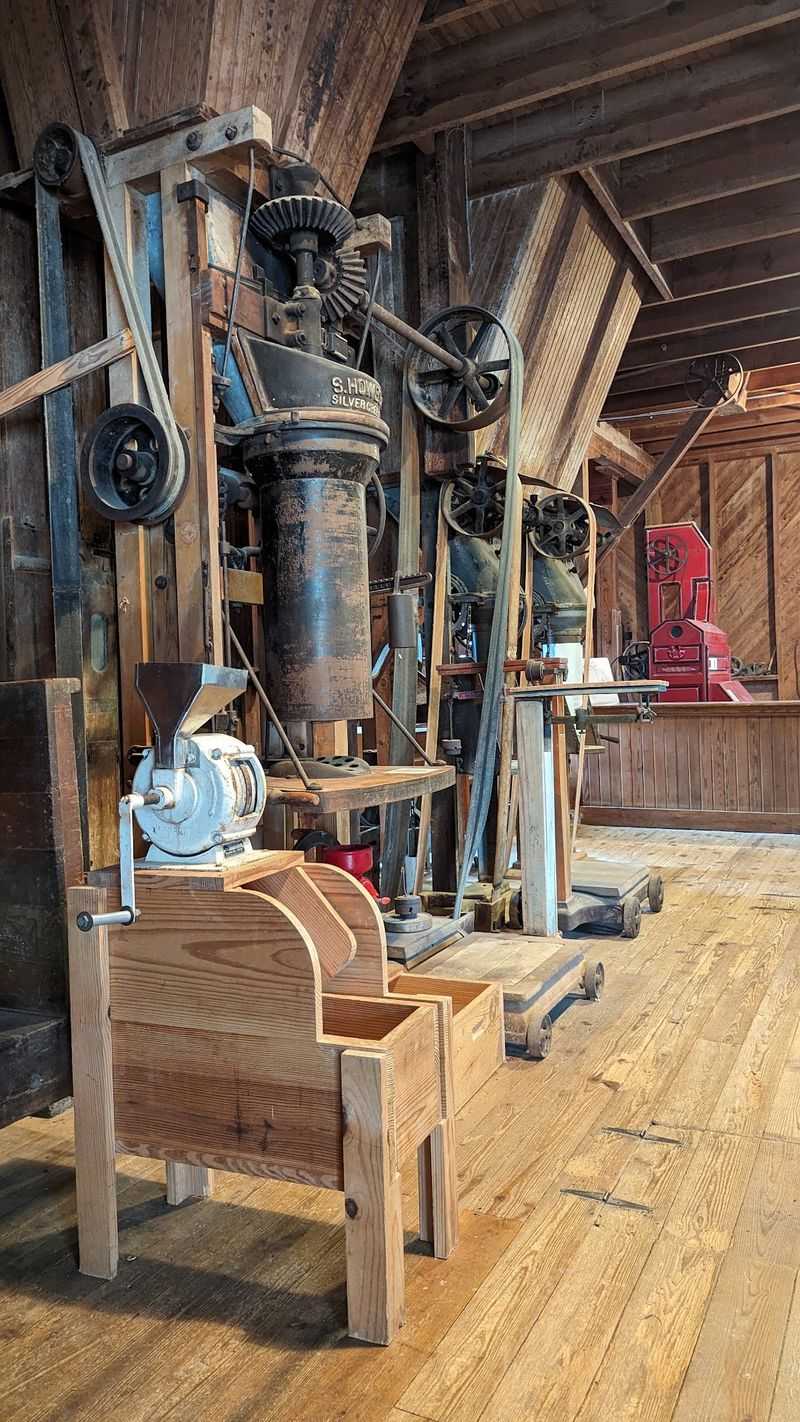
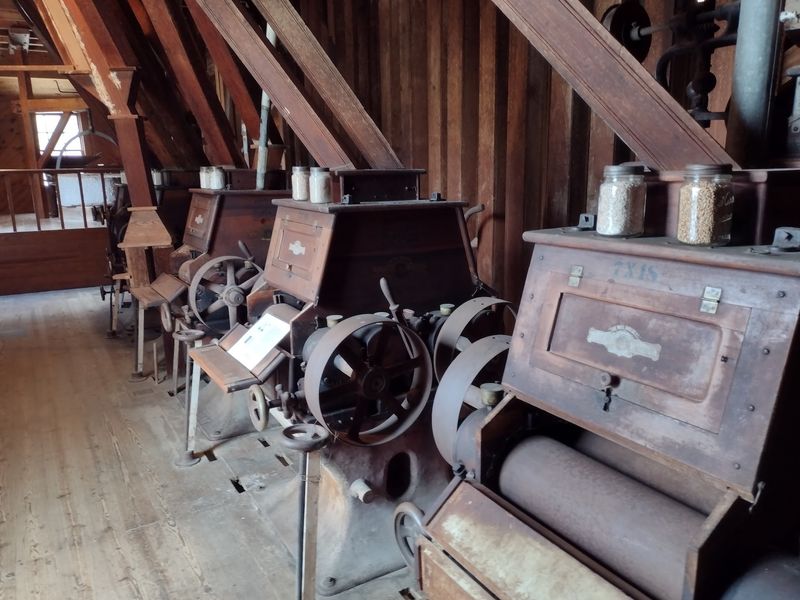
Corn was the mainstay, but John Murray wanted flour too, so he installed roller mills for grinding wheat. The Eureka roller mills, also known by the Sprout and Waldron name, were serious equipment for a rural mill in that era.
Roller mills worked differently from stone grinding, crushing wheat between metal rollers rather than pressing it between stones. That process produced finer, whiter flour that customers increasingly wanted.
Having both systems under one roof made the mill far more useful to local farmers. You could bring corn or wheat and leave with something ready for the kitchen.
The machinery has that heavy industrial look that always surprises me in old rural buildings. Cast metal frames, wooden housings, and belts running in every direction.
Tracing where the belts once ran helped me understand the building as one connected machine instead of separate parts. Power came from below and traveled upward through shafts and pulleys.
Remarkably, portions of this equipment still function. Knowing that made the room feel less like a display case and more like a workshop waiting on somebody to flip a switch.
Grain Elevators, Storage Bins, and a Belt Lacer
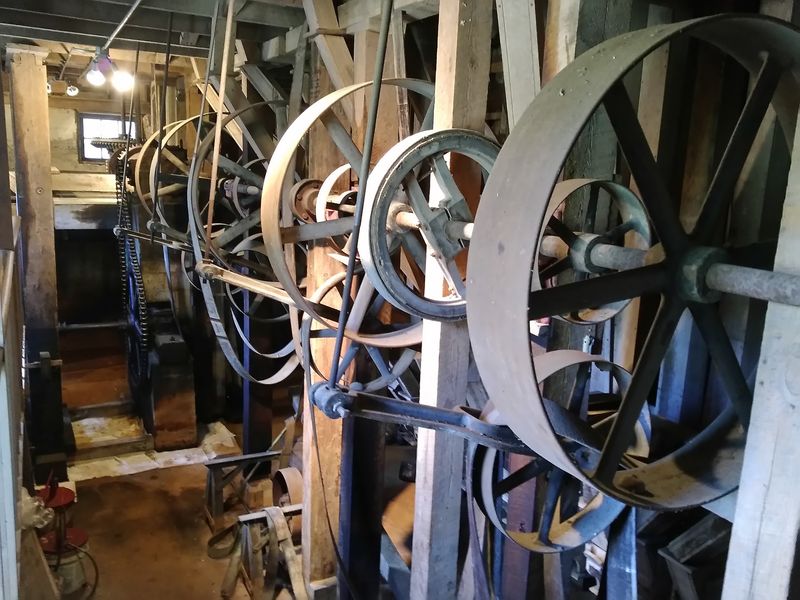
Somebody had to move grain up three floors without a forklift, and the answer was grain elevators built right into the structure. Belts with small buckets carried corn and wheat upward so gravity could do the rest on the way down.
Wooden storage bins line sections of the interior, partitioned with tongue and groove sheathing that has held up remarkably well. They look plain until you consider how much weight they held season after season.
My favorite small find was the belt lacer, a tool used to join the leather power belts that ran the machinery. Belts snapped, and there was no calling a repair service out to Balls Creek.
Millers fixed things themselves, and that tool is proof. Self sufficiency was not a lifestyle choice here, it was simply how the place stayed open.
Details like these are easy to walk past if you are only looking for the big waterwheel. Slow down and the building starts telling you how it actually worked.
Bring curiosity. The signage rewards it.
That Famous 28-Foot Waterwheel
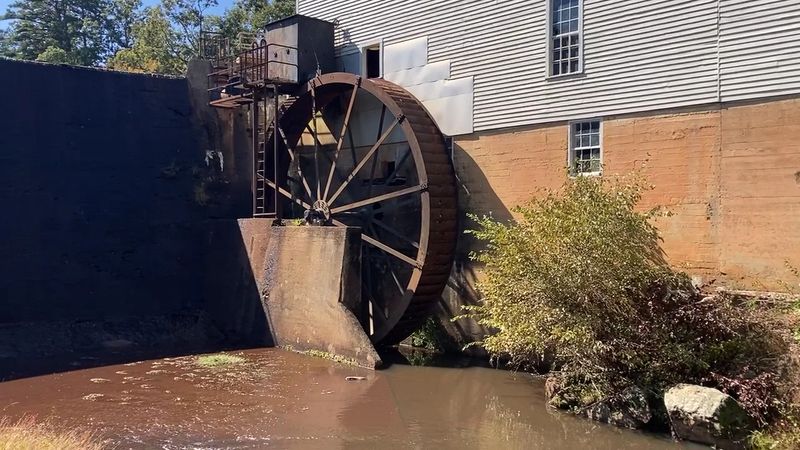
Lloyd Murray clearly thought big. In 1938 he raised the dam by six feet and installed the 28-foot waterwheel that has become the signature image of this place.
Before that, John Murray’s 22-foot overshot wheel handled the job from 1913 onward. Going bigger meant more power, and more power meant more grain processed in a day.
Photographs never quite capture the scale. You have to stand near the base and look up to understand how much wood and iron went into it.
I watched water spill from the dam and tried to imagine the full rhythm of the wheel turning, the belts tightening, and the whole building coming alive. It is a completely different kind of engineering from anything modern.
Not every visit guarantees the wheel in motion, since maintenance on something this old is ongoing work. Even still, it photographs beautifully against the mill’s dark red siding.
Come in late afternoon if you can. The light hits the wheel and the pond at the same time, and that is the shot everyone leaves with.
The 1880s Wheat House Turned Exhibit Gallery
Built in the 1880s to store wheat, this modest building now serves a completely different purpose as the site’s exhibit gallery. The transformation works better than you might expect.
Displays inside fill in the background that the machinery alone cannot explain. You get context about milling in Catawba County, the Murray family, and how rural economies depended on operations like this one.
I appreciated having a quieter indoor space to read and process things. After the noise of the dam and the scale of the wheel, sitting with photographs and artifacts felt like the right pace.
Structures like this rarely survive. Storage buildings are usually the first to be torn down once they stop being useful, so having an original wheat house still standing is genuinely unusual.
Look at the construction itself while you are inside, particularly the framing and boards. The building is an artifact just as much as anything displayed within it.
Give it fifteen minutes minimum. The information here makes everything else on the property make far more sense.
Houses and Barns That Complete the Village
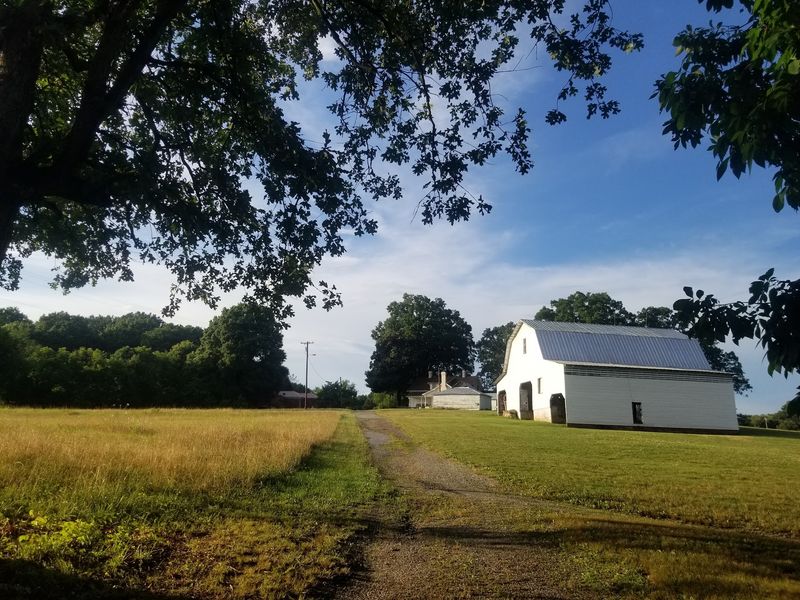
Mills rarely stood alone, and the cluster of buildings here proves it. The John Murray House, built in 1913, has been restored and furnished with period pieces so you can see how the mill-owning family actually lived.
Nearby stands the William Murray House from the 1880s, along with the Lloyd Murray House built in 1935. Three homes, three generations, all within walking distance of the machinery that supported them.
A large gable roof frame barn from the 1930s rounds out the collection. Barns like that one were the storage and workspace backbone of any working farm property.
Wandering between them gives you a real sense of a small rural village rather than a single attraction. Work, home, commerce, and storage all sat within a few hundred steps.
Historic records note that a blacksmith shop and sawmill once operated nearby as well, filling out the little community that formed around the grinding operation.
Walk the whole loop rather than just the mill. The layout itself tells you how these families organized their lives.
Picnic Lawns Under the Old Oaks
Bring lunch. Seriously, the lawns here are made for it, with mature oaks throwing generous shade and picnic tables scattered near the historic buildings.
Families spread out easily, and kids have room to run without anyone worrying. Several visitors mention eating near one of the old houses, which sounds like a fine way to spend an hour.
Grounds stay open during daylight hours, so even if you arrive when buildings are closed, you can still walk and sit and enjoy the setting. I have seen people show up early just for the morning quiet.
Photographers love this place, and it shows. Family portraits happen regularly against the mill, the water, and the tree line.
The mood is unhurried in a way that is honestly rare. Nobody seems to be rushing anywhere, which affects how you move through the site.
Pack a blanket, something to drink, and maybe a book. Half the value here is simply having a peaceful outdoor place to sit beside moving water and old wood.
Tours, Hours, and How to Plan Your Visit
Planning ahead pays off here, mostly because the site is closed Mondays and Tuesdays. Wednesday through Friday runs 10 AM to 5 PM, Saturday opens earlier at 9 AM, and Sunday runs 1 PM to 5 PM.
Both self-guided and guided tours are offered, with the guided option subject to staff availability. The self-guided version comes as a well-organized binder with photos arranged in the order you encounter things.
Families with kids seem to love the binder approach, since children can move at their own speed and talk out loud without disturbing a group. One review mentioned an interpretive storybook trail geared toward young readers.
The Catawba County Historical Association website also lists current details.
Restrooms are limited, so plan accordingly before longer walks.
Give yourself two hours minimum. Between the mill, the store, the exhibit building, and the trails, rushing would genuinely be a waste of the trip.
Preservation, Recognition, and Why It Still Matters
Recognition came in 1979 when the Murray’s Mill Historic District was listed on the National Register of Historic Places. That listing helped protect what could easily have been lost.
The Catawba County Historical Association took over in 1980 and began the long restoration work. Eight years later, in 1988, the site officially reopened to the public.
What they saved is the last milling complex in the county, which puts the whole thing in a different light. Once these places disappear, there is no getting them back.
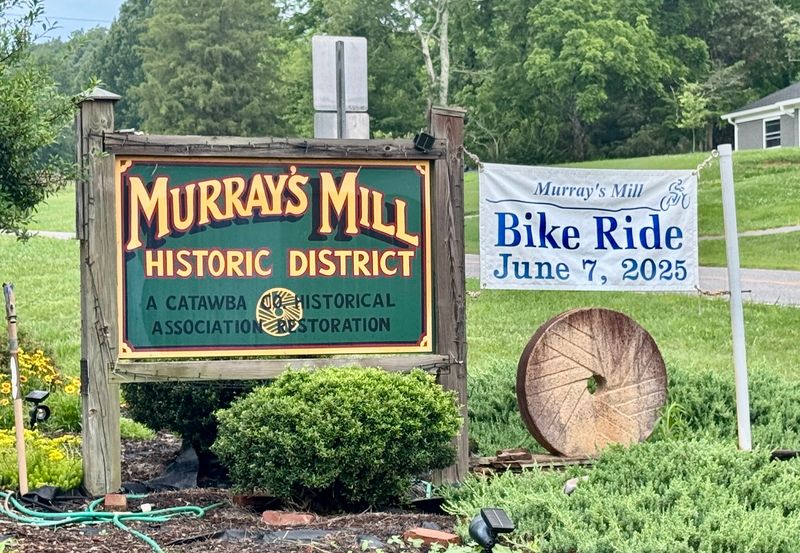
Events keep the property active rather than frozen, including a Saturday farmers market in season and a June cycling event that draws several hundred riders and supports the site.
I left thinking about how much ordinary life passed through this one small spot. Farmers hauling corn, neighbors trading news, a family working the same water year after year.
If you are driving Interstate 40 through this part of North Carolina, the detour takes about ten minutes and gives back far more than that.
Address: 1489 Murrays Mill Rd, Catawba, NC 28609
