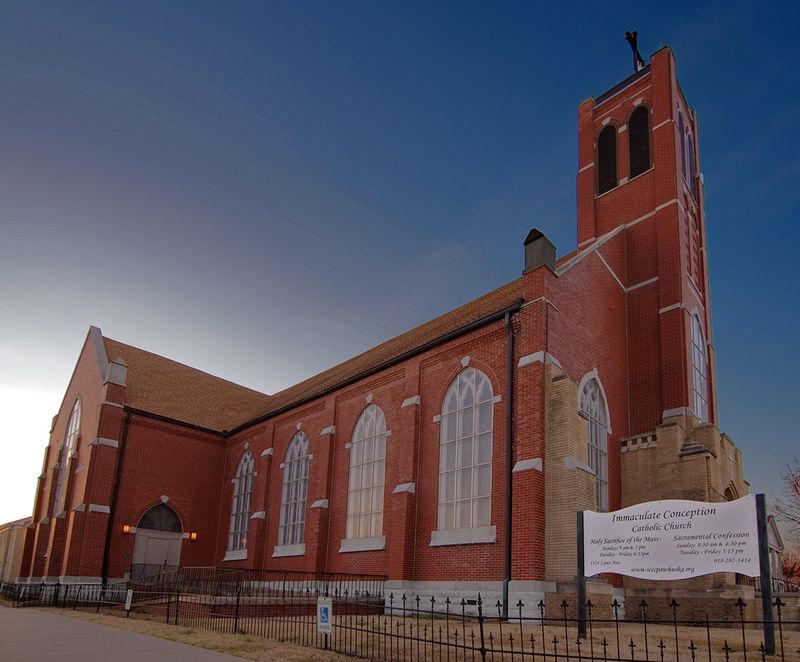
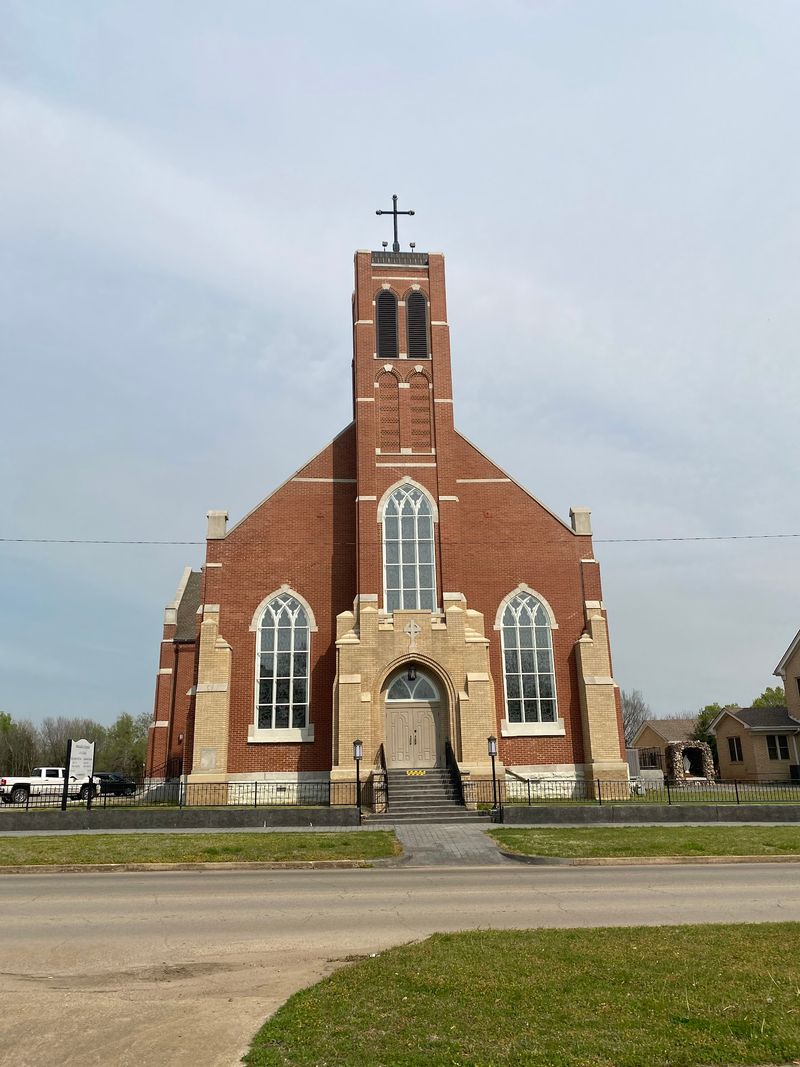
Some Oklahoma buildings give away everything from the sidewalk, and then there are the ones that keep their best secret behind the front doors. From the outside, this brick church on a quiet hillside street looks like a hundred other prairie parishes.
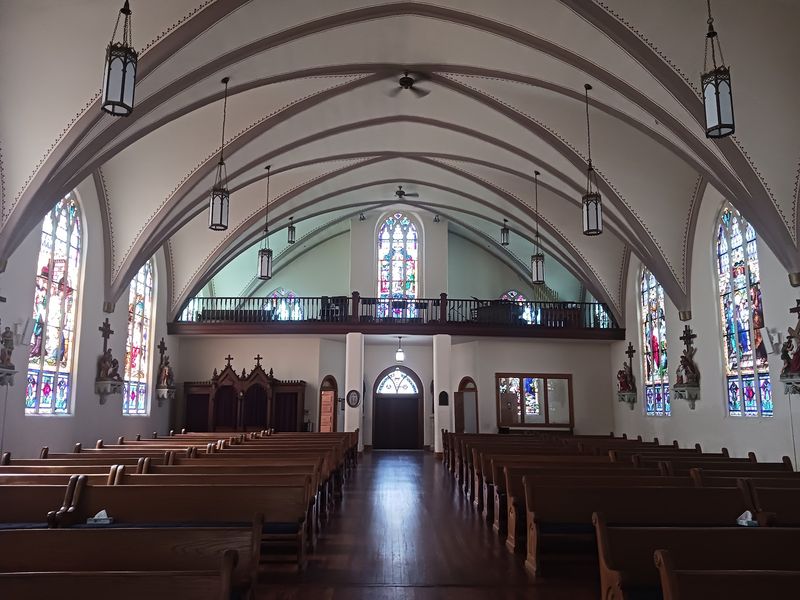
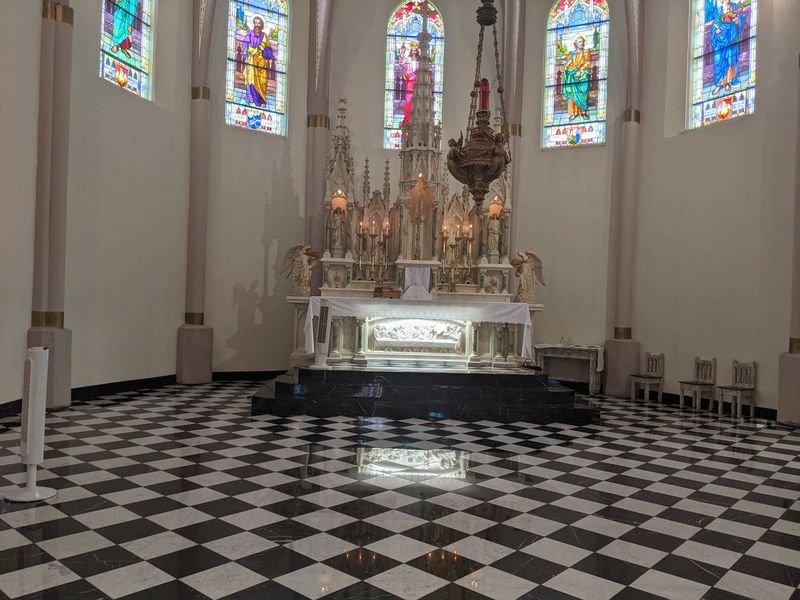
Step inside on a sunny morning, though, and you are suddenly standing in colored light that was painted, fired, and fitted together by craftsmen in Munich, Germany, more than a century ago. It is the kind of surprise that makes you call somebody on the drive home.
A Gothic Silhouette on a Pawhuska Hillside
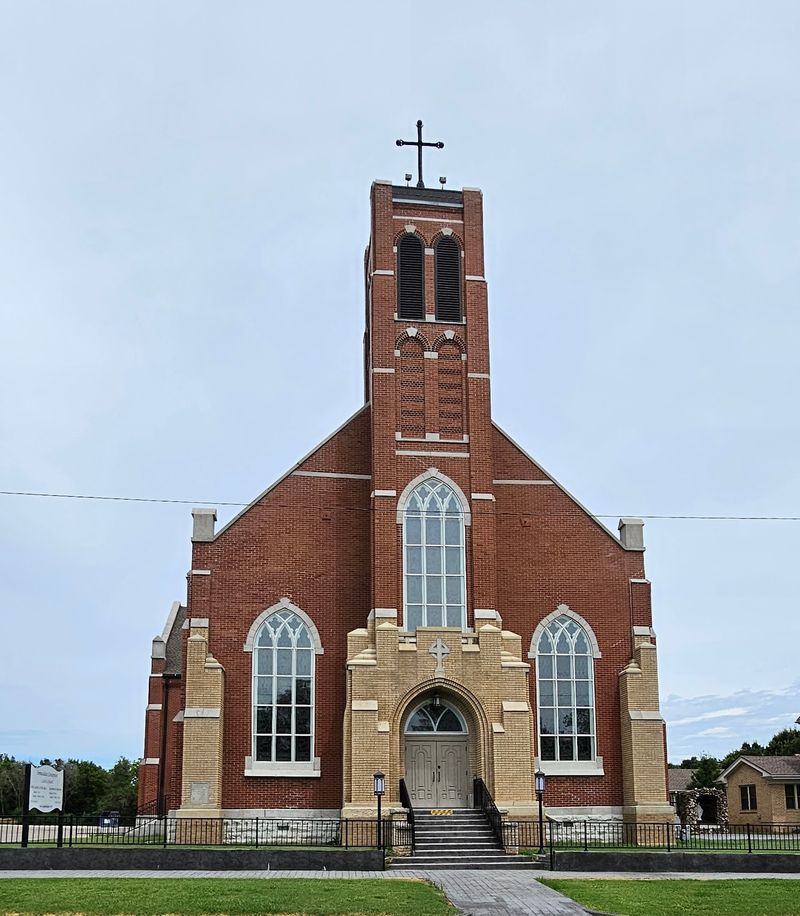
Pawhuska sits in the rolling Osage Hills of northeastern Oklahoma, about an hour and change northwest of Tulsa, and most travelers roll through for the downtown shops and the prairie views. Tucked at 1314 Lynn Ave, a little uphill from the main drag, stands Immaculate Conception Catholic Church.
Locals have called it the Cathedral of the Osage for generations, though it is a parish church rather than an official cathedral. The nickname stuck because the building punches so far above the weight class of a town this size.
Built in 1910, the brick structure wears its Gothic influence honestly: pointed arches, a tower that once told neighborhood kids when to head home for supper, and tall window openings shaped for glass that had not yet arrived.
Approach from Lynn Avenue and the first impression is dignified rather than showy. Red brick, clean lines, and a modest lawn give little hint of what is waiting inside.
That restraint is part of the charm. Oklahoma has a habit of hiding its best artwork inside plain packages, and this hillside church may be the clearest example in the entire state.
Why the Osage Nation Sent to Munich for Glass
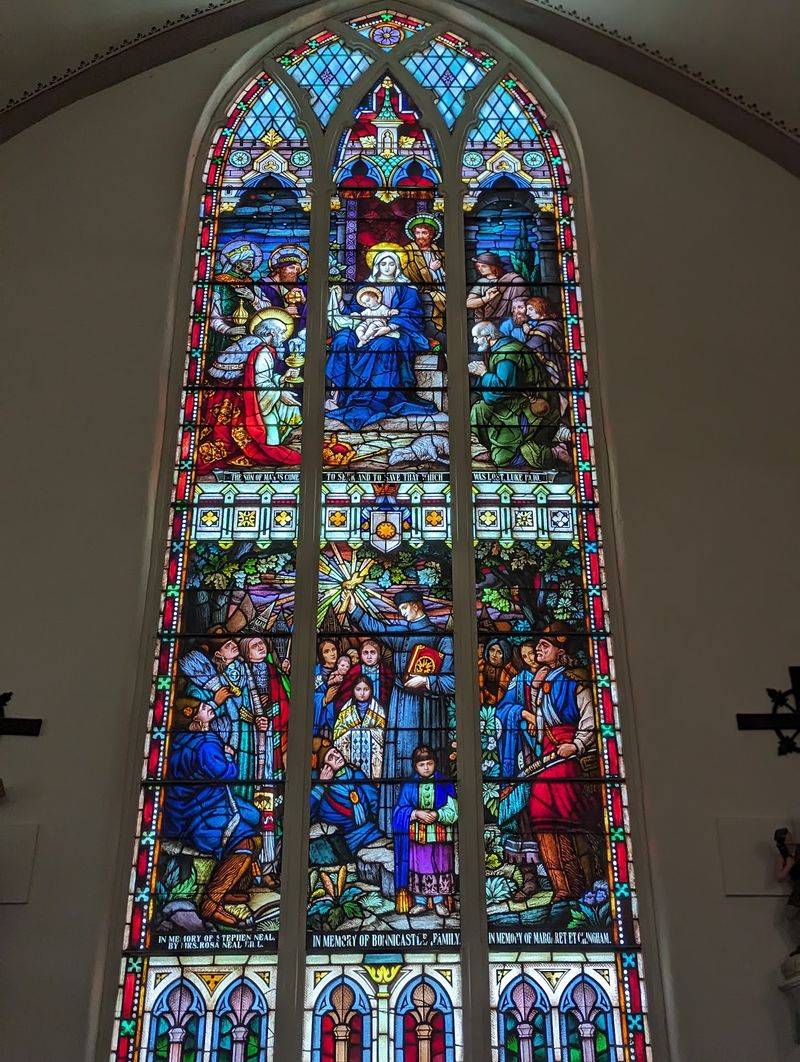
Money and vision came together at an unusual moment in Osage County history. The Osage Nation commissioned the windows and looked past American studios entirely, hiring the Bavarian Art Glass Company of Munich, Germany, to do the work.
Those Old World German craftsmen were already known across Europe for cathedral commissions, so the decision put a small Oklahoma parish in genuinely elite company. Visitors today often say that fact alone is what makes their jaw drop before they even look up.
Consider what that meant logistically in the 1910s. Drawings, approvals, and payments crossed the Atlantic by ship and mail, and every panel had to be designed, painted, kiln-fired, leaded, crated, and sent thousands of miles to a prairie town.
The ambition says something about the community that ordered them. Rather than settling for something serviceable, the parish and its Osage patrons asked for work that would still be worth traveling to see a century later.
They got it. What hangs in those window frames is regularly described as some of the finest stained glass anywhere in the United States.
Windows Buried Underground to Survive a World War
Here is the twist that turns a nice art story into an unforgettable one. World War I broke out while the panels were still being finished in Germany, and bombing raids threatened the workshop and everything in it.
The craftsmen responded by burying the partially completed windows underground, essentially hiding years of painstaking labor in the dirt until the fighting stopped. It was a gamble on both the glass and the future.
Once the war ended, the panels were dug back up, inspected, and completed. They were then crated and shipped across the ocean to Pawhuska, where installation finally happened in 1919, roughly nine years after the church itself went up.
Think about the patience involved. A congregation waited nearly a decade, through a global conflict, to see the windows they had ordered fill their empty frames.
Tour guides tend to linger on this chapter, and for good reason. Standing under glass that spent part of its life underground in Bavaria, in a town of a few thousand people in Osage County, is the sort of detail that sticks with you long after you leave.
The Osage Window and Its Vatican Dispensation
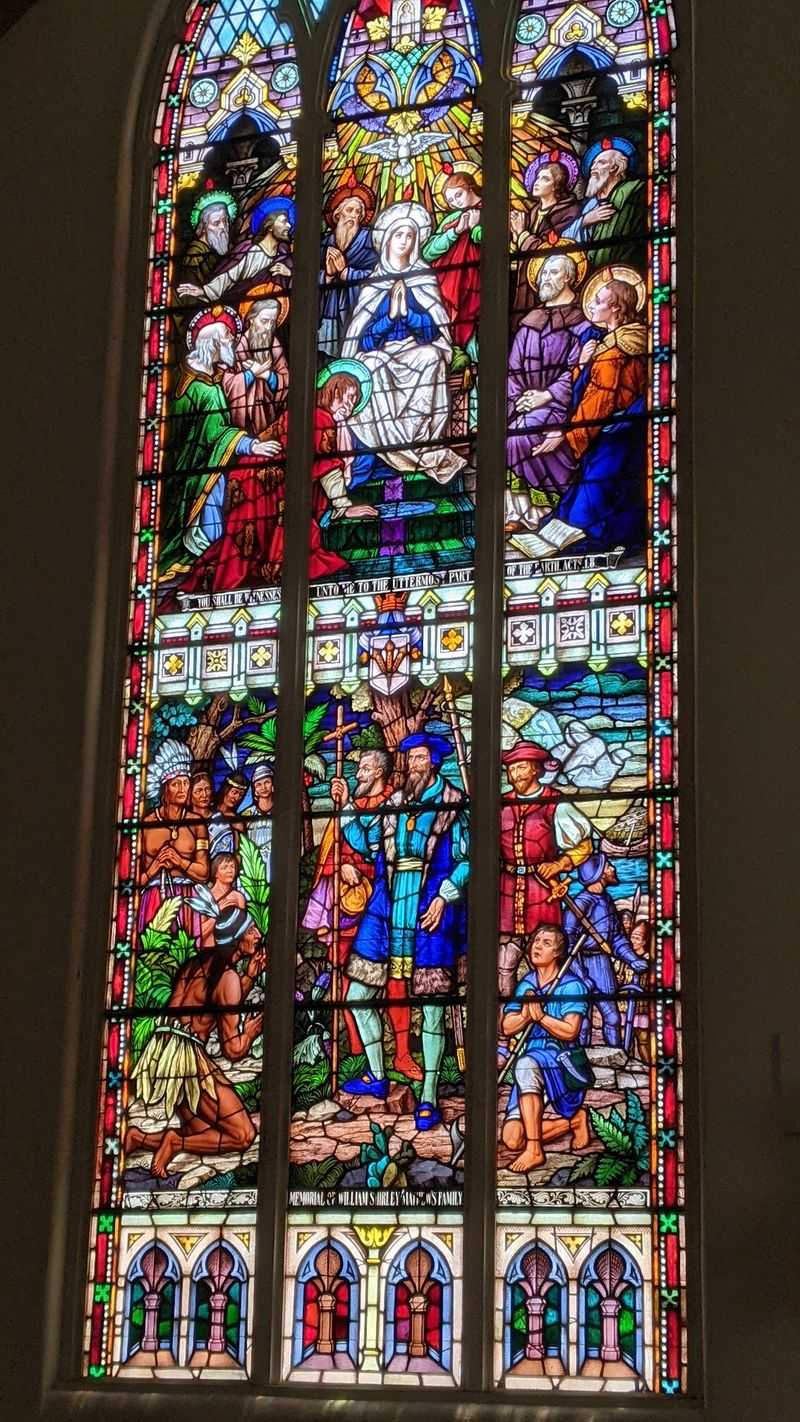
Catholic tradition generally reserved stained glass portraits for saints and biblical figures, not for people still walking around town. The Osage Window broke that rule on purpose.
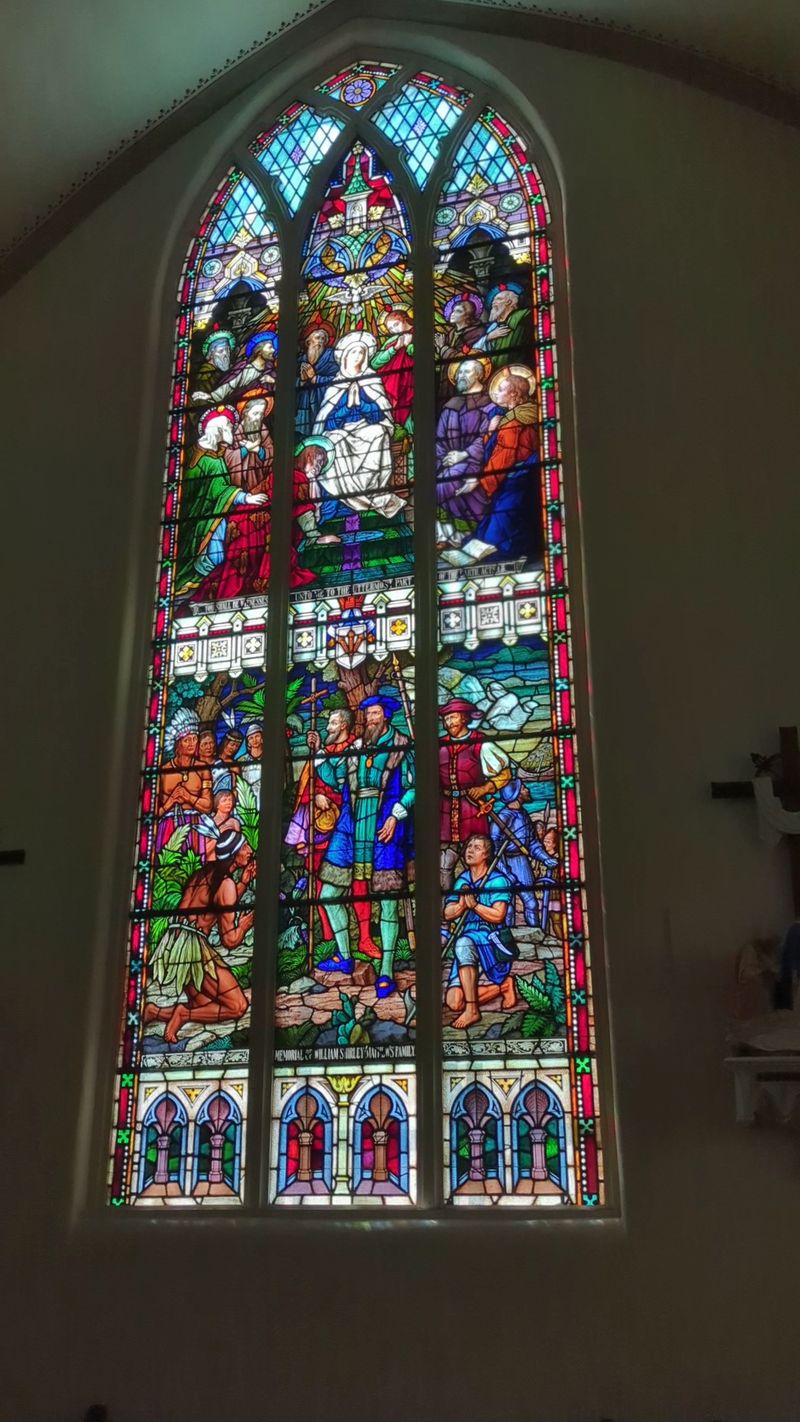
Two of the church’s windows show living members of the Osage tribe as they were at the time the glass was made, including chiefs and tribal members rendered in recognizable detail. Because depicting the living was so unusual, the project required a special dispensation from the Vatican before the work could proceed.
That approval turned the windows into something closer to a portrait gallery than standard church decoration. Osage families visiting today can look up and see ancestors preserved in painted glass, which carries a weight no museum label can match.
Visitors frequently mention this window as the reason the tour lands emotionally rather than just visually. The story of the Osage Nation and the Catholic parish is braided right into the artwork.
A separate panel depicts Christopher Columbus arriving in the New World and meeting Native peoples, a scene that draws plenty of conversation on tours. Guides handle the history directly, and that honesty is part of why the visit feels substantial.
Twenty-Two Panels and the Gold Dust Secret
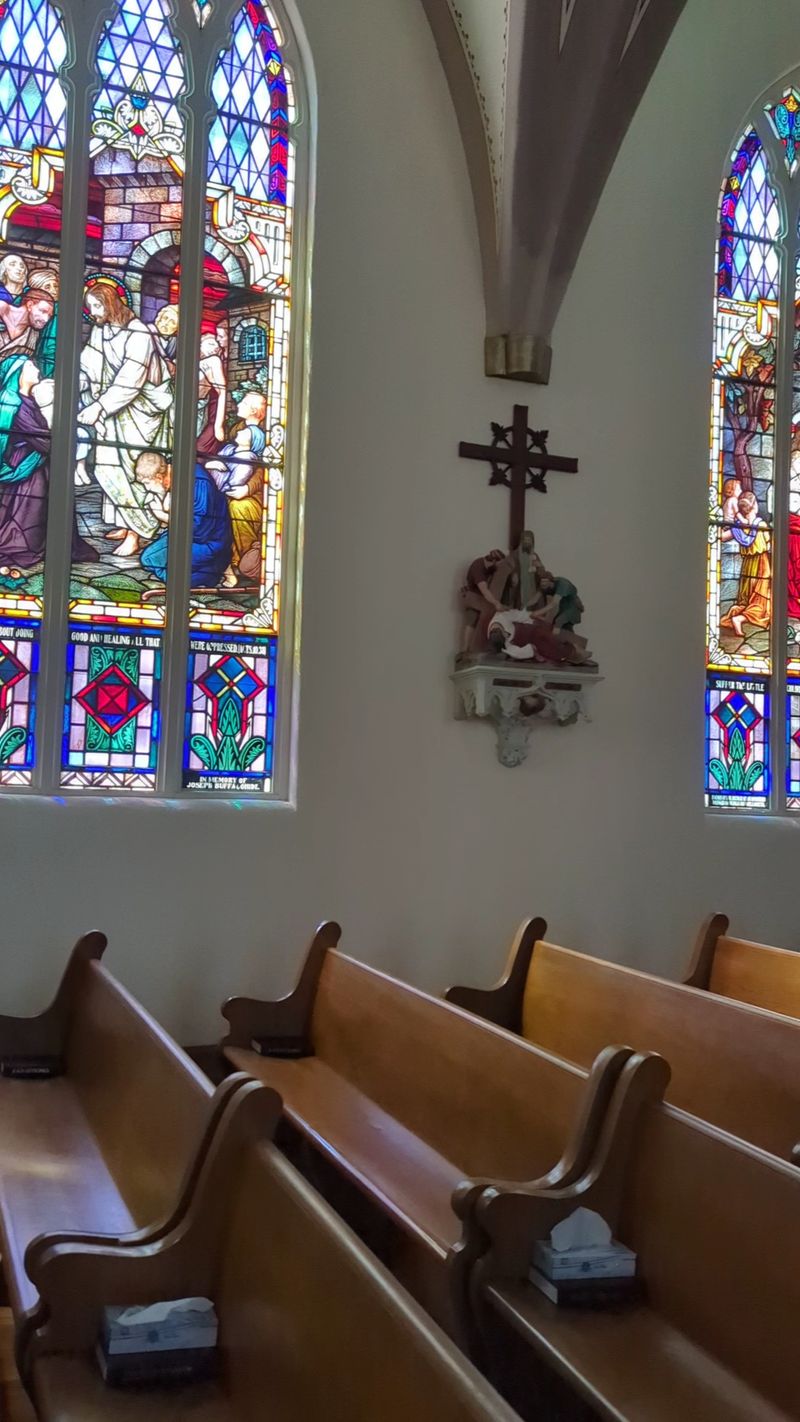
Count them as you walk the nave and you will reach twenty-two. The windows wrap the sanctuary on all sides, which means the room changes character depending on where the sun happens to be sitting.
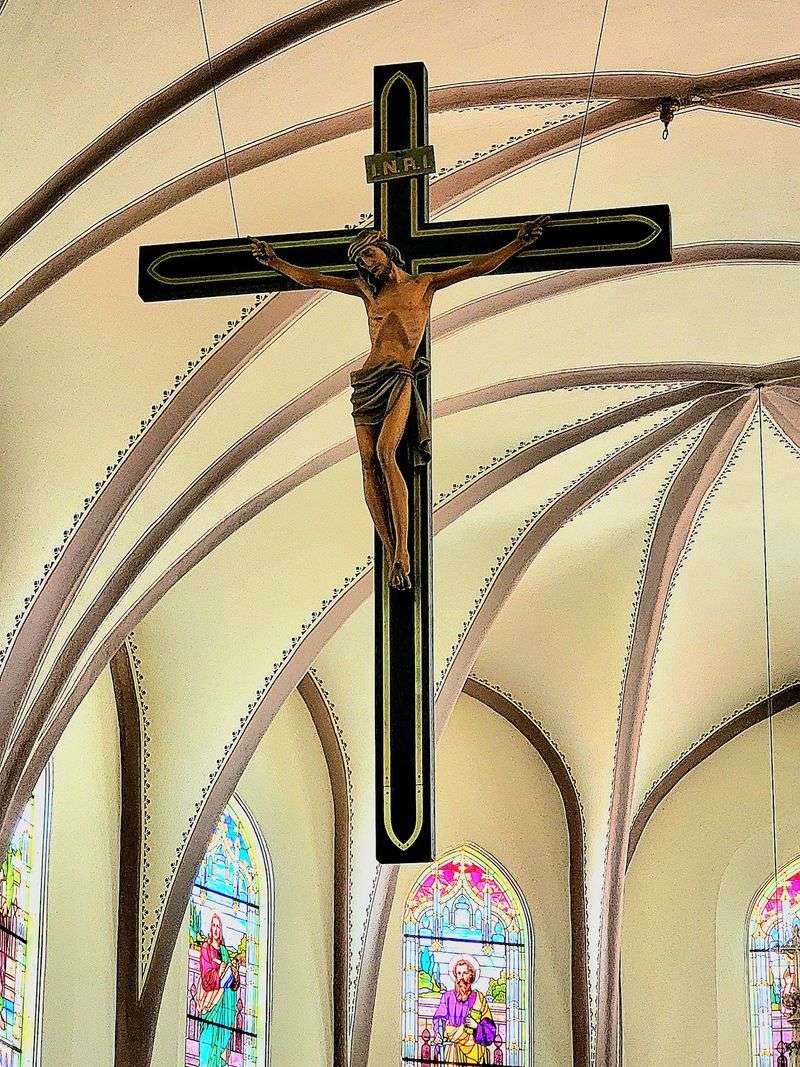
The reds are the showstopper. Those brilliant crimson tones were achieved by working actual gold dust into the glass, an old technique that produces a depth ordinary pigment cannot fake.
Morning light through the eastern panels tends to warm the whole interior, while afternoon shifts the glow toward the opposite wall. Repeat visitors sometimes come back at a different hour just to see how much the colors change.
Detail is where these panels earn their reputation. Faces carry expression, fabric folds look like fabric, and the painted linework holds up when you stand close enough to fog the glass.
Guests consistently report that photographs, even good ones, flatten the effect. The liveliness people describe comes from real light passing through layered color, which no screen reproduces well.
Also worth studying: the Stations of the Cross, which visitors single out for the care packed into each individual scene.
Inside the Sanctuary: Wood Floors and Quiet Light
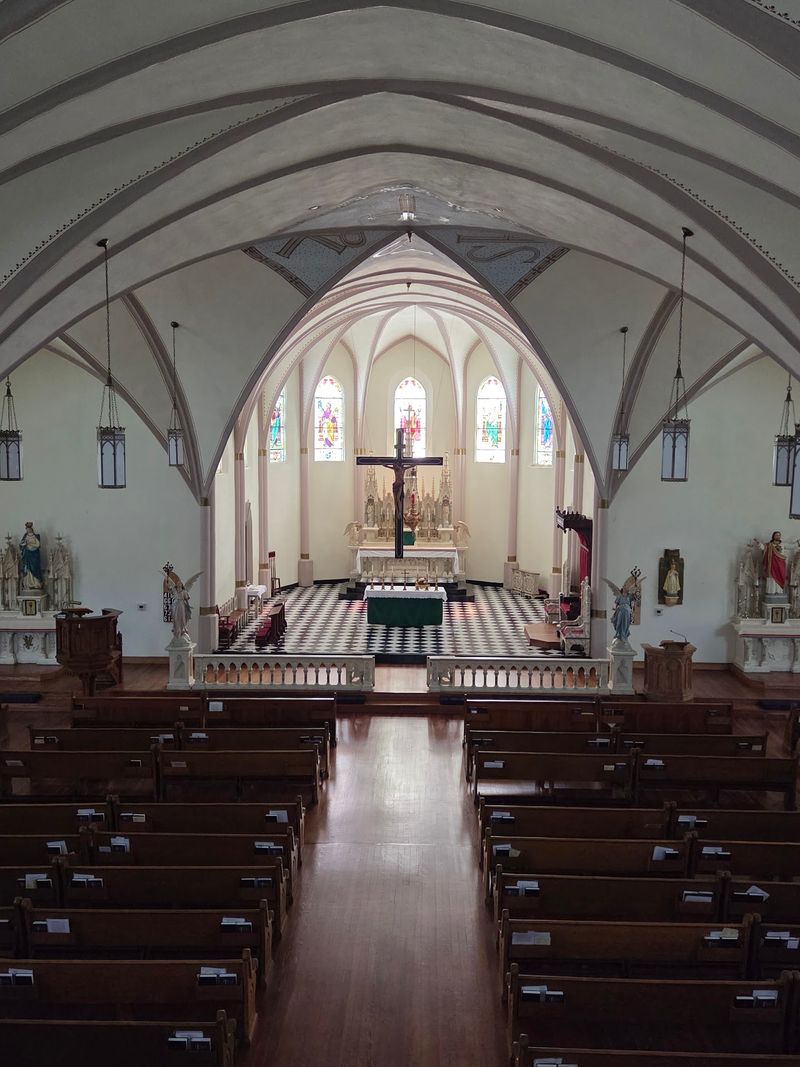
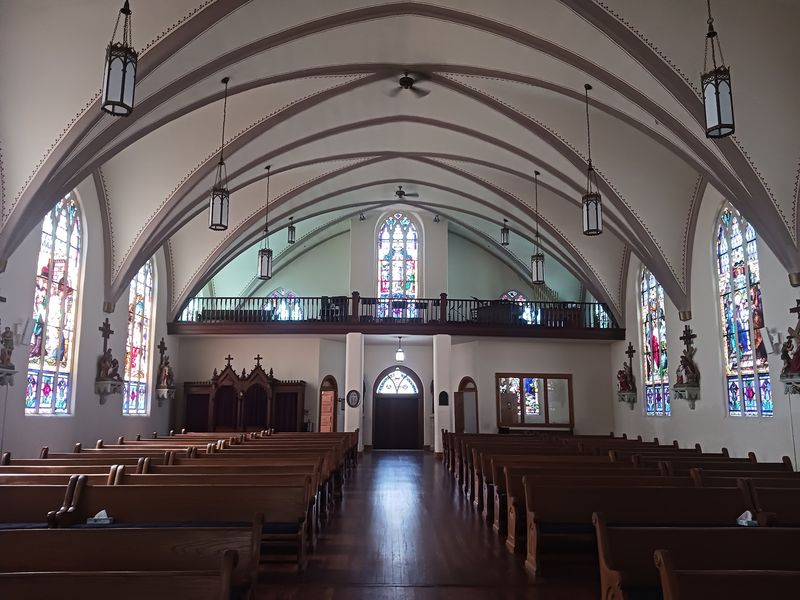
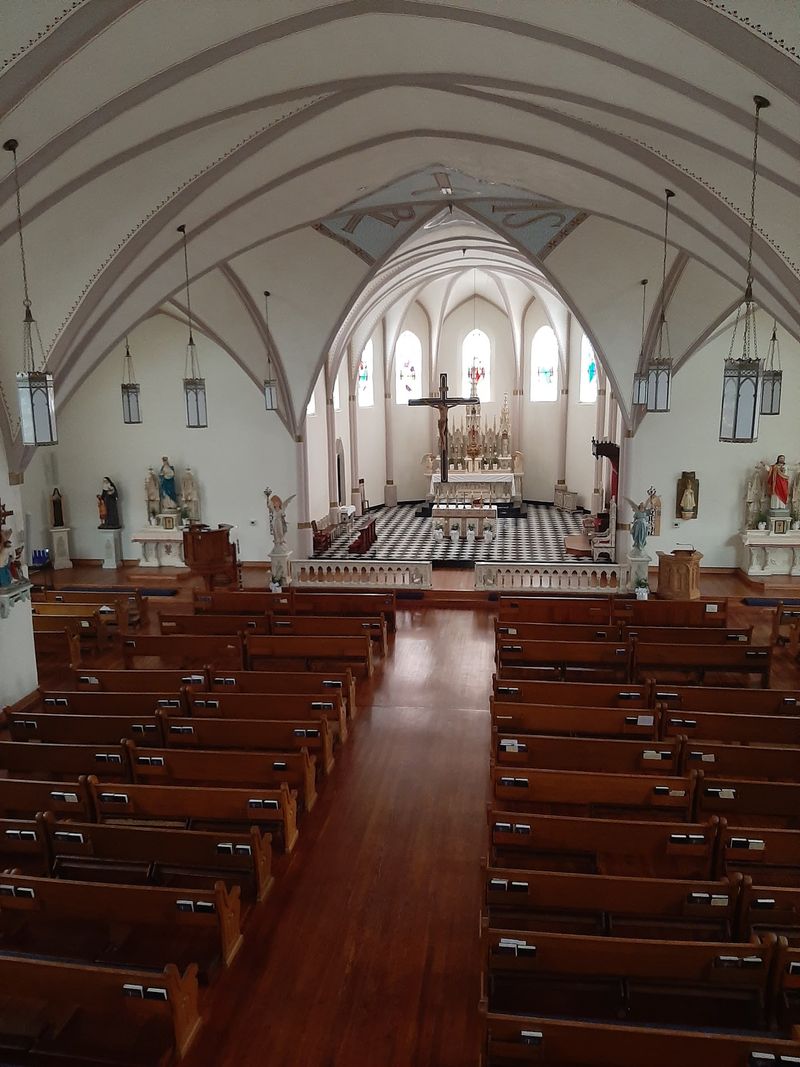
Walking through the doors surprises people. The scale is intimate rather than cavernous, and the wooden floor creaks underfoot in a way that reminds plenty of guests of the church they grew up attending.
Warm wood, tidy pews, and colored light bouncing off every surface create a room that feels lived-in instead of staged. Guests often describe the first few seconds inside as unexpectedly moving, even those who did not come for religious reasons.
The building received a thorough restoration in recent years, and longtime Pawhuska residents have noticed the difference. Someone who grew up hearing those bells as a curfew signal put it simply: the place looks the way it deserves to look.
Acoustics do their share of the work too. Conversation naturally drops to a murmur, and any music in the space carries beautifully across the wood and plaster.
Christmas services draw particular praise, with the glass glowing against the dark and downtown Pawhuska lit up a few blocks away.
Bring a jacket in winter, since older sanctuaries hold a chill, and give yourself a minute to just sit before you start looking around.
The Guided Tour Is the Whole Point
Skip the tour and you will genuinely miss most of what is there. Every panel carries a story, and without someone unpacking the symbolism, faces, and dates, you are looking at pretty colors instead of a narrative.
Tours generally run about an hour and are led by volunteers who know the history cold. Guests repeatedly mention how enthusiastic and well-prepared the guides are, and how willingly they field off-script questions.
One longtime volunteer named Barbara comes up again and again in visitor accounts. She ranches west of town and has asked for roughly a week of notice when scheduling, so a phone call to the church office on a weekday morning is the smart move.
Tours are offered free of charge by appointment, which is a rare value for artwork of this caliber.
A caution worth taking seriously: staffing depends on volunteers, and at least one group arrived for a posted tour time only to find the guide unavailable that day. Confirming directly beats relying on a website listing.
Plan for questions. The guides clearly enjoy them.
Hours, Phone Numbers, and Making a Plan That Works
Scheduling is where most disappointed visitors go wrong, so here is the practical rundown. The church office keeps morning hours Tuesday through Friday, roughly 9 am to noon, with Sunday access around 8:30 to 10 am.
Mondays and Saturdays are listed as closed, which catches weekend road-trippers off guard more often than you would think. If Saturday is your only free day, call first and ask what is possible.
The office number is 918-287-1414, and pawhuskaiccc.org lists current information. Keep in mind that calls have sometimes reached a recorded message, so leaving a clear callback number with your preferred dates helps.
A week of advance notice is the general recommendation for arranging a guided visit. Weekday mornings are the easiest window for reaching an actual person.
Hours and volunteer availability can shift, especially around holidays and Mass schedules, so treat any posted time as a starting point rather than a guarantee.
Building flexibility into your day pays off. Pair the visit with lunch or shopping downtown so an adjusted tour time does not wreck the whole trip.
Driving In From Tulsa, OKC, or Anywhere Nearby
Distance rarely scares Oklahoma travelers, and this one is easy. From Tulsa, expect somewhere around an hour and fifteen minutes northwest through Osage County, mostly on two-lane roads with genuinely pretty prairie scenery.
Coming from Oklahoma City puts you closer to two and a half to three hours, which still works as a day trip if you leave early and make a few stops along the way.
Bartlesville sits close enough to combine easily, and folks from southern Kansas can drop down without much trouble at all.
Parking around 1314 Lynn Ave is street-side and uncomplicated, the sort of small-town setup where you pull up out front and walk twenty steps.
Weather deserves a thought. Osage County roads get windy and exposed, spring storm season can turn quickly, and summer afternoons run hot, so a morning visit tends to be more comfortable in July and August.
Fall may be the sweet spot. Tallgrass prairie color north of town and cooler air make the drive itself half the reason to go.
Who Gets the Most Out of a Visit Here
History buffs win big here, obviously. So does anyone interested in Osage Nation heritage, early statehood-era Oklahoma, or the craft side of art glass.
Faithful visitors come for worship and often stay for the tour, while plenty of guests arrive with no religious connection at all and leave just as impressed. Beauty travels across belief lines pretty easily.
Kids do fine as long as expectations are set. The hour-long format asks for some patience, but the pictures in the windows tell actual stories, and a good guide can hold a curious ten-year-old’s attention better than most museums.
Grandparents seem to love it most. Several visitors have mentioned the wooden floors and bell tower reminding them of childhood churches, which makes the visit as much memory as sightseeing.
Photographers should manage their hopes. The colors are stunning in person and stubbornly difficult to capture, so put the phone down for a while and just look.
Anyone tracing Oklahoma’s tribal history will find this stop fits naturally alongside other Osage heritage sites in town.
Rounding Out the Day in Pawhuska
Nobody drives an hour for a single hour. Fortunately, downtown Pawhuska sits just a few blocks from the church and gives you plenty of reasons to stretch the day out.
Brick storefronts, antique and mercantile shopping, and casual small-town cafes fill the historic district, and the whole area is walkable once you park.
Osage heritage runs deep here, and the town’s museum offerings give useful context for the tribal history you will have just seen rendered in glass. Seeing the window first and the history after, or the reverse, both work well.
North of town, the Tallgrass Prairie Preserve offers wide-open country and bison herds, which makes a natural second stop for families with restless kids.
Winter brings downtown holiday lighting that visitors have noticed and appreciated, especially paired with an evening service at the church.
Budget-wise, the day stays friendly. A free church tour, window shopping, and a plate of something hearty downtown add up to an inexpensive outing by any road-trip math.
Worth the Gas Money, Every Mile of It
Few small-town stops in Oklahoma deliver a payoff this disproportionate to their setup. A parish church in a town of a few thousand holds twenty-two windows from a Munich studio that also worked for the Vatican and European cathedrals.
Add in the wartime burial, the Vatican dispensation for portraying living Osage people, the gold dust in the red glass, and the free volunteer-led tours, and the value math stops being close.
Visitors overwhelmingly describe the experience as worth the time, with many saying they would return and bring others along. One former local suggested the building belongs in museum company, which feels about right.
The single real risk is showing up without arranging anything. Call ahead, give some notice, and treat the schedule as flexible rather than fixed.
Do that, and you get an hour of Old World craftsmanship and Osage history in a room that smells faintly of wood polish and old hymnals.
For anyone who likes proof that Oklahoma keeps remarkable things in unremarkable packages, this hillside church settles the argument quickly.
