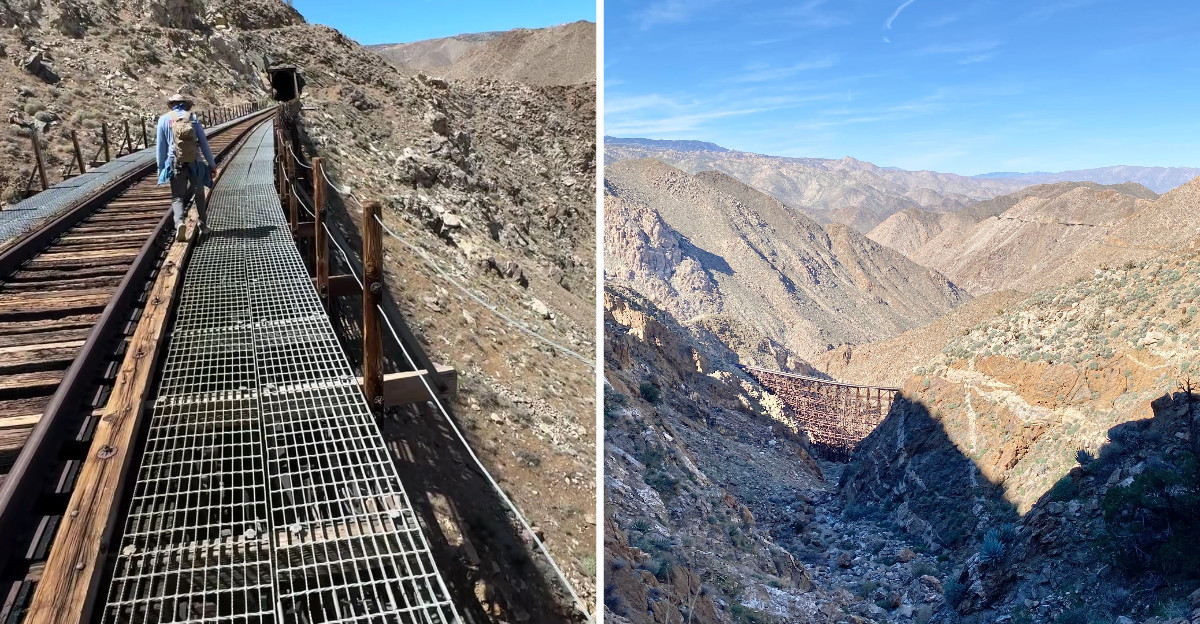
Faded photographs of wooden bridges curving through empty desert canyons have a way of sticking in the mind, and this one refused to let go for years. It looked like something built for a movie set, then abandoned and forgotten by everyone.
The bridge is real, it sits deep inside a California desert state park, and it happens to be the largest all-wood railroad trestle on the planet. Getting there means rough dirt roads, dark tunnels, and a hike long enough to make your legs complain for days.
The trip was made anyway, mostly because the idea of a landmark that huge with almost nobody around felt too good to pass up. What waited at the end was quieter, stranger, and far more moving than that old photograph ever suggested.
The wood still holds its curve against the sky, and the silence around it feels like a held breath. It is one of those places that rewards the effort with something you cannot quite put into words.
A Wooden Giant Born From a Collapsed Tunnel
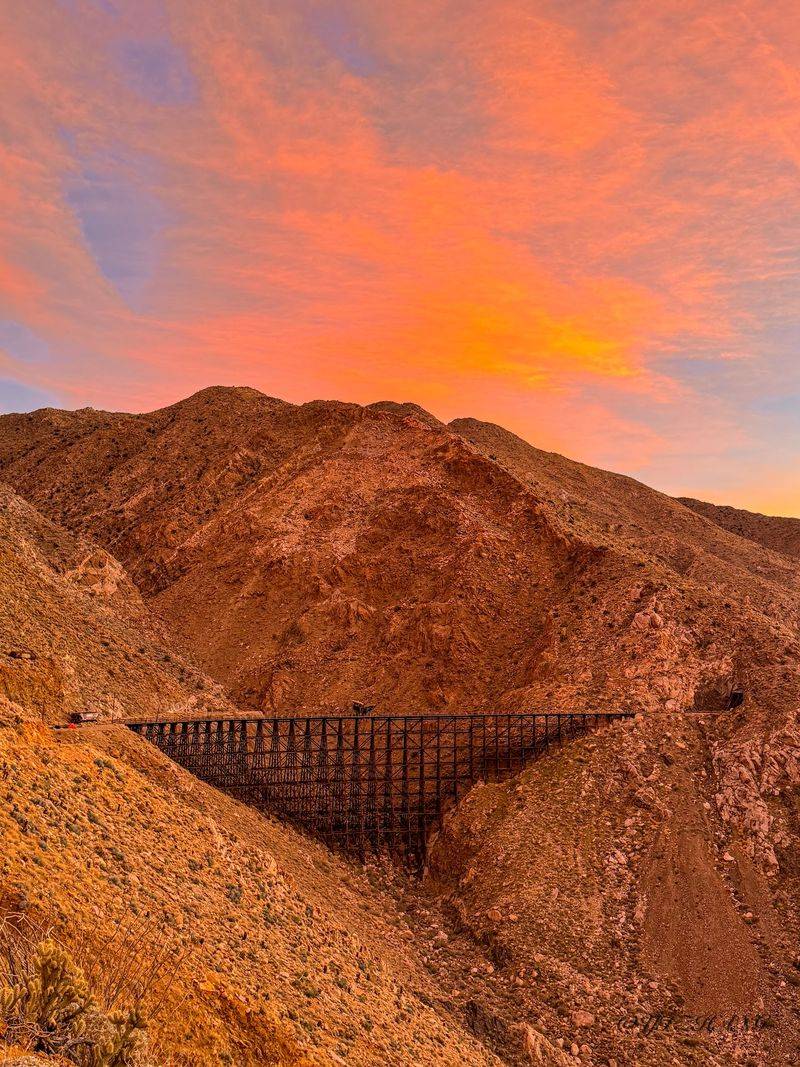
Failure, oddly enough, is the reason this bridge exists. When Tunnel 15 caved in along the Carrizo Gorge line, engineers decided that digging through unstable rock again was a losing battle.
So they bridged the gap instead. Finished in 1933, the Goat Canyon Trestle became part of the San Diego and Arizona Eastern Railway, a route nicknamed the Impossible Railroad for good reason.
Crews punched 21 tunnels and raised 14 trestles across just 11 miles of gorge. Redwood was chosen over steel because the canyon swings between blistering afternoons and near-freezing nights, and metal fatigue was a real worry.
Here is the detail that got me: it was assembled without nails. The builders also gave it a 14-degree curve so the wind sweeping through the canyon would push against the structure at a friendlier angle.
Depending on how you measure, it stretches roughly 600 to 750 feet and rises somewhere between 182 and 200 feet above the canyon floor. Passenger trains stopped running in 1951, freight limped along for decades, and by 2008 the line was shut for repairs that never came.
What remains is pure craftsmanship, quietly baking in the sun.
Rough Roads and the Drive That Starts the Adventure
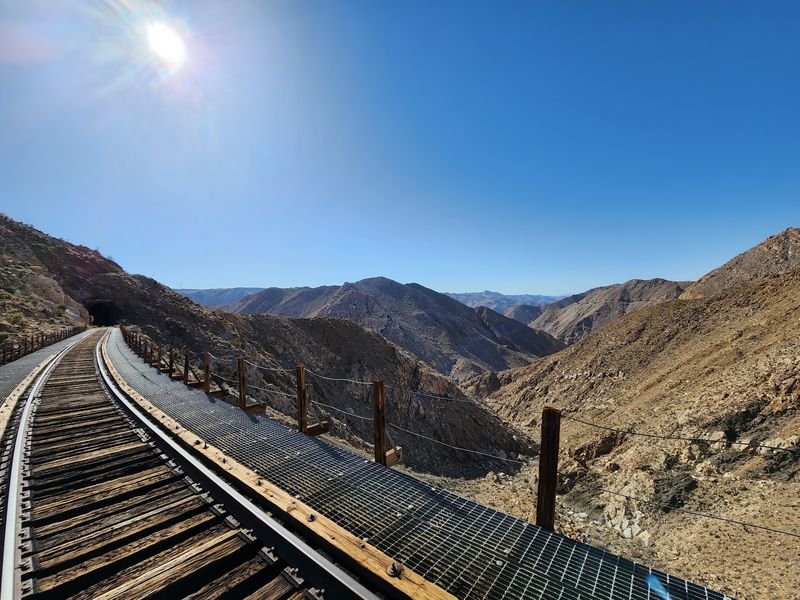
My tires told me the trip had begun long before my boots did. Pavement gives way to washboard dirt, then sand, then rock, and the whole time you are winding deeper into the southern edge of Anza-Borrego, barely 15 miles from the Mexican border.
A high clearance vehicle matters here. Four-wheel drive is safer still, especially on the soft sandy stretches where momentum is your only friend.
There is no visitor center waiting at the end, no paved walkway, no sign pointing helpfully toward the bridge. Parking happens on dirt shoulders and pull-outs, and you simply start walking.
Hikers use a few different approaches. The Dos Cabezas area follows the old rail grade and runs somewhere around 10 to 14 miles round trip, the Jacumba side can stretch to 16, and the Mortero Palms route trades distance for serious boulder scrambling.
I liked the rail grade option because the grade stays gentle even as the scenery turns dramatic. Cell service disappears early, so download your maps at home.
Honestly, the drive sets the tone perfectly. By the time you park, you already feel wonderfully far from anything ordinary.
Carrizo Gorge, Where the Desert Sets the Rules
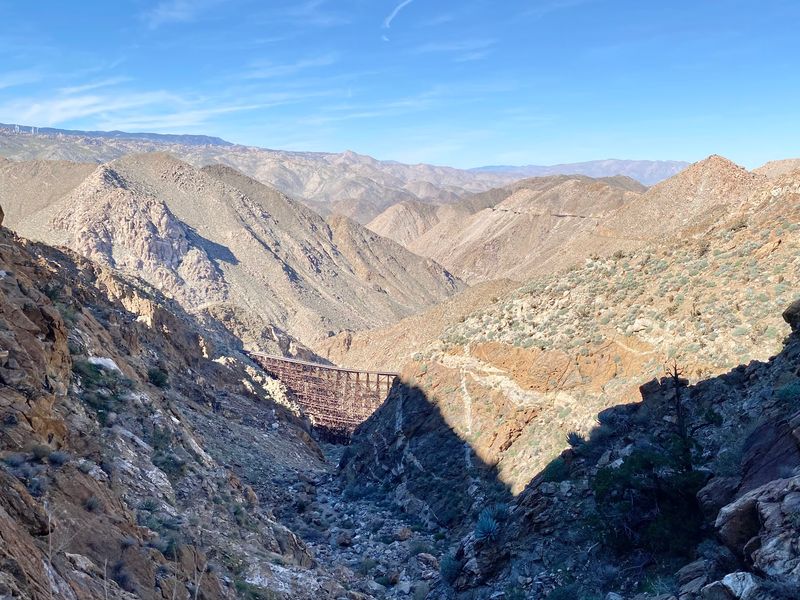
Rock walls rise on both sides here like the sides of an enormous bowl, and the ground never stays the same for long. One minute I was crunching across gravel, the next I was picking my way over slabs and loose sand.
Heat is the headline. Summer temperatures regularly climb past 100 degrees, and shade is almost nonexistent along the route.
Winter mornings flip the script completely, with wind that bites and temperatures near freezing before the sun clears the ridgeline. Layers are not optional.
Life still finds a way out here, which surprised me. Bighorn sheep roam these slopes, songbirds call from thickets in the washes, and after a wet season the canyon floor can flush with unexpected color.
Cacti crowd close to the old rail bed, so long pants earn their keep. Several hikers carry tweezers, and after one brush with a cholla I understood why.
The washes hint at flash floods that reshape the terrain in hours. Mostly, though, it is the silence I remember, broken only by wind moving through the canyon and my own footsteps on gravel.
Tunnels, Trestles and the Seven Sisters
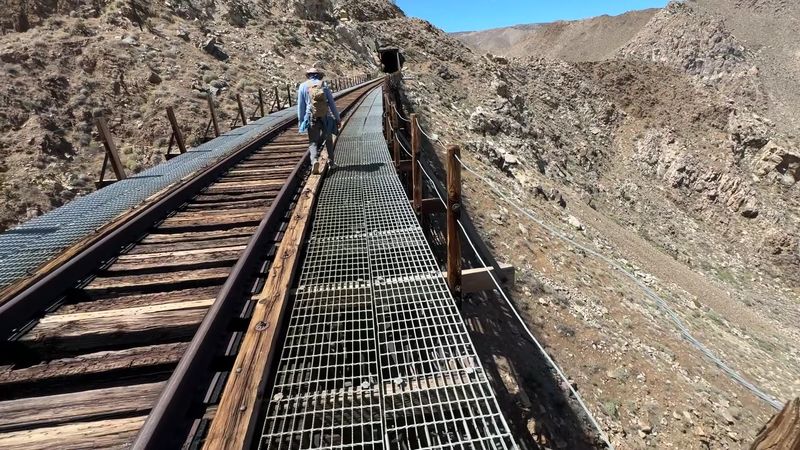
Cool air spilling out of a tunnel mouth on a hot desert day is one of the better surprises a trail can offer. I stepped inside, let my eyes adjust, and felt the temperature drop like someone had opened a refrigerator.
Bring a headlamp. Some tunnels run a quarter mile or longer, and a couple go pitch black fast because one end is sealed.
Two tunnels along the popular rail route are locked, but well-worn footpaths loop around them. One detour narrows along a slope with real drop-offs, so slow feet win.
Before the main event, you cross a string of smaller trestles, including the cluster hikers call the Seven Sisters. Several have metal grates, gaps between planks, and no handrails, which certainly sharpens your focus.
Morning dew on those beams makes them slick, something I discovered early and did not repeat. Walking beside the rails rather than between them helped.
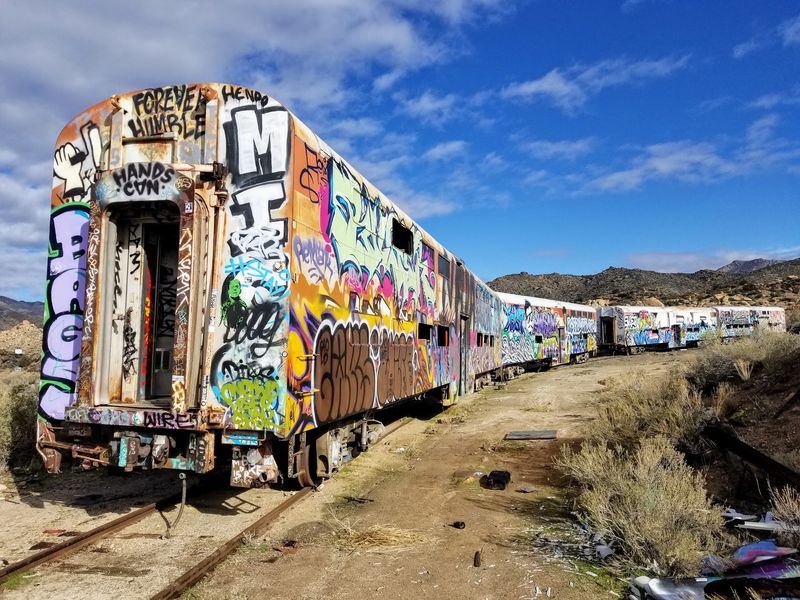
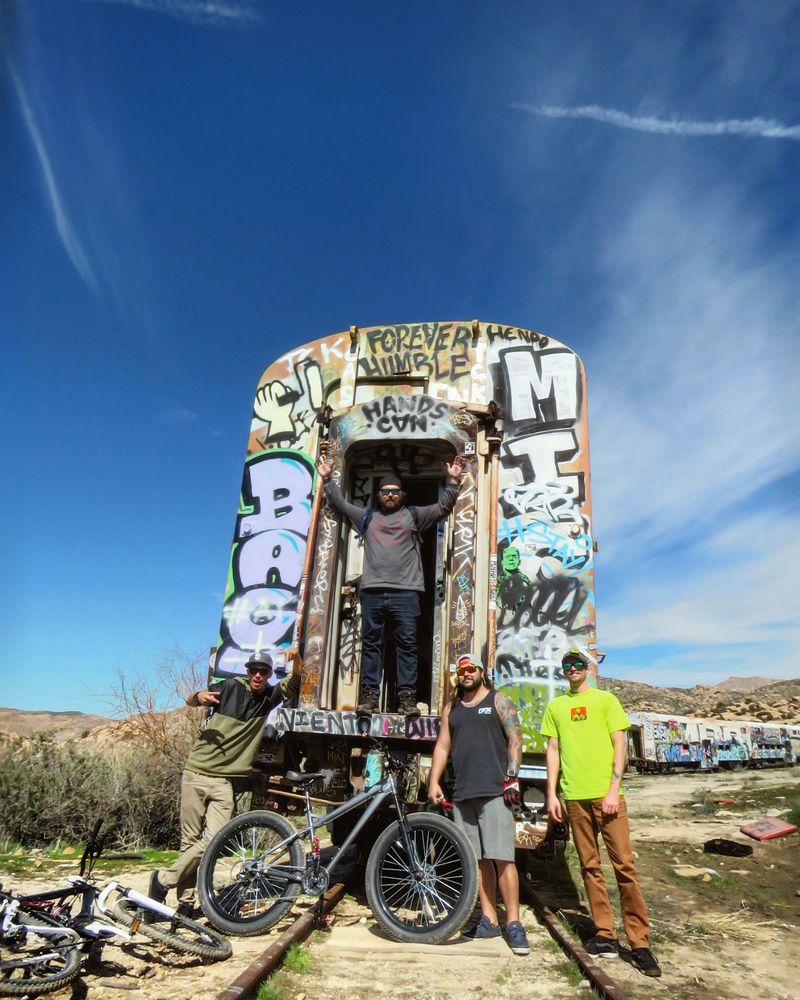
Rusted, graffiti-covered rail cars sit abandoned along the way, doors open, paint peeling. Fun bit of history: the big trestle once had its own fire suppression system, which makes sense when your bridge is made of wood.
That First Look, and Then Standing Underneath
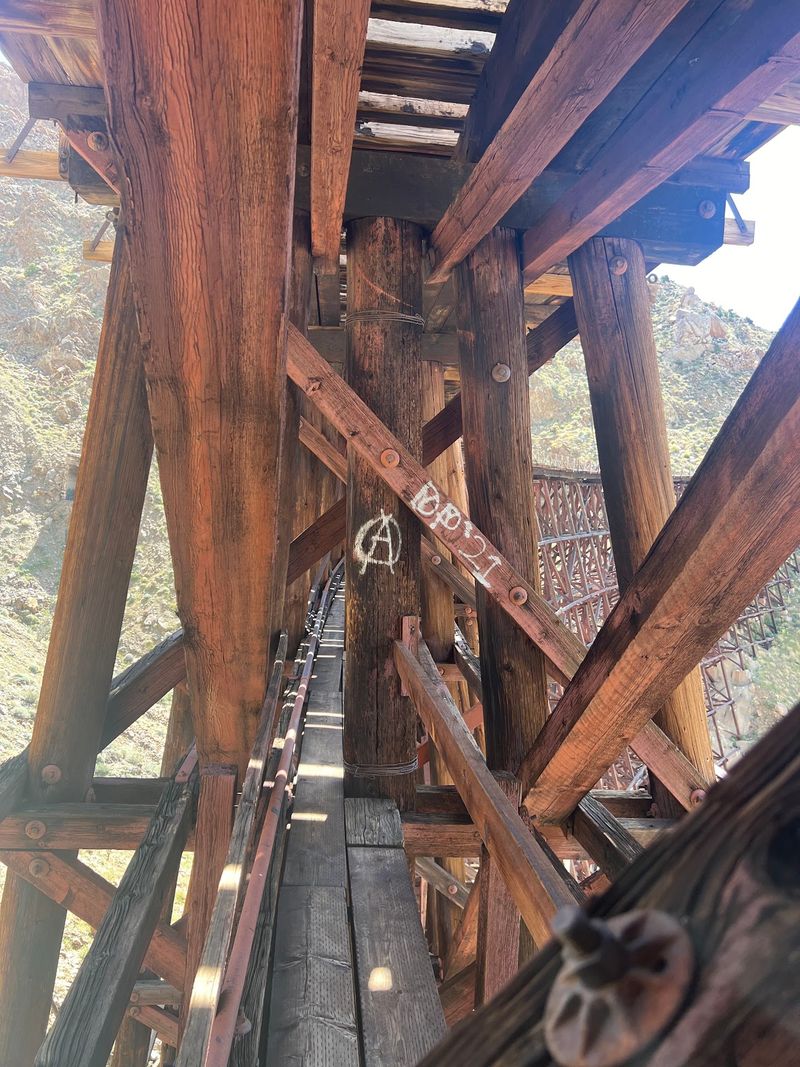
Around one final bend, the trestle appeared, and I actually stopped walking. It sits tucked into a fold of the canyon, a pale wooden curve against red-brown rock, and photos really do not prepare you for the proportions.
Closer in, the details sharpen. Thousands of timbers cross and brace each other in a pattern that looks complicated until you realize every piece is doing a job.
The wood has weathered to a soft silver-gray after nine decades of sun and wind. Up close it feels less like a ruin and more like something still holding its shape on purpose.
Looking straight up from the canyon floor, I felt genuinely small. Roughly 180 to 200 feet of structure leaning gently into that famous curve is a humbling sight.
Crossing it is possible, and there is a railing along the deck, though the boards creak in a way that keeps you honest. Some hikers stay near the metal ties for peace of mind.
From the middle, Goat Canyon opens wide in both directions. I stood there longer than planned, camera down, just listening to the wind.
What to Pack, and When Not to Go
Water is the whole ballgame out here. Three liters is the bare minimum, and plenty of hikers report drinking nearly a gallon on a warm day and still finishing thirsty.
Skip summer entirely. With triple-digit heat and essentially zero shade, the window between November and March is the sensible choice.
Sturdy boots with ankle support make the rocky sections much kinder. Trekking poles saved my knees on the steeper descents, and I would bring them again without thinking.
Sun protection is non-negotiable: wide-brim hat, sunglasses, sunscreen, long pants for the cactus gauntlet. A basic first aid kit and those cactus tweezers round things out nicely.
A headlamp belongs in every pack, even on a day hike. Getting caught out after dark with trestles still to cross is a situation nobody wants.
Download offline maps before you leave the highway, because service vanishes and cairns can be hard to spot. Start early, watch the clock, and turn around on schedule rather than on feeling.
Rattlesnakes live here, so keep your eyes on the trail. Hiking with a partner is smart on a route this remote.
Why This Empty Canyon Stays With You
Walking back out, legs heavy and boots full of grit, I kept glancing over my shoulder at the bridge. It stayed impressive from every distance, which felt like a fair reward for a long day.
The superlatives are fun, largest all-wood trestle, largest curved one too, but they are not really why the place sticks. What lingers is the emptiness around it.
Hours passed without seeing another person. In a state as busy as California, that kind of solitude feels almost impossible to find.
I thought a lot about the crews who worked this gorge, blasting tunnels and raising timber in heat that would flatten most of us. Earthquakes, landslides, fires, and a 1976 hurricane all took their turns at the line.
Revival plans came and went, most recently abandoned around 2021. The desert has simply outlasted every attempt.
That is what makes the hike feel less like sightseeing and more like a visit. You earn it, you stand under it, and you carry it home with you.
Address: PRH8+JG, Palm Grove, California, United States
