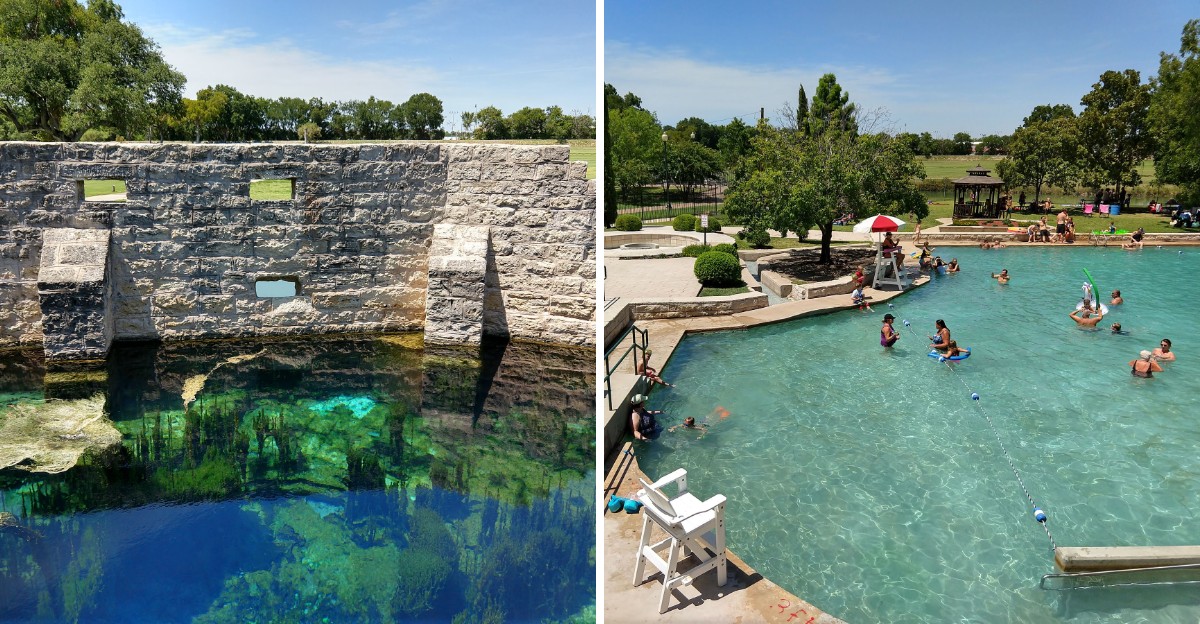
Some swimming pools are built. This one was given.
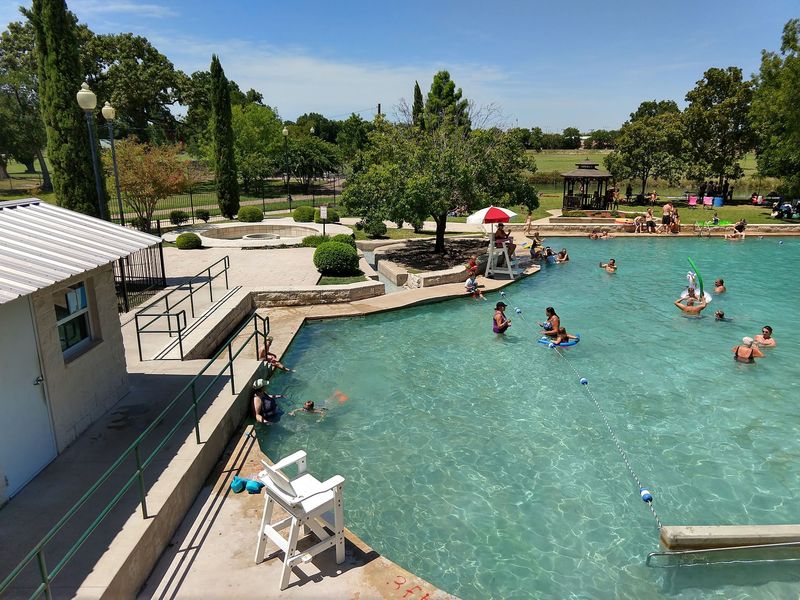
Fed by natural springs, the water is clear, cool, and constantly flowing, the kind of spot that has been refreshing Texans for generations. It is one of the oldest free flowing pools in the state, and it still delivers.
You can swim, float, or just sit on the edge and watch the water move. The setting is simple and natural, without the slides and splash pads of modern waterparks.
That is part of the charm. It is not about entertainment.
It is about enjoying something real. Families have been coming here for years, passing the tradition down.
And once you experience it, you understand why. Bring a towel, some sunscreen, and a sense of appreciation.
This is Texas swimming the way it used to be.
Water That Never Stops Moving
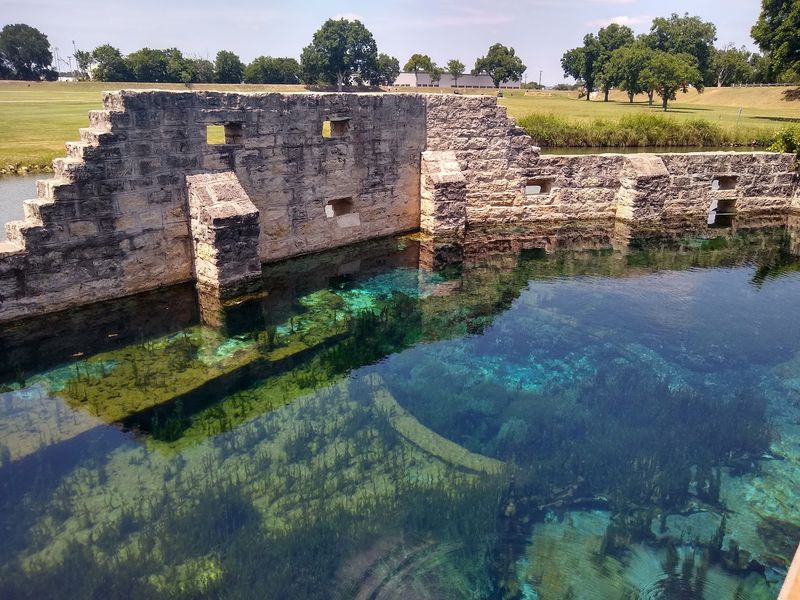
The phrase free flow gets tossed around a lot, but here it means something very literal. Water rises from an artesian spring, enters the pool, fills it completely, then exits on the far side into Sulphur Creek.
Nothing recirculates. Nothing gets treated with chemicals.
The basin is essentially a wide spot in a spring’s natural path, shaped by concrete but powered entirely by the ground beneath Lampasas.
Roughly seventy gallons per second move through the system on an average day, which is a hard number to picture until you stand near the outflow and hear it. There is a steady rushing sound at one end, almost like a small creek rapid, and swimmers naturally drift toward it.
Because of that constant turnover, the clarity holds up remarkably well. On a bright afternoon the bottom is visible across most of the pool, and shadows from the surrounding trees ripple across the floor in slow patterns.
One practical note that regulars pass along: the pool floor is rough. Water shoes are a genuinely smart call, especially for anyone with tender feet or kids who plan to run around the shallow end.
Depth reaches past six feet in the deep section, so there is room for actual swimming rather than just standing around cooling off. Lifeguards watch the water during operating hours.
Tubes and floats are generally welcome, which turns the whole thing into a slow-drifting afternoon rather than a workout.
Cold Enough To Make You Laugh Out Loud
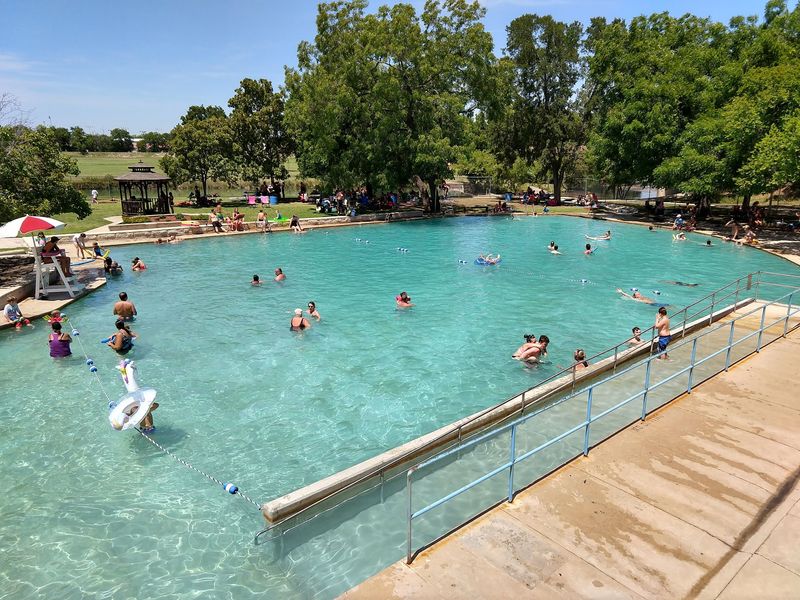
Anyone who has eased into this pool knows the routine. Toes go in, shoulders tense, someone says the water is fine, and nobody believes them.
Temperatures hover around 72 degrees Fahrenheit, with some sources reporting a steadier 69. Either way, on a 100-degree Texas day that difference hits like an ice pack.
The chill comes straight from the source. Water travels through cavernous Marble Falls limestone before surfacing, and underground rock keeps it at a near-constant temperature regardless of the season.
That consistency is the real magic. In late May the water feels bracing.
In the thick of August it feels like the best decision anyone made all week.
Strategy matters. Most people find that a quick full plunge beats the slow inch-by-inch approach, because the body adjusts within a couple of minutes once fully submerged.
Kids tend to adapt faster than adults, which is mildly unfair but consistently true. Expect a lot of shrieking followed almost immediately by nonstop swimming.
Bring a towel and something dry to change into, since the cool water plus shade can leave you genuinely chilly afterward even in peak summer. A blanket for the grass helps too.
Alternating between the water and a sunny patch of lawn becomes its own rhythm, and it is honestly one of the more pleasant ways to spend a hot afternoon anywhere in central Texas.
That Sulfur Scent And Why It Belongs Here
First impressions usually involve a nose wrinkle. The air near the springs carries a mineral smell, thanks to sulfur content in the water, and it announces itself before the pool comes into view.
Give it a few minutes. Almost everyone stops noticing entirely, and plenty of visitors come to associate the scent with the place itself.
That mineral signature is not a flaw. It is proof the water is coming straight from deep rock rather than a municipal line, and it is the same quality that built the town’s reputation in the first place.
Back in the 1800s, people traveled considerable distances to take the waters here, believing the minerals carried healing properties. Lampasas became a genuine health destination on the strength of that belief.
Whether or not the claims held up medically, the effect on the town was real and lasting. Hotels went up.
Visitors arrived by the trainload. The springs shaped the local economy for decades.
Modern swimmers get the same water without the marketing. It is clean, cold, and constantly renewed, and the faint scent is simply part of the package.
A small tip for anyone sensitive to smells: the breeze usually clears things up on the grassy edges away from the outflow. Sitting under the larger trees also helps.
Honestly, the scent fades into the background faster than most people expect.
More Than A Century Of Swimmers
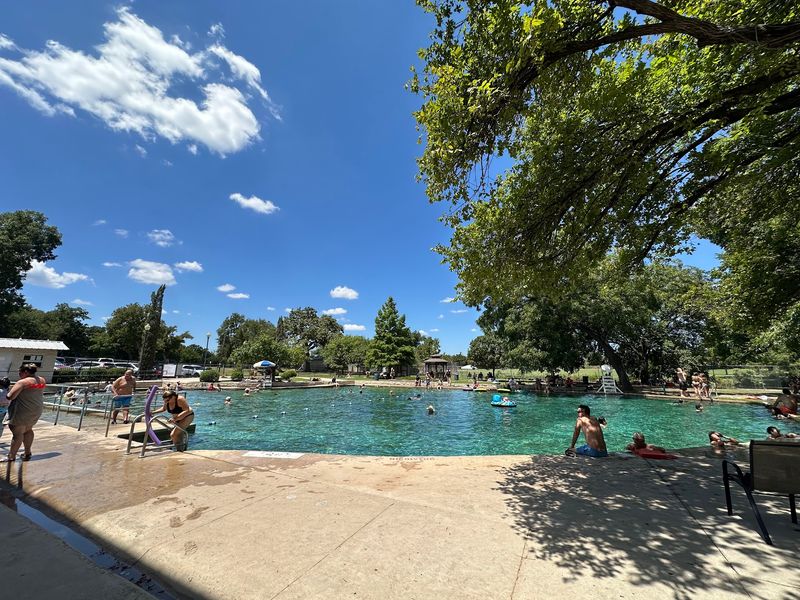
History here runs deeper than the pool itself. Spanish explorer Juan Antonio Bustillo y Cevallos may have passed these springs as early as 1732, long before anyone thought about swimming laps.
Lampasas began forming around the water sources in the 1850s, and by the late 1800s the town had earned the nickname Saratoga of the South.
The pool as it exists today traces back to 1911, when it was built as a large bathing facility for a Baptist encampment. Crowds gathered.
Tents went up. The springs did the rest.
In 1936 the City of Lampasas purchased the property and dedicated it as a public park, opening the water to everyone rather than a single organization.
Then came an unexpected chapter. From 1942 to 1946 the federal government leased the grounds and ran it as an Army convalescent camp called Panther Recreation Park, where recovering soldiers used the same cool water.
Standing near the old stone walls, it is easy to imagine how many different eras of people have cooled off in this exact spot. Families, soldiers, health seekers, kids on summer break.
Very few recreational spaces in Texas can claim that kind of unbroken run. The water has simply kept flowing through every version of the town above it.
That continuity is a big part of why locals treat the place with real affection.
Shade Trees, Picnic Tables And A Very Relaxed Duck Population
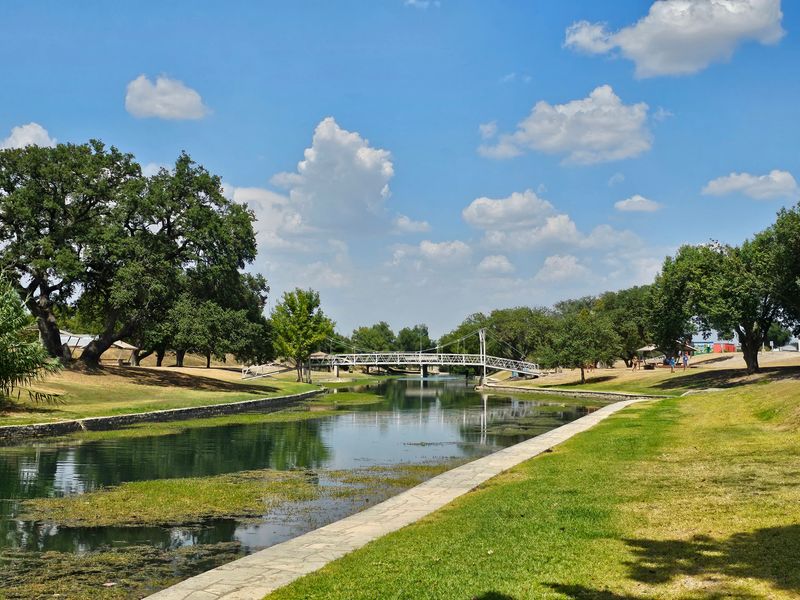
Beyond the pool itself, the park spreads across roughly three acres of grass and old trees, part of a larger municipal property of about 109 acres that includes the golf course.
Shade is the headline feature. Enormous trees cover much of the lawn, keeping picnic spots comfortable even when the sun is doing its worst.
Picnic tables exist, but they go fast. First come, first served is the unofficial rule, so bringing folding chairs or a blanket is the smarter play.
Kids gravitate toward the playground and swings, and there is a volleyball court for anyone who wants to burn off energy between swims. The grassy areas near the water work well for towels and coolers.
Waterfowl wander the grounds with the confidence of longtime residents. Ducks and geese generally mind their own business, though giving the geese a wide berth is sound advice.
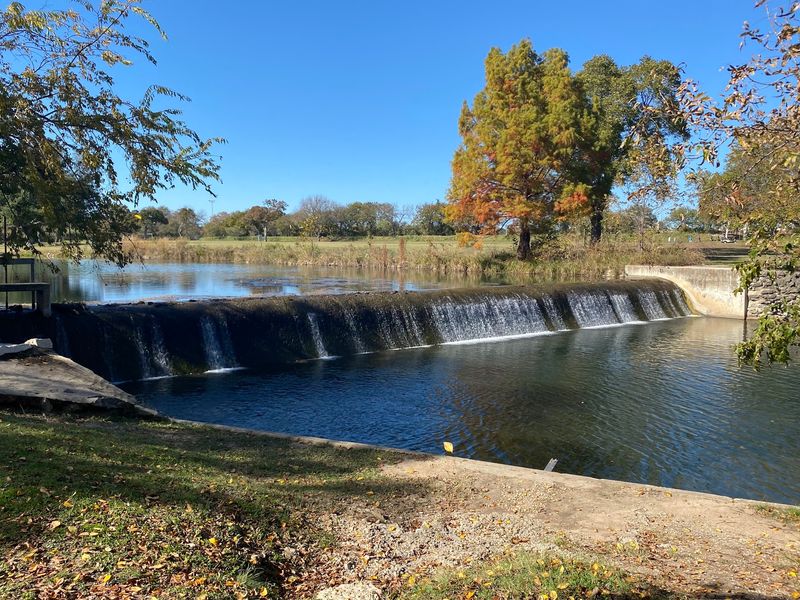
A Creekwalk follows Sulphur Creek where the pool’s overflow drains out, and it makes for a pleasant, unhurried stroll. A small waterfall along the way draws photographers and the occasional fisherman.
The park sits at 1600 S. Highway 281, Lampasas, TX 76550, easy to spot on the drive into town.
Restroom facilities are limited, so plan accordingly, especially with a group.
Bring your own food and drinks, because there is no concession setup to rely on.
Moonlight Swims And Summer Evenings
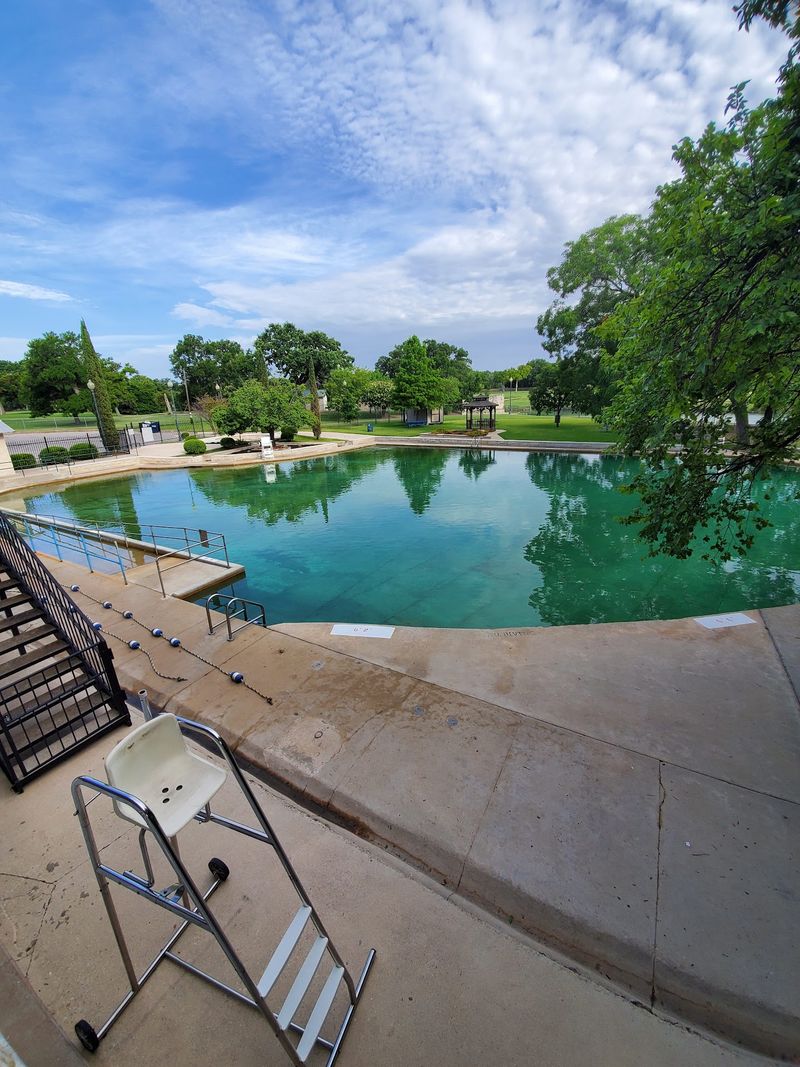
Nighttime changes the whole character of the place. During June, July and August, the pool hosts Moonlight Swims on designated evenings, and the cold water somehow feels friendlier after dark.
These gatherings often include a potluck supper, with attendees bringing dishes to share on the lawn. It has a neighborhood cookout energy rather than an organized event feel.
Live music turns up at some of them, drifting across the water while people float around in tubes. Glow-in-the-dark necklaces sometimes make an appearance, which delights every kid in attendance.
Swimming in spring water under open sky is a genuinely different sensation. The surface goes glassy, the sound of the outflow gets louder without daytime chatter, and the surrounding trees turn into dark silhouettes.
For visitors planning a trip around one of these evenings, checking the city’s park schedule ahead of time is worth the effort, since dates are set seasonally and can shift.
Bring a flashlight for navigating the grass afterward, plus an extra towel. Wet feet plus dark lawn equals mild comedy.
The atmosphere leans strongly family-friendly, with plenty of parents watching from blankets while kids splash.
It is one of those small-town traditions that has stuck around because it simply works.
Arrive a little early to claim a decent patch of grass near the water.
The Hostess House And Old Stone Bathhouse Walls
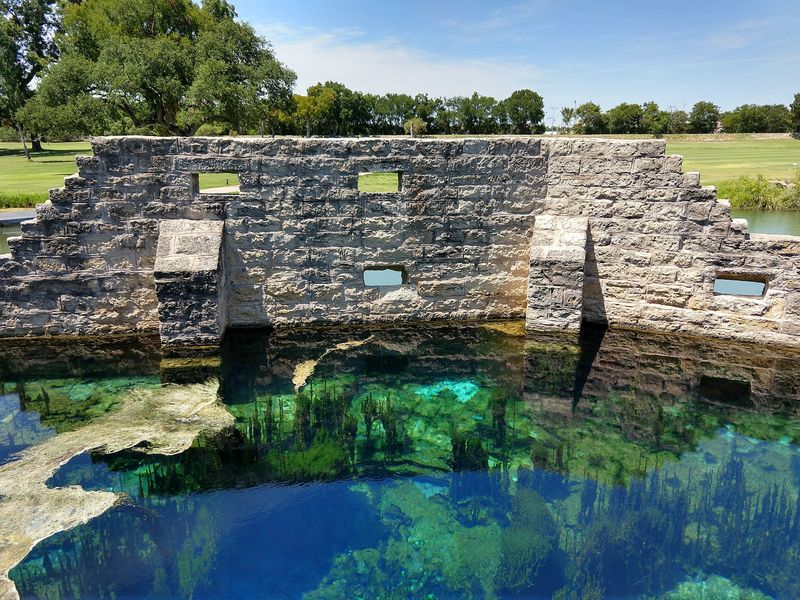
Perched above the water sits the Hostess House, a two-story building with a balcony that looks out over the pool. Restored in the 1990s, it still serves as a rental venue for gatherings and special events.
That balcony view is arguably the best angle on the whole property. From up there the clarity of the water reads differently, and the tree canopy frames everything neatly.
Nearby, stone walls from an earlier bathhouse built in 1882 remain standing. Weathered, moss-flecked, and unmistakably old.
Those walls are physical evidence of the era when people came specifically to bathe in mineral water for their health. It predates the pool by nearly three decades.
The city carried out further restoration work on the Hancock Springs bathhouse in 2023, which helps keep the structure stable and readable for visitors who like poking around historic remnants.
Walking between the modern pool deck and those older stones creates a nice sense of layers. Same water, several different centuries of people using it.
Photographers tend to linger here, especially in late afternoon light when the stonework warms up.
For anyone planning a small event, the Hostess House offers a setting that feels rooted rather than generic, with the sound of running spring water in the background.
Take a few minutes to read the informational markers scattered around the grounds.
Getting The Timing Right And What Else Lampasas Offers
Timing is the single biggest factor in whether a trip here goes well. The pool operates seasonally, generally from late May into early August, and typically opens Thursday through Sunday in the afternoon and early evening.
Hours shift year to year. Checking the City of Lampasas website before driving out saves a lot of disappointment, since the park closes entirely outside the swim season.
Carrying cash is wise, as card payment has not always been an option at the gate.
Pack towels, chairs, a cooler, snacks, water shoes and a blanket. Pets are not allowed in the swimming area, though leashed service animals are welcome in the park.
While in town, the Historic Downtown Square deserves a wander, anchored by the refurbished Lampasas County Courthouse within a Nationally Registered Historic District.
Cooper Spring Nature Park covers 25 acres of trails, native plants and wildlife habitat for anyone wanting a quieter walk. Over at Campbell Park, the Hanna Springs Sculpture Garden rotates outdoor art worth a slow loop.
July brings the week-long Spring Ho Festival, a community celebration built around the very springs that made the town.
Lampasas calls itself the Gateway to the Texas Hill Country, and it earns the title.
Pair the pool with a downtown stroll and the day fills itself without much planning.
