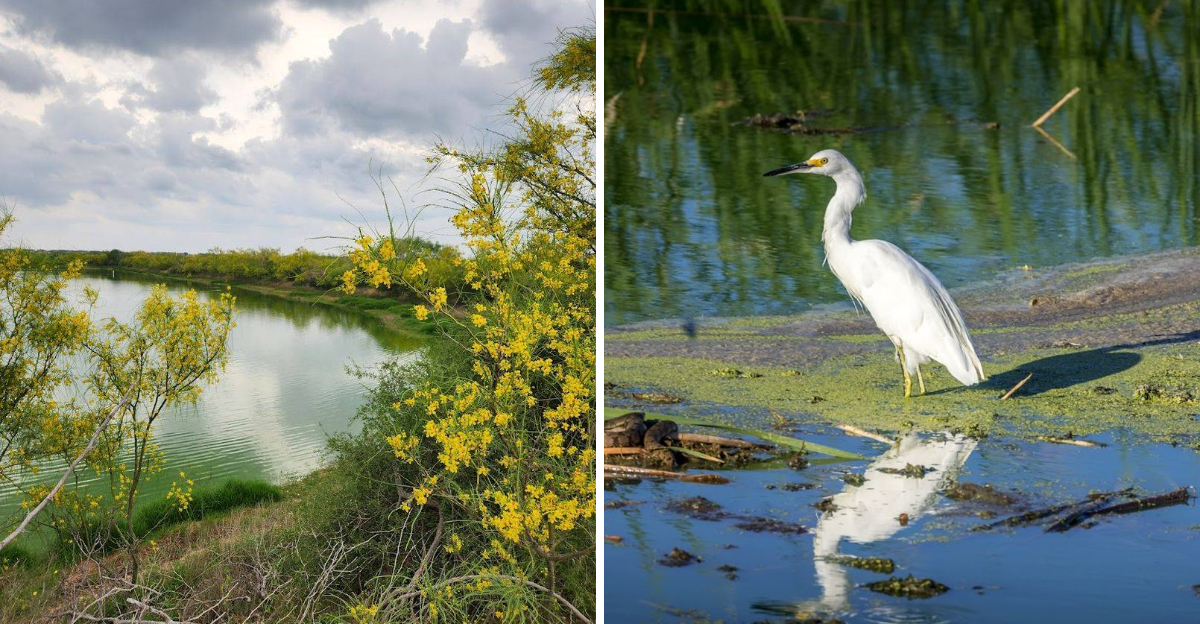
Just beyond the busy streets, this quiet nature center offers a surprising escape into open wetlands and peaceful trails. The calm surroundings make it easy to forget how close the city actually is.
In Texas, places like this show how quickly the landscape can shift from urban energy to wide natural spaces. Visitors spend time walking the paths, watching birds glide across the water, and enjoying the quiet rhythm of nature.
The experience feels slow and refreshing, perfect for anyone needing a break from city noise.
The Scale of the Land Will Catch You Off Guard

Most people have no idea just how big this place really is until they are standing at the trailhead looking out across open water that seems to stretch forever. Mitchell Lake Audubon Center covers 1,200 acres in total, including a 600-acre lake, 215 acres of wetlands and ponds, and 385 acres of upland habitat.
That is a lot of ground to explore.
The sheer variety of landscapes packed into one site is what makes it feel so different from a typical city park. You move from dense reedy wetlands to wide open shorelines to brushy upland trails almost without noticing the transition.
Each habitat shift brings a new set of sights and sounds.
On my first visit, I kept thinking I had seen everything, then the trail curved and opened onto something completely new. The center feels layered, like it keeps revealing itself slowly the longer you stay.
Planning to spend at least three to four hours here is a smart move because there is genuinely a lot to take in. Bring comfortable shoes and a water bottle because the trails cover real distance.
Over 350 Bird Species Call This Place Home

Birdwatching at Mitchell Lake is not just a hobby activity here, it is practically the whole point of the place. The center has recorded over 350 bird species across its habitats, a number that puts many dedicated birding destinations to shame.
American White Pelicans, Northern Pintails, and Painted Buntings are among the standout species that draw visitors from across the state.
Migration seasons transform the lake into something almost cinematic. Thousands of shorebirds and waterfowl pass through in spring and fall, and the energy during those periods is electric in the quietest possible way.
You might spot a dozen different species in a single hour without moving more than a few feet.
Even outside peak migration, the resident bird population keeps things interesting year-round. Raptors circle overhead while herons stalk the shallows with laser focus.
I once watched a Green Heron stand motionless for nearly five minutes before striking with perfect precision. Bringing a good pair of binoculars is highly recommended because many of the best sightings happen across the water at a distance.
A field guide or a birding app will help you keep track of everything you see.
Migration Season Turns the Lake Into a Wildlife Spectacle
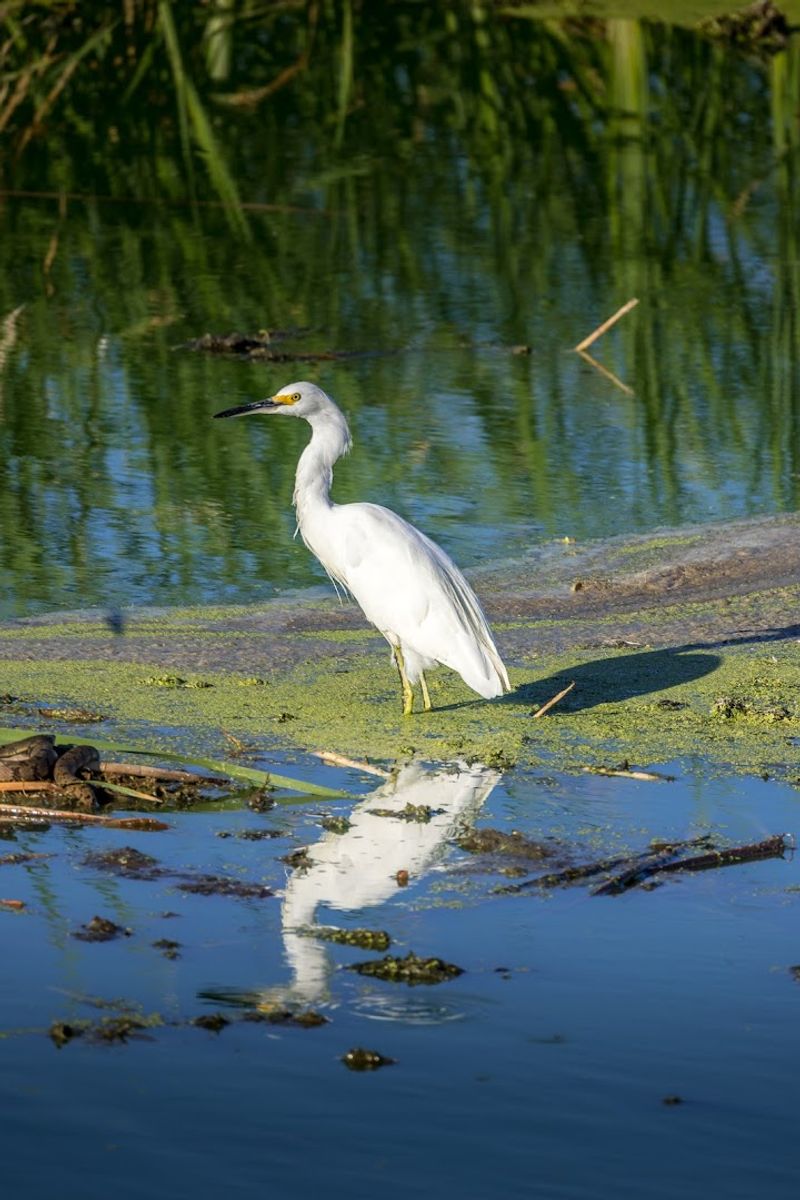
Spring and fall migration at Mitchell Lake is one of those experiences that is hard to put into words without sounding like you are exaggerating. The lake becomes a stopover point for massive numbers of birds moving along the Central Flyway, one of North America’s major bird migration routes.
The result is a concentration of wildlife that feels almost surreal for a place so close to a city.
During peak migration, the shoreline and wetland areas fill with activity from early morning through midday. Shorebirds probe the mudflats while ducks and geese rest on the open water.
The sound layer alone is worth the visit, a constant overlapping chorus that changes every few minutes as new arrivals land and others take flight.
The annual Migratory Bird Fest, scheduled for March 21, 2026, is a free community event that celebrates spring migration and World Migratory Bird Day. It features live birds, nature walks, games, crafts, and vendors, making it a fantastic option for families.
Arriving early on any migration morning gives you the best light for viewing and photography. The center is open Tuesday through Sunday starting at 8:00 am, which lines up perfectly with peak bird activity.
The Wetlands Are a World Unto Themselves
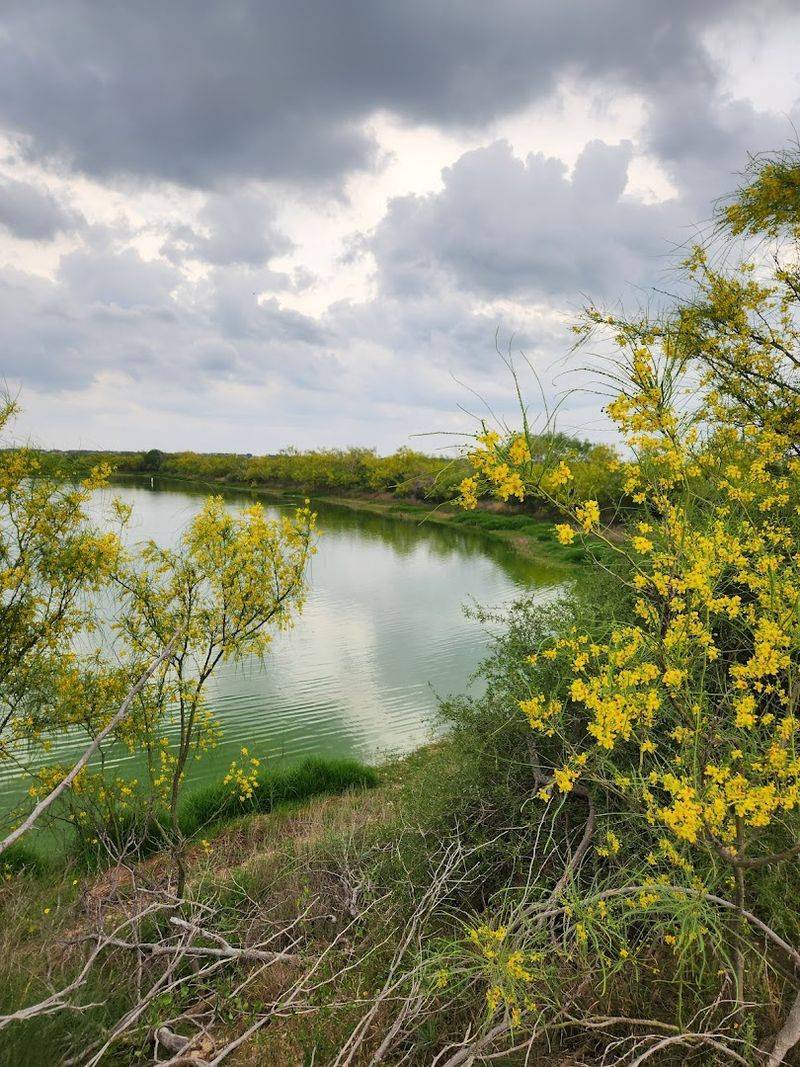
There is a specific kind of stillness that only wetlands can produce, and Mitchell Lake has it in abundance. The 215 acres of wetlands and ponds scattered across the property create a layered habitat that supports an extraordinary range of wildlife beyond just birds.
Turtles sun themselves on logs, dragonflies hover over the water, and the occasional deer moves quietly through the tall grass at the edge of the reeds.
The wetland trails put you right alongside this habitat in a way that feels intimate rather than distant. Wooden observation platforms and viewing areas are positioned at key points, giving you elevated sightlines without disturbing the wildlife below.
It is the kind of setup that rewards patience.
Spending time near the wetlands in the early morning is a genuinely calming experience. The light hits the water at low angles, the air smells clean and earthy, and the noise of the city is completely absent.
It is one of those rare spots where you can slow down without feeling like you are missing something. Wear layers in cooler months because the open water areas can feel noticeably windier than the upland sections of the trail system.
Upland Trails Offer a Completely Different Experience
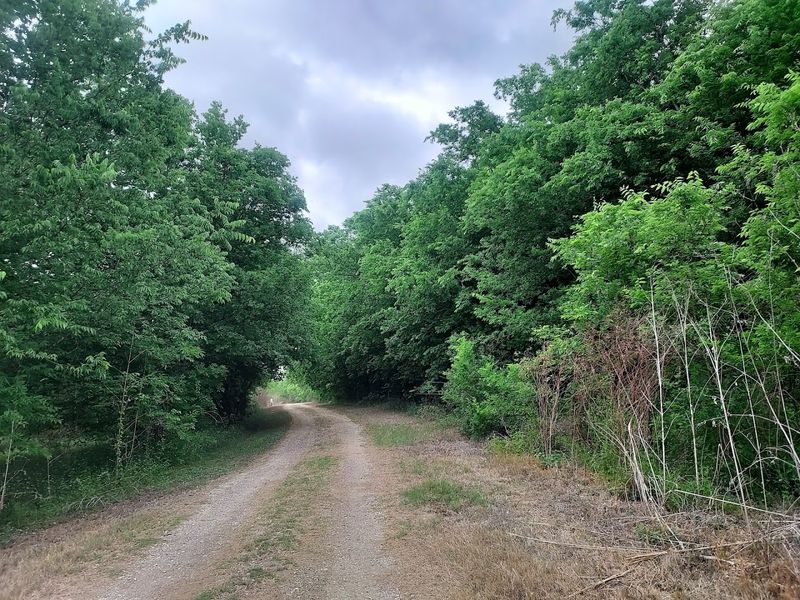
Not everything at Mitchell Lake revolves around the water, and the 385 acres of upland habitat prove that point clearly. The upland trails wind through native Texas brush and grassland, a drier and more rugged landscape that feels like a different destination entirely compared to the wetland areas.
This is where you are most likely to spot raptors, sparrows, and species that prefer open country over water.
The contrast between the two habitat types is one of the things that makes a full loop of the property so satisfying. You go from the lush, humid feel of the wetlands to the open, wind-swept quality of the uplands within the same walk.
Your bird list tends to grow significantly once you reach this section.
The trails here are well-maintained but still feel natural and unhurried. There are no crowds pushing you along, and the pace of the place naturally slows you down.
I found myself stopping constantly just to listen, which is not something I usually do on a walk. Wearing sunscreen and a hat is a practical necessity on the upland trails since shade is limited and the Texas sun does not hold back even in cooler months.
Native Gardens Bring the Beauty Right to the Entrance

Before you even reach the trails, the native gardens near the center’s entrance set the tone for the whole visit. These are not decorative garden beds planted for aesthetics alone.
They are carefully curated collections of native Texas plants designed to support pollinators, songbirds, and beneficial insects throughout the year.
Butterflies are a common sight here, especially during warmer months when the flowering plants are at their peak. Hummingbirds occasionally dart through too, which is always a pleasant surprise when you are not expecting it.
The gardens feel intentional and alive in a way that a lot of landscaped green spaces do not.
For anyone interested in home gardening or habitat restoration, the native garden section is genuinely educational. You can see firsthand how native plants support local wildlife in ways that non-native ornamental plants simply cannot match.
Picking up one of the plant identification guides available at the center is a great way to take that knowledge home with you. The gift shop also carries locally inspired nature products that make meaningful souvenirs if you want a small reminder of the visit.
Science Education Programs Make This a Classroom Without Walls

Mitchell Lake Audubon Center is not just a place for weekend birdwatchers. It is also a working outdoor classroom for local students across the San Antonio area.
The center runs science education programs for K-12 schools, with a particular focus on fourth grade students and environmental stewardship. That kind of community commitment gives the place a purpose that goes well beyond recreation.
Seeing a school group out on the trails adds a different kind of energy to a visit. Kids react to nature with a refreshing lack of self-consciousness, pointing excitedly at herons and arguing good-naturedly about whether a distant shape on the water is a duck or a pelican.
It is contagious in the best way.
The education programs are built around the idea that connecting young people to nature early creates lifelong environmental awareness.
That philosophy is visible in how the center is designed, with interpretive signage, observation stations, and hands-on learning areas positioned throughout the property.
For families visiting with children, the center is a genuinely enriching destination rather than just a scenic walk. The experience tends to spark questions and conversations that continue long after you leave the property.
The Gift Shop Is Worth a Browse Before You Leave

Small nature center gift shops can sometimes feel like an afterthought, but the one at Mitchell Lake is genuinely worth your time. It carries local art, nature-inspired products, and items that reflect the character of the center and the surrounding Texas landscape.
Nothing here feels mass-produced or generic.
Bird-related books and field guides make up a solid portion of the inventory, which makes sense given the center’s focus. Picking up a regional bird guide here feels more appropriate than ordering one online because you are already surrounded by the species it describes.
The staff are usually happy to point out their favorites.
Local art prints and handcrafted items add a personal quality to the shop that makes it feel like a community space as much as a retail one. If you are visiting with kids, there are usually a few nature activity items that make for practical and meaningful take-homes.
The gift shop is also a good spot to ask questions about recent bird sightings or trail conditions before heading out. The people working there tend to know the property well and are genuinely enthusiastic about sharing what they know.
Getting There Is Easier Than You Might Expect

One of the quiet advantages of Mitchell Lake is how straightforward it is to reach from most parts of San Antonio. The center sits just south of downtown at 10750 Pleasanton Road, and the drive from the city center takes under 20 minutes in normal traffic.
That kind of accessibility makes it an easy choice for a spontaneous morning outing.
From Loop 410, take exit 46 for Moursund Boulevard and head south for about 0.7 miles. The entrance gate appears on the left side of the road and is clearly marked.
Parking on-site is available and manageable even on busier weekend mornings.
The center is open Tuesday through Sunday from 8:00 am to 4:00 pm and is closed on major and federal holidays. Checking the official website before your visit is always a smart move to confirm current hours and any event schedules that might affect trail access.
Arriving close to opening time gives you the best wildlife activity and the most peaceful experience on the trails. The contact number is (210) 628-1639 and the website at mitchelllake.audubon.org has up-to-date visitor information including directions and seasonal highlights.
A Spot That Rewards Repeat Visits Throughout the Year

Some nature destinations are worth visiting once for the novelty, but Mitchell Lake is the kind of place that genuinely changes with the seasons.
The bird population shifts dramatically between spring migration, summer nesting, fall migration, and winter residency, which means no two visits feel exactly the same.
That seasonal rhythm is part of what keeps regular visitors coming back.
Summer brings nesting activity and a slower, more residential bird population. Winter draws species that do not breed here but use the lake as a warm-weather refuge.
Each season has its own personality and its own rewards for anyone paying attention.
Even the light and the landscape feel different depending on when you visit. The wetlands look completely transformed after heavy rain, and the upland areas take on a different character in the dry heat of a Texas summer.
Keeping a simple birding journal across multiple visits is a surprisingly satisfying way to track how the place changes over time. The center’s modest admission fee makes frequent visits easy to justify, and the experience rarely feels repetitive even if you are walking the same trails you have walked before.
Why Mitchell Lake Deserves More Attention Than It Gets

For a place with this much going for it, Mitchell Lake Audubon Center flies surprisingly under the radar outside of dedicated birding circles.
It does not have the name recognition of some of San Antonio’s bigger attractions, but in terms of pure natural experience, it competes with almost anything the region has to offer.
That low profile is honestly part of its appeal.
The center balances accessibility with authenticity in a way that is genuinely rare. You do not need specialized gear or expert knowledge to enjoy a visit here.
Just showing up with a curious mindset and comfortable shoes is enough to have a memorable morning.
What stays with you after a visit is not any single dramatic sighting but the overall feeling of the place. The quiet, the scale, the sense that nature is doing its thing completely independently of the city humming away just a few miles north.
Places like this matter more than we often give them credit for, and Mitchell Lake Audubon Center is one that deserves a spot on more people’s radar.
Address: 10750 Pleasanton Rd, San Antonio, TX 78221.
Dear Reader: This page may contain affiliate links which may earn a commission if you click through and make a purchase. Our independent journalism is not influenced by any advertiser or commercial initiative unless it is clearly marked as sponsored content. As travel products change, please be sure to reconfirm all details and stay up to date with current events to ensure a safe and successful trip.
