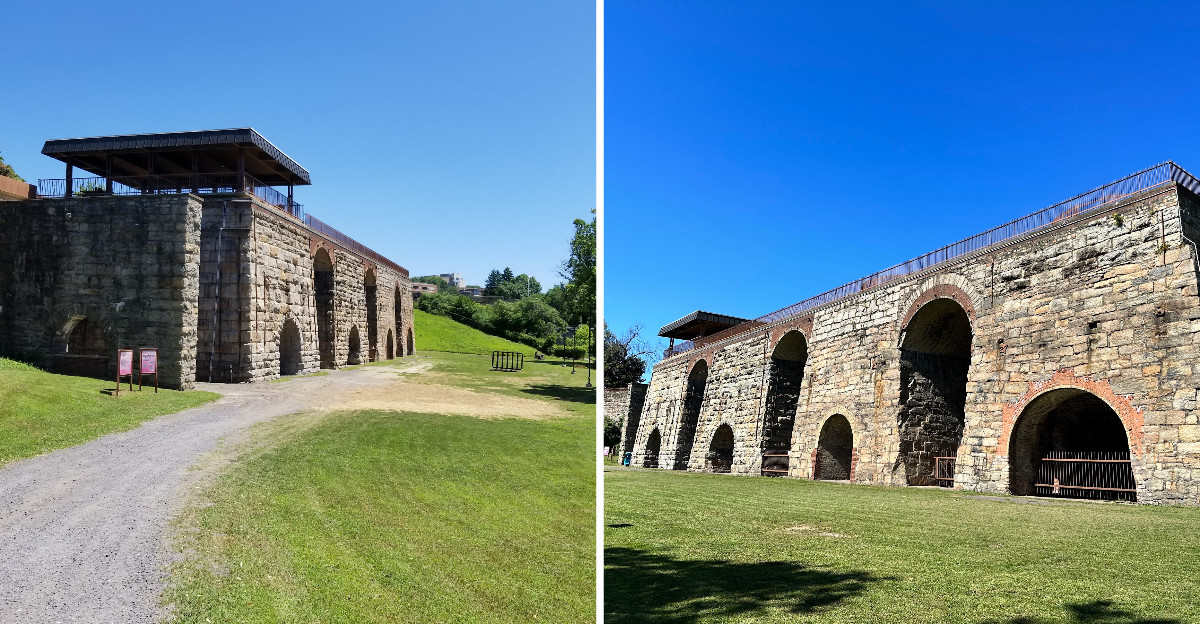
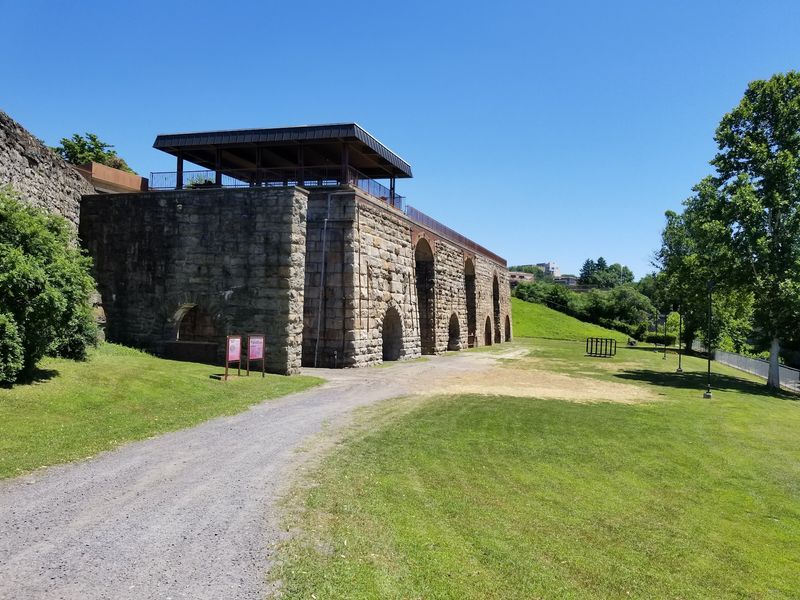
I almost drove right past them, which feels absurd once you realize how big they are. Four stone arches rise out of a grassy hollow in downtown Scranton, tucked behind a shopping center and a set of railroad tracks, looking more like the ruins of a castle than anything built for making iron.
I parked, walked down the path, and stood in the shade of walls that are somehow both crumbling and rock solid. These furnaces once belonged to a company that held the largest iron production capacity in the entire country, feeding rails and bridges to a nation in a hurry.
Everything else from that plant is gone, dismantled and hauled away more than a century ago. Everything is gone.
What is left is quiet, free to visit, and honestly one of the most surprising hours I have spent in Pennsylvania.
The Four Stone Giants That Refused to Disappear
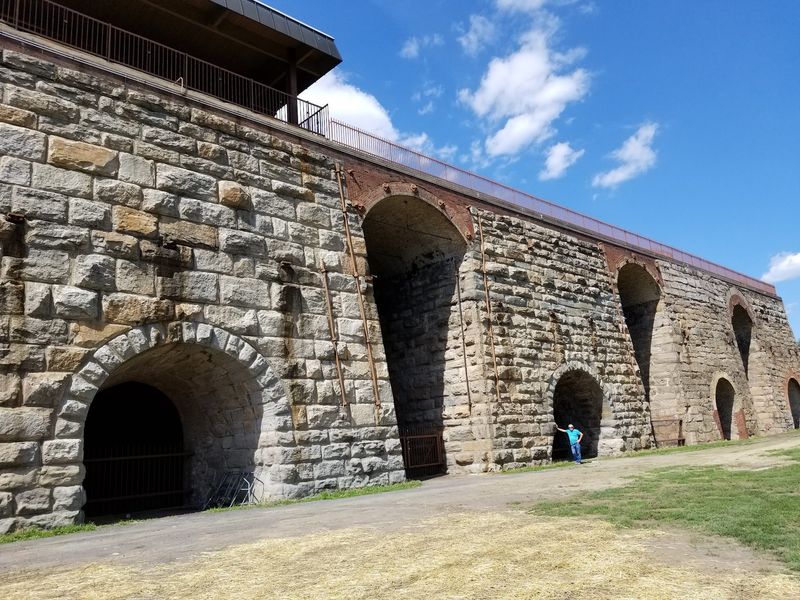
Nothing quite prepares you for the scale. The stone stacks stand roughly sixty feet high, with arched openings big enough to swallow a truck, and they were built between 1848 and 1857 using local stone that has held up remarkably well.
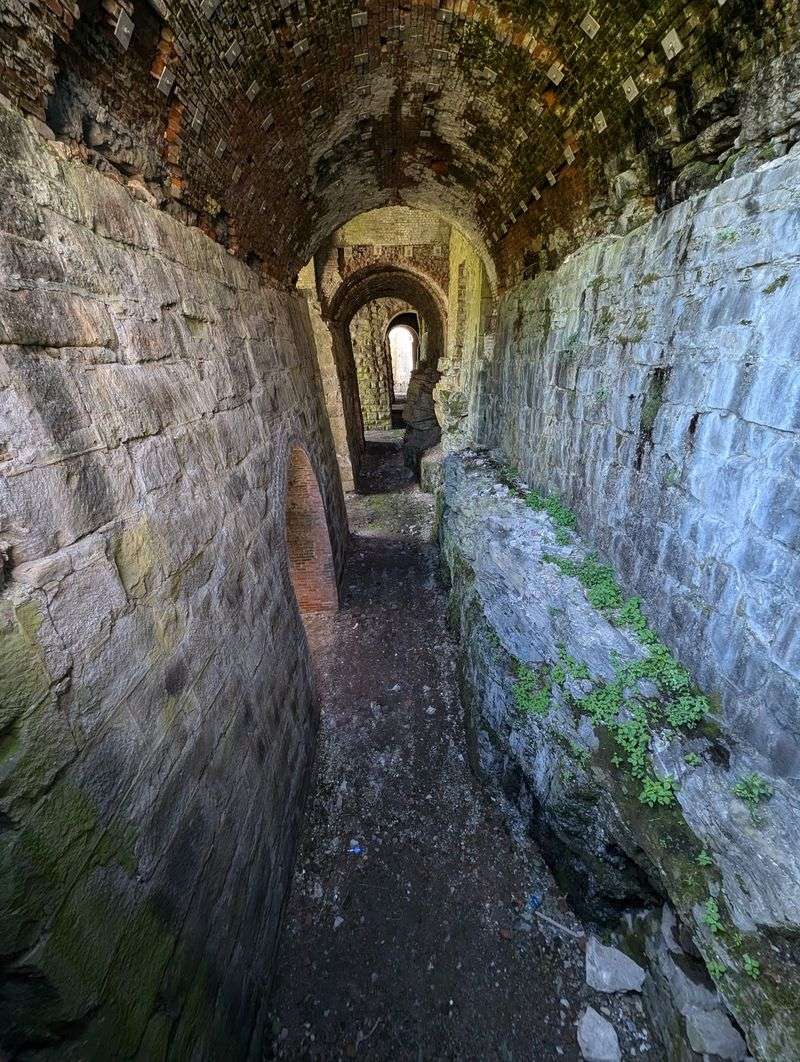
I walked the length of them twice, once along the upper level and once down below, and the perspective changes completely depending on where you stand. From above, they look like a wall.
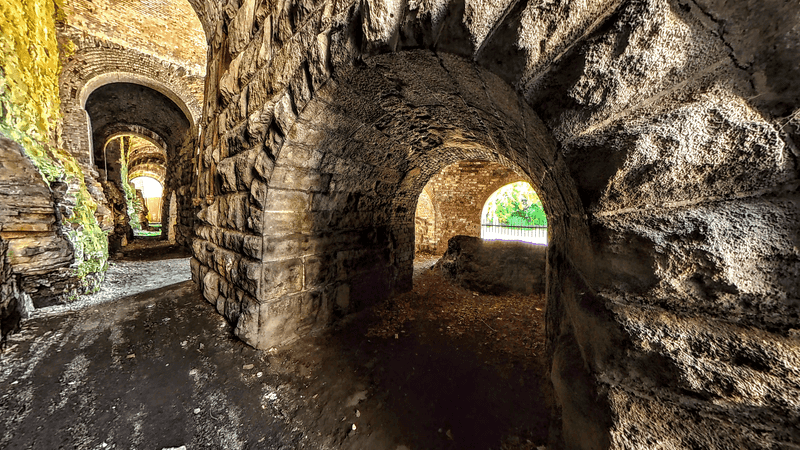
From the bottom, they look like something ancient.
What strikes me most is that these four are the survivors. The Lackawanna Iron and Steel plant sprawled across this valley with mills, sheds, offices, and rail spurs, and nearly all of it was taken apart after 1902.
Stone simply outlasted everything else.
Moss grows in the joints now, and small trees have taken root along the top edges. There is a softness to the whole thing that feels almost gentle for a place that once ran at furious heat.
Walking around the site also makes it easier to imagine just how much activity once filled this valley. The surviving stacks occupy only a fraction of the former complex, making the empty ground surrounding them feel like part of the story too.
Bring a camera, because the arches frame the sky in a way that photographs beautifully at any hour, especially late afternoon when the stone turns warm and golden.
How a Small Partnership Grew Into a National Powerhouse
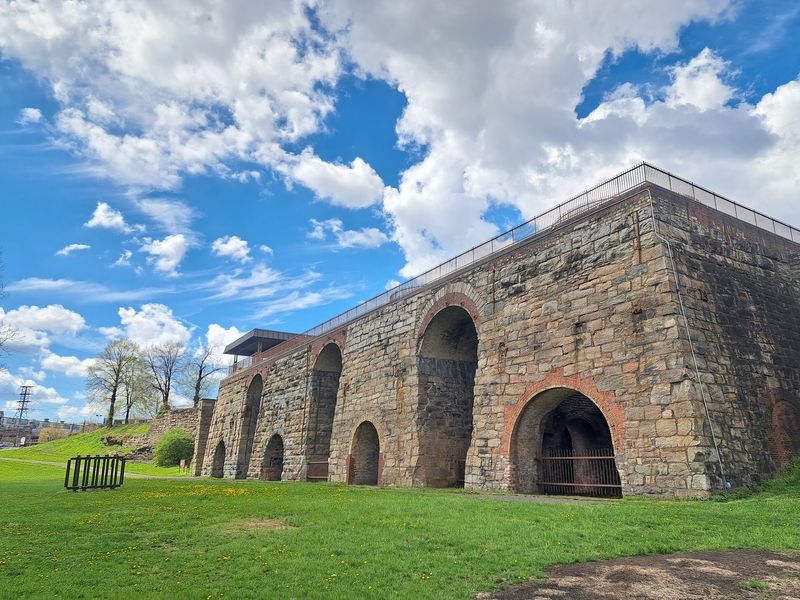
Back in 1840, the operation started small under the name Scranton, Grant and Company, which sounds more like a law firm than the seed of an industrial empire. Growth came fast, though, and by 1865 the company held the largest iron production capacity in the United States.
Reading that on a signboard while standing in the grass gave me genuine pause. A valley in northeastern Pennsylvania, of all places, quietly out-producing everyone.
By 1880 the furnaces were pouring around 125,000 tons of pig iron every year. Much of it became T-rails, the shaped steel that railroads laid across the country mile after mile after mile.
The iron made here ended up in bridges and buildings far from Scranton, and during the Civil War it fed the production of machinery and armaments as well. So the reach of this one hollow stretched much further than its city limits.
The city itself grew up around the works, which is why Scranton is often described as a place born from iron rather than a place that simply hosted it.
The workers who fed these furnaces came from Wales, Ireland, Germany, and elsewhere, bringing skills and traditions that shaped the neighborhoods around them. Their labor built not just rails and bridges, but a city that still carries their fingerprints in its streets, churches, and stone row houses.
The Recipe, Anthracite, Limestone, and Iron Ore
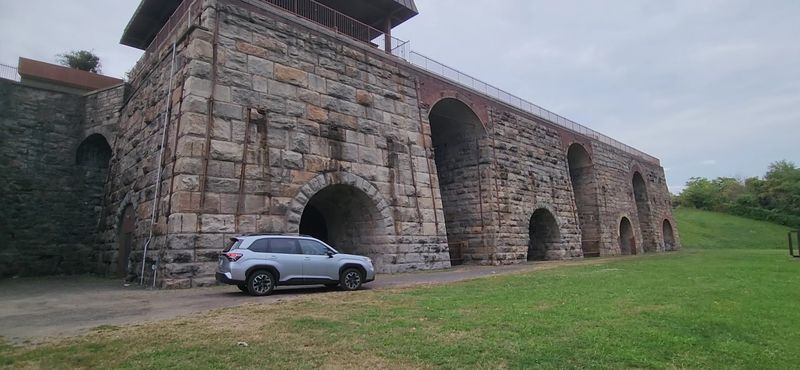
Chemistry class never felt this interesting. The process here used three main ingredients loaded from the top of the stack: iron ore, limestone, and hard anthracite coal mined right in the region.
Heat did the heavy lifting. Blasted air pushed temperatures high enough to melt the ore, while the limestone grabbed onto impurities and floated them off as a glassy waste called slag.
What poured out at the bottom was pig iron, named for the way the molten metal ran into sand channels that reminded workers of piglets nursing. One of the reviews I read joked about learning how involved the foundry process was, and honestly, same.
Using anthracite was the regional advantage. Northeastern Pennsylvania sat on enormous deposits of it, so the fuel was local, plentiful, and burned hot and clean compared to older charcoal methods.
Signboards along the path break this down step by step with diagrams, and I found myself reading every single one. Kids seem to like the scale of it, adults tend to linger over the technical details, and everyone leaves knowing more than they expected.
Why the Company Packed Up and Left in 1902
Every boom has an ending, and this one arrived with arithmetic rather than drama. Local iron ore reserves ran thin, and meanwhile enormous, high-grade deposits were being pulled from the Mesabi Range out in Minnesota.
Moving closer to that supply made plain business sense. In 1902 operations relocated to a new site in Lackawanna, New York, near Buffalo and the Great Lakes shipping routes.
Most of the Scranton plant was dismantled soon after. Machinery, sheds, and steel structures were hauled off or scrapped, and what remained was essentially the part nobody could easily carry away.
Standing in that empty hollow, I kept trying to picture the noise and glow that filled it for decades. The silence is genuinely strange when you know what used to be there.
The site earned a listing on the National Register of Historic Places in 1991, which helped secure its future. Preservation here is ongoing and unglamorous, a long effort to keep stone stable and history legible for people who wander down the path.
Reading the Signboards and Wandering the Grounds
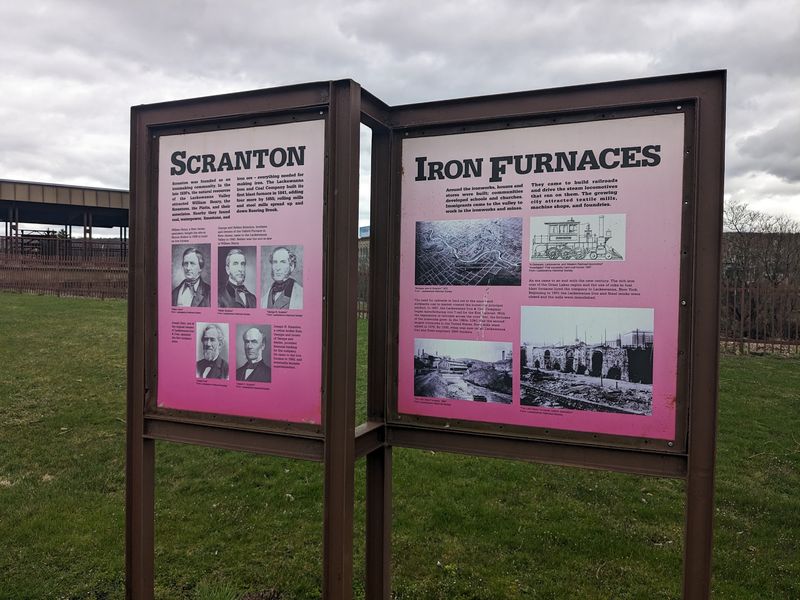
Self-guided works perfectly here, and that is part of the charm. Interpretive plaques are scattered across both the upper and lower viewing areas, covering construction, technology, working conditions, and the company timeline.
I counted roughly a dozen before I stopped counting. Some visitors breeze through in fifteen minutes, others stretch it to an hour, and both approaches feel right depending on your mood.
Benches sit along the manicured grass, and the whole park is easy to walk with no steep climbs or tricky footing. The lower area gives you the most dramatic angle looking up at the arches.
Parking sits close by and costs nothing, though large RVs and towables will struggle with the approach. Restrooms are not available on the grounds, so plan accordingly before you arrive.
Grab a spot on the grass and you have a decent picnic setting too, with the Lackawanna River running nearby and trains occasionally rumbling past. The combination of running water, moving trains, and silent stone makes for an oddly perfect soundtrack.
The Visitor Center and the Trolley Ride Option
Timing your visit between April and October opens up an extra layer. A Visitor Center operates during those months with exhibits on ironmaking and guided interpretive tours led by staff who know the details well.
Having someone explain the furnace mechanics out loud changes the experience. Details that read flat on a sign suddenly click when you can ask a follow-up question.
The site is administered by the Pennsylvania Historical and Museum Commission and supported by the Anthracite Heritage Museum, which handles programming and interpretation. That connection is worth knowing if you want to build a fuller day around regional industrial history.
Here is the fun part: you can arrive by vintage trolley. Riding an old electric car to a nineteenth-century ironworks is a ridiculous amount of period-appropriate charm for one afternoon.
Grounds themselves stay open year-round from sunrise to sunset, so even an off-season stop works. Call ahead at 570-963-4804 if you need current tour times, since seasonal schedules shift and special events occasionally take over the lawn.
Fitting the Furnaces Into a Bigger Scranton Day
Pairing this stop with something else is the smartest move you can make. The furnaces sit within easy walking distance of downtown hotels, the Steamtown area, and the Marketplace, so you can knock out a whole afternoon on foot.
I spent a morning nearby and came here afterward with time to spare before dinner. It slotted in perfectly.
Evening deserves a mention of its own. The stacks get lit up after dark, and the way the light catches the stonework makes the arches look enormous and theatrical in the best possible way.
Events pop up on the grounds throughout the year, including outdoor theater performances, so it is worth checking what might be happening during your visit. Bonfire gatherings have been held here too.
One small ask from the regulars and from me: carry out whatever you carry in. Litter turns up inside the arches sometimes, and this place deserves better than that.
Address: 159 Cedar Avenue, Scranton, Pennsylvania
