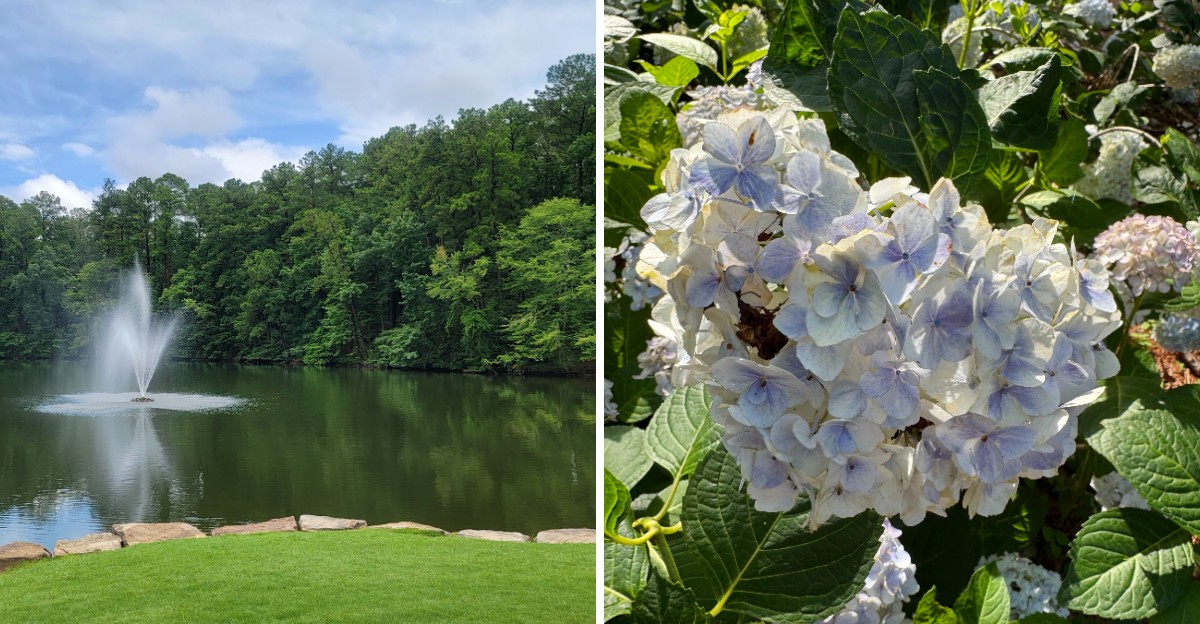
The traffic is loud. The garden is not.
That contrast is probably the first surprise. One minute there are shopping centers, cars, and highway noise.
Then the trees close around the road, the sound drops away, and suddenly there is a lake, shaded paths, bronze sculptures, and ducks that clearly consider the whole place their property. This Alabama garden covers 30 acres, with a five-acre lake sitting right in the middle.
Then comes the flower that changes the story. A rare oakleaf hydrangea discovered in the woods in 1969 went from a local curiosity to a plant grown around the world.
All that is hiding behind the trees. And nobody charges admission to see it.
A Five-Acre Lake and the Easy Loop Around It
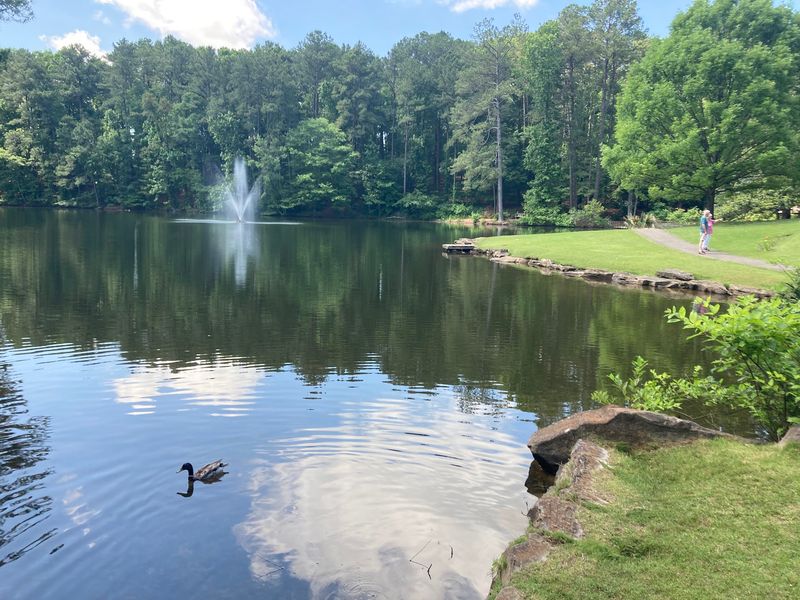
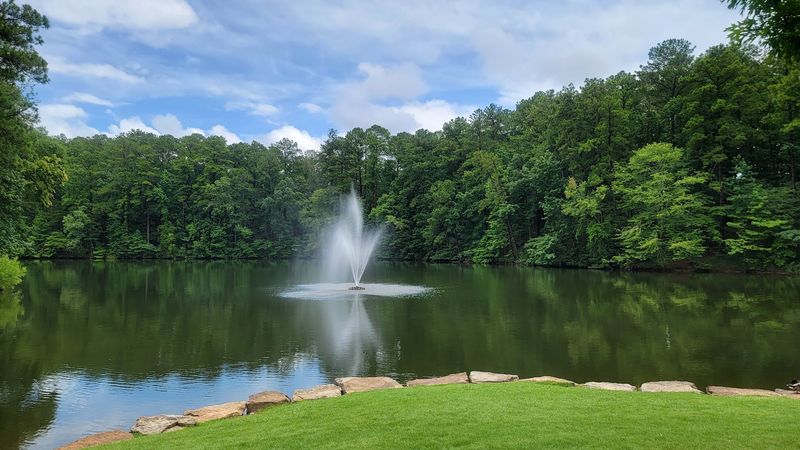
Water sits right in the middle of everything here. The five-acre lake anchors the property, and a half-mile loop traces the shoreline so closely that the reflections follow along beside walkers the whole way.
Roughly a mile of trails covers the full grounds.
Surfaces stay friendly for most visitors, mixing smooth asphalt with packed crushed limestone. Strollers roll fine.
Wheelchairs manage well on the main routes, and the lack of steep climbs makes the whole thing doable for grandparents and toddlers on the same outing.
Paths wander through several different moods without ever feeling long. Shaded woods give way to wetland edges thick with reeds, then open onto wide lawns where families spread out picnic blankets.
Benches show up right where legs start to tire, which suggests someone planned this thoughtfully.
A boathouse with a floating dock lets visitors stand out over the water, and fish sometimes break the surface close enough to startle people. Man-made waterfalls add a low rushing sound that birds seem to love for drinking and bathing.
Mornings tend to be the sweet spot. Cooler air, softer light, and fewer people make the loop feel almost private, though the tree canopy keeps things comfortable well into the afternoon.
Food for the ducks and fish is sold near the entrance, and the resident geese have absolutely figured that out.
The Snowflake Hydrangea That Started in the Alabama Woods
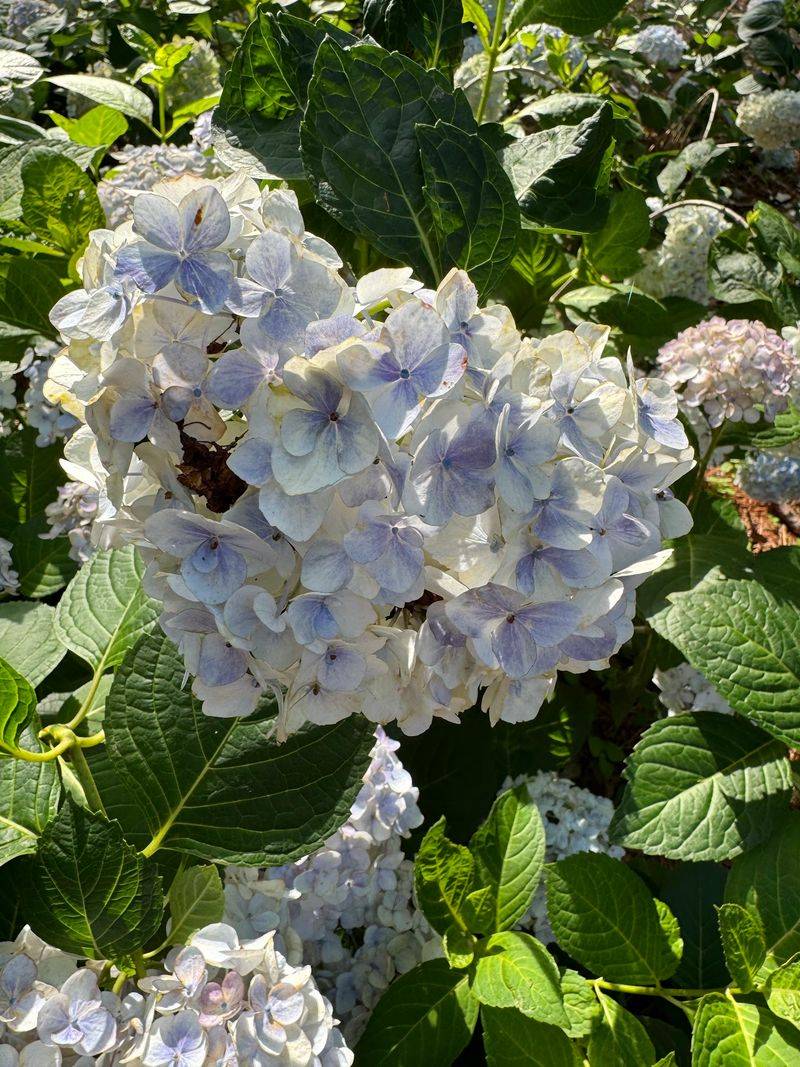
Back in 1969, horticulturist Eddie Aldridge and his father Loren spotted something unusual growing wild in the Alabama woods. The oakleaf hydrangea they found had double flowers instead of single ones, with layered bracts stacked on top of each other.
They patented it in 1971 and called it Snowflake.
Each bloom looks like a small drift of snow piled onto a branch, heavy enough that the stems bow a little under the weight. Flowers open creamy white, then slowly turn rose and antique pink as summer wears on.
They hold on far longer than the single-flowered kind, which is part of why gardeners everywhere wanted one.
Here is the part that makes the story better. The Aldridges shared the plant around the globe without collecting royalties, simply because they wanted people to have it.
Snowflake hydrangeas now grow in places as far away as Central Park in New York City, yet Aldridge Gardens remains the home place where it all began. The flower is also the official bloom of the City of Hoover.
Summer gets the most attention, but the plant earns its keep year round. Autumn turns those oak-lobed leaves deep red, purple, and bronze.
Winter strips things back to cinnamon-brown bark that peels away in papery curls, which honestly looks just as interesting up close as the flowers do, right at 3530 Lorna Road Hoover, AL 35216.
Bonsai, Japanese Maples, and Everything Else Growing Here
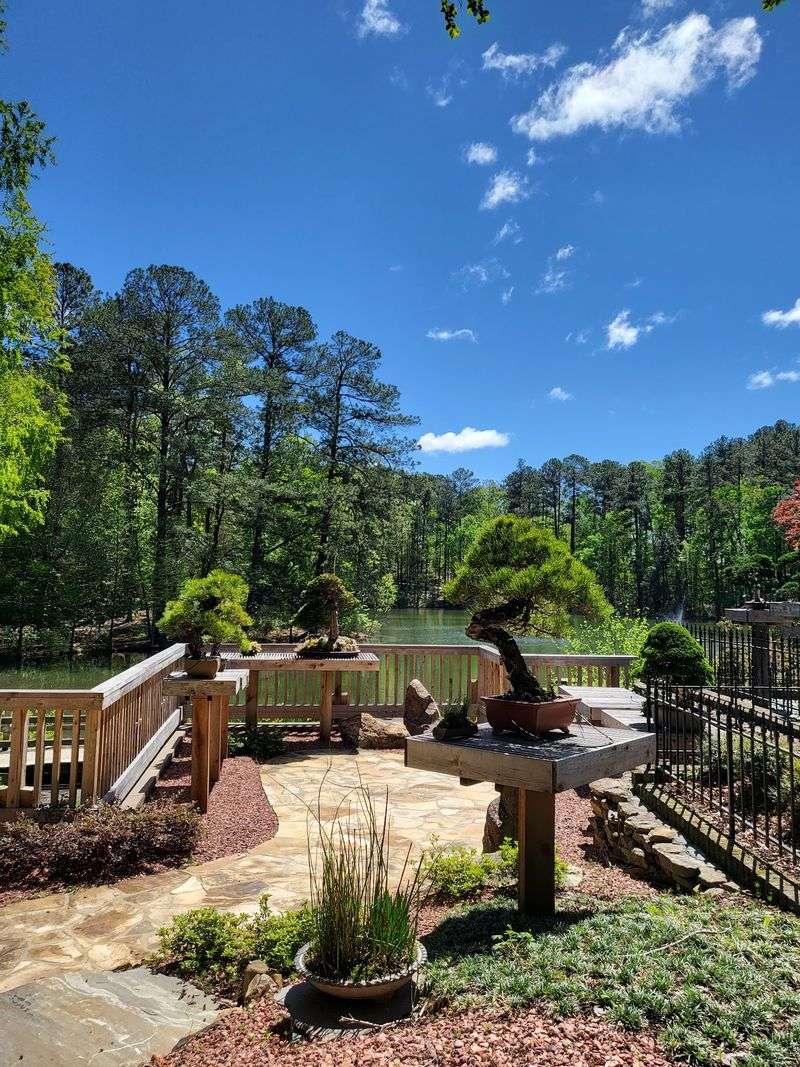
Plenty of visitors arrive for the hydrangeas and leave talking about the bonsai instead. The NaphCare Bonsai Collection ranks among the finest displays in the southeastern United States, and the miniature trees reward anyone willing to crouch down and look closely at their tiny gnarled trunks.
Patience is the whole art form. Some of these trees have been shaped for decades.
Beyond the bonsai, the plant list runs long. Camellias, azaleas, Japanese maples, and a broad range of hydrangea varieties fill different corners of the property, alongside native Alabama trees and shrubs that belong to this soil naturally.
A shade garden tucked under the canopy holds rhododendrons, hostas, and ferns, cooled further by a recirculating stream that trickles through the plantings. The sound alone drops the temperature a few degrees in the imagination.
Elsewhere, the Alabama Urban Forest shows what the region looked like before development, and an open wildflower meadow buzzes with pollinators through the warm months. Butterflies work the blooms in loops.
An herb garden adds scent to the mix, the kind visitors instinctively reach out and rub between their fingers.
Seasons change the experience completely. Spring belongs to azaleas and camellias, summer to the hydrangeas, and autumn turns the maples into something worth driving across town to see.
Bronze Sculptures Hiding Among the Branches
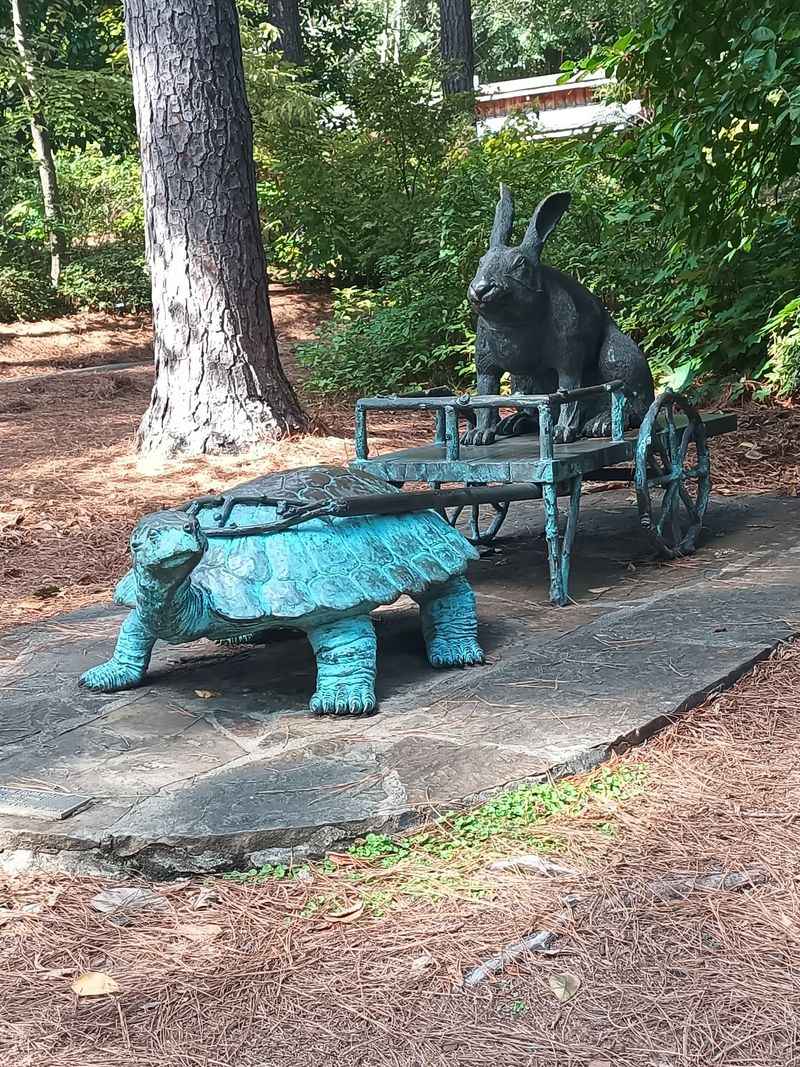
Turn a corner on one of the paths and a bronze figure appears where nobody expected one. Aldridge Gardens holds the largest publicly available collection of bronze sculptures by artist Frank Fleming, donated by Hoover resident Ken Jackson.
Fleming’s work leans surreal and dreamlike.
Some pieces are funny, some are quietly serious, and a few feel almost mystical in the way they blur animals and people together. Children tend to spot them first, usually because the shapes look like something from a storybook rather than a formal statue.
Themes circle back to nature, conservation, and southern culture, which fits the setting better than polished marble ever could. Moss creeps onto the bases.
Leaves collect at the feet of the figures, and somehow that makes them feel more at home.
A sculpture honoring Eddie Aldridge himself stands as a tribute to the man whose plant collecting started all of this, a nice full-circle detail for anyone who learned his name at the hydrangea beds.
Indoors, the gallery inside the Eddie and Kay Aldridge Art and Historical Collections Museum rotates exhibits throughout the year. Plein air paintings created on the grounds by Alabama artists show up regularly, giving visitors a chance to compare the painted version with the actual view outside the window.
Photographers love the sculptures for portraits, too.
Where Birders Show Up With Binoculars and Patience
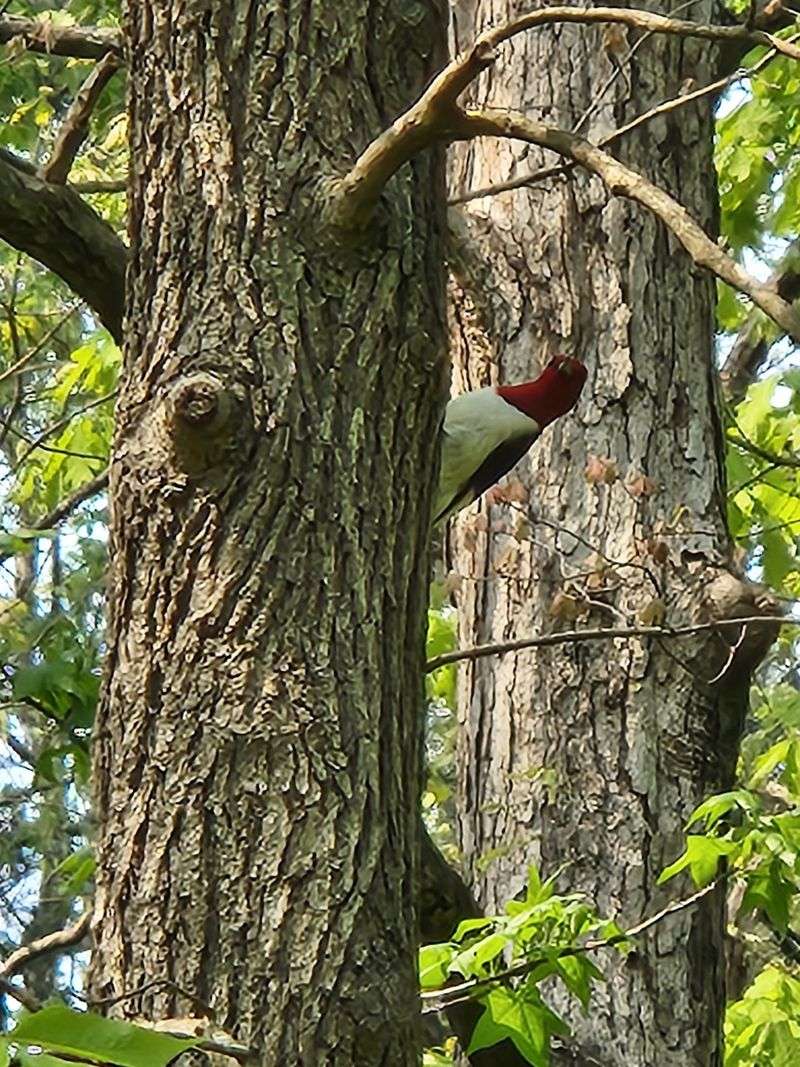
Over 80 bird species have been recorded across these 30 acres, which is remarkable for a property wedged between shopping centers and an interstate. Aldridge Gardens forms part of the Appalachian Highlands Alabama Birding Trail, and serious birders treat it as a reliable stop.
Year-round residents keep things lively. Woodpeckers hammer away in the wooded sections, while cardinals, bluebirds, Eastern Towhees, Brown Thrashers, and Blue Jays flash color through the branches.
Brown-headed Nuthatches are unusually abundant here, tiny and busy and worth listening for.
Migration seasons crank up the excitement, especially right after a low-pressure front rolls through. Warblers drop in to rest and feed, including Palm and Orange-crowned varieties, along with wrens working the underbrush.
Birds are only part of the animal story. Turtles stack themselves onto logs to catch the sun, ducks and geese patrol the lake with obvious confidence, and butterflies drift through the wildflower meadow all summer.
Demonstration apiaries on the property go by the name Apiopolis, set up to show visitors how honey bees fit into the wider ecosystem. Kids usually find the hives fascinating from a safe distance.
Members can join guided bird walks led by people who actually know the calls, which speeds up the learning curve enormously. Early morning remains the best window for activity.
Classes, Camps, and a Trail Built for Kids
Learning runs through nearly everything Aldridge Gardens does, and the schedule stays surprisingly full for a place this peaceful. Adult classes cover gardening, horticulture, botanical crafts, floral design, art, and photography, taught by people with real expertise in those fields.
Shorter pop-up sessions tackle the practical stuff. Think everyday landscape headaches and quick fixes for struggling plants.
Garden talks dig into best practices for lawns, flowers, shrubs, and trees, the kind of advice that actually changes how a backyard looks the following spring. Nature journaling classes slow things down, and Nordic walking sessions get visitors moving along the trails with proper technique.
Younger visitors get their own programming. STEAM-based summer camps fill up during the warm months, and field trips are built to match school curriculum rather than just filling an afternoon.
Two features stand out for families. The Storywalk places pages from a children’s book along a path so reading happens while walking, and the Trail to Fort Aldridge gives kids a smaller route to explore on their own terms.
A fairy garden along the way tends to stop children in their tracks.
Members can also attend bonsai society workshops with master John Walker, a rare chance to watch that slow, careful shaping happen firsthand.
Plenty of picnic tables mean a class can easily turn into a whole afternoon.
The Veterans Arbor, Festivals, and Quiet Bench Time
A 200-foot arbor stretches across the lake dam, and it might be the most striking structure on the property. The Veterans Memorial Arbor flies all five service branch flags along with the American flag, and flowering vines climb the framework through the warm months.
Cast iron columns draw on Prairie School architecture. Shaded seating runs the length of it.
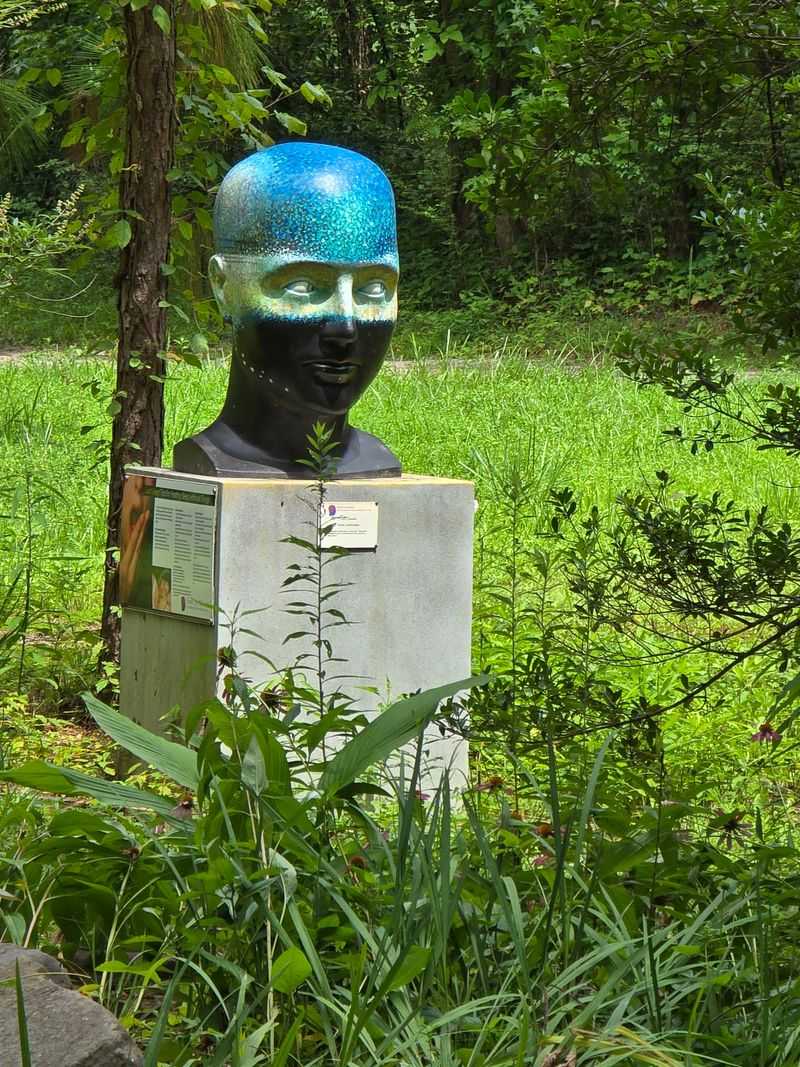
At the Pentagon Plaza, bronzed busts honor local service members who gave their lives, and engraved pavers let families memorialize veterans in a lasting way. Visitors often go quiet walking through that section, which feels right.
The gardens wear a second hat as a community gathering spot. Festivals, art fairs, plant sales, and concerts fill the calendar, with the Hydrangea Festival and Taste of Hoover drawing the biggest crowds each year.
Parking gets tight during those events, so shuttles run from nearby shopping center lots.
Weddings happen here regularly, and the reason is obvious once the fall color arrives. Photographers find usable backdrops at practically every turn.
Most days, though, the place belongs to walkers and readers and people who came to sit. Gates open at 8 AM and close at 7 PM daily, a covered area handles sudden rain, and a small gift shop sits near the entrance.
Admission is free, which makes repeat visits easy.
