Shiny metal and good stories turned a quick roadside stop into a lost afternoon. Somewhere in the Allegheny Mountains of Pennsylvania, a small town holds a company that has fixed millions of lighters for free since 1932.
Some of those lighters are older than the grandparents who carried them. The promise printed on every box, “It works or we fix it free,” has never been broken.
That kind of commitment is rare. The museum is free to enter, bright, and packed with surprises around every corner.
Walking through the displays, the history feels alive and useful. Visitors can see the machines, the old advertisements, and the rows of repaired lighters that came back from wars and adventures.
The place deserves a spot on any map, not just for the lighters, but for the story of a promise kept for nearly a century. Hours disappear here, and nobody minds.
A Promise That Started in 1932
Right away, I noticed how often one simple sentence pops up around the building. It works or we fix it free has been the company motto for over 90 years, and nobody has ever paid for the mechanical repair of a Zippo pocket lighter.
The story goes back to George G. Blaisdell, a Bradford local who saw a friend struggling with a clunky Austrian lighter at the Bradford Country Club.
He liked the idea of a chimney that blocked the wind, but he wanted something sleeker that worked with one hand. By late 1932 his new design was ready.
Fun fact: Blaisdell picked the name because he liked the sound of the word zipper. He thought Zippo sounded fresh and modern, and it clearly stuck.
The first pocket model came out in 1933, and the lifetime guarantee came with it from day one.
What amazed me most was how rare this kind of promise feels today. So many things we buy break and get tossed out within a year or two.
Here is a company that still treats a lighter from your grandpa’s pocket like it matters, and that idea sets the tone for the entire visit.
Peeking Through the Glass at the Repair Clinic
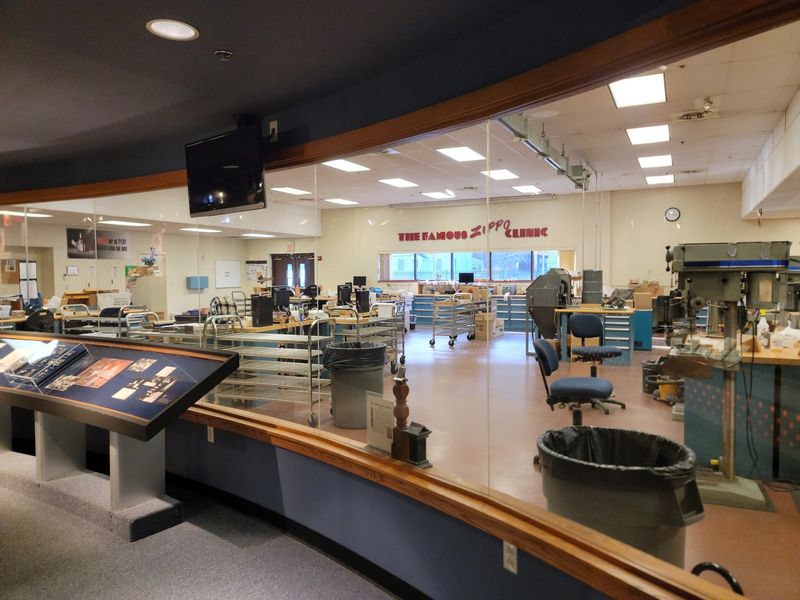
My favorite moment came at a big glass window. On the other side, skilled technicians were carefully fixing lighters mailed in from all over the world.
You can watch the Repair Clinic in action Monday through Friday from 9 a.m. to 3:30 p.m. Eastern time.
Plan around those hours, because holidays and weekends mean empty workbenches, and you would miss the best part.
Watching them work was oddly calming. Some lighters looked shiny and nearly new, while others had dents, scratches, and clear signs of decades in someone’s pocket.
Each one got the same patient attention.
The clinic is not just about fixing things either. Technicians also help the company learn how products hold up over time, which can guide future improvements.
That made the whole operation feel smart as well as kind.
If you own a Zippo that has stopped working, the process at home is simple. Remove the inside unit, let all the fuel evaporate, and pack it securely with a repair form or a note with your contact details.
Repairs usually take about four to five weeks. Keep in mind the guarantee covers how it works, not faded finishes or worn designs.
Survivors of Lawnmowers and Train Tracks
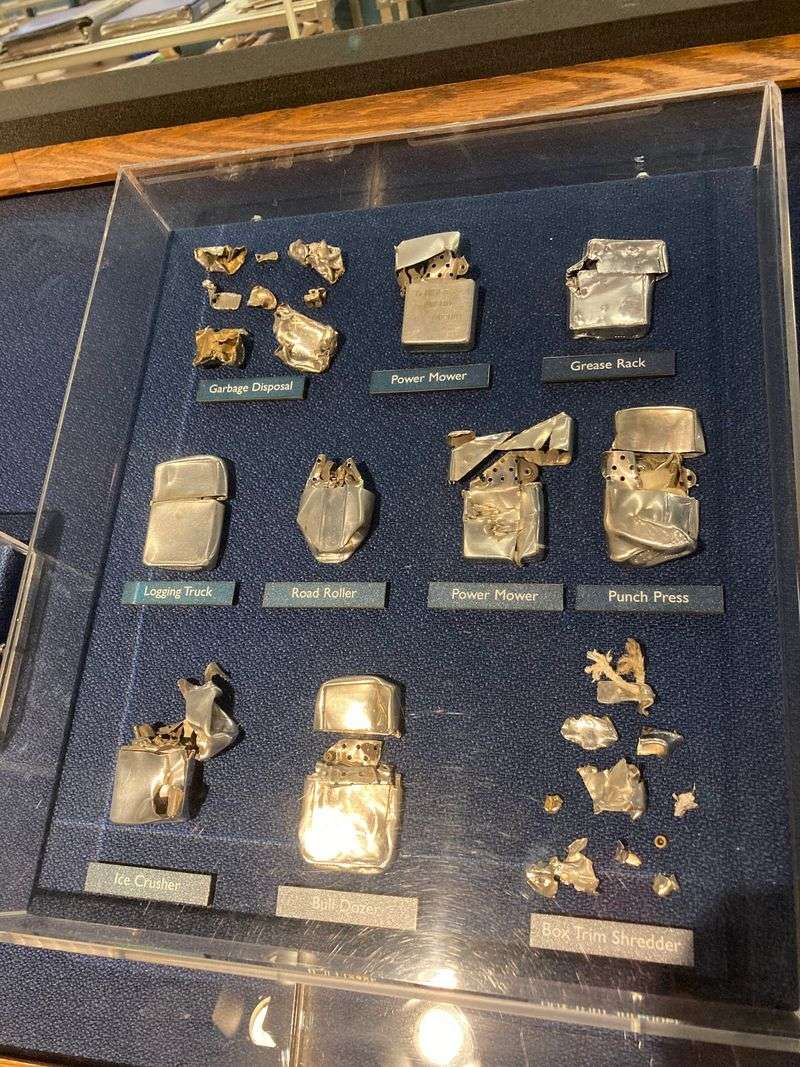
Crushed, bent, and flattened, the lighters in one display looked like they had lost a fight with a monster truck. Some of them nearly had.
This exhibit shows lighters that owners sent back after wild accidents. Labels mention things like garbage disposals, weed trimmers, and even train tracks.
I laughed out loud reading a few of them, then felt impressed that anyone bothered mailing such wrecks back at all.
The funny part is that the Bradford repair team has a reputation for being generous. Even when a lighter looks hopeless, they often go above and beyond, sometimes swapping in parts to get it working again.
One lighter run over by a lawnmower is exactly the kind of case they are known to help.
This section made the free repair promise feel real instead of just a nice slogan. Seeing the damage up close tells you how far people trust the company, and how far the company goes to keep that trust.
If you visit with kids, this is a great stop to spark conversation. Ask them to guess what happened to each lighter before reading the label.
It turns a quick look into a fun guessing game.
Giant Monuments in the Parking Lot
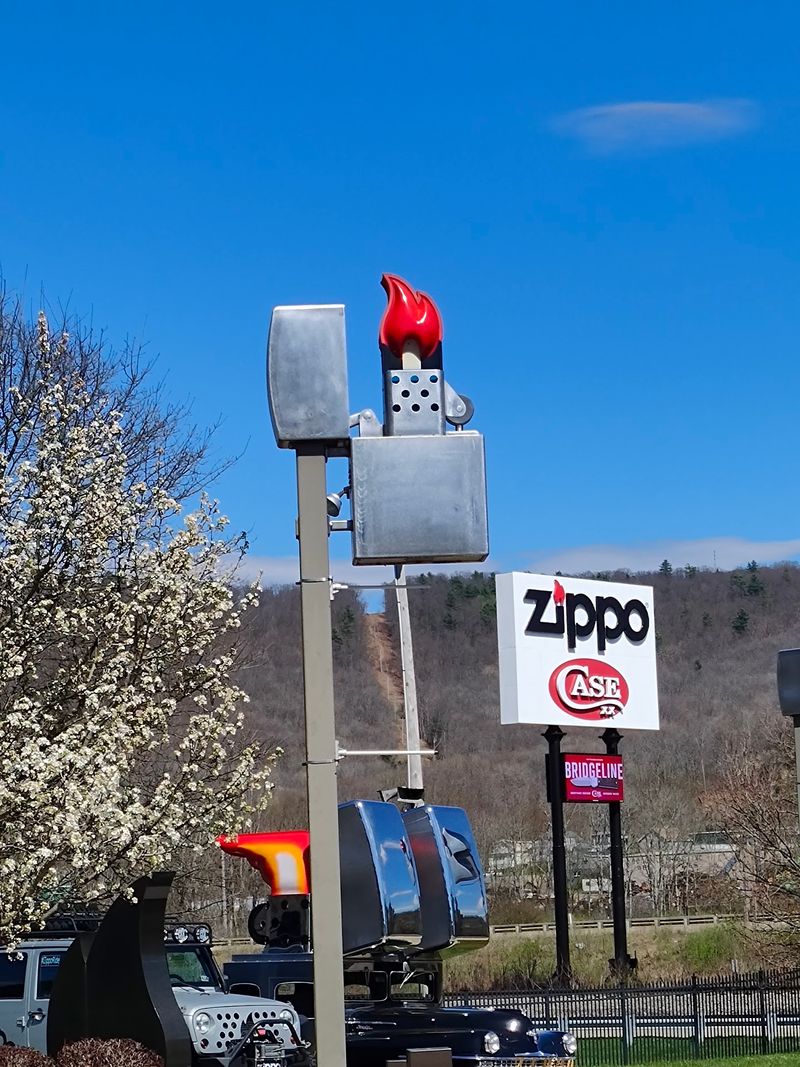
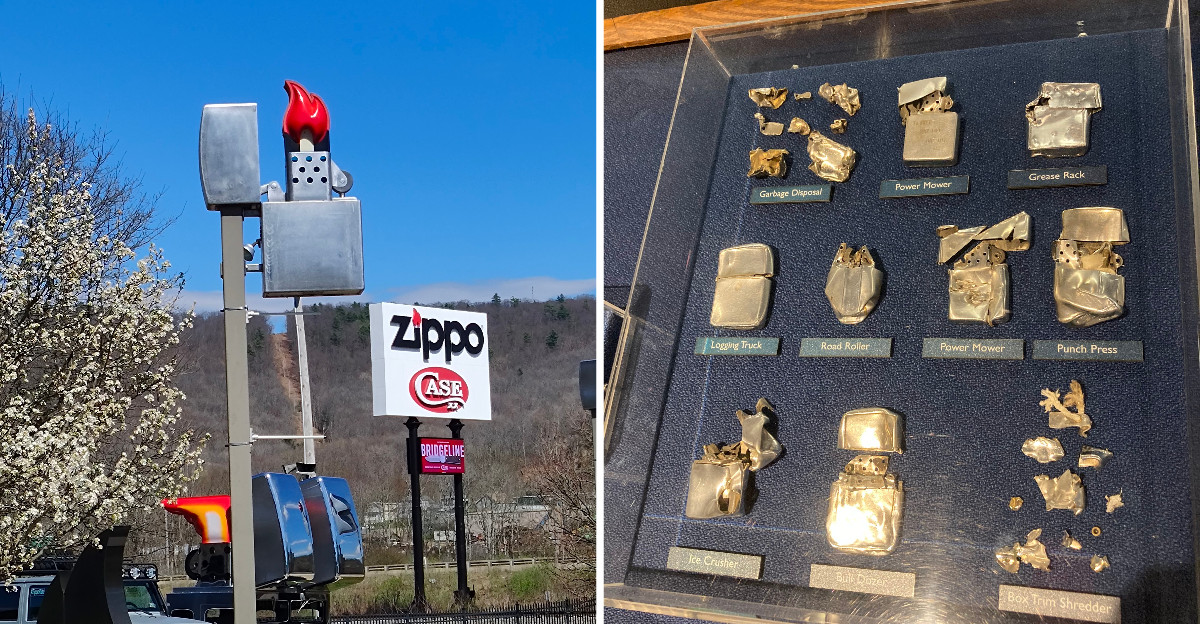
Before I even found a parking spot, I was grinning. Two oversized monuments greet visitors outside, one shaped like a Zippo lighter and the other like a Case knife.
They are big enough that people line up to pose beside them, and honestly, you should too. My photo made me look tiny, which was exactly the point.
Kids seem to love pretending the lighter is a skyscraper, and grown-ups are not much better.
The museum sits at 1932 Zippo Drive, a street number that nods to the year the company began. That little detail made me smile once I figured it out.
The building is well marked and easy to reach, even if you are just passing through on a road trip through northwestern Pennsylvania.
Here is a helpful tip for your visit. Arrive earlier in the day if you want clean photos without a crowd behind you, since the lot can get busy on weekends.
The museum opens at 9 a.m. most days and at 11 a.m. on Sundays.
Some visitors have also spotted the company’s branded vehicles parked out front, though they are not always there. If you catch them, consider it bonus luck for your camera roll.
An American Flag Made of 3,300 Lighters
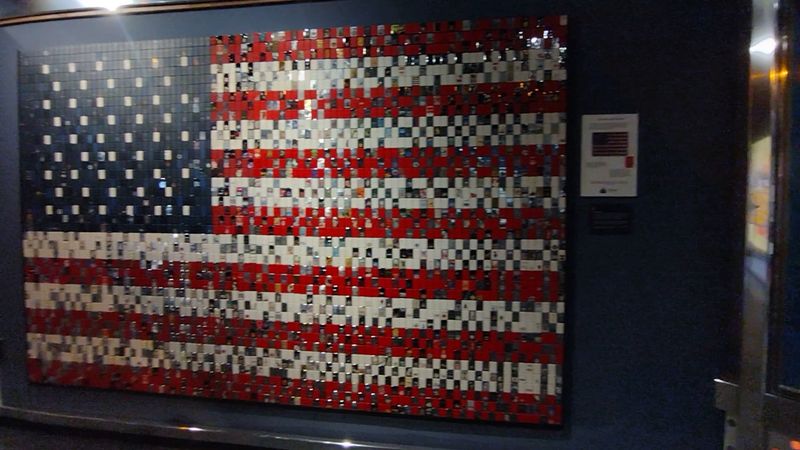
Colors hit me first, bright reds, crisp whites, and deep blues all glowing under the lights. Then I realized the whole wall was made of lighters, about 3,300 of them.
Shaped like the American flag, this display is one of the most photographed spots inside the museum. Standing close, you can pick out individual lighters and their shiny edges.
Step back, and they blend into one bold, waving pattern.
Nearby, an exhibit called An Ally for the Allies shares how Zippo supported the country during World War II. During those years, the company sent all of its production to the United States military.
Soldiers carried these lighters across the globe, and that helped build the brand’s name for toughness.
I found this part surprisingly moving. It showed how a small object from a Pennsylvania town ended up in so many important moments in history.
Zippo lighters have also shown up in countless movies, plays, and TV shows over the decades. Once you notice that, you might start spotting them everywhere.
Give yourself extra time in this area, since there is a lot of reading, and the stories are worth every minute.
Case Knives Get Their Own Spotlight
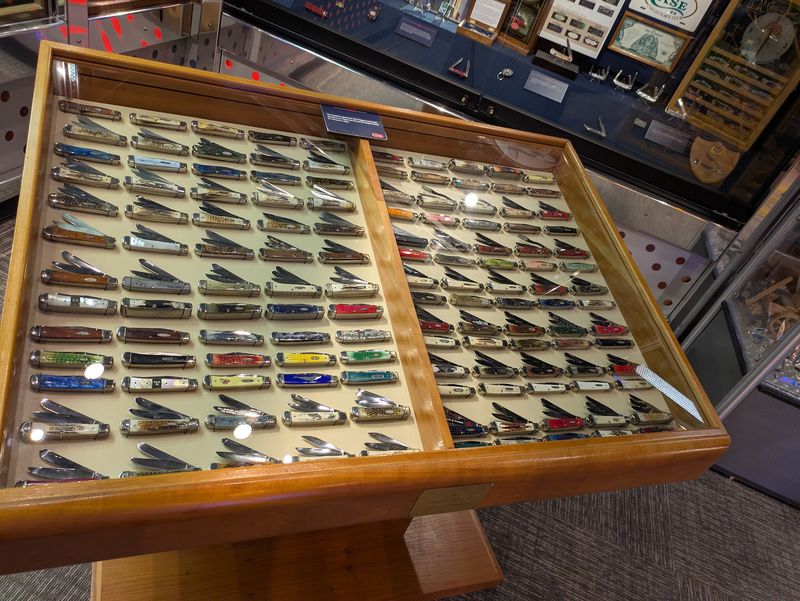
Knife fans, this corner is for you. Zippo bought W.R.
Case and Sons Cutlery Company in 1993, joining two long-running American brands under one roof.
The Case exhibits are beautifully arranged, with rows of pocket knives in all kinds of handle styles. Some have smooth wood, others have patterned bone, and a few look almost like jewelry.
I am not a knife collector, but I still caught myself leaning in close to study the tiny details.
What I appreciated was how the museum weaves the two histories together. You get a sense of how both companies valued careful work and products meant to last for years.
That shared idea makes the pairing feel natural rather than random.
Here is a practical tip. If you are visiting with a group that has mixed interests, this area helps keep everyone happy.
Lighter lovers and knife lovers can both find something to admire.
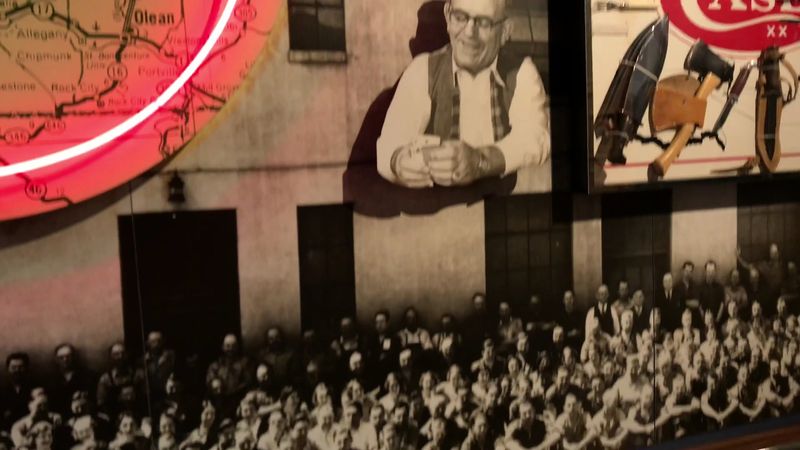
A timeline history wall also shares the story of Bradford itself. It gives helpful background on how this small town grew into a home for two famous brands, and I found it made the rest of the museum click together nicely.
Secret Codes on the Bottom of Every Lighter
Did you know that flipping a Zippo upside down can tell you when it was made? I had no idea until I found the exhibit called What’s in a date.
Tiny stamps on the bottom of each lighter, plus tang stamps on Case knives, work like secret codes. The company started using them around the mid-1950s to track quality.
Over time, collectors realized these marks were perfect for figuring out a lighter’s age.
I spent a while here trying to memorize a few patterns, and it felt a bit like cracking a puzzle. The exhibit explains everything clearly, so even beginners can follow along without feeling lost.
This is really useful if you have an old family lighter sitting in a drawer at home. Take a quick photo of its bottom before your trip, then compare it to the displays.
You might discover it is older than you thought.
The lighter design itself has changed very little since its second patent in 1950. That is part of what makes the date codes so handy, since many models look nearly identical.
Learning this small trick made me look at every lighter in the building a little differently.
Browsing the One-of-a-Kind Flagship Store
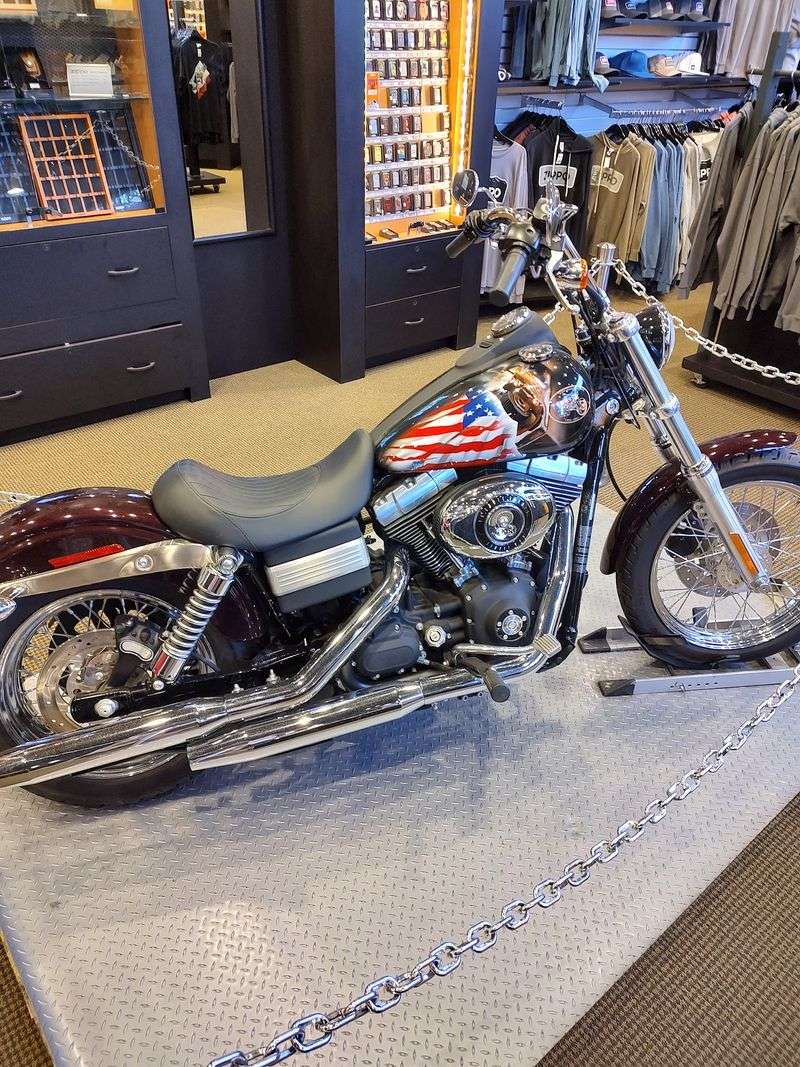
Walls of color and sparkle waited for me at the end of the museum. The flagship store is the only place anywhere that carries the complete selection of Zippo and Case products.
Designs range from classic plain chrome to detailed engravings, bright colors, and playful themes. I spotted everything from music-inspired pieces to cute animal designs.
There is also branded clothing, so you can take home a hoodie or shirt as a souvenir.
Collectors often hunt for exclusive items here that are hard to find elsewhere. Even if you do not plan to shop, browsing is fun, and the staff is friendly and happy to answer questions.
Most people spend 30 minutes to an hour at the museum and store together. Serious fans can easily stretch that to three hours.
There is no factory tour, but the exhibits and repair window give you a real feel for the company.
Admission is free, the restrooms are clean, and the hours are generous, from 9 a.m. to 5 p.m. Monday through Saturday and 11 a.m. to 4 p.m. on Sunday.
I left with a smile and a new respect for things made to last.
Address: 1932 Zippo Drive, Bradford, Pennsylvania
