Grey stone half swallowed by brush sits quietly on the far side of a little creek, looking like something dropped in from an old Roman ruin. It caught the eye through bare trees on a winding road with no real plan.
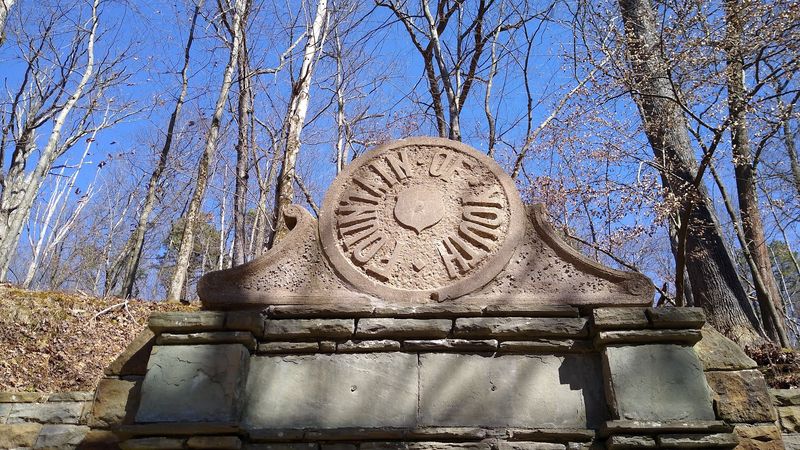
Pulling onto the gravel shoulder revealed a carved stone disc above the arched doorway, three words chiseled into the surface. Nobody else was around, which made the whole thing feel like a secret.
This odd little springhouse was built in the late 1930s over a real natural spring, and people once came with jugs to fill up on cold water. Pennsylvania hides plenty of roadside oddities, but this one stuck longer than most.
The stone has weathered decades of rain and snow, and the arch still holds its shape. It is a small piece of forgotten infrastructure, a monument to a time when fresh water was a destination.
Standing there, it was easy to imagine the line of people waiting with containers, the sound of water spilling over the edge.
The Roadside Reveal Along Kummer Road
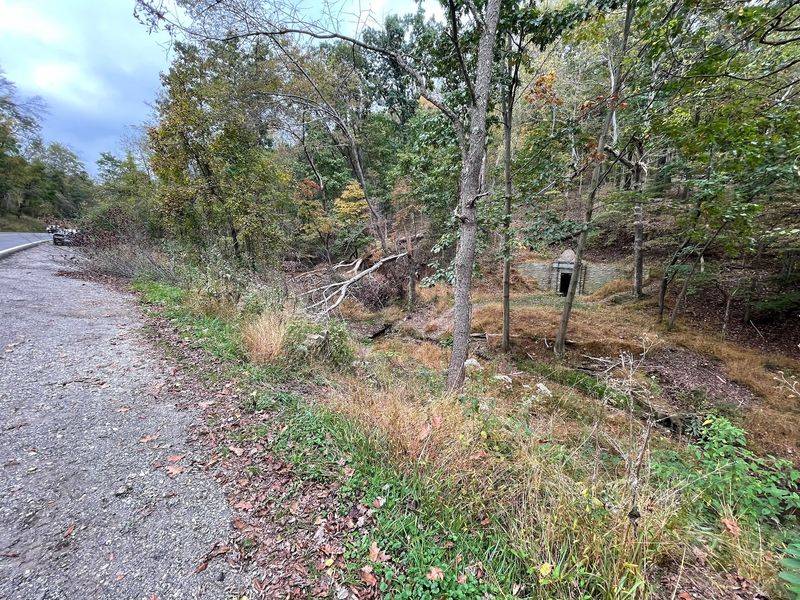
My first glimpse came from behind the steering wheel, which is not how most historic landmarks introduce themselves. There is no sign, no marker, no parking lot with a map board.
Just a narrow pull-off on Kummer Road wide enough for about three cars, and a slope dropping away into trees. If you are not watching for it, you will sail right past.
Late fall through early spring is when the stonework really pops out from the hillside, because the leaves are down and the structure sits exposed. In summer, green growth crowds in and the arch turns into a shadow you might mistake for a culvert.
I ended up circling back twice before I trusted my eyes. Once parked, the walk down is short, maybe a hundred feet, but the ground tilts more than photos suggest.
Cell coordinates help more than the street number here, since mapping apps sometimes point you a little past the shoulder. Plugging in the location and slowing down around the bend worked for me.
What I liked most was the quiet arrival. No ticket booth, no gate, just a curious stone face waiting across a stream.
Built by WPA Crews During the Great Depression
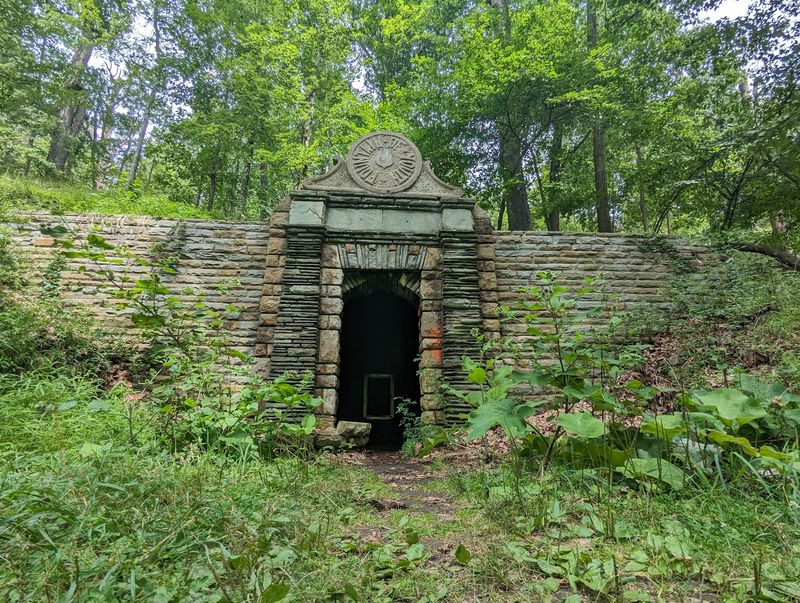
Here is the detail that turned my roadside curiosity into genuine interest: this thing was built around 1938 and 1939 as a Works Progress Administration project. That was the era when federal work programs put people back on payrolls during the Great Depression, building roads, bridges, shelters and stairways across the country.
Allegheny County’s North Park got a whole collection of stone and timber structures in that period, and the springhouse was one of them.
Knowing that changed how I looked at the masonry. Somebody hauled and fitted every one of those stones by hand, in a ravine, for a structure whose only job was to protect a water source.
The craftsmanship shows in the arch and the way the stones step and curve rather than sit in flat rows. It was not slapped together.
I find WPA work weirdly moving. These projects were meant to be useful and permanent, and plenty of them are still standing long after the agency itself disappeared.
Standing beside it, I kept thinking about how a temporary job program left behind something people drive out of their way to photograph nearly ninety years later. That is a decent legacy for a water pump.
A Roman Bathhouse Look in the Pennsylvania Woods
Most springhouses I have come across in Pennsylvania are plain little boxes of block or fieldstone, functional and forgettable. This one went in a completely different direction.
The design borrows from classical Roman bathhouses and grottoes, with a rounded arch, decorative rockwork and a deliberate sense of drama. It reads like a garden folly someone built for a country estate, except it sits in a public park ravine.
Above the opening hangs the engraved stone disc with those three famous words. The lettering is simple, but the placement gives the whole facade a focal point, like a keystone with a punchline.
I crouched down to look at the stone joints and noticed how the rocks were chosen for texture, not just size.
Moss and lichen have settled into the seams, and water stains streak downward in dark ribbons. Time has been working on it, and honestly the weathering suits the cavern theme.
What amuses me is the mismatch. Grand Roman styling, a woodsy Pittsburgh suburb, and a creek you have to hop across to get a proper look.
That contrast is exactly why the place is memorable.
When Neighbors Came Here for Drinking Water
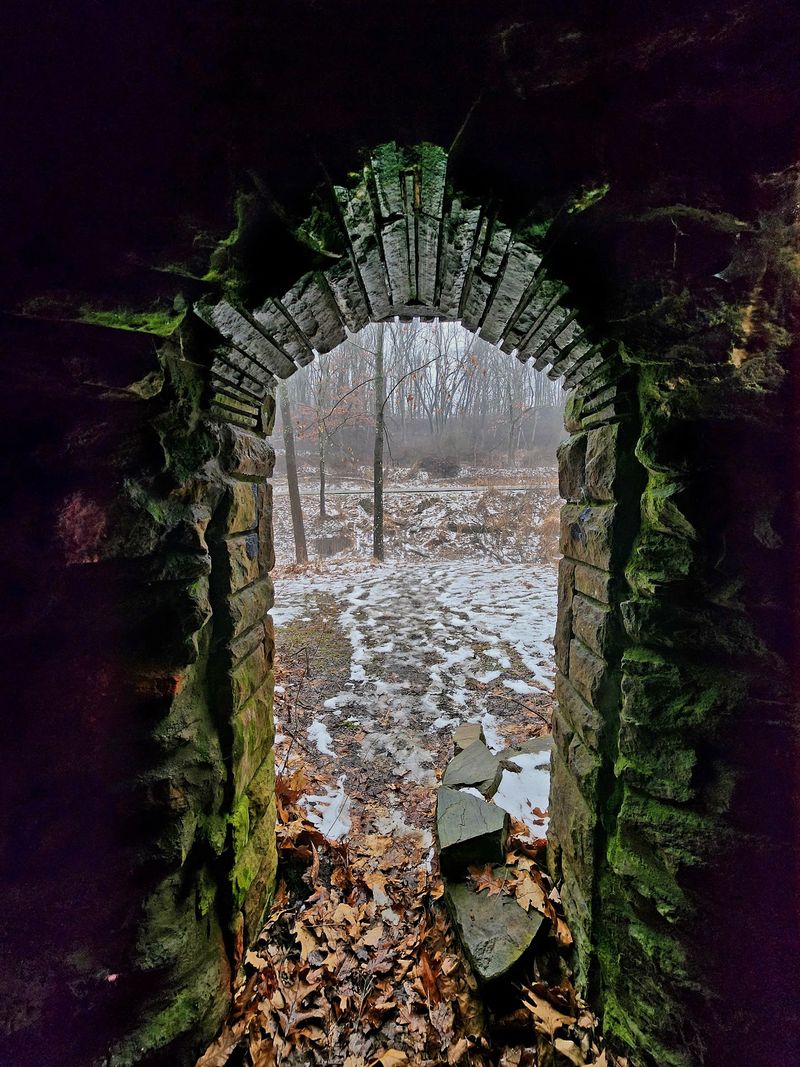
Long before it became a photo stop, the springhouse had a practical daily job. A natural spring already flowed at the site, and the structure was built to enclose and protect it.
A pump handle let anyone walk up, work the lever and fill a container with cold water straight from the ground.
For roughly sixteen to twenty years, that is exactly what happened. People from the surrounding communities made the trip out with jugs and bottles, treating it as a reliable local resource.
I love imagining the routine of it. A Saturday errand, the car parked on the shoulder, kids taking turns pumping while the water ran cold over their fingers.
Spring water carried a reputation for being purer and better tasting than what came out of the tap, and the name carved above the door leaned right into that idea.
Nobody seriously expected extra years of life, I suspect, but a clever name makes a spring memorable.
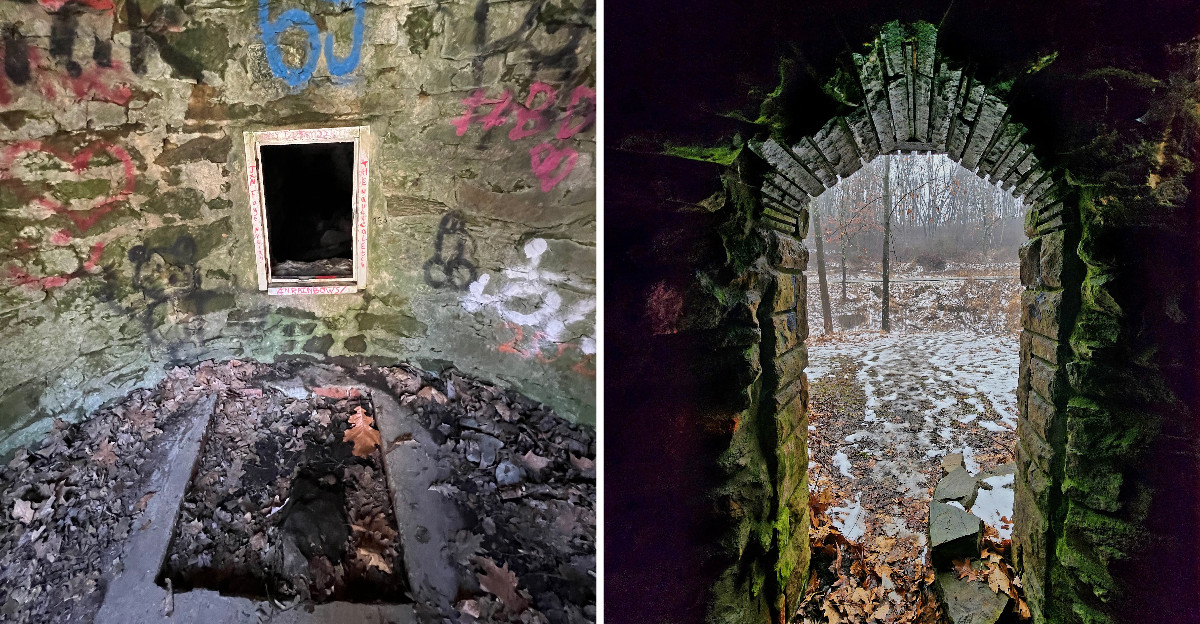
Knowing the history gave the empty interior a different weight when I peered inside. What is now a quiet, dripping hollow used to be a small neighborhood gathering point.
The Pump Disappears, 1953 to 1955
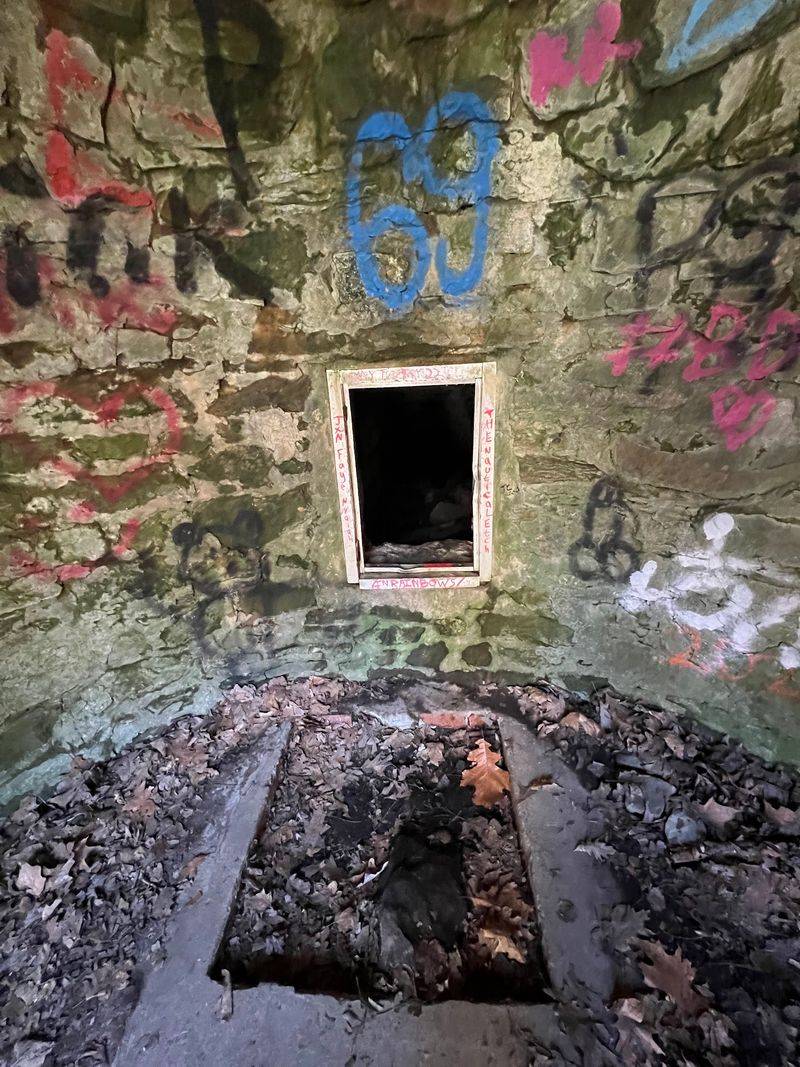
Every good landmark story has a turning point, and this one arrived in the 1950s. Around 1953 the pump mechanism started failing, which was the first sign the setup was living on borrowed time.
Then came the real problem. Testing in 1955 found bacterial contamination in the water, including coliform organisms, which meant it was no longer safe to drink.
Rather than leave a tempting handle attached to unsafe water, officials removed the pump permanently. Simple and effective, if a little sad.
That single decision is why the structure feels frozen in time today. Its entire purpose vanished in one step, and the building just stayed where it was.
I want to be clear about the practical takeaway: the spring still trickles inside, but the water is not safe to drink. Bring your own bottle from home and admire the flow instead.
Restoration work in 2004 repaired damaged rockwork, and the engraved stone disc was remounted in 2009 after coming loose.
So the fountain has had a few caretakers over the decades, even without its original job description.
Crossing the Creek, What the Walk Actually Involves
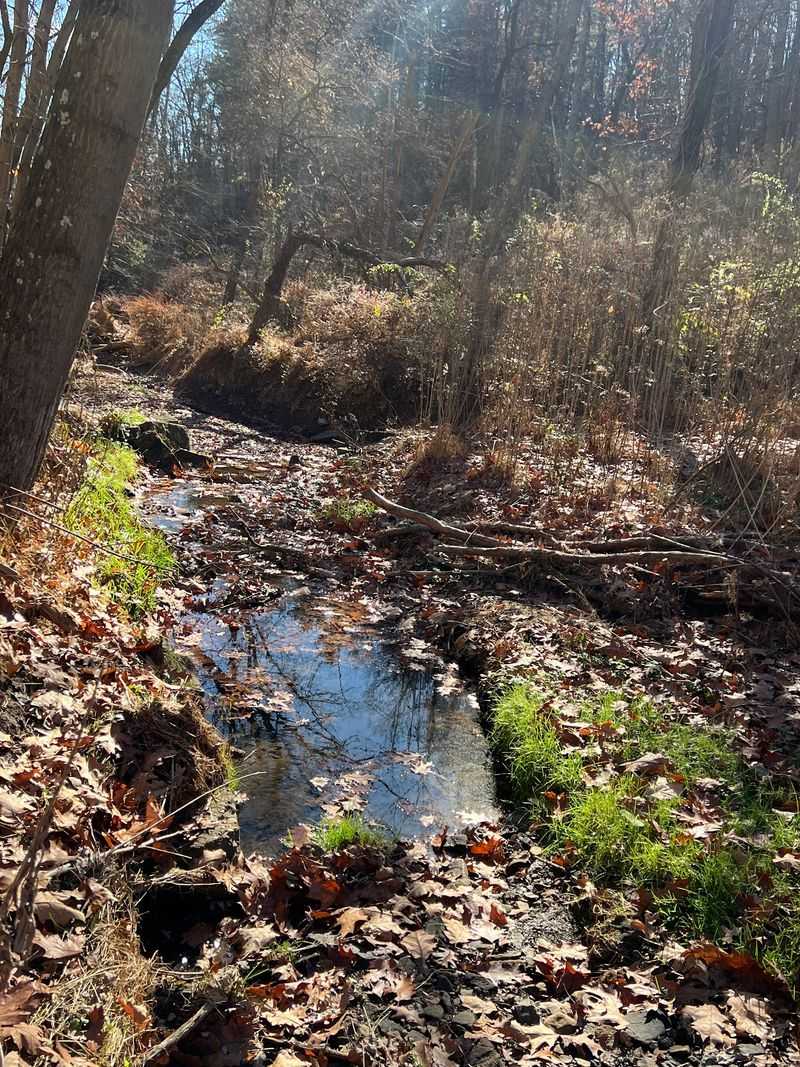
Let me save you the trial and error I went through. From the pull-off, the route drops down a short embankment and crosses a small stream before reaching the arch.
It is genuinely close, maybe a couple of minutes of walking, but the ground is uneven and the slope is steeper than it looks from the car.
Boots are the right call. After rain the hillside turns slick, and the creek can run fast and high enough that crossing stops being a good idea.
I skipped a first attempt because the water was up, and I have zero regrets about that.
Winter snow brings its own trouble, since the path disappears under white and the footing becomes guesswork. Dry stretches in early spring or late autumn are the sweet spot, before undergrowth fills in and while the ground is firm.
A flashlight earns its space in your pocket if you want to see anything inside the dim interior.
Anyone with mobility concerns can still get a clear view straight from the roadside, which is honestly a decent look.
Making a Day of It in North Park
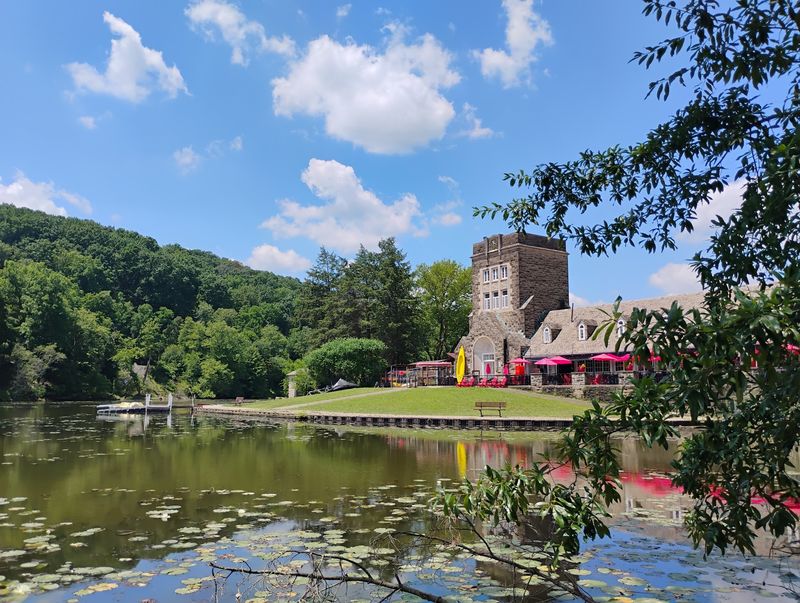
The springhouse alone is a ten minute stop, so I built the rest of my afternoon around the park it sits inside. North Park sprawls across more than 3,000 acres about fifteen miles north of downtown Pittsburgh, and it is one of Allegheny County’s big green playgrounds.
There is a lake that draws kayakers and anglers, plus a loop road that cyclists and runners use constantly.
Hiking trails thread through the woods in every direction, and I found the quieter ones surprisingly peaceful for something so close to a city. Golf courses, tennis courts and a nature center round out the options.
Pairing the fountain with a lake walk turns a roadside curiosity into a full outing.
My suggestion: hit the springhouse first while the light is soft, then wander toward the water. The contrast between a forgotten 1930s ruin and a busy lakeside path says a lot about how parks change over time.
Bring a bag if you feel like picking up stray litter around the arch, since the spot sees plenty of visitors and little upkeep.
Address: 10127 Kummer Rd, Wexford, PA 15090
