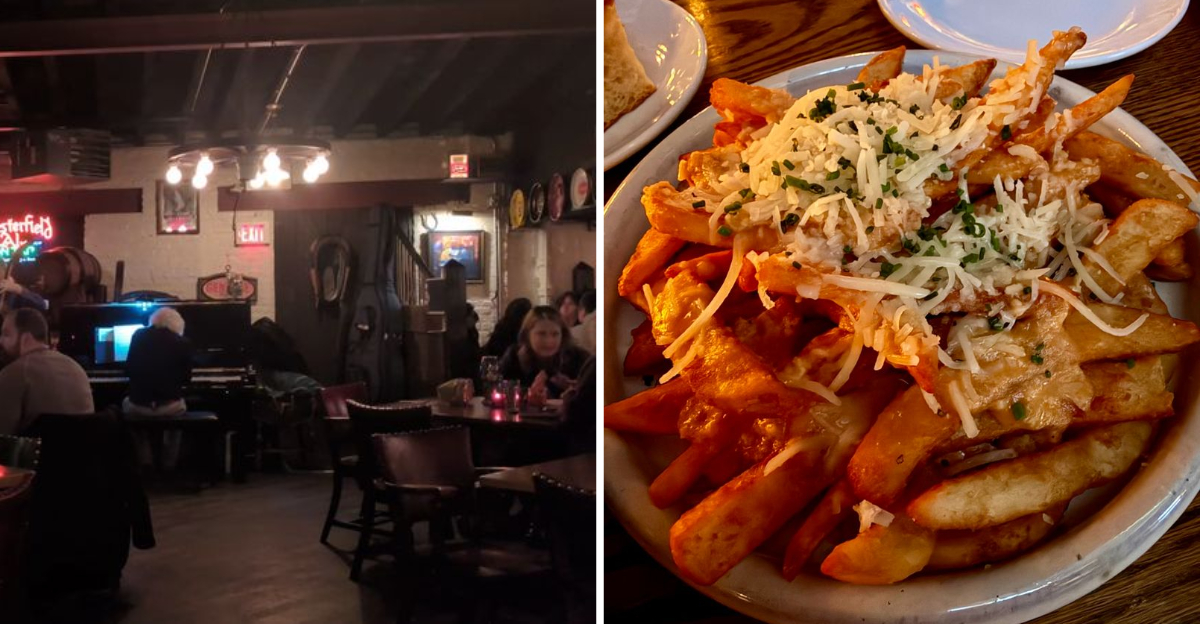
Worn horse-stall wood shaped into booths and wagon wheels turned into light fixtures overhead, that is what I found at the top of a steep wooden staircase in a Pennsylvania restaurant. I slid into one of those snug nooks, ordered the horse fries everyone in town talks about, and understood the hype in about four bites.
There was a piano playing somewhere behind me, the lights were low and golden, and the whole place smelled like something good coming out of the kitchen. What really got me was learning the building started as a carriage house in the mid-1800s, complete with actual horses downstairs and a hayloft above.
Nearly a century after that hayloft became a hidden gathering spot, the wood is still up there, and so is the charm.
The building has worn many hats over the years, but the current owners have kept its character intact, letting the history speak for itself while serving plates of comfort food that match the warmth of the room.
A place where you can still feel the presence of the horses that once stood below is exactly what this Pennsylvania spot delivers.
The Carriage House That Refused to Be Forgotten
Old buildings usually get knocked down or scrubbed clean of their past. Not here.
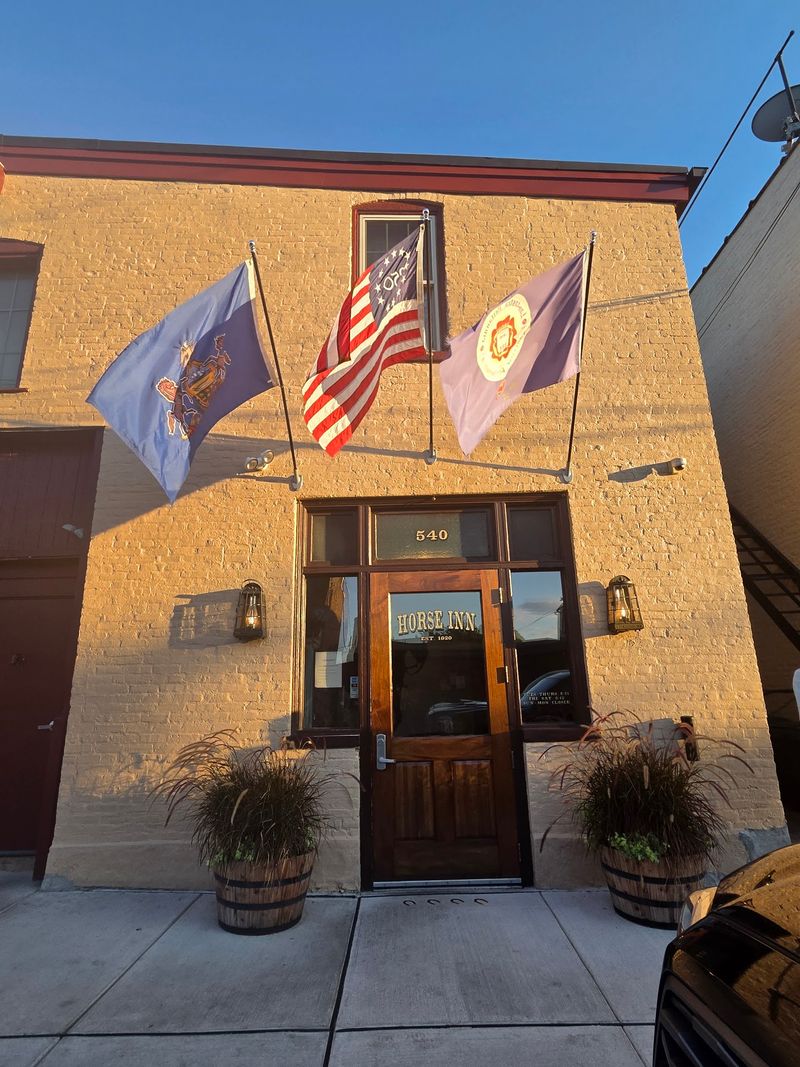
The structure at this Pennsylvania street began life in the mid-1800s as a carriage house serving a home over on East Chestnut Street. In 1911, the Shaub family bought it for $800 and used it for their excavating and contracting business, with horses, carriages, and equipment kept on the lower level.
Above all that sat a plain hayloft, the kind of space nobody expected would matter someday. I love that the family did not tear anything out when the building changed purpose.
They reworked what was already there, which is exactly why the place feels so layered now. Walking up to it, you get almost no hint of the room waiting upstairs.
The original way in was down a narrow, unnamed alley, which only added to the mystery. These days there is a friendlier entrance right on E Fulton Street, though the stairs are still steep enough to remind you this was never designed as a dining room.
That honesty about its own history is the whole appeal.
Horse Stalls Turned Into the Coziest Booths in Lancaster
Here is the detail that stuck with me longest: the booths you sit in were once horse stalls.
When the hayloft was converted in the early 1920s, the original stalls were hauled upstairs and rebuilt as private dining nooks. Almost a hundred years later, that same weathered wood is still framing dinner.
Sliding into one feels genuinely different from a normal restaurant seat. The high wooden walls block out the room a little, so conversations stay between the people at your table.
My advice is to request one when you book, because they go fast and they are easily the best seats in the house. The wood has that soft, worn shine that only comes from decades of hands and elbows.
Look up while you are in there and you will see how the stall structure continues overhead, hanging above the dining room like a wooden canopy.
It is the kind of thing you point at mid-sentence and forget what you were saying. For a date night or a long catch-up with an old friend, these nooks are hard to beat.
Wagon Wheels Overhead and Hubs Under Your Seat
Someone in the 1920s looked at a pile of leftover wagon parts and saw furniture. Honestly, respect.
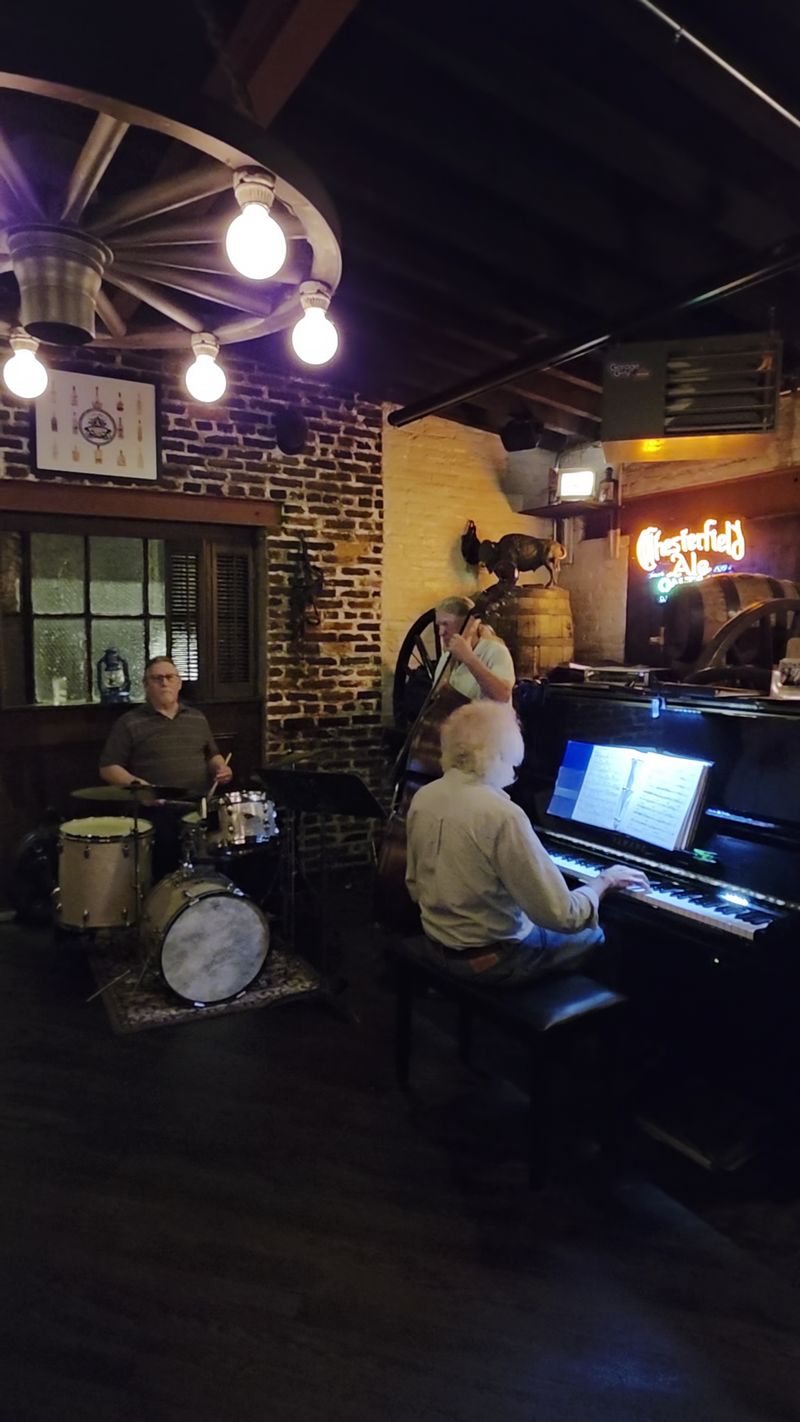
The chandeliers hanging over the dining room are made from actual wagon wheels, fitted with bulbs that throw a warm amber glow across the wood. The light they give off is soft and a little uneven, which does wonders for the mood of the room.
Even better, the barstools were built from wagon hubs, so you are literally perched on old carriage hardware while you eat.
I did not expect to find hardware charming, but there is something great about a room where nothing was bought new for the look. It all came from the building’s working life.
Photographers will love how the light falls, though I would say put the phone down after a couple of shots and just enjoy it.
The glow gets especially nice after sunset, once the windows go dark and the wheels are doing most of the work. Arrive around opening at 5 PM and you can watch the room slowly shift into evening mode.
A Back Bar With Its Own Résumé
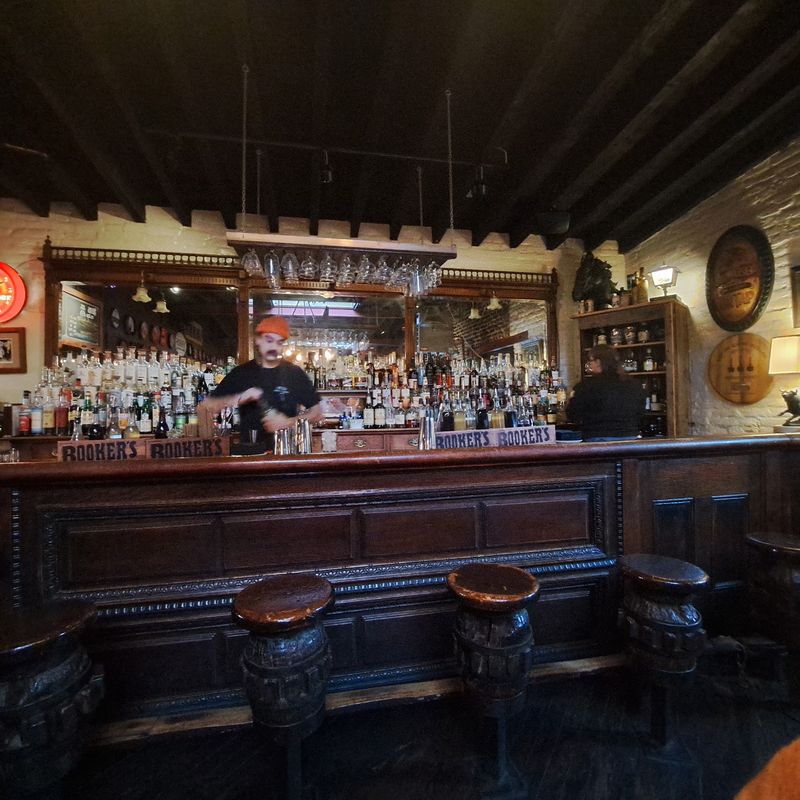
Most bars are furniture. Occasionally one is a museum piece.
The handcrafted back bar here dates to the late 1800s and was installed behind the counter when the upstairs space was reinvented. It anchors the whole room, all dark carved wood and quiet presence.
The part that made me stop and read the details twice is the front section, which was built using an original door from Franklin and Marshall College dating back to 1787.
Think about that for a second. A door older than most of the country is now holding up your dinner plate.
Seating at the bar is a solid strategy on busy nights, especially since walk-in waits can stretch past twenty minutes. Regulars will tell you the front bar area is the coziest corner in the building.
The staff behind it move fast and know the room inside out, so questions about the building usually get a good answer.
There are also tables scattered around that came from the long-gone Toby Tavern at the Stevens House, another small piece of Lancaster salvaged instead of scrapped.
Tips on Toast, One Century, One Recipe
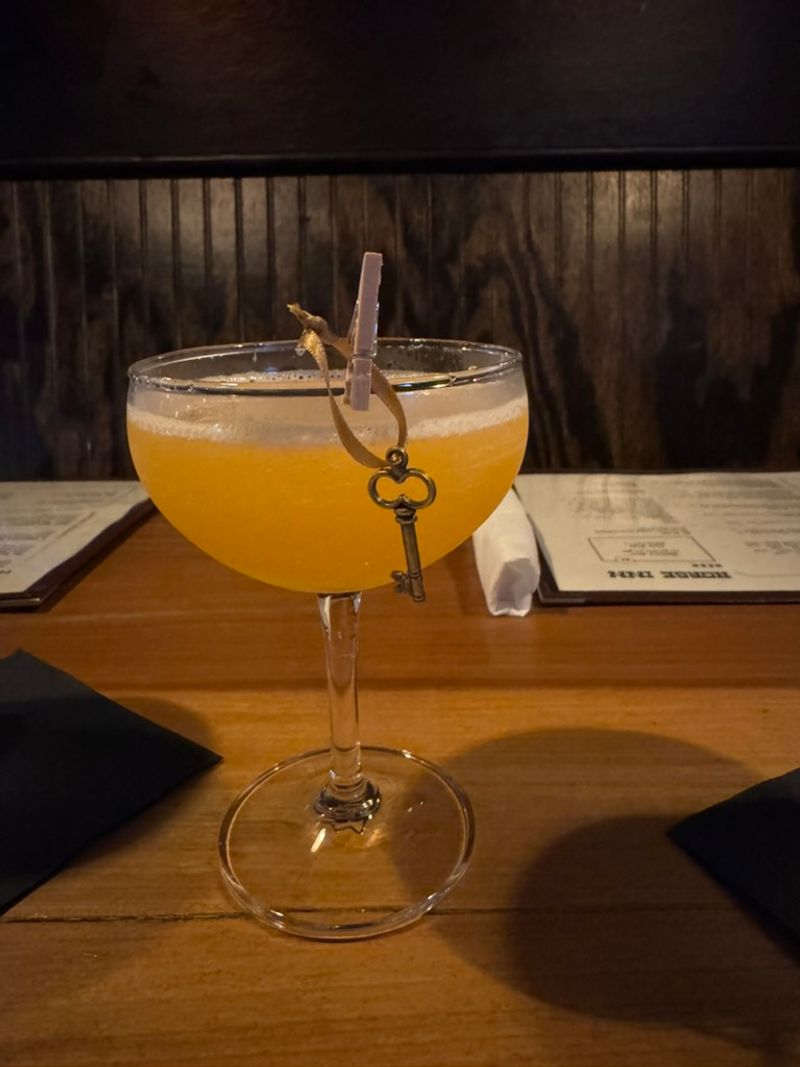
Florence Shaub started serving tenderloin tips on toast to feed hungry guests upstairs, and the dish never left.
A hundred years on, Tips N’ Toast is still the plate that defines the place. Beef tips arrive with Alfred and Sam’s French bread underneath and a red demi-glace pulling everything together.
It is not fussy food, and that is precisely why it works in a room like this.
I ordered it mostly out of curiosity about the history and finished it out of pure appetite. The bread soaks up the sauce in the best possible way, so do not rush the last few bites.
If you are sharing plates with a group, this one travels well around the table.
The kitchen is run by Matt Russell, who trained in culinary school and bought the place with his wife Starla back in January 2014. They reopened five months later after renovations that kept the old bones intact.
Keeping a century-old dish on a menu that changes daily takes real commitment, and you can taste that it matters to them.
Horse Fries, Shrimp and Grits, and a Chalkboard of Local Farms
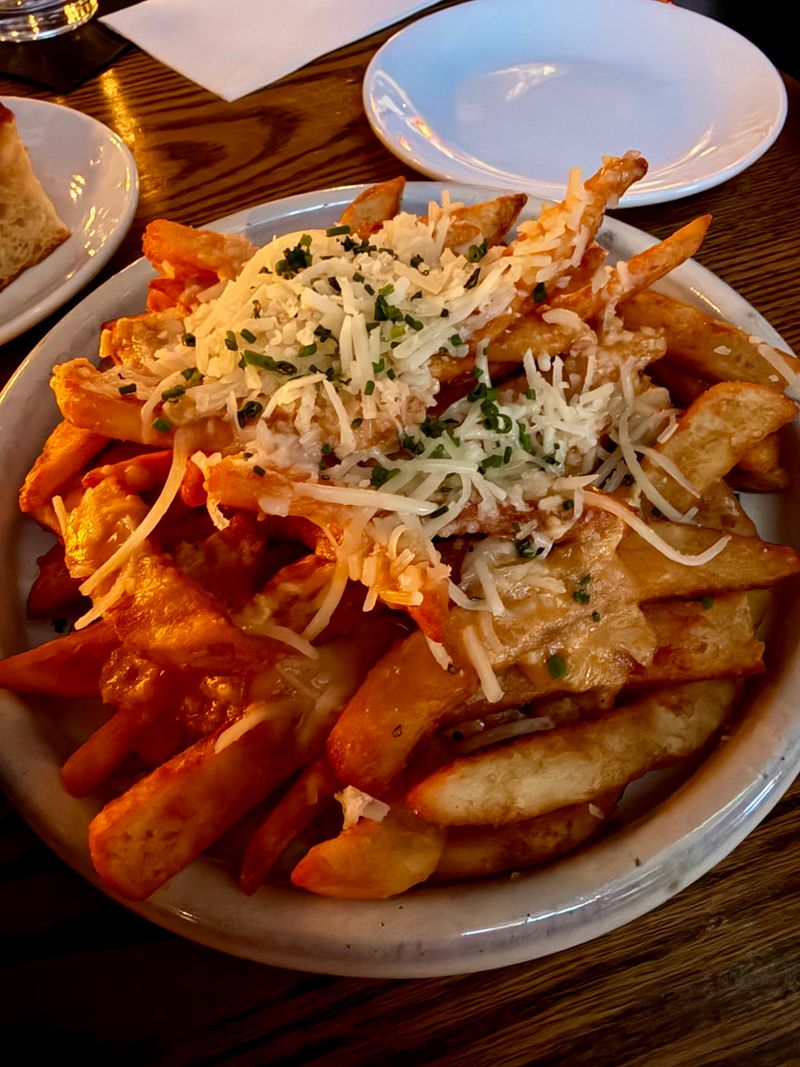
Ask anyone in Lancaster what to order and they will say horse fries before you finish the question.
They come loaded with house-made sausage, Parmesan, aged Provolone, garlic, and heavy cream, and they are every bit as filling as that sounds. Split an order unless you plan to skip everything else.
Shrimp and grits is the other plate people rave about, built on Marsh Hen Mill stoneground grits with house-made sausage, peppers, onions, and veal stock.
Matt Russell spent time cooking in Charleston, South Carolina, and that Southern influence shows up in dishes like this one. The Horse Inn cheeseburger deserves a mention too, made from a custom blend of short rib, brisket, chuck, and dry-aged beef.
What I appreciate most is the chalkboard in the dining room listing the local farms and vendors behind the food, including nearby Central Market.
The menu changes daily depending on what comes in, so the board is genuinely useful rather than decorative.
Save space for dessert, because the pot de creme and the sweet cream ice cream have quite the following.
Live Piano, Late Hours, and Why You Should Book Ahead
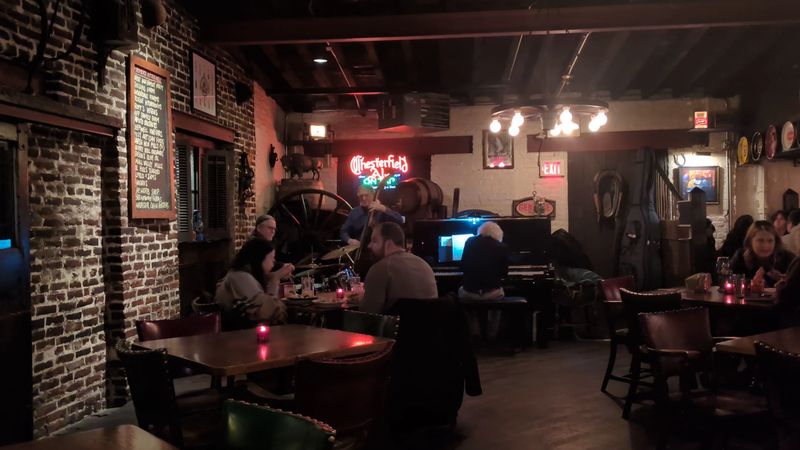
Around six in the evening, music starts up and the room changes gear.
Live jazz and piano are a regular part of the experience here, and the volume sits at that sweet spot where you can still talk across the table. It suits the space perfectly, since the low ceilings and old wood soak up sound beautifully.
Planning matters more than you might think. Doors open at 5 PM Tuesday through Saturday, with the kitchen running until 11 PM midweek and midnight on Friday and Saturday, and the place is closed Sunday and Monday.
Reservations are strongly recommended, especially on weekends, because tables fill within minutes of opening. If you cannot get one, the bar is fair game and often quicker.
Parking sits across the block in a nearby lot, though street parking a couple of blocks away works fine too.
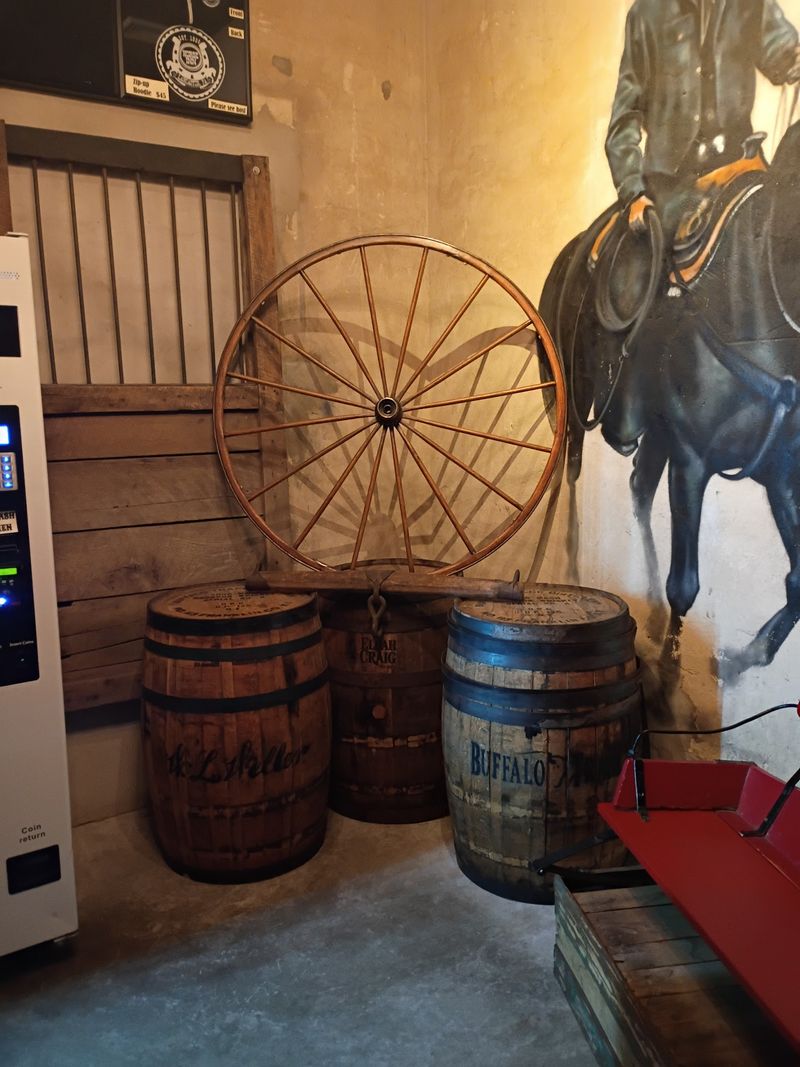
One heads-up worth knowing: the staircase up is steep, so wear comfortable shoes. There is even a vending machine near the entrance selling T-shirts, which is a fun little souvenir.
Address: 540 E Fulton St, Lancaster, Pennsylvania
