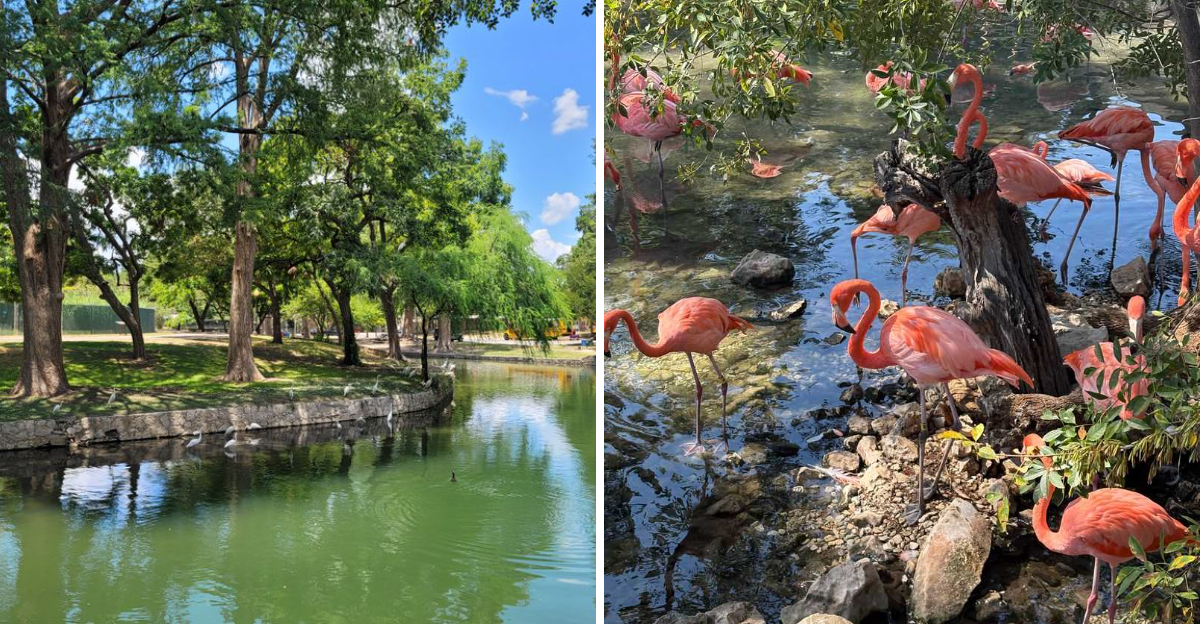
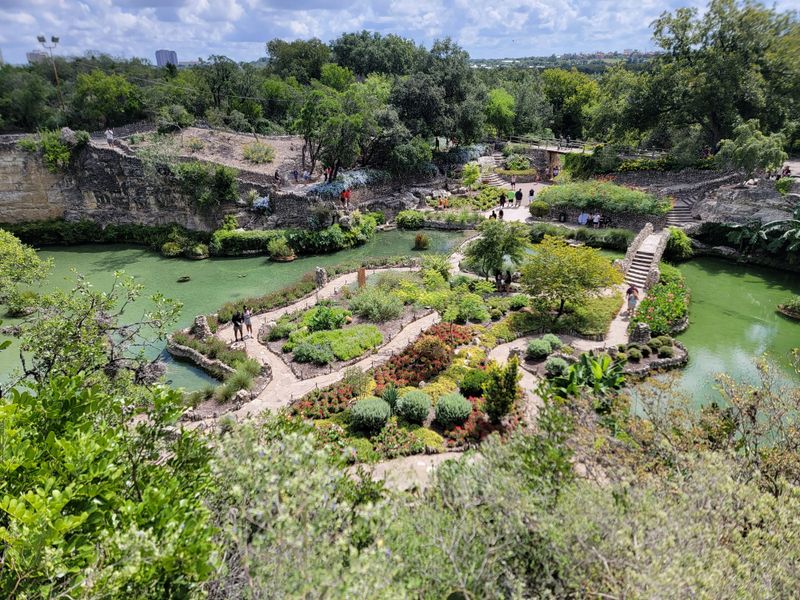
San Antonio does not usually come to mind when you think of waterfalls, which is why walking into the Japanese Tea Garden feels so unexpected in the best way. Inside Brackenridge Park, the space opens up into stone bridges, koi ponds, and winding paths that pull you deeper with every turn.
Then the waterfall comes into view, a full 60 feet of water spilling down layered rock, surrounded by greenery that makes the whole scene feel far removed from city streets. I could still technically hear traffic somewhere in the distance, but it faded fast under the sound of rushing water and birds.
It is the kind of place where I slowed my steps without meaning to, just to take it all in. Whether you live nearby or are only in town for a few days, it feels like a quiet reset button hidden right in the middle of everything.
The Japanese Tea Garden’s Surprising History
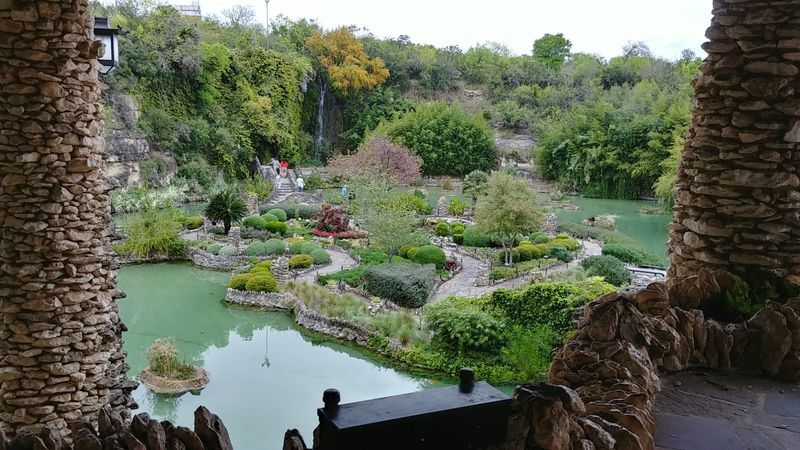
Walking through the Japanese Tea Garden today, it’s hard to imagine this serene space was once a working limestone quarry. The transformation happened in 1917 when city parks commissioner Ray Lambert saw potential in the abandoned rock pit.
He envisioned something beautiful rising from the industrial scars, and what emerged became one of San Antonio’s most cherished hidden gems.
The garden sits on the grounds of Brackenridge Park, carved directly into the former quarry’s dramatic cliffs and rock formations. Those towering stone walls that now frame the waterfall were once blasted apart by workers extracting limestone for building materials.
Today, they create natural amphitheaters and grottos that amplify the sound of falling water and provide shade during hot Texas afternoons.
What strikes me most is how the garden’s design works with the existing landscape rather than against it. The original designers used the quarry’s natural features, incorporating the rock faces, caves, and uneven terrain into something that feels both ancient and carefully planned.
Stone steps wind up and around the cliffs, leading to unexpected viewpoints where you can see the entire garden spread below. It’s a reminder that sometimes the most beautiful places come from reimagining what others left behind.
Finding the 60-Foot Waterfall
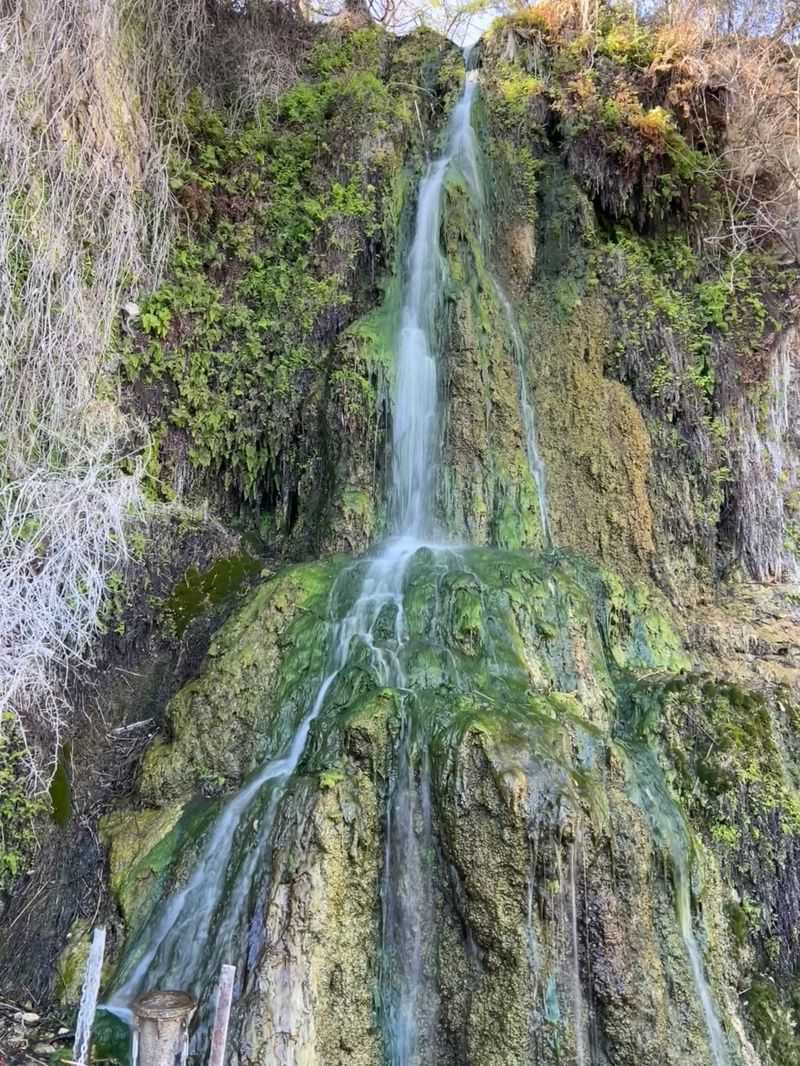
The waterfall announces itself long before you see it. As you follow the stone path deeper into the garden, the sound of rushing water grows louder, echoing off the quarry walls in a way that makes you quicken your pace.
Then you round a corner, and there it is, a white ribbon of water tumbling 60 feet down the rust-colored limestone cliff face into a clear pool below.
I’ve visited on both crowded weekends and quiet weekday mornings, and the experience changes dramatically depending on when you arrive. Early mornings offer the best light, with sun filtering through the trees and catching the spray at the waterfall’s base.
The mist creates tiny rainbows that dance across the rocks, and if you’re lucky, you might have the viewing area almost entirely to yourself.
The waterfall isn’t natural, it’s pumped from the San Antonio River, but that doesn’t make it any less impressive. What matters is how it transforms the space, cooling the air by several degrees and creating a soundtrack that drowns out any city noise.
There are several viewing spots at different levels, from the base where you can feel the spray on your face to upper platforms that let you see how the water disappears into the pool and feeds the koi ponds downstream.
The Koi Ponds and Stone Bridges
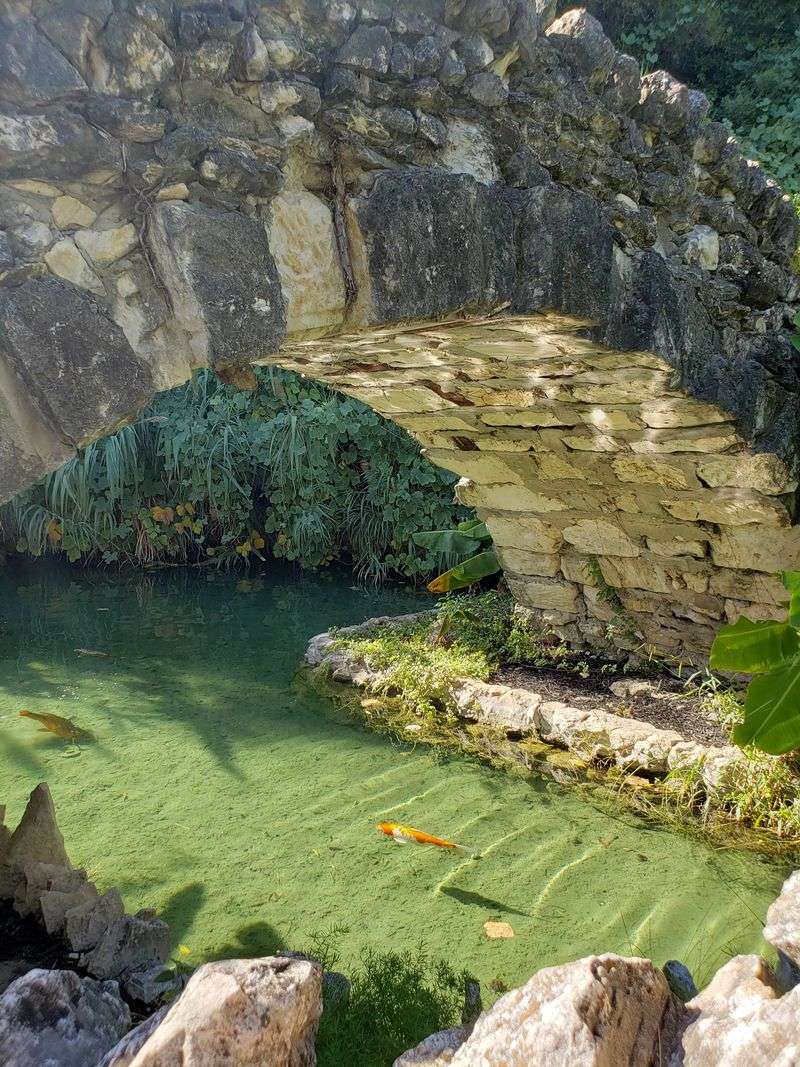
Below the waterfall, the garden opens into a series of interconnected koi ponds crossed by graceful stone bridges. The water is remarkably clear, letting you watch dozens of koi gliding through the depths in flashes of orange, white, and gold.
Some of these fish are massive, easily two feet long, and they’ve learned that people on the bridges often mean food.
The bridges themselves are works of art, built from the same limestone that once formed the quarry. Each one offers a different perspective on the garden, whether you’re looking down at the fish, across to the waterfall, or up at the towering cliffs covered in ferns and ivy.
I’ve spent more time than I’d like to admit standing on these bridges, just watching the koi circle and the water flow.
What makes this area special is how everything connects. Water from the main waterfall feeds these ponds, which then flow into smaller cascades and streams throughout the garden.
The sound changes as you move from space to space, sometimes loud and rushing, other times gentle and trickling.
Kids love spotting the different colored koi and counting how many they can see, while photographers camp out on the bridges waiting for that perfect shot of fish and flowers reflected in still water.
Winding Pathways and Hidden Grottos
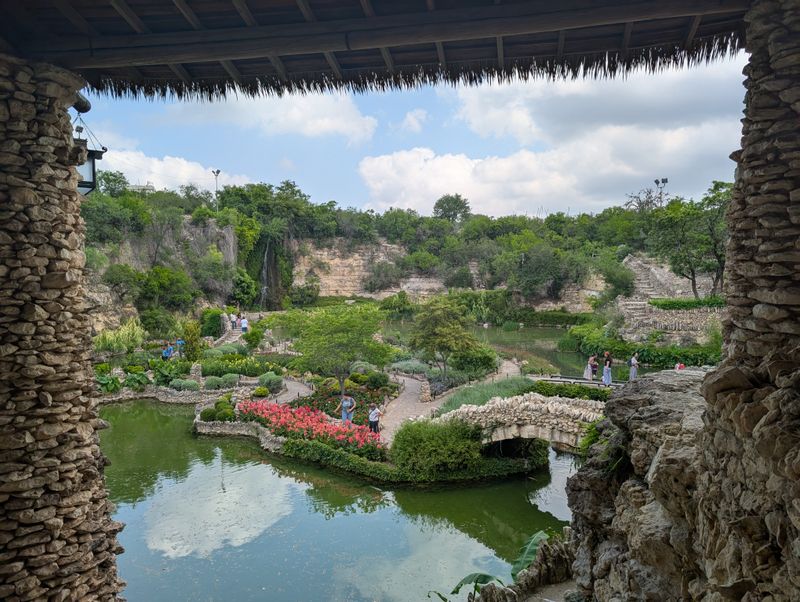
The real magic of the Japanese Tea Garden happens when you venture off the main path. Narrow stone stairways climb the quarry walls, leading to cave-like grottos and shaded alcoves that most visitors miss.
These spaces stay cool even on the hottest days, with ferns growing directly from cracks in the rock and water seeping down the walls.
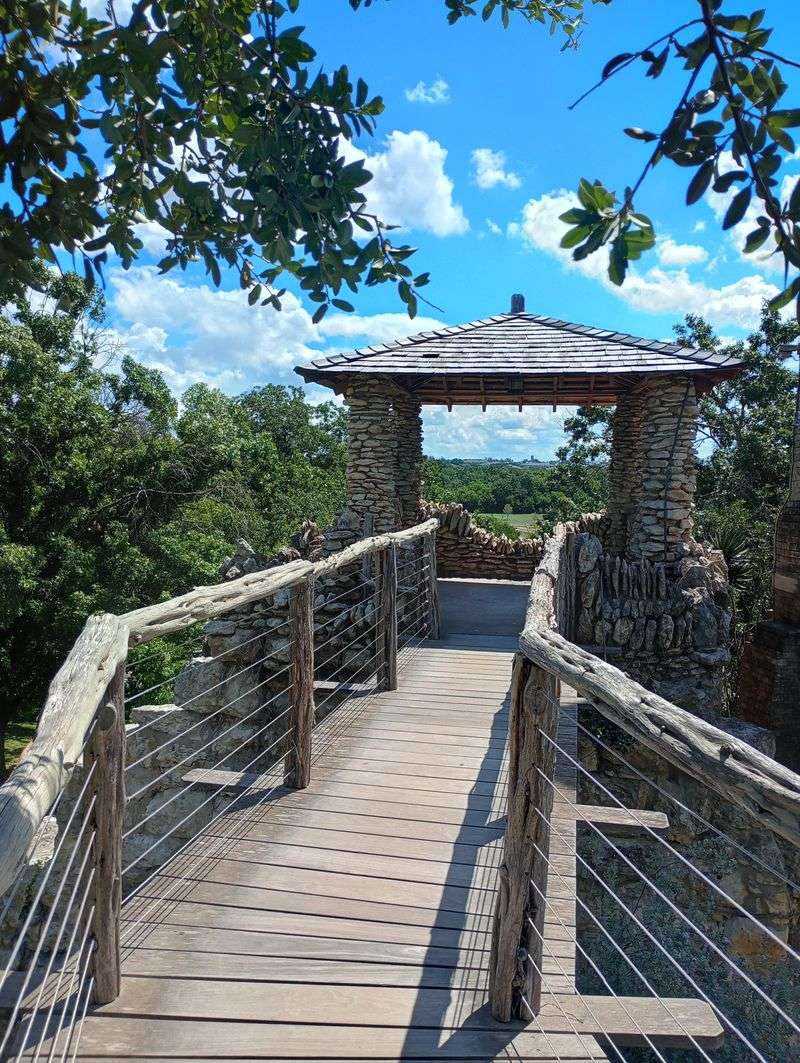
One of my favorite spots is a small grotto about halfway up the eastern wall. You have to climb a somewhat steep set of stairs to reach it, but once you’re there, you’re rewarded with a private viewing platform overlooking the entire garden.
From this height, you can see how the waterfall, ponds, and pathways all fit together like pieces of a puzzle carved into the earth.
The pathways themselves tell a story of careful planning and adaptation. Some follow the natural contours of the quarry, while others were blasted or carved to create specific views and experiences.
Stone benches appear at strategic points, always positioned to showcase something beautiful, whether that’s a view of the waterfall, a cluster of blooming plants, or simply a quiet corner where you can sit and listen to the water.
The garden rewards slow exploration, revealing new details and perspectives with each visit.
Best Times to Visit for Photography
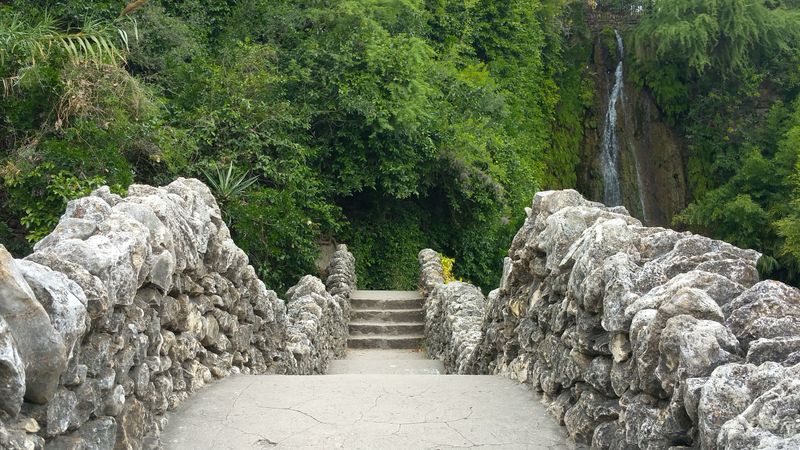
Photography enthusiasts treat the Japanese Tea Garden like a studio with constantly changing natural light. The garden opens at sunrise, and that’s when serious photographers arrive with tripods and cameras.
Morning light comes in low and soft, creating long shadows across the stone pathways and illuminating the waterfall spray with a golden glow that only lasts about an hour.
Weekday mornings between 7 and 9 AM offer the best combination of good light and fewer crowds. You can set up shots without people walking through your frame, and the koi are most active during feeding times.
The waterfall looks particularly dramatic in morning light, with the sun hitting it from the side and highlighting every drop and ripple.
Late afternoon brings different opportunities. As the sun drops toward the horizon, it lights up the limestone cliffs in warm tones of orange and gold, making the whole garden glow.
The challenge is that this is also when families and tourists arrive in larger numbers, so patience becomes part of the process. I’ve found that waiting just 15 or 20 minutes past sunset, during the blue hour, can produce some of the most striking images with far fewer people around.
The waterfall takes on an almost ethereal quality in that soft twilight.
Exploring the Wider Brackenridge Park
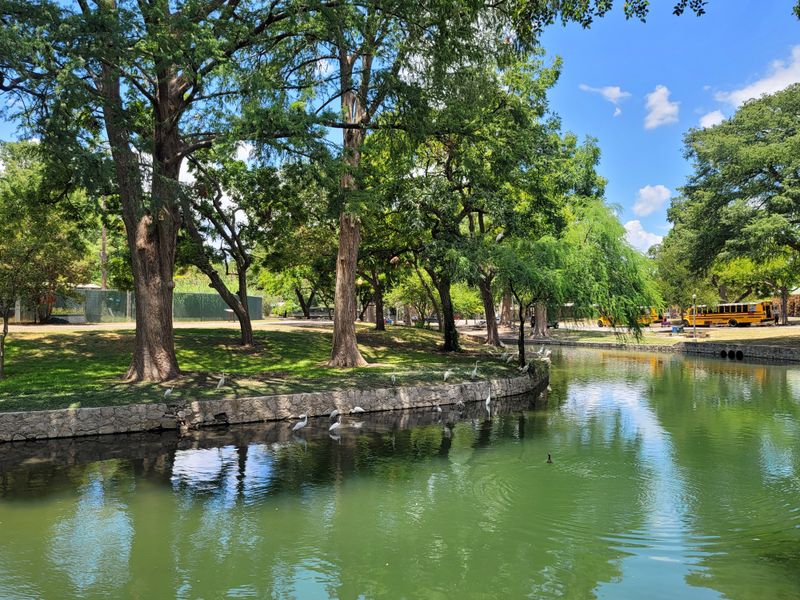
The Japanese Tea Garden is just one jewel in Brackenridge Park’s much larger crown. This 343-acre park stretches along the San Antonio River and contains enough attractions to fill an entire day.
After visiting the waterfall, I always make time to explore the surrounding trails that wind through massive oak trees and along the riverbank.
The park opened in 1899, making it one of San Antonio’s oldest public spaces. You can feel that history in the mature trees that create natural tunnels over the pathways and in the vintage stone bridges that cross the river.
On any given day, you’ll see joggers, families having picnics, people fishing in the river, and kids feeding ducks near the water’s edge. Police patrol regularly, and the park maintains a welcoming atmosphere even during busy weekends.
What surprises many visitors is how much the landscape changes as you move through different sections. Near the Japanese Tea Garden, everything feels manicured and intentional.
Walk north toward the river trails, and you enter a more natural environment where the path becomes dirt and gravel, wildflowers grow along the banks, and you might spot herons fishing in shallow water.
The park connects to other attractions like the San Antonio Zoo and the Witte Museum, making it easy to plan a full day of exploration without ever getting in your car.
Wildlife and Natural Features
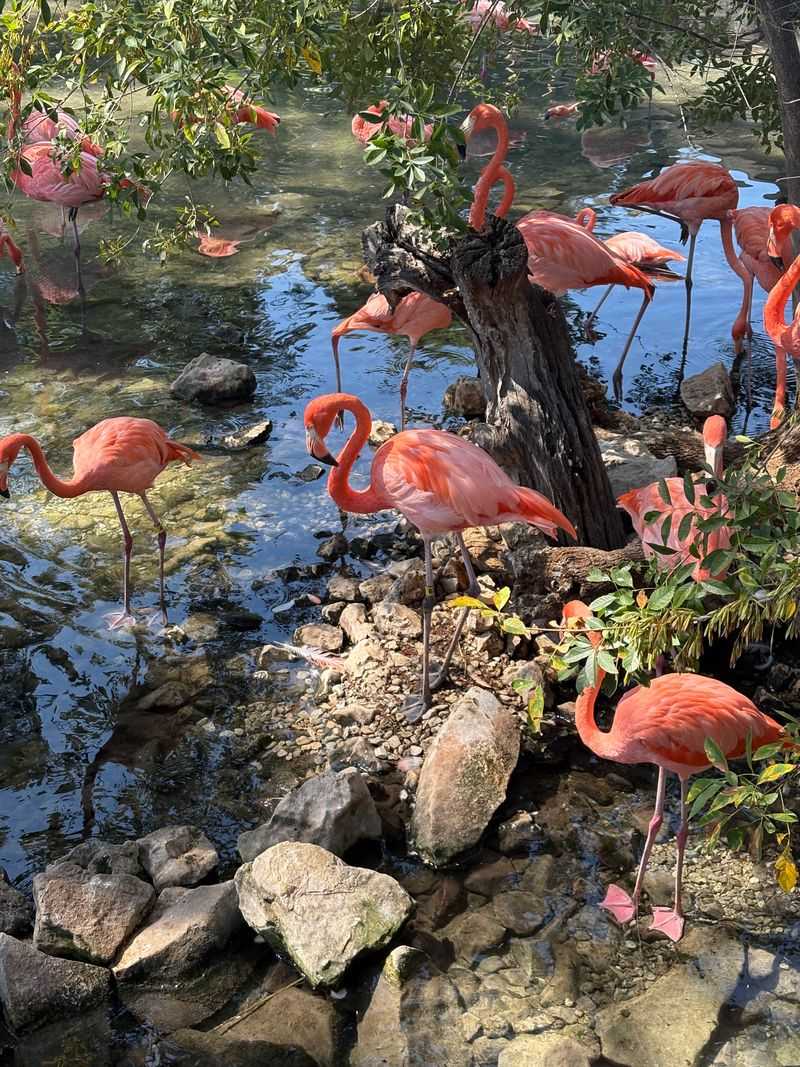
Brackenridge Park serves as an urban wildlife refuge, and spending time here means encountering animals you wouldn’t expect so close to downtown. Squirrels are everywhere, darting up and down the massive oak trees with an energy that seems excessive even for squirrels.
They’ve become so accustomed to people that they’ll approach within a few feet, though feeding them isn’t encouraged.
The San Antonio River running through the park attracts water birds year-round. Ducks congregate near the bridges, mallards mostly, along with the occasional heron standing statue-still in the shallows waiting for fish.
I’ve seen families bring bread to feed the ducks, and while signs discourage this practice, it remains a popular activity. The birds certainly don’t seem to mind the attention.
Beyond the obvious wildlife, the park hosts an impressive variety of native and introduced plant species. The mature trees provide habitat for countless songbirds, and if you visit in spring, the chorus of bird calls rivals the waterfall for auditory interest.
Butterflies flutter between flowering plants in the more cultivated areas, while the river sections support cattails, water lilies, and other wetland vegetation. It’s a reminder that even in the middle of a major city, nature finds ways to thrive when given the space and protection to do so.
Practical Visiting Information
Planning your visit to Brackenridge Park and the Japanese Tea Garden requires knowing a few key details. The garden itself is free to enter, which still surprises me given how well-maintained it is.
The park opens at 5 AM and closes at 11 PM, though the Japanese Tea Garden typically follows daylight hours. Arriving early on weekends is essential if you want parking anywhere near the garden entrance.
Parking can be challenging, especially during peak times. There’s a small lot directly adjacent to the Japanese Tea Garden, but it fills quickly on weekends and holidays.
When that happens, you’ll need to park along the street or in one of the larger lots near the zoo and walk about ten minutes to reach the garden. I’ve learned to treat this as part of the experience, using the walk to transition from city mode to park mode.
The park provides restrooms at several locations, including one near the center that reviewers consistently mention as convenient and reasonably clean. Portable facilities supplement the permanent bathrooms during busy periods.
The pathways in the Japanese Garden involve stairs and uneven surfaces, so comfortable walking shoes are essential. While the garden is relatively small, you could easily spend an hour exploring if you take your time and visit all the viewing spots and grottos.
Bringing water is smart, especially during summer months when temperatures climb and shade becomes precious.
The Miniature Train and Family Activities
Brackenridge Park offers more than just gardens and trails for families looking to fill an afternoon. The park’s miniature train, affectionately called The Eagle, has been carrying passengers since 1956, making it a nostalgic attraction that spans generations.
The narrow-gauge railroad makes a roughly two-mile loop through the park, passing under bridges and through tunnels while a conductor shares history and points out landmarks.
Riding The Eagle feels like stepping back in time, which is exactly the point. The vintage-style locomotive pulls open-air cars at a leisurely pace that lets you see the park from a different perspective.
Kids love it for the simple thrill of riding a train, while adults appreciate the break from walking and the chance to see parts of the park they might otherwise miss. The train runs on weekends and during peak seasons, with the schedule varying throughout the year.
Beyond the train, the park contains multiple playgrounds, though one is currently closed for renovation until 2026. Athletic fields host softball games and other sports, while the open green spaces attract people flying kites, playing frisbee, or simply spreading out a blanket for a picnic.
The park’s proximity to the San Antonio Zoo means many families combine visits, spending the morning at one attraction and the afternoon at the other. It’s the kind of place where three generations can find something to enjoy together.
Seasonal Changes and Year-Round Beauty
While Texas doesn’t experience dramatic seasonal changes like northern states, Brackenridge Park still transforms throughout the year in subtle and beautiful ways. Late autumn brings the most noticeable shift, when the oak and cypress trees turn golden and russet.
Reviewers specifically mention November and December mornings as particularly beautiful times to walk the trails, with cooler temperatures and changing leaves creating perfect conditions.
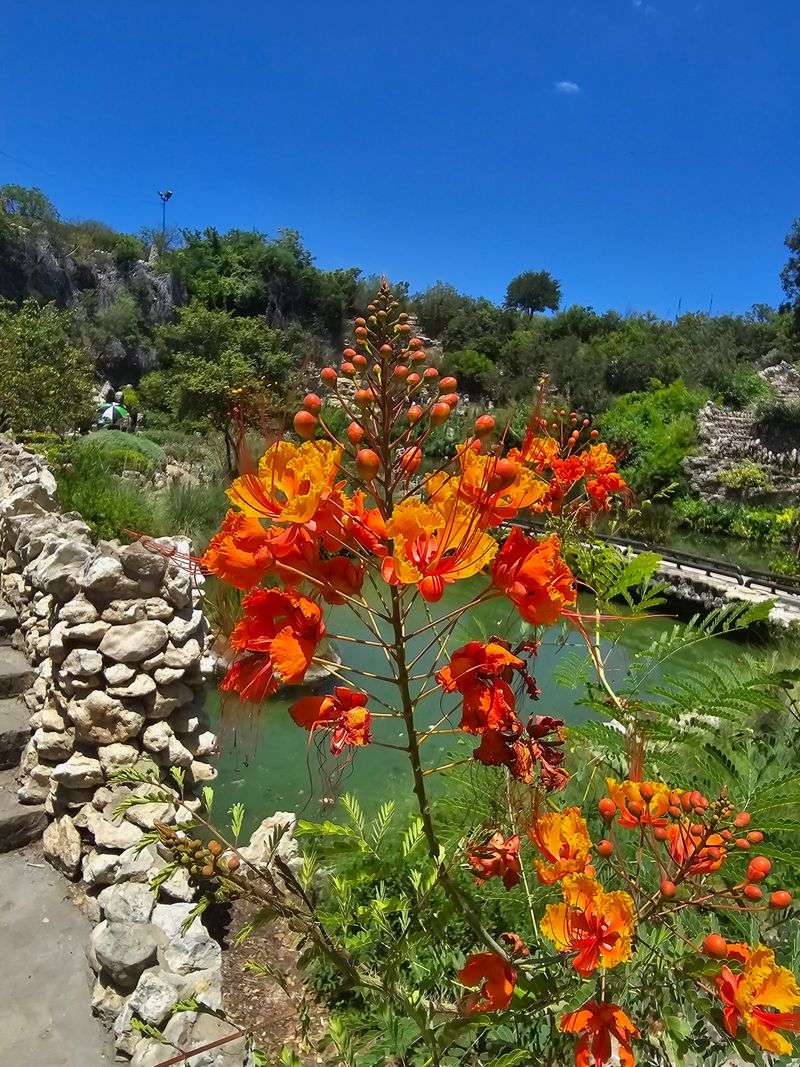
Spring arrives early in San Antonio, often by late February. Wildflowers begin blooming along the river trails, and the trees leaf out in fresh green that contrasts sharply with the limestone cliffs.
The waterfall seems to flow more vigorously, though that might just be perception influenced by the general sense of renewal. Birds return from winter migrations, filling the park with song that competes with the rushing water.
Summer challenges visitors with heat and humidity, but the Japanese Tea Garden becomes a refuge during these months. The stone walls and flowing water create a microclimate that’s noticeably cooler than the surrounding park.
Morning visits become essential, with most locals arriving before 9 AM to avoid the worst heat. Even winter has its charms, with mild temperatures making midday visits comfortable and the lower tourist numbers meaning you can often find solitude near the waterfall.
The garden proves that some places maintain their appeal regardless of season, adapting and revealing new facets as the year progresses.
Address: 3700 N St Mary’s St, San Antonio, TX 78209
Dear Reader: This page may contain affiliate links which may earn a commission if you click through and make a purchase. Our independent journalism is not influenced by any advertiser or commercial initiative unless it is clearly marked as sponsored content. As travel products change, please be sure to reconfirm all details and stay up to date with current events to ensure a safe and successful trip.
