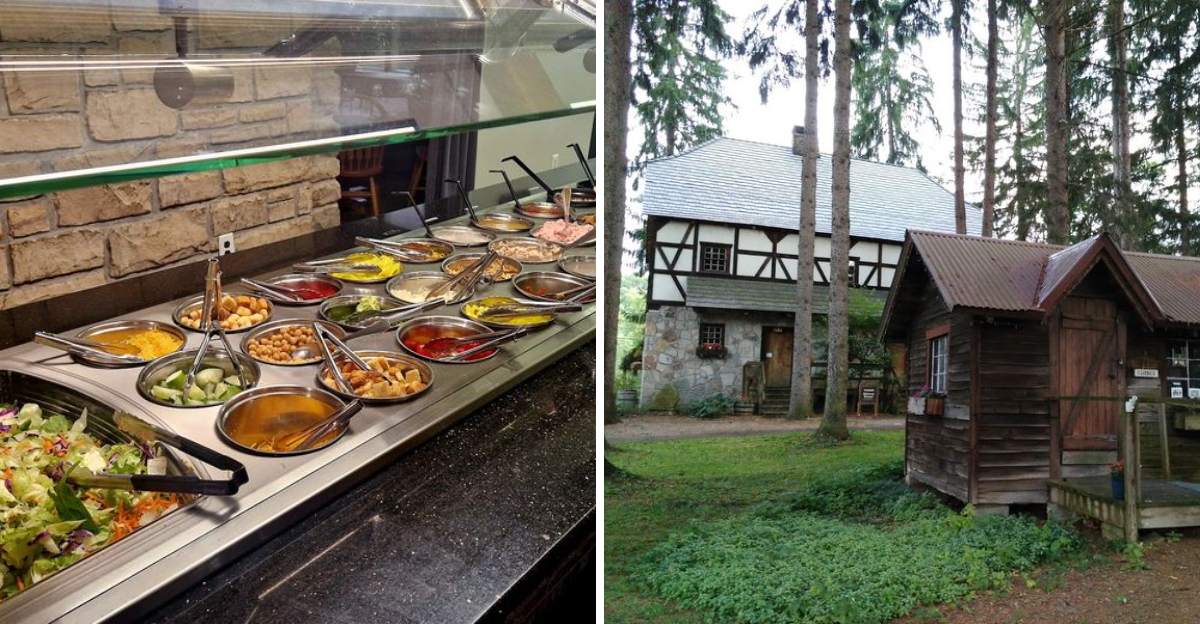
You drive up into the mountains and the world starts to feel different. Quieter, slower, more peaceful.
At the top, you find a restaurant and artisan village that feels like a hidden gem. Great food, handmade crafts, and a setting that makes you want to stay all day.
The restaurant serves hearty, home style meals that warm you from the inside out. The craft shops are full of handmade treasures, from quilts to pottery to woodwork.
Locals come here for the food and the shopping. Visitors come for the experience.
The mountain air, the friendly people, the sense of discovery. That is the beauty of a western Maryland escape.
A restaurant, a village, and a whole lot of charm hidden in the mountains.
The Historic Log Inn That Started It All
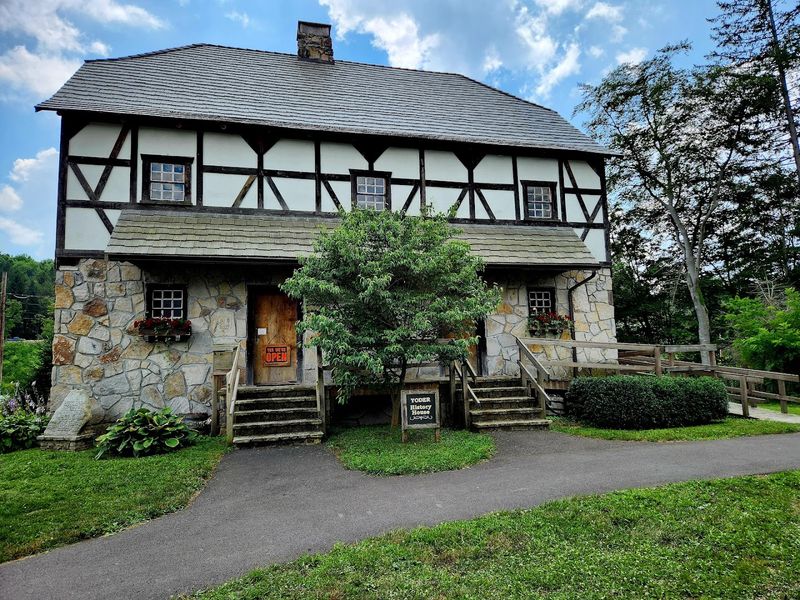
Some buildings carry history in their walls in a way you can actually feel, and the original log structure at Penn Alps is one of those rare places.
Built around 1818 as the Little Crossings Inn, this stagecoach stop once served weary travelers making their way along the National Road, the very first federally funded highway in the United States.
The fact that it still stands and still serves people today is genuinely remarkable.
The inn sits at what was historically called Little Crossings, a spot where even George Washington and General Braddock crossed the Casselman River back in 1755. That is not a small detail.
It means the ground beneath your feet has been walked by some of the most significant figures in early American history.
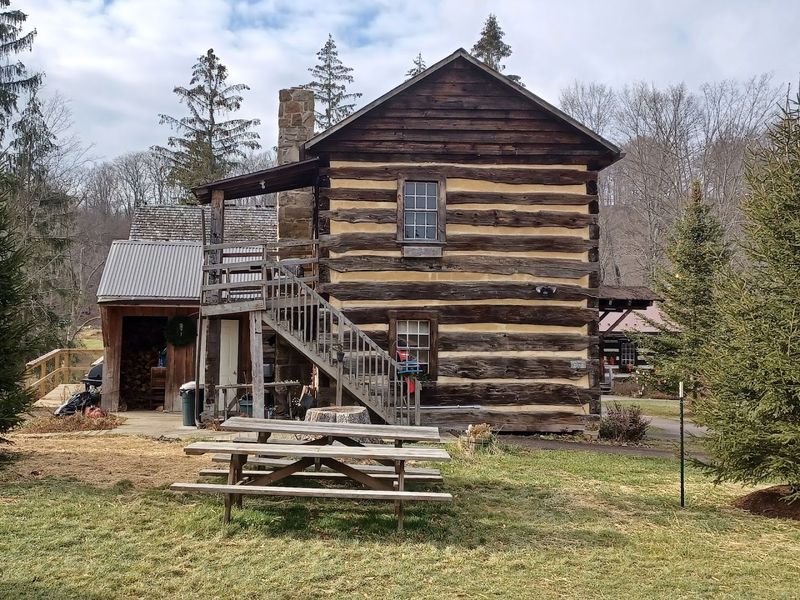
Three of the six dining rooms inside Penn Alps are part of this original log structure. You can sit at a table surrounded by those same old beams and walls that sheltered travelers over two centuries ago.
It does not feel like a theme park recreation, it feels honest and lived-in.
The restaurant officially opened in 1959, with the craft shop welcoming visitors a year earlier in 1958. Both were built around preserving the soul of this original inn rather than replacing it.
Penn Alps holds the distinction of being the last log hospitality house on the National Pike still actively serving travelers. That title alone should be enough to make you want to visit.
The Woman Behind the Vision, Dr. Alta Schrock
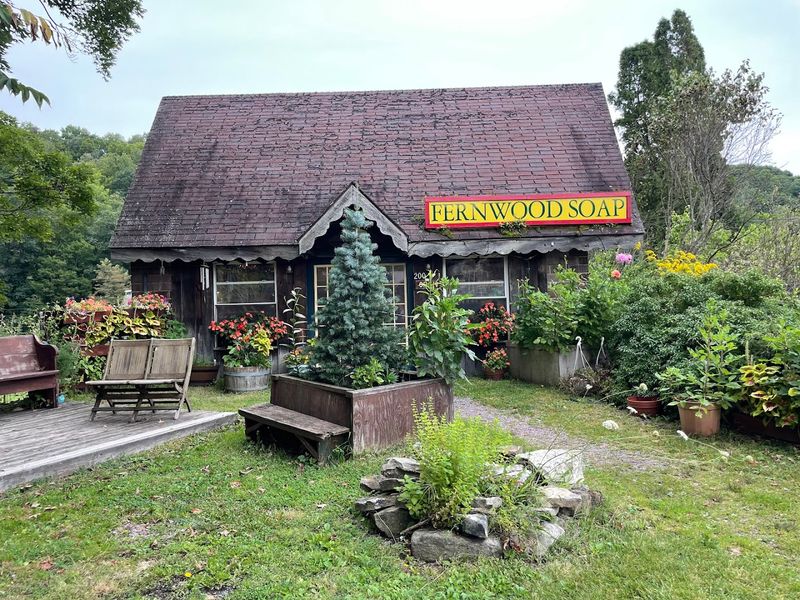
Behind every remarkable place, there is usually a person with an even more remarkable sense of purpose. For Penn Alps, that person was Dr. Alta Schrock, who in 1957 felt a deep pull to return to the Allegheny mountains she loved.
Her goal was not to build a business in the traditional sense. She wanted to create something that would serve her community in a lasting, meaningful way.
Her vision centered on preserving the arts, crafts, music, and history of the Allegheny mountain region. She also wanted to give local cottage industries a real market, a place where handmade goods could find buyers and craftspeople could earn a living doing what they loved.
That combination of cultural preservation and practical support was ahead of its time.
Her guiding slogan, “To help people to help themselves,” says everything about her approach. It was not charity, it was empowerment.
She believed in the dignity of skilled work and the importance of keeping traditional crafts alive in a world that was quickly moving on from them.
What she built grew far beyond a single restaurant or shop. Penn Alps and the adjacent Spruce Forest Artisan Village became a cultural campus that continues to honor her original intentions decades later.
Visiting today, you can feel her influence in every hand-thrown pot, every woven textile, every bowl of homemade soup. Dr. Schrock created something that outlasted trends, and that is a rare kind of legacy worth knowing about.
Homestyle Country Cooking With Roots in Mennonite Tradition
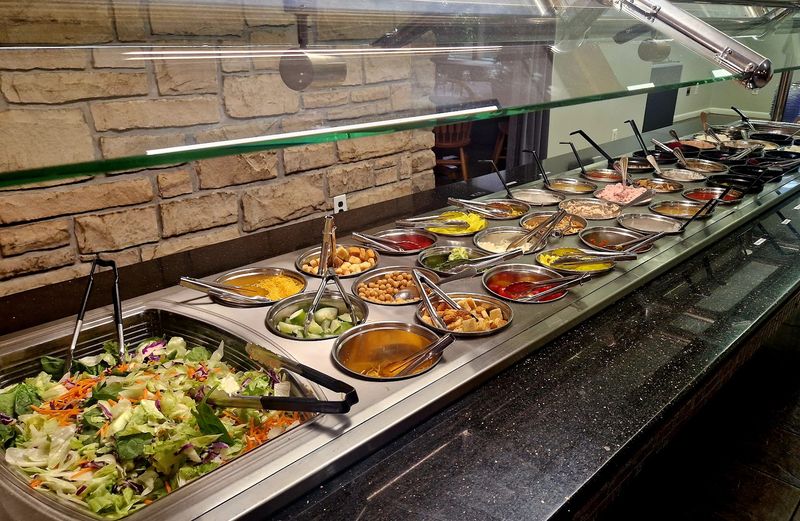
There is a particular kind of comfort that only comes from food made with genuine care and old recipes, and the kitchen at Penn Alps delivers that in full.
The menu leans heavily into German-inspired Mennonite and Amish cooking, the kind of hearty, unpretentious food that has been feeding mountain families for generations.
Fried chicken, homemade mashed potatoes, Dutch smoked sausage, and freshly sliced roast beef are among the staples that keep people coming back.
The daily soup and salad bar is a highlight that regulars especially love. Two fresh homemade soups are offered each day, and the German Vegetable Soup has earned a reputation that extends well beyond Garrett County.
Homemade dressings, fresh rolls, and warm bread round out the spread in a way that makes it hard to leave anything on your plate.
What makes the food feel truly special is that many of the recipes in use today are the same ones the kitchen has followed since 1959. There is a consistency here that is not about being stuck in the past, it is about respecting what works.
The desserts, baked fresh and made from scratch, have their own loyal following.
Eating in one of the original log dining rooms adds another layer to the whole experience. The setting is not just background decoration, it becomes part of the meal itself.
Good food tastes even better when the room around you has a story, and at Penn Alps, every wall has one worth hearing.
Spruce Forest Artisan Village, a Living Craft Community
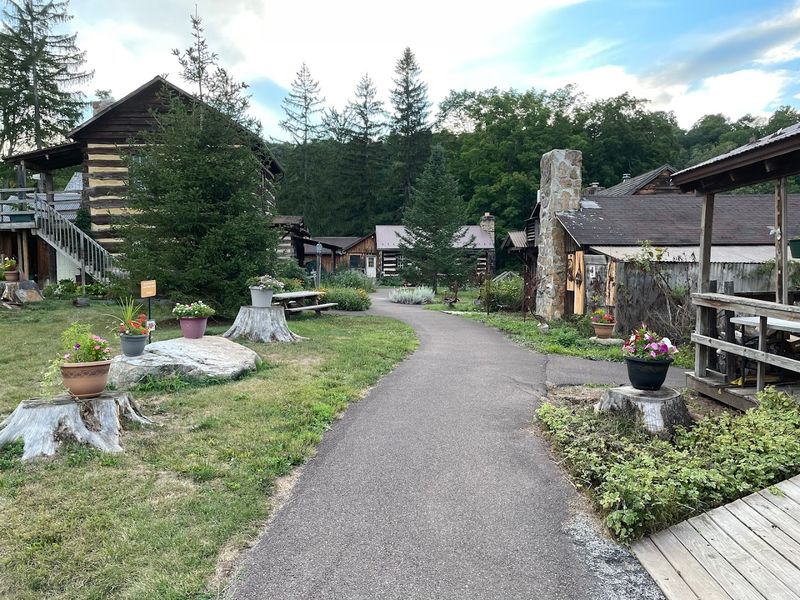
Right next to the restaurant, a whole separate world opens up. Spruce Forest Artisan Village grew from the same roots as Penn Alps, founded by Dr. Alta Schrock in 1957 as a dedicated space for traditional Allegheny mountain crafts.
Over time, it evolved into something genuinely extraordinary, a village of roughly twelve restored log and frame structures, some dating back to the Revolutionary War era, each one now home to a working artisan studio.
These buildings were not built on site from scratch. Many were carefully moved from various locations across the region and reconstructed here, preserving their original materials and character.
Walking through the village feels less like a tour and more like wandering into a different era, one where slowing down to make something beautiful by hand was not a hobby but a way of life.
The artisans working here are juried professionals, meaning they have been vetted for skill and authenticity. Bird carvers, basket makers, hand-loom weavers, potters, stained glass artists, blacksmiths, and natural soap makers are among those you might encounter.
Watching someone shape a piece of iron at a forge or pull a freshly thrown pot from a wheel is the kind of thing that makes you stop and appreciate human skill all over again.
The village grounds are free to visit, which makes it accessible to everyone. Artisans are typically present from May through October, though schedules can vary.
Checking ahead before your visit is always a smart move to make sure you catch the studios in action.
The Casselman River Bridge, a Stone Arch Engineering Marvel
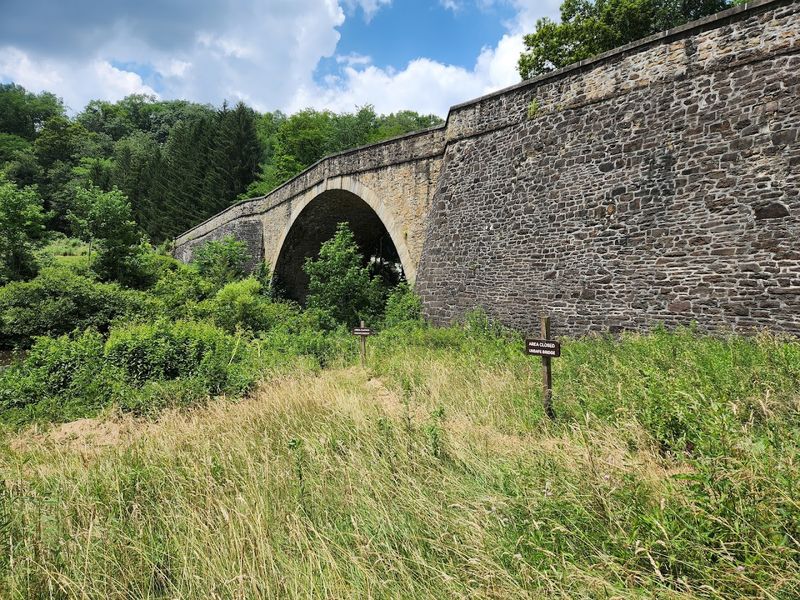
Just steps from Penn Alps, a bridge stands that once made engineers across the country take notice.
The Casselman River Bridge was built between 1813 and 1814 as a key crossing point on the National Road, and at 80 feet, it held the title of the longest single-span stone arch bridge in America at the time of its completion.
That is not a small engineering achievement for the early nineteenth century.
The bridge no longer carries vehicle traffic, having been closed to cars in stages during the 1930s and 1950s as newer crossings were built nearby. But it still stands beautifully, now serving as a pedestrian bridge that invites visitors to walk across and look down at the river below.
The stonework is detailed and sturdy, a testament to the craftsmanship of the workers who built it over two centuries ago.
In 1964, the bridge was designated a National Historic Landmark, cementing its place in American history. It is the centerpiece of the small but lovely Casselman River Bridge State Park, a four-acre park that offers spots for picnicking and quiet reflection.
Fishing is also popular here, and the Casselman River is known among anglers for its smallmouth bass and trout.
Pairing a meal at Penn Alps with a walk across the Casselman Bridge makes for a perfect afternoon itinerary. The two sit close enough together that you can move between them easily, and each one gives the other a richer context.
History and scenery, together in one small stretch of road.
Traditional Crafts You Can Watch, Learn, and Bring Home
One of the most satisfying things about visiting Spruce Forest Artisan Village is that it is not a passive experience. You are not just looking at finished products behind glass.
You can actually watch the people who made them, mid-process, hands deep in clay or threading a loom, and ask them about what they are doing. That kind of direct connection between maker and visitor is increasingly rare, and it makes everything feel more real.
The range of crafts on display is genuinely impressive. Hand-forged ironwork, hand-thrown pottery, hand-loom weaving, basket making, bird carving, stained glass, and natural soap making are just some of the traditions kept alive here.
Each artisan brings their own story and technique, and no two studios feel quite the same. Spending an hour wandering from building to building is time well spent.
Purchasing something from one of the artisans is a different kind of souvenir experience. You know exactly who made it, you might have watched part of the process, and you are taking home something that cannot be replicated by a factory.
That kind of provenance gives an object a completely different kind of value.
The village also hosts workshops and events throughout the year, giving visitors a chance to try crafts themselves rather than just observe. Children especially tend to light up at these opportunities.
Whether you come as a buyer, a curious observer, or someone looking to learn something new with your hands, the village has a way of meeting you exactly where you are.
Seasonal Events and Christmas in the Village
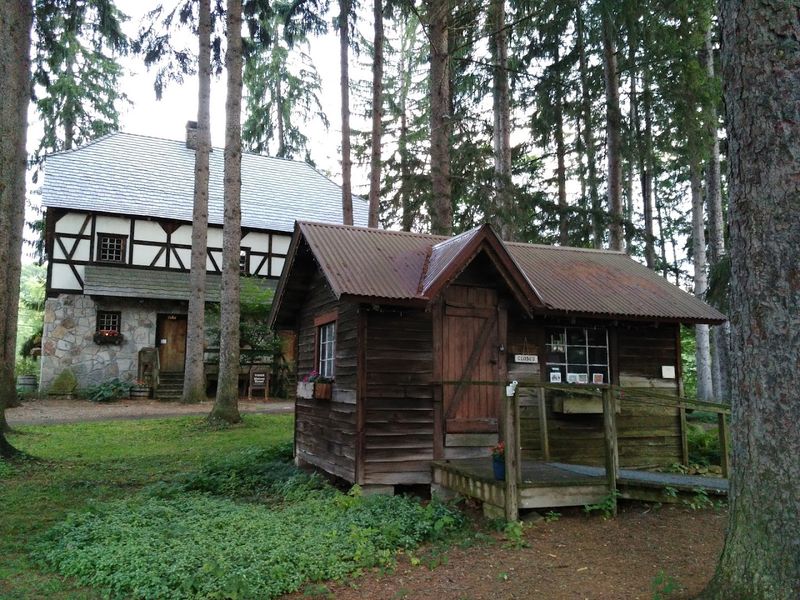
Penn Alps and Spruce Forest Artisan Village are not just a warm-weather destination. Throughout the year, the campus comes alive with events that give each season its own distinct character.
Workshops, children’s camps, and themed gatherings rotate through the calendar, making repeat visits feel fresh each time rather than repetitive.
The most talked-about event, though, is Christmas in the Village. When the holiday season arrives, the artisan village transforms into something that feels genuinely magical.
Festive decorations fill the historic buildings, lights glow from every window, and music drifts through the cold mountain air. It is the kind of seasonal experience that earns a permanent spot in family traditions.
The setting makes the holiday atmosphere feel especially earned. Old log buildings draped in winter light look like something from a storybook, and the surrounding mountains add a natural grandeur that no indoor venue can replicate.
Families with children often find it to be one of the most memorable holiday outings in the region.
Planning around one of these events can turn a simple day trip into a full travel experience. The combination of the restaurant, the craft studios, and a seasonal event gives you multiple reasons to linger rather than rush through.
Western Maryland in December is cold and crisp, but Penn Alps makes that cold feel like part of the charm rather than something to endure. Checking the event calendar before visiting is highly recommended, especially if you are traveling with family.
Exploring Garrett County, Mountains, Forests, and Open Roads
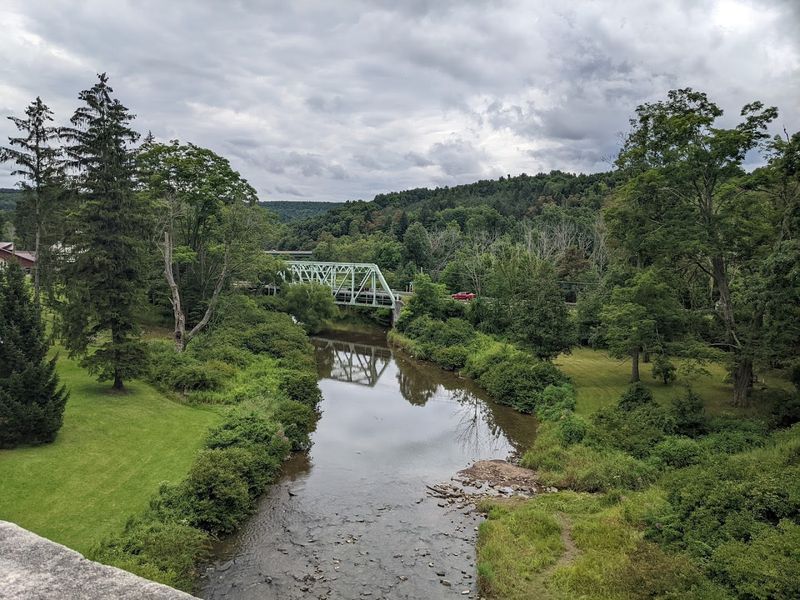
Penn Alps makes a perfect anchor for a longer exploration of Garrett County, one of Maryland’s most underappreciated outdoor destinations. The surrounding landscape is genuinely stunning, with mountain ridges, dense forests, and rivers that invite you to slow down and pay attention.
Once you are in this corner of the state, it becomes obvious why people come back year after year.
Savage River State Forest covers more than 55,000 acres and offers hiking, biking, boating, canoeing, fishing, and cross-country skiing all in one sprawling natural space. It is the kind of place where you can spend a full day without crossing your own path twice.
New Germany State Park adds a 13-acre lake, cabins, camping, and groomed cross-country ski trails that make winter visits just as worthwhile as summer ones.
Grantsville itself has been recognized as an Arts and Entertainment District, which fits perfectly with the cultural mission of Penn Alps. The town has a quiet, unhurried energy that encourages you to explore on foot rather than from behind a car window.
Small stops, like the Hill Top Fruit Market and local farm stands, add texture to the experience.
The whole region rewards travelers who are willing to take their time. There is no single attraction that demands to be rushed through, and that is part of what makes Garrett County so refreshing.
Penn Alps sits at the heart of it all, a starting point that sets exactly the right tone for everything else the mountains have to offer.
Address: 125 Casselman Rd, Grantsville, MD 21536
