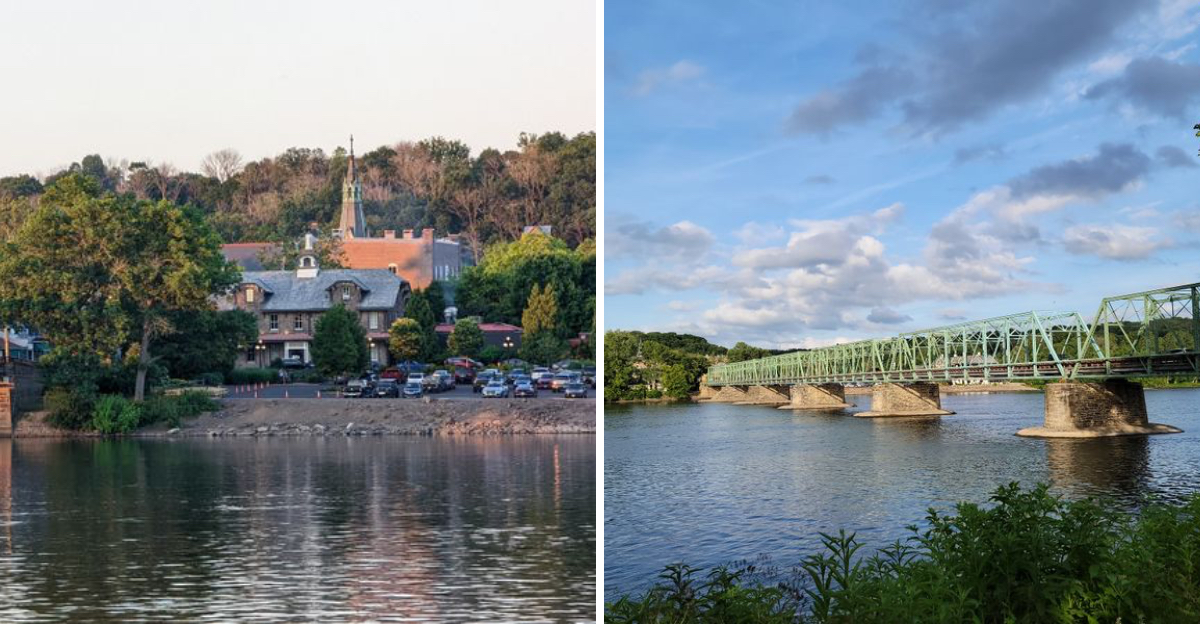
Set along the Delaware River, New Hope quietly transforms during the holiday season, offering a version of winter travel that feels intimate rather than crowded.
The river acts as a natural anchor, reflecting lights from shopfronts, bridges, and historic buildings once evening settles in.
This riverside corner of Pennsylvania succeeds because it does not try to compete with larger holiday destinations.
Lights, history, and hospitality remain in balance, allowing the season to feel present without overwhelming the setting.
A Walkable Town Framed by Water
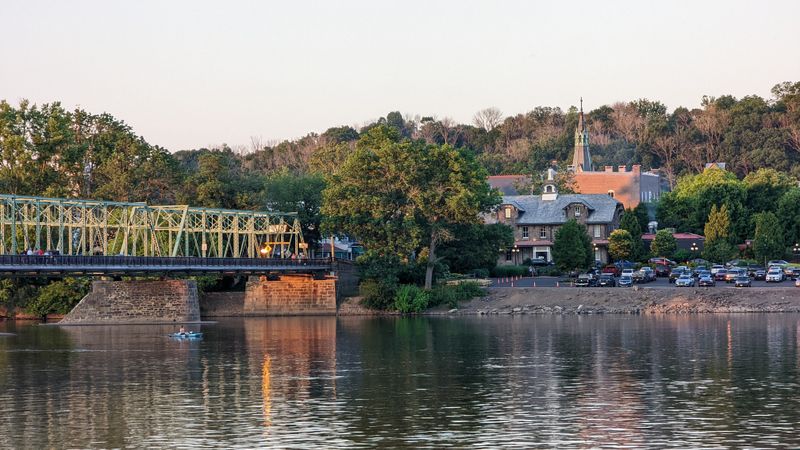
New Hope’s compact layout makes it easy to explore on foot, even in colder weather.
Streets follow the curve of the river, and holiday lights soften the edges of stone buildings and narrow sidewalks.
The pace encourages lingering rather than looping quickly through highlights.
Walking becomes the primary mode of discovery here, with each turn revealing another shop window, another historic marker, another quiet corner worth pausing at.
The town measures just a few blocks in each direction, meaning visitors can cover most of it within an hour if they move briskly.
But moving briskly misses the point entirely.
Cold air sharpens the details, from frost patterns on old glass to steam rising from vents in restaurant walls.
Sidewalks narrow in places, forcing slower movement and closer attention to architectural details that might otherwise blur past.
The river remains visible from many angles, appearing between buildings or at the end of side streets.
Its presence shapes the rhythm of exploration, pulling attention outward even while navigating the town center.
Winter weather adds texture without creating barriers.
Snow accumulates on windowsills and wrought iron railings, adding visual interest without blocking paths or obscuring views.
The walkable scale means visitors can duck into shops or cafes whenever cold becomes uncomfortable, then resume wandering once warmth returns.
This flexibility suits unpredictable winter days better than destinations requiring extended outdoor exposure.
Evening walks feel particularly rewarding as lights begin reflecting off wet pavement and river surfaces.
The compact layout means these reflections multiply quickly, transforming the town into something that feels both festive and contained.
Pennsylvania’s smaller riverside towns often reward slow exploration, and New Hope exemplifies this approach perfectly during the holiday season.
Historic Inns That Define the Stay
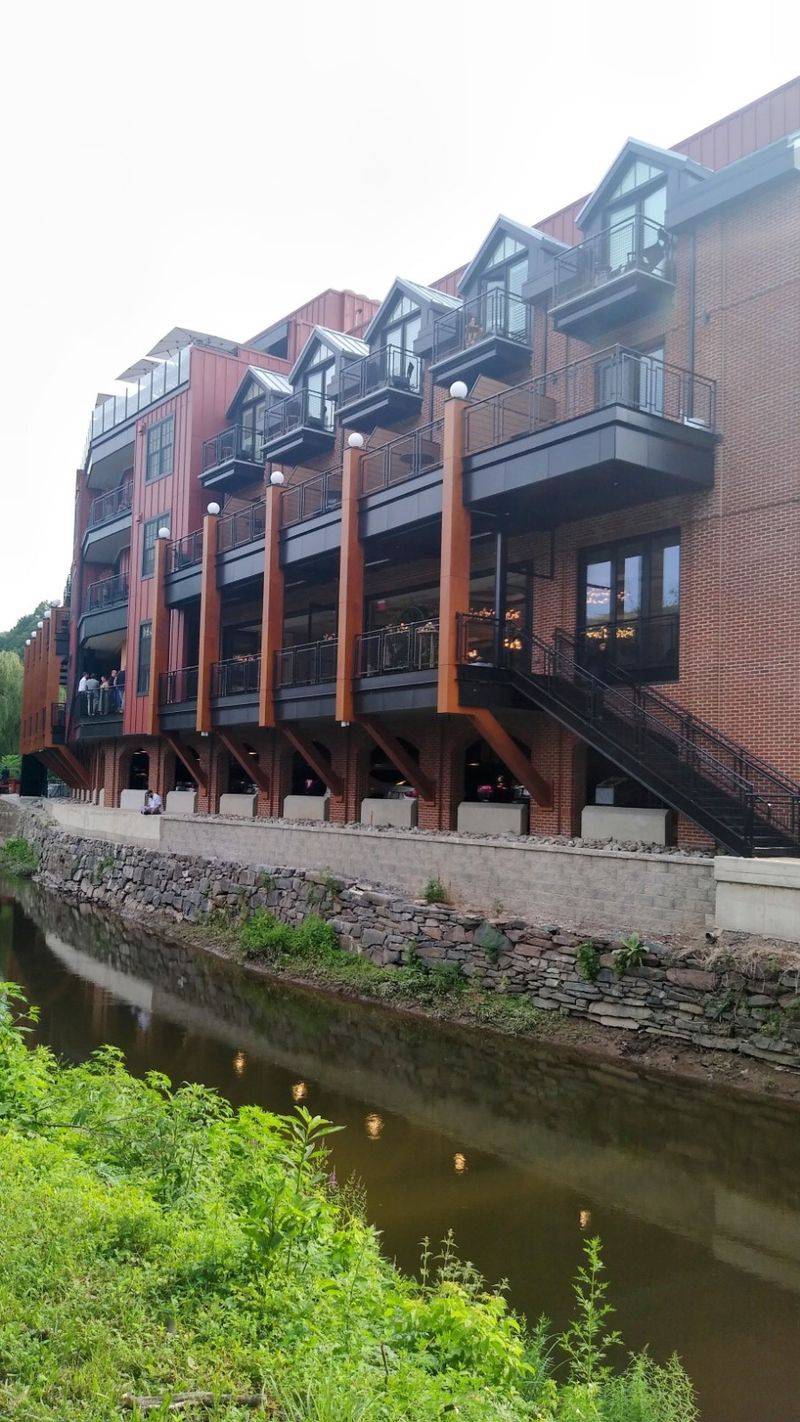
The town’s lodging experience is rooted in its older buildings.
Inns such as Logan Inn and The River House at Odette’s offer rooms that feel connected to place, with exposed beams, fireplaces, and river-facing windows shaping the atmosphere.
Staying overnight feels like stepping into the town rather than visiting it.
These properties carry history in their walls, floors, and staircases.
Logan Inn dates back to the late 1700s, making it one of the oldest continuously operating inns in Pennsylvania.
Its rooms vary in size and layout, reflecting the building’s evolution over centuries rather than following modern standardization.
Creaking floors and uneven doorways remind guests that this structure served travelers long before automobiles or electric lighting existed.
The River House at Odette’s takes a slightly different approach, blending historic architecture with refined updates that enhance comfort without erasing character.
Windows frame river views that change with light and season, offering something different each time guests look out.
Winter views carry particular appeal, with bare trees and moving water creating compositions that feel both stark and calming.
Fireplaces in common areas and some guest rooms provide focal points for colder evenings.
The ritual of sitting near a fire after walking through cold streets reinforces the sense of retreat that defines a successful winter escape.
These inns operate on a smaller scale than chain hotels, meaning interactions with staff feel more personal and recommendations carry more weight.
Breakfast often happens in shared spaces where conversations with other guests occur naturally.
The experience emphasizes connection over anonymity, suiting travelers who prefer character-driven stays.
Choosing to stay in one of these historic properties shifts the entire visit, transforming New Hope from a day trip into an immersive experience where lodging becomes part of the destination itself.
Holiday Lights Without the Spectacle

Decorations here are intentional and restrained.
Shop windows glow softly, trees along the riverwalk are lit without excess, and historic facades remain visible beneath the lights.
The effect is warm rather than theatrical, making evening walks especially rewarding.
New Hope avoids the temptation to compete with destinations known for elaborate displays.
Instead, the town leans into its existing architecture, using lights to enhance rather than overshadow what already exists.
White lights wrapped around bare tree branches create patterns against dark skies without overwhelming the view.
Storefronts maintain individual character in their decoration choices, resulting in variety that feels organic rather than coordinated by committee.
One shop might feature a simple wreath and candles, while the next displays vintage ornaments or handmade garlands.
This diversity prevents the visual monotony that sometimes plagues heavily themed destinations.
The riverwalk becomes particularly atmospheric after dark, with lights reflecting off moving water in ways that shift constantly.
Bridges crossing the Delaware gain subtle illumination that highlights their structure without turning them into focal points.
Pennsylvania’s smaller towns often excel at this kind of understated seasonal decoration, and New Hope demonstrates how effective restraint can be.
Visitors seeking overwhelming spectacle might feel underwhelmed initially, but those who appreciate subtlety will find the approach refreshing.
The lighting allows evening exploration without creating the sensory overload that sometimes accompanies holiday destinations.
Conversations remain easy, quiet observation stays possible, and the town retains its essential character even while acknowledging the season.
This balance proves difficult to achieve, yet New Hope manages it consistently year after year.
The result is a holiday atmosphere that feels genuine rather than manufactured, inviting rather than demanding, present without being insistent.
Dining That Matches the Season
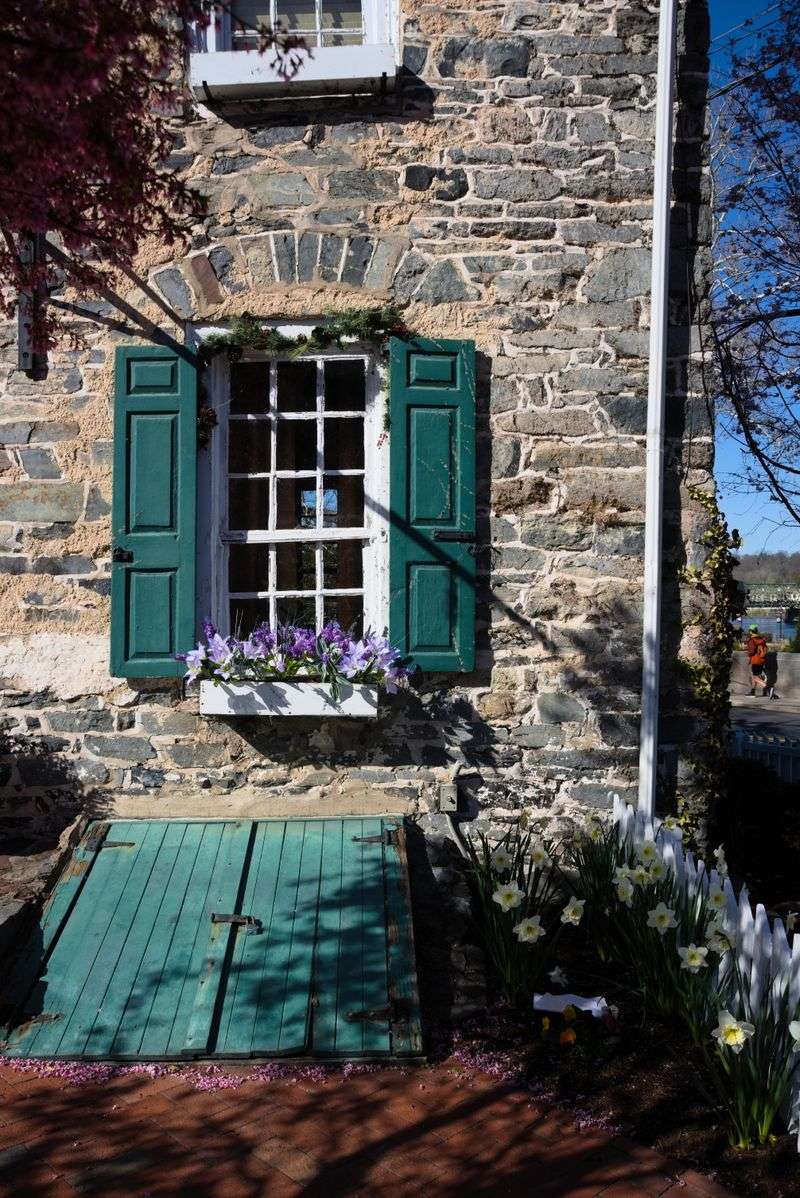
Cold-weather menus lean toward comfort, with restaurants emphasizing slower meals suited to winter nights.
Dining rooms fill early, then settle into a calm rhythm that mirrors the town itself once day-trippers leave.
Food becomes part of the seasonal experience rather than just a practical necessity.
Restaurants in New Hope range from casual cafes to more formal establishments, but most share an approach that values atmosphere alongside cuisine.
Stone walls, low ceilings, and firelight create settings where meals naturally extend beyond simple fuel consumption.
Winter menus often feature soups, stews, and roasted dishes that suit both the temperature and the pace of a holiday escape.
Portions tend toward generous, reflecting an understanding that cold weather increases appetite and that diners are likely settling in for the evening rather than rushing to the next activity.
Many establishments source ingredients from nearby Pennsylvania farms, maintaining connections to place even during months when growing seasons pause.
Preserved and stored foods from autumn harvests appear in creative preparations that highlight regional culinary traditions.
Reservations become advisable during holiday weekends, particularly for dinner service.
The town’s popularity increases during this season, though it never reaches the overwhelming crowds found at larger destinations.
Arriving slightly earlier or later than peak dining hours often yields easier seating and more relaxed service.
Several restaurants offer views of the river or Main Street, adding visual interest to meals.
Watching evening light fade over water or observing pedestrians pass by illuminated windows enhances the dining experience without requiring any effort from diners.
Staff at many establishments know regular visitors and welcome newcomers with equal warmth, creating an environment that feels neighborly rather than transactional.
This approach suits the town’s overall character and reinforces why dining here feels like participation rather than consumption.
River Views That Slow Everything Down
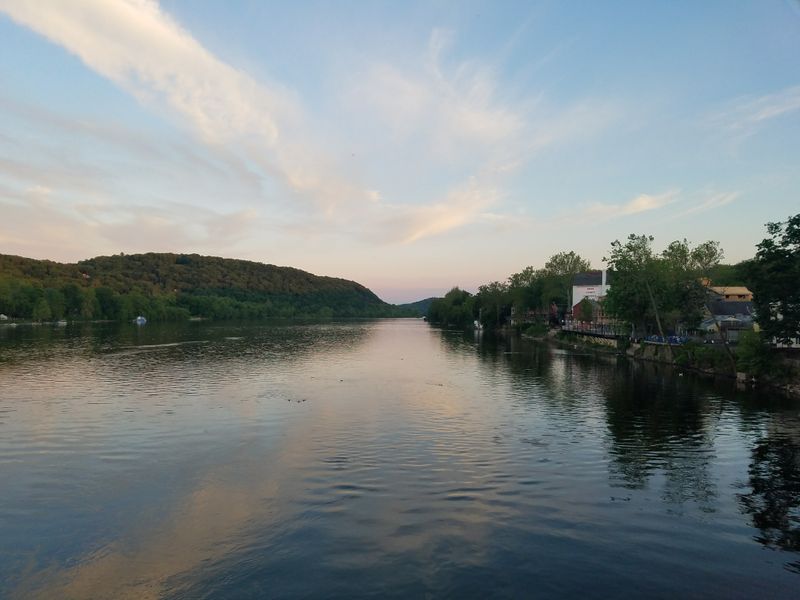
The Delaware River shapes the experience even when activity is minimal.
Watching water move past snow-dusted banks reinforces the sense of pause that defines a winter stay here, especially when viewed from a quiet bridge or riverside bench.
Rivers possess an inherent ability to alter perception of time.
Their constant movement provides something to observe without demanding active engagement, making them ideal focal points for travelers seeking to step away from routine urgency.
In New Hope, the river runs wide enough to feel substantial but not so vast that it overwhelms the landscape.
Winter conditions often reduce boat traffic to near zero, leaving the water’s surface relatively undisturbed except by current and occasional waterfowl.
This simplicity enhances rather than diminishes the view, stripping away distractions and leaving only essential elements.
Several access points along the waterfront allow different perspectives.
The main bridge connecting New Hope to Lambertville on the New Jersey side offers elevated views that reveal how the river curves through the valley.
Lower paths running alongside the water put viewers at eye level with the surface, where details like ice formation along edges or patterns in moving water become more apparent.
Pennsylvania’s river towns each develop unique relationships with their waterways, and New Hope’s feels particularly integrated.
Buildings face the river rather than turning away from it, streets lead naturally toward the water, and public spaces acknowledge its presence through benches and viewing areas.
Winter visits intensify this connection because fewer activities compete for attention.
Without warm-weather crowds or active recreation, the river reasserts itself as the primary feature, reminding visitors why this location attracted settlement in the first place.
Cold air rising from the water carries scents and sounds that differ from those found inland, adding sensory dimensions to visual observation.
A Base for Short Winter Wanders
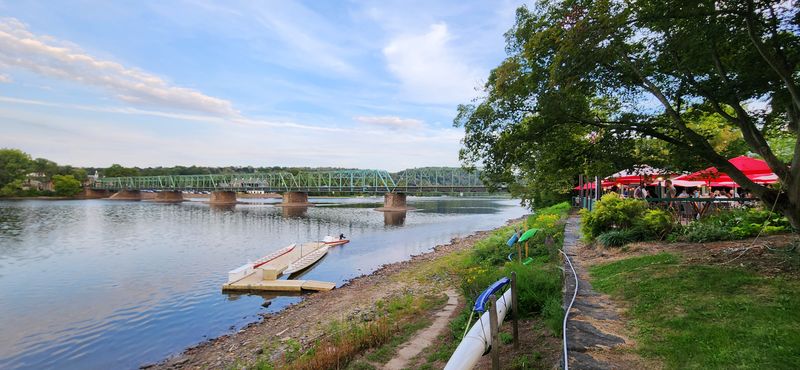
New Hope works well as a base rather than a packed itinerary.
Short walks into neighboring Lambertville or along nearby canal paths add variety without pulling focus away from the town itself.
The Delaware Canal State Park runs alongside the river, offering miles of level towpath perfect for winter walking.
Snow and ice sometimes require careful footing, but the path’s gentle grade and wide surface remain accessible during most winter conditions.
Trees lining the canal create natural frames for views that extend across fields and toward the river.
This landscape feels distinctly Pennsylvania, with stone walls, old bridges, and glimpses of farmland creating compositions that reward slow observation.
Walking a mile or two out and back provides enough exercise to justify later indulgence without requiring significant time commitment or athletic ability.
Lambertville sits directly across the river, reachable via a short bridge walk.
This New Jersey town shares some characteristics with New Hope but maintains its own identity through different architecture and shop selections.
Crossing back and forth between states becomes an easy way to extend exploration while keeping accommodations and familiar landmarks nearby.
The combination of walkable town center and accessible trails means visitors can adjust daily plans based on weather, energy levels, and mood without feeling constrained by limited options.
This flexibility proves particularly valuable during winter when conditions can shift quickly.
Some days might favor staying close to shops and cafes, while others invite longer outdoor exploration.
Pennsylvania’s canal system once served commercial transportation, and remnants of that history appear along the towpath in the form of locks, bridge abutments, and occasional interpretive signs.
Winter visits allow clearer views of these features since vegetation dies back and sightlines open up.
Using New Hope as a central point from which to make short excursions creates a rhythm that balances discovery with return, adventure with familiarity.
Seasonal Details That Reward Attention

Winter reveals textures and patterns that warmer seasons conceal.
Frost patterns on old glass, ice formations along building edges, and the way low-angle sunlight illuminates stone walls all contribute to the seasonal character of New Hope.
Paying attention to these details transforms a simple walk into something richer.
Historic buildings display their age more clearly in winter.
Without leaves and flowers to soften views, architectural elements like stonework, roof lines, and window proportions become more apparent.
Many structures in New Hope date from the eighteenth and nineteenth centuries, and their construction methods differ noticeably from modern techniques.
Hand-cut stone shows variations in size and placement that machine-cut materials lack.
Wooden elements weather in ways that reveal grain patterns and joinery methods.
These details might seem minor individually, but collectively they create an atmosphere that distinguishes historic towns from newer developments.
Pennsylvania’s building traditions emphasized durability and local materials, resulting in structures that have survived centuries while maintaining their essential character.
Seasonal decorations in New Hope tend toward natural materials and traditional forms.
Wreaths made from evergreen branches, ribbons in classic colors, and simple candle displays appear more frequently than inflatable figures or elaborate light sculptures.
This aesthetic choice aligns with the town’s historic character and creates visual harmony between old buildings and seasonal additions.
Even small details like the way snow accumulates on window ledges or how ice forms along the river’s edge contribute to the overall experience.
Winter conditions create temporary sculptures and patterns that change daily, offering returning visitors new compositions even along familiar routes.
This constant subtle variation prevents the repetition that sometimes affects longer stays in small towns.
Recognizing and appreciating these details requires slowing down enough to actually see them, which aligns perfectly with the pace New Hope naturally encourages.
Why It Works as a Holiday Escape
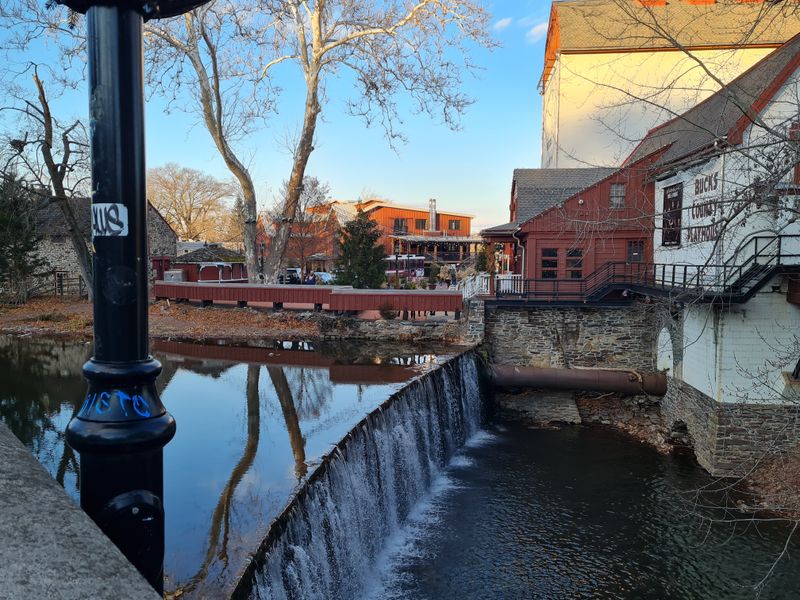
New Hope succeeds as a holiday destination because it understands its own scale and works within it rather than against it.
The town does not attempt to become something it is not, instead offering a version of winter travel that prioritizes atmosphere over activity, quality over quantity, and authenticity over manufactured experience.
This approach appeals particularly to travelers weary of destinations where holiday celebrations feel disconnected from place.
In New Hope, the season enhances what already exists rather than replacing it with temporary spectacle.
Historic buildings remain the primary visual focus, with decorations serving as accent rather than main feature.
The river continues shaping the experience just as it does during other seasons, its presence felt even when not directly visible.
Local businesses maintain their individual characters while acknowledging the season through window displays and special offerings.
The combination of walkable scale, historic lodging, riverside setting, and restrained seasonal decoration creates an environment where slowing down feels natural rather than forced.
Pennsylvania offers numerous holiday destinations, but few balance these elements as effectively as New Hope.
Visitors can experience winter travel without navigating overwhelming crowds, enjoy festive atmosphere without sensory overload, and explore a genuinely historic setting without feeling like they have stepped into a theme park.
The town attracts couples seeking romantic getaways, friends looking for relaxed reunion settings, and solo travelers wanting quiet reflection.
This broad appeal stems from the destination’s flexibility and the way it allows different types of visitors to craft their own experiences within a consistent framework.
Holiday escapes need not involve elaborate itineraries or constant stimulation to feel successful.
Sometimes the most memorable trips are those that create space for conversation, observation, and genuine rest.
New Hope provides exactly this kind of space, wrapped in historic charm and softened by holiday lights reflecting off a river that has witnessed countless winters before this one.
Dear Reader: This page may contain affiliate links which may earn a commission if you click through and make a purchase. Our independent journalism is not influenced by any advertiser or commercial initiative unless it is clearly marked as sponsored content. As travel products change, please be sure to reconfirm all details and stay up to date with current events to ensure a safe and successful trip.
