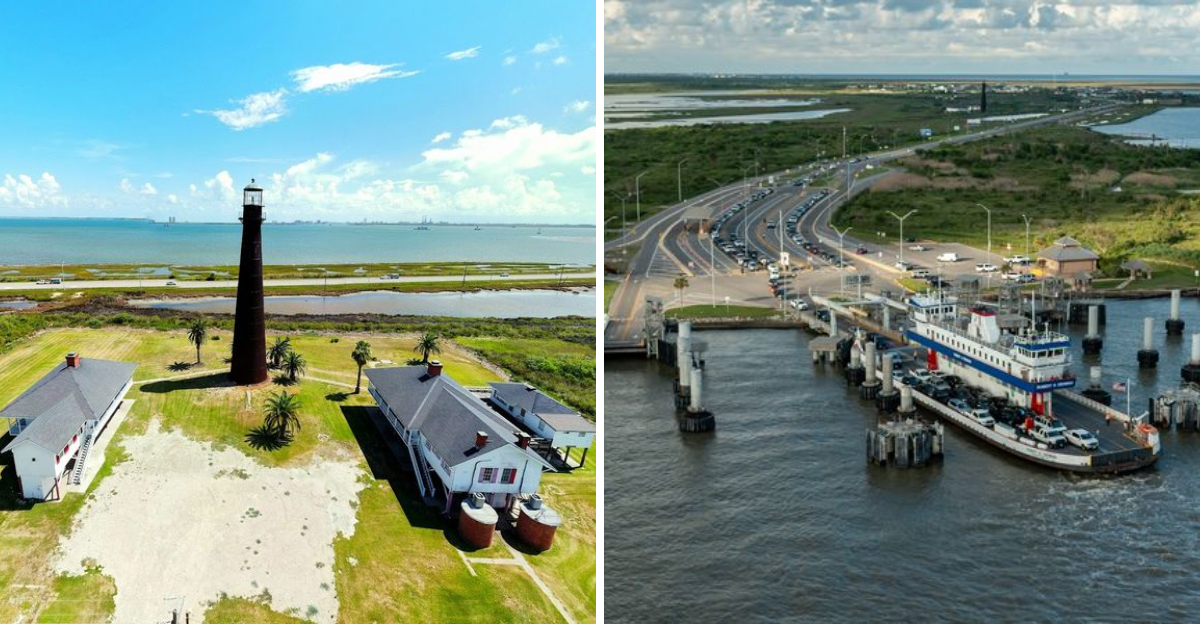
A place that requires a ferry ride to reach always feels more special. The Bolivar Peninsula is exactly that kind of destination.
A quick, scenic trip across the water separates it from the mainland and gives it a quieter, slower feel. The peninsula is not crowded, despite its proximity to Galveston.
The beach is wide, and the pace is relaxed. A person can drive along the shore, spot birds wading in the shallows, and enjoy a sunset without the noise of a packed beach town.
The ferry ride itself is a pleasant experience, with views of the coastline and passing ships. Texas has plenty of coastal spots, but a peninsula that requires a boat ride to reach has an extra layer of charm.
It is worth the wait in line.
The Galveston-Port Bolivar Ferry, A Free Ride Worth Every Minute
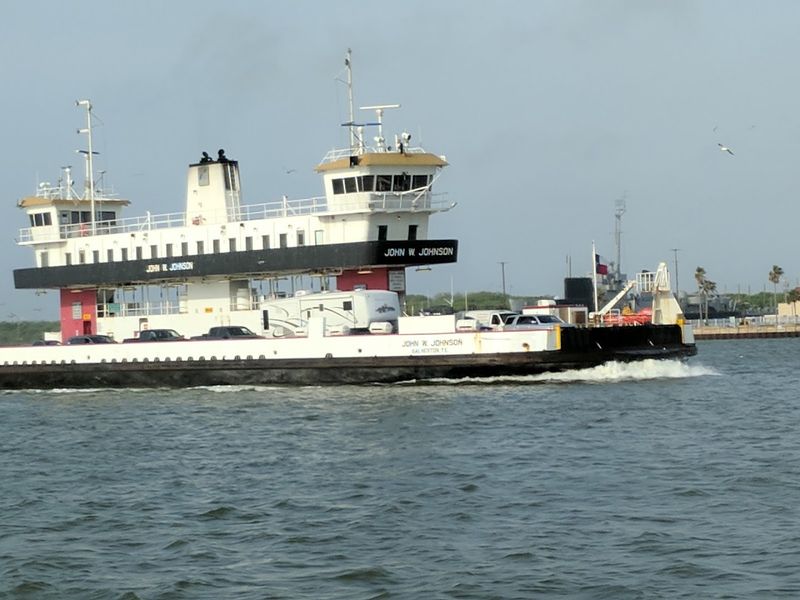
Not every journey starts with a dolphin sighting, but this one just might. The Galveston-Port Bolivar Ferry is operated by the Texas Department of Transportation, and it runs around the clock, every single day of the year, completely free of charge for both vehicles and passengers.
That alone makes it one of the most generous public transportation perks in the entire state.
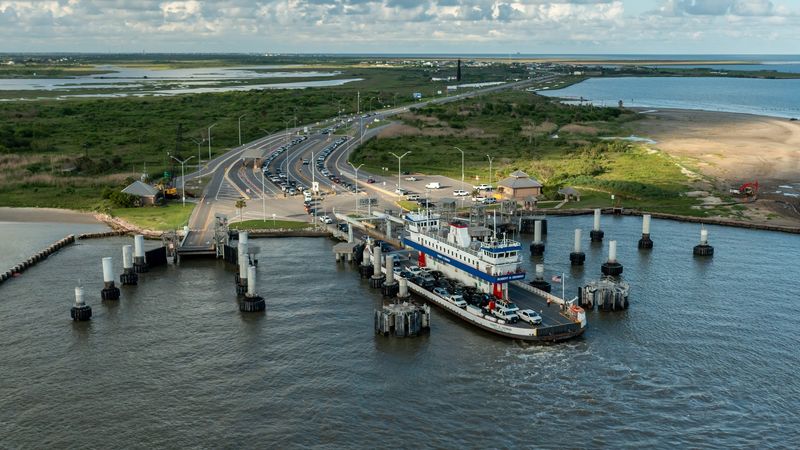
The crossing spans roughly 2.7 miles and takes about 18 to 20 minutes from one dock to the other. It connects Galveston Island, departing from 1000 Ferry Road, Galveston, TX 77550, to the Bolivar Peninsula terminal at 123 SH 87, Port Bolivar, TX 77650.
During peak summer weekends, wait times can stretch over two hours, but most locals will tell you that is not necessarily a bad thing.
Up to seven vessels can operate simultaneously when traffic is heavy. Each ferry holds around 70 vehicles and up to 500 passengers.
You can stay in your car or head up to the open observation deck to catch the breeze. Walk-on passengers are also welcome, with free parking available at the Galveston terminal.
The ferry is not just transportation, it genuinely sets the tone for the whole Bolivar experience, slow, scenic, and surprisingly enjoyable from the very first moment you step aboard.
Dolphins, Pelicans, and Cargo Ships, The Wildlife Show On The Water
The ferry ride itself doubles as one of the best free wildlife encounters on the Texas coast. Dolphins seem to treat the ferry crossing like their personal playground, and on most crossings you will spot at least a few arcing alongside the boat.
Pelicans cruise low over the water with that prehistoric elegance they carry so effortlessly.
Seagulls follow the ferry in loose, noisy clusters, always hoping for a snack. Beyond the wildlife, the bay itself is surprisingly busy with maritime traffic.
Large cargo ships, tugboats, sailboats, and even cruise ships pass through the channel, making the crossing feel like a front-row seat to one of Texas’s busiest waterways.
The route also passes Pelican Island, where you can spot a retired Navy destroyer and submarine sitting in the water like quiet monuments to another era. The old Selma, a concrete ship from World War I, rests in the bay not far from the ferry path.
Watching all of this unfold from the open upper deck, with salt air in your face and the skyline of Galveston slowly receding behind you, is a genuinely memorable experience.
It is the kind of spontaneous, sensory-rich moment that travel writers try hard to describe but that really only makes sense when you are standing there yourself, watching a pelican glide three feet above the water without even flapping its wings.
Crystal Beach, The Heart of Bolivar Peninsula Life
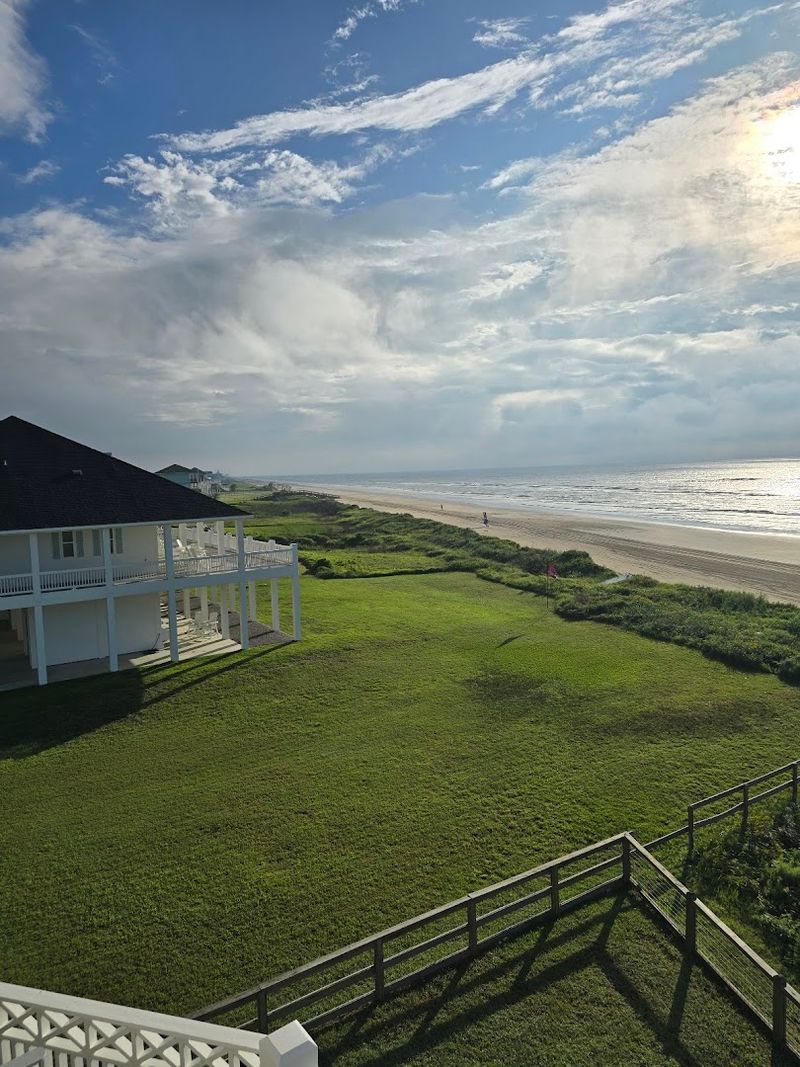
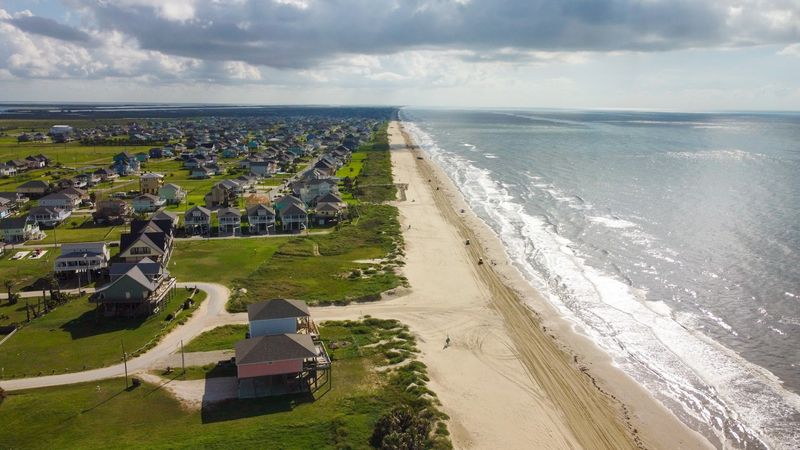
Crystal Beach is the kind of place where you can literally drive your car onto the sand and park it ten feet from the water. That is not a figure of speech.
The beaches along Bolivar Peninsula are drivable for most of their 27-mile stretch, and Crystal Beach sits right at the center of it all, both geographically and culturally.
A beach parking permit is typically required to access the drivable sections, so it is worth picking one up before you head down to the shore. Once you are there, the vibe is relaxed in a way that feels almost old-fashioned.
There are no massive resort hotels crowding the shoreline. Instead, you get beach houses on stilts, a scattering of small local shops, and a whole lot of open sky.
Beachcombing here is genuinely rewarding. Shells wash up in good variety, and if you know what to look for, fossilized shark teeth turn up with surprising regularity along certain stretches.
Driftwood piles accumulate in photogenic tangles near the waterline. Surf fishing is popular year-round, and you will often see people set up with multiple rods planted in the sand, completely content to wait out the tide.
Crystal Beach is not trying to impress anyone. That is exactly what makes it so easy to love, especially after the hectic pace of city life starts to wear on you.
Bolivar Flats Bird Sanctuary, A World-Class Birding Destination
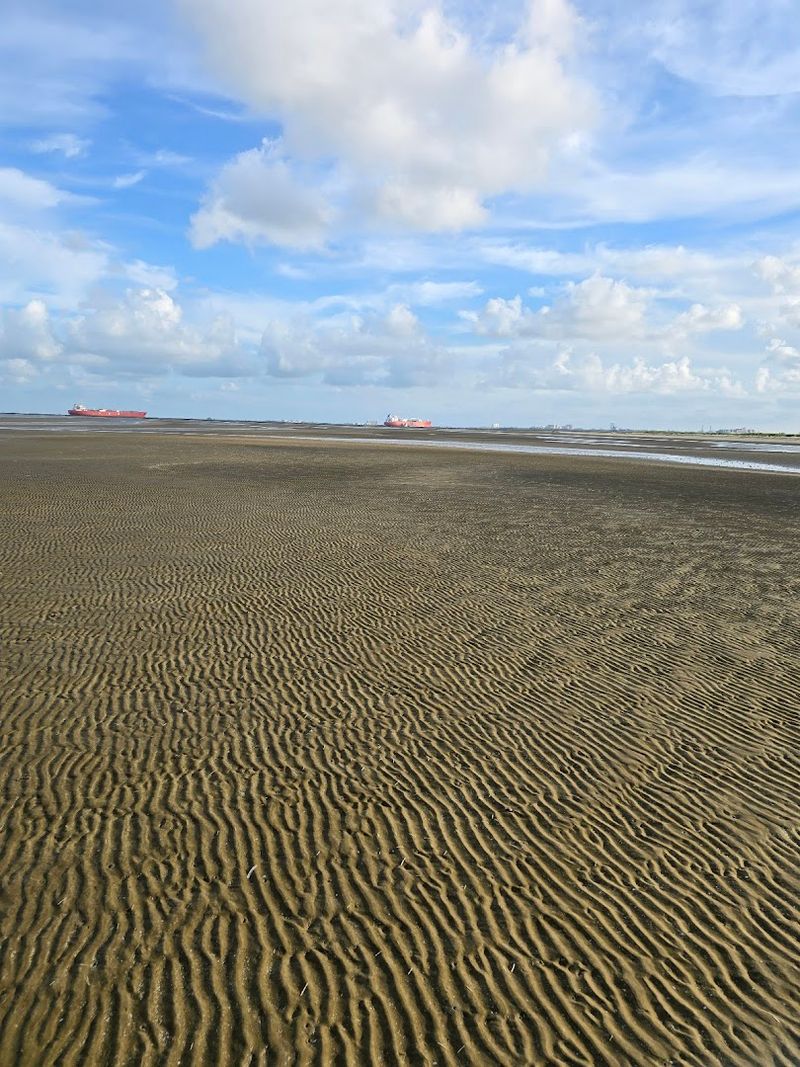
Birders from across North America make the ferry crossing specifically to visit Bolivar Flats, and once you see it, the appeal is immediately obvious.
This stretch of tidal flats near the eastern end of the peninsula is recognized as a Globally Important Bird Area, which is a designation that carries serious weight in the birding world.
During migration season, the numbers of birds that pass through here are genuinely staggering.
Roseate spoonbills, great blue herons, snowy egrets, avocets, and dozens of shorebird species congregate on the exposed mudflats when the tide pulls back. The sanctuary is managed in part by the Houston Audubon Society and attracts both casual observers and serious listers.
You do not need to be an expert to enjoy it. Even if you cannot tell a dunlin from a dowitcher, watching thousands of birds move in synchronized waves across a shallow bay at golden hour is something that stays with you.
The best viewing tends to happen in the early morning or late afternoon when the light is softer and the birds are most active. A pair of binoculars makes a big difference, but even without them the spectacle is impressive.
Bolivar Flats is the kind of place that reminds you how much wildlife exists just outside the edges of ordinary daily life, quietly going about its business while we go about ours, mostly unaware of the show happening just down the road.
Point Bolivar Lighthouse, A Historic Beacon Still Standing Proud
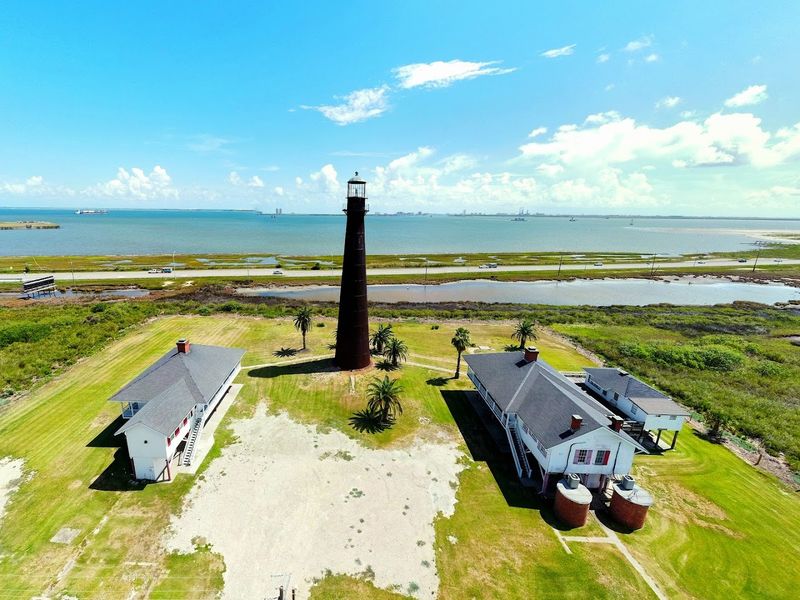
The Point Bolivar Lighthouse has been standing on this narrow strip of Texas coast since 1872, and it carries the kind of quiet dignity that only comes from surviving more than a century of Gulf Coast weather.
The original lighthouse was actually built in 1852, but the current cast-iron tower replaced it after the Civil War.
It stands about 117 feet tall and was once a critical navigational aid for ships entering Galveston Bay.
During the catastrophic 1900 Galveston hurricane, the lighthouse became a refuge for over 100 people who sheltered inside its thick iron walls as the storm surge swallowed the surrounding land. That story alone gives the structure a weight that no historic marker can fully capture.
The lighthouse is privately owned and not open for interior tours, but it is visible from the road and makes for one of the most photographed subjects on the peninsula.
Fort Travis Seashore Park sits nearby and offers its own layer of history, with old military bunkers and gun emplacements left over from the early 20th century.
Walking around those crumbling concrete structures while looking out over the Gulf gives you a strange, layered feeling, part historical curiosity, part coastal beauty.
The lighthouse grounds and fort together make for a genuinely worthwhile afternoon stop, especially for anyone who finds that old structures always seem to hold more stories than the official plaques ever manage to tell.
Fishing on Bolivar, Where the Gulf Meets Your Fishing Line
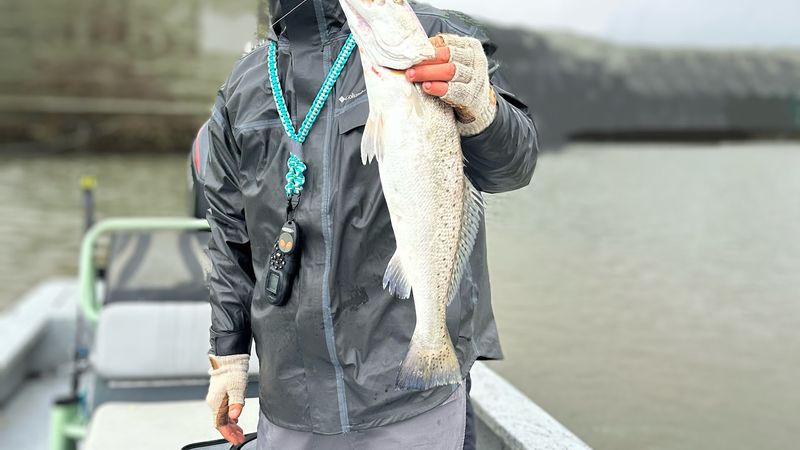
Fishing on Bolivar Peninsula is not a hobby, it is a way of life for a lot of the people who come here. The surf fishing along the open Gulf beaches is accessible to pretty much anyone with a rod, a license, and a little patience.
You do not need a boat or specialized gear to have a genuinely productive day on the water here.
Redfish, speckled trout, flounder, and sheepshead are among the species that anglers target regularly along these shores. The bay side of the peninsula offers calmer water and different fishing conditions, making it popular for kayak fishing and wade fishing in the shallower areas.
Gilchrist, a small community toward the eastern end of the peninsula, is particularly well-regarded among fishing regulars for its productive spots and unhurried pace.
There is a particular rhythm to a morning on the Bolivar beach with a fishing rod in the sand beside you. The sun comes up slow and orange over the Gulf.
The waves are steady and unhurried. You do not have to catch anything spectacular to feel like the morning was well spent.
Many visitors discover that the act of fishing here is more about the environment than the catch, a reason to stand still in a beautiful place and pay attention to what is happening around you. That is a harder thing to find than it sounds, and Bolivar delivers it without making a big deal about it.
Kayaking and Beachcombing, Slow Travel at Its Best
There is a certain pleasure in exploring a coastline at a pace that lets you notice things. Kayaking the bay side of Bolivar Peninsula offers exactly that kind of slow, attentive travel.
The water on the Galveston Bay side is generally calmer than the open Gulf, making it accessible for beginners while still offering enough variety to keep experienced paddlers interested.
The marshy edges of the bay are home to blue crabs, mullet, and all manner of shorebirds that seem completely unbothered by a quiet kayak drifting past. On the Gulf side, beachcombing rewards anyone willing to walk slowly and look down.
The shells here are genuinely varied, and certain stretches of beach are known for turning up fossilized shark teeth that have washed in from offshore deposits.
Driftwood pieces accumulate in sculptural piles near the waterline, and the light on a clear morning turns everything on the beach into something almost painterly. Neither kayaking nor beachcombing requires booking anything in advance or spending much money.
They are the kind of activities that reward curiosity and a willingness to move slowly through a place rather than rush to see everything at once. Bolivar Peninsula suits this approach perfectly.
The whole peninsula seems to exist at a slightly different speed than the rest of the coast, and once you sync up with that pace, it becomes very hard to feel like you are missing anything at all.
Sunsets on Bolivar, The Kind That Make You Put Your Phone Down
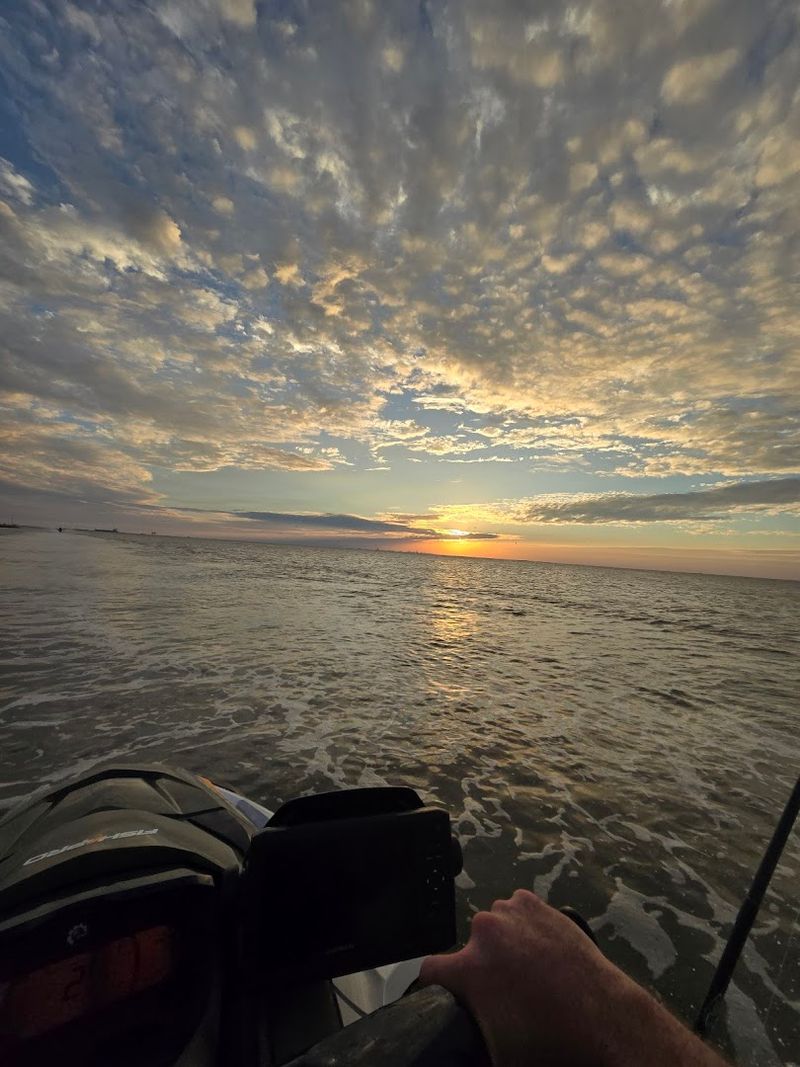
Bolivar Peninsula sunsets have a reputation among people who have seen them, and that reputation is fully deserved.
The western sky over the Gulf turns into something almost unreasonable most evenings, with layers of orange, pink, and deep violet stacking up over the water in a way that makes even the most photographed sunset look fresh and new.
The flat landscape of the peninsula means there is nothing blocking the view in any direction.
On the bay side, the sunsets reflect across the shallow water in long, shimmering streaks that double the color of the whole scene. Many visitors end up just sitting on the tailgate of a truck or on a folding chair in the sand, watching it happen without reaching for their phone.
That is a rare thing in modern travel, a view that genuinely competes with the impulse to document everything.
The small communities along the peninsula, Crystal Beach, Port Bolivar, and Gilchrist, all offer good vantage points depending on the season and the direction of the light. Locals tend to have their favorite spots, and if you ask around, most are happy to point you toward one.
Ending a Bolivar day watching that sky shift from blue to gold to deep red while the ferry lights start to flicker on across the bay is the kind of closing scene that makes the whole trip feel complete. Some places earn their reputation quietly, and Bolivar is very much one of those places.
