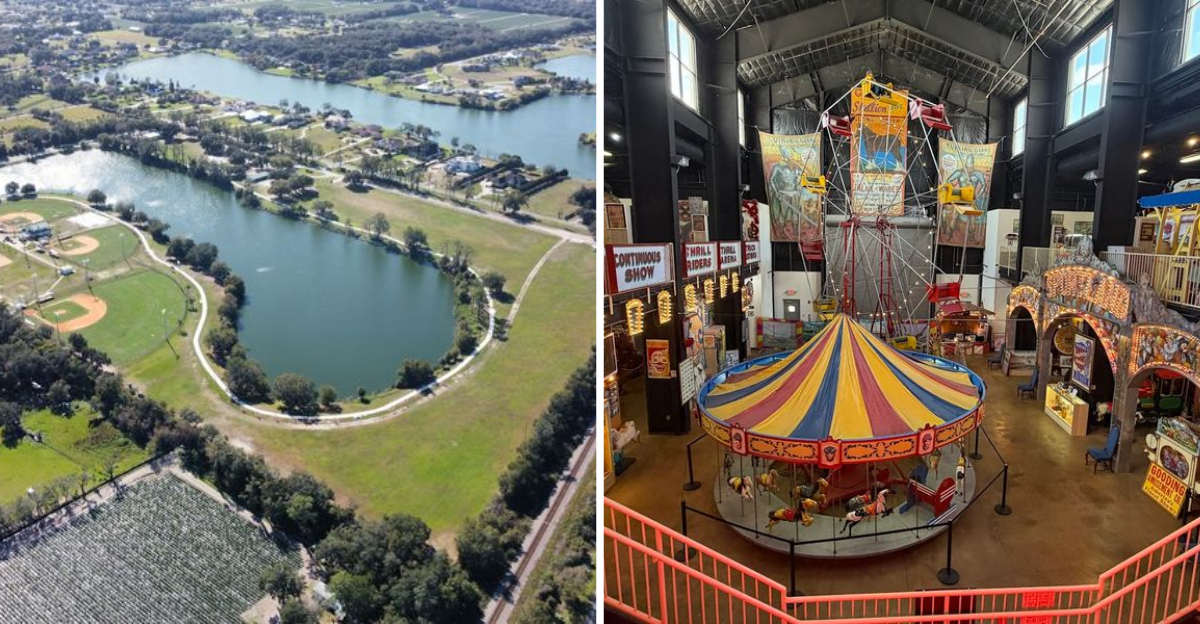
Florida has a weird history. But this small town might take the prize.
Back in the circus heyday, performers would winter here between tours. Bearded ladies.
Sword swallowers. Skeletal performers.
It was a place where being unusual was completely normal. Most of the performers are gone now, but something stayed behind. Locals swear the town still feels different, like the carnival settled into the soil.
I walked down the main street and could almost imagine the elephants parading through. A shopkeeper told me about phantom smells of popcorn and sawdust.
The circus packed up decades ago, but the spirit of it never left. Florida has plenty of quirky spots.
This one is genuinely haunting in the most wonderful way.
How Gibsonton Became the Carnival Capital of America
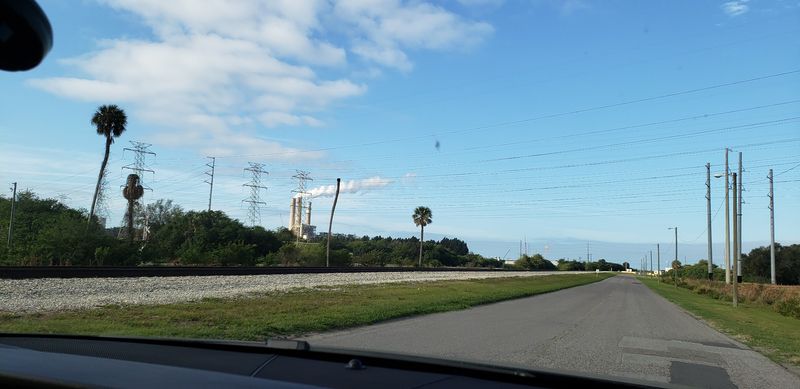
Nobody planned for Gibsonton to become what it did. The story starts in the 1930s and 1940s, when a handful of carnival and circus workers discovered that this quiet stretch of Hillsborough County offered something rare: a warm winter climate, affordable land, and neighbors who simply did not care what you did for a living.
Word spread fast through the tight-knit world of traveling shows. Performers who spent summers on the road needed a place to rest, repair equipment, and feel at home during the off-season.
Gibsonton fit that need perfectly.
The town sits along U.S. Route 41, close enough to Tampa to access supplies but far enough to feel like its own world.
Over the following decades, the community grew into the unofficial winter headquarters for the American outdoor amusement industry. Families built houses here, raised children here, and eventually retired here.
What started as a convenient layover became a permanent community, and that shift changed the character of the town forever. The carnival did not just pass through Gibsonton.
It put down roots.
The Legends Who Called Gibtown Home
The roster of people who lived in Gibsonton reads like the cast of a traveling show that never fully disbanded. Al Tomaini, known professionally as the Giant, stood 8 feet 4 inches tall and became one of the town’s most beloved figures.
His wife Jeanie, who was 2 feet 6 inches tall and billed as the Half-Woman, built a life alongside him here on the banks of the Alafia River.
Percilla the Monkey Girl settled in Gibsonton. Grady Stiles, known as Lobster Boy, raised his family here.
Siamese twin sisters ran a local fruit stand that neighbors visited regularly. Melvin Burkhart, the Anatomical Wonder, was another resident who became part of the town’s social fabric.
These were not museum pieces or curiosities on display. They were people who coached little league, attended church, and argued about the weather like anyone else.
Al Tomaini even served as the town’s fire chief, which says everything about how the community worked. Gibsonton did not treat its famous residents as spectacles.
It treated them as neighbors, and that simple dignity made all the difference.
The Post Office Built for Everyone
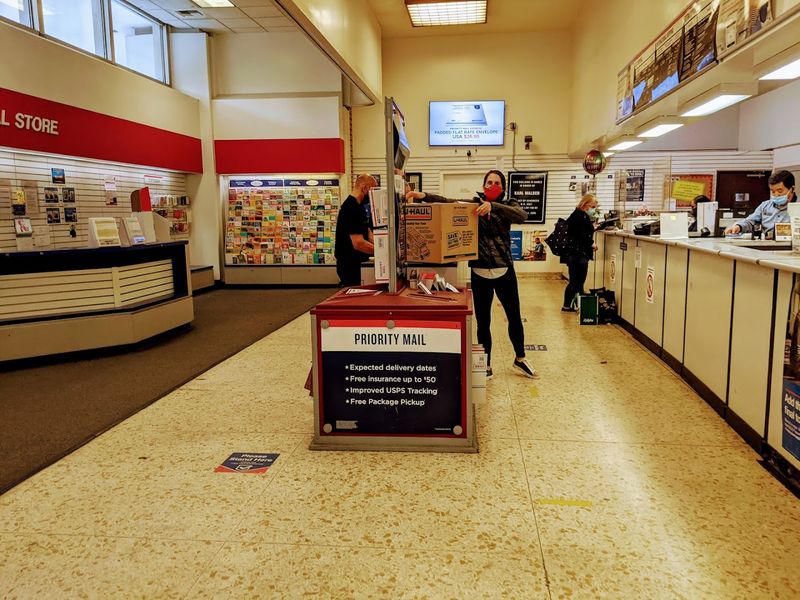
One detail about Gibsonton always catches people off guard when they first hear it. For a stretch of its history, the town’s post office featured a counter specifically designed for little people, making it the only post office in the United States with that accommodation.
That counter was not a novelty. It was a practical response to the fact that a significant portion of the town’s population included performers of short stature who needed to conduct daily business without the frustration of infrastructure built entirely around average height.
The gesture sounds small, but its meaning ran deep. Public spaces in most of America were not designed with anyone outside the average in mind.
Gibsonton quietly pushed back against that standard by adapting its civic spaces to fit the actual people who lived there. A little person also served as a police deputy in town, which added another layer to the picture.
This was a community where civic life genuinely reflected its residents. The post office counter is gone now, but the story of it lingers as one of the most quietly powerful symbols of what made Gibsonton different from every other town in Florida.
The Showmen’s Club and Its Living Museum
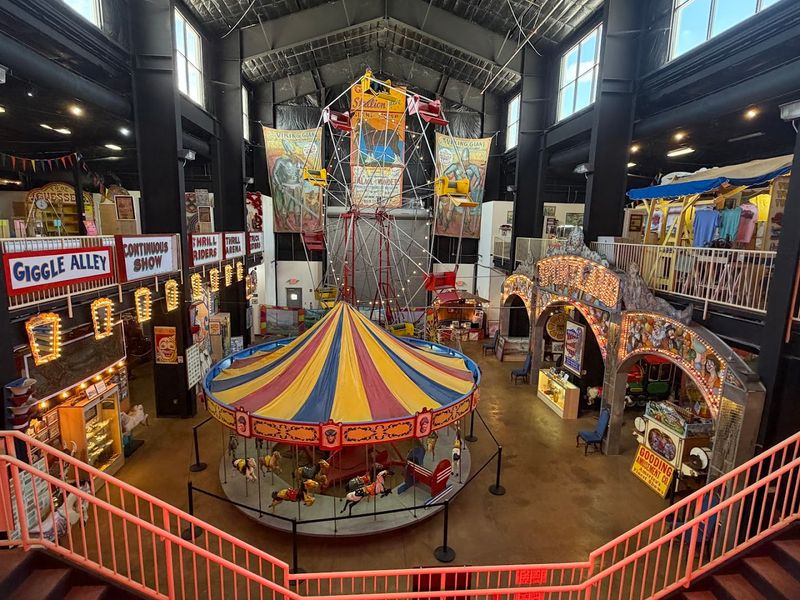
The International Independent Showmen’s Association, headquartered right in Gibsonton, is the kind of organization that keeps a community’s memory alive long after the people who built it are gone. Known locally as the Gibtown Showmen’s Club, it serves the outdoor amusement industry as a non-profit and has been doing so for decades.
The museum attached to the association is where things get genuinely exciting. Inside, visitors can find one of the earliest Ferris wheels in American history, along with carnival posters, costumes, and equipment that trace the arc of an entire industry.
It is a hands-on history lesson that no textbook could replicate.
Every year, the association hosts the largest carnival trade show in the country, drawing industry professionals from across the United States and beyond. Rides get inspected, deals get made, and the next season’s touring plans take shape right here in this unassuming Florida town.
For anyone who has ever marveled at a midway or bought a funnel cake at a county fair, the origins of all that joy trace back, at least in part, to what happens in Gibsonton each year. The club is the heartbeat of a tradition that refuses to slow down.
Old Rides, Animal Cages, and Backyard History
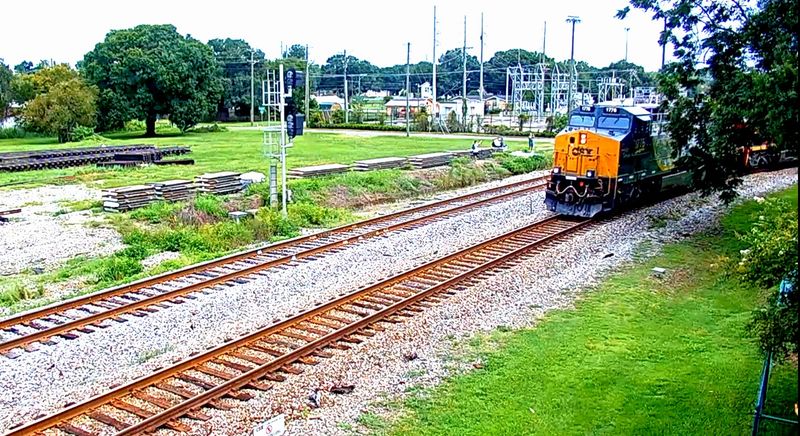
Driving through Gibsonton today, you might spot something in a neighbor’s yard that stops you mid-sentence. Old carnival rides, weathered and rust-touched, sit alongside houses like oversized lawn ornaments.
Animal cages from decades past lean against fences or disappear into the tree line at the back of a property.
These are not decorations. They are the physical remains of working lives, left behind by performers who retired here and never had a reason to haul the equipment away.
Some of those original families still live on those properties, and their descendants carry the history forward in their own ways.
There is something genuinely moving about seeing a Ferris wheel motor rusting quietly next to a garden shed. It connects the past to the present without any museum label or tour guide to explain it.
Gibsonton does not stage its history for visitors. The history is just there, mixed into the everyday texture of the place.
You have to pay attention to catch it. But when you do, the feeling is unlike anything a curated exhibit could produce.
It is real, a little rough around the edges, and completely honest about what this town has always been.
Gibsonton in Pop Culture and Storytelling
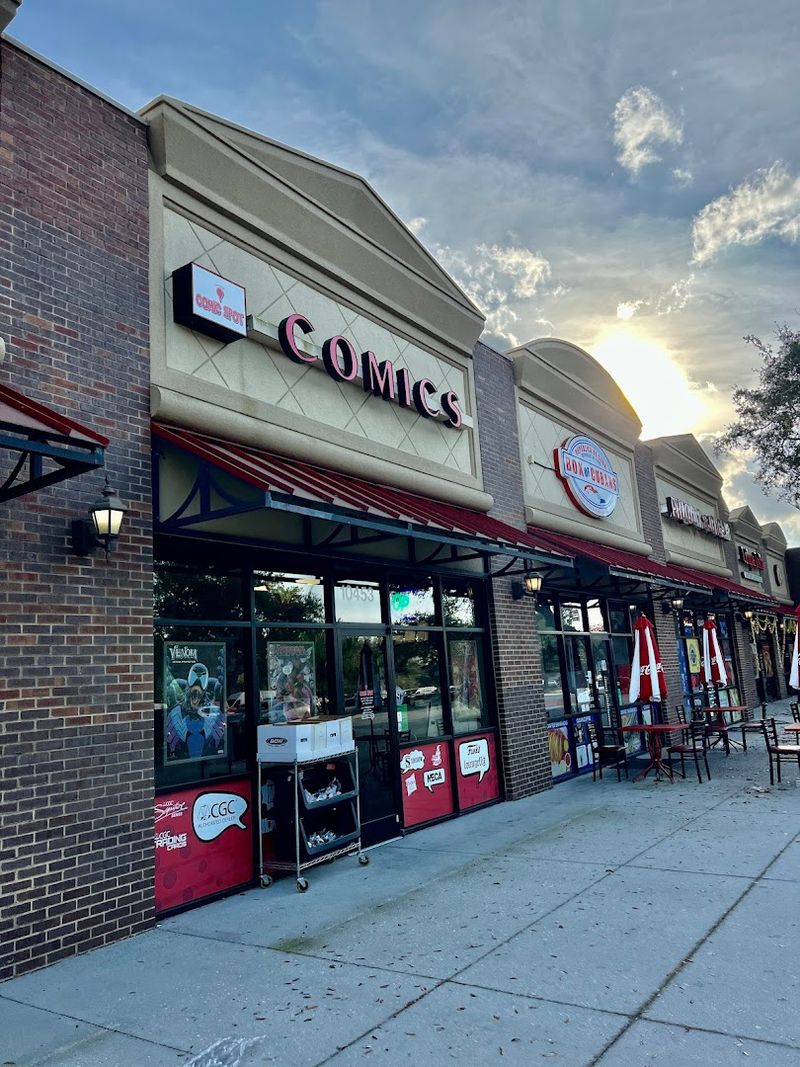
A place as unusual as Gibsonton was always going to attract storytellers. The town inspired an episode of The X-Files, where the fictional version of Gibsonton became a community of retired sideshow performers hiding a dark secret.
The episode captured something real about the town’s spirit, even while spinning it into science fiction.
American Horror Story: Freak Show drew heavily from Gibsonton’s legacy, using the idea of a Florida community built around carnival performers as the emotional backbone of an entire season. Writers and directors have returned to this well repeatedly because the truth of Gibsonton is already stranger than most invented stories.
What makes those fictional treatments interesting is what they get right: the sense of a community built on mutual acceptance, where people who did not fit anywhere else finally found a place that welcomed them. The darker dramatic elements are invented.
The core warmth is not. Gibsonton’s real story is one of belonging, and that theme translates across every medium that touches it.
Whether you encounter it through a television screen or a drive down U.S. Route 41, the emotional pull is the same.
This town made room for people the rest of the world looked past.
What Gibsonton Feels Like Today
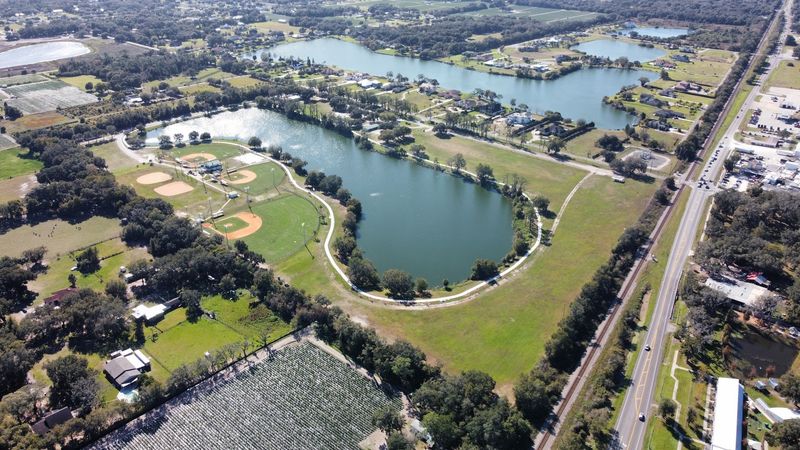
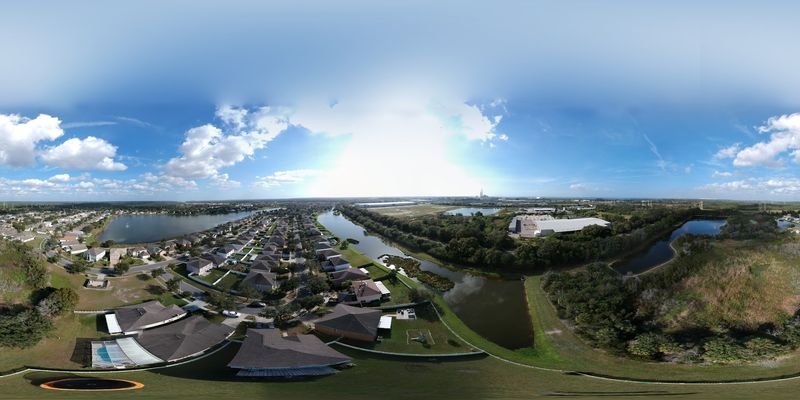
Gibsonton today is a quieter place than it was in its heyday. The population has grown steadily, reaching over 18,000 residents according to the 2020 census, and the town has taken on more of the look of a standard Hillsborough County suburb.
New developments have filled in spaces that once held carnival lots and performer homesteads.
But the spirit has not entirely gone. The annual trade show still comes to town.
The Showmen’s Association still operates. Descendants of the original carnival families still live here, and they carry the stories with them like heirlooms you cannot put in a box.
There is a particular feeling you get in Gibsonton that I have not found anywhere else in Florida. It is the feeling of a place that chose its own identity and held onto it through decades of change.
The bearded ladies and sword swallowers are gone, but they left something behind that new construction cannot erase. The town remembers what it was built on, and that memory lives in the land, the people, and the occasional rusted carnival wheel catching afternoon light at the back of someone’s yard.
Gibsonton earned its legend honestly, and it wears it well.
