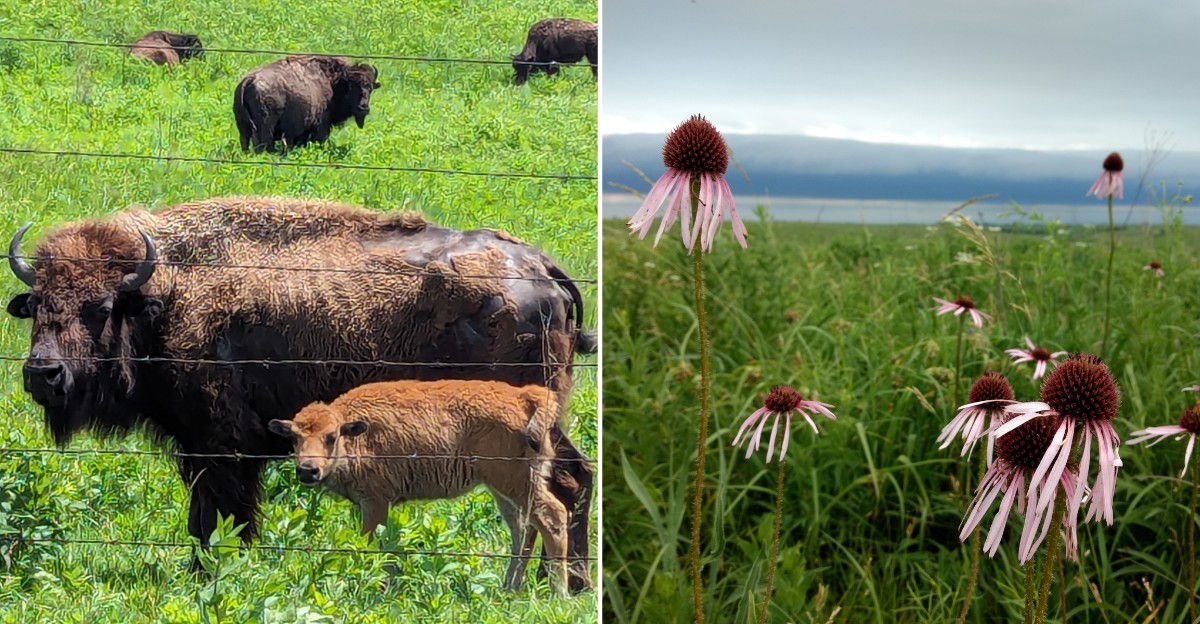
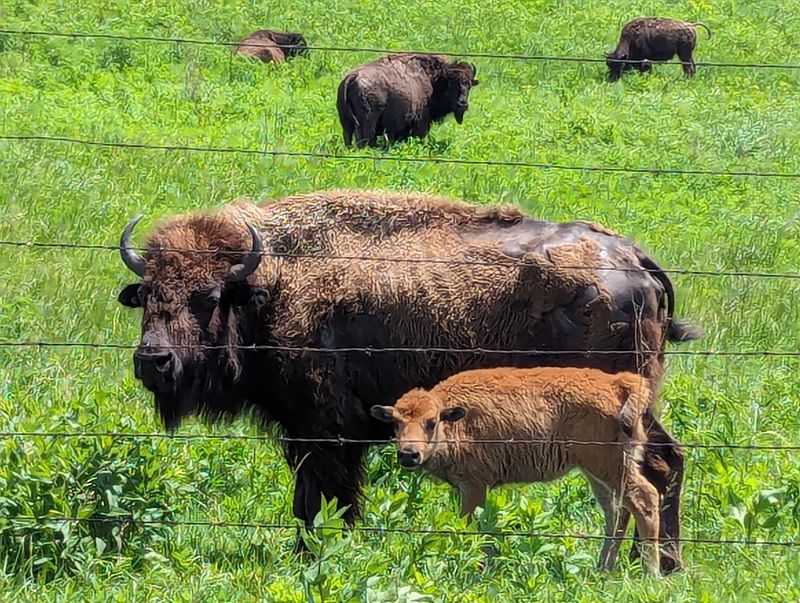
Thirty bison arrived from preserves in South Dakota and Iowa in 2011, and now more than 200 roam Dunn Ranch Prairie. Yep, more than 200.
I’ll admit, that number made me look twice.
The land under their hooves is just as wild. Over 1,000 acres of the original purchase had never felt a plow.
That’s rare soil in a world of tidy cornfields.
This spot sits in northern Missouri, close enough to Iowa to wave at it. Prairie chickens dance here in spring.
A tiny endangered fish swims in the creek nearby.
What stands out to me is how much life squeezed back into one place. It feels like the old Midwest got a second chance.
So how does a quiet corner of farm country pull that off?
Over 200 Bison Call This Grass Home, And They Took The Long Road
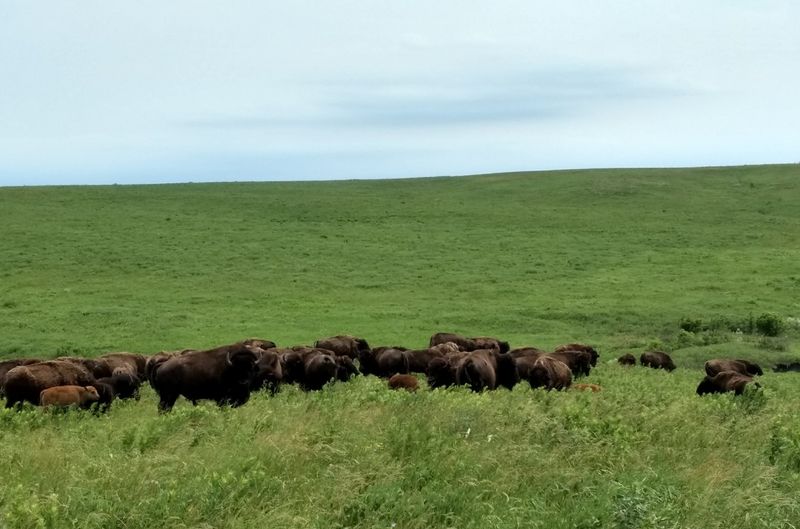
Thirty shaggy travelers descended from Wind Cave National Park’s herd arrived from preserves in South Dakota and Iowa in the fall of 2011. That small group started something big at Dunn Ranch Prairie.
Today, the herd numbers more than 200 animals. Not bad for a road trip that began with just 30 passengers.
The original bison descended from the Wind Cave herd, which earlier genetic tests had found free of detectable cattle ancestry. Many bison today carry some cattle genes from long-ago crossbreeding.
Maintaining genetic diversity helps conserve the herd.
The herd grazes about 2,300 acres of prairie. That land is split into two units of roughly 1,100 acres each.
Rotating between units gives the grass time to recover. It also keeps the bison moving like their wild ancestors did.
Here’s the fun part for nature fans. Bison aren’t just pretty faces with big beards.
They roll in the dirt and create shallow dips called wallows. Rain collects in those dips and turns them into tiny habitats for other creatures.
Their grazing also shapes which plants grow where. In a way, every bison is a full-time groundskeeper that never asks for a day off.
Bring Binoculars Because The Bison Pastures Stay Off-Limits
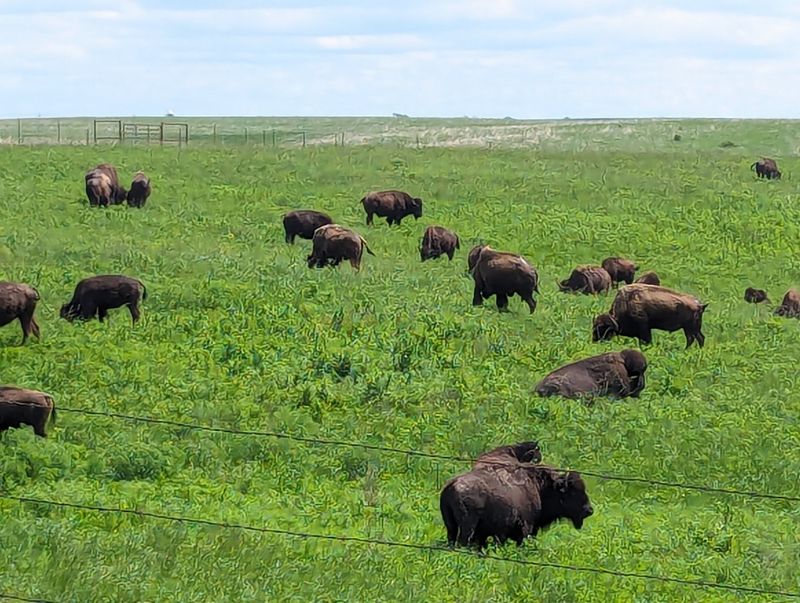
Fair warning, you can’t stroll up and pat a bison. Public access to the bison pastures is restricted, and that rule exists for good reason.
These animals are huge, fast, and unpredictable. A safe distance keeps both people and bison happy.
The good news is that you still have options. The herd can often be spotted from other parts of the preserve.
Roadside viewing stations also give you a chance to look across the hills. A pair of binoculars turns a brown dot into a full-size bison with personality.
Timing helps too. Spring brings bison calves, which adds a cute factor that’s hard to beat.
Fall is another popular season for bison watching. The golden grass makes the dark animals easier to pick out against the hills.
Keep your expectations flexible. Wild animals don’t follow a schedule, and they wander where the grass looks best that day.
Some visits might bring a close view from the road. Others might show you a distant herd moving across a ridge.
Either way, it’s a real herd on real prairie. That’s a sight most folks only see out West, not in Missouri.
Your Adventure Begins At A Simple Trailhead Off 150th Street
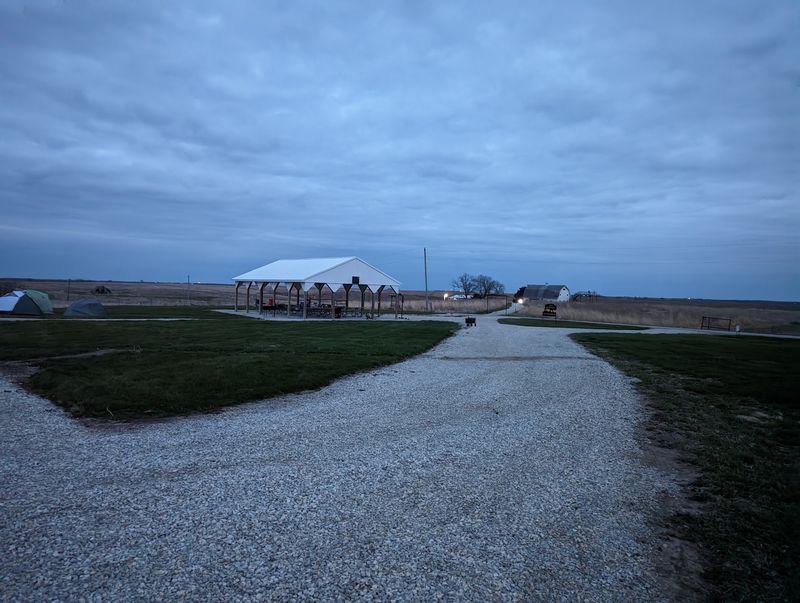
Every great prairie trip needs a starting line. At Dunn Ranch Prairie, it sits at 16970 West 150th Street, Hatfield, MO 64458.
That spot holds the office, a nature trail, a picnic shelter, and restrooms. It’s a handy base before you head out into all that grass.
A short paved nature trail offers all-access walking. Strollers and wheelchairs can enjoy the prairie without battling rough ground.
An observation deck gives you a higher view of the land. ADA-accessible parking sits close by as well.
Driving an electric car? There’s a charging station at the trailhead, which is a nice surprise way out in the country.
Informational kiosks help you learn as you go. They’re great for families who like a little reading with their fresh air.
The preserve is free and open daily from dawn to dusk. Just stay in public areas, on trails, or in parking lots.
Want to visit the office itself? You’ll need an appointment first.
Some areas may close for restoration work now and then. Think of it as the prairie taking a quick nap.
Over 1,000 Acres Never Met A Plow, And That’s A Big Deal
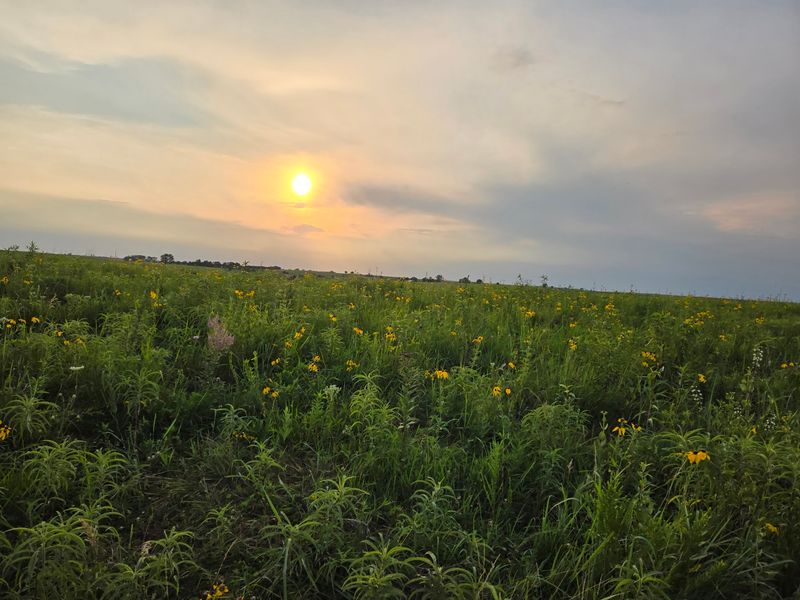
Most Midwest land has been turned over many times for crops. That makes the unplowed ground at Dunn Ranch Prairie something close to a treasure chest.
When The Nature Conservancy bought the first 2,281 acres in 1999, over 1,000 acres had never been plowed. The roots and soil there stayed much like they were long ago.
Here’s a little history to chew on. Before Missouri became a state in 1821, about one-third of it was covered in prairie.
By the mid-1900s, only scraps of those original 15 million acres of tallgrass remained. Farms and towns took over most of it.
That’s why this place matters so much. It’s one of the last tallgrass prairies on deep soil in the Central Tallgrass Prairie Ecoregion.
That region covers 110,000 square miles across six states. Finding a surviving piece this size is like spotting a four-leaf clover in a parking lot.
The land was purchased from descendants of the Dunn family. Their name stuck, and so did the prairie.
By its 20th year of restoration in 2019, the preserve had grown to 3,258 acres. Slow and steady really did win here.
Purple Blazing Star And 300 Plant Species Steal The Summer Spotlight
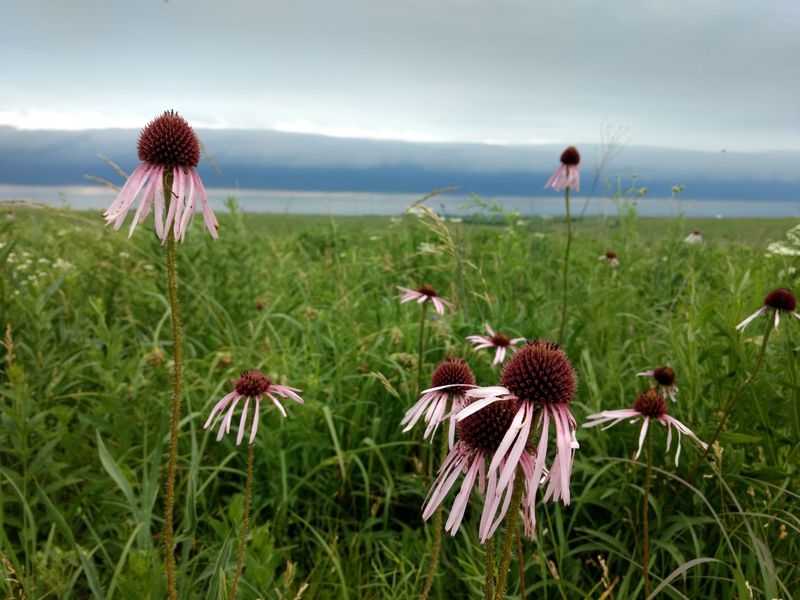
Grass might sound boring until you count the varieties. More than 300 species of native grasses, wildflowers, sedges, and trees grow on this prairie.
Big bluestem and switchgrass form the backbone. Some of these grasses grow tall enough to swallow a kid whole.
Summer is when the color really turns up. Prairie blazing star adds bright purple spikes across the hills.
Coneflowers join the party too. Prairie gentian and the western prairie fringed orchid are part of the plant list here.
All those blooms bring in the bugs, and that’s a good thing. Regal fritillary butterflies flutter over the flowers.
Dragonflies zip around in the warm air. Even ants get a mention, with over 30 species at work in the soil.
Spring offers its own treat. Areas burned on purpose turn an intense green as new growth pushes up.
By fall, the whole prairie shifts from green to gold. It’s like the land changes outfits for every season.
Bring a phone or camera with a good zoom. Close-up flower shots here can look like magazine covers with almost no effort.
A Tiny Endangered Fish Made A Comeback In Little Creek
Not every hero on this prairie weighs a ton. One of them is a small minnow called the Topeka shiner.
This little fish is federally endangered. Its population has been re-established in Little Creek, which flows from the prairie’s headwaters.
That’s a quiet win that’s easy to miss. Healthy grass upstream helps keep the water cleaner downstream.
Bison wallows add more water spots for wildlife. Rain fills those dips, giving frogs and insects a place to thrive.
The mammal list keeps things lively too. Deer, coyotes, bobcats, rabbits, and squirrels all share the land.
You probably won’t see a bobcat strolling by the picnic shelter. Still, knowing they’re out there makes every walk a little more exciting.
This mix of life shows how connected everything is. Grass feeds bison, bison shape the land, and the land supports fish and birds.
It’s like a giant team where everyone has a job. Nobody gets to sit on the bench.
For kids, this is a great real-life science lesson. It beats reading about food webs in a textbook any day.
Fire, Cattle, And Science Keep The Whole Place Healthy
Setting a prairie on fire sounds wild, but it’s part of the plan. The Nature Conservancy uses prescribed burns to keep the land healthy.
Fire clears old growth and wakes up native plants. Crews also sow native seed and manage invasive species.
Then there’s the grassbank, the first of its kind in the Midwest. Local ranchers can graze their cattle on the preserve’s grasslands.
The prairie gets the benefits of grazing and hoof traffic. Meanwhile, ranchers’ home pastures get a chance to rest.
It’s a neighborly deal that helps both sides. Conservation and farming don’t have to be rivals.
Dunn Ranch Prairie also works as a research center. Studies look at soil health, pollinators, bird populations, and grazing.
The goal is to build a model for sustainable agriculture. What works here could help farms in other places.
Big partners join the effort. The Missouri Department of Conservation, the Iowa Department of Natural Resources, and the U.S.
Fish and Wildlife Service all help out.
The preserve is part of the Grand River Grasslands. That region stretches across more than 70,000 acres in Missouri and Iowa.
Pack Smart Because This Prairie Plays By Its Own Weather Rules
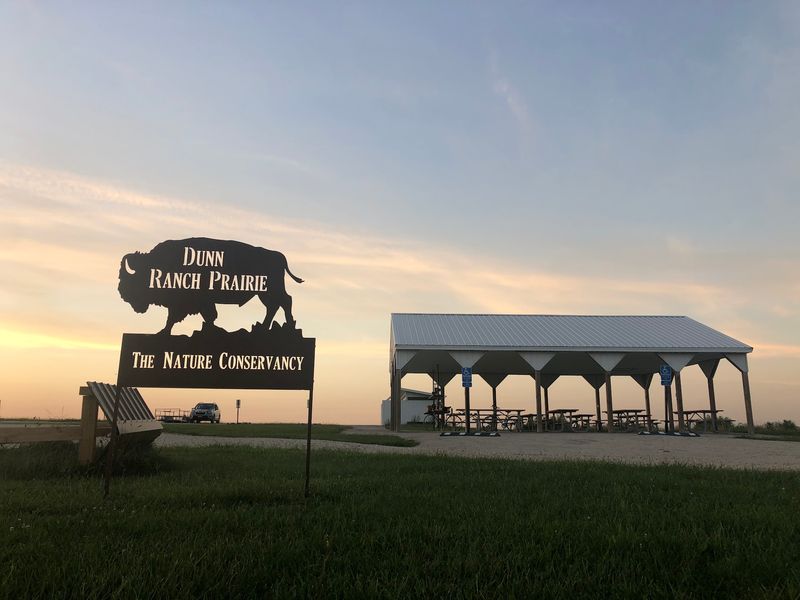
Shade is a rare luxury out here. Summers on the prairie often run hot with very little cover.
Wind is another regular guest. It blows often, and spring can feel cool and breezy even on sunny days.
The rolling hills make for a moderate hike. Your legs will notice the ups and downs after a while.
Vegetation grows tall from late spring through fall. Sturdy shoes help a lot when the grass reaches your waist.
Ticks are part of the deal in warmer months. Long pants, long sleeves, and insect repellent are your best friends.
Pack plenty of water, especially in summer. A hat and sunscreen won’t hurt either.
Spring can be wet, so expect mud in places. Waterproof boots save you from soggy socks.
Winter brings crisp, cold air and fewer bugs. Bundle up and you’ll have the hills nearly to yourself.
Preparing well turns a good trip into a great one. Then the only thing left to worry about is how many bison you can spot before sunset in this quiet slice of Missouri.
