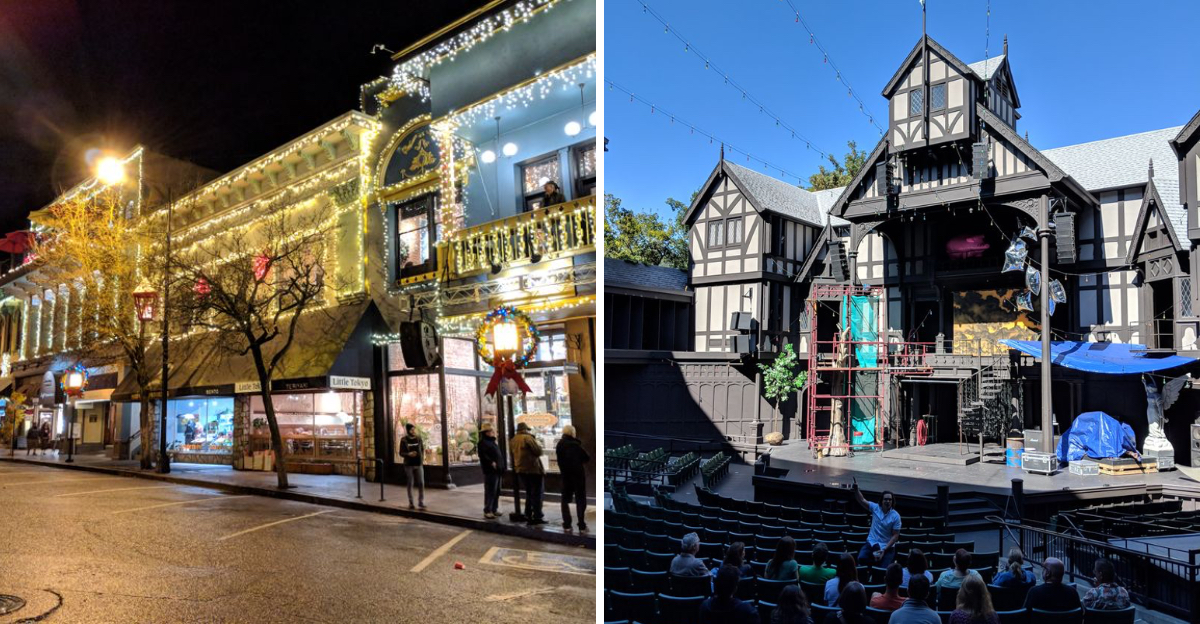
Tucked into the foothills of the Siskiyou Mountains in southern Oregon, Ashland feels like a town where culture and nature have made peace with one another.
Streets lined with brick storefronts lead to creekside trails, and theaters open their doors just steps from galleries, bookshops, and cafes.
This is a place where Shakespeare lives year-round, where stages fill with actors and audiences gather under open skies, and where history still shapes the rhythm of everyday life.
Oregon Shakespeare Festival
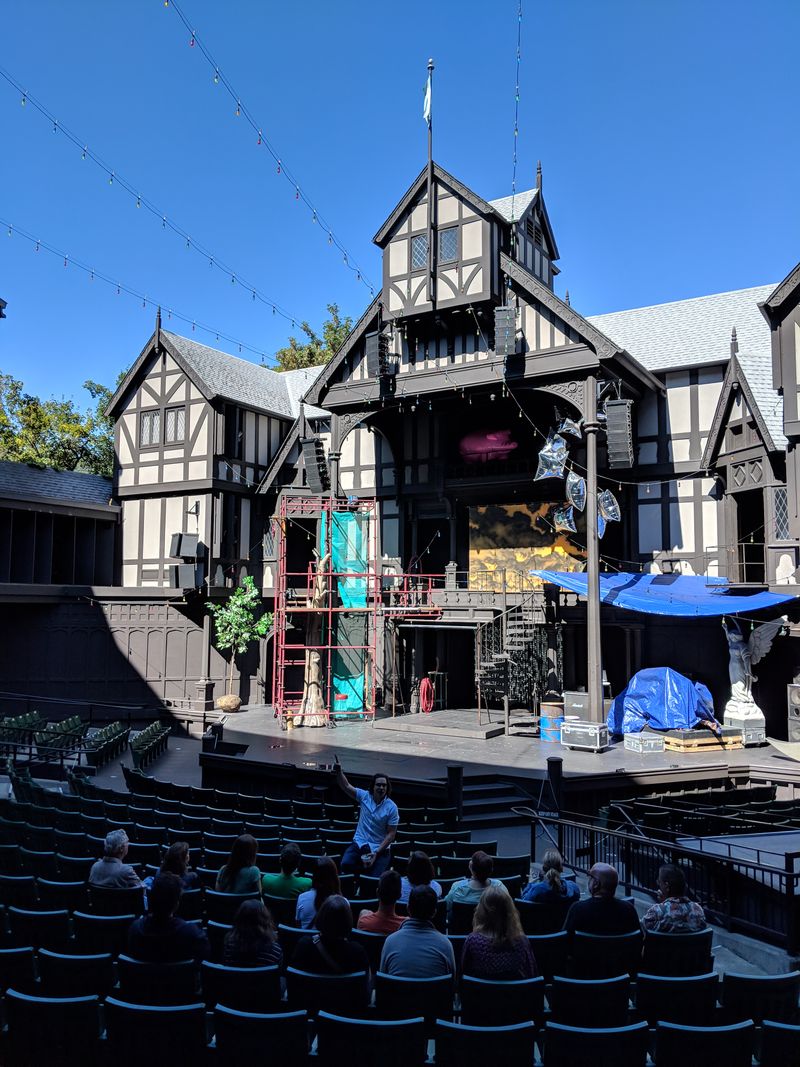
Few theater companies in America carry the kind of reputation that follows the Oregon Shakespeare Festival.
Founded in 1935, this institution has grown into one of the oldest and most respected regional theaters in the country.
Performances take place across multiple stages, including the beloved outdoor Allen Elizabethan Theatre, where productions unfold beneath the stars from late spring through fall.
The festival’s name might suggest a narrow focus, but the programming stretches far beyond the Bard.
Contemporary works, classic dramas, and new American plays all find a home here.
Actors come from across the nation to perform in Ashland, bringing skill and energy to every production.
Audiences arrive from around the world, turning the town into a seasonal gathering place for theater lovers.
The festival’s influence runs deep in Ashland.
It shapes the local economy, inspires the arts community, and gives the town its cultural identity.
Walking through downtown during festival season, you’ll see posters in shop windows, hear conversations about recent performances, and notice the steady flow of visitors moving between venues.
Even when the stages go dark in winter, the presence of the festival lingers.
Theater isn’t just entertainment here.
It’s woven into the fabric of daily life, a tradition that has defined Ashland for nearly a century and continues to draw people back year after year.
The Oregon Shakespeare Festival remains the beating heart of this small Oregon town.
Historic Downtown Ashland

Downtown Ashland carries the kind of charm that doesn’t announce itself but quietly settles in as you walk its streets.
Brick buildings line the blocks, many dating back over a century, their facades preserved and cared for through generations.
This is a downtown built for wandering.
Storefronts hold independent bookstores, art galleries, clothing boutiques, and specialty shops that reflect the town’s creative spirit.
There’s no chain store sprawl here, just locally owned businesses that give the area its distinct personality.
Cafes and restaurants spill onto sidewalks during warmer months, their patios filled with people lingering over coffee or meals.
The architecture tells its own story.
Buildings constructed during Ashland’s early days as a railroad and timber town still stand, their original details intact.
You’ll notice decorative cornices, tall windows, and ironwork that hint at the craftsmanship of another era.
The streets themselves feel walkable and human-scaled, designed before cars dominated urban planning.
Public art appears throughout the downtown core.
Murals brighten alleyways, sculptures occupy small plazas, and banners celebrating the arts hang from streetlights.
The blend of history and creativity makes this downtown feel alive rather than frozen in time.
Visitors and locals alike move through the area at an unhurried pace, stopping to browse, chat, or simply enjoy the atmosphere.
Ashland’s downtown isn’t trying to be anything other than itself.
It’s a place where history is respected, where small businesses thrive, and where the character of Oregon shines through every corner.
Lithia Park
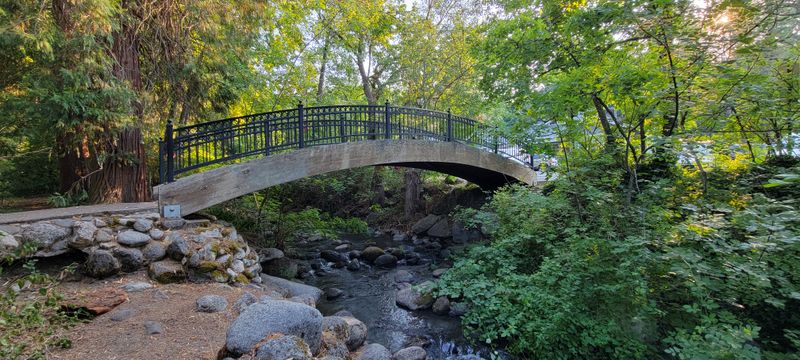
Lithia Park stretches along Ashland Creek like a green ribbon running through the heart of town.
Designed by John McLaren, the landscape architect behind San Francisco’s Golden Gate Park, this 93-acre space opened in 1916 and has been a gathering place ever since.
Trails wind through the park, following the creek as it tumbles over rocks and under wooden footbridges.
Some paths are paved and accessible, while others climb into the hillsides, offering quieter routes beneath towering trees.
The terrain shifts as you move deeper into the park, from manicured lawns and gardens near the entrance to wilder, forested areas upstream.
Duck ponds sit near the lower section, where families gather to watch waterfowl glide across still water.
A rose garden blooms in season, filling the air with fragrance.
Picnic areas and benches appear throughout, inviting visitors to pause and take in the surroundings.
During summer, the park becomes a hub of activity.
Theatergoers stroll through before performances, children play near the playground, and locals walk dogs along shaded paths.
In fall, the foliage turns brilliant shades of red and gold, transforming the landscape into something painterly.
Winter brings a quieter beauty, with bare branches and the sound of rushing water taking center stage.
Lithia Park doesn’t demand attention.
It simply offers itself as a place to breathe, walk, and connect with nature without leaving town.
For Ashland residents, it’s a backyard.
For visitors, it’s a reminder that this Oregon town understands the value of green space and natural beauty.
ScienceWorks Hands-On Museum

Curiosity fuels every corner of ScienceWorks, a hands-on museum designed to spark wonder in young minds.
Located just outside downtown Ashland, this interactive space invites children and families to explore science through play, experimentation, and discovery.
Exhibits change regularly, but the focus remains consistent.
Visitors are encouraged to touch, build, and test ideas rather than simply observe.
In Da Vinci’s Garage, kids can tinker with tools, construct simple machines, and engage in creative problem-solving.
Other areas explore topics like light, sound, motion, and the natural world, all presented in ways that feel accessible and fun.
The museum doesn’t rely on flashy technology or overwhelming displays.
Instead, it emphasizes hands-on learning through simple, effective activities that invite experimentation.
Children can spend hours moving between stations, testing theories, and asking questions.
Parents often find themselves just as engaged as their kids, rediscovering the joy of exploration.
ScienceWorks also hosts workshops, camps, and special programs throughout the year.
These events dive deeper into specific topics, offering more structured learning opportunities for those who want to go beyond the general exhibits.
The museum’s outdoor area adds another layer of discovery.
A bubble station, water play features, and space to run around make it easy for kids to burn energy while still engaging with scientific concepts.
For families visiting Ashland, ScienceWorks provides a welcome break from theater and downtown wandering.
It’s a place where learning feels like play, where curiosity is celebrated, and where Oregon’s commitment to education and creativity shines through in every exhibit.
North Mountain Park
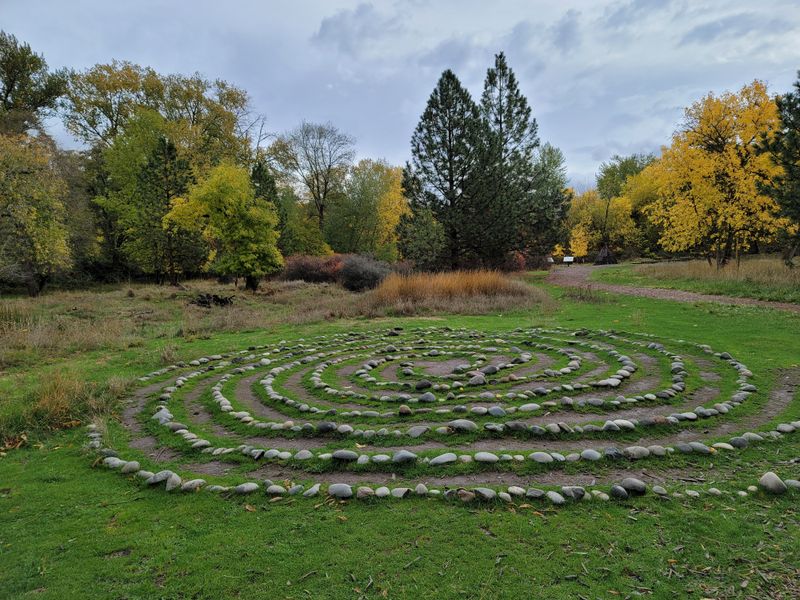
North Mountain Park sits on the northeastern edge of Ashland, offering a different kind of outdoor experience than Lithia Park.
This space focuses on nature education, with themed gardens, trails, and a nature center that welcomes visitors year-round.
The park’s gardens provide both beauty and learning opportunities.
A butterfly garden attracts pollinators throughout the warmer months, its blooms carefully chosen to support local species.
An herb garden showcases plants used for cooking, medicine, and fragrance, each labeled with information about its uses and history.
Other themed areas explore native plants, water-wise landscaping, and sustainable gardening practices.
Trails wind through the park’s 59 acres, leading into oak woodlands and open meadows.
These paths offer a chance to explore the natural landscape of southern Oregon without venturing far from town.
Birdwatchers often visit, as the park’s varied habitats attract a wide range of species.
The nature center serves as a hub for environmental education.
Programs for children and adults cover topics like local wildlife, ecology, and conservation.
Staff and volunteers lead guided walks, offer workshops, and provide resources for those interested in learning more about the region’s natural environment.
North Mountain Park feels quieter and less visited than some of Ashland’s other attractions, which adds to its appeal.
It’s a place for slow exploration, for paying attention to small details, and for connecting with the ecosystems that define this part of Oregon.
Whether you’re interested in gardening, hiking, or simply spending time outdoors, the park offers a peaceful retreat and a chance to see Ashland’s commitment to nature and education in action.
Schneider Museum of Art
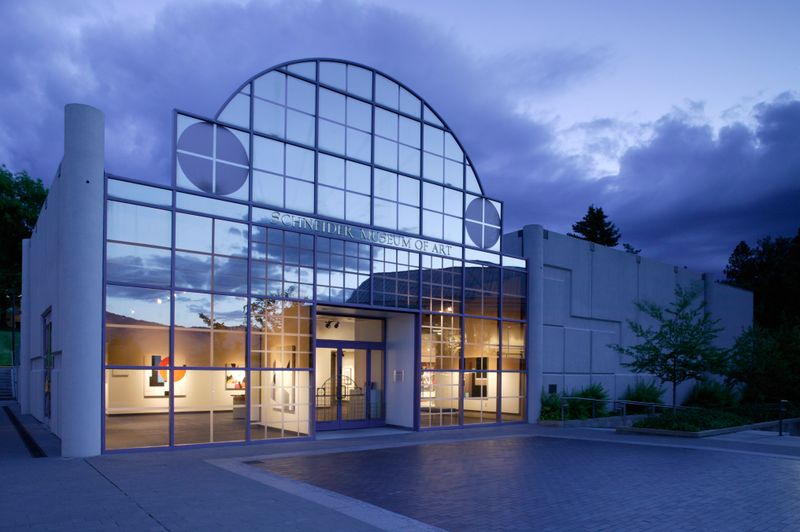
Art takes center stage at the Schneider Museum of Art, located on the Southern Oregon University campus in Ashland.
This contemporary art museum focuses on regional, national, and international works, offering rotating exhibitions that challenge, inspire, and engage visitors.
The museum’s collection emphasizes modern and contemporary art, with pieces spanning various media including painting, sculpture, photography, and installation.
Exhibitions change regularly, ensuring that repeat visitors always encounter something new.
Curators prioritize works that reflect current conversations in the art world while also highlighting artists from the Pacific Northwest and beyond.
Unlike larger city museums, the Schneider maintains an intimate scale.
Galleries feel approachable rather than overwhelming, allowing visitors to spend time with individual works without distraction.
The space itself is thoughtfully designed, with natural light and clean lines that let the art speak for itself.
Educational programs complement the exhibitions.
Artist talks, gallery tours, and workshops provide deeper insights into the works on display and the creative process behind them.
The museum also partners with the university to offer resources for students studying art and art history.
Admission is free, making art accessible to everyone in the community.
This commitment to public access reflects the museum’s mission to serve as a cultural resource for Ashland and the surrounding region.
For visitors exploring Ashland’s arts scene, the Schneider Museum adds another dimension beyond theater.
It’s a place where visual art takes priority, where contemporary voices are amplified, and where Oregon’s creative spirit extends into galleries as well as onto stages.
Ashland Creek
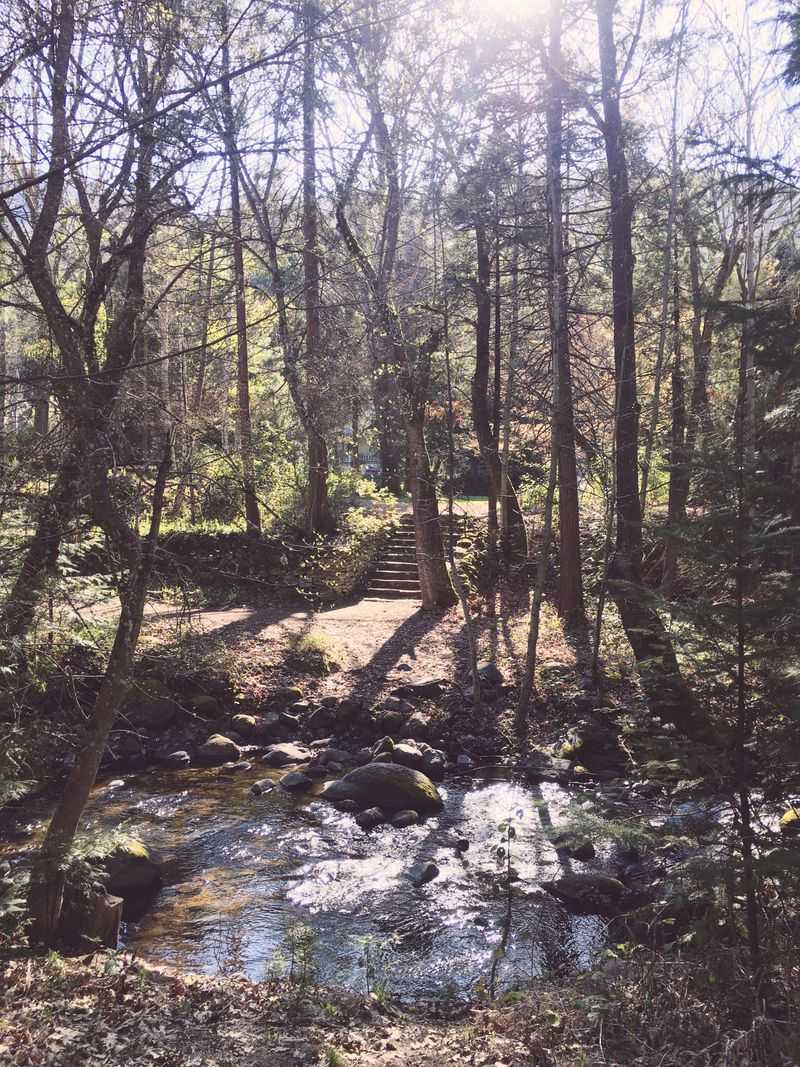
Water defines much of Ashland’s character, and Ashland Creek serves as the town’s liquid spine.
Flowing down from the mountains, the creek cuts through Lithia Park and continues through town, its presence felt and heard throughout the area.
The creek’s path through Ashland creates pockets of natural beauty in unexpected places.
Even near downtown, you can hear water rushing over stones, see trees leaning over the banks, and watch birds dipping into the current.
This constant connection to moving water adds a calming element to the urban environment.
Trails follow the creek for miles, offering walks that range from easy strolls to more challenging hikes.
Lower sections near the park are paved and accessible, while upstream paths become rougher and more secluded.
The sound of flowing water accompanies you regardless of which route you choose.
During hot summer months, the creek provides relief.
Locals know the best spots to dip their feet or sit on rocks near the water.
Children wade in shallow areas, and the temperature near the creek always feels a few degrees cooler than the surrounding streets.
The creek also plays a practical role in Ashland’s history and ecology.
It once powered mills and provided water for early settlers.
Today, it supports riparian habitats that shelter wildlife and native plants.
Efforts to protect and restore the creek’s health continue, reflecting the community’s commitment to environmental stewardship.
Ashland Creek might not be a destination in itself, but it threads through nearly every outdoor experience in town.
It’s a reminder that Oregon’s natural beauty doesn’t stop at city limits.
Historic Railroad District
Ashland’s Railroad District preserves a slice of the town’s industrial past, when trains connected this southern Oregon community to the wider world.
The area centers around the historic railroad depot and surrounding buildings, many of which have been adapted for new uses while maintaining their original character.
The depot itself stands as a reminder of Ashland’s role as a stop along the rail lines that once dominated West Coast transportation.
Built with sturdy materials meant to last, the building’s architecture reflects the practical design of early 20th-century rail infrastructure.
Though trains no longer carry passengers through Ashland, freight lines still pass by, and the occasional whistle echoes through town.
Surrounding the depot, old warehouses and commercial buildings have found new life as shops, restaurants, and creative spaces.
Brick walls, exposed beams, and industrial details give these spaces a distinct atmosphere.
Walking through the Railroad District feels different from downtown’s Victorian charm, offering a grittier, more utilitarian aesthetic.
The district also hosts events and gatherings that celebrate Ashland’s history.
Interpretive signs provide context about the railroad’s impact on the town’s development and economy.
Photographs from earlier decades show how the area once bustled with activity as goods and people moved through the depot.
For visitors interested in history beyond the theater, the Railroad District offers a different perspective on Ashland’s past.
It’s a place where industry and commerce shaped the town’s growth, where connections to the outside world were forged through steel rails, and where Oregon’s transportation heritage remains visible in the built environment.
The district may not draw crowds like other attractions, but it adds depth to understanding what made Ashland what it is today.
Mount Ashland
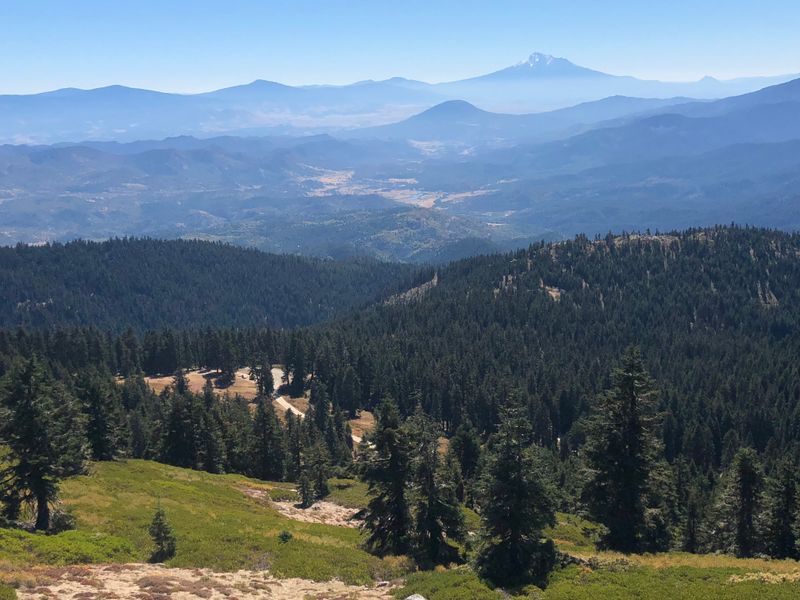
Rising to the south of town, Mount Ashland dominates the skyline and offers year-round recreation for those willing to make the drive.
At over 7,500 feet, the mountain provides a dramatic contrast to the valley below, with alpine environments and sweeping views across southern Oregon and into northern California.
Winter transforms Mount Ashland into a ski area, with runs suitable for various skill levels.
The resort operates a modest but well-loved ski hill where locals and visitors can downhill ski, snowboard, and enjoy winter sports without the crowds found at larger resorts.
Snow typically covers the upper slopes from late fall through spring, creating a seasonal playground above the town.
When snow melts, the mountain reveals hiking trails that wind through meadows and forests.
Wildflowers bloom in summer, painting the slopes with color.
Trails range from moderate walks to challenging climbs, with the summit trail offering panoramic views that stretch for miles in every direction.
The Pacific Crest Trail passes near Mount Ashland, connecting this area to the larger network of long-distance hiking routes that traverse the West Coast.
Hikers often stop here to resupply in Ashland before continuing their journeys north or south.
Mount Ashland serves as a reminder of the natural diversity surrounding this small Oregon town.
Within a short drive, you can move from valley floor to alpine zone, from theater seats to mountain trails.
The mountain’s presence shapes the local climate, provides recreation opportunities, and adds to the scenic beauty that defines the Ashland area.
For outdoor enthusiasts, it’s an essential part of what makes living in or visiting this region so appealing.
Dear Reader: This page may contain affiliate links which may earn a commission if you click through and make a purchase. Our independent journalism is not influenced by any advertiser or commercial initiative unless it is clearly marked as sponsored content. As travel products change, please be sure to reconfirm all details and stay up to date with current events to ensure a safe and successful trip.
