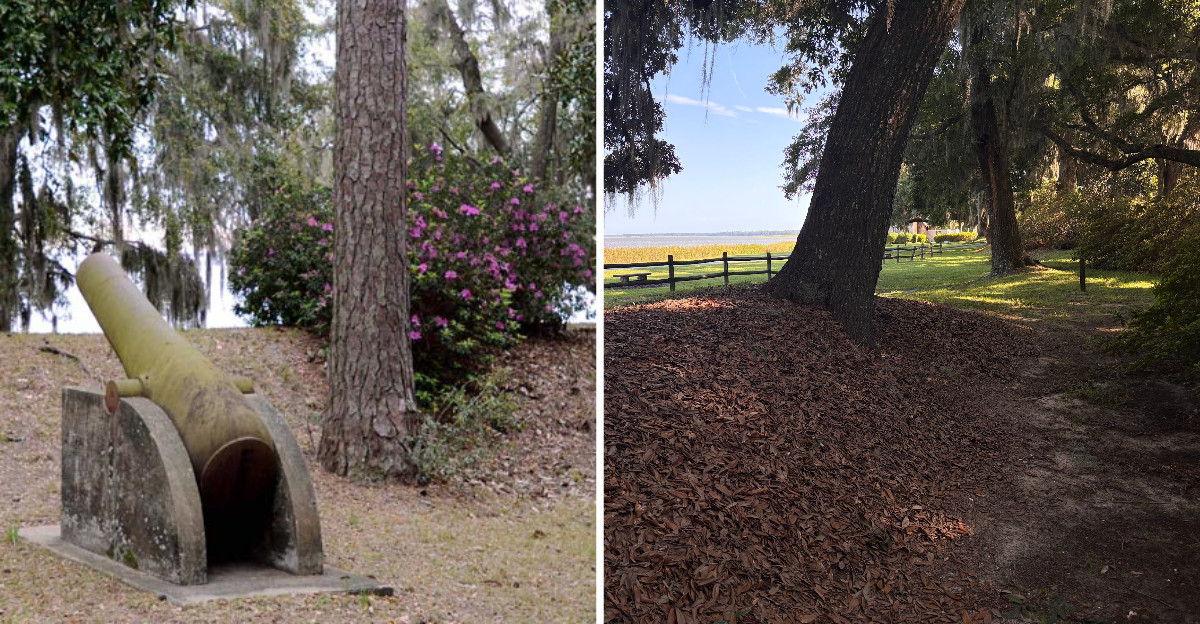
Packed earth ridges shaded by oaks and two enormous cannons still aimed at the water are all that remain, and nobody told the guns the war ended. A long earthen fort sits on a bluff just outside a South Carolina town, looking straight down the shipping channel of a wide bay.
At its peak, the earthwork mounted fifteen guns, and yet it never fired a shot in a real battle. Confederate troops simply walked away in February 1865, and a Union crew found the place empty a few days later.
That image lingers, a fortress bristling with iron that quietly gave up without a fight. Grass grows over the ramparts now, and the cannons still point at the water as if waiting for orders that will never come.
The quiet here is heavy with what did not happen, and that absence is what makes it unforgettable.
Mayrant’s Bluff and the Bay It Was Built to Guard
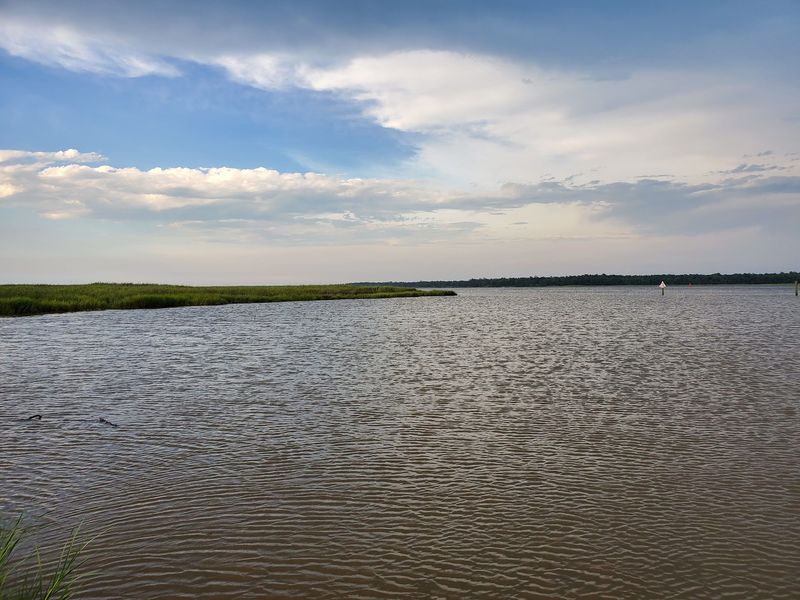
Water does most of the talking here. From the top of the earthworks, Winyah Bay opens up wide and flat, and you can see exactly why military engineers picked this bluff back around 1862.
Georgetown sat at the meeting point of several rivers, and the bay was the front door to its port. Ships carrying supplies had to squeeze through a main channel that passes close to this shoreline.
Guns placed on high ground here could reach that channel without much effort. I stood there watching a small boat cut across the water and realized it would have been an easy target from this angle.
The bluff itself is modest, maybe a gentle rise rather than a cliff, but in the Lowcountry even a little elevation counts for a lot. Everything around it is marsh, mudflat, and pine.
Sound carries oddly across the bay, so you hear engines and birds long before you spot them. That same openness once made this the perfect lookout point.
If you visit, give yourself a few quiet minutes facing the water before you start reading markers. The geography explains the history better than any sign can, and it makes the rest of the site click into place immediately.
Earth Instead of Stone, How the Fortification Was Shaped
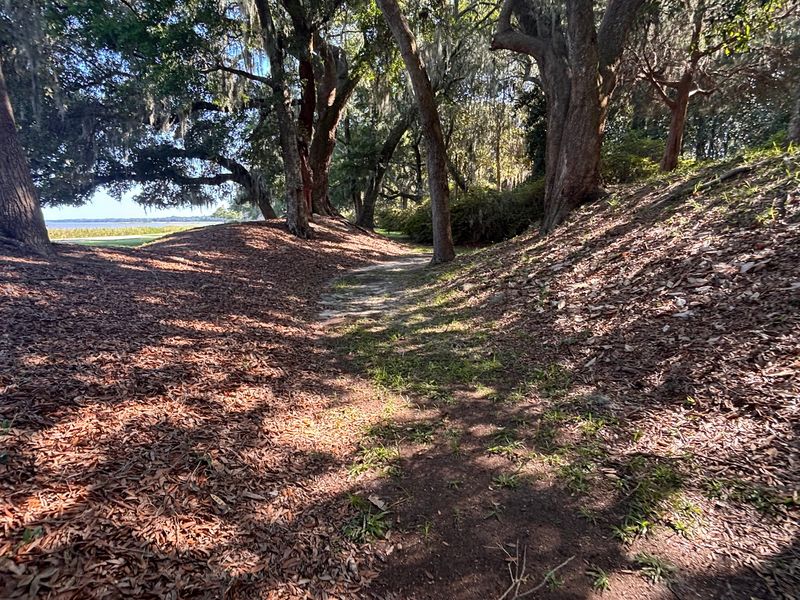
My first reaction was honestly a little confused. Where were the walls?
Then I climbed the slope and understood that the hill I was walking on was the wall.
Battery White is an earthwork, meaning it was built from packed soil, sand, and timber rather than brick or stone. That sounds flimsy until you learn why builders preferred it.
Solid masonry shatters when heavy shells hit it, sending stone fragments flying. Dirt absorbs the blow, swallows the shot, and can be shoveled back into shape overnight.
The shape here is long and irregular, following the natural contour of the bluff with raised sections where guns sat and lower passages behind them. Walking the line, you can still trace where gunners would have moved between positions.
Live oaks and pines have grown into the embankments over the years, their roots holding the old soil together in a way the builders never planned.
What surprised me most is how intact it all remains. Nearly all of the original earthworks survive, which is rare for something made of dirt and left alone for a century and a half.
Wear closed shoes, because the ground is uneven and sandy in spots. And resist the urge to shortcut across the slopes, since foot traffic wears the profile down.
Fifteen Guns on Paper, Far Fewer Hands to Fire Them
Here is the number that stopped me: fifty-three men. In February 1863, reports listed Battery White with just fifty-three soldiers and nine guns to cover a major shipping channel.
By the time Union officers inspected the place in 1865, it mounted fifteen guns, a serious arsenal for a single position. The list included three ten-inch columbiads, four thirty-two pounder Brooke rifles, five twenty-four pounder smoothbores, two eighteen pounders, and a twelve pounder.
Iron was never really the problem. People were.
Brigadier General J. H.
Trapier, who commanded here, wrote in January 1864 that the position itself was strong and, with proper artillery and enough infantry support, might be made almost impregnable. The help he asked for never showed up in the numbers needed.
Thinking about that while standing among the gun platforms gives the site a strange sadness. All that planning, all that digging, and not enough hands to work the guns if a real fleet arrived.
Morale suffered too. In October 1864, eleven Confederate soldiers deserted the battery and handed information to the crew of the U.S.S.
Potomska.
Knowing those details ahead of your visit changes what you see. The empty platforms stop looking like ruins and start looking like unfinished business.
February 1865, The Quiet Walk Away
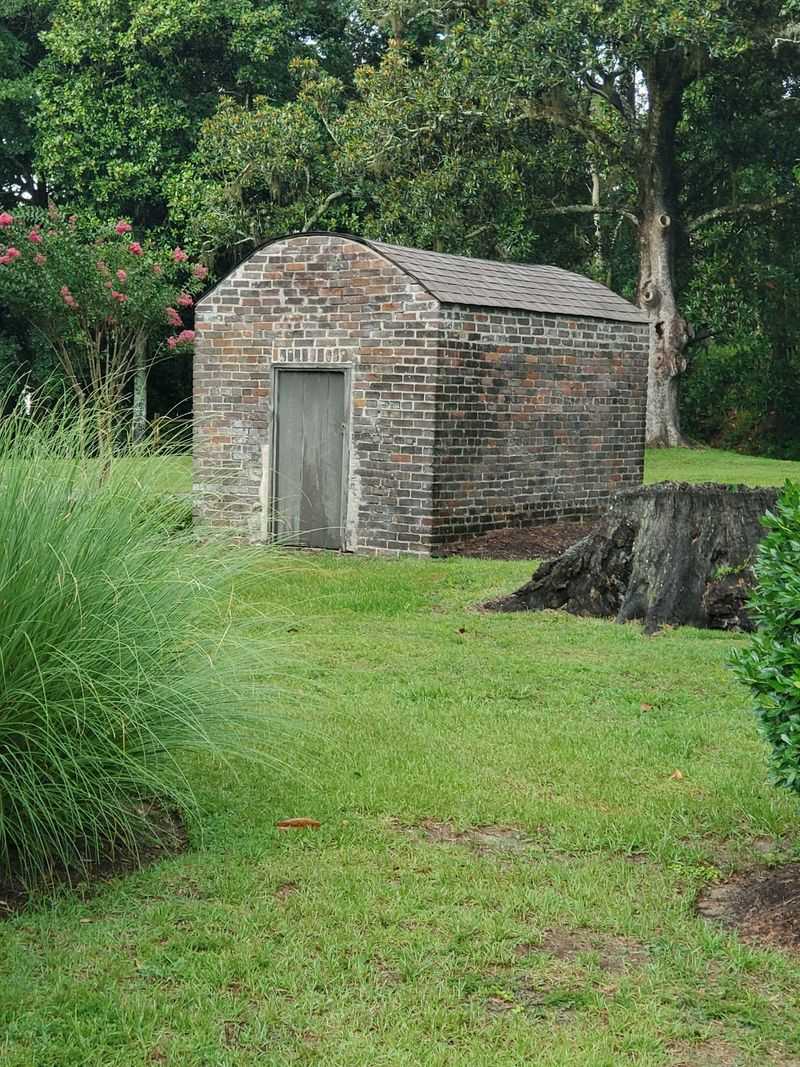
Most forts get remembered for their loudest day. Battery White is remembered for its quietest one.
As Union forces under General William Tecumseh Sherman pushed into South Carolina, holding a coastal battery near Georgetown stopped making sense. Confederate troops evacuated the town on February 19, 1865.
Before leaving, they spiked the guns, which meant disabling them so the enemy could not turn the artillery around and use it. Then they were gone.
On February 24, a party from the U.S.S. Mingo came ashore and found the whole place unmanned.
No gunfire, no standoff, no dramatic surrender ceremony.
Rear Admiral Dahlgren, aboard the flagship Harvest Moon, later inspected the fortification and described it as a well-constructed and formidable work mounting fifteen guns. High praise for something handed over empty.
I find that ending oddly human. Somebody made a hard, practical decision, and the war moved on without a fight here.
When you walk the site, try lining up the dates in your head as you go. The five days between evacuation and discovery feel almost eerie once you are standing in the spot where nobody was waiting.
It also explains why so much survives. Places that never get shelled tend to keep their shape.
Two Columbiads Still Pointing at the Water
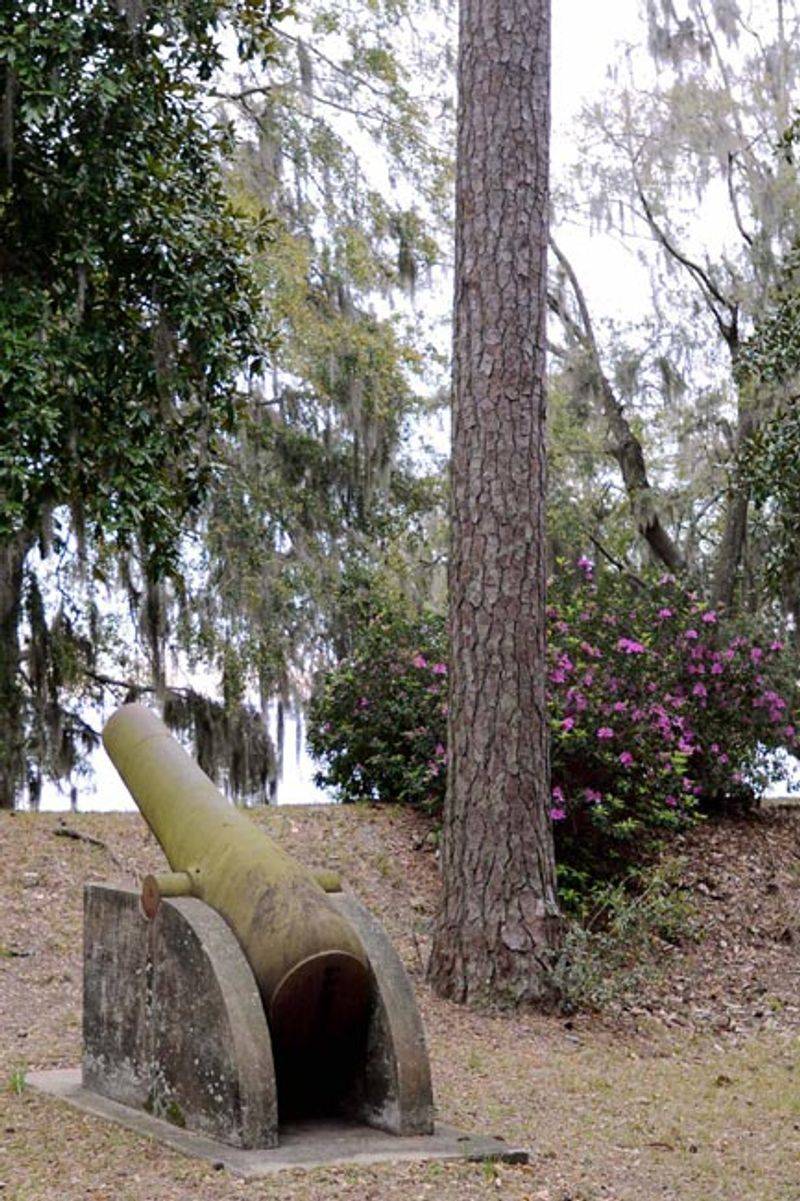
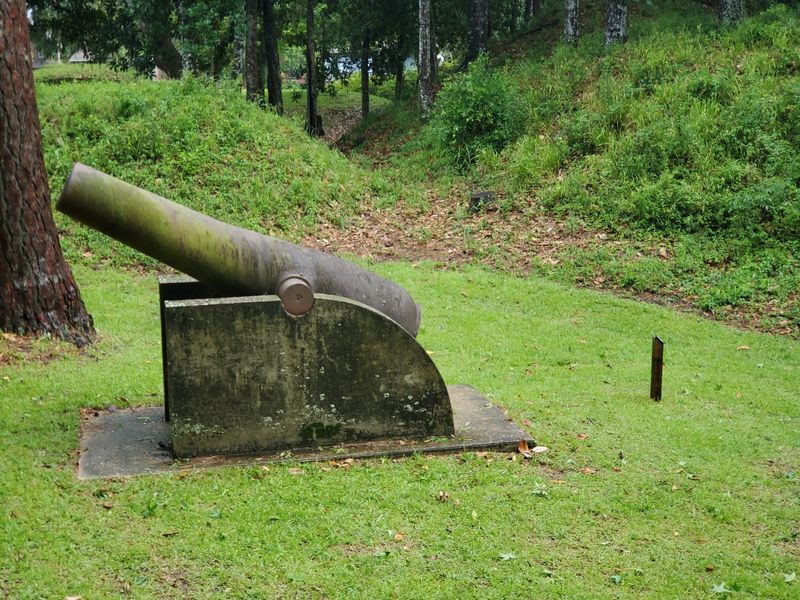
Nothing prepares you for the size. The two ten-inch Columbiads that remain on site are thick, blunt, and heavy in a way photos flatten out completely.
Both barrels still point toward Winyah Bay, which is the detail people mention most often after visiting. They are not arranged as decoration in a park somewhere, they sit where they were meant to sit.
Columbiads were built to hurl large shot at ships, and their barrels flare out toward the muzzle in a shape that looks almost cartoonishly stout. Running a hand along the pitted iron, you feel every decade of salt air.
I spent longer than expected just looking down the barrel line toward the channel, trying to guess the range. It is one thing to read about coastal defense and another to stand behind the actual weapon.
Bring a camera with a wide lens if you have one, because getting both guns and the bay in a single frame is tricky.
Morning and late afternoon light work best, since the tree canopy throws harsh patches at midday.
Do not climb on the barrels, tempting as it is for photos. These are original pieces, and they have already outlasted everyone who ever loaded them.
Belle Isle Plantation and the Ground Beneath It All
Long before cannons arrived, this ground had another name. The battery was built on land that was part of Belle Isle Plantation, a property once owned by Colonel Peter Horry of Revolutionary War fame.
That layering is what I like most about Lowcountry sites. One patch of earth carries a Revolutionary officer, a Civil War gun platform, and a modern neighborhood, all stacked on top of each other.
Horry County to the north takes its name from the same family, which makes the connection easy to remember once you hear it.
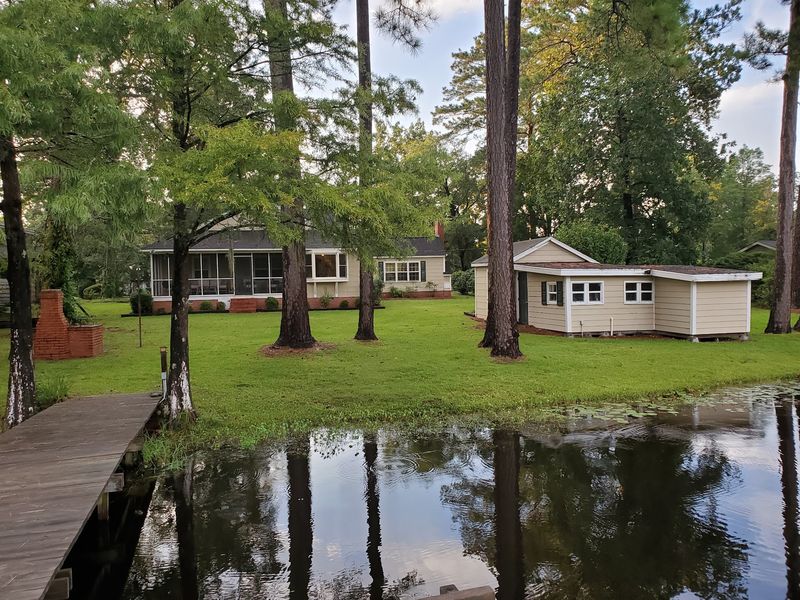
Today the property sits inside Belle Isle Villas and Yacht Club, a private residential community with marsh views and quiet roads. Driving in, the transition feels gentle, tidy homes and then suddenly a wall of old earth.
The National Register of Historic Places added the site in 1977, which helped secure its survival as the surrounding land developed.
Knowing the plantation history gives the visit more depth than just counting guns. Georgetown County was rice country, and the labor that shaped these waterways came from enslaved people whose work built the wealth the war was fought over.
Read the markers slowly. The story here runs much deeper than 1865, and the landscape rewards anyone willing to think about all of it.
Getting Through the Gate, Planning a Visit That Actually Works
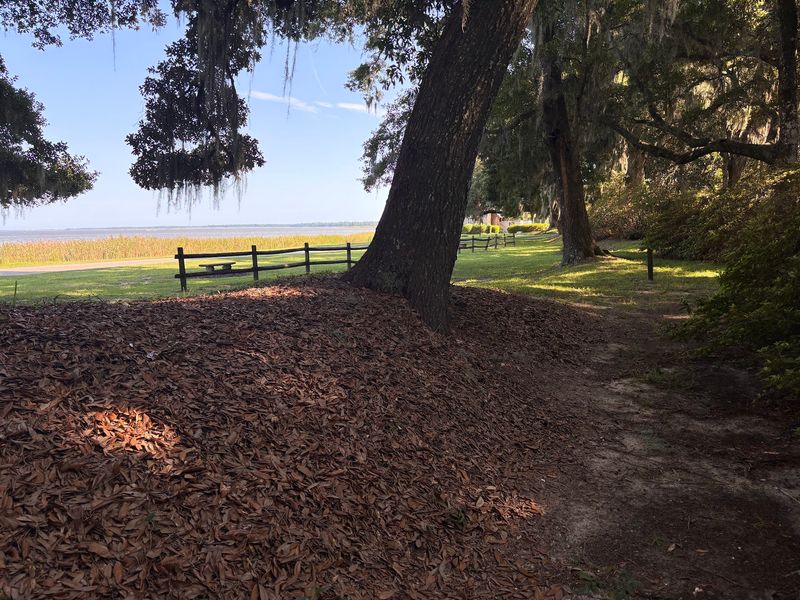
Let me save you the frustration I nearly walked into. Battery White sits on private land inside a gated community, so you cannot simply drive up and wander in whenever you please.
Access is by appointment, generally Thursday through Sunday from four in the afternoon until sundown. Arranging it means calling the Belle Isle Yacht Club ahead of time to set up your visit.
That one phone call is the difference between seeing the cannons and staring at a gate. Some visitors have arrived unannounced and been turned away, while others have been welcomed in after stopping to ask politely.
Plan for a late afternoon stop and pair it with time in downtown Georgetown, which sits a short drive north along the waterfront.
Bring insect repellent, because marsh edges in South Carolina do not forgive bare ankles at dusk. Water and a hat help too, since shade comes and goes along the earthworks.
Give yourself thirty to forty-five minutes on site. It is not a huge area, but the views and the guns deserve unhurried attention.
Above all, remember you are a guest in someone’s neighborhood. Keep voices low, stay on paths, and thank whoever lets you in.
Address: 1228 Belle Isle Road, Georgetown, South Carolina
