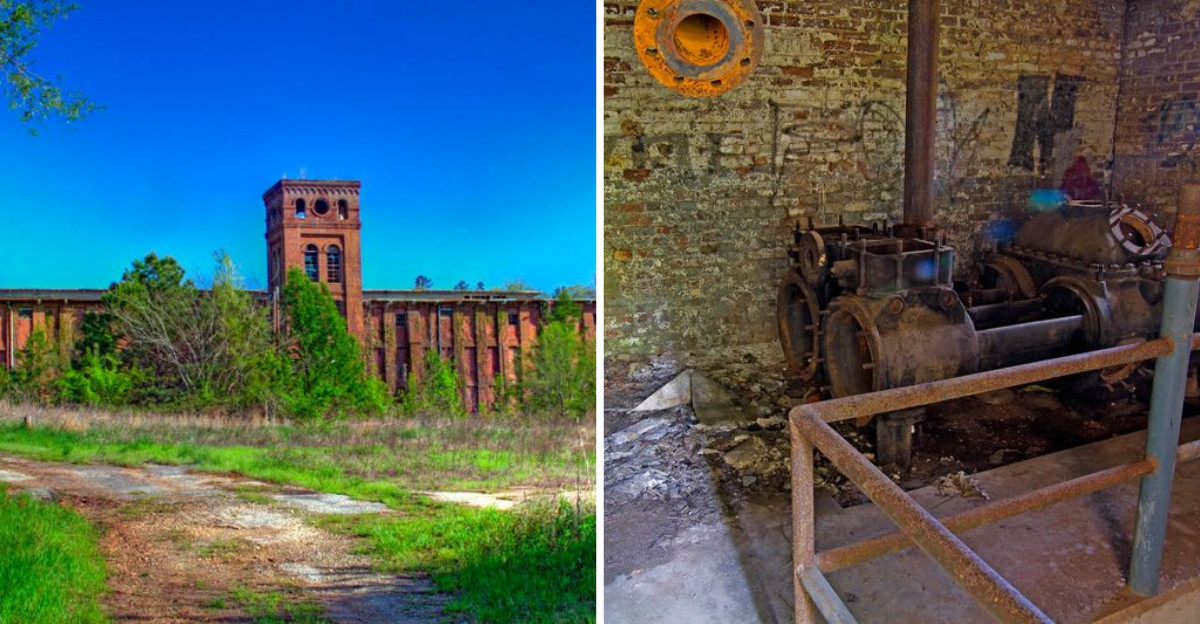
Rows of little wooden houses lined up like they were waiting for a shift change appeared when the road dipped down on a slow South Carolina drive, and I found this place almost by accident.
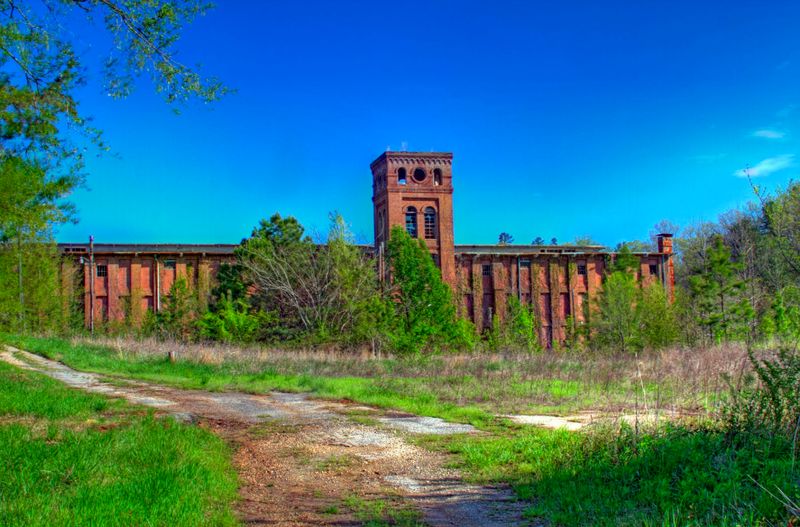
The big brick mill sat at the bottom of the hill, quiet but very much alive, its windows catching the late afternoon light in a way that made the whole scene feel suspended in time.
I parked, walked a block, and realized I had stumbled into one of the most complete textile villages left in the state. What struck me most was how ordinary it felt, with porch chairs and mailboxes and dogs barking somewhere behind a fence, the kind of street where people still know their neighbors’ names.
The mill stopped running back in 1975, yet the village around it never disappeared, and the houses still hold the shape of the lives that were lived in them.
The gap between what was lost and what stayed is exactly what makes this place worth a detour, a quiet reminder of how communities hold together even after the work that built them is gone.
The Mill That Started It All in 1893
Some towns grow slowly. Newry, South Carolina did not.
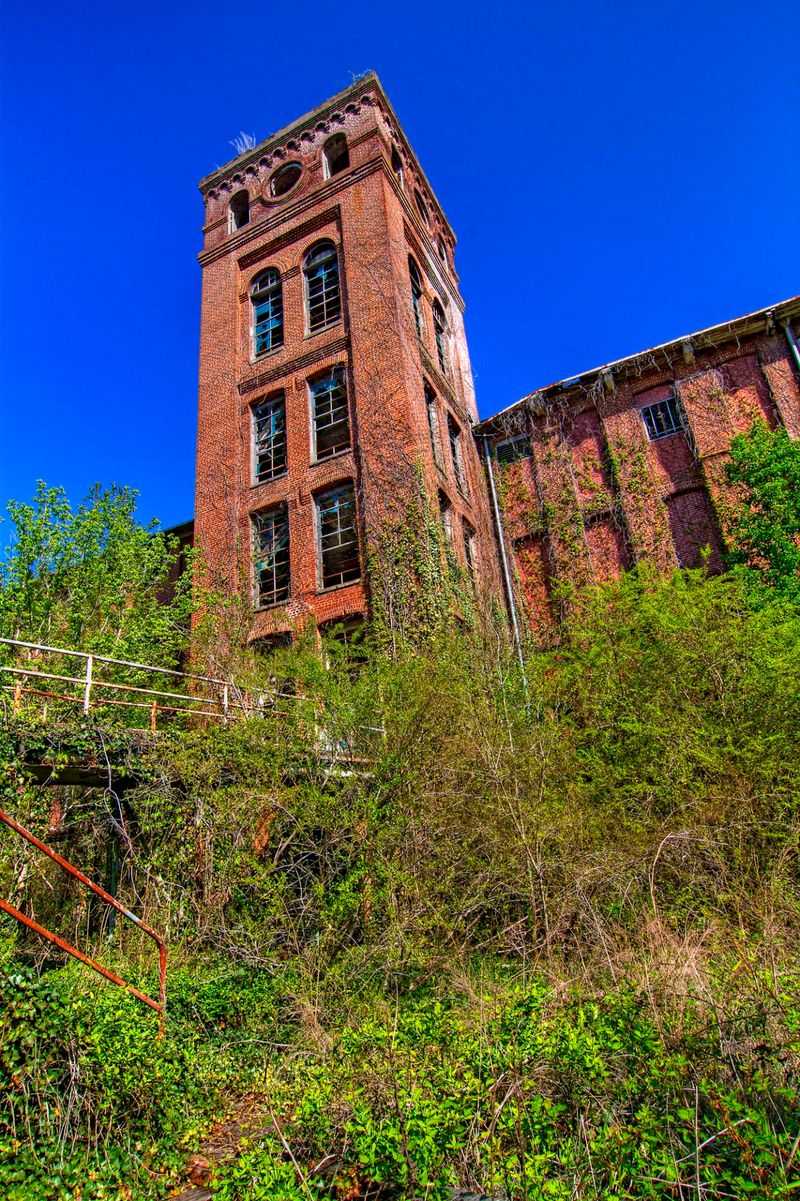
It arrived fully planned in 1893, when William Ashmead Courtenay, a former mayor of Charleston, formed the Courtenay Manufacturing Company and put a cotton mill in a quiet Oconee County valley.
The first cloth came off the machines on June 14, 1894, which is a strangely specific date to hold onto for over a century. Courtenay named the village Newry after his ancestral home in Ireland, and he wanted it to look like the New England textile towns he admired.
The mill and village design is attributed to W.B.S. Whaley, and you can still read that intention in the brickwork and the long rows of windows.
What I like about seeing it in person is how the building sits lower than the road, tucked against the landscape rather than looming over it. Water did the early work here, with hydropower drawn from the Little River turning the machinery.
By 1905, steam power and boilers were added to keep things running when the river would not cooperate. Standing near the mill now, that mix of ambition and practicality feels very human and very Southern.
Salt Box Duplexes and the Rhythm of the Streets
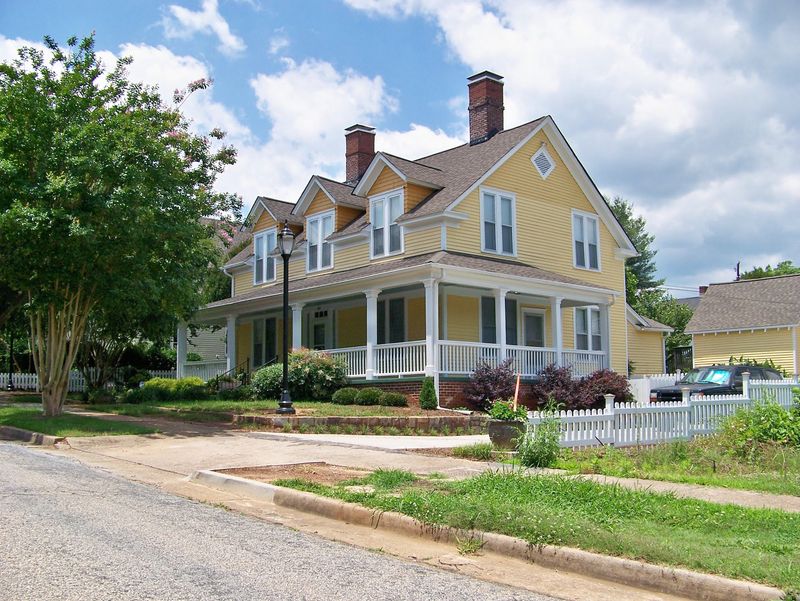
Walk two blocks in any direction and the houses start to feel like a pattern you can almost hum. Most of the original workers’ homes were built in a salt box duplex design, which means two families shared one simple building with a sloped roof out back.
They are small, plain, and surprisingly charming once you notice the details, like the way porch posts line up down the street.
I counted porches instead of houses, which turned out to be a better way to understand the place. These homes were not decoration.
They were part of the deal that came with mill work, built close enough that a whistle could reach every kitchen.
Larger residences were set aside for mill supervisors, and you can spot them by their extra windows and deeper yards.
The hierarchy of the old company town is still written into the streets if you slow down enough to read it. Names like Broadway, South Avenue, Branch Avenue, and Palmetto Avenue give the grid its shape.
Most of these original structures remain standing, which is genuinely rare for a village this old.
The General Store Everyone Tells You to Visit
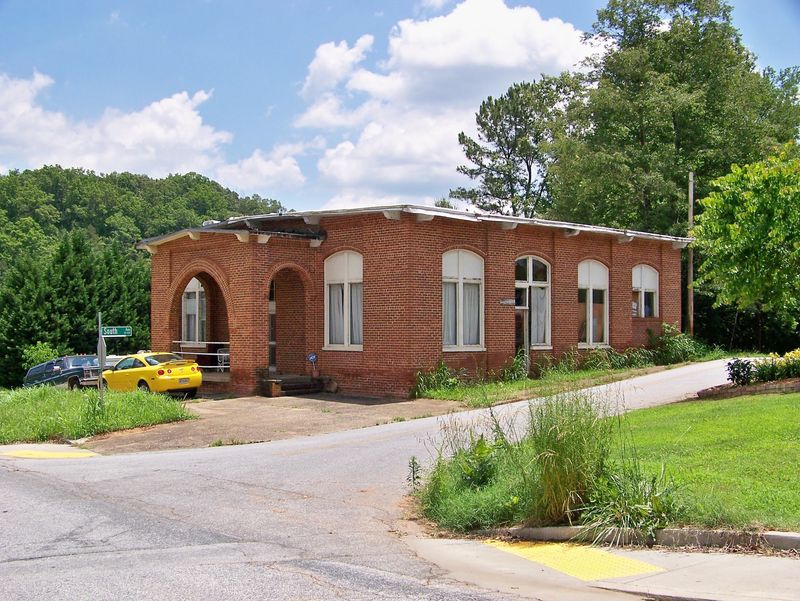
Ask anyone who has been to Newry recently and the general store comes up within about thirty seconds. The former company store and post office building has been renovated into a space that holds a grocery store, a cafe, and an event venue, plus an expanded U.S.
Post Office.
It is the kind of place where the coffee smells better than it needs to and the shelves hold sundries you did not expect to find.
I ordered a breakfast sandwich and ended up wandering the aisles longer than planned, mostly because the building itself is interesting. Upstairs there is a large open meeting space, reachable by stairs or an elevator, which tells you someone thought carefully about making an old building usable again.
The floors are clean, the staff are easy to talk to, and nothing feels overly staged.
Company stores were once the center of mill village life, where wages circulated right back into the community. Having that same building serve coffee and mail stamps again feels like a small, satisfying full circle.
Check hours before you go, since it is not open every hour of every day.
Inside the Mill’s New Life as Apartments and Lofts
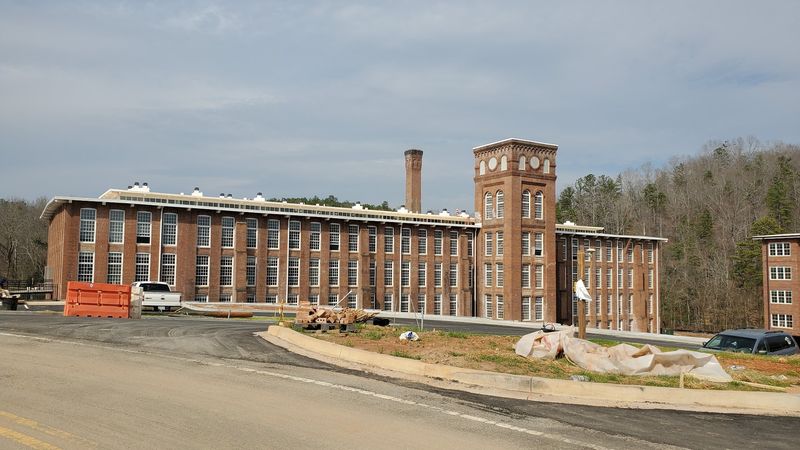
Here is the twist in the Newry story. The historic mill building is being transformed into 79 one- and two-bedroom apartments and lofts, which means people are living inside the same walls where cotton cloth was once woven.
Exposed brick, tall windows, and heavy timber are exactly the kind of features that modern renovations chase, and this building had them all along.
A local review I read summed it up honestly, noting that before the conversion the mill was a fascinating ruin but genuinely unsafe, with weak flooring and questionable stairs. Now it is occupied and cared for.
I understand why some people miss the abandoned version, since ruins have their own pull, but a building with residents tends to survive longer than one without.
From the outside, you can watch the transformation without disturbing anyone, and the scale of the structure becomes clearer when you notice how many windows it takes to light a mill floor.
Keep in mind these are private homes, so admire from public roads. The Newry Mill sits on Broadway Road if you want to find it on a map.
Innisfallen, the Ruined House on the Ridge
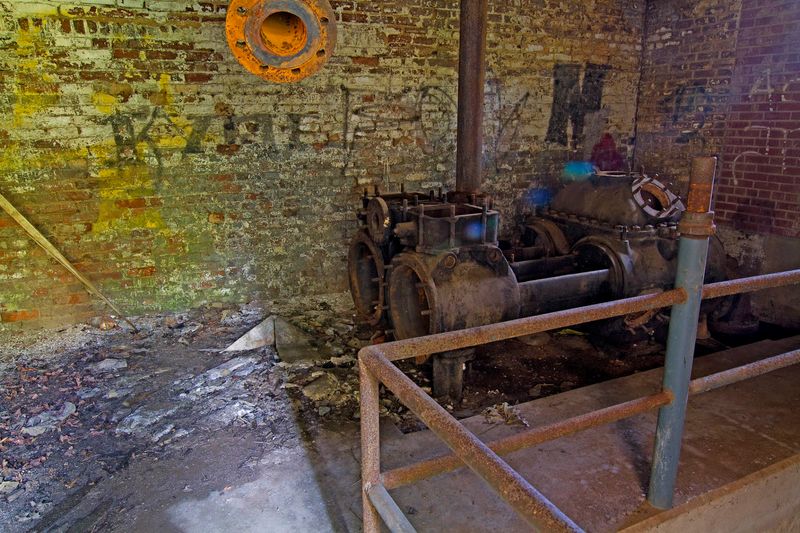
Up on a ridge southwest of the village, Courtenay built himself a neoclassical home and gave it the name Innisfallen. Today it sits in ruins, slowly being reclaimed by trees and vines.
There is something poetic about the founder’s grand house crumbling while the modest workers’ duplexes below are still lived in and repainted.
I did not expect the contrast to hit me the way it did. The village he designed for other people outlasted the house he designed for himself, and that says something about how communities hold on.
Ruins in the Upstate disappear fast because the forest here grows aggressively, so what remains of Innisfallen has been fighting a long battle with kudzu and hardwoods.
Be respectful and cautious here, since ruined structures are unstable and much of the surrounding land may be private. Viewing from a distance is the safer and more considerate choice.
Even without walking up to it, knowing that the ridge holds those remains changes how the whole valley reads. History in Newry is layered vertically as well as along the street grid.
A Church, a School, and a Boarding House
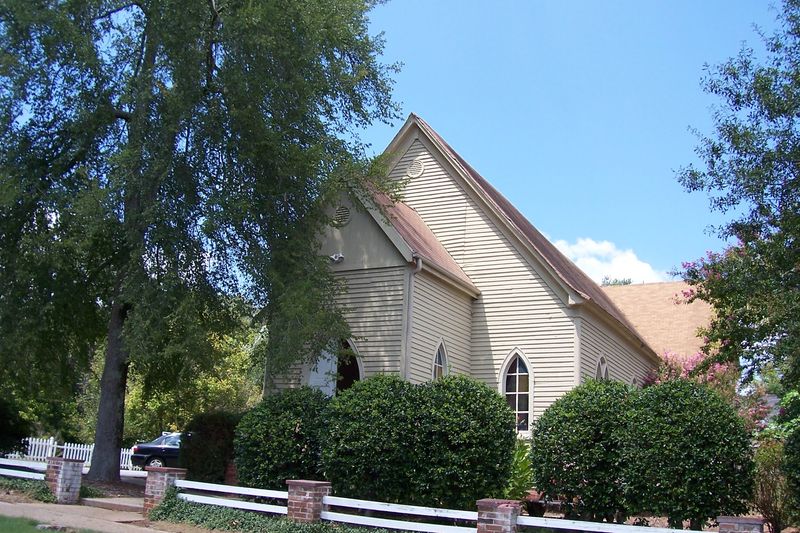
Planned villages needed more than houses, and Courtenay knew it. Newry was laid out with a church, a school, a boarding house, and a company office alongside the homes and the store.
Together they formed a self-contained world where a person could be born, educated, employed, and married without leaving the valley.
What surprised me on foot was how close everything sits. The distance between the school and the mill is short enough that children would have grown up hearing the machines all day.
The boarding house served single workers, often young people who came from farms nearby looking for steady wages.
Most of these buildings are still standing, which is the detail that earned Newry its place on the National Register. Individually they are modest structures.
Collectively they are a nearly complete record of how a turn-of-the-century mill village actually functioned.
If you enjoy architecture that tells you about daily life rather than wealth, this is the good stuff. I spent a while just noting which buildings had been repainted and which were waiting their turn.
The Little River and the Power Behind the Looms
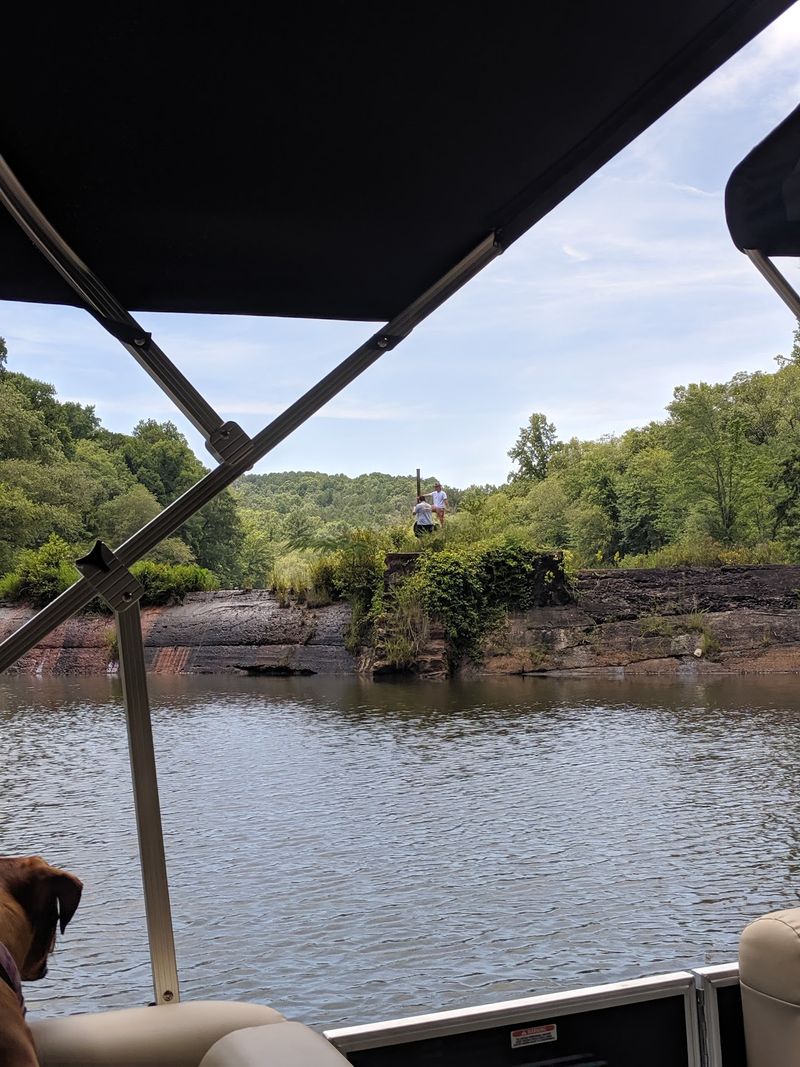
Rivers built the Southern textile industry, and the Little River built Newry. Hydropower from that water turned the mill’s machinery in its earliest years, long before boilers arrived to help in 1905.
Once you know that, the location of the village stops feeling random and starts feeling engineered.
The water is quieter now, at least in terms of industry. I walked toward the low ground near the mill and listened, and it was mostly birds and wind through hardwoods.
Droughts and floods both caused trouble for the mill over the decades, which is a reminder that relying on a river is a partnership, not a guarantee.
Plans for the surrounding area include improved walking trails, a pedestrian bridge, and public green spaces, all of which would make the waterside easier to enjoy.
Even without finished trails, the valley setting is genuinely pretty, with ridges rising on either side and thick forest closing in behind the houses.
Bring decent shoes if you plan to poke around near the water, because Upstate ground stays soft after rain.
Planning a Quiet Visit Without Getting in the Way
Newry is a real neighborhood, not an outdoor museum, and that shapes how you should visit. People live in these houses, apartments now fill the mill, and mail still arrives at the post office.
Park where parking is allowed, stay on public streets, and keep your voice at a Sunday morning volume.
Mornings worked best for me, when the light hits the brick and the cafe is doing its thing. Give yourself an hour to walk, longer if you sit down for coffee or breakfast.
Weekday hours can be limited, so a quick check before driving out saves disappointment.
Combine it with nearby Oconee County stops if you want a fuller day, since Seneca and the lake are close by. Comfortable shoes matter more than any special gear, and the terrain has gentle slopes.
What I took away was simple. A mill can close and a town can shrink, yet a village built with care can outlast the industry that created it, which is a pretty hopeful thing to find at the end of a country road.
Address: Broadway Road, Newry, South Carolina 29665
