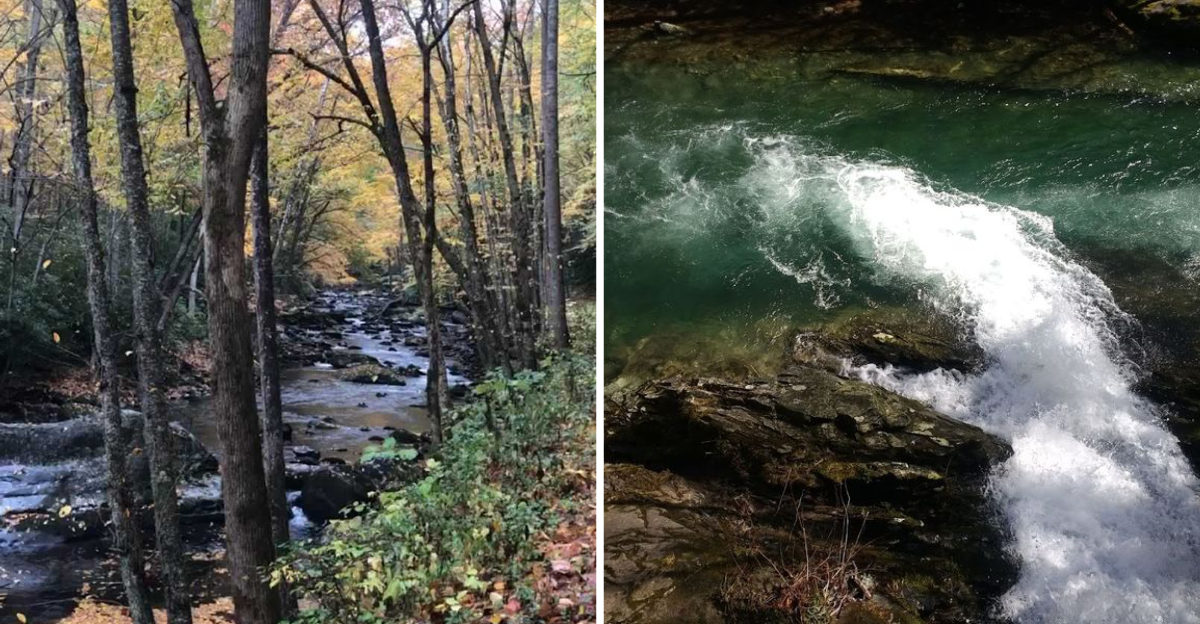
Clear water, cold enough to take your breath away, runs through a Tennessee river even in the heat of July. I sat on a smooth rock and let my feet dangle in the current, forgetting my phone existed.
That river originates at the highest point in the state and flows right through the heart of the park. I had heard people talk about it, but nothing prepares you for how alive that place feels.
The water moves over stones in a rhythm that makes you slow down, breathe differently, and just sit with it. I spent an afternoon there, watching the light shift through the trees, the sound of rushing water filling the air.
Swimming, fishing, hiking, or just listening, that place delivers something real.
The Townsend Y: Where the River Becomes a Natural Playground
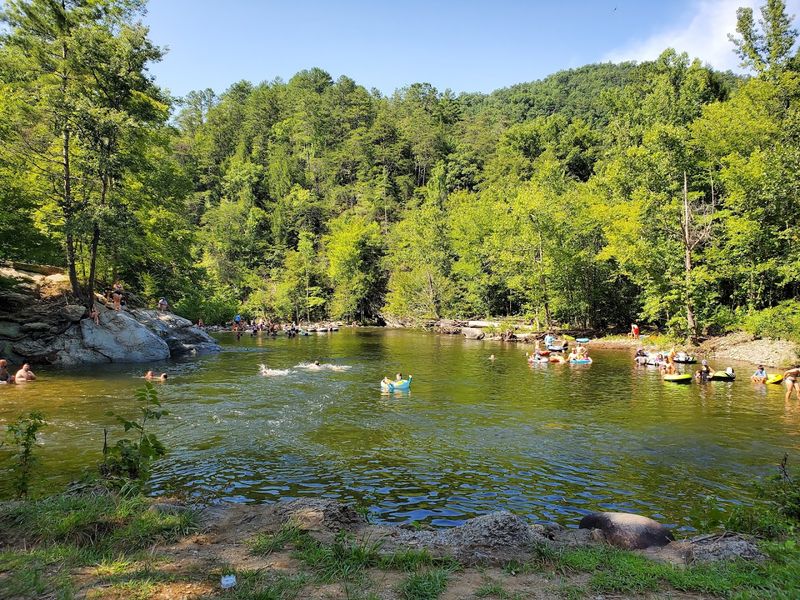
Some swimming holes feel like secrets, and the Townsend Y feels like one that half of Tennessee has already found but keeps coming back to anyway. Located at the junction of Laurel Creek Road and Little River Road near the Townsend park entrance, this spot is completely free to access and absolutely worth every bit of the drive.
The water here is calm, clear, and cold in a way that genuinely shocks you the first time you step in.
Families spread out on the grassy banks while kids splash in the shallows and braver visitors launch themselves off the jump-off rock into the deeper pool below. Gentle rapids make it a natural tubing run, and the whole vibe is relaxed and unhurried.
Nobody is rushing anywhere, and that energy is contagious.
I spent a good two hours just sitting on a flat rock mid-river, watching the water move around me, and it was one of the most genuinely restful moments of my trip. The river bottom is mostly smooth stones, so water shoes are a smart call.
Grassy areas nearby are perfect for picnicking, and the surrounding tree cover keeps things shaded enough to be comfortable even on the hottest afternoons. There are no lifeguards on duty, so awareness of your surroundings matters, especially with younger kids.
Still, the Townsend Y earns its reputation as one of the most beloved and accessible natural swimming spots in all of the Smokies without even trying too hard.
Metcalf Bottoms: The Family-Friendly Stretch That Earns Its Reputation
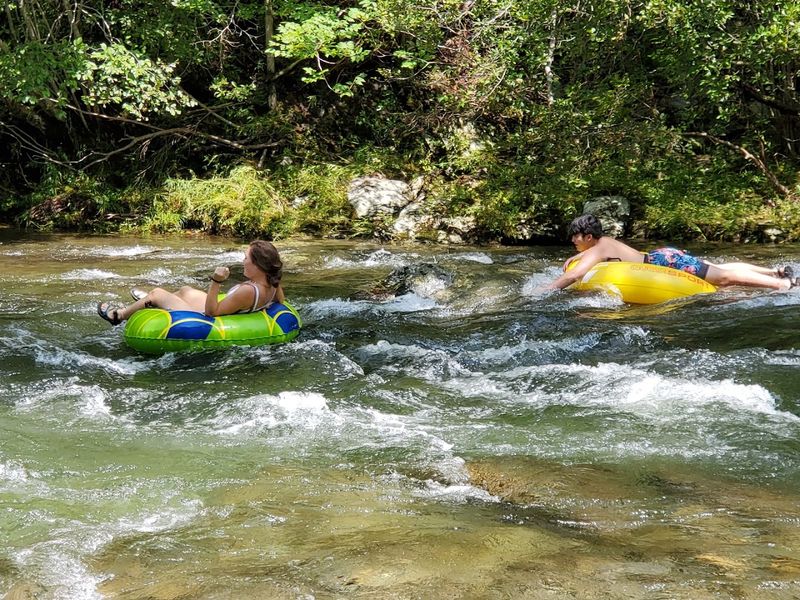
Metcalf Bottoms has a calm, almost lazy quality to it that makes you understand immediately why families keep returning year after year. Situated along Little River Road between Gatlinburg and Townsend, this section of the river is shallow enough for toddlers and wide enough for everyone to spread out without feeling crowded.
The water moves slowly here, making it ideal for floating on tubes or just standing knee-deep and watching the current drift past.
Picnic tables are scattered throughout the area, and restrooms are available nearby, which makes a full day here genuinely practical rather than just appealing. Packing a lunch and spending the whole afternoon is a very reasonable plan.
The surrounding forest keeps the air noticeably cooler than in town, and the sound of moving water is a constant, pleasant backdrop to everything.
What I noticed most was how unhurried everything felt. Parents read in camp chairs while kids built little rock dams in the shallows.
Older kids floated downstream on tubes and then walked back to do it again. There was a rhythm to the afternoon that felt almost nostalgic, like a summer memory in real time.
The water clarity here is remarkable too. You can see every grain of sand and every small fish darting between the rocks.
Metcalf Bottoms does not try to impress you with drama or spectacle. It simply offers a genuinely peaceful stretch of one of the most beautiful rivers in the Southeast, and that is more than enough.
The Sinks: A Waterfall with Serious Personality
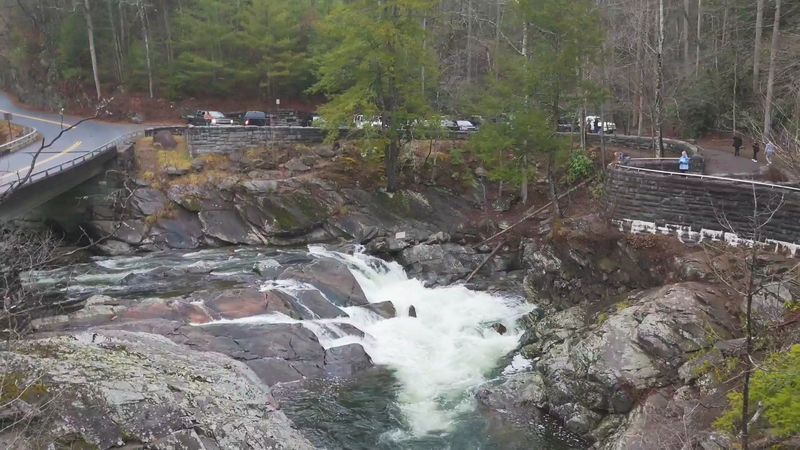
The Sinks is the kind of place that stops you mid-step. One moment you are driving along Little River Road, trees blurring past the windows, and then suddenly there is a waterfall thundering into a jade-colored pool right beside the road.
It is dramatic in a way that feels almost theatrical, like the river decided to show off just at that particular bend.
The waterfall itself is not enormous, but the force behind it is impressive. Water funnels through a narrow rocky channel and drops into a deep, swirling pool below, creating a roar that you feel as much as hear.
The rocks around the pool are worn smooth and slippery, so caution near the edge is genuinely important. Wading along the calmer edges is popular, but swimming near the waterfall itself carries real risk due to strong undercurrents.
What makes the Sinks worth a stop beyond the obvious visual drama is the atmosphere. The mist from the falls drifts over the surrounding rocks, keeping everything cool even on the warmest days.
Mossy boulders frame the scene, and the forest presses in close on all sides. It feels ancient and a little wild.
I stood at the overlook for longer than I planned, just watching the water churn and foam at the base. The Sinks is not a place to linger carelessly, but it absolutely rewards those who slow down and take it in from a respectful distance.
It is one of the most visually striking moments along the entire Little River corridor.
Fly Fishing on Little River: A Tradition Rooted in the Mountains
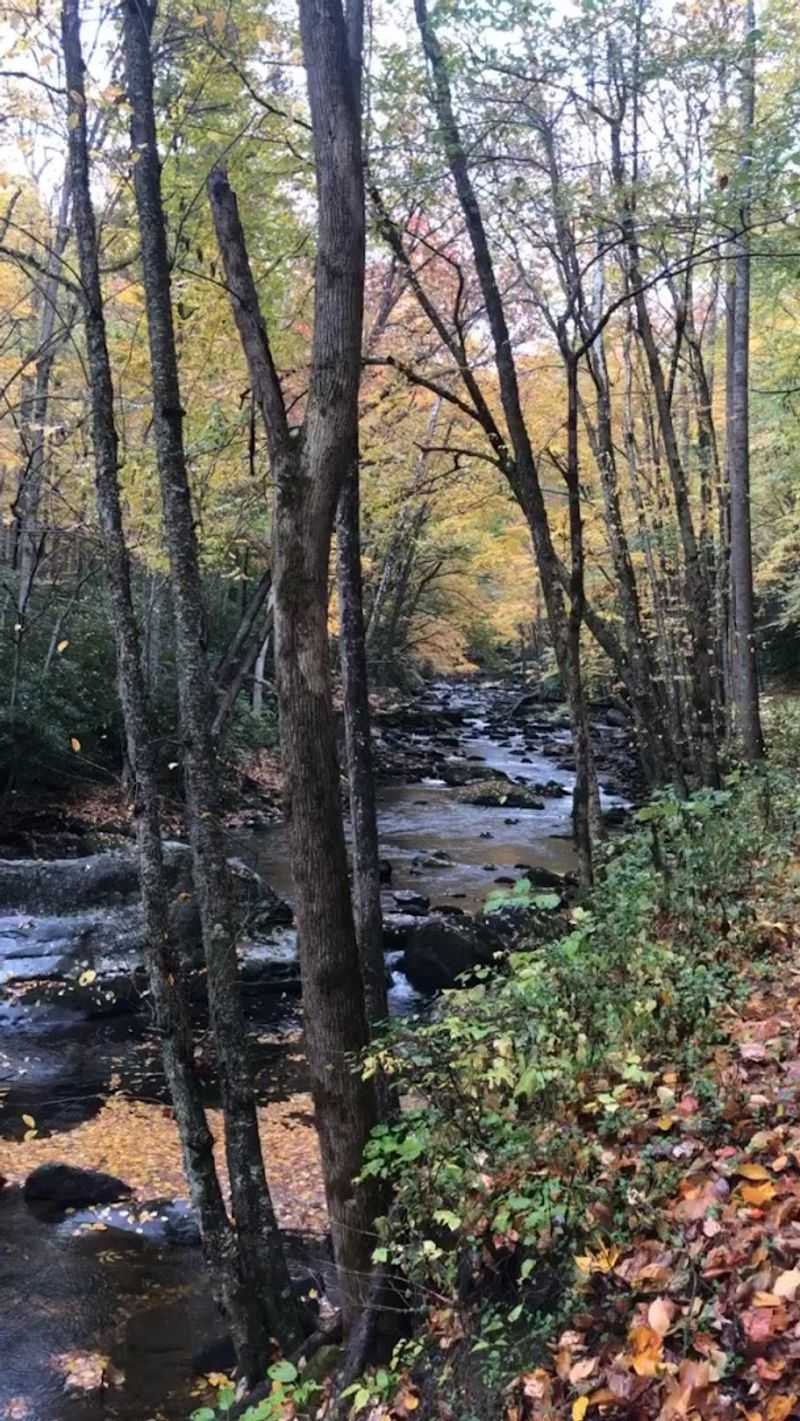
Little River has a reputation among anglers that goes back generations, and spending even a few hours on its banks makes it easy to understand why. Wild rainbow trout and brown trout populate the lower stretches of the river, while native Southern Appalachian brook trout hold to the cooler, higher-elevation tributaries where the water stays cold year-round.
The clarity of the river here is almost surreal, and watching a trout hold position in the current before darting away is genuinely thrilling.
Fishing is permitted year-round, from 30 minutes before official sunrise to 30 minutes after official sunset. The rules are strict and worth knowing before you go: only artificial flies or lures with a single hook are allowed within the park, and a valid Tennessee or North Carolina fishing license is required.
Daily possession limits apply, typically five trout with a 7-inch minimum length, along with 20 rock bass.
The ecological story of this river adds another layer to the experience. Scientists discovered a new fish species here, named Percina Apina, which translates roughly to “clean” or “without dirt,” a nod to the river’s exceptional water quality.
That kind of purity is increasingly rare, and knowing that you are casting a line into one of the cleanest river ecosystems in the eastern United States makes the whole outing feel meaningful. Even if you come back empty-handed, the morning light on the water and the sound of the current make the effort completely worthwhile.
Little River Trail: An Easy Walk with a Lot to Say
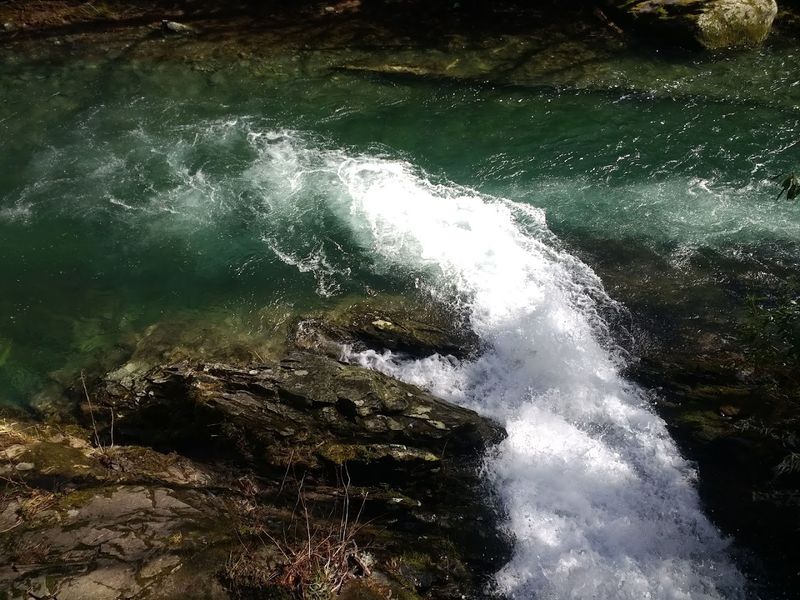
The Little River Trail begins in the Elkmont area, following an old railroad bed that once served the logging industry before the park existed. That history gives the trail a quiet depth that purely natural paths sometimes lack.
Remnants of historic summer cottages appear along the route, some in various stages of restoration, offering small windows into a past when wealthy families summered in these mountains decades ago.
The trail itself is wide, mostly gravel-covered, and gentle enough for young children and first-time hikers. Elevation change is minimal, which means the focus stays entirely on the scenery rather than the effort.
The river runs alongside the path for most of the route, visible through the trees and audible almost constantly. Small waterfalls like Huskey Branch Falls appear along the way, and large mossy boulders break up the riverbanks in a way that begs you to stop and sit for a while.
Wildlife sightings are not uncommon here. River otters have been spotted in the area, and the dense forest canopy provides habitat for a wide range of birds.
Spring brings wildflowers in abundance, and fall turns the whole corridor into something that looks almost too colorful to be real. The trail is rated easy to moderate and most visitors spend two to three hours depending on pace.
Parking near the trailhead requires a Great Smoky Mountains parking tag for stays longer than 15 minutes. Restrooms are available at the nearby Elkmont Campground, making logistics simple for a full morning out.
Little River Road: The Scenic Drive That Connects It All
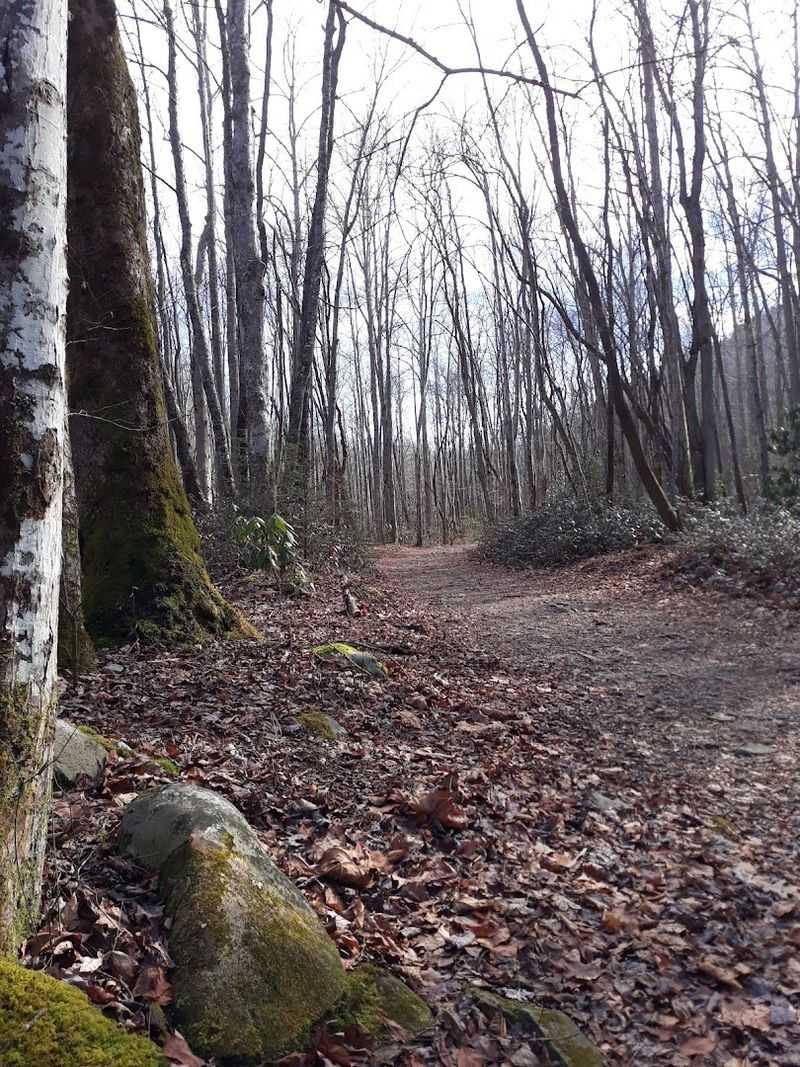
Not every great experience in the Smokies requires getting out of the car, and Little River Road proves that point beautifully. This 18-mile paved route connects the Sugarlands Visitor Center near Gatlinburg with the town of Townsend, hugging the banks of Little River for much of its length.
The road was built to follow the natural contours of the land, which means every curve brings a new angle on the river and the forest surrounding it.
Along the way, overlooks, picnic areas, and trailheads appear at regular intervals. Maloney Point offers a broad view of the surrounding ridgelines.
Meigs Falls is visible from the roadway itself, especially in fall and winter when the leaf cover thins out and the falls come into clearer view. The Sinks, Metcalf Bottoms, and the Townsend Y are all accessible directly from this road, making it a kind of greatest-hits loop for first-time visitors.
I drove it slowly on a weekday morning with the windows down, and the air coming off the river was noticeably cooler than anything I had felt in town. The sound of the water kept pace with the car for miles.
It is the kind of drive that reminds you why roads through national parks deserve to be taken at a crawl rather than a rush. Little River Road is not just a connector between destinations.
It is a destination in its own right, and one that rewards anyone willing to pull over, breathe the mountain air, and just look at the water for a minute.
Address: 107 Park Headquarters Road, Gatlinburg, TN 37738
