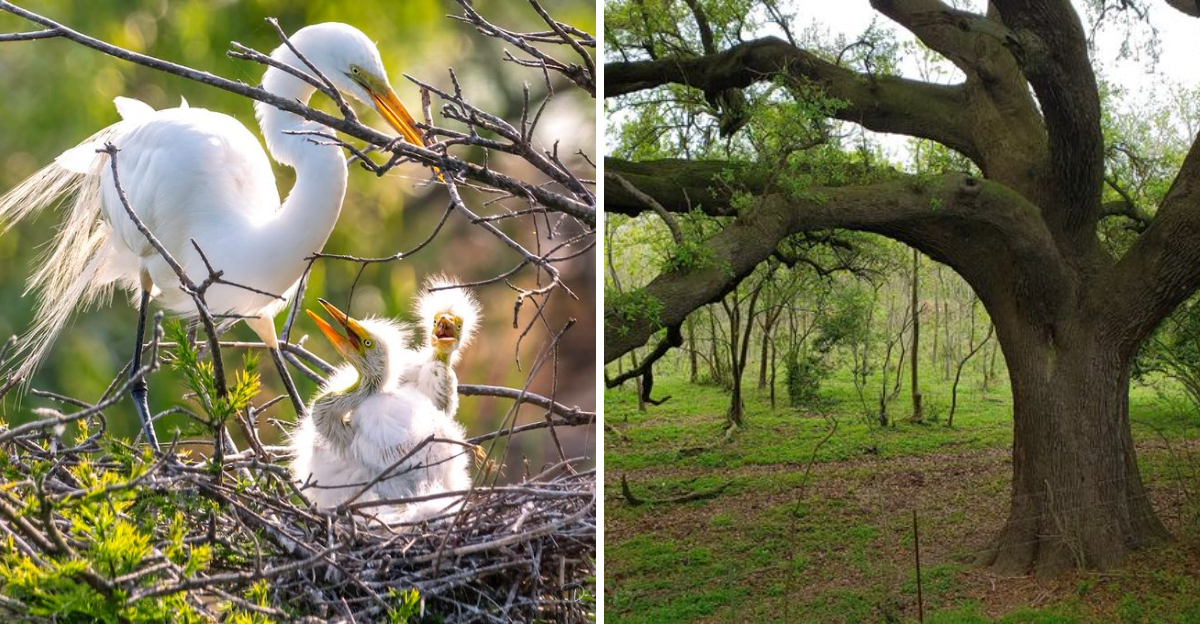
Nothing quite prepares the ears for the first visit to a rookery packed with thousands of nesting waterbirds during the height of the season. High above the ponds on an elevated canopy walkway, the perspective shifts from looking up into the trees to standing right where the action happens.
You get a front-row seat to one of the noisiest and most vibrant neighborhoods in the state, where egrets and herons jockey for branch space in a scene that feels like time suspended.
It is a refreshing discovery for anyone who wants to see wildlife in a way that feels immersive rather than observed from a distance.
The Magic of Spring Migration at Smith Oaks
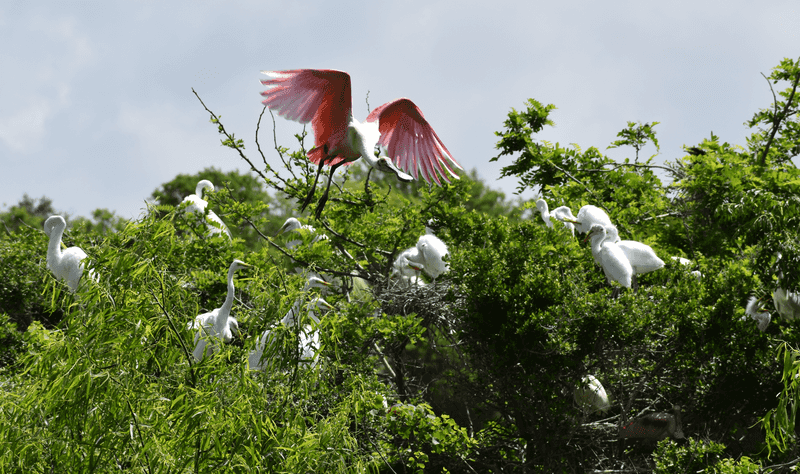
Every spring, something extraordinary unfolds along the upper Texas coast that birders plan months in advance to witness. Smith Oaks Sanctuary becomes a literal landing pad for exhausted migratory birds crossing the Gulf of Mexico, and the numbers are staggering.
These birds have flown hundreds of miles over open water with no rest. When they finally spot land near High Island, they drop into the oaks like confetti, filling every branch and bush.
The phenomenon is called a “fallout,” and on a good day, one tree can hold dozens of species at once.
Warblers in brilliant yellows and oranges mix with tanagers, buntings, and orioles. The air hums with birdsong from every direction.
What makes Smith Oaks special compared to other Texas spots is the combination of mature trees, freshwater ponds, and coastal proximity that creates a perfect recovery zone for these exhausted travelers.
Mid-March through mid-May is the sweet spot for visiting. Arriving early in the morning after a southerly wind shifts to north is your best bet for catching a fallout.
The experience feels less like birdwatching and more like witnessing a miracle unfold right in front of you.
Claybottom Pond Rookery: Nature’s Noisiest Neighborhood
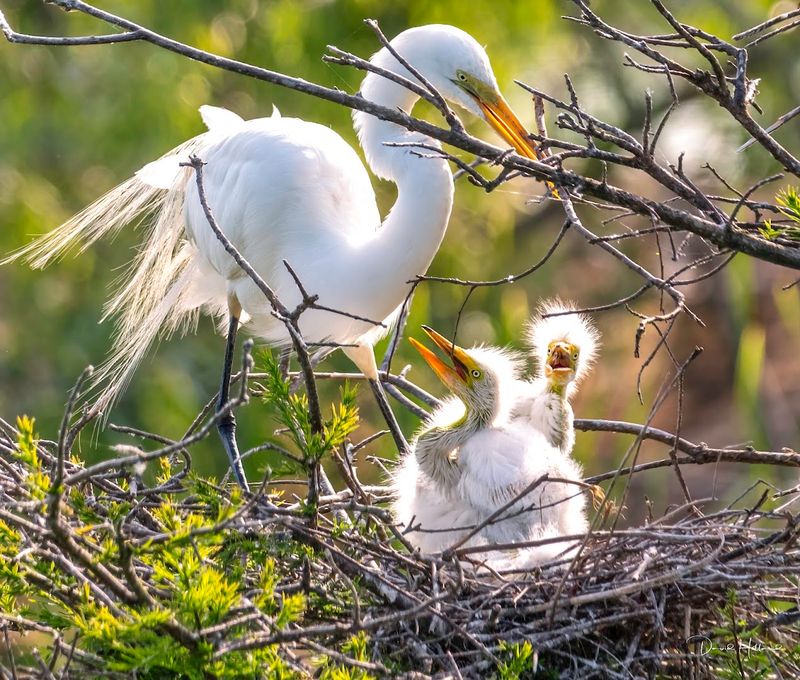
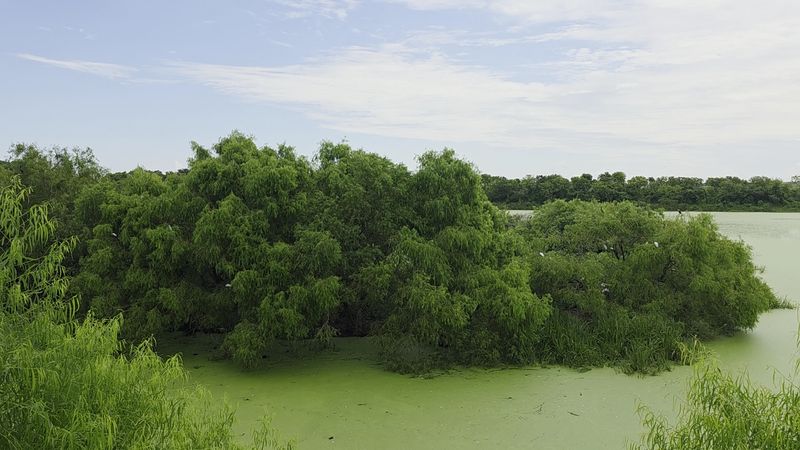
Nothing quite prepares you for the first time you see Claybottom Pond during nesting season. A small island in the middle of the pond holds one of the most spectacular rookeries on the entire Gulf Coast, packed with thousands of waterbirds raising their young.
Roseate Spoonbills glow pink against the green foliage. Great Egrets spread their wings wide while Tricolored Herons jockey for prime branch space.
Snowy Egrets and Neotropic Cormorants add to the chaos, and the noise level is something you genuinely have to experience to believe.
The rookery is active from spring through early summer, and each visit feels different depending on the time of day. Morning light turns the whole scene golden, making it a photographer’s dream.
Late afternoon brings feeding frenzies as adult birds return from nearby marshes loaded with food for their chicks.
The viewing platforms around the pond put you at eye level with the action without disturbing the birds. It is one of those rare situations where wildlife is completely comfortable with human observers nearby.
Spending an hour here feels like time suspended, the kind of moment you keep thinking about long after you have driven home.
Kathrine G. McGovern Canopy Walkway: A Bird’s-Eye View
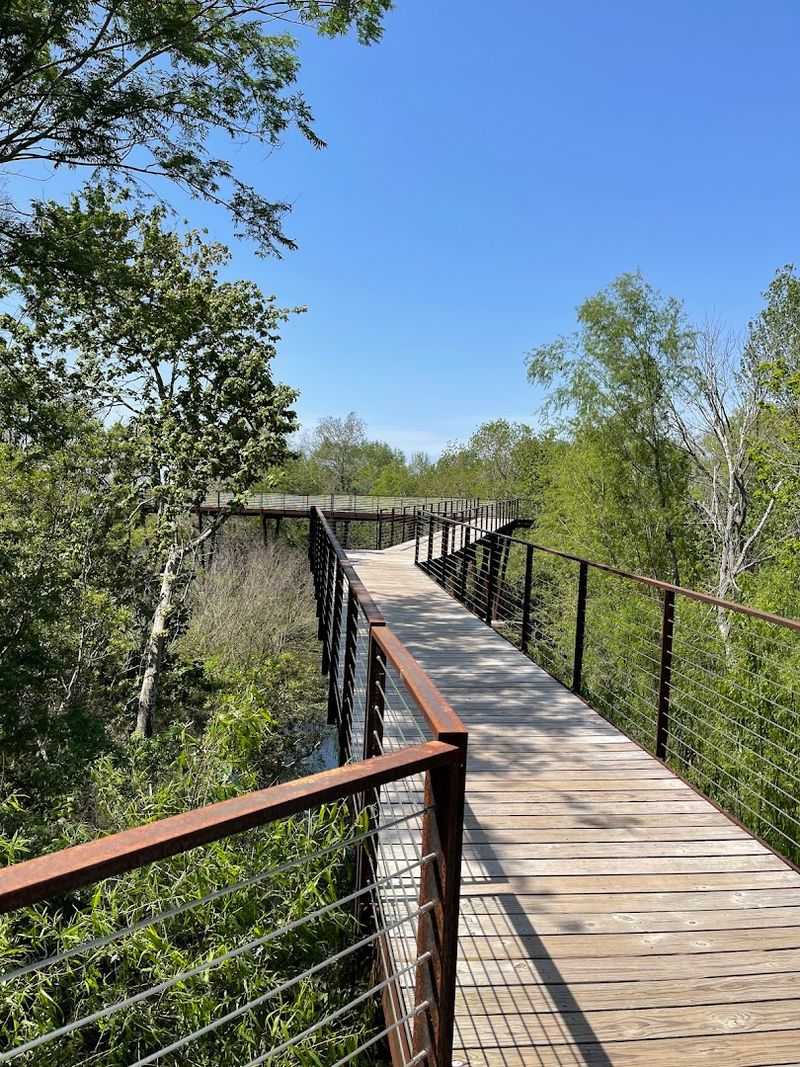
Most birdwatching happens from the ground up, craning your neck and squinting into the treetops. The Kathrine G.
McGovern Canopy Walkway flips that experience completely around, lifting you right up into the canopy where the birds actually live.
This 700-foot elevated boardwalk is one of the most unique structures at any birding sanctuary in the country. It winds through the oak trees at canopy height, giving you a perspective that feels genuinely rare.
Suddenly, warblers are at eye level. Herons glide past at the same altitude you are standing on.
The walkway also offers sweeping views of the surrounding sanctuary, including Claybottom Pond below. On a clear spring morning, the combination of bird activity and coastal light makes the whole scene feel almost surreal.
I spent nearly two hours up there one visit without even noticing the time passing.
The structure is well-built and accessible, with gentle railings and a smooth walking surface. It connects visitors to the rookery viewing area, making it a natural part of any route through the sanctuary.
Even if birds were not your primary interest, the views alone would justify the trip out to High Island.
The Diverse Habitats That Make This Sanctuary Tick
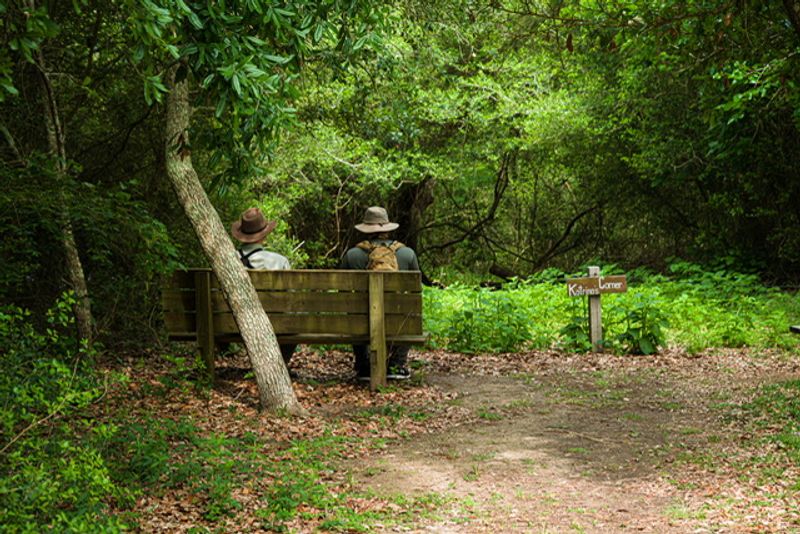
One reason Smith Oaks consistently delivers incredible birdwatching is that it packs several completely different habitat types into 177 acres. That variety is not an accident, it is the whole reason so many different species use this place as a migration stop.
The mature oak mottes provide dense cover for songbirds that need shade and insects after a long flight. Open fields attract ground-feeding sparrows, pipits, and shorebirds during different seasons.
Wetland edges draw in herons, rails, and wading birds that prefer marshy conditions.
Freshwater ponds like Claybottom serve double duty as both a rookery site and a drinking stop for thirsty migrants. The connectivity between these habitats means birds can move fluidly through the sanctuary finding exactly what they need.
You can witness that movement just by standing in one spot and watching the traffic flow between zones.
The Houston Audubon Society actively manages these habitats to keep them healthy and productive. Invasive plants are removed, water levels are monitored, and the tree canopy is maintained thoughtfully.
That behind-the-scenes work is why Smith Oaks keeps delivering year after year, and it is something visitors rarely see but absolutely benefit from every single visit.
Roseate Spoonbills: The Pink Celebrities of the Sanctuary
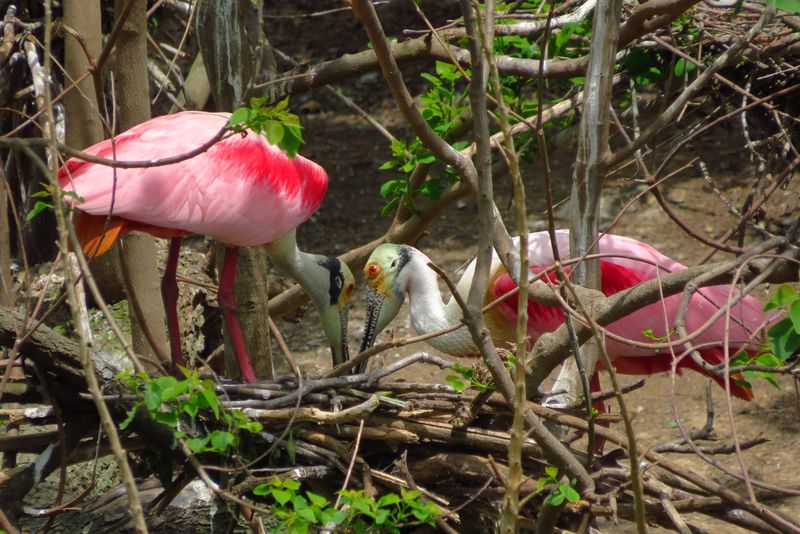
Of all the birds you might see at Smith Oaks, the Roseate Spoonbill tends to stop people cold in their tracks. That shocking flamingo-pink color looks almost too vivid to be real, especially when a group of them are feeding together in the shallow water near the pond edges.
Spoonbills get their name from the distinctive spatula-shaped bill they sweep side to side through the water to catch small fish and crustaceans. Watching them feed is oddly hypnotic, almost like watching someone slowly sweep a floor in slow motion.
They are not subtle birds in any sense of the word.
During nesting season at Claybottom Pond, they build their stick nests in the trees on the island and become surprisingly bold. Adults fly in and out constantly, and the pink flashes of wings against the green canopy are the kind of image that sticks with you permanently.
Spoonbills were once hunted nearly to extinction for their feathers. Their recovery and presence at Smith Oaks today is genuinely a conservation success story worth appreciating.
Seeing one up close feels like a small victory for every wildlife protection effort that came before it, which adds a quiet layer of meaning to an already beautiful encounter.
Birdwatching Tips for Getting the Most Out of Your Visit
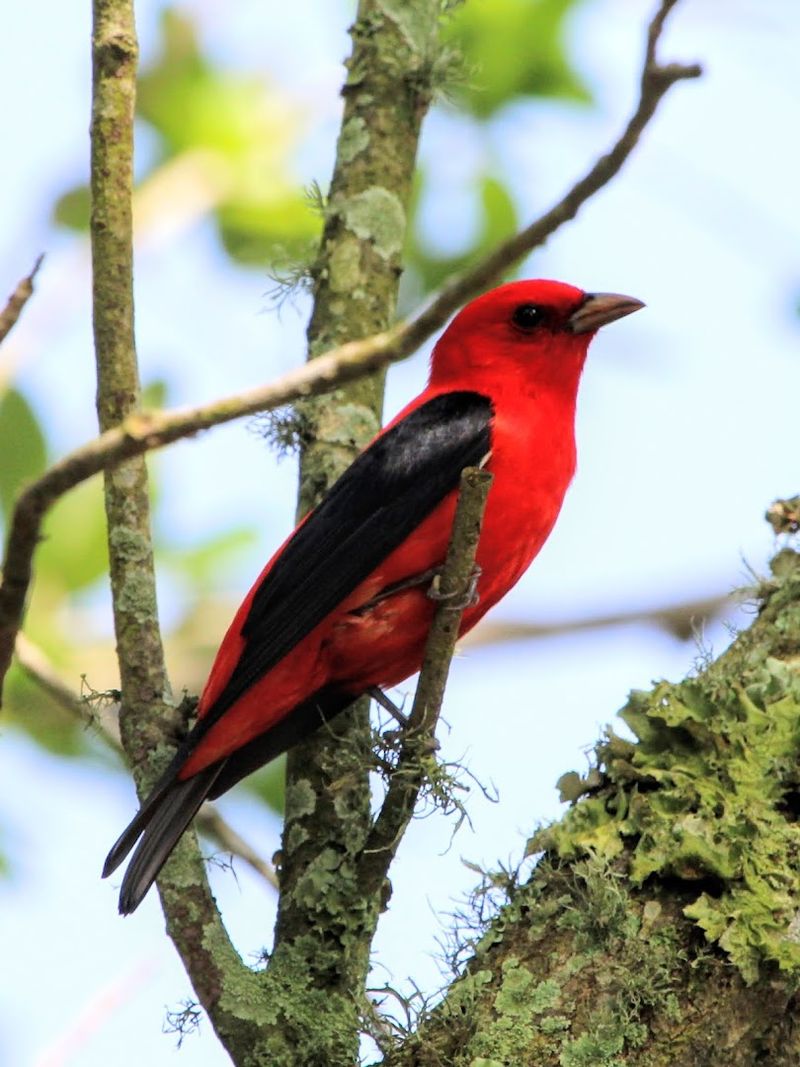
Showing up to Smith Oaks without a little preparation means you might miss half of what makes it spectacular. A few simple habits can turn a good visit into an unforgettable one, regardless of your experience level with birding.
Arrive early. The first two hours after sunrise are consistently the most active, especially during migration.
Birds are feeding, moving, and calling constantly, and the light is better for both watching and photography. Bring binoculars with at least 8x magnification, and a field guide specific to Texas or the Gulf Coast will help you identify what you are seeing in real time.
Move slowly and quietly through the trails. Fast movement startles birds and clears an area quickly.
Patience is genuinely the most valuable tool you can bring. Wear muted colors that blend into the environment rather than bright clothing that can spook wary species.
Bug spray is non-negotiable during warmer months. Mosquitoes near the wetland areas can be aggressive, and long sleeves help significantly.
Comfortable walking shoes matter too since some trail sections can be muddy after rain.
Download the free eBird app before you go. It lets you log sightings in real time and check recent reports from other visitors so you know exactly which species have been seen in the days before your trip.
Photography at Smith Oaks: Where Every Shot Tells a Story
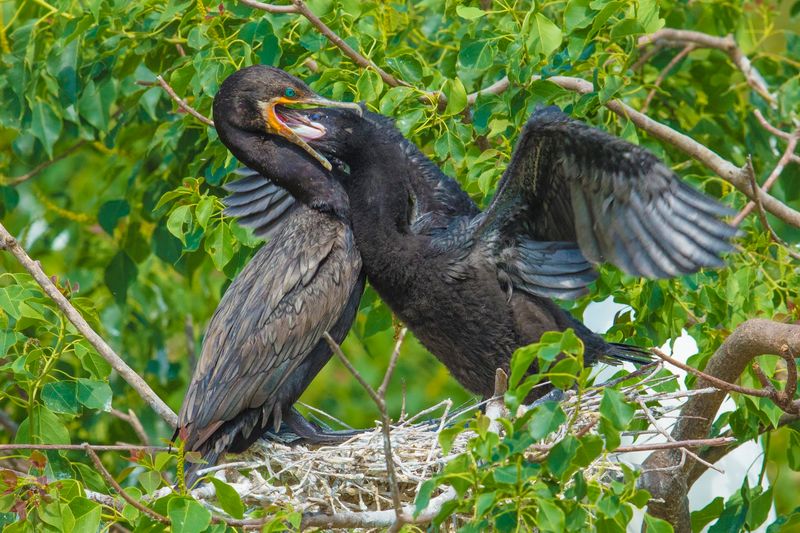
Bird photography does not get much better than what Smith Oaks offers during peak season. The combination of cooperative subjects, great natural light, and accessible viewing platforms creates conditions that even beginner photographers can work with successfully.
The rookery at Claybottom Pond is the obvious highlight for photos. Birds are close, active, and completely unbothered by cameras.
You can capture nesting behavior, feeding rituals, and dramatic wing spreads without needing a massive telephoto lens. A 300mm or 400mm zoom gets you genuinely close-up shots from the viewing platforms.
The canopy walkway opens up creative angles that ground-level photography simply cannot achieve. Shooting down at birds in flight or capturing the layered canopy with birds hidden into branches produces images that look like they belong in a nature magazine.
Golden hour light in the morning hits the pond surface and the pink plumage of spoonbills in a way that feels almost cinematic. Arriving before the sun fully clears the horizon gives you that warm, soft light before the crowds arrive and the scene gets busy.
The Houston Audubon Society does ask photographers to follow specific guidelines near the rookery to protect nesting birds. Respecting those rules keeps the sanctuary healthy and ensures future visitors get the same incredible access that makes Smith Oaks so rewarding to photograph.
High Island: The Small Town Behind the Big Bird Scene
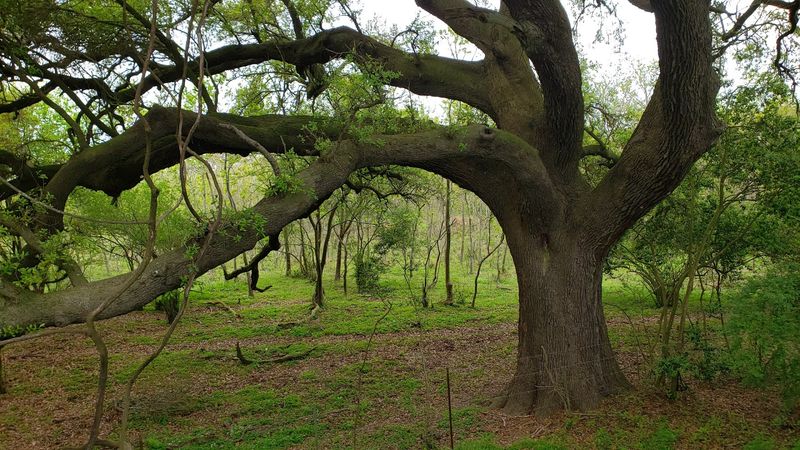
High Island is not exactly a bustling destination, and that is honestly a big part of its charm. This tiny community of a few hundred people sits on a salt dome that rises just enough above the surrounding coastal plain to support the oak trees that make the bird sanctuaries possible.
The geology here is genuinely unusual for the Texas coast. That slight elevation difference of just a few feet above sea level creates a completely different plant community compared to the surrounding marshes.
Without that quirk of geology, there would be no oaks, no canopy, and no reason for millions of migratory birds to stop here every year.
The town itself has a quiet, unhurried energy that feels refreshing after driving through busy coastal highways. There are no flashy tourist traps or crowded parking lots outside of peak birding season.
It feels like a place that has not changed much in decades, which is oddly comforting.
Nearby Bolivar Peninsula offers additional coastal scenery and shorebird habitat for those wanting to extend their trip. The drive along Highway 87 through the peninsula is flat, wide open, and filled with marsh birds on both sides of the road.
High Island serves as a perfect base for exploring this entire stretch of the upper Gulf Coast.
Year-Round Birding Beyond the Spring Spectacle
Spring migration gets all the attention at Smith Oaks, but the sanctuary has something worth seeing in every season. Knowing what to expect throughout the year helps you plan a visit that matches your interests beyond just the famous April fallout events.
Fall migration runs from August through October and brings a quieter but still impressive parade of southbound birds. Shorebirds and warblers move through in good numbers, and the reduced crowds mean you often have the trails almost entirely to yourself.
The light is different in fall too, lower and warmer, which makes for beautiful photography conditions.
Winter brings its own cast of characters to the sanctuary. Sparrows flock into the brushy areas in surprising variety.
Ducks and grebes fill the ponds. The occasional rarity shows up, which is why local birders keep visiting even in the coldest months.
It is a completely different energy from spring but genuinely rewarding in its own way.
Summer is quieter for migration but the rookery is in full swing through June, making it the best time to observe nesting behavior and chick development. The sanctuary is open year-round from 7 AM to 7 PM, so there is really no bad time to show up and see what is happening.
Every season at Smith Oaks has its own personality.
Planning Your Trip to Smith Oaks Sanctuary
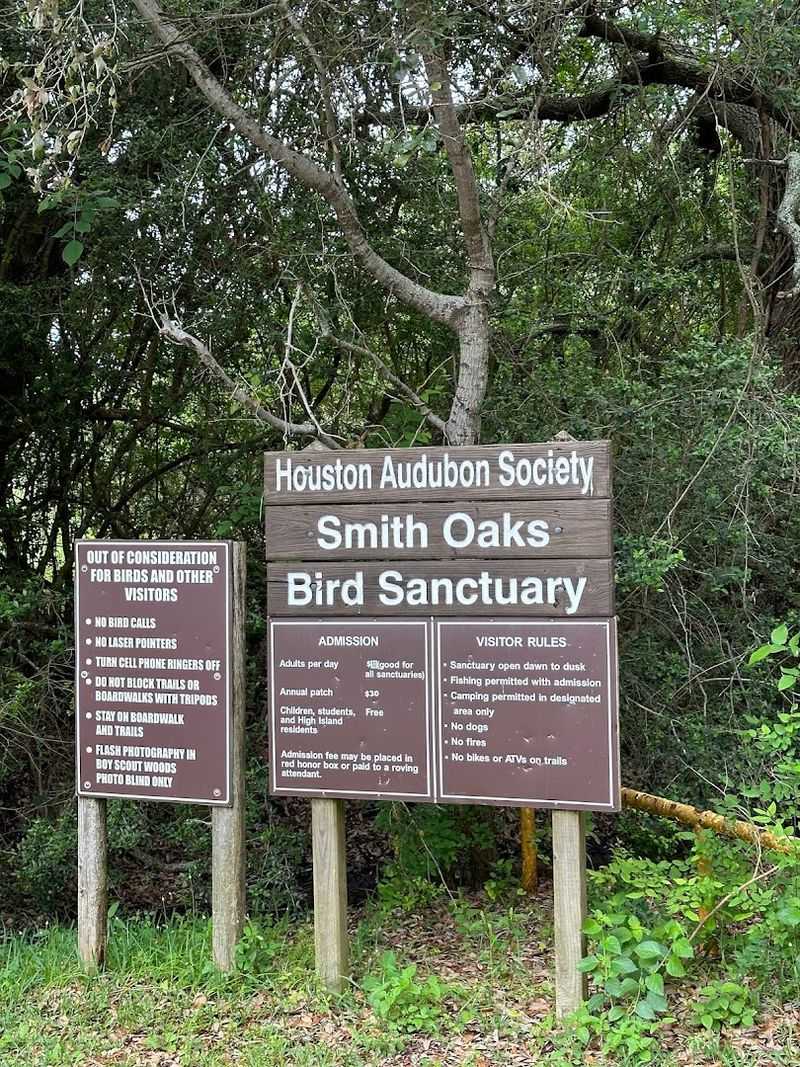
Getting to Smith Oaks requires a bit of planning since High Island is not exactly on the way to anywhere else. The sanctuary sits at 2205 Old Mexico Road, about 75 miles east of Houston, and the drive takes you through some genuinely beautiful coastal prairie and wetland scenery along the way.
The Old Mexico Road entrance is the main access point during spring migration and on weekends throughout the rest of the year. A second entrance on Winnie Street is accessible year-round through a pedestrian turnstile gate.
Parking is available at both locations depending on the season and day of your visit.
A day pass covers access to all Houston Audubon sanctuaries in High Island, which is a great deal since there are several sanctuaries clustered in the area. The annual patch option is worth considering if you plan to visit more than a few times per year.
Passes can be purchased online before you arrive or at the sanctuary entrance.
Pack water, snacks, sunscreen, and bug spray before leaving the car. There are no food vendors or shops inside the sanctuary.
Cell service can be spotty in the area, so downloading offline maps and bird identification apps in advance is genuinely useful. The Houston Audubon Society website also posts real-time bird activity reports during peak season that help you time your visit perfectly.
