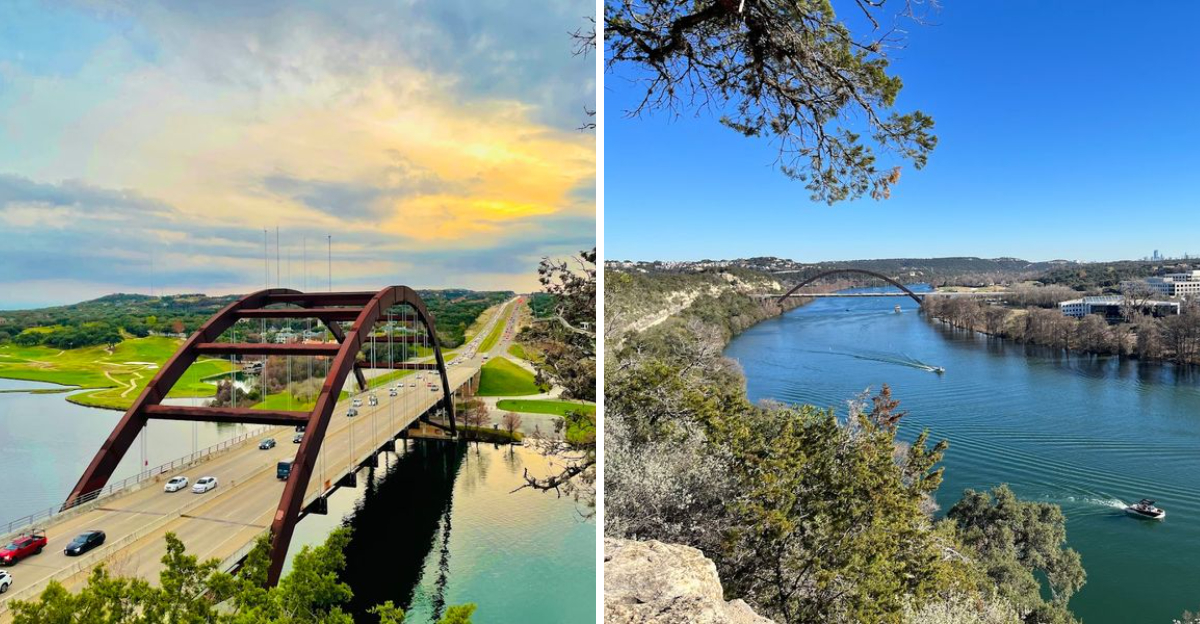
This bridge does not just get a person across the water. It puts on a little show while doing it.
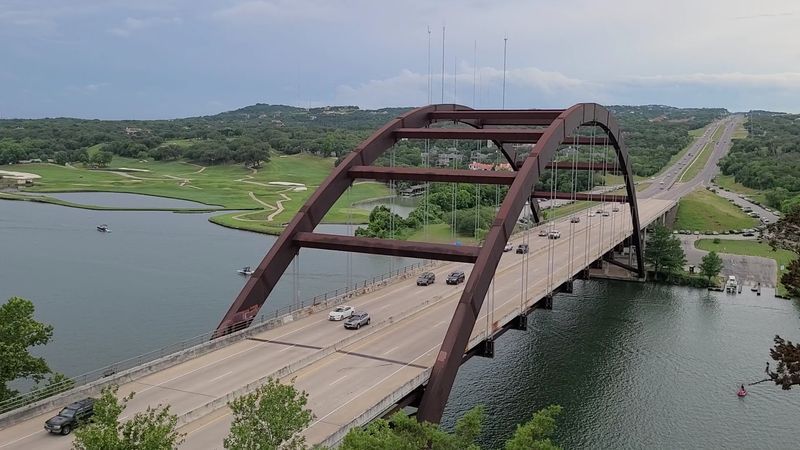
That rusty orange arch cuts through the Texas sky like a giant metal rainbow. The view of the lake from the top is ridiculous, the kind that makes a person stop and just stare.
When it was built back in the 80s, only one other bridge like it existed anywhere on the planet. No support columns touch the water, so boats glide right underneath without a worry.
That is some clever engineering. A person could sit on the rocky overlook for an hour and just watch the boats drift by.
For a quick adventure, this spot is hard to beat. Texas knows how to build things with style.
The Steel Through-Arch Design That Made History
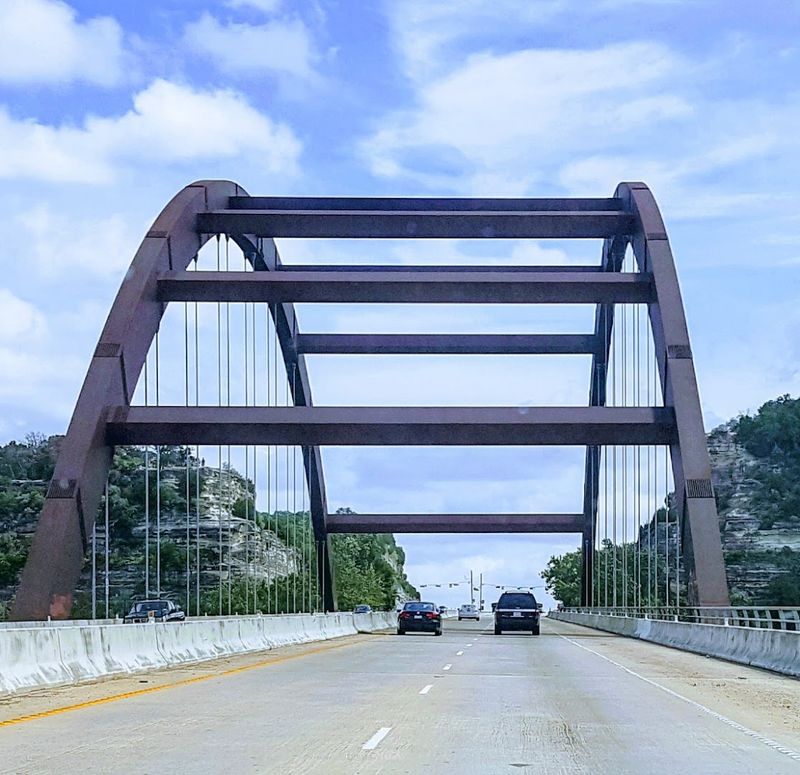
When this bridge was completed in 1982, it was only the second of its kind in the entire world. That is not a small thing.
The steel through-arch design means the roadway actually passes through the arch rather than sitting on top of it, which gives the bridge that low, sleek profile you notice immediately from the overlook.
Seventy-two steel cables suspend the roadway above the water, and not a single piece of the structure physically touches Lake Austin below. That was a deliberate choice, made specifically to protect the lake for boating and waterskiing.
Engineers wanted the bridge to coexist with recreation rather than interrupt it.
The arch spans 600 feet at its center, and the full length of the bridge stretches 1,150 feet. Those numbers feel abstract until you are standing beneath it.
The scale is genuinely impressive, and the engineering behind it earned the Federal Highway Administration’s Excellence in Highway Design award in 1984, the same year it also won first prize in the American Institute of Steel Construction’s Prize Bridge Competition in the Long Span category.
Corten Steel and the Amber Patina That Ages Beautifully
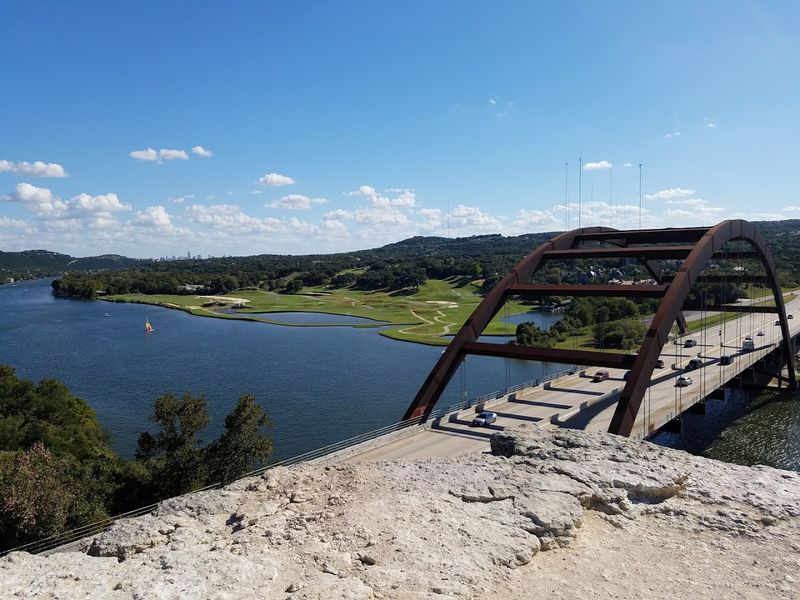
Most bridges try to fight rust. This one was designed to embrace it.
The Pennybacker Bridge was built using Corten steel, a weathering steel that develops a stable, rust-like surface over time rather than continuing to corrode. The result is that warm amber and reddish-brown tone that makes the bridge look like it grew out of the Texas Hill Country landscape naturally.
What makes the material story even more interesting is the journey the steel took. It was produced by U.S.
Steel, but actually manufactured in Japan and fabricated in South Korea before being shipped all the way to Texas. For a bridge that feels so deeply Texan, its bones came from across the Pacific.
The roadway itself is made from roughly 3,400 short tons of concrete, which balances the lightness of the arching steel above. The visual contrast between the heavy concrete deck and the graceful steel curves above it is part of what gives the bridge its personality.
By 1992, Austin’s Consulting Engineers Council of Texas recognized it as the most innovative example of local architecture, which feels like a well-earned compliment for a structure that is also just genuinely beautiful to look at.
Percy V. Pennybacker Jr., the Man Behind the Name
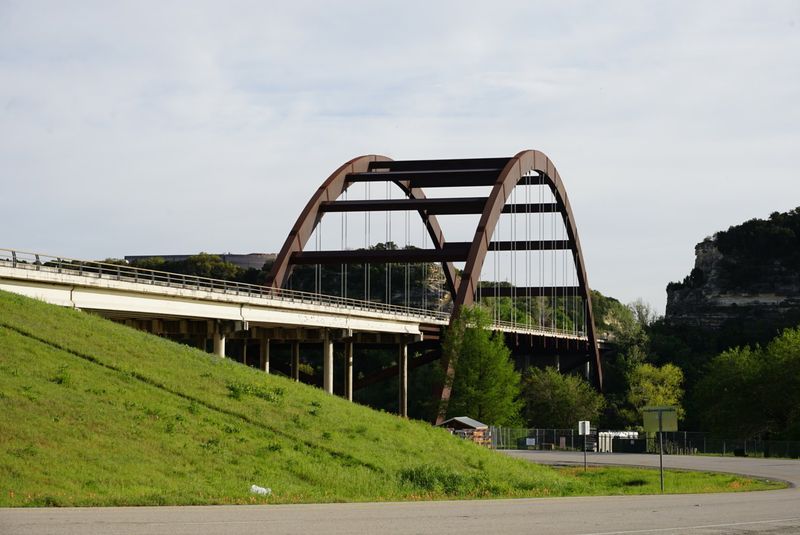
Not every bridge gets named after someone worth knowing about. Percy V.
Pennybacker Jr. was a civil engineer whose career was defined by two things that do not always go together: a passion for innovative bridge structures and a genuine commitment to environmentalism. The bridge carries his name because his values are literally built into its design.
Planning for the bridge began back in 1962, long before construction ever started. The decision to keep the entire structure above the waterline was directly influenced by the kind of environmental thinking Pennybacker championed throughout his career.
Protecting Lake Austin was not just a practical consideration; it reflected a broader philosophy about how infrastructure should interact with the natural world.
Construction finally began in 1979 and was completed in 1982 at a total cost of ten million dollars. The bridge was officially dedicated on November 29, 1982, and opened to traffic just four days later on December 3.
Naming it after Pennybacker was a fitting tribute, not just to the man, but to the idea that good engineering and environmental responsibility can genuinely work together rather than pulling in opposite directions.
Lake Austin Views From the Overlook That Photographers Love
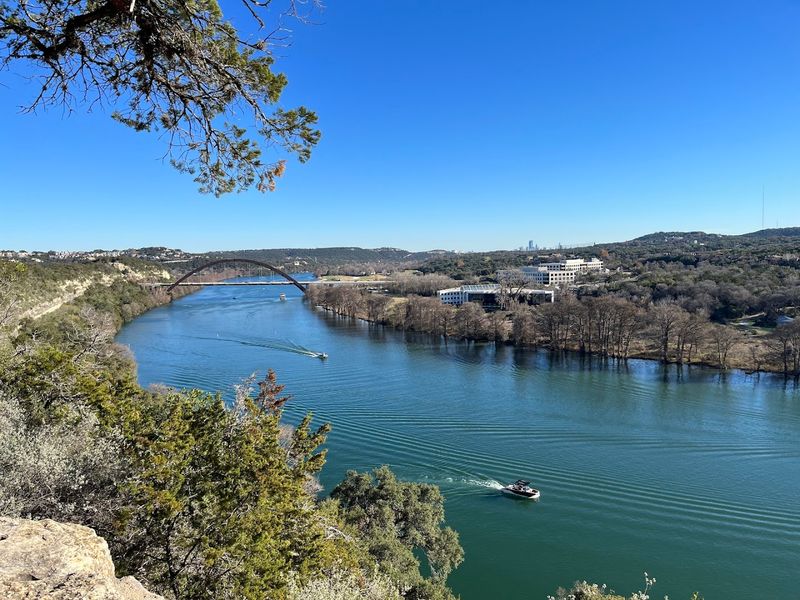
The overlook just north of the bridge on the west side of Loop 360 is one of those spots that feels like a reward for knowing where to look. From up there, the bridge frames the water below in a way that changes completely depending on the time of day.
Early morning light turns the lake into something almost silver, while sunset pulls out every warm tone in the Corten steel.
Photographers have known about this spot for years, and it shows. On any given weekend morning, you will find people with cameras, people with phones, and people who just came to sit and look.
There is no formal viewing platform, just a patch of hillside that has become a community gathering point by reputation alone.
The view takes in Lake Austin, the Colorado River corridor, and the rolling texture of the Hill Country stretching out behind the bridge. It is a surprisingly complete landscape for a spot you can reach from a major highway.
As of late 2024, the Austin City Council voted to acquire nearby land to improve access, add parking, and expand trails, which should make the overlook even more welcoming without changing what makes it special.
A Pedestrian and Cyclist Friendly Crossing Over the Colorado River
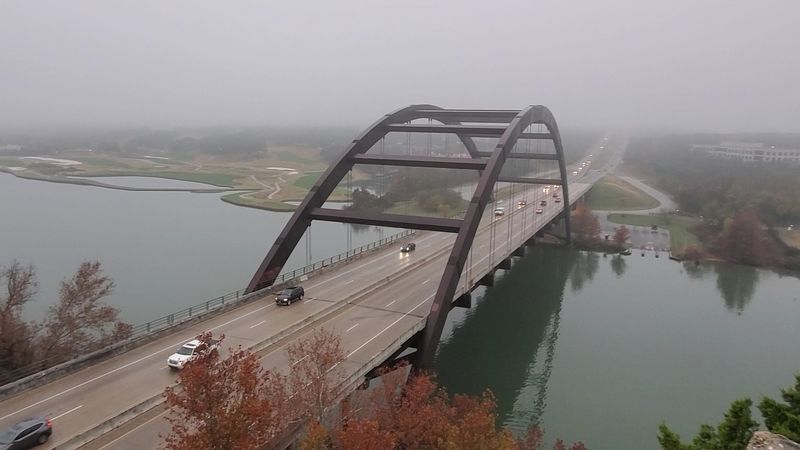
Four vehicle lanes carry the bulk of the daily traffic, but the bridge also includes a six-foot-wide lane dedicated to pedestrians and cyclists.
That lane is narrow by modern standards, but it gives people the chance to cross on foot or by bike, which opens up a completely different experience of the structure compared to driving across it at highway speed.
Cycling across the Pennybacker Bridge is genuinely memorable. The sound of the water below, the slight flex of the bridge under traffic, and the open views on both sides make it feel more like an event than a commute.
Loop 360 is already a popular road for cyclists in Austin, and the bridge is a natural centerpiece of that route.
Pedestrians get the same views but at a slower pace, which honestly suits the setting better. There is enough to look at that rushing through would feel like a missed opportunity.
Ongoing improvements to Loop 360 are being planned and developed, but the bridge itself is expected to remain intact throughout any construction phases, so the crossing experience should stay consistent for the foreseeable future.
How the Bridge Earned Its Award-Winning Recognition
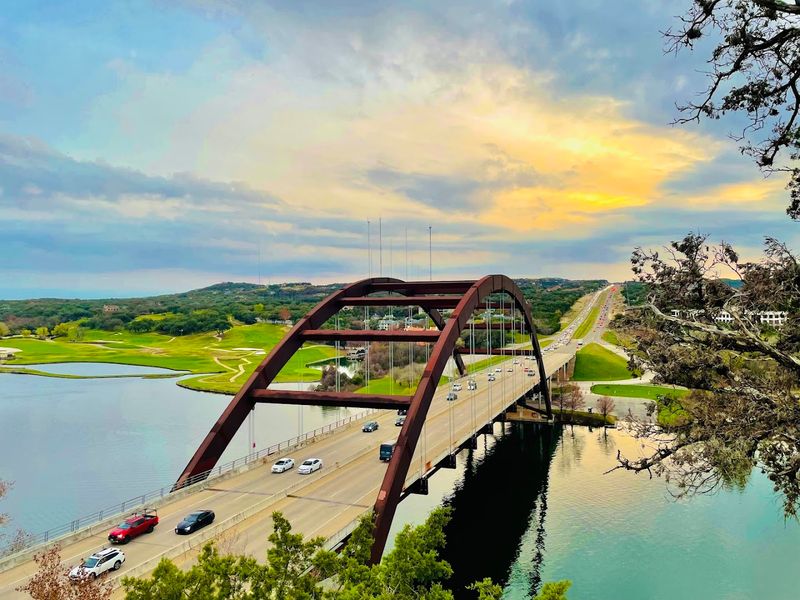
Winning awards in the world of bridge engineering is not especially common, which makes the Pennybacker Bridge’s track record worth paying attention to. In 1984, just two years after opening, it received the Federal Highway Administration’s Excellence in Highway Design award.
That same year, it also took first prize in the American Institute of Steel Construction’s Prize Bridge Competition in the Long Span category.
Those two awards together represent recognition from both the practical engineering community and the structural steel design world. It is a combination that speaks to how well the bridge balances function and form.
Most structures get celebrated for one or the other, rarely both at once.
The recognition did not stop there. In 1992, Austin’s Consulting Engineers Council of Texas named it the most innovative example of local architecture.
A decade after opening, the bridge was still being cited as a benchmark. That kind of sustained recognition is a sign that the original design decisions were genuinely ahead of their time, not just clever for the moment.
For a bridge built on a state highway budget in the early 1980s, the Pennybacker has held up remarkably well in terms of both structure and reputation.
The Hill Country Setting That Makes Every Visit Feel Different
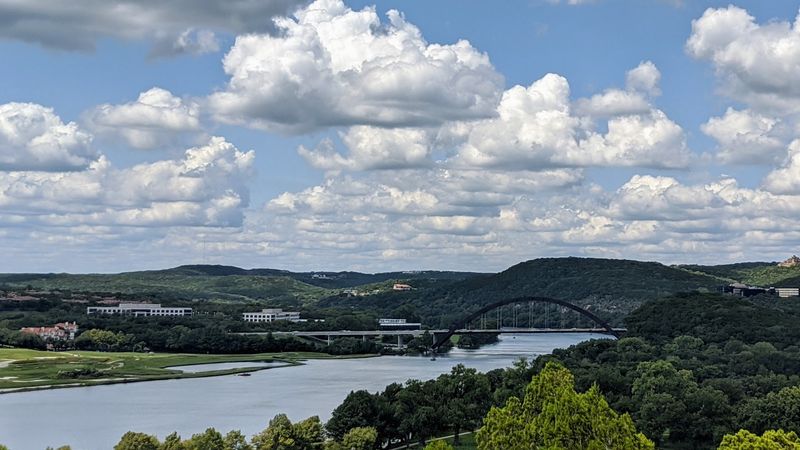
Austin is not always associated with dramatic natural scenery, but the stretch of Loop 360 around the Pennybacker Bridge tells a different story.
The surrounding Hill Country terrain is rugged and layered, with cedar trees, limestone outcroppings, and elevation changes that give the area a texture you do not find in most parts of the city.
The bridge sits within that landscape rather than dominating it, which is part of why it photographs so well from so many angles. The amber steel blends into the warm tones of the rock and soil around it.
Seasons shift the color palette noticeably, with spring bringing bursts of green that contrast sharply against the steel, and dry summer months pulling the landscape back toward dusty gold.
Early mornings have a particular quality out here. The light comes in low across the water, the traffic is still thin, and the whole scene feels calmer than it does at midday.
I have visited at different times of year and in different weather, and it genuinely rewards repeat visits. The bridge stays the same, but the Hill Country around it keeps changing the mood, which is a rare quality in a landmark that is technically just a road crossing.
Planning Your Visit to Pennybacker Bridge on Loop 360
Getting to the Pennybacker Bridge is straightforward since it sits right on Loop 360, also known as Capital of Texas Highway, at the address 5300 N Capital of Texas Hwy, Austin, TX 78730. The overlook on the west side just north of the bridge is the main destination for most visitors who are not simply driving through.
Parking near the overlook has historically been an issue, with cars pulling onto narrow shoulders in ways that created real safety concerns.
The Austin City Council’s December 2024 vote to acquire additional land nearby specifically addresses this problem, with plans for proper public parking and expanded trail access in the works.
Until those improvements are complete, arriving early on weekdays gives you the best chance of finding a manageable spot.
Sunrise visits are worth the early alarm. The light hits the bridge and the water in a way that midday sun simply cannot replicate.
Bring comfortable shoes if you plan to walk the overlook area or attempt the bridge crossing on foot. There are no formal amenities at the overlook itself, so pack water and anything else you need before heading out.
The bridge is open year-round and free to visit, making it one of Austin’s most accessible and underrated landmarks.
