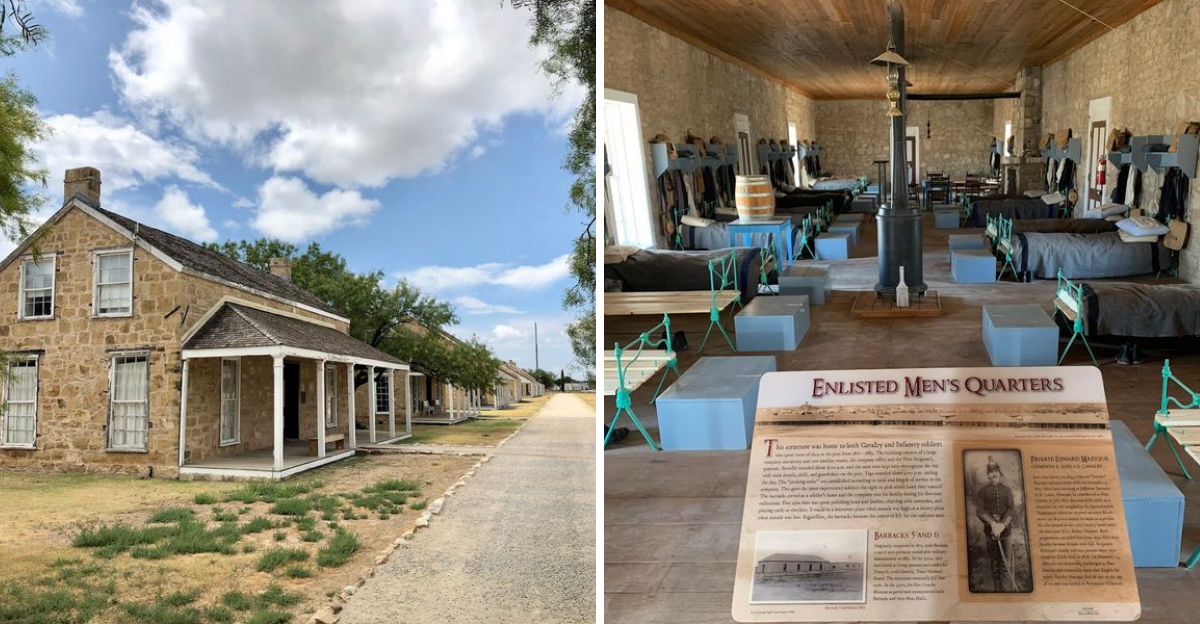
History hits different when it’s not behind glass.
Instead of reading plaques and moving on, you’re surrounded by it, old barracks, officers’ quarters, and wide-open grounds that still carry that frontier feel. It’s easy to picture the routines, the noise, and the long stretches of quiet that once filled this place.
Texas has no shortage of historic sites, but this one actually lets you slow down and sit with it for a while, not just pass through and forget five minutes later.
The Buffalo Soldiers and Their Legacy at the Fort
Fort Concho holds a particularly powerful chapter in American military history because of the Buffalo Soldiers who were stationed here. Elements of all four Buffalo Soldier regiments served at this post, and their contributions to protecting and mapping the West Texas frontier were enormous.
These were African American soldiers who served with distinction during an era when racial inequality was still deeply embedded in American society.
The 10th Cavalry, one of the most celebrated Buffalo Soldier units, used Fort Concho as a regimental headquarters. Their presence here shaped not only the fort’s history but the development of the surrounding region.
The name Buffalo Soldiers itself is believed to have come from the Native American tribes they encountered, given as a mark of respect for their fierce courage.
Fort Concho honors this legacy in a meaningful way, with exhibits and heritage events like Buffalo Soldier Heritage Day that bring this history back to life. Volunteers in period-accurate uniforms help visitors connect with what daily life actually looked like for these soldiers.
It is one of those stories that deserves far more recognition than it typically gets in mainstream history books.
The Limestone Buildings That Have Stood Since 1867
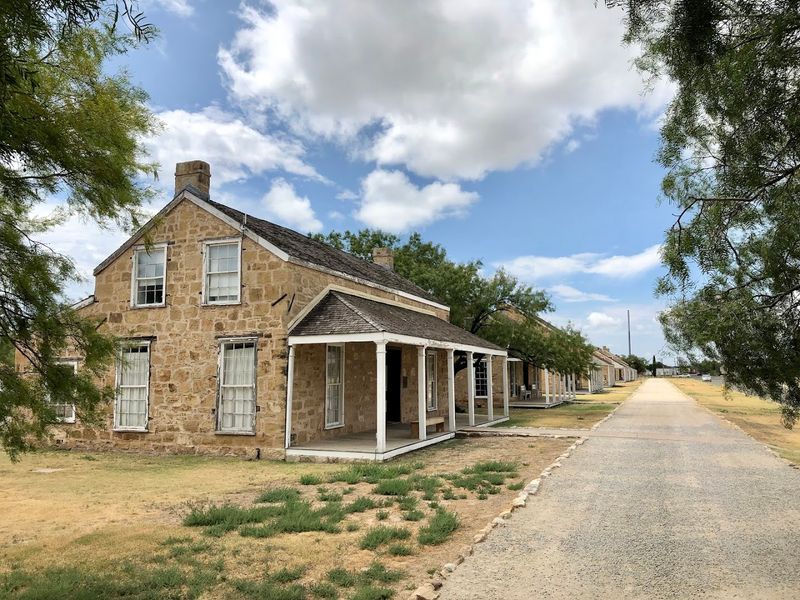
There is something almost unreal about touching a wall that has been standing since the Civil War era. The buildings at Fort Concho were constructed primarily from native limestone quarried right out of the West Texas landscape, and that material has aged with a quiet dignity that no modern replica could ever fake.
The stone gives off a warm, honey-colored tone in the afternoon sun that makes the whole fort feel almost golden.
What makes these structures remarkable is not just their age but their condition. Many of them are original, not reconstructed from scratch but carefully restored to reflect what they looked like during the fort’s active years between 1867 and 1889.
You can walk through doorways that soldiers once used daily.
Each building tells a slightly different story depending on its purpose. The barracks feel cramped and utilitarian.
The officers’ quarters feel surprisingly refined by comparison. Seeing that contrast up close gives you a real sense of the social hierarchy that defined military life on the frontier.
It is history you can actually feel beneath your fingertips.
Wandering Through the Officers’ Quarters
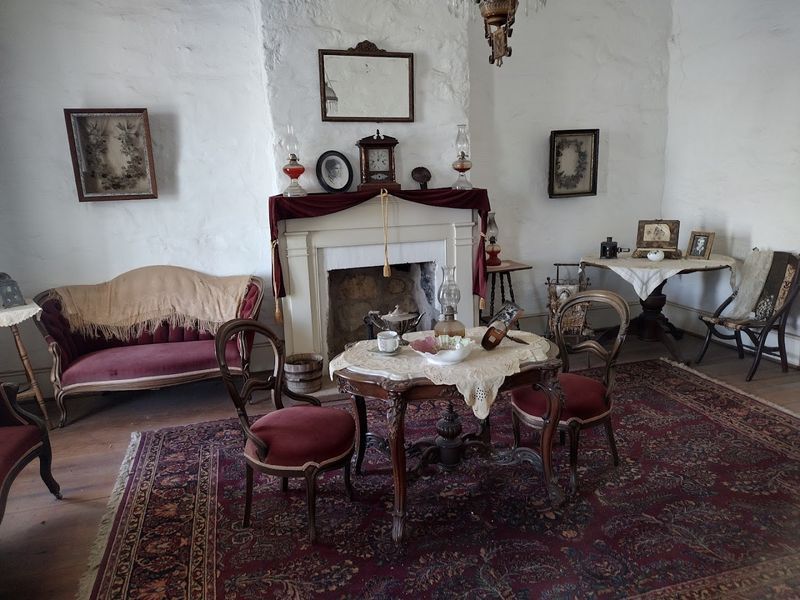
The officers’ quarters at Fort Concho are genuinely surprising. After spending time in the enlisted barracks, stepping into these spaces feels like entering a completely different world, even though they sit just yards apart.
The rooms are furnished with period-appropriate pieces that give a real sense of how the upper ranks lived during frontier service.
Commanders like Ranald Mackenzie and Benjamin Grierson once occupied these quarters, and the spaces reflect their relative comfort compared to the enlisted men. There are writing desks, proper beds, and personal touches that humanize figures who might otherwise feel like names in a textbook.
It is oddly moving to stand in a room where a real person made real decisions about life on the frontier.
What I appreciated most was how the restoration avoids over-glamorizing. The rooms feel lived-in rather than staged.
You get the sense that someone genuinely occupied these spaces, not that they were designed for a museum catalog. Small details, like the placement of a chair near a window or a coat hanging on a hook, make the experience feel grounded and authentic rather than theatrical.
The Enlisted Men’s Barracks Up Close
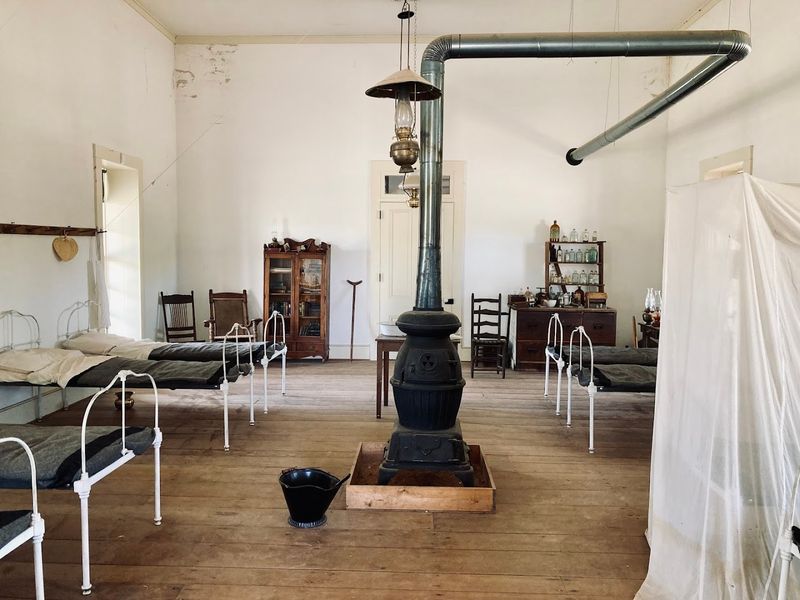
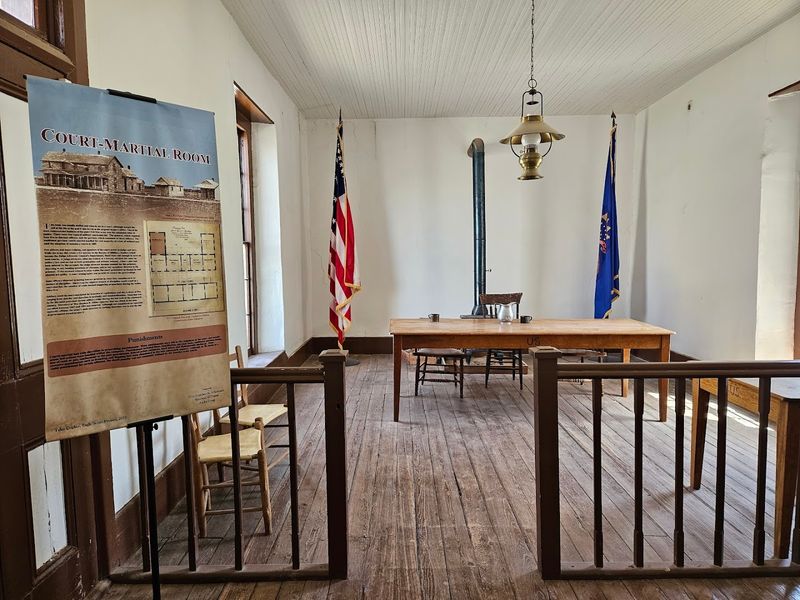
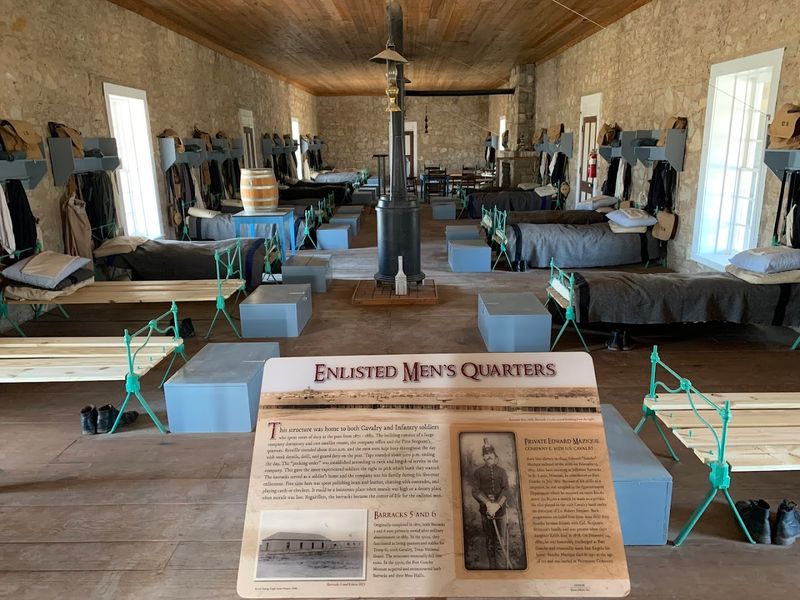
Honesty is the best word for the enlisted barracks at Fort Concho. There is no romanticizing the conditions here.
The spaces are tight, the furniture is basic, and the overall atmosphere makes it clear that frontier military life was demanding in ways that go beyond just combat. Men lived in close quarters with little privacy and worked long, grueling days patrolling thousands of acres of West Texas terrain.
The barracks are set up to show what a typical day might have looked like, with bunks arranged in rows and equipment displayed as it would have been stored. At full strength, the fort housed between 400 and 500 personnel, so you can imagine how these rooms would have buzzed with noise, activity, and the constant rhythm of military routine.
Seeing the contrast between these barracks and the officers’ quarters just a short walk away is one of the most quietly powerful moments the fort offers. It is not something the exhibits need to explain with lengthy text panels.
The physical space does the talking. You leave the barracks with a much deeper respect for the men who served here under conditions most of us could not imagine enduring for a single week.
The Fort Concho Museum and Its Artifact Collection
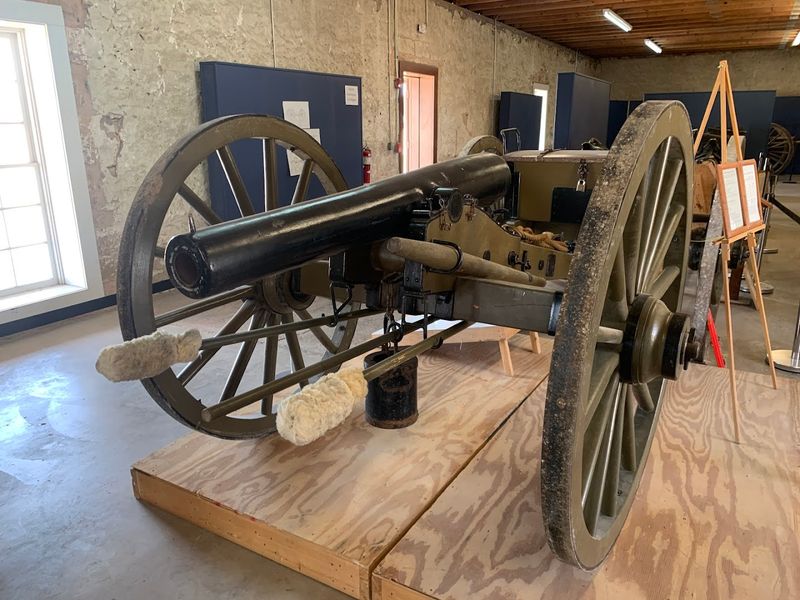
Fort Concho’s museum collection is the kind that rewards slow, curious visitors. The artifacts span the full arc of the fort’s history, from its establishment in 1867 through its deactivation in 1889, and they cover everything from military hardware to personal objects that soldiers and their families left behind.
There is real breadth here, and the curation feels thoughtful rather than overwhelming.
Weapons, uniforms, maps, and documents fill the exhibit spaces, but it is the smaller personal items that tend to linger in your memory. A worn boot.
A handwritten letter. Objects like these shrink the distance between the present and the past in a way that large displays simply cannot.
The museum does a genuinely good job of making you feel like these were real people, not just historical figures.
The museum has been operating in some form since 1929, which itself is a remarkable piece of institutional history. That longevity means the collection has had decades to grow and deepen.
Fort Concho has been owned and operated by the city of San Angelo since 1935, which speaks to how seriously the local community takes the responsibility of preserving this landmark for future generations.
The Schoolhouse and What It Reveals About Fort Life
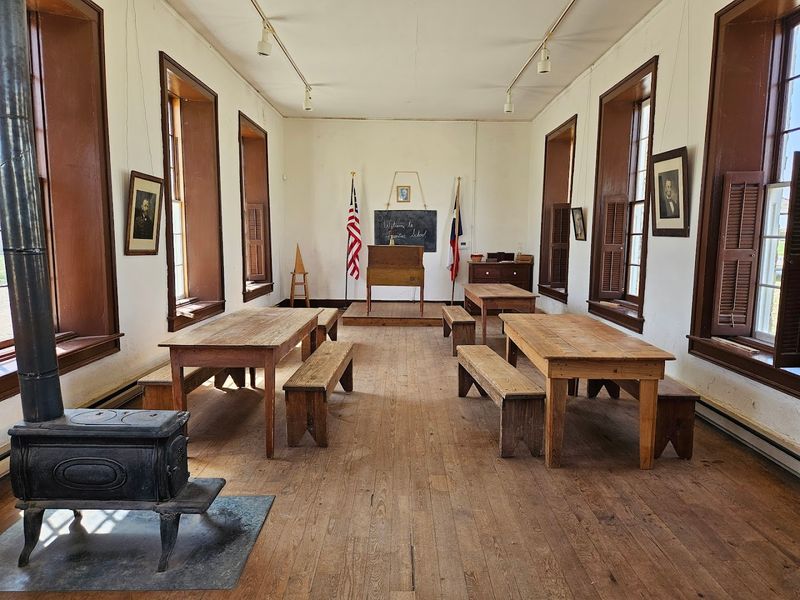
Most people do not immediately think of a schoolhouse when they picture a frontier military fort, but Fort Concho had one, and it is one of the more unexpectedly touching stops on the grounds. The presence of a school is a reminder that the fort was not just a military installation.
It was a functioning community, complete with families, children, and everyday civilian rhythms running alongside the military ones.
Children of soldiers and officers attended school here, learning to read and write in a limestone building while their fathers patrolled the surrounding territory. That image, of a child bent over a slate board with the sound of cavalry drills in the background, is one that sticks with you long after you leave.
It makes the fort feel genuinely human in a way that purely military exhibits sometimes miss.
The restored classroom is set up with period-appropriate furnishings that give you a clear visual of what education looked like in this remote corner of Texas in the 1870s and 1880s. It is a small space, but it carries a lot of weight.
Visiting it adds a layer of nuance to your understanding of what life at Fort Concho actually meant for the people who called it home.
Living History Reenactments That Bring the 1800s to Life
Fort Concho does not just preserve history behind glass. It performs it.
The fort hosts reenactments throughout the year where volunteers dress in period-accurate uniforms and demonstrate the actual procedures, drills, and daily routines of 1800s military life.
Watching a cavalry drill or a musket demonstration on the parade ground is a genuinely different experience from reading about it in a book.
The attention to detail in these reenactments is impressive. Volunteers research their roles carefully, and the result is a presentation that feels grounded rather than theatrical.
You can ask questions, get up close, and engage in the kind of conversation that no exhibit panel can replicate. It turns a visit into something interactive and memorable rather than passive.
Events like Fort Concho Frontier Day and Buffalo Soldier Heritage Day anchor the reenactment calendar and draw visitors from across Texas and beyond. If you can time your visit to coincide with one of these events, the experience becomes even richer.
The parade ground fills with sound and movement in a way that makes the whole site feel briefly, vividly alive. It is one of those rare moments where history stops being something you observe and becomes something you actually feel.
The Hospital Building and Frontier Medicine
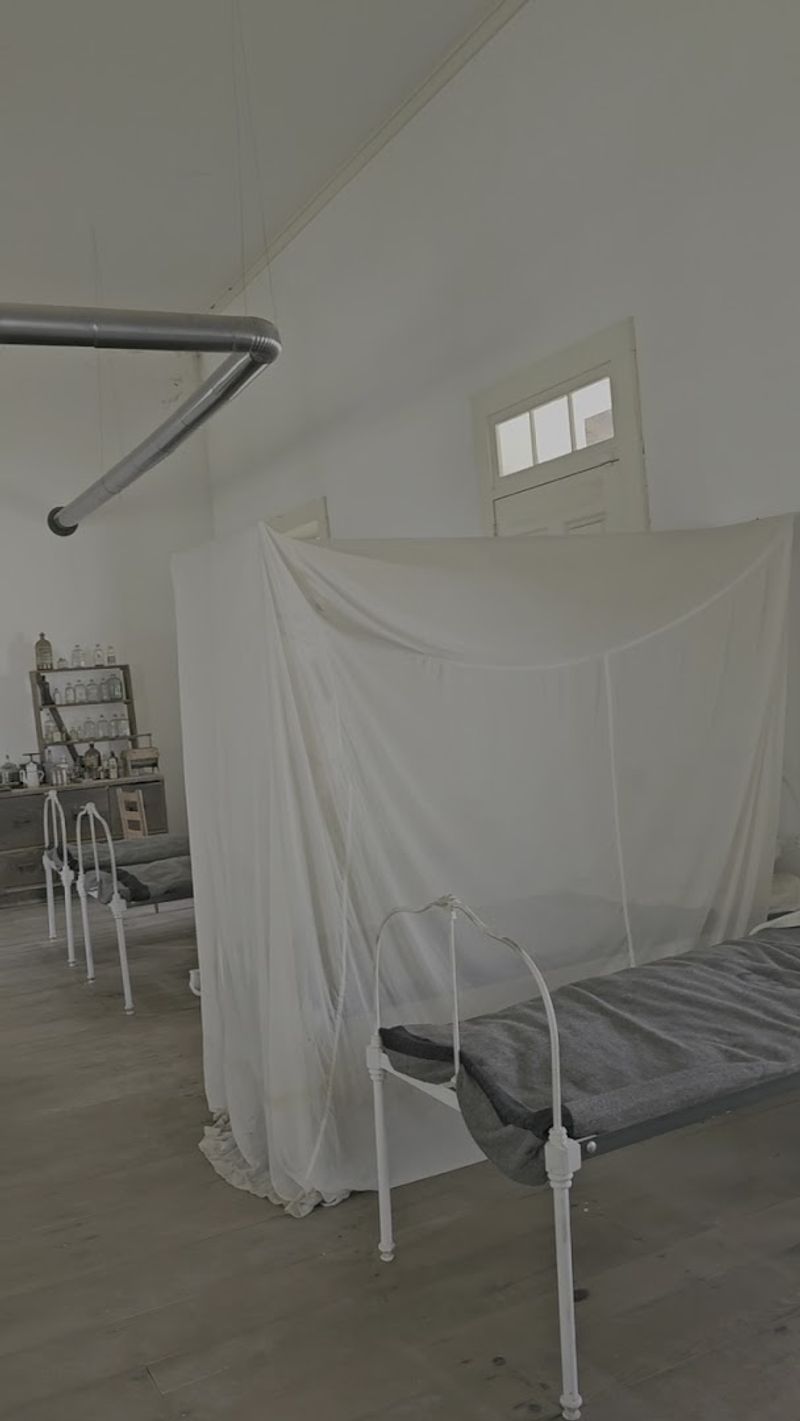
The hospital at Fort Concho is one of those stops that catches visitors off guard. Frontier medicine in the 1870s and 1880s was a world away from modern healthcare, and the restored hospital building makes that gap feel very real.
The equipment on display, the layout of the wards, and the sparse tools available to post surgeons all point to a time when treating even basic injuries was a complicated and often dangerous undertaking.
Soldiers stationed at Fort Concho faced a range of health challenges beyond combat wounds. Heat, dehydration, and disease were constant concerns in the West Texas climate.
The hospital was a critical part of the fort’s infrastructure, and the medical staff who worked here operated under conditions that required both skill and improvisation in equal measure.
There is a quiet, sobering quality to this building that sets it apart from the other structures on the grounds. It does not carry the same energy as the barracks or the parade ground.
Instead, it invites a slower kind of reflection about the human cost of frontier expansion. Visiting it rounds out the picture of fort life in a way that feels necessary and honest, not grim for the sake of drama but truthful in the way good history always is.
The Parade Ground and the Scale of the Fort
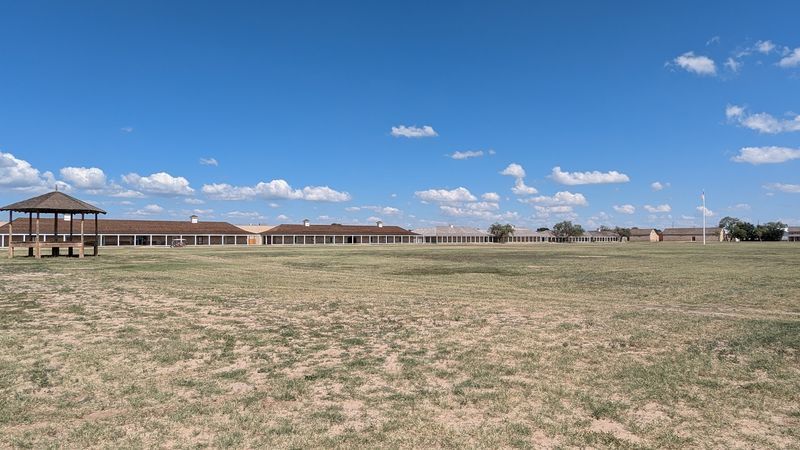
The parade ground at Fort Concho is the geographic and emotional heart of the entire site. When you step out onto it, the scale of the fort suddenly clicks into place.
Limestone buildings frame three sides of the open space, and the whole layout gives you an immediate sense of how military life here was organized around visibility, order, and collective identity. This was where soldiers drilled, assembled, and marked the rhythm of their days.
Originally, Fort Concho sprawled across more than 1,600 acres and included at least forty buildings. What survives today represents a carefully preserved portion of that original footprint, but it is enough to feel the weight of the place.
The parade ground itself is large enough that standing at one end, the buildings at the other feel genuinely distant.
On a clear day, the Texas sky above the parade ground is enormous. That open sky is part of what makes the experience feel so different from visiting an indoor museum.
You are standing in actual space, breathing actual air, with the same limestone walls and the same horizon that soldiers would have seen every single morning for over two decades. That kind of continuity with the past is rare and worth savoring.
Planning Your Visit to Fort Concho in San Angelo
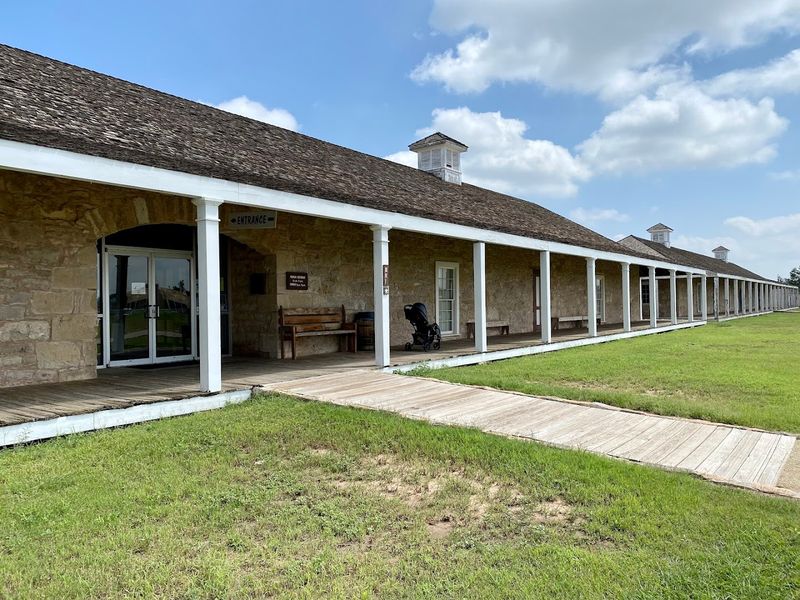
Fort Concho is the kind of place that rewards visitors who give it real time. A rushed walk-through will get you the basics, but spending a full morning or afternoon here is where the experience really opens up.
The fort is open Monday through Saturday from 9 a.m. to 5 p.m. and on Sundays from 1 p.m. to 5 p.m., which gives you a solid window to explore at your own pace.
San Angelo itself is a genuinely underrated Texas destination, and Fort Concho sits right in the heart of the city at 630 S. Oakes St. The surrounding area has good food options and local spots worth checking out before or after your visit.
The fort’s staff are knowledgeable and approachable, and they can point you toward exhibits or events you might otherwise miss.
If you are traveling with kids, this is one of the better historic sites in Texas for younger visitors because there is so much to see, touch, and engage with beyond just reading. Seasonal events add extra energy to the calendar throughout the year.
Check the fort’s website or call ahead to see what is happening during your visit. It is the kind of place that genuinely stays with you.
Address: 630 S Oakes St, San Angelo, TX 76903
