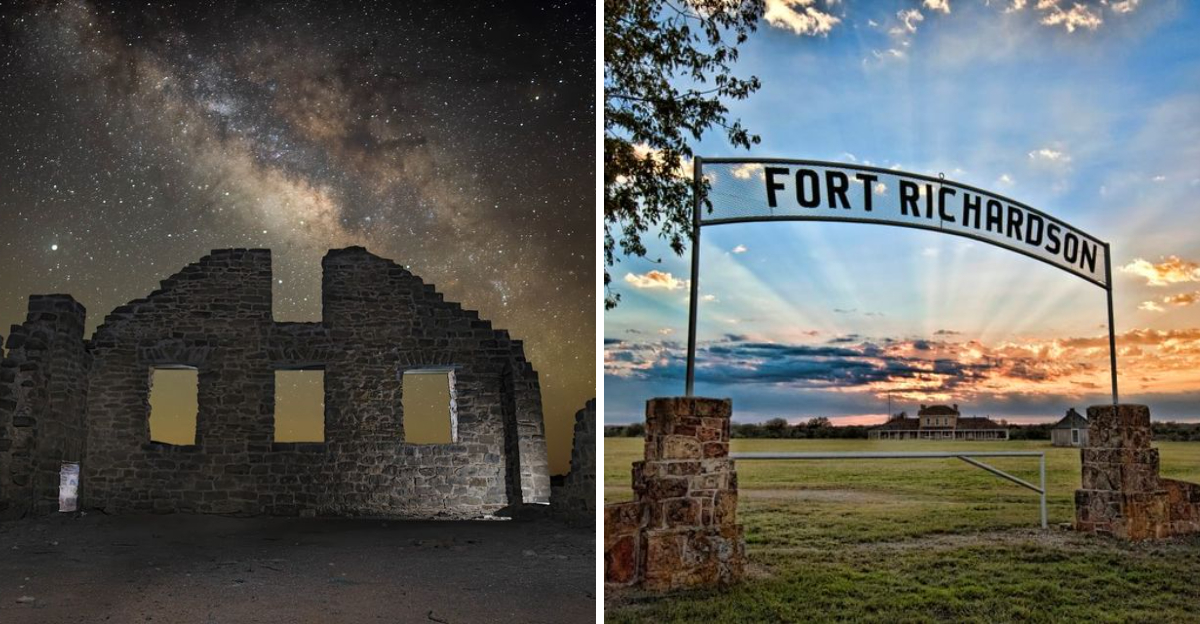
Some road trips are just about getting from point A to point B. This one is about stepping back in time.
You will follow a route that connects preserved frontier forts and outposts, places where soldiers, settlers, and outlaws once stood. Each stop feels like a page from a history book, except you can walk the grounds and touch the stone walls.
Imagine standing where cavalry once rode out and natives watched from the hills. The drives between them are wide open and beautiful, giving you time to let it all sink in.
Pack water, a good camera, and a curiosity for the stories these silent walls still hold.
1. Fort Davis National Historic Site
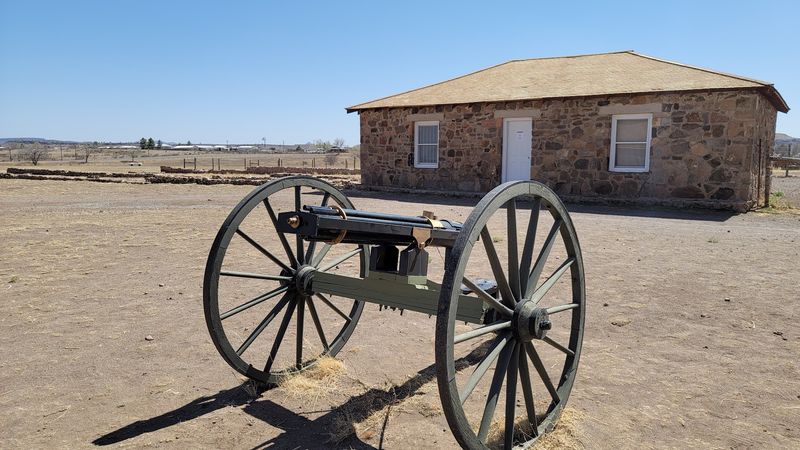
The Davis Mountains have a way of making everything feel both ancient and alive at the same time. Fort Davis sits right in the middle of that feeling, hidden against rocky hillsides that frame the old parade ground like a natural amphitheater.
It is one of the best-preserved frontier forts in the entire American Southwest, and the moment you arrive, that becomes obvious.
Originally established in 1854, the fort played a major role in protecting the San Antonio-El Paso Road from raids. It also became a significant post for the Buffalo Soldiers, the African American regiments who served here with distinction after the Civil War.
The reconstructed barracks are detailed enough that you can almost picture daily life inside. Rangers offer interpretive programs that bring the history to vivid life.
Even just wandering the grounds quietly, with the mountains looming overhead, feels like a genuinely rare experience. The visitor center has excellent exhibits that explain the fort’s military and cultural significance in a way that is easy to follow and genuinely interesting.
Plan to spend at least two hours here.
Address: 101 Lt Henry Flipper Dr, Fort Davis, TX
2. Fort Lancaster and Battlefield State Historic Site
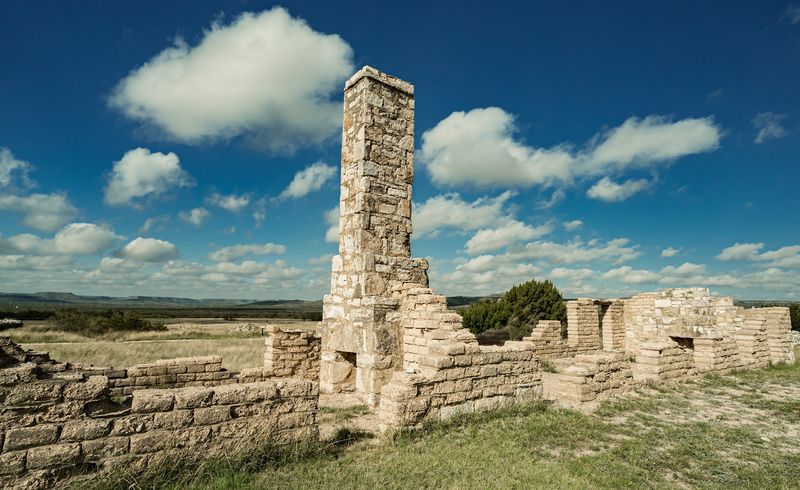
Out in Crockett County, where the land stretches flat and dry in every direction, Fort Lancaster feels like a place that time forgot on purpose. The ruins here are honest and unpolished, which somehow makes them more powerful than any fully restored site could be.
Crumbling stone walls rise from the desert floor, and the silence around them is the kind that actually says something.
Established in 1855, the fort guarded the Lower Military Road through some of the harshest terrain in Texas. It was abandoned at the start of the Civil War and never reoccupied, which is part of why it feels so raw and untouched today.
The site includes a small museum that provides helpful context about the soldiers who served here and the Indigenous groups they encountered. A short trail winds through the ruins themselves, giving visitors a close look at the original construction.
I found the battlefield component especially thought-provoking, as the landscape itself helps you understand why this location mattered strategically. It is a quieter stop than some others on this route, but it carries a weight that lingers long after you leave.
Address: 629 Lancaster Rd, Sheffield, TX
3. Historic Fort Stockton
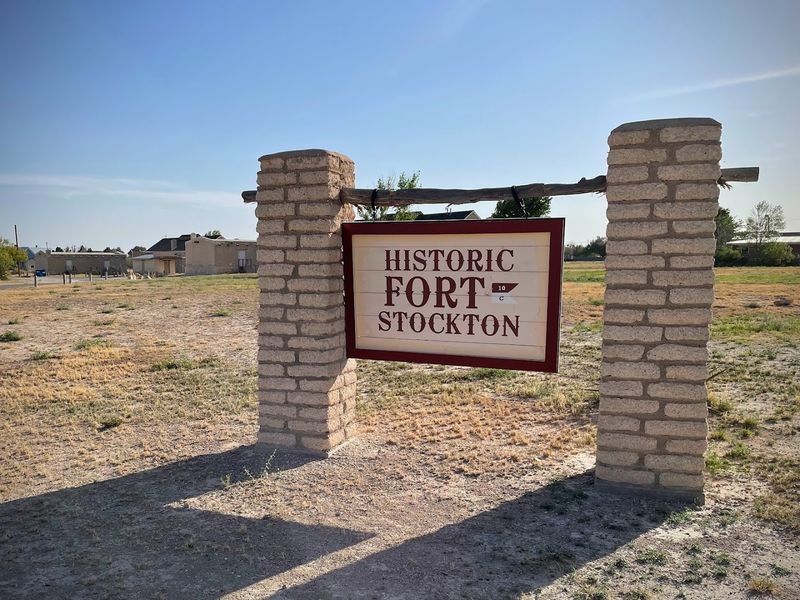
Fort Stockton sits right in the middle of the town that shares its name, which gives it a completely different feel from the more isolated stops on this trail. History and everyday life exist side by side here, and there is something charming about that overlap.
The restored guardhouse is one of the most photographed structures on the entire Texas Forts Trail, and it earns that attention.
The fort was established in 1859 at Comanche Springs, one of the most important water sources in all of West Texas. That water made the location strategically critical, and the military presence here shaped the development of the surrounding region for decades.
Several original and reconstructed buildings are open for exploration, including officers’ quarters and barracks that give a genuine sense of how soldiers lived and worked on the frontier. The on-site museum does a solid job of connecting the fort’s military history to the broader story of West Texas settlement.
I appreciated how the exhibits handled the complicated relationships between the military, settlers, and Indigenous communities. If you are making this road trip, Fort Stockton is a stop that rewards curiosity and a willingness to look beyond the surface.
Address: 301 E 3rd St, Fort Stockton, TX
4. Fort McKavett State Historic Site
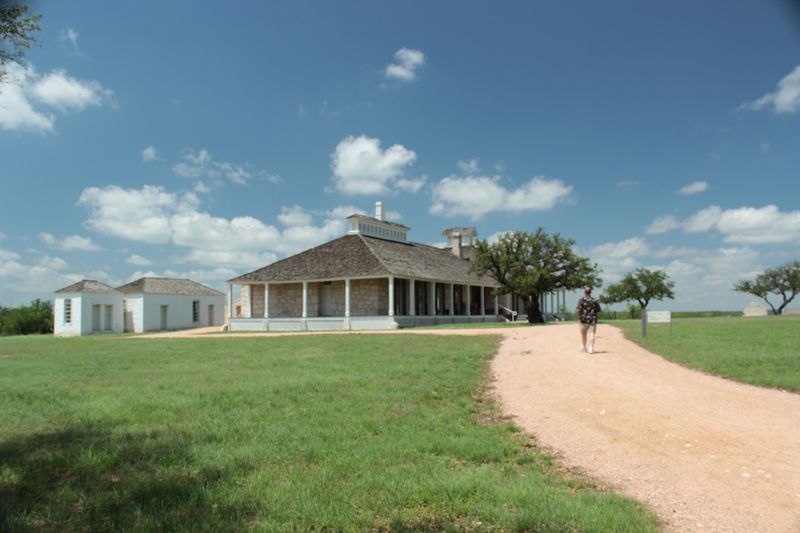
There is a reason Fort McKavett earned the nickname ‘the prettiest post in Texas’ from the soldiers who served there. The limestone buildings glow warm in the afternoon sun, and the grounds have a sense of order and calm that feels almost pastoral.
It is an unexpectedly beautiful stop in the middle of a road trip built around toughness and survival.
Established in 1852, the fort guarded travelers on the San Antonio-El Paso Road and later became a key base for the Buffalo Soldiers of the 10th Cavalry during the 1870s Indian Wars campaigns. The history here is layered and genuinely compelling.
More than 20 structures have been preserved or restored, making this one of the most complete frontier fort experiences in the state. You can walk through the hospital, the enlisted men’s barracks, and the commanding officer’s quarters, each offering a different window into 19th-century military life.
The site staff are knowledgeable and happy to answer questions, which adds real value to the visit. The surrounding Hill Country landscape is gorgeous, and the drive to get there winds through some of the most scenic roads in central Texas.
Give yourself plenty of time here.
Address: 7066 FM 864, Fort McKavett, TX
5. Fort Concho National Historic Landmark
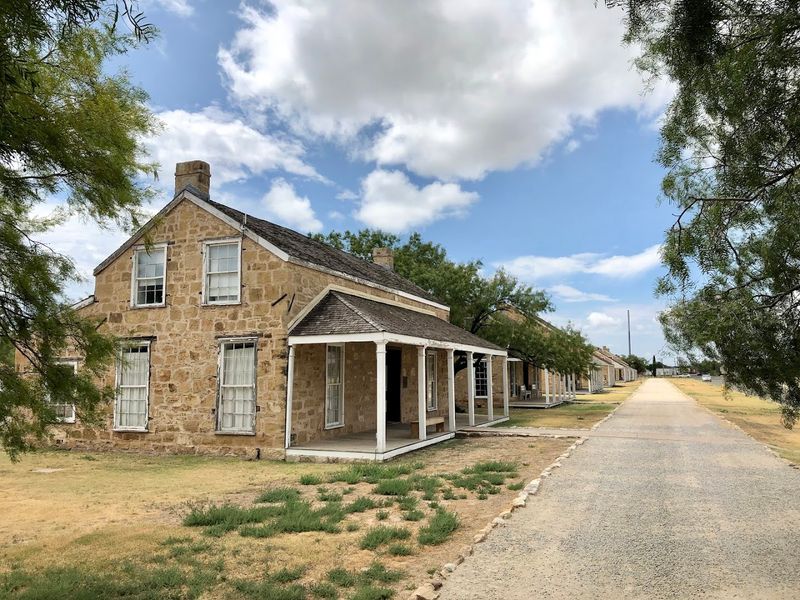
Fort Concho is one of those places that surprises you with how much it has held onto. Located in San Angelo, the site features more than 20 original and restored structures, making it one of the most intact frontier forts anywhere in the country.
The sheer scale of what has been preserved here is genuinely impressive.
Active from 1867 to 1889, Fort Concho served as headquarters for the Buffalo Soldiers of the 10th Cavalry and 24th Infantry. Their story is central to the site’s identity, and the exhibits here handle that history with real care and depth.
The fort hosts annual living history events and reenactments that draw crowds from across the region. Even on a regular visit, the atmosphere is rich and immersive.
I spent a long afternoon moving between the barracks, the chapel, and the commanding officer’s quarters, and each building offered something new. San Angelo itself is worth exploring before or after your visit, with a lively downtown and the nearby Concho River adding to the appeal of the stop.
Fort Concho manages to feel both educational and genuinely moving, which is a combination that is harder to achieve than it sounds.
Address: 630 S Oakes St, San Angelo, TX
6. Fort Chadbourne
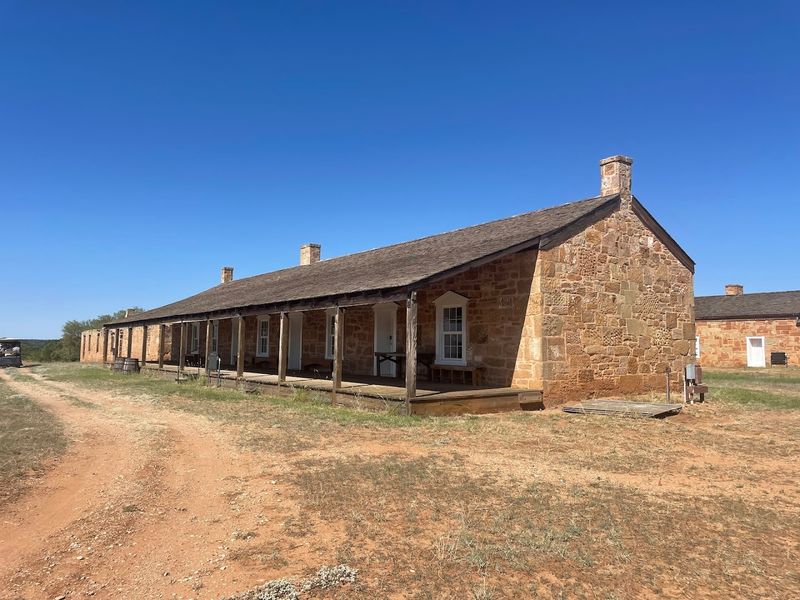
Fort Chadbourne is the kind of place that feels personal in a way that bigger, more polished sites sometimes do not.
It sits on private ranch land and has been lovingly restored by the Fort Chadbourne Foundation, a fact that gives the whole experience a hands-on, community-driven character that is genuinely refreshing.
The people behind this restoration clearly care deeply about what they are preserving.
Established in 1852, the fort served as a key link in the chain of frontier defense posts stretching across central Texas. It was also a stop on the Butterfield Overland Mail route, which adds another fascinating layer to its history.
The restored stone buildings include a barracks, a commissary, and officers’ quarters, all of which are open during guided tours. The foundation also operates a museum with artifacts recovered from the site, including items that help paint a detailed picture of daily life here.
Special events throughout the year bring reenactors and historians to the property, turning it into a living classroom. The surrounding ranchland gives the visit a rugged, authentic feel that you simply cannot manufacture.
If you appreciate history that has been kept alive through genuine community effort, Fort Chadbourne will absolutely deliver.
Address: 651 Fort Chadbourne Rd, Bronte, TX
7. Historic Fort Phantom Hill
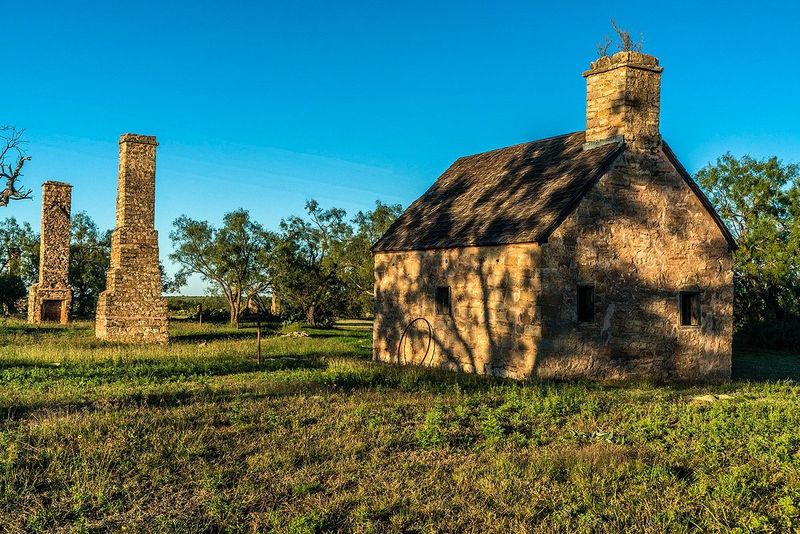
Few places on this entire road trip carry as much atmospheric drama as Fort Phantom Hill. The stone chimneys rising from the open plain near Abilene look almost otherworldly, especially at dusk when the light turns golden and the shadows stretch long.
It is the kind of scene that makes you reach for your camera before you have even fully stepped out of the car.
Established in 1851, the fort had a short and troubled history. It was abandoned just three years later, and much of it burned under mysterious circumstances.
What remained were those haunting chimneys and a few stone structures that have stood ever since.
The site is accessible and free to visit, which makes it an easy and rewarding detour. A walking trail connects the surviving structures, including a powder magazine and a stone commissary that still stands in surprisingly good shape.
The name itself comes from early surveyors who reported seeing a phantom hill in the distance that turned out to be a mirage. That kind of strange, layered history gives the place a personality all its own.
Fort Phantom Hill does not try to be a museum. It simply exists, quietly dramatic and completely unforgettable.
Address: 10818 FM600, Abilene, TX
8. Fort Griffin State Historic Site
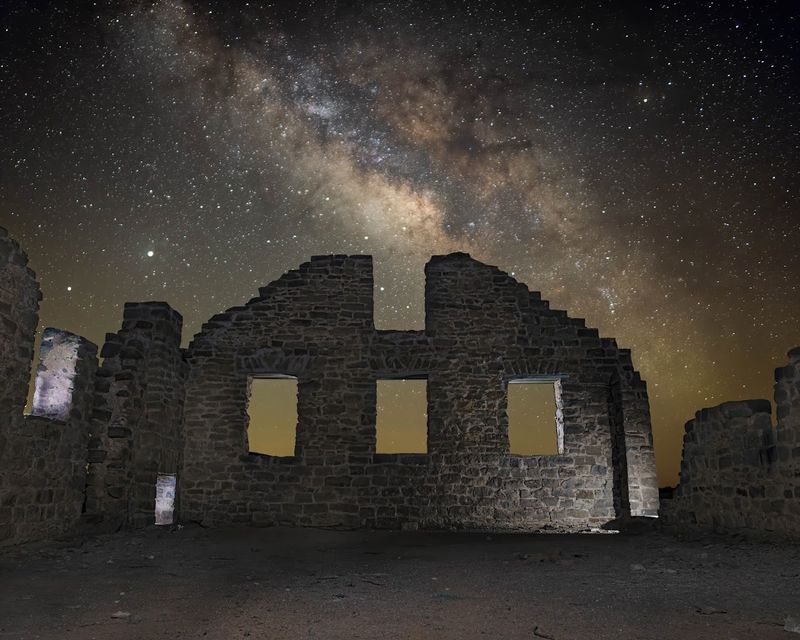
Perched on a flat-topped hill above the Clear Fork of the Brazos River, Fort Griffin offers one of the most dramatic natural settings of any stop on this route.
The views from the hilltop are expansive and genuinely beautiful, and the presence of the official Texas State Longhorn Herd grazing below adds a living, breathing dimension to the experience that catches you off guard in the best way.
The fort was established in 1867 and served as a base for military operations against Kiowa and Comanche raiders throughout the 1870s. The nearby town of Fort Griffin became a wild and bustling hub during the buffalo hide trade era, attracting a colorful cast of characters from across the frontier.
The reconstructed and original structures on the hilltop include barracks foundations, a bakery, and various support buildings. The state park surrounding the site also offers camping and hiking, making it a natural overnight stop if you want to break up the drive.
The interpretive exhibits do an excellent job of connecting the military history to the broader social and economic forces shaping the Texas frontier at the time. Fort Griffin rewards a slow, thoughtful visit more than a quick walkthrough.
Address: 1701 N US Hwy 283, Albany, TX
9. Fort Belknap Historic Site
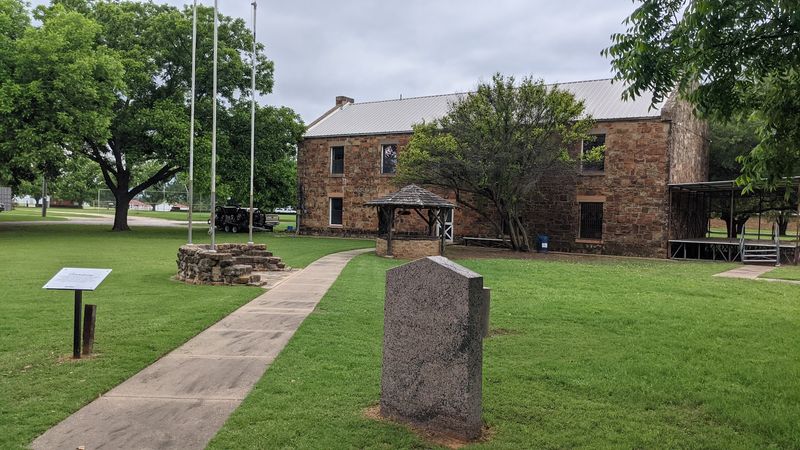
Fort Belknap holds a distinction that sets it apart from many of the other stops on this trail: several of its original buildings are still standing, not reconstructed, not replicated, but genuinely original 19th-century structures. That fact alone makes it worth going out of your way to visit.
There is a different quality to being inside a building that has stood in the same spot for nearly 175 years.
Established in 1851, Fort Belknap was the northernmost post in the initial chain of frontier forts protecting Texas settlers. It guarded against raids from Kiowa and Comanche groups and served as a launching point for numerous military expeditions into the surrounding territory.
The site includes a museum housed in one of the original buildings, with exhibits covering the fort’s military history and the broader story of settlement in Young County. The grounds are peaceful and well-maintained, with a small cemetery nearby that adds a quietly sobering note to the visit.
Fort Belknap sits in the town of Newcastle, a small community that has embraced its historical connection to the fort with obvious pride. The whole stop feels unhurried and genuine, exactly the kind of place that makes a long road trip feel worthwhile.
Address: 114 Fort Cir, Newcastle, TX
10. Fort Richardson State Park & Historic Site
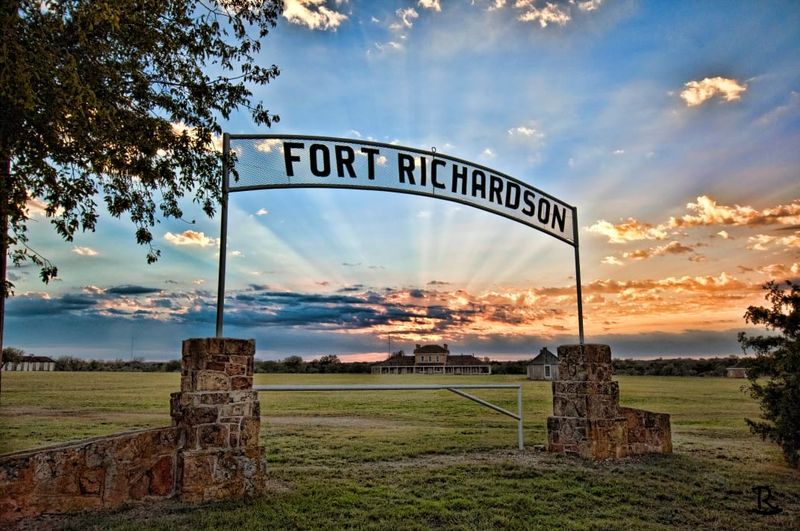
Fort Richardson is the kind of road trip finale that earns its place at the end of a long journey. The site near Jacksboro features some of the best-preserved original frontier fort buildings in all of Texas, with distinctive red-roofed structures that stand out beautifully against the surrounding landscape.
After days of ruins and reconstructions, the completeness of this site feels genuinely satisfying.
Active from 1867 to 1878, Fort Richardson was the most northern of the post-Civil War frontier forts in Texas. It played a direct role in the Red River War, the military campaign that effectively ended large-scale resistance by the Kiowa and Comanche on the southern Plains.
The state park surrounding the fort offers camping, hiking along Lost Creek, and fishing, which makes it a wonderful place to spend a full day or even a night before heading home. The historic structures include a hospital, bakery, guardhouse, and officer quarters, each carefully maintained and open for exploration.
The combination of natural beauty and rich history makes Fort Richardson feel like more than just a history lesson. It feels like a destination in its own right, a fitting and memorable way to close out a road trip that has covered some of the most fascinating ground Texas has to offer.
Address: 228 Park Road 61, Jacksboro, TX
