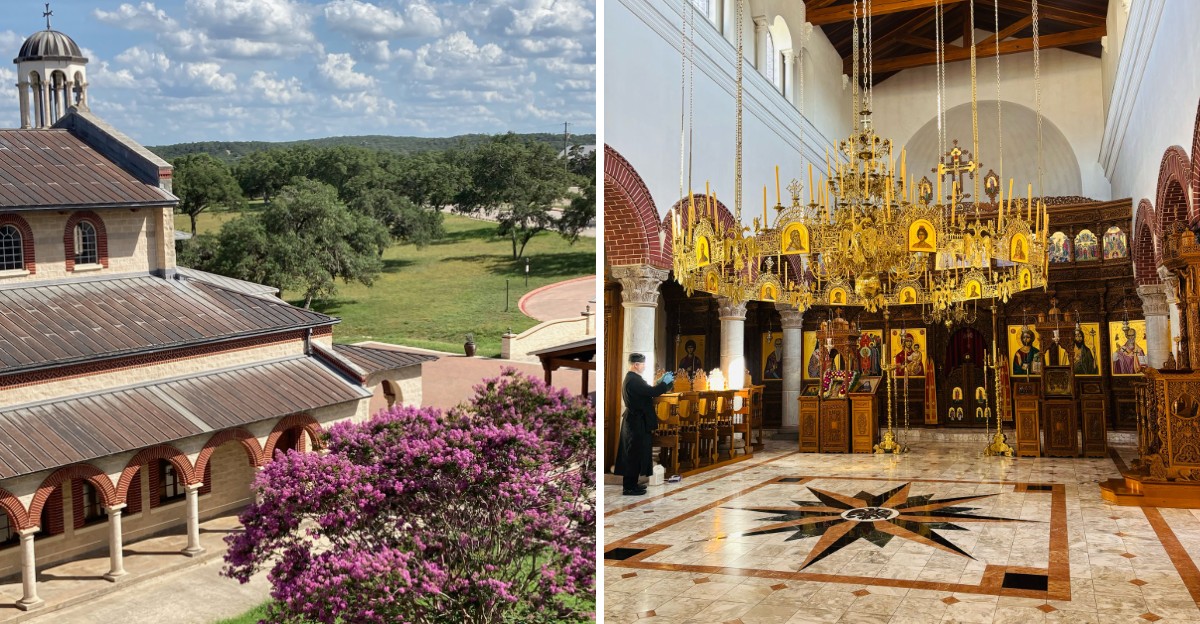
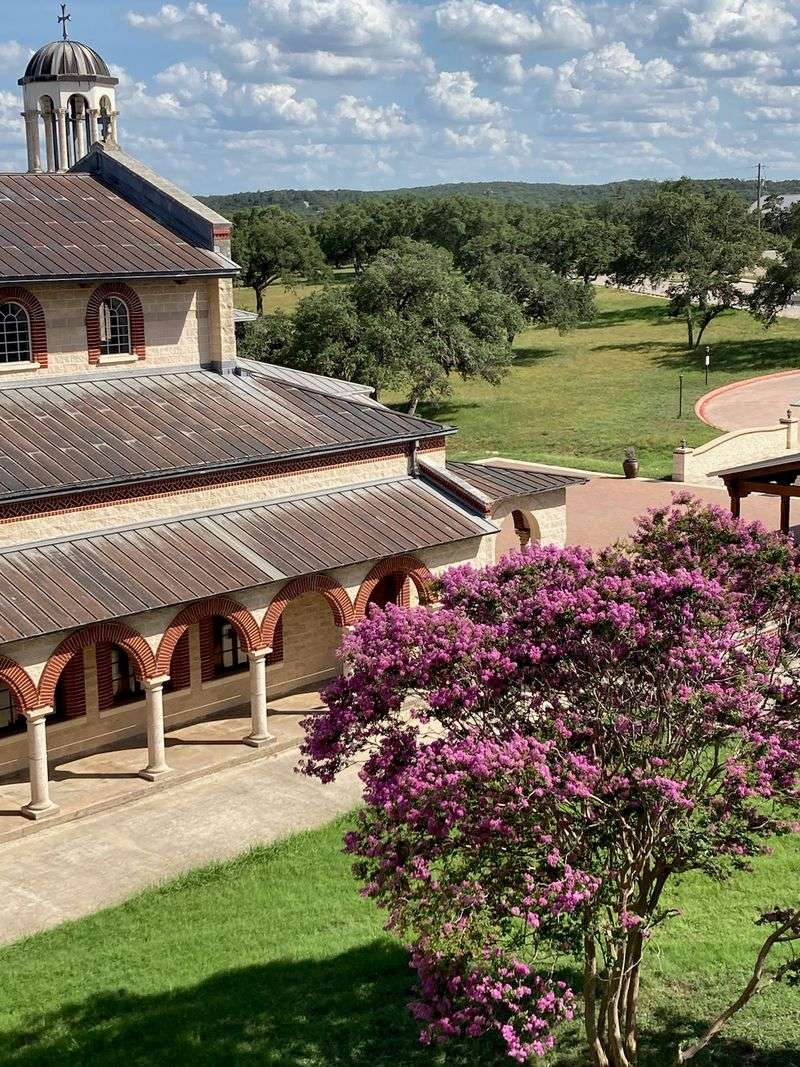
The moment you see the domes, you know you are somewhere different. This Texas monastery is a stunning example of Byzantine architecture, with golden mosaics, arched windows, and a sense of peace that settles over you the second you arrive.
It feels completely removed from everyday life, a place where the noise of the modern world fades into the background. You can walk the grounds, sit in the chapel, and admire the craftsmanship that went into every detail.
It is not a tourist attraction in the traditional sense. It is a place of worship and reflection, open to those who visit with respect.
The architecture alone is worth the trip, but the atmosphere is what stays with you. Quiet, beautiful, and deeply calming.
A reminder that some places are meant for more than just looking. They are meant for feeling.
Hill Country Backroads That Set the Mood Before Arrival
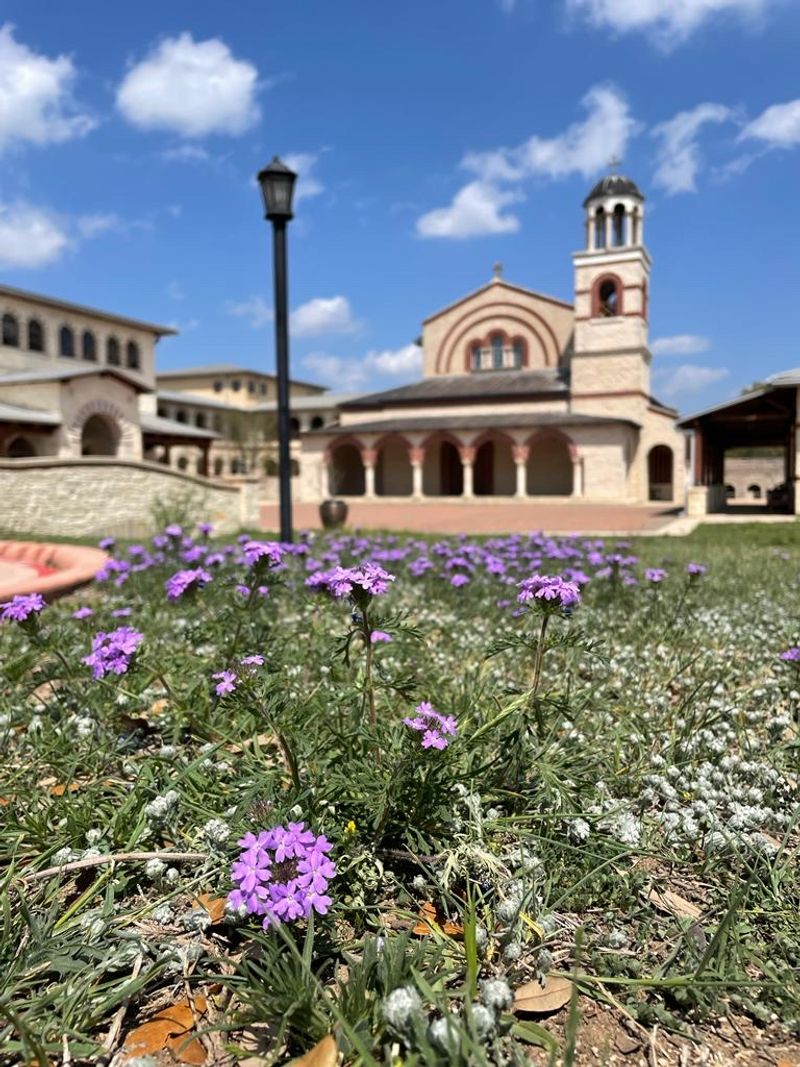
The drive does half the work. Between Blanco, Spring Branch, and the cluster of houses called Kendalia, the roads narrow, the shoulders disappear, and cell service starts playing hide and seek.
Limestone ledges poke through the grass. Live oaks lean over the asphalt like they are checking who is passing.
Most visitors come from San Antonio or Austin, and either way the trip runs roughly an hour to ninety minutes depending on traffic and how many low water crossings slow things down. Those crossings are worth respecting after heavy rain, since Hill Country creeks rise fast and fall just as quickly.
What makes the approach memorable is the shift in pace. Highway noise fades, then the radio starts cutting out, and suddenly the loudest thing is gravel under the tires.
By the time the monastery gate appears, most people have already downshifted mentally. That transition seems intentional, or at least it works that way in practice.
A few practical notes help. Fill the gas tank before leaving the interstate, because stations out here are scattered and some keep short hours.
Download directions ahead of time rather than trusting live navigation. Bring water, especially in summer, when the sun bakes the rock and the heat lingers well into evening.
Spring and late fall bring the friendliest weather, with wildflowers along the fence lines in April and cooler air by November. Deer wander out at dusk, so keep the speed reasonable on the return trip and enjoy the fact that nothing out here feels rushed.
The Katholikon and Its Basilica Bones
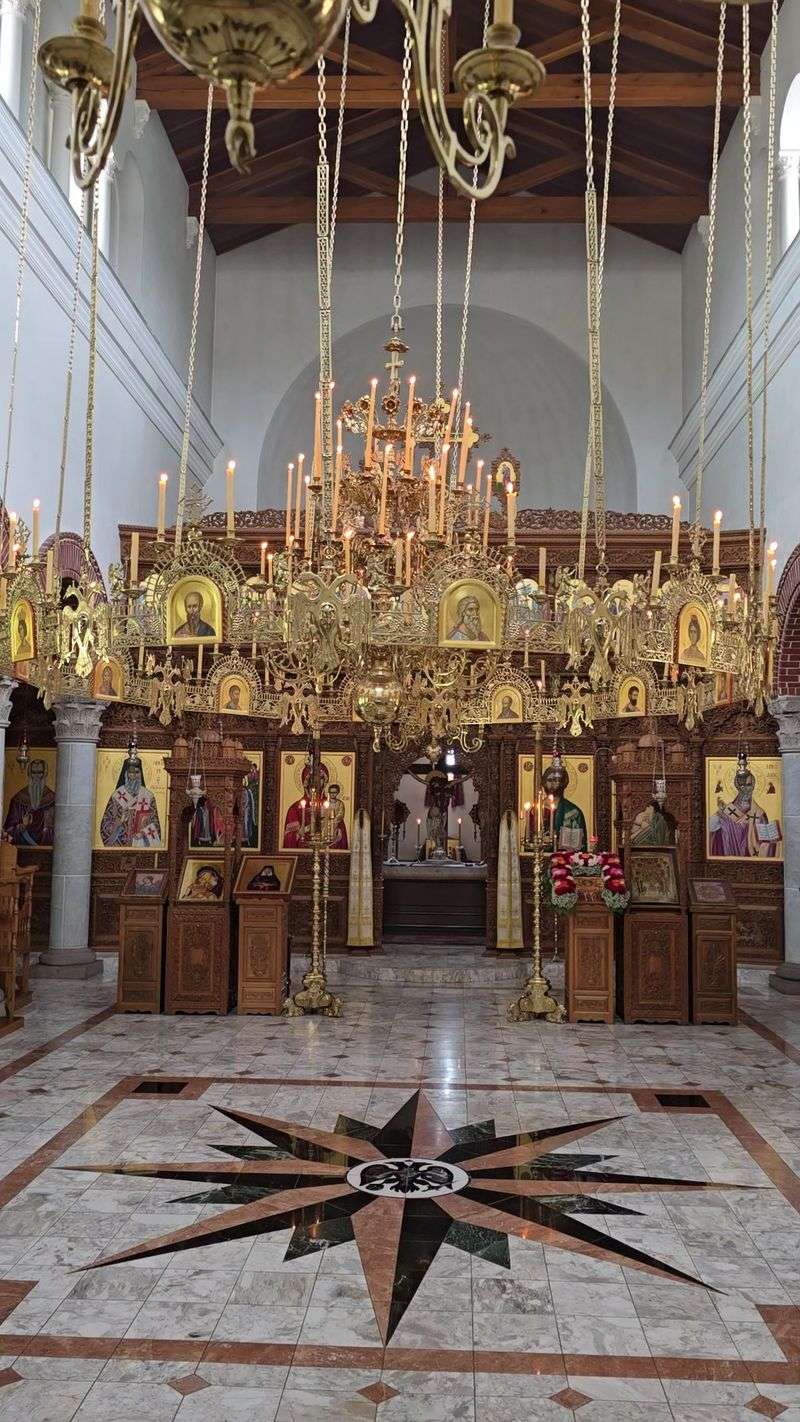
Built in a basilica style with clear nods to St. Catherine’s Monastery on Mount Sinai, the main church anchors the whole property. Stonework carries the weight, and the proportions feel old even though construction is relatively recent.
Seeing that shape against Texas scrub is genuinely disorienting in the best way.
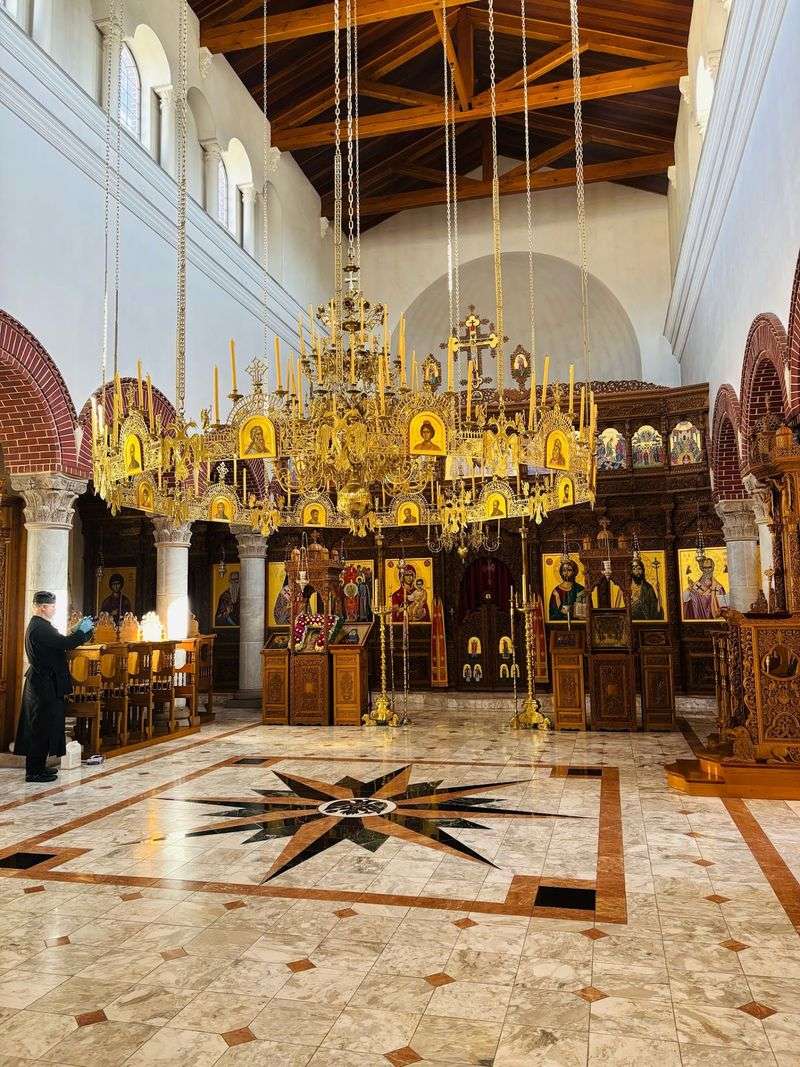
Inside, the eye goes up first. Arches, beams, and the soft reflection of candlelight on polished surfaces create a space that swallows sound rather than bouncing it around.
Conversations naturally drop to a murmur. Footsteps sound different here, softer somehow.
The iconostasis, the carved screen separating the nave from the altar area, is one of the standout pieces. Craftsmen worked the wood into detailed patterns that reward close inspection, though visitors should keep a respectful distance during services.
Behind it, in the altar, sits the original icon of the Synaxis of the Holy Archangels, the image the entire monastery takes its name from.
The Katholikon opens for Sunday liturgies and major feast days, which is when the building truly comes alive with chanting, incense, and the flicker of dozens of candles. On quieter weekdays, services move to a smaller chapel instead.
Photography rules are strict, so ask before lifting a camera. Honestly, the better choice is to leave the phone in a pocket and just look.
Architecture buffs will notice how the design borrows from centuries of Eastern Christian building tradition while adapting to local stone and Texas weather, a combination that shouldn’t work but absolutely does.
Gold Leaf, Limewood, and the Art of the Icons
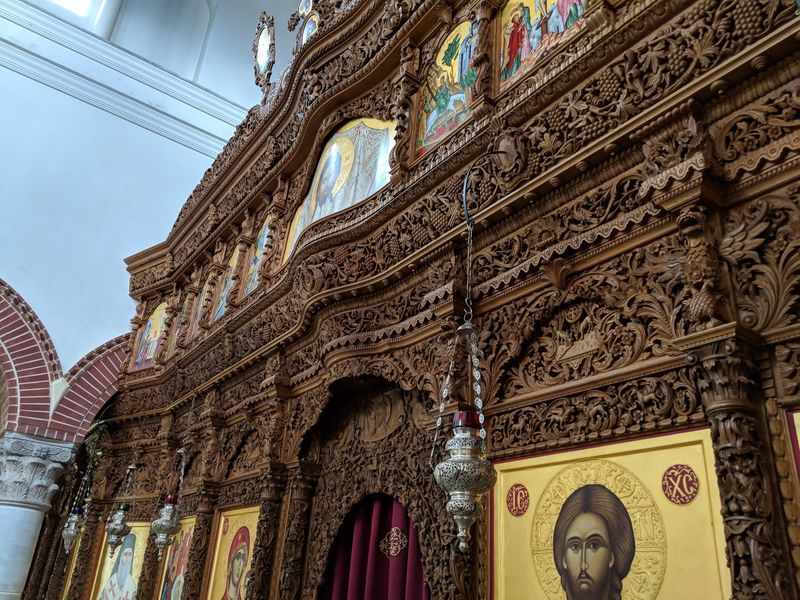
Gold does strange things in low light. The icons here are painted on solid limewood panels prepared using traditional methods, with backgrounds laid in 22 karat gold leaf, and under candle flame they seem to breathe.
Iconographers from Greece contributed much of the work.
For anyone unfamiliar with Orthodox practice, icons are not decoration. They function as windows, meant to draw attention toward what they depict rather than toward the artist who made them.
That explains the flat perspective, the elongated figures, and the absence of dramatic shadows. Nothing is trying to trick the eye.
The preparation process is worth appreciating. Wood gets sealed and layered with gesso, the surface is sanded smooth, then pigments go on in careful stages before the gold is applied and burnished.
It takes patience most modern crafts have abandoned.
Visitors often gravitate toward the larger pieces first, but the smaller icons hidden into corners tend to hold the most personality. Faces differ.
Some look stern, others almost tender.
Candles are typically available near the entrance, and lighting one is a normal part of an Orthodox visit, though nobody is required to participate.
Watch how regulars move through the space and follow their lead if unsure.
Fun detail worth knowing: limewood was chosen for centuries because it resists warping and holds fine detail, which is why panels painted hundreds of years ago still survive in monasteries across Greece and the Balkans. The same logic applies here in the Hill Country humidity.
A Day Shaped by the Athonite Typikon
Life here runs on a clock most people would find brutal and the monks find freeing. The community follows the Athonite Typikon, the same rhythm used on Mount Athos, which means private prayer starts in the small hours long before sunrise.
Morning and evening services follow. Work fills the middle.
Tasks get divided across the property. Some brothers tend vegetable gardens, others manage vineyards and olive groves, and a few handle construction, since building projects have continued steadily since 1996.
Hospitality counts as work too, which explains why visitors so often mention being greeted warmly.
Quiet hours are built into the schedule for rest and reflection, and during those stretches the grounds go noticeably still. Arriving mid afternoon on a weekday might mean finding almost nobody around, which can feel awkward until you realize it is by design.
Central to everything is ceaseless prayer, particularly the Jesus Prayer, repeated silently throughout ordinary tasks. Alongside it comes watchfulness and a deliberate avoidance of idle chatter.
That last part explains the atmosphere better than anything else. Nobody is filling silence just to fill it.
For guests, the takeaway is simple. Match the energy, keep voices low, and let conversations happen naturally rather than forcing them.
Several pilgrims have noted that fathers here will happily talk at length about faith when there is time, and those conversations tend to be thoughtful rather than rushed. The structure is not coldness.
It is just a different set of priorities than the ones most schedules run on.
Chapel of the Glykophilousa and the Farmhouse Story
Not every building on the property started as a church. The Chapel of the Glykophilousa Icon of the Mother of God began life as a farm building, then got converted into the space where weekday services now take place.
Repurposing like that suits the Hill Country perfectly.
Glykophilousa translates roughly as sweet kissing, referring to a type of icon showing Mary and the Christ child cheek to cheek. Tender is the right word for it.
The chapel is smaller and more intimate than the main church, which changes the whole feel of a service. Voices carry differently in a tight space, and chanting in Greek fills every corner rather than rising into a dome.
Weekday pilgrims end up here, so anyone visiting outside Sunday should expect this building rather than the Katholikon.
Nearby stands a restored German farmhouse dating to 1904, now serving as the Bishop’s quarters. Hill Country German heritage runs deep across this region, and seeing that history preserved next to Greek Orthodox monastic life makes for an unexpected pairing.
A new residence hall designed to house fifty monks has also been part of ongoing construction, a sign the community expects to keep growing.
What makes this collection of buildings interesting is how little of it feels staged. Old structures were kept and adapted rather than bulldozed.
The result reads like layers of Texas history sitting comfortably alongside a tradition that traveled here from Greece, and the mix works far better than a purely new campus ever could.
Dress Codes, Manners, and Getting the Visit Right
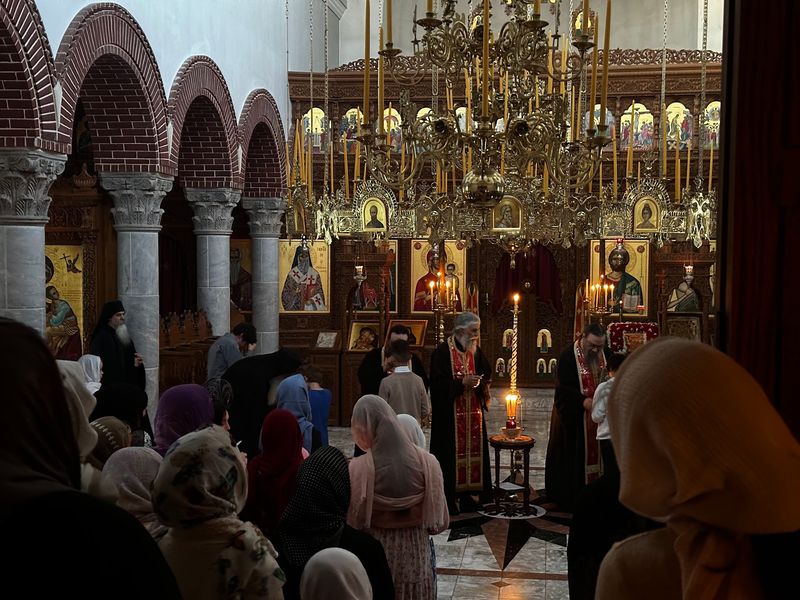
Showing up prepared makes everything smoother. The monastery asks visitors to dress modestly, and the guidelines are specific rather than vague.
Women wear loose fitting, non see through clothing with skirts or dresses falling below the knees, long sleeved shirts, and a headscarf. Men wear long pants, long sleeved shirts, socks, and shoes.
Yes, even in August. Lightweight cotton and linen are your friends here, and packing a spare scarf in the car is never a bad idea.
Behavior matters as much as clothing. Loud talking, unrestrained laughter, and rude gestures are considered out of place, not because anyone is humorless but because the entire property is treated as a space set apart.
Phones on silent. Sunglasses off indoors.
Smoking, hunting, and fishing are all prohibited on the grounds. Anyone wanting to walk or hike across the acreage needs permission first, since much of the land is used for the community’s own work and prayer.
Children are welcome, though parents are expected to supervise them closely throughout the visit.
Both men and women may attend services as pilgrims, which is worth clarifying since some monasteries restrict access. Weekday liturgies happen in the small chapel, Sundays and feast days in the main church, mostly in Greek.
The address is 2191 Twin Sisters Dr, Spring Branch, TX 78070, and checking the monastery website before driving out is smart since the schedule shifts around the church calendar. A little preparation turns a potentially awkward visit into a genuinely welcoming one.
The Bookstore Worth Budgeting Time For
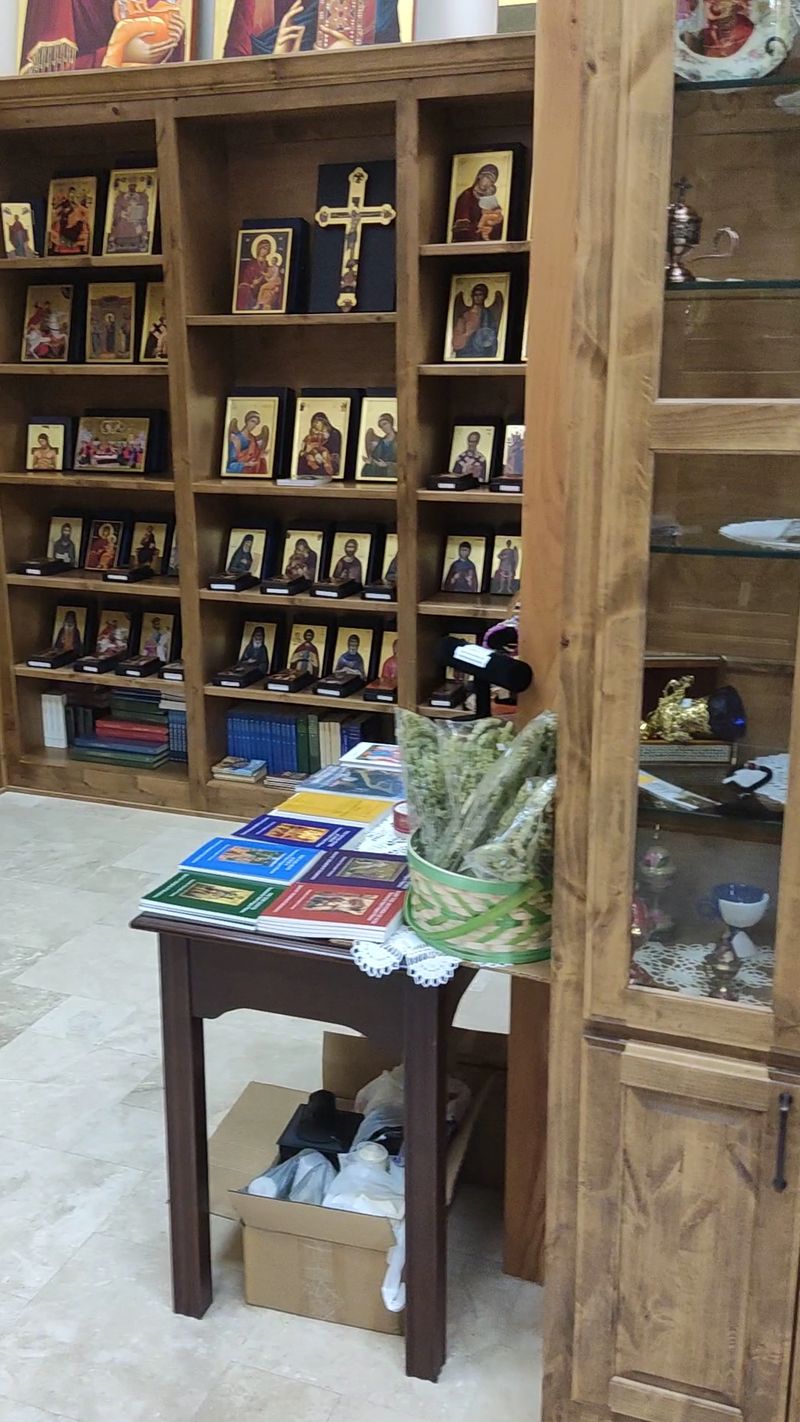
Plan for longer than expected in here. The bookstore stocks icons, books, prayer ropes, incense, and a range of Orthodox items, and browsing tends to stretch past whatever time was allotted.
Shelves are packed but organized.
Icons range from small pocket sized reproductions to larger mounted pieces, and the selection covers plenty of saints beyond the usual suspects. Prayer ropes, knotted by hand, come in wool and other materials with different knot counts.
For anyone new to Orthodoxy, the book section alone is a solid education. Titles cover everything from introductory explanations of the faith to writings from desert fathers and Athonite elders.
Staff and monks can point toward reasonable starting points if asked.
Incense is another draw. Monasteries in this tradition often blend their own, and the scents differ noticeably from anything found in a general store.
Beyond the bookstore, the community produces its own wine from the vineyards on the property, part of the agricultural work that keeps the place running alongside gardens and olive groves.
Hours generally align with when the monastery is open to visitors, which centers on Sunday mornings, so timing a trip around that window matters. Arriving for liturgy and browsing afterward is the natural sequence.
Bringing something home from a place like this tends to carry more weight than a typical souvenir. A small icon on a shelf at home quietly recalls the whole morning, the stone walls, the chanting, the smell of beeswax and incense hanging in the air long after the drive back.
Gardens, Groves, and the Cemetery on the Hill
Growing olives in Texas sounds like a stretch, yet the groves here manage it alongside grapevines and vegetable beds worked by the monks themselves. Rocky, often dry ground makes gardening a real effort.
That effort is part of the point.
Agricultural work fits directly into the daily rhythm, breaking up hours of prayer with something physical and grounded. Watching a property sustain itself this way gives the whole place a lived in quality that a purely devotional site would lack.
Wind moves constantly across the open stretches. Birds are everywhere.
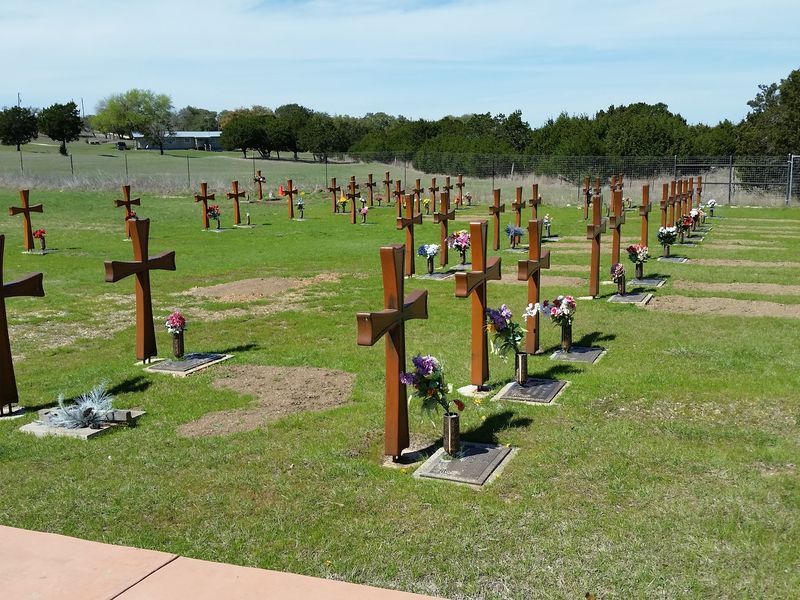
A cemetery also sits on the grounds, serving as a resting place for the faithful. Those buried there are commemorated at every Divine Liturgy, a practice that brings real comfort to families who choose it.
Quiet does not begin to describe that corner of the property.
Visitors curious about walking the wider acreage need permission first, and asking is straightforward. Much of the land stays undeveloped, which is exactly why wildlife shows up so freely near dawn and dusk.
Sturdy shoes help. So does sunscreen, because shade is inconsistent and Hill Country sun does not negotiate.
What lingers after leaving is the combination of all of it. Byzantine stone against cedar and limestone, Greek chanting drifting over a Texas pasture, olive trees taking root where mesquite usually wins.
Few places in the state manage to feel this far from ordinary life while sitting an easy drive from two major cities, and that contrast is precisely what keeps pilgrims and curious travelers coming back down those narrow roads.
