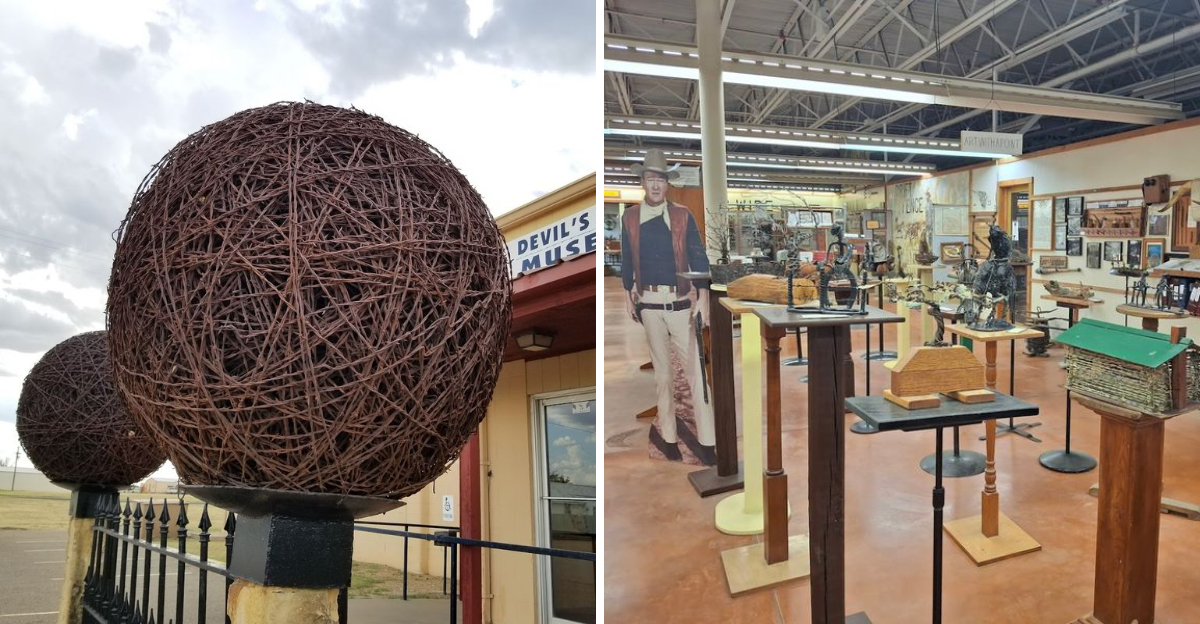
Where else in Texas can you walk into an old bra factory and come out an expert on barbed wire? This place is wonderfully weird.
The walls are covered with over 2,000 different types of that sharp stuff, all because one simple invention helped tame the wild American West. From the massive steel balls outside to the intricate wire sculptures inside, the whole spot is a surprising history lesson.
The town of McLean used to be known as the “Uplift Capital of the World” thanks to that factory, but now it’s all about the “Devil’s Rope.” Texas sure knows how to turn the ordinary into something fascinating.
The Building That Used to Make Bras
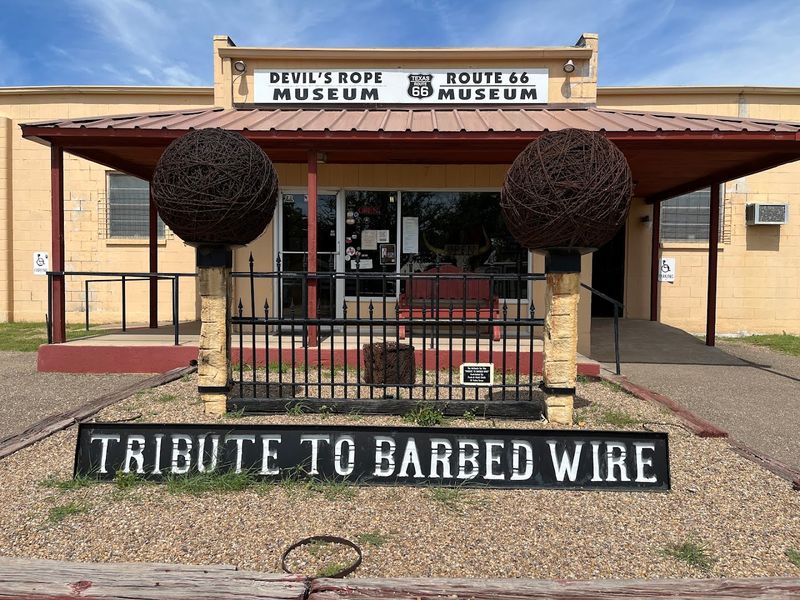
Before a single strand of barbed wire ever entered this building, it was busy with a very different kind of production. The structure once housed Marie’s Foundations, a brassiere factory that employed roughly 100 women from the surrounding area.
That quirky bit of history earned McLean the nickname “the uplift town,” a phrase locals still seem to enjoy saying with a grin.
The factory closed in the early 1970s, leaving behind a spacious, no-frills building that sat waiting for a new purpose. Two decades later, in 1991, that purpose arrived in the form of barbed wire history.
The transformation from undergarment manufacturing to museum feels almost poetic, two wildly different chapters sharing the same walls.
Stepping inside, you would never guess the building’s former life unless someone told you, and trust me, someone will tell you. The staff love sharing that detail with visitors, and honestly, it is the perfect icebreaker for what turns out to be a surprisingly rich experience.
The building itself becomes part of the story, a reminder that history layers itself in the most unexpected places.
Over 2,000 Varieties of Barbed Wire and Why That Number is Wild
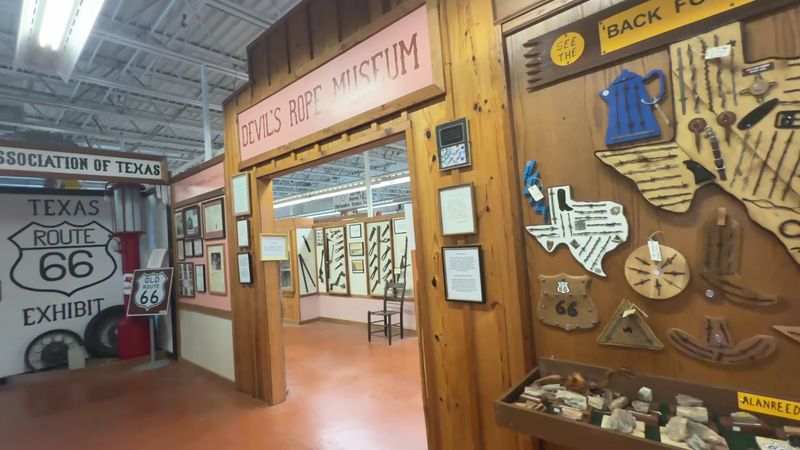
Most people think barbed wire is just barbed wire, sharp, rusty, and something to avoid on a hike. The Devil’s Rope Museum makes that assumption feel genuinely embarrassing.
The collection here spans over 2,000 distinct varieties, and more than 800 of those types received official U.S. government patents at some point in history.
Each variety has subtle differences that matter enormously once you understand what you are looking at. Some have two-point barbs, others have four.
Some are twisted tightly, others loosely. The spacing between barbs, the gauge of the wire, the shape of the points, all of it was carefully engineered and fiercely competed over by inventors during the late 1800s.
The museum is also considered home to the largest collection of published material about barbed wire anywhere in the world. Books, catalogs, patent documents, and collector guides fill shelves alongside the wire itself.
It sounds dry on paper, but standing in front of row after row of mounted samples, each one slightly different from the last, you start to feel the obsession that drives collectors to keep searching for just one more type they have never seen before.
The Origin of the Name Devil’s Rope
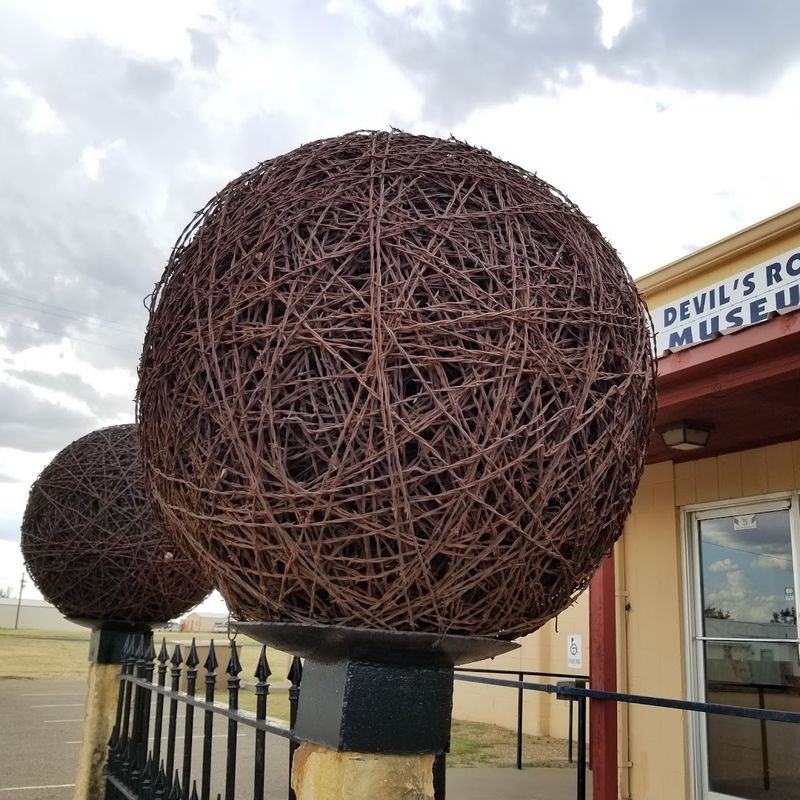
The phrase “devil’s rope” did not come from a marketing team or a museum founder looking for a catchy name. It came from the people who actually had to deal with barbed wire when it first appeared across the American West, and they were not fans.
Ranchers, farmers, Native Americans, and certain religious communities all used variations of the name to describe something they saw as dangerous, even cruel.
The wire’s ability to injure cattle, horses, and people made it deeply controversial when it first spread across the Plains in the 1870s and 1880s. Animals that had never encountered fencing before would run straight into it, suffering serious wounds.
For Native American communities whose way of life depended on open land and free movement, the sudden appearance of barbed wire felt like a physical manifestation of everything being taken from them.
Understanding that history reframes the entire museum. What looks like a quirky collection of twisted metal is actually a record of one of the most transformative and contested technologies in American history.
The name devil’s rope carries real weight, and the museum does not let you forget it. That tension between utility and harm runs through every exhibit.
Founder Delbert Trew and the Collectors Behind It All
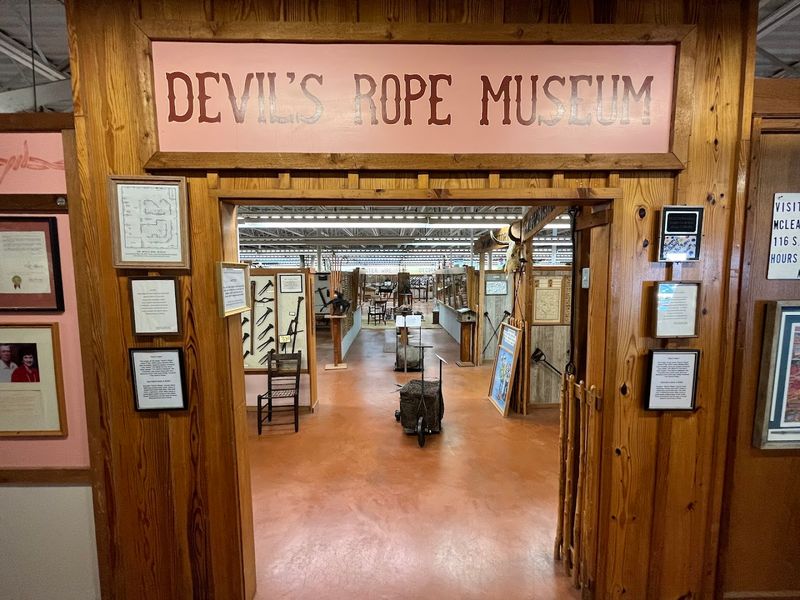
Museums like this do not appear out of nowhere. The Devil’s Rope Museum exists because of Delbert Trew, a Panhandle rancher who cared deeply about preserving the history of barbed wire and the ranching culture it shaped.
He founded the museum in 1991 alongside a group of fellow collectors who shared his conviction that this piece of history deserved a permanent home.
Collector communities around barbed wire are more active than most people realize. There are clubs, swap meets, price guides, and long-running debates about which varieties are the rarest or most historically significant.
Trew helped bring that community together and give it a physical anchor in McLean.
What makes the museum feel different from a typical institutional collection is the personal passion behind it. These were not curators assigned to a project.
They were people who had spent years gathering pieces, researching patents, and tracking down obscure varieties from old ranch fences and estate sales.
That kind of dedication shows in how the collection is presented, not sterile or overly academic, but arranged with the enthusiasm of someone who genuinely wants you to understand why this matters.
It gives the whole place a warmth that is hard to manufacture.
The Ranching Heritage Exhibits
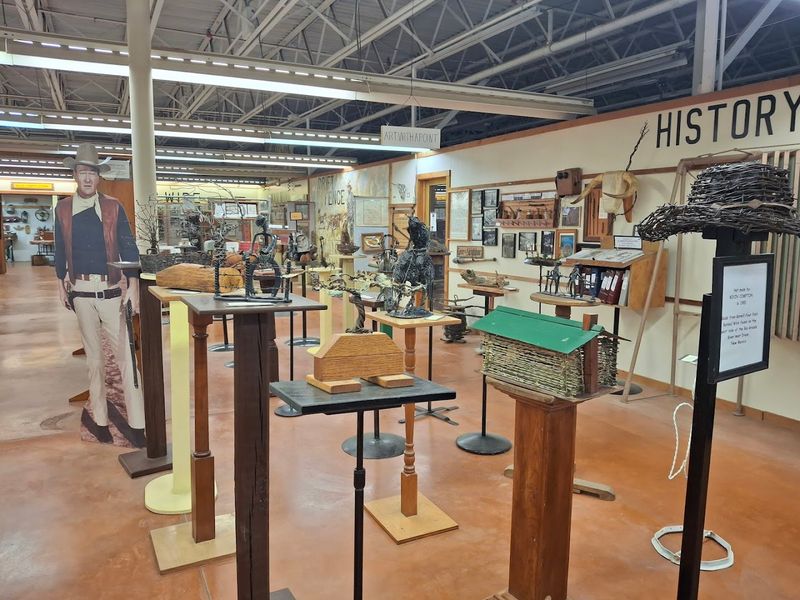
Barbed wire did not exist in isolation. It was part of a massive shift in how land was used, managed, and contested across the American West, and the Devil’s Rope Museum tells that broader story well.
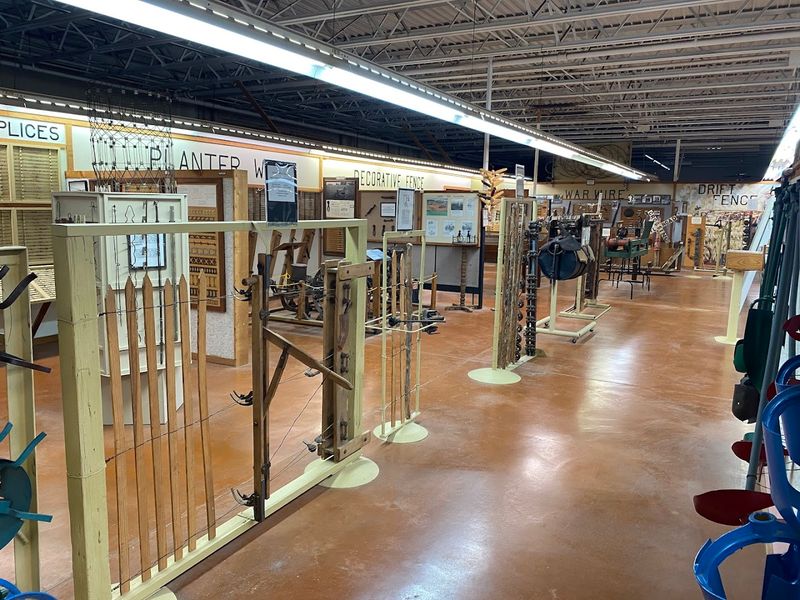
The ranching heritage exhibits give real context to the wire itself, showing the tools, techniques, and daily realities of the people who worked with it.
Fence-making tools from the late 1800s and early 1900s fill several displays, many of them hand-forged and worn smooth from decades of use. Seeing these objects up close makes the labor of early ranching feel immediate and physical.
These were not people working with modern equipment. Every post hole was dug by hand, every wire stretched and stapled by someone who started before sunrise and finished well after dark.
The exhibits also touch on the conflicts that arose as fencing changed the landscape. Fence-cutting wars, range disputes, and legal battles were all part of the era, and the museum does not gloss over them.
Getting a full picture of ranching history means acknowledging how messy and contested that history often was. The exhibit handles it honestly, which makes it far more interesting than a sanitized version would ever be.
The Dust Bowl Exhibit That Quietly Stops You in Your Tracks
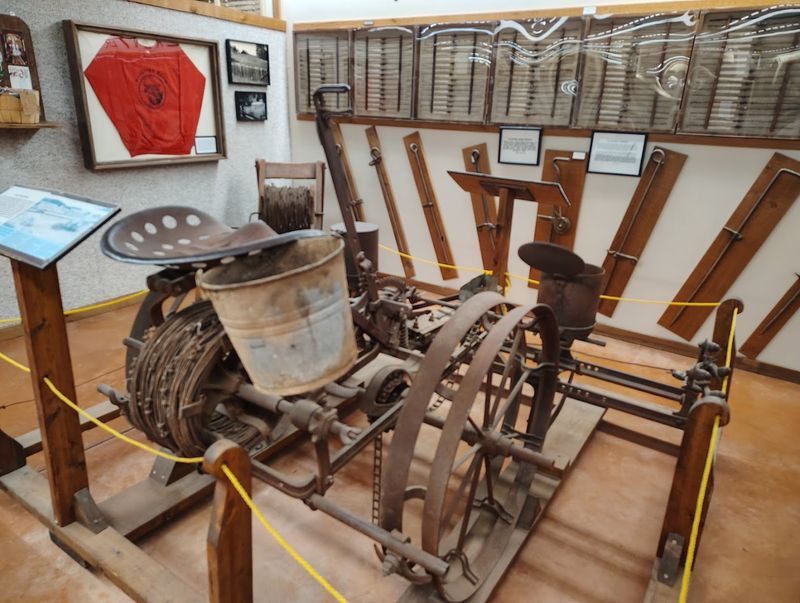
Hidden within the museum is a Dust Bowl exhibit that hits differently than the barbed wire displays. The Texas Panhandle was ground zero for some of the worst dust storms of the 1930s, and McLean sits right in that geography.
The exhibit brings that era into focus with a quiet intensity that can catch you off guard if you are not expecting it.
Photographs of towering black clouds rolling across flat farmland, accounts of families abandoning everything they had built, and artifacts from daily life during those years fill the space with a heaviness that feels earned. This was not a distant disaster.
It happened here, to people whose descendants still live in towns like McLean.
What the exhibit does well is connect the Dust Bowl to the broader story of land use and fencing. The ecological collapse of the 1930s had roots in how the land had been broken up, farmed, and grazed in the decades before.
Barbed wire made mass farming of the Plains possible, and mass farming contributed to the conditions that turned the topsoil to dust. The museum draws that line without being preachy about it, which makes the connection land even harder.
It is genuinely one of the more thoughtful exhibits I have encountered in a small regional museum.
Salesman Samples and Warfare Wire, the Unexpected Corners of the Collection
One of the more surprising corners of the museum involves salesman samples, tiny mounted sections of barbed wire that traveling salesmen once carried to show ranchers and farmers what they were selling.
These little cards and boards, each holding a short piece of wire with a label, feel almost delicate compared to the full rolls and fence-line displays elsewhere in the building.
They tell a fascinating story about commerce in the American West. Wire companies competed fiercely, and salesmen fanned out across the Plains trying to convince landowners that their particular design was superior to the competition.
Holding one of these samples in your imagination, you can almost picture the pitch being made at a farmhouse kitchen table somewhere in 1890.
The warfare wire section adds a completely different dimension to the collection. Barbed wire was not just a ranching tool.
It became a major feature of modern warfare, used extensively in World War I to slow enemy advances and channel troops into kill zones. The museum includes examples of military wire and explains how the same technology that fenced the American West also shaped the battlefields of Europe.
That leap from ranch to trench is one of the most jarring and thought-provoking moments the museum offers.
The Route 66 Collection Inside a Barbed Wire Museum
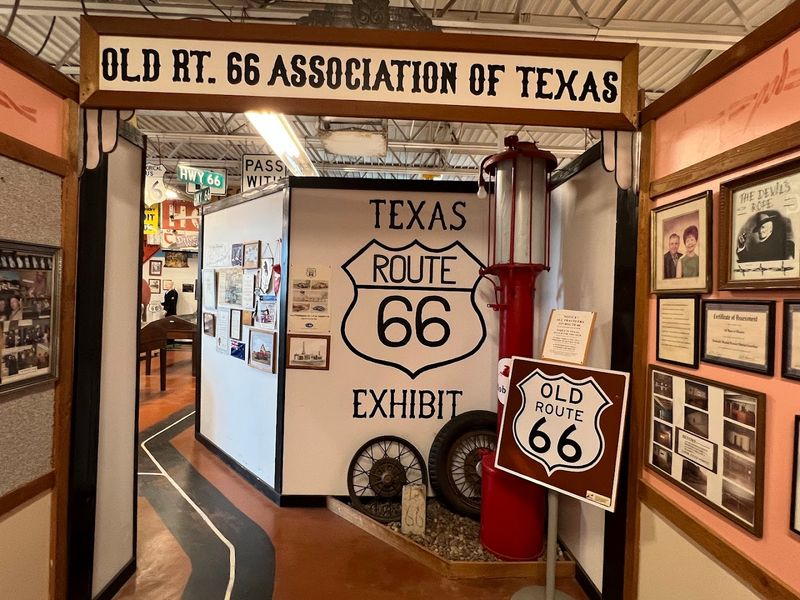
Finding a Route 66 collection inside a barbed wire museum is exactly the kind of unexpected combination that makes road tripping through the Texas Panhandle so rewarding.
McLean sits along the historic path of Route 66, and the museum dedicates a meaningful section to that heritage, focusing specifically on the Texas stretch of what many people call the Mother Road.
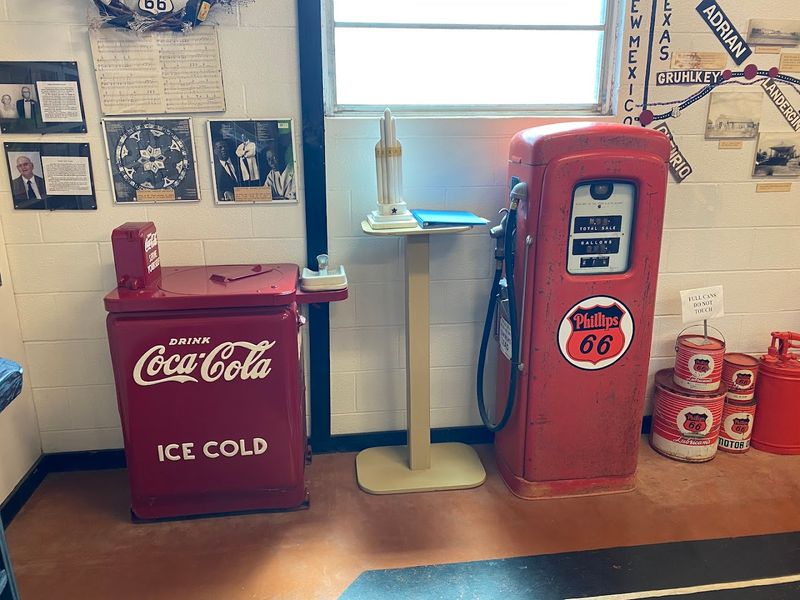
The exhibit includes photographs, signs, maps, and artifacts that capture what traveling Route 66 looked like during its peak decades. Old gas station memorabilia, roadside motel relics, and images of the towns that thrived along the route give the display a nostalgic pull that even people with no barbed wire interest will appreciate.
McLean itself was once a busy stop on Route 66, with businesses, motels, and diners catering to cross-country travelers. The interstate highway system eventually pulled traffic away, leaving towns like McLean quieter than they once were.
The museum treats that history with respect rather than bitterness, presenting it as another layer in the town’s story. Route 66 enthusiasts who stop in McLean for the highway history often end up spending far more time in the museum than they originally planned, which seems like exactly the right outcome.
Why McLean Texas is Worth the Detour
McLean is not a place you accidentally end up. Getting here requires a decision, a turn off the main route, a willingness to trade speed for something more interesting.
That is exactly the kind of detour that tends to reward you most when you travel through the American South and Southwest.
The town has the quiet, sun-bleached character of a place that has seen a lot of history and is not in a hurry to perform for anyone. There are old storefronts, wide flat streets, and that particular Panhandle sky that goes on forever in every direction.
It feels genuinely itself, not curated for tourism.
The Devil’s Rope Museum is the anchor, but the drive through the surrounding landscape has its own appeal. The flat, open terrain of the Texas Panhandle is not dramatic in the conventional sense, but it has a scale and stillness that gets under your skin.
Coming here means accepting that the reward is not a postcard view or a famous landmark. It is something quieter, a deeper understanding of how a single invention, a twisted piece of wire, helped shape an entire region, its economy, its conflicts, and its identity.
That is more than most detours offer.
Address: 100 Kingsley St, McLean, TX 79057
