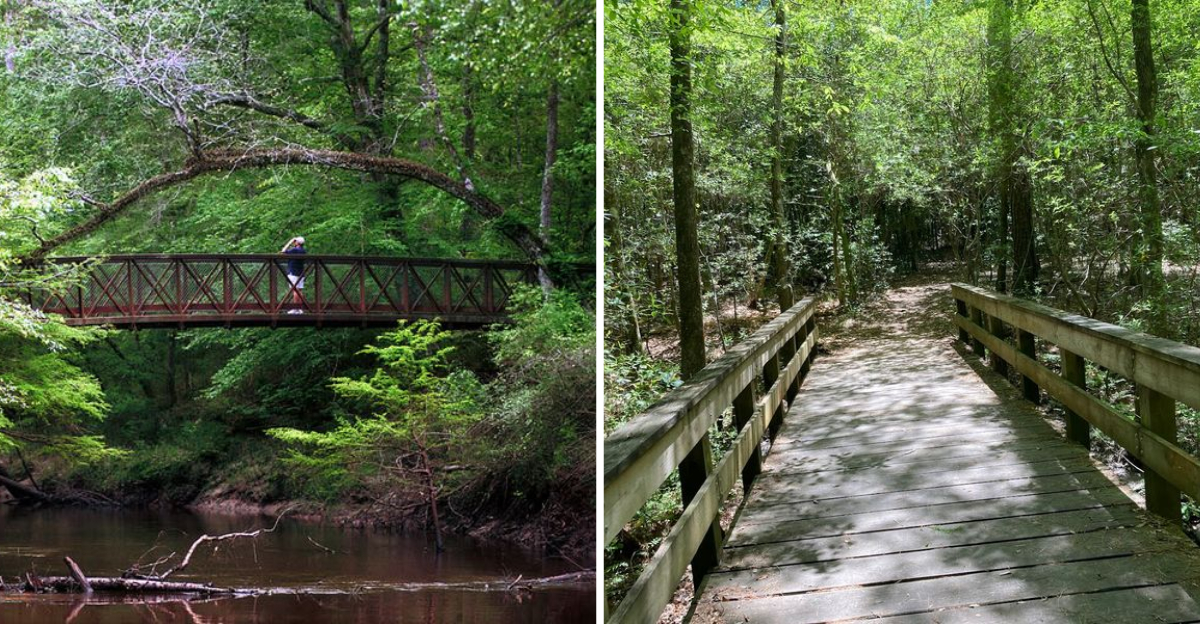
One mile of boardwalk takes you from pine forest to swampy bottomland to open savannah where flowers eat bugs. Southeast Texas has been keeping secrets, and this is the biggest one.
The trail is easy, flat enough for anyone to manage, but the landscape changes so fast you forget you are walking in a straight line. One minute you are under a canopy of pines, the next you are surrounded by pitcher plants and sundews, carnivorous flowers that look like something from a sci fi movie. I saw a heron standing perfectly still in a shallow pond, a turtle sunning itself on a log, and at least three different kinds of dragonflies. Texas has plenty of big parks.
This nature area is smaller, quieter, and absolutely worth the detour.
The Kirby Nature Trail: Where the Forest Gets Personal
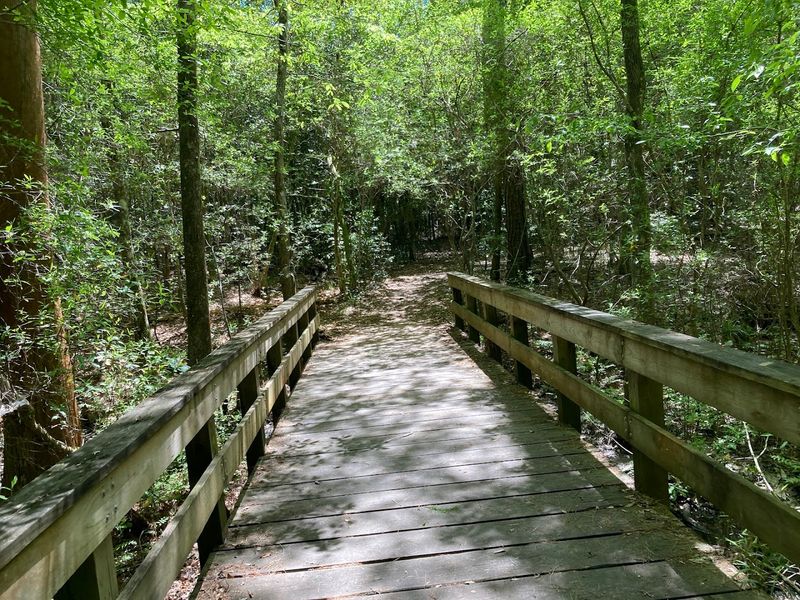
My first time on the Kirby Nature Trail, I was not prepared for how quickly the forest closes in around you. The trail stretches just under three miles and loops through several distinct ecosystems, which is unusual for such a short hike.
You can move from open pine woodland into dense hardwood forest and then into swampy bottomland almost without noticing the shift.
Sections of the trail run along raised boardwalks, which keep your feet dry when the ground turns boggy near the bayou edges. Those boardwalks are one of the highlights, giving you a chance to look down into the dark water and spot turtles or wading birds without disturbing anything.
The trail is well-maintained and clearly marked, which makes it approachable for hikers of most skill levels.
Birding on the Kirby trail is genuinely rewarding. Over 300 bird species have been recorded in the preserve, and the wooded stretches near the water are some of the best spots to catch them.
Early morning visits tend to yield the most activity, with woodpeckers drumming and songbirds filling the canopy overhead. Sturdy shoes are a smart call since the soil near the wet sections stays slick long after rainfall.
The trail begins near the visitor center, making it easy to grab a map and get oriented before heading out.
The Sundew Trail: Carnivorous Plants in the Savannah
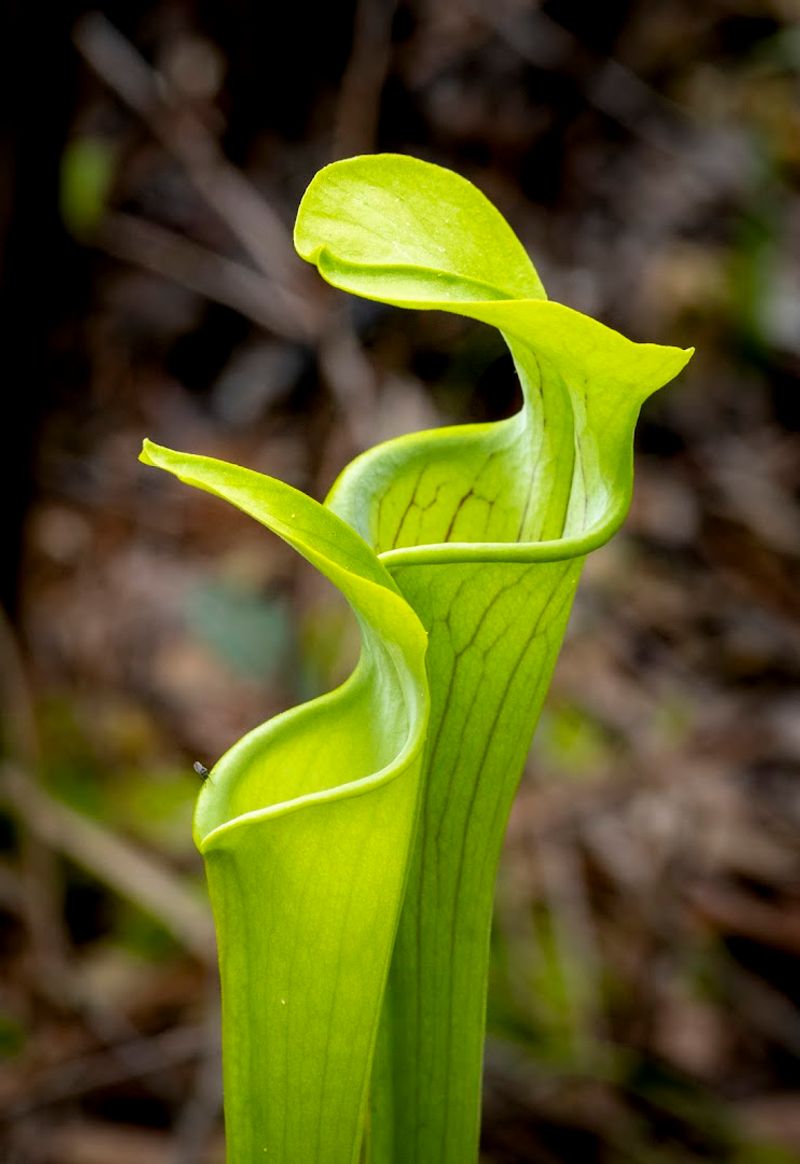
Not many hiking trails can claim carnivorous plants as their main attraction, but the Sundew Trail earns that title without any competition. Located in the Hickory Creek Savannah Unit, this short half-mile inner loop takes you through one of the most ecologically unusual landscapes in the entire preserve.
The raised boardwalk here is purpose-built to protect the fragile bog habitat below.
Pitcher plants are the showstoppers, their tubular leaves holding a liquid that traps and digests insects. Sundews, which give the trail its name, are smaller and harder to spot but worth the search.
Their sticky, reddish leaves glint in the sunlight and curl slowly around anything that lands on them. Seeing that in person is genuinely one of those moments that makes you appreciate how strange and creative nature can be.
The savannah setting itself is open and bright compared to the shadier forest trails, which creates a completely different mood. Spring and early summer tend to bring out the most wildflower color alongside the carnivorous plants.
The access road to this unit is unpaved and can be bumpy, so a vehicle with decent clearance helps. Plan for about an hour to walk the loop comfortably and spend time actually looking at the plants rather than rushing past them.
Big Thicket is one of the few places in North America where you can see four of the five known carnivorous plant types in one location.
Turkey Creek Trail: The Long Walk Worth Every Step
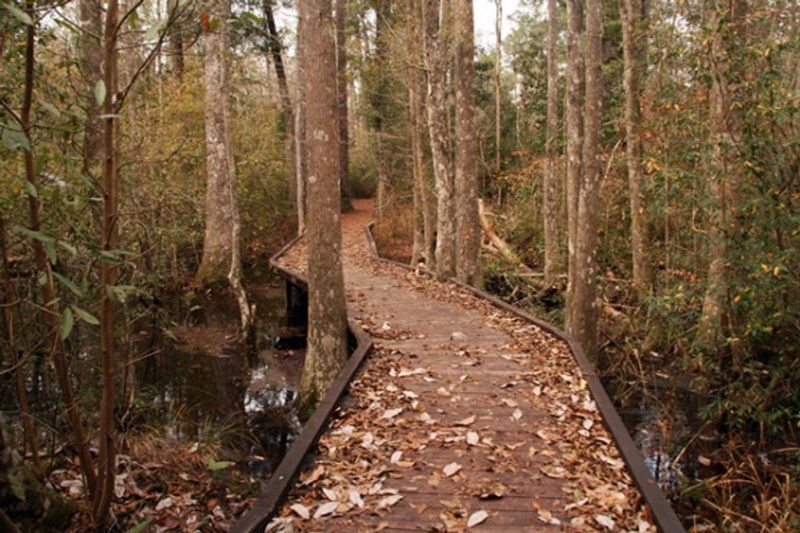
Turkey Creek Trail is the kind of hike that rewards patience. At roughly 15 miles for the full out-and-back route, it is the longest trail in the preserve and covers more varied terrain than any other single path here.
Most visitors do a shorter section and still come away feeling like they have seen a lot.
The trail winds through beech-magnolia forest, pine uplands, and creek bottoms, shifting character every mile or so. Turkey Creek itself runs alongside portions of the path, its clear water moving quietly over sandy beds.
Listening to that creek while surrounded by old hardwoods is one of those simple pleasures that is hard to replicate anywhere else.
The Sandhill Loop, which branches off the main trail, takes you through a drier pine forest growing in sandy soil, a striking contrast to the wet bottomlands nearby. That shift in landscape happens fast and it genuinely feels like stepping into a different region of Texas.
Camping is permitted in the backcountry with a free permit from the visitor center, making this trail a solid option for an overnight trip. The trailhead sits past the picnic area, and the signage at the start can be a little easy to miss, so pay attention when you arrive.
Bring plenty of water because there are no facilities along the trail itself, and summer temperatures in this part of Texas are not forgiving.
Wetlands and Bayous: The Heartbeat of the Preserve
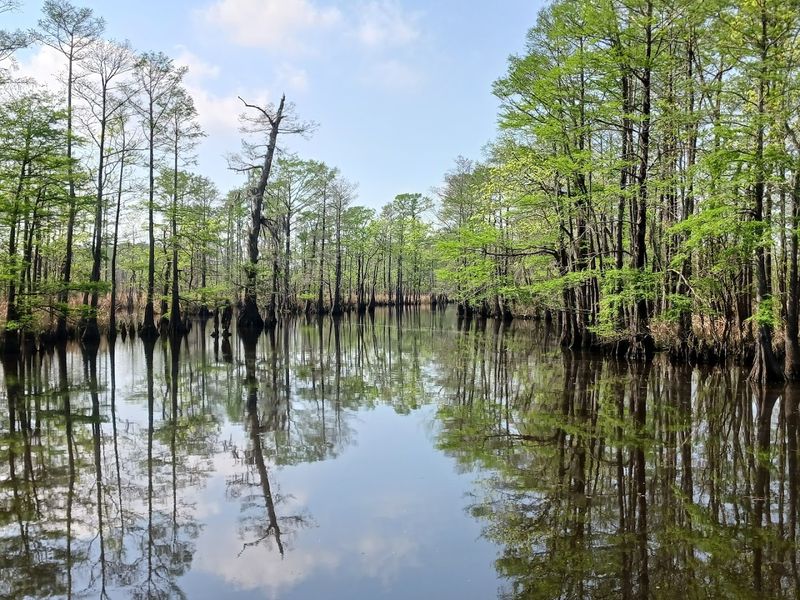
The wetlands inside Big Thicket are not just scenic backdrops. They are living systems that support an extraordinary number of species and give the preserve much of its ecological identity.
Cypress bayous wind through the lowlands, their dark water stained by tannins from decomposing leaves, giving them a tea-colored look that is completely natural.
Paddling these waterways is one of the best ways to experience the preserve at a slower pace. Canoes and kayaks can access several water corridors, and the stillness out on the bayou is something else entirely.
Great blue herons stand motionless along the banks, and if you move quietly enough, you might catch an alligator sunning itself on a muddy shore.
The marshy edges of these wetlands are also prime habitat for amphibians, and the chorus of frogs after dark is genuinely impressive. Seasonal flooding shapes much of the preserve’s forest structure, and the trees that grow here have adapted over centuries to periodic submersion.
Bald cypress knees poke up from the water in clusters, creating an almost otherworldly visual. The water corridors connect the preserve’s nine land units, which are spread across the region rather than forming one continuous block.
That patchwork design means the bayous serve as critical links between habitats, keeping wildlife corridors open and functional across the landscape.
Biodiversity Beyond What You Expect
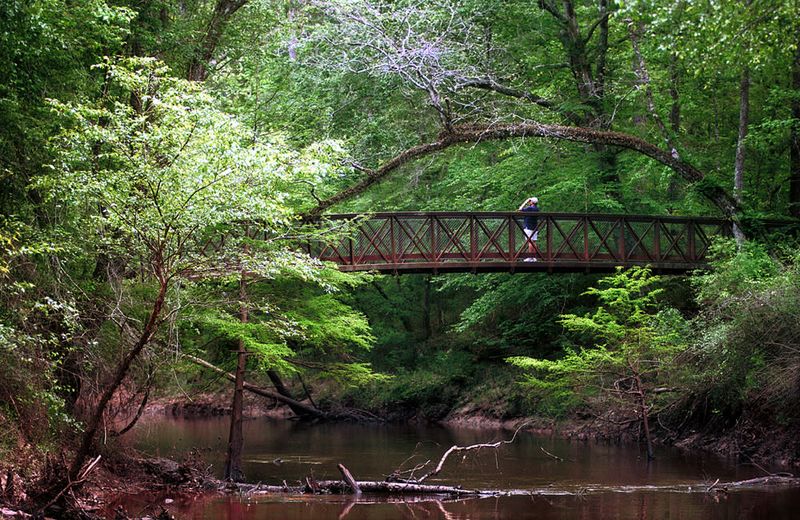
Big Thicket earned its nickname as the biological crossroads of North America for a very real reason. The preserve sits at the convergence of multiple major ecosystems, which creates an overlap zone unlike almost anywhere else on the continent.
Southeastern swamps, eastern deciduous forests, central plains grasslands, longleaf pine savannas, and arid sandhills all meet here within a relatively compact area.
That collision of habitats produces staggering species diversity. Over 1,300 species of trees, shrubs, vines, and grasses have been documented within the preserve boundaries.
At least 300 bird species use the area during migration or as permanent residents, which makes Big Thicket a serious destination for birders from across the country.
Reptiles, amphibians, and mammals round out the wildlife picture in a big way. Black bears have been spotted in the preserve, and white-tailed deer are common along most trails.
The insect life alone could keep an entomologist busy for years. What makes this biodiversity feel so accessible is that you do not need to hike for miles to encounter it.
Even a short walk near the visitor center reveals species that would feel out of place together almost anywhere else. The preserve protects over 113,000 acres across its units, giving all of this life enough room to actually thrive rather than just survive on the margins.
The Visitor Center: Your Best First Stop
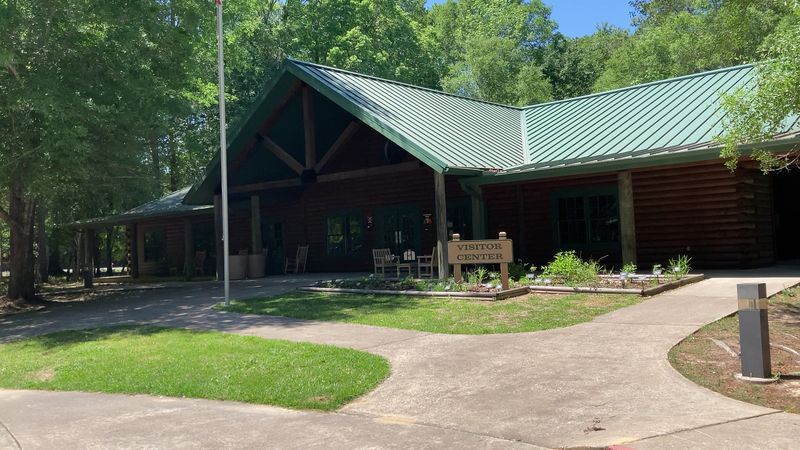
Before hitting any trail, the visitor center on FM 420 is genuinely worth your time. The staff and volunteers here are knowledgeable and approachable, and they take real pride in helping people figure out which trails suit their interests and fitness level.
I asked a few questions on my first visit and ended up with a much better plan than I had arrived with.
The center has exhibits covering the preserve’s ecology, history, and wildlife, giving you useful context before you head outside. There is also a park stamp available for those collecting national park stamps, which is a small but satisfying ritual for frequent NPS visitors.
Bathrooms and a picnic area are on-site, making it a practical base to start and end your day.
The volunteers who sometimes lead guided walks are a highlight worth mentioning. Having someone point out plants and birds you might otherwise walk right past changes the experience significantly.
The center is open daily from 9 AM to 5 PM, so arriving early gives you the most time to explore before the afternoon heat sets in. No entry fee is required to visit the preserve, which makes it one of the better deals in the entire national park system.
Donations are welcomed and go directly toward trail maintenance and preserve improvements, so tossing something in the box is a good way to give back.
Planning Your Visit: Practical Tips for the Trail
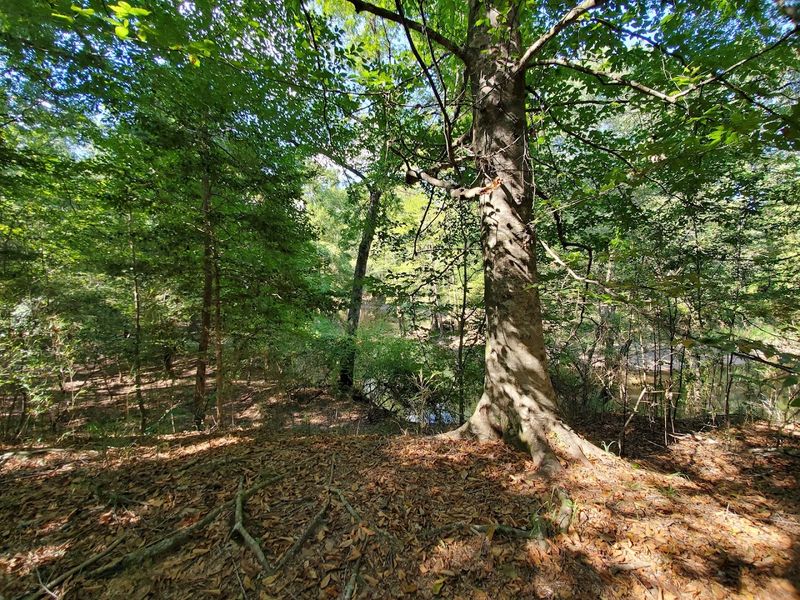
Getting the most out of Big Thicket starts with a bit of preparation, especially if the Texas heat is in full swing. Summer temperatures regularly climb into the 90s, and the humidity in this part of the state is relentless.
Bringing more water than you think you need is not an overstatement. A good pair of waterproof or water-resistant hiking shoes is also essential because trail surfaces near wetlands stay wet long after rain.
The preserve is open daily from 9 AM to 5 PM, and the trails themselves do not require a fee to access. Backcountry camping is free with a permit from the visitor center, which makes multi-day trips surprisingly affordable.
The Big Sandy Creek Unit is the only section that allows cycling, so if you want to bring bikes, that is your destination.
Trail signs can be easy to miss in a few spots, particularly on longer routes, so downloading an offline map before you lose cell service is a smart move. Insect repellent is a must from spring through fall, as mosquitoes and other bugs thrive in the moist forest environment.
Keep an eye out for trail signs when driving between units because the entrances are not always obvious from the road. The preserve spans multiple disconnected land units, so checking which unit your chosen trail belongs to before you drive out saves a lot of unnecessary backtracking.
Address: FM 420, Kountze, TX 77625.
