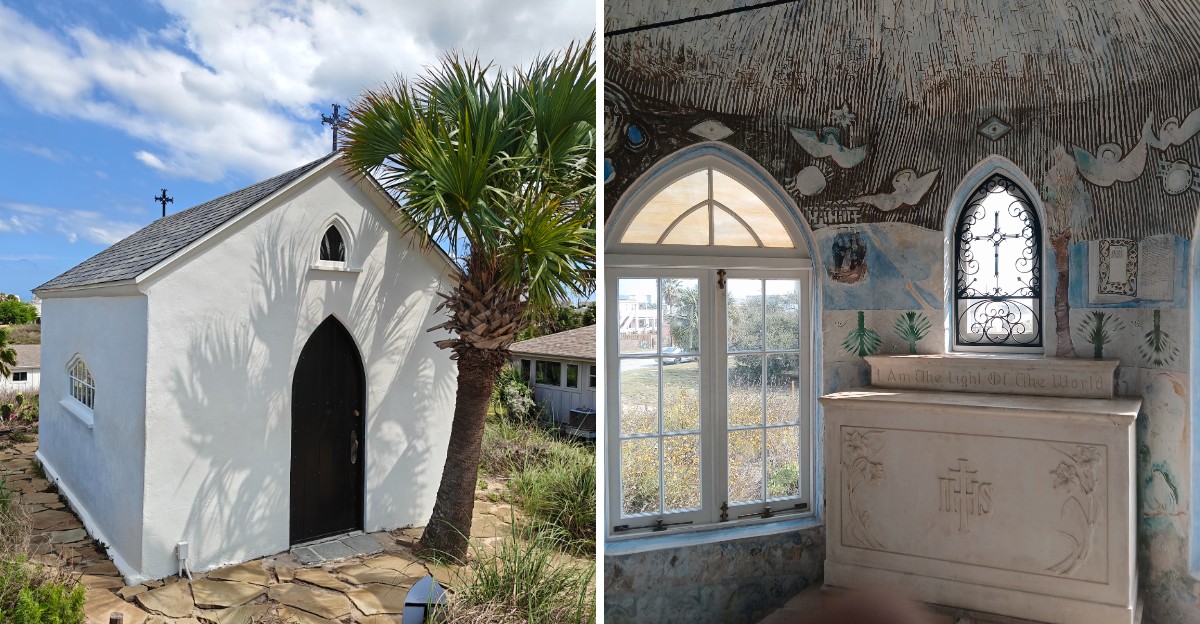
Hand-painted biblical scenes cover the walls and ceiling of a tiny chapel perched on a sand dune. Artist John Patrick Cobb added the murals decades after the building went up, turning its plain white interior into an unexpected burst of color.
The woman behind this Texas landmark was a poet and astronomy teacher. She had the chapel built in the late 1930s and welcomed local children for Sunday school, followed by cake and ice cream.
Even the altar and tilework were based on her own designs.
I can’t help admiring how much personality fits inside such a small building. Today, visitors can see the painted interior on museum-led tours, which require advance reservations.
Between the arched windows, colorful murals, and little hilltop setting, there’s plenty to notice once you reach the top.
The Poet Laureate Who Looked Up at the Stars
Long before anyone planned weddings on this dune, there was Aline B. Carter.
She was a San Antonio native who wrote poems, painted art, and studied the night sky.
The Chapel on the Dunes in Port Aransas started as her dream. She even kept an observatory at her home in San Antonio, which is a pretty impressive hobby for anyone.
Aline served as the Texas Poet Laureate from 1947 to 1949. That means the state officially honored her as one of its top poets.
She was also an author and a humanitarian who cared deeply about her community.
Her nickname makes her even more memorable. People called her the White Angel because she wore flowing white organdy dresses.
Her service to others helped earn that name too.
I like how her interests seem to blend together. Poetry, art, faith, and astronomy all point toward big questions about the world.
A chapel on a high dune, close to the sky, feels like a natural fit for her.
She also loved teaching. Aline taught astronomy to young students, sharing the stars with curious kids.
When you visit, it helps to remember this was built by someone who spent her life looking up.
Built by a Friend With Serious Pottery Skills
Construction started in 1937 and wrapped up in 1938. Aline didn’t build the Chapel on the Dunes alone, though.
She asked her friend Ethel Wilson Harris to take on the job.
Ethel was no random pick. She was known for her work with Mission San Jose Pottery and the Works Progress Administration, a big government program from that era.
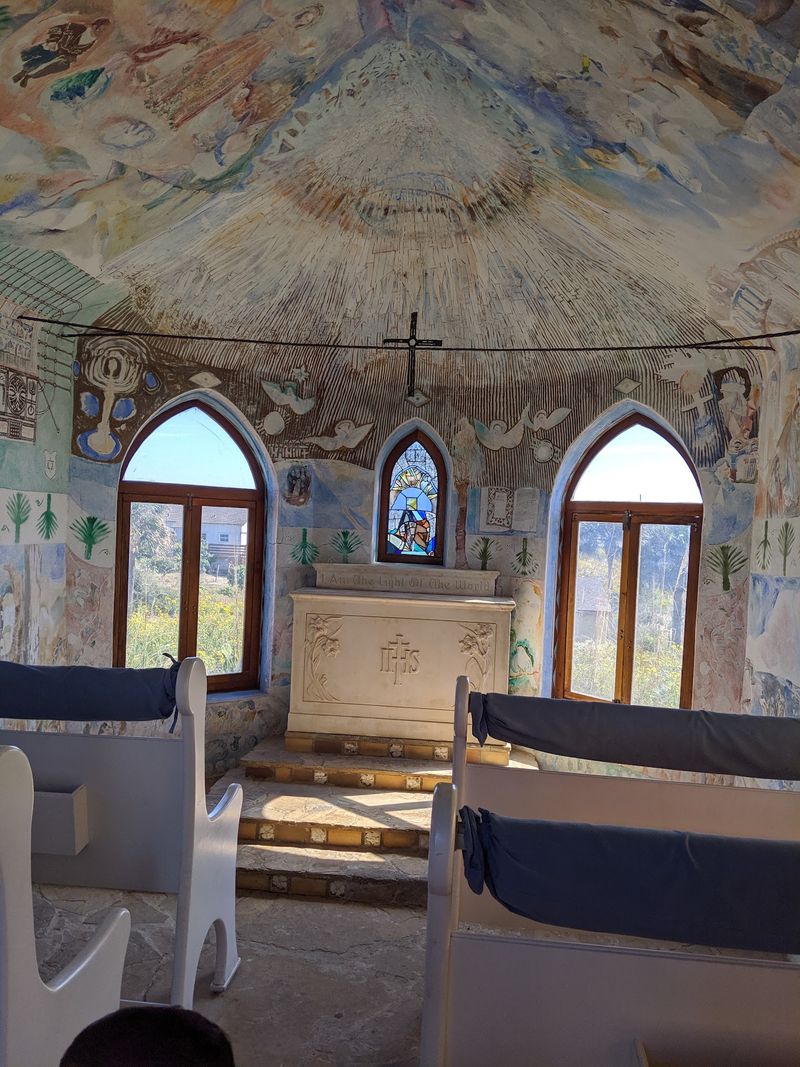
Aline still put her own creative stamp on the place. She designed the altar and the tile work inside herself.
So the building became a true team project between two talented Texas women.
The shape is unusual, too. The chapel is an irregular convex hexagon, which is a fancy way of saying it has six sides that aren’t all equal.
Good luck finding that shape on your average church.
Aline first called it the Chapel of Eternal Light. Today most people know it as the Chapel on the Dunes, and some locals simply call it the little Chapel.
All three names fit nicely. One sounds poetic, one tells you exactly where it sits, and one admits the obvious.
It really is small, and that’s part of the fun.
Sunday School Ended With Ice Cream and Cake
Ice cream and cake after Sunday School might be the best reward system ever invented. Aline B.
Carter apparently thought so too.
During her time in Port Aransas, she held non-denominational Sunday School classes at the chapel. That meant children from any church background could come and join in.
After the lessons, she often served ice cream and cake to the local kids. Picture the coastal heat, then add a cold treat.
No wonder those classes were memorable.
I believe this detail tells you a lot about her heart. She didn’t just build a pretty building.
She created a welcoming spot where young people could learn stories and feel cared for.
The chapel also served as a place for worship, quiet thinking, and artistic inspiration. It wasn’t meant to be fancy or crowded.
It was meant to be peaceful and personal.
That small-town spirit still shapes the chapel today. It remains the oldest continuously functioning consecrated church on Mustang Island.
For a building this size, that’s quite a title to carry. When you stand outside, try to imagine kids racing up the dune for dessert.
The Painted Walls Tell Two Big Stories
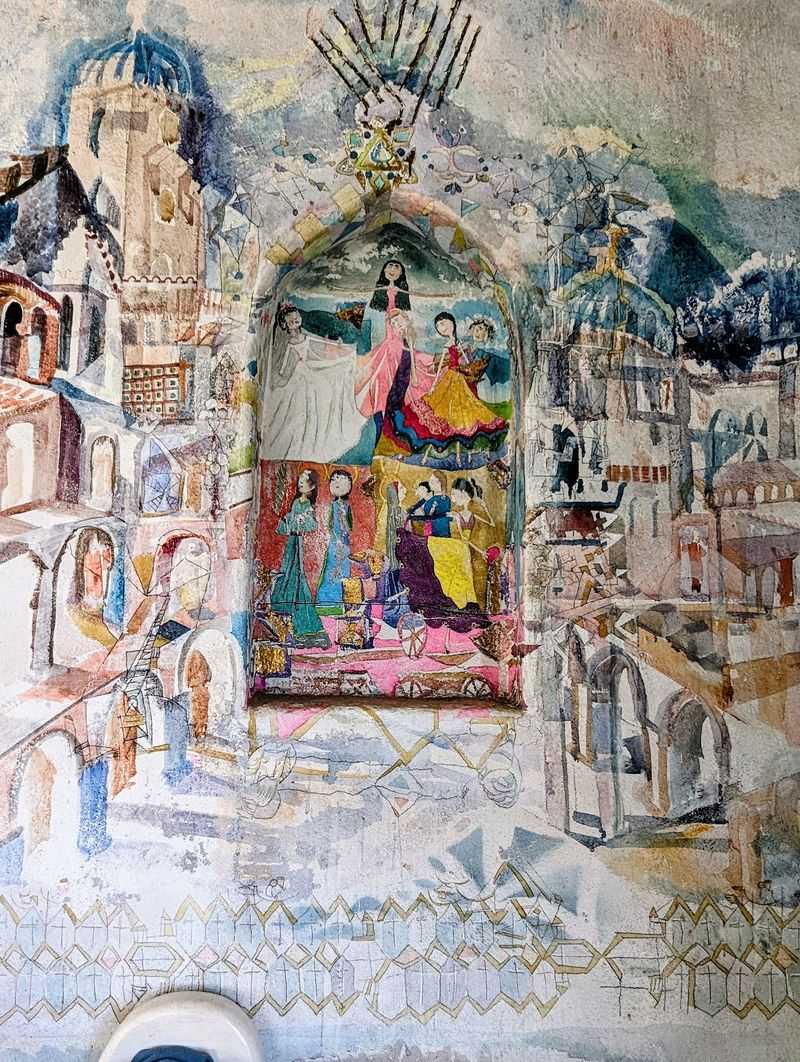
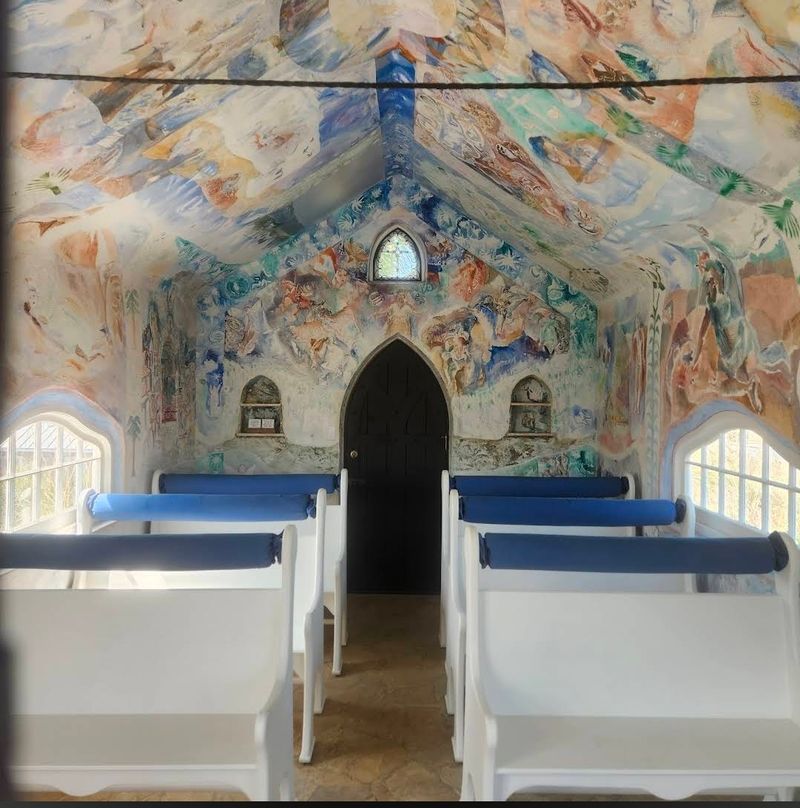
Here’s a fun twist in the story. After Aline passed in 1972, the chapel’s interior was whitewashed, and artist John Patrick Cobb painted new murals across the walls.
His hand-painted frescoes are the heart of the Chapel on the Dunes today. The north wall shows stories from the Old Testament.
The south wall shows stories from the New Testament.
The style surprises some people. The colors are bright and thin, almost like watercolors.
The figures have a playful, childlike look instead of a grand museum feel.
So don’t show up expecting the Sistine Chapel. Expect something more personal and cheerful, with a strong 1970s artistic flavor.
Honestly, that makes it more interesting.
The paintings pair nicely with the wooden pews and soft light inside. Since the room is so small, the art wraps around you from every direction.
My tip is simple. Take a moment to follow each wall from one end to the other, like reading a picture book.
You’ll notice more details that way, and you’ll see how Cobb turned old stories into one colorful room.
You Can Climb Above Most of Mustang Island
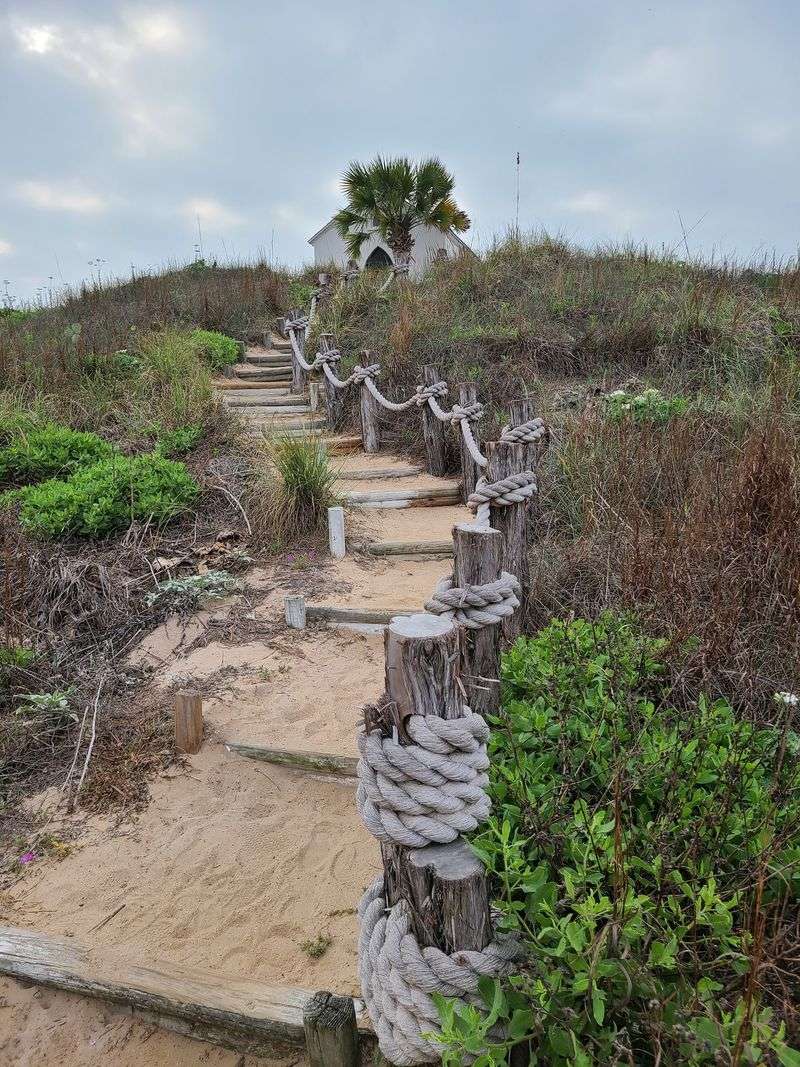
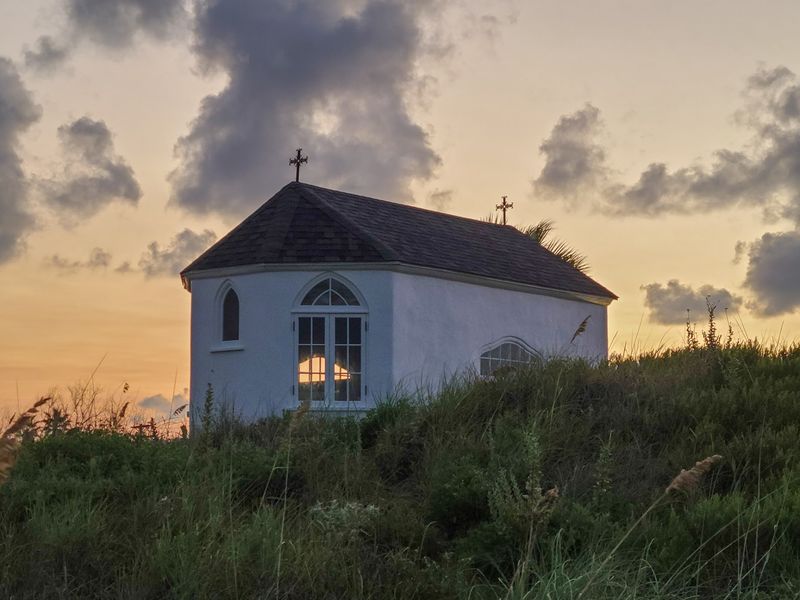
Twenty-six feet doesn’t sound tall until you remember you’re on a barrier island. The chapel sits on a sand dune about 26 feet above sea level.
That makes it one of the highest points on Mustang Island. For a beach town in Texas, that’s basically mountain territory.
You’ll find the Chapel on the Dunes at 203 S 11th St, Port Aransas, TX 78373. It sits several blocks back from the beach, near the corner of 11th and Avenue B.
A short path leads up the dune to the front of the building. Please stay on that path and skip making your own trail for photos.
The dune and the neighbors will thank you.
The setting has changed since the 1930s. Homes and hotels now surround the area, so the chapel feels like a little piece of the past sitting in a modern neighborhood.
From up top, you get views of the surrounding dunes. Sunrise and sunset are especially pretty times to stop by.
The white walls glow nicely in that golden light, which makes for easy, lovely photos.
Getting Inside Takes a Little Planning
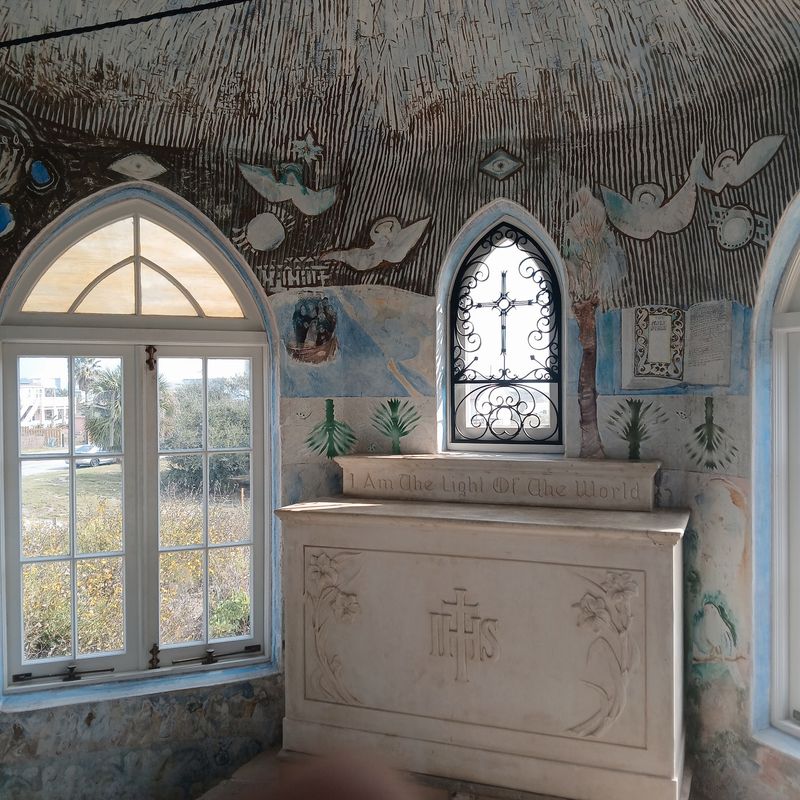
The door is usually locked, and that’s normal. The outside of the chapel is open to visitors from sunrise to sunset, but the inside works differently.
Interior visits happen through guided tours arranged by the Port Aransas Museum. These tours usually run on the first and third Saturdays of each month.
Reservations are required because space is limited. Tours begin at the museum with a short video about the chapel’s history.
Then the group heads over to the chapel together.
Plan for the tour to start in the morning, and check the timing with the museum ahead of time. Showing up early beats racing across town in a panic.
The tour itself is free, though donations to the museum’s volunteers are welcome. Special group tours can also be scheduled if you’re bringing a bigger crew.
Can’t make a tour day? You can still enjoy the view from outside.
Many visitors peek through the windows to catch a glimpse of the murals. Just remember that weddings sometimes take place, so the chapel may not always be available.
Small Weddings Fit Beautifully in This Room
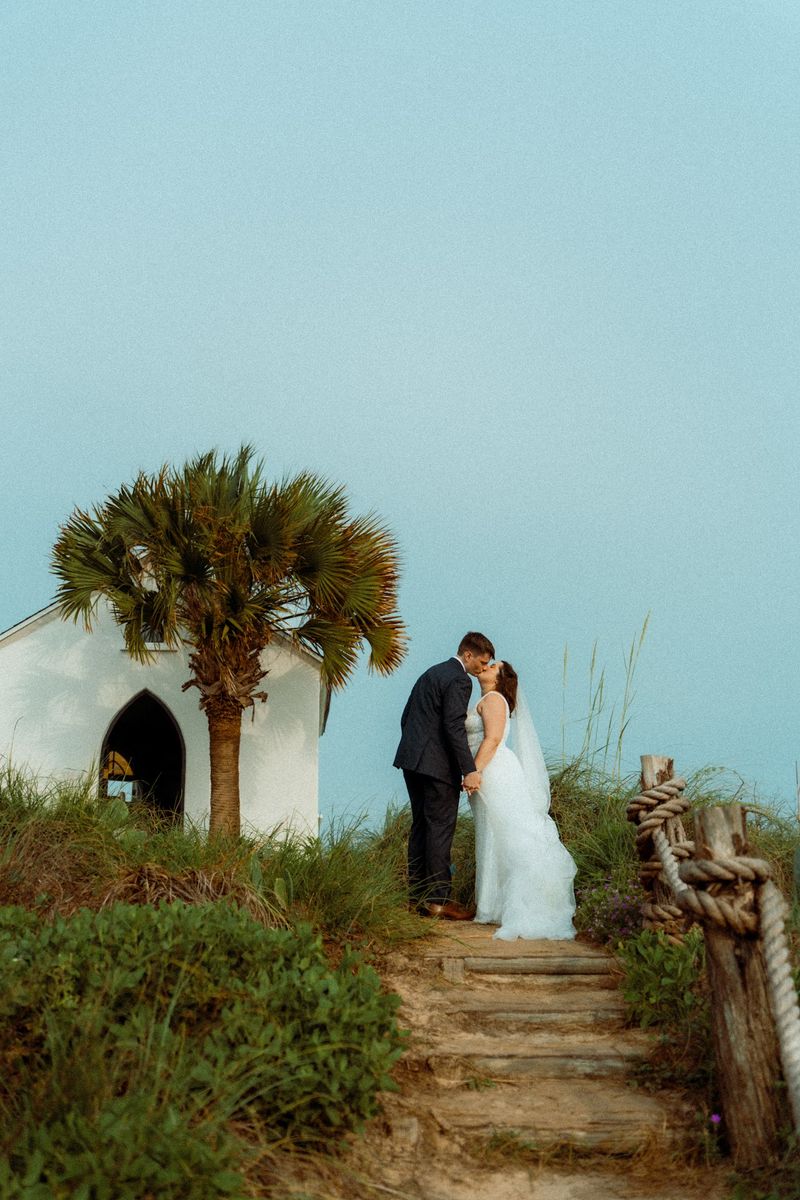
Forget the 300-guest ballroom. The Chapel on the Dunes is built for weddings where everyone actually knows each other.
The room seats about 18 to 22 people on its wooden pews. Around six more adults can stand, bringing the total to roughly 25 to 30 guests.
Couples can book the chapel privately for small weddings and vow renewals. It also hosts baptisms, memorial services, and photo sessions.
There are some house rules to know. No smoking on the property, no candles or open flames, and nothing that attaches to the walls or altar.
Glitter, confetti, rice, and faux flower petals aren’t allowed either. Food stays outside too.
Those rules make sense when you think about protecting painted walls that have lasted for decades.
Here’s another practical tip. The chapel has no air-conditioning, and Texas summers can get steamy.
Plan your timing wisely and keep guests comfortable with breezy clothing. The good news is that the murals already provide plenty of decoration.
Honestly, adding more might feel like hanging posters in an art gallery.
A Family Has Cared for It for Generations
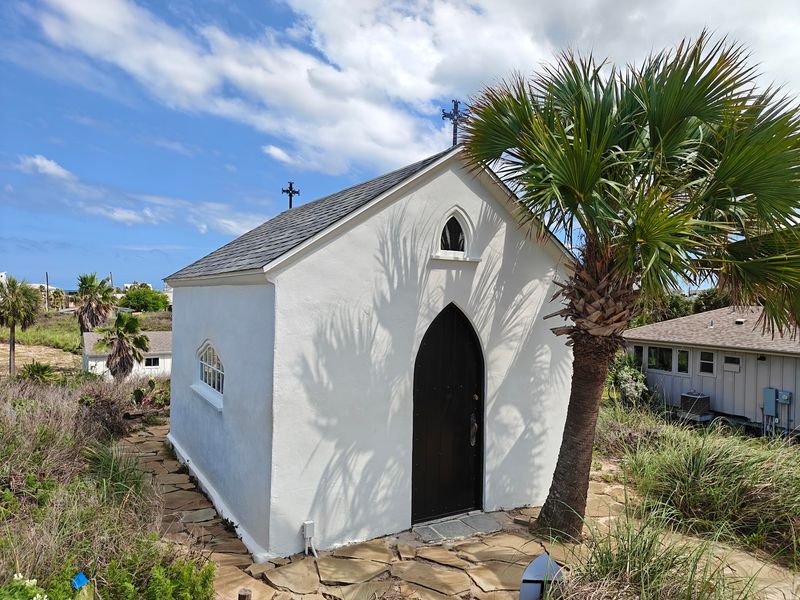
Ninety-nine years is a long life, and Frank Carter spent much of his caring for his mother’s chapel. Aline’s son managed the Chapel on the Dunes until his passing in 2018.
Today, the Carter family still owns and maintains the property. It remains privately owned, which is pretty rare for a landmark this well known.
That steady care matters on the Texas coast. Wind, salt, and storms can be tough on any building, especially one perched on sand.
The chapel has survived multiple hurricanes over the years. That includes Hurricane Harvey in 2017, which hit the area hard.
Somehow, the little hexagon held on.
I can’t imagine the worry each storm season brings for the family. Yet the chapel keeps standing, looking as calm as ever.
It’s also been named one of the Eight Wonders of Port Aransas. That’s a big honor for a building of just 250 square feet.
When you visit, treat the property gently. Respect the neighbors, stay on the path, and help keep this family treasure in good shape for the next generation.
You Can Sleep Right at the Foot of the Dune
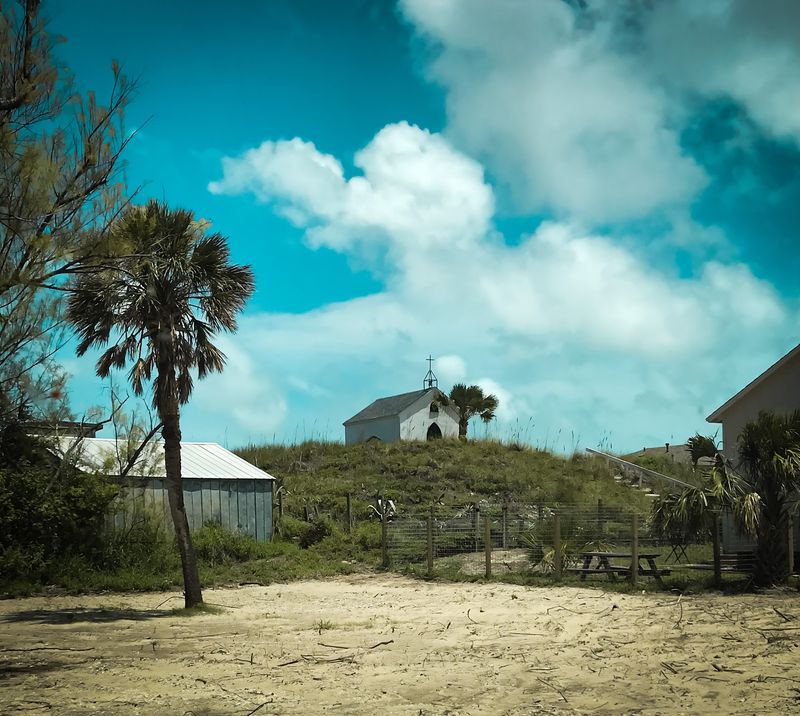
Want the chapel as your next-door neighbor? A rental cottage sits right below the chapel stairs, so you can stay close to this unusual landmark.
The Chapel Cottage was built in 1949 and shares the same 203 S. 11th St. address. It sleeps eight people and has two bathrooms, which is handy for families or friend groups.
Picture stepping outside and seeing that white hexagon above you. Okay, I’m not allowed to say picture.
But you get the idea, and it sounds wonderful.
Staying nearby also makes sunrise and sunset visits easy. You won’t need to race across town to catch the best light on the dune.
The Carter family is also renovating the Chapel House for future rentals. So more options may open up down the road.
For a Texas beach trip with a little history mixed in, this is a fun choice. Pair your stay with a museum tour, and you’ll learn the whole story of the poet, the potter, and the painter.
Then you can walk back home, a few steps from where it all began.
