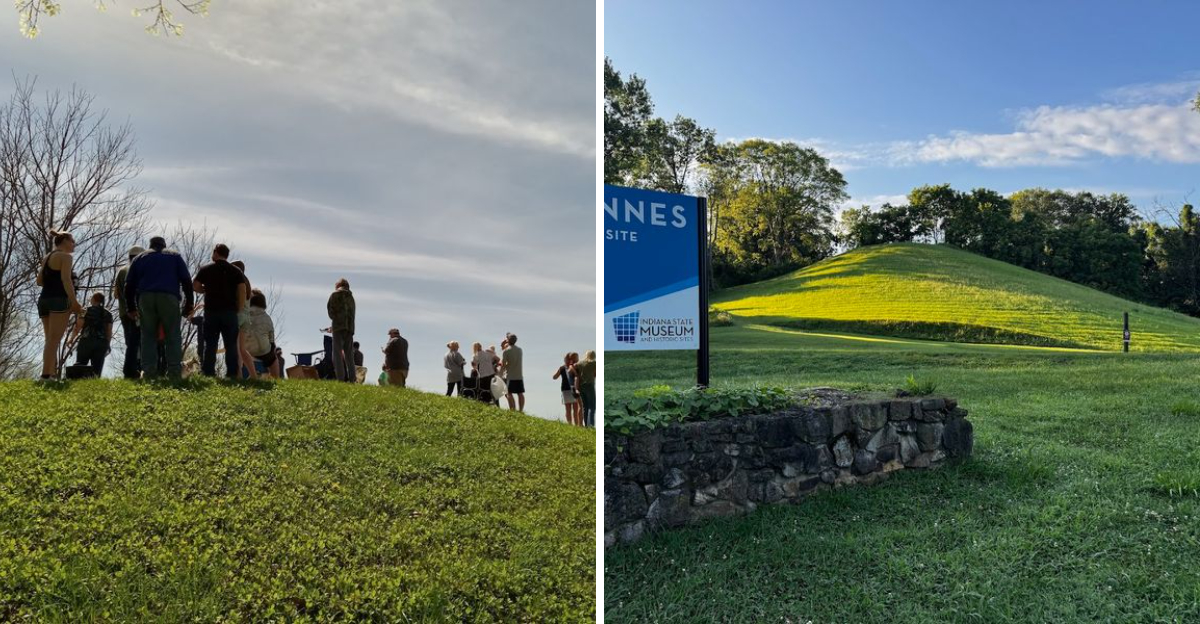
Some places carry a weight that you can almost feel the moment you arrive. A remarkable historic landmark in Vincennes, Indiana is one of those rare spots where ancient nature and human history collide in the most unexpected way.
Unlike most burial mounds across the country, this one was not built by human hands. It began as a natural geological formation long before Indigenous peoples recognized its significance and later used it as a sacred burial site more than a thousand years ago.
Rising prominently above the surrounding landscape, it has become both a cultural landmark and a place of quiet reflection. Standing nearby, it is easy to appreciate how generations of people found meaning in the same landscape.
Whether you are fascinated by archaeology, Native American history, or unusual natural formations, this site offers a powerful glimpse into the region’s distant past.
Come See a Natural Mound No Human Built
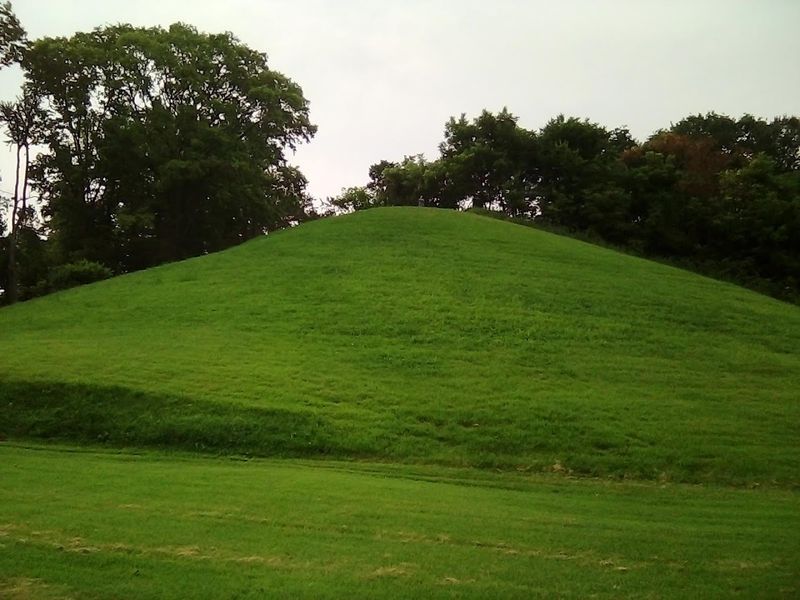
Most people assume that every Native American mound was constructed from scratch by human hands. Sugar Loaf Mound flips that assumption completely on its head.
This formation existed long before any person chose to use it, shaped entirely by natural geological forces over thousands of years.
That fact alone makes it stand out from nearly every other mound site in the Midwest. When the Late Woodland Indians arrived around 900 A.D., they recognized something powerful in this natural rise and began using it as a burial ground.
They did not create the foundation. They simply honored what was already there.
Standing at the base of the mound, you can feel how significant that choice must have been. The site sits at 2425 Wabash Ave, Vincennes, IN 47591, and it is open 24 hours a day, making it easy to visit at your own pace.
Whether you come in the morning light or late afternoon, the mound carries a quiet presence that feels genuinely ancient. This is not a reconstructed attraction or a replica.
It is the real thing, and that authenticity is something you rarely find at historical sites anymore. Bring curiosity and a little patience, and this place will reward you with a sense of connection to something far older than any building or monument nearby.
You Can Explore Ancient Burial Practices Here
Soil samples taken from within Sugar Loaf Mound have revealed evidence of prehistoric burials dating back over a thousand years. That kind of discovery puts history into a completely different perspective.
You are not reading about ancient people in a textbook. You are standing on the very ground where they laid their loved ones to rest.
The Late Woodland culture that used this site left behind a legacy that is still being understood today. Archaeological study of the mound has been limited, and many questions remain unanswered.
That mystery actually adds to the experience rather than taking away from it. Some visitors find the unknown aspects of the site more compelling than any exhibit could ever be.
Respecting the space matters here. This is a burial ground with genuine cultural and spiritual significance.
Walking around the mound with that awareness changes how you see it. You start noticing the quiet, the stillness, and the way the landscape seems to hold its breath.
Families visiting with children often find this a meaningful opportunity to talk about honoring history and showing respect for cultures different from their own. The mound is free to visit, and a free audio tour is available to help expand your understanding of what this place meant to the people who used it.
That combination of accessibility and depth makes it a genuinely worthwhile stop.
Plan to Climb and See the Killer View
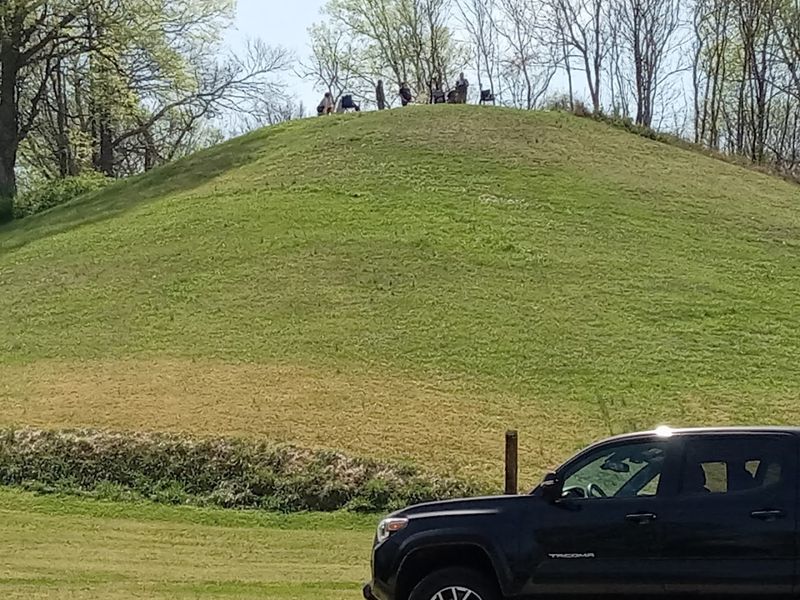
Rising 44 feet above the surrounding bluff, Sugar Loaf Mound offers something that very few historical sites can match. The view from the top is genuinely impressive.
You can see across a wide stretch of Vincennes, and on a clear day, the horizon feels wide open in every direction.
Local families have used this spot for generations. Some grew up sledding down its steep sides in winter, a tradition that speaks to how deeply the mound is woven into everyday life in this city.
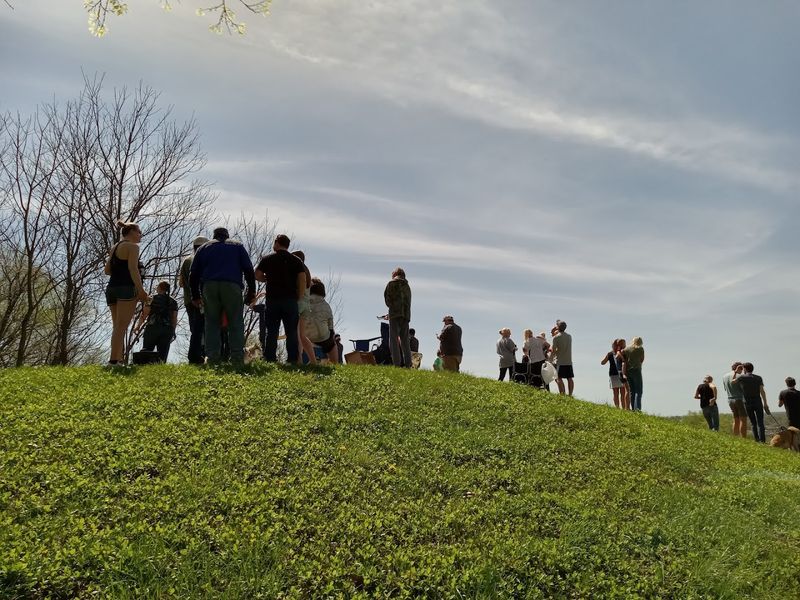
Now, most visitors choose to climb it and simply take in the scenery. There is a flat area at the summit where you can sit, catch your breath, and look out over the town below.
The climb itself is not extremely difficult, but it is steep enough to feel like an accomplishment when you reach the top. Wear comfortable shoes, especially if the ground is damp.
The effort pays off almost immediately once you reach the summit and the view opens up around you. One visitor even experienced the total solar eclipse from this very spot, which gives you a sense of just how special the elevation can be during rare moments.
Whether you are visiting for history, for the scenery, or simply for a unique outdoor experience in Indiana, the view from the top of Sugar Loaf Mound is something worth making time for.
Make Time for the Buffalo Trace Connection
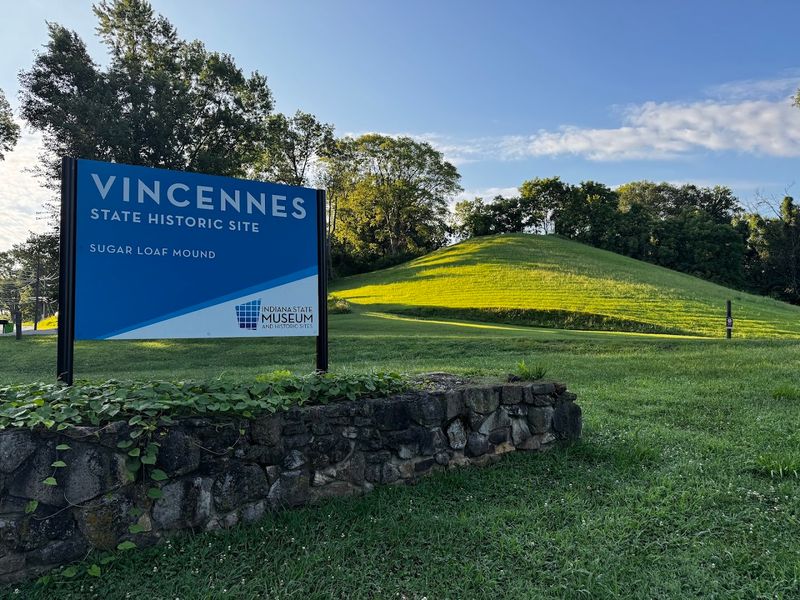
Before roads and GPS, travelers relied on landmarks to find their way through unfamiliar territory. Sugar Loaf Mound served exactly that purpose for those moving along the Buffalo Trace, a well-worn path that stretched from Louisville toward Vincennes.
Pioneers, traders, and Native Americans all used this natural rise as a navigation point through the dense wilderness of what would eventually become Indiana.
Think about what that means for a moment. The same mound you are looking at today was a guiding beacon for people traveling through wild, uncharted land centuries ago.
It was not just a burial site. It was a reference point, a fixed star in a landscape that could easily swallow a traveler whole.
That layered history gives Sugar Loaf Mound a richness that goes well beyond any single story. It connects prehistoric burial practices, Indigenous land use, and pioneer-era navigation all in one place.
For history enthusiasts, this kind of multi-layered significance is rare and genuinely exciting. Standing at the mound knowing all of this transforms the experience from a simple sightseeing stop into something much more meaningful.
You are not just visiting a hill. You are standing at a crossroads of centuries, where the paths of countless different people once converged.
Few places in the entire Midwest can claim that kind of overlapping historical importance in such a compact and accessible location.
Skip Nothing and Learn the Underground Railroad Story
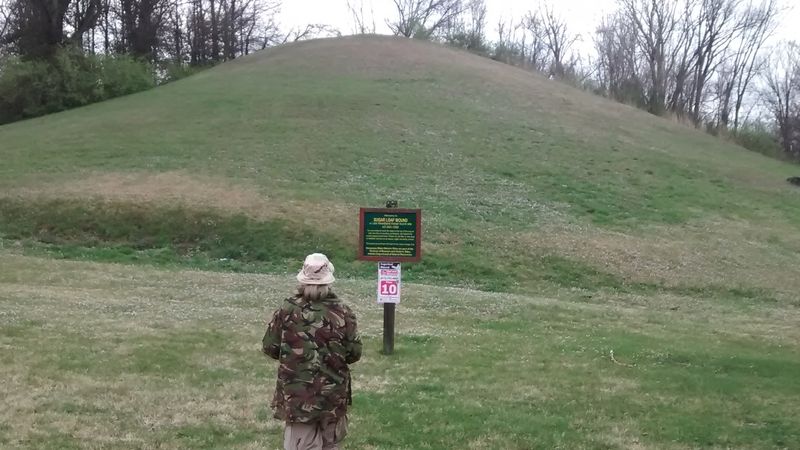
Not every chapter of Sugar Loaf Mound’s history is ancient. The mound also played a role in one of the most courageous movements in American history.
It served as a marker along the Underground Railroad, helping freedom seekers navigate their way north toward free states.
For enslaved people moving through dangerous territory, landmarks like this mound were lifelines. Recognizing the mound meant knowing where you were and which direction to keep moving.
The emotional weight of that history settles over you when you stand at the site and let yourself think about it. These were real people, risking everything, using this natural formation as a point of hope in the darkness.
That layer of history makes Sugar Loaf Mound something more than a geological curiosity or an archaeological site. It becomes a monument to human resilience and the desire for freedom.
Visiting with that knowledge in mind shifts the entire experience. You see the mound not just as an object from the past but as a witness to profound human courage.
Families visiting with older children or teenagers often find this aspect of the site’s history sparks some of the most meaningful conversations they have on any trip. The free audio tour available at the site touches on this history and helps bring it to life in a way that feels personal and real, not distant or academic.
Try Visiting Indiana’s Oldest City While Here
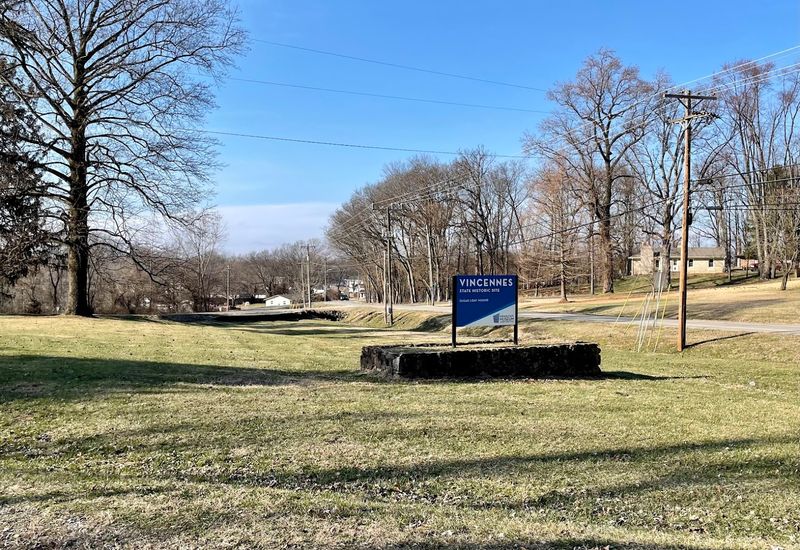
Vincennes holds a title that most people outside of Indiana do not know about. It is the oldest city in the state, with roots that stretch back to French colonial settlement in the early 1700s.
Coming to see Sugar Loaf Mound gives you a built-in reason to explore a city that shaped the entire trajectory of the Midwest.
The decisions made in Vincennes during the territorial period had ripple effects that reached far beyond its borders. This was the seat of the Indiana Territory, a place where laws were written and futures were decided.
Walking through the city with that context in mind gives even a short visit a sense of depth that is hard to find elsewhere.
Sugar Loaf Mound fits naturally into a broader Vincennes itinerary. Spend a morning at the mound, then use the rest of the day to explore what the city has to offer.
The combination of prehistoric history, pioneer-era significance, and small-town Indiana charm makes Vincennes a destination that rewards curiosity. Visitors who assume they will be in and out in an hour often find themselves staying much longer than planned.
The city has a way of pulling you deeper into its story the more you look around. For anyone who loves history that feels lived-in and real rather than polished and staged, Vincennes delivers something genuinely hard to replicate anywhere else in the state.
Do the Full Audio Tour at the Historic Site
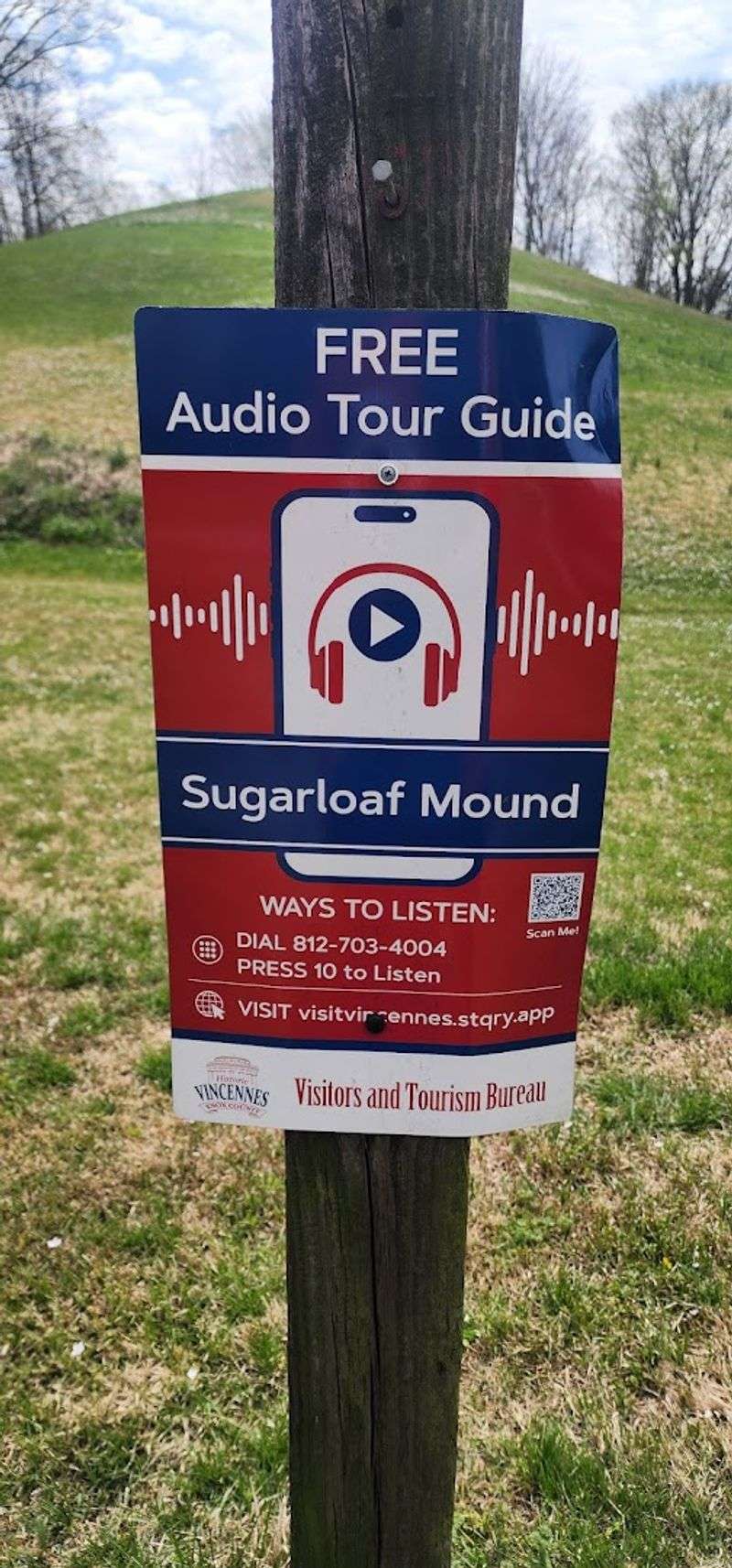
One of the best things about visiting Sugar Loaf Mound is that the experience does not stop at the mound itself. A free audio tour is available that expands the story well beyond what you can see with your eyes.
It connects the mound to the broader historical landscape of Vincennes and helps visitors understand why this site matters in a larger context.
The audio tour is a smart way to make the most of your visit, especially if you are coming with kids or with someone who wants more than just a scenic stop. It gives the experience structure without making it feel like a classroom lesson.
You move at your own pace, stop where you want, and absorb the information as it fits your visit.
Sugar Loaf Mound is also part of the wider Vincennes State Historic Sites complex, which includes other landmarks worth exploring nearby.
After finishing the mound, consider checking out the Territorial Capitol or Fort Knox II to round out your understanding of what this region meant to the development of Indiana and the broader Midwest.
The mound is open 24 hours a day, seven days a week, and admission is free, which makes it one of the most accessible historical sites you will find anywhere. For a stop that costs nothing and delivers a genuinely layered historical experience, Sugar Loaf Mound at 2425 Wabash Ave is hard to beat.
