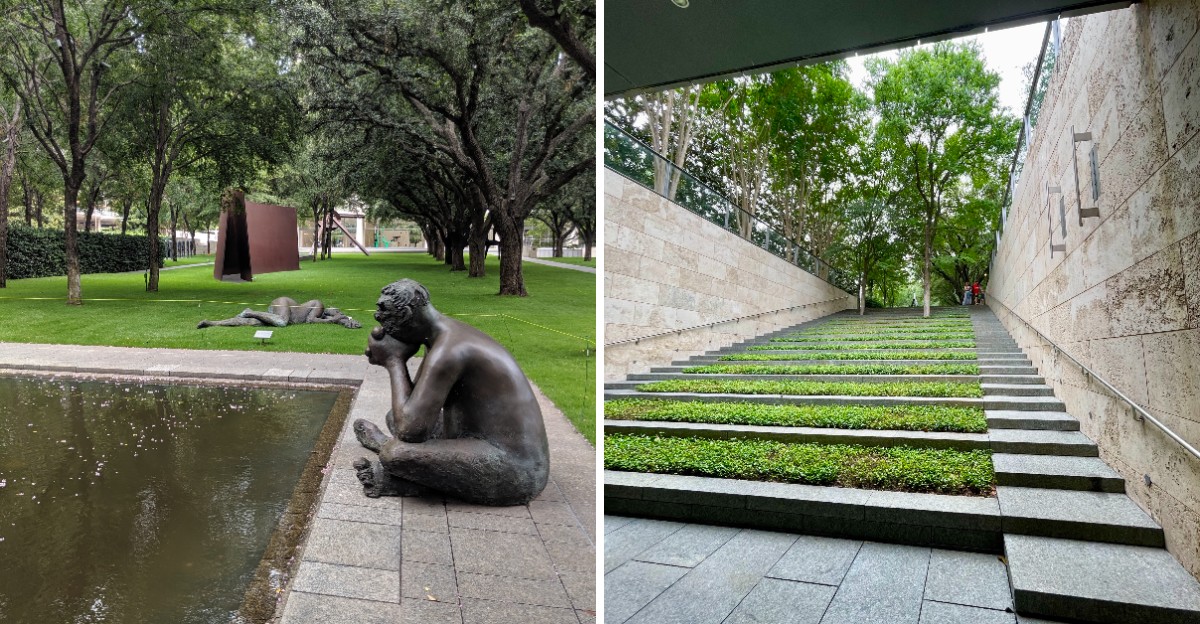
Art is usually found indoors, behind glass, with a security guard watching your every move. Not here.
This Texas sculpture garden puts massive works right out in the open, where you can walk around them, under them, and even touch a few if the mood strikes. The pieces are bold, creative, and surprising.
Some tower over you. Others blend into the landscape so well you almost miss them.
The paths wind through the property, making it easy to explore at your own pace. It is free, it is outdoors, and it is a completely different way to experience art.
Bring comfortable shoes, a camera, and an open mind. The sculptures are waiting.
And they look even better under the Texas sky.
A Roofless Museum Built Around Sunlight
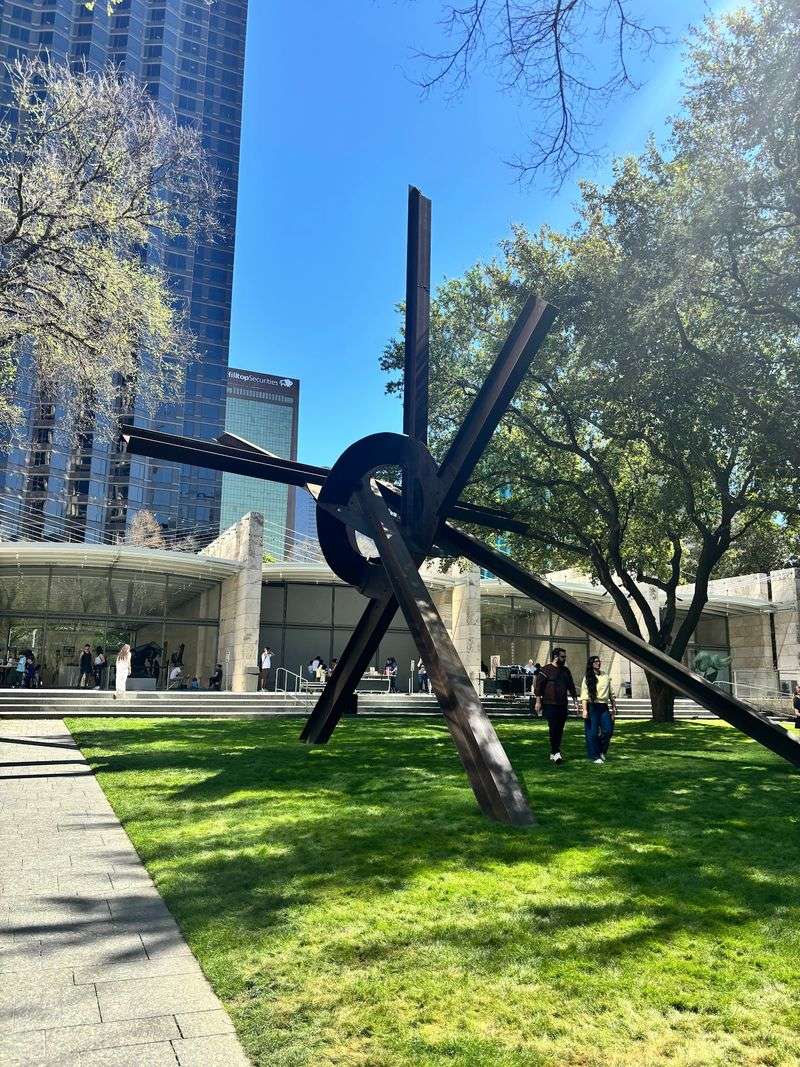
Raymond and Patsy Nasher spent decades collecting modern sculpture, and when it came time to house it, they did something unusual. Instead of building more walls, they built a garden.
The phrase Raymond Nasher used was roofless museum, and the whole design follows that idea. Sculpture made for open air gets open air, exactly as many of the artists intended.
Opened in 2003, the center occupies a full city block in the Dallas Arts District. Architect Renzo Piano handled the building, and landscape architect Peter Walker shaped the garden behind it.
Their collaboration produced something rare. The indoor galleries and the outdoor lawn flow into each other so smoothly that visitors often drift from one to the other without noticing the transition.
Glass walls at the back of the pavilion frame the garden like a living painting. From Flora Street, people passing by can see straight through the building into the greenery, which was entirely on purpose.
That transparency acts as an invitation. Curiosity does the rest.
Light plays a huge role here. Morning sun throws long shadows across the grass, while late afternoon warms the bronze to a deep honey color.
Visiting at different hours genuinely changes what the sculptures look like, which is one of the quiet pleasures of an outdoor collection. Clouds, rain, and seasonal light all become part of the viewing experience.
No other museum in Dallas works quite this way, and that alone makes it worth the trip.
Big Names Standing in the Grass
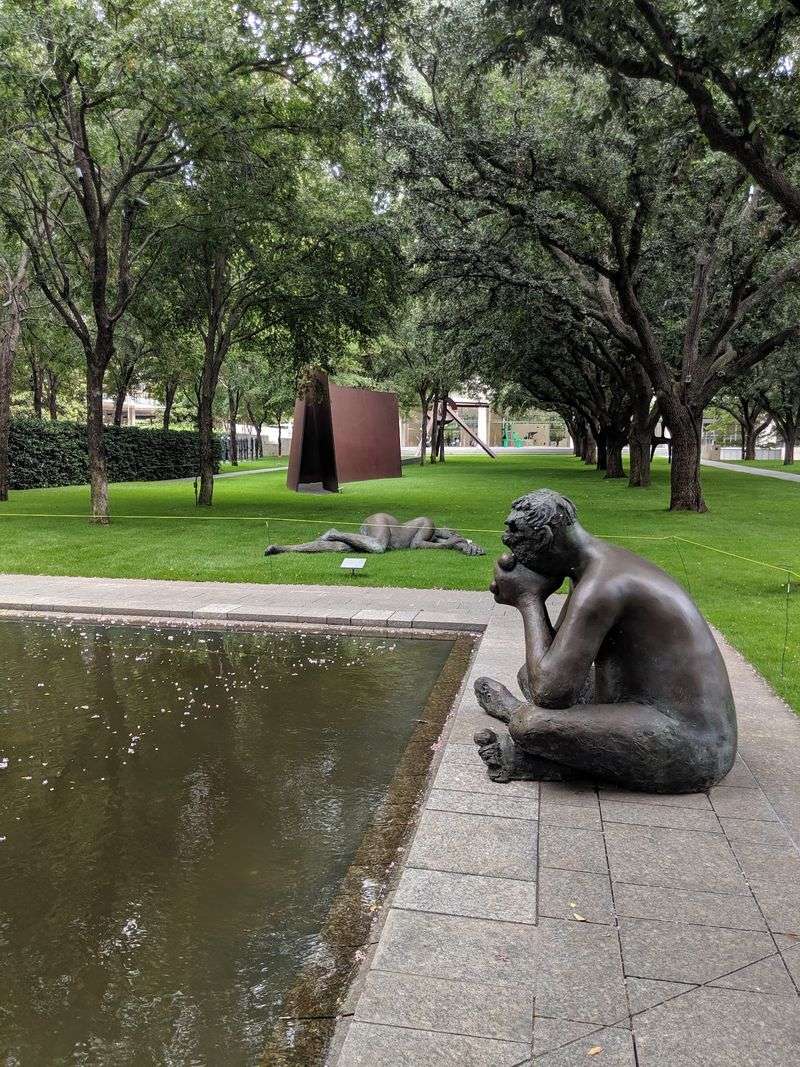
Few gardens anywhere let visitors walk within arm’s reach of work by Picasso, Rodin, and Calder on the same stretch of lawn. The Raymond and Patsy Nasher Collection holds more than 300 masterpieces of modern and contemporary sculpture, and a rotating selection lives outside.
Roughly twenty to thirty large-scale pieces occupy the garden at any given time. The lineup shifts, so repeat visits rarely look identical.
Names on display have included Alexander Calder, Alberto Giacometti, Barbara Hepworth, Henry Moore, Joan Miro, Ellsworth Kelly, Willem de Kooning, Richard Serra, David Smith, Henri Matisse, and Auguste Rodin. That is a list most major museums would envy.
What makes it click is the spacing. Nothing is crammed together, so each work gets room to breathe and be studied from multiple angles.
Walking a full circle around a Moore or a Serra reveals shapes that simply do not exist in photographs. Sculpture rewards movement, and the garden is designed for exactly that kind of slow circling.
Labels stay modest and low-key. The art does the talking.
Visitors who are not art experts tend to enjoy the garden just as much, because scale and texture speak for themselves. Weathered bronze, polished steel, and rough stone all invite a closer look.
Anyone hoping to see a specific artist should check the current outdoor installation before arriving, since works rotate between the garden, the indoor galleries, and storage. Surprises, however, are half the fun.
Garden Rooms Made of Trees
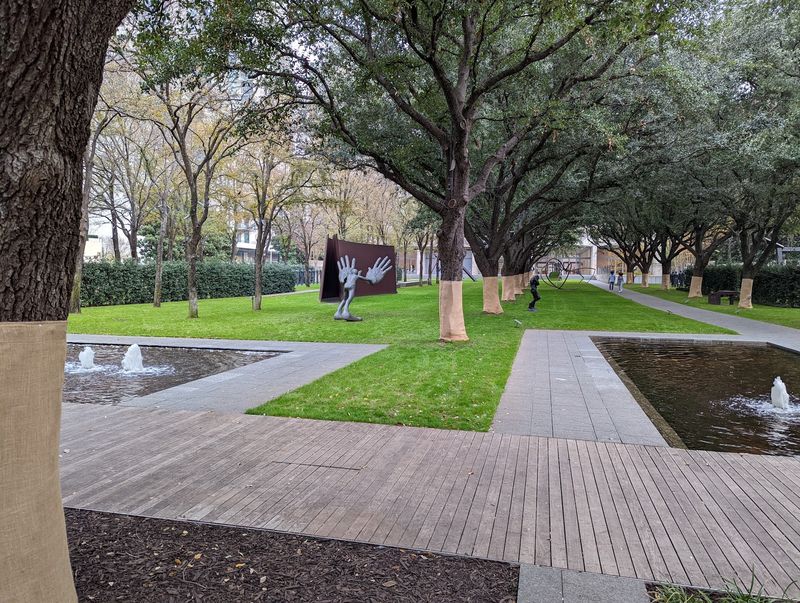
Peter Walker did not plant trees at random. The layout divides the space into a series of outdoor rooms, each one framed by greenery and each one holding its own small cast of sculptures.
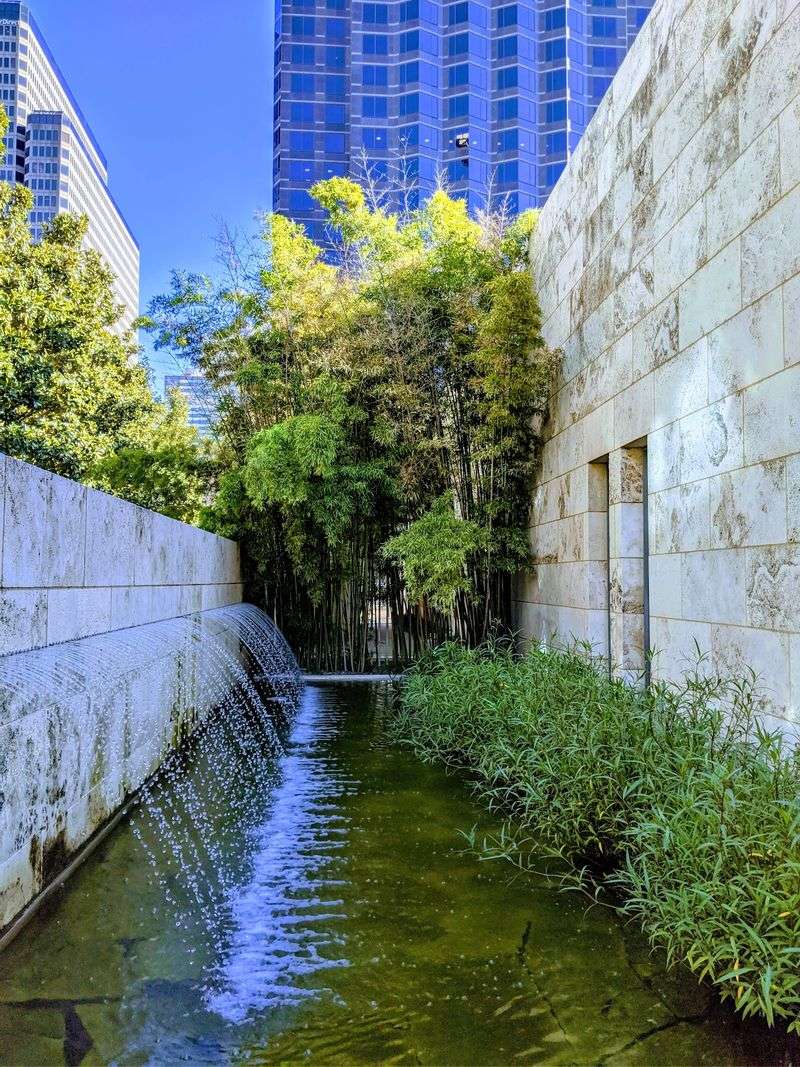
Live oaks, cedar elms, magnolias, weeping willows, and bamboo do the structural work. Together they create pockets of shade and privacy without ever fully blocking the view.
The effect is subtle but powerful. Turn a corner and the mood shifts, because a different canopy filters the light and a different sculpture takes center stage.
A long linear lawn runs down the middle, with terraces stepping gently along the sides. The geometry keeps things orderly, yet the planting keeps it from feeling stiff.
Texas heat is real, and the shade matters. Those oak canopies make summer afternoons far more bearable than an open plaza ever could.
Bamboo clusters near the edges add a soft rustling sound whenever wind moves through downtown. Small detail, big difference.
Seasonal change shows up here too. Magnolia blooms, fresh spring growth, and the deeper greens of late summer all shift the backdrop behind the art.
Photographers love the tree corridors, especially in the hour before closing when light angles low through the trunks. The contrast between organic branches and hard-edged metal makes for striking images.
Comfortable shoes help, though the whole garden is compact enough to cover slowly in under an hour. Slow is the right speed here anyway.
Water That Drowns Out the City
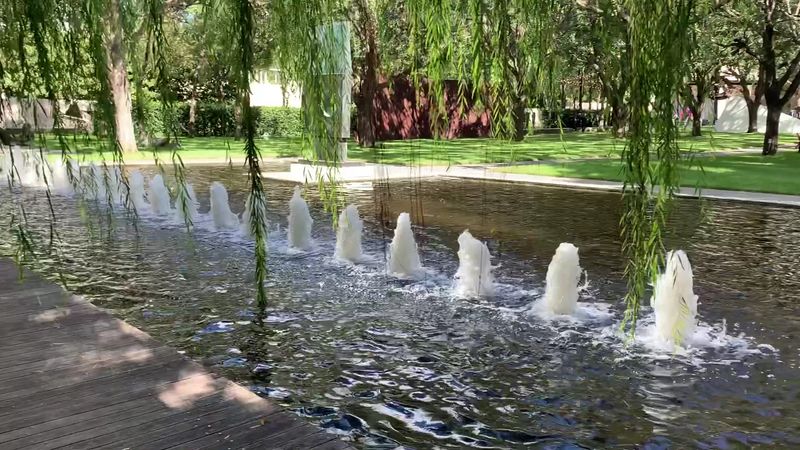
One of the smartest choices in the entire design has nothing to do with art. It has to do with sound.
Fountains and pools are woven through the garden, and the running water does double duty. It looks lovely, and it quietly masks the hum of downtown traffic beyond the walls.
Most visitors notice the effect without identifying the cause. Conversations feel softer, footsteps feel lighter, and the city seems further away than it actually is.
The reflecting pool toward the back of the garden is the showstopper. A weeping willow leans over the water nearby, and the combination has become one of the most photographed corners of the property.
Still water also doubles the sculpture. Reflections stretch bronze forms downward, adding a second version of each piece on calm days.
Small fountains scattered elsewhere provide a gentler trickle. Their sound carries best in the shaded sections where trees hold the noise in.
Benches near the water make good resting spots, and plenty of people use them for exactly that. Sitting still for ten minutes here resets a busy day surprisingly well.
Dragonflies show up in warmer months, skimming the surface. Birds drop in too, drawn by the same thing everyone else is.
Anyone visiting with children should note that the water features are open and low, so a little supervision goes a long way. Otherwise, the pools are simply there to be enjoyed.
Travertine Walls and the Renzo Piano Touch
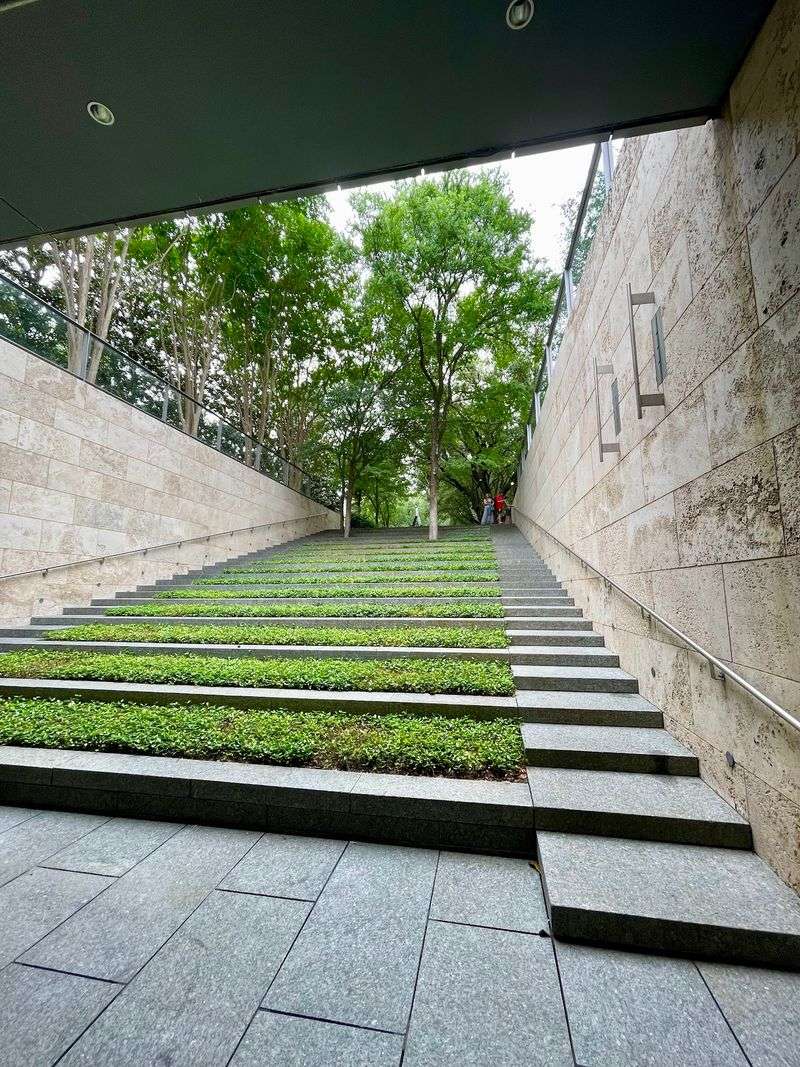
Stone sets the tone before any sculpture comes into view. Italian travertine walls enclose the garden, their warm beige surface catching sunlight in a way that flatters everything placed against it.
The same stone appears on the pavilion, tying building and garden together. Continuity like that is easy to overlook and hard to achieve.
Renzo Piano designed the structure with a signature light touch. Thin steel, generous glass, and a sculpted roof canopy filter daylight into the indoor galleries without frying the artwork.
Address for anyone plugging it into a map: 2001 Flora Street, Dallas, TX 75201, right in the Arts District. Parking on weekends can take a little patience, so building in extra time is wise.
Sinking the garden slightly below street level was another quiet stroke of genius. That small drop separates visitors from the sidewalk and creates a sense of enclosure without any heavy gates.
Walls stop at a height that still lets the skyline peek over. Downtown towers rise behind the trees, a reminder of exactly where this green pocket sits.
Architecture fans often spend as long studying the roof structure as the sculptures. The layered canopy is genuinely clever engineering.
The entire center, including outdoor areas, is wheelchair accessible and ADA compliant. Paths are smooth, grades are gentle, and the garden is easy to navigate for visitors of all mobility levels.
Good design, doing its job without shouting about it.
Evenings Under the Open Sky
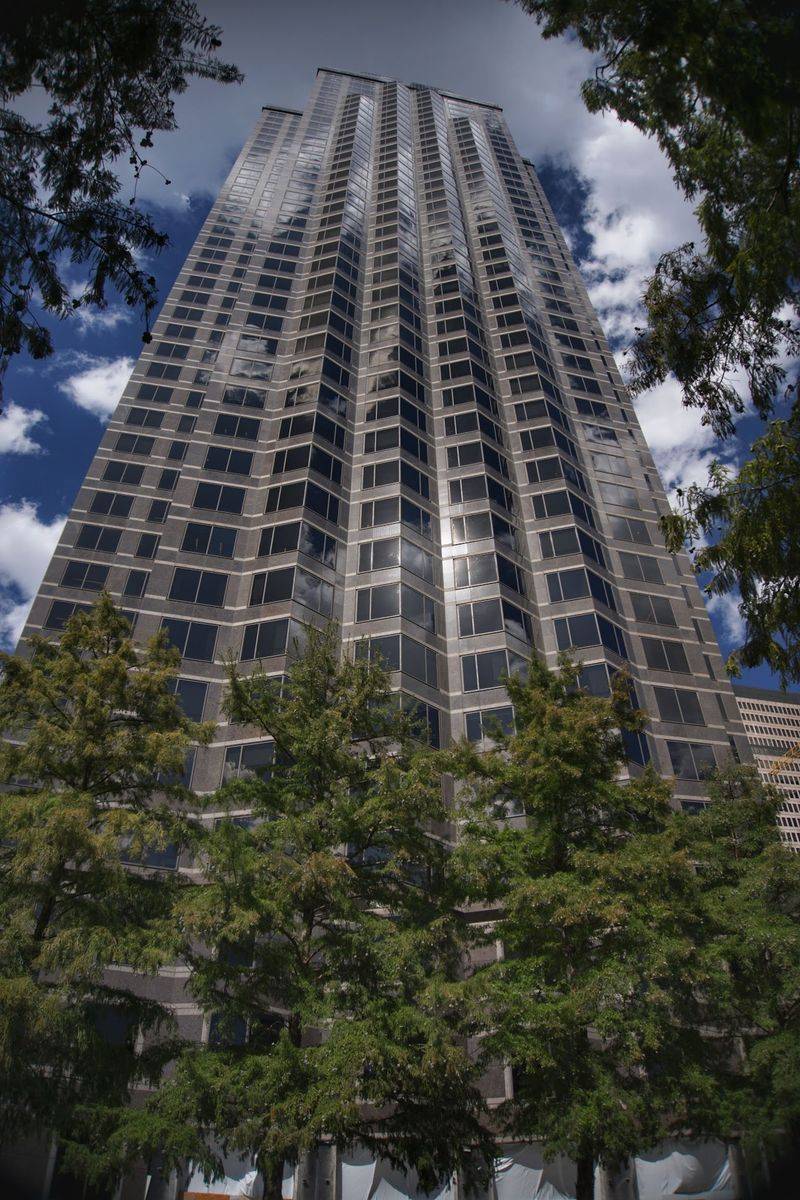
Nighttime turns the garden into something else entirely. Landscape lighting picks out individual sculptures, throwing dramatic shadows across the lawn while the skyline glows overhead.
The center runs an evening program called Til Midnight at the Nasher, which brings live music from local performers onto the grounds. Film screenings follow on select Saturday evenings during the warmer months.
Blankets are the seating of choice, since the lawn serves as the auditorium. Bringing a cushion or throw makes a real difference in comfort.
Bag checks happen at entry, and outside food and drinks are not permitted. Free water stations are set up on site, which handles the main concern on a warm Texas night.
Seating rules apply to the hardscape areas, so sticking to the grass keeps everything running smoothly. Staff are friendly about pointing people in the right direction.
The auditorium inside can open up to function as an outdoor theater, which is part of how these evenings work so well. Architecture and programming were planned together from the start.
Music carries differently in a garden than in a concert hall. Notes drift up past the tree canopy instead of bouncing off a ceiling.
Registering online ahead of time is worth doing, since certain events fill up. Arriving early also secures a better patch of lawn.
Few downtown venues offer this mix of art, greenery, and live sound. It is a genuinely memorable way to spend an evening.
Where to Pause, Sit, and Refuel
Hunger tends to strike about the time visitors finish their second loop of the lawn. Conveniently, the Nasher Cafe by Wolfgang Puck sits right inside the pavilion with views straight out to the garden.
Glass walls mean the sculptures stay in sight throughout a meal. Not a bad backdrop for lunch.
Benches scattered through the garden give a free alternative for anyone who just wants to sit and watch the light move. Several are positioned for specific sculpture views, which feels intentional.
The scale of the place works in a visitor’s favor. At roughly a city block, the garden can be explored thoroughly without wearing anyone out.
Plan on an hour or two for a relaxed visit, longer if there is a special exhibition indoors or an event on the schedule. Rushing defeats the purpose.
Hours run Wednesday through Sunday from 11 am to 5 pm, with Mondays and Tuesdays closed. Checking before heading over saves a wasted trip.
Shade options make midday visits workable even in summer, though early or late in the day is more comfortable. Spring and fall are the sweet spots.
The lawn is also a favorite backdrop for photos, and the indoor-outdoor contrast gives plenty of variety. Portrait light near the willow is particularly flattering.
Bring water, wear sunscreen, and give yourself permission to linger. The garden rewards people who slow down.
An Arts District Anchor Worth Building a Day Around
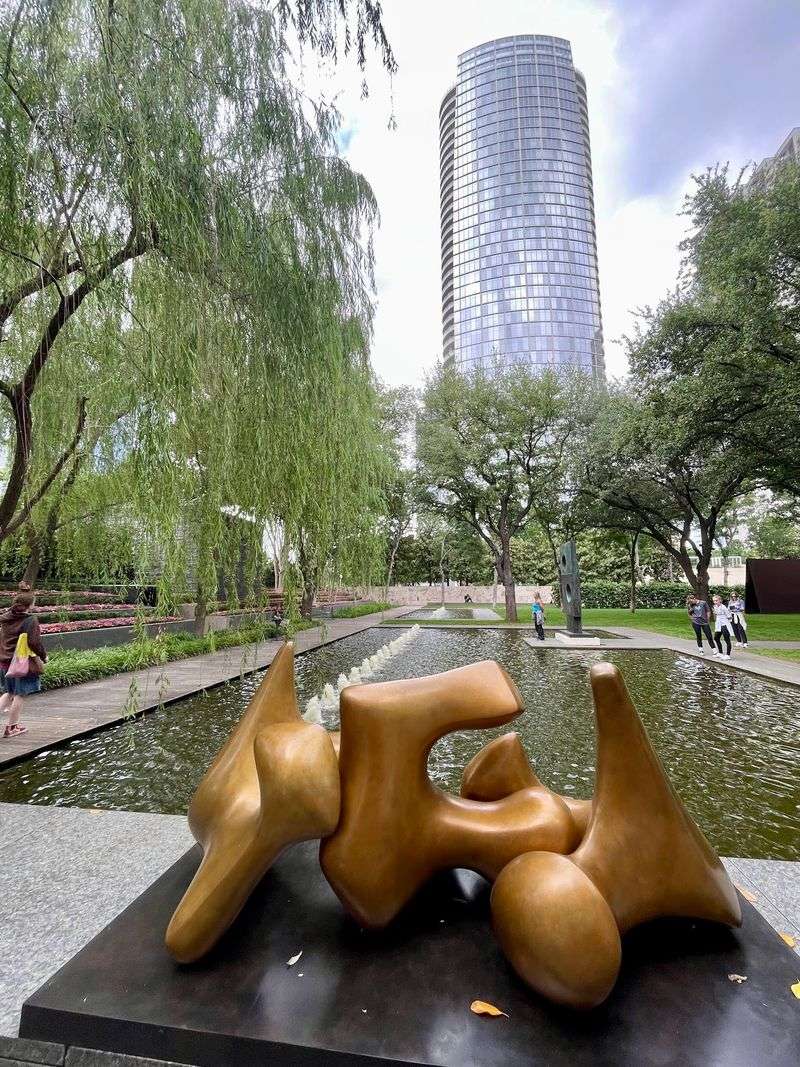
Location does a lot of heavy lifting here. Flora Street runs through the Dallas Arts District, and the Nasher sits among a cluster of major cultural buildings within easy walking distance of one another.
That makes it simple to pair a garden visit with other stops. A full arts-focused day comes together without ever needing to move the car.
Programming extends well beyond the sculptures. Artist talks, concerts, and educational workshops run throughout the year, along with research and education facilities on site.
Special exhibitions rotate through the indoor galleries, and past shows have covered major contemporary names. Checking the current lineup before visiting helps set expectations.
The garden remains the heart of it all, though. Regulars tend to talk about the outdoor space first, and the indoor galleries second.
Free admission days occur on the first Saturday of the month, which is a nice option for locals who want to stop by often. Membership also unlocks additional events.
Staff have a reputation for being welcoming and helpful, which smooths out the experience for first-timers. Questions about specific artists usually get a thoughtful answer.
Weddings and private events take place here as well, which speaks to how striking the setting is when it is dressed up.
For visitors to Dallas looking for one cultural stop that balances world-class art with actual fresh air, this garden is a strong choice. Few cities have anything quite like it downtown.
