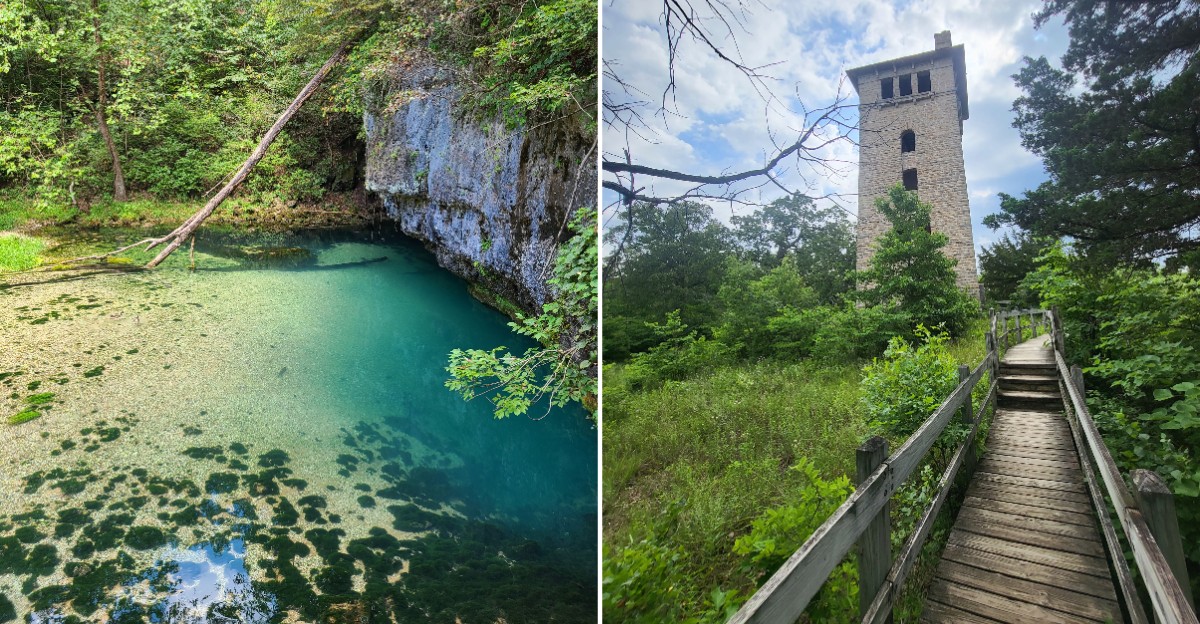
This is the kind of park where you keep thinking, “Wait, there’s more?”
One minute you are looking at old stone ruins above the trees, and not long after that you are standing near a huge natural bridge or staring at water that looks almost too blue to be real.
This Missouri park packs a surprising amount into one visit without making the experience feel rushed.
The trails lead past bluffs, sinkholes, cave openings, and a spring that pours an enormous amount of water into the lake every day. None of it feels like it belongs in the same place, which is exactly what makes the park so fun to explore.
You can come for a short hike and easily end up spending much longer than planned because there is always one more thing worth checking out.
Seriously, A Real-Life Castle?
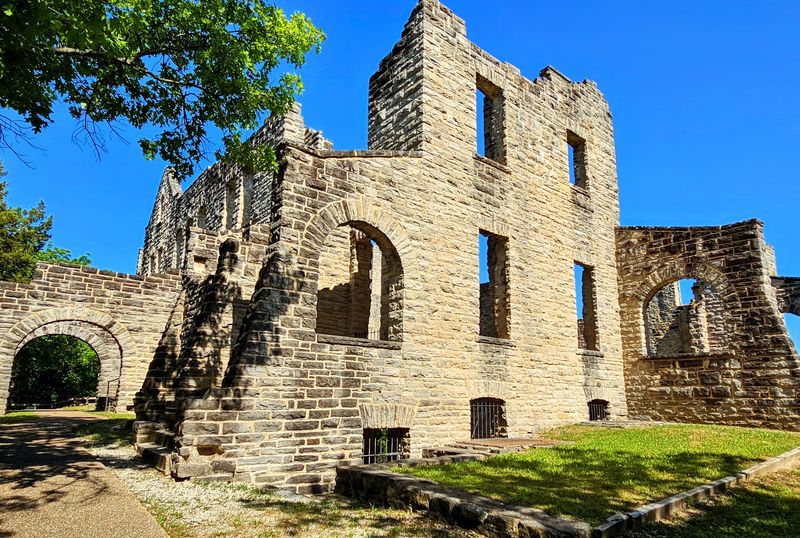
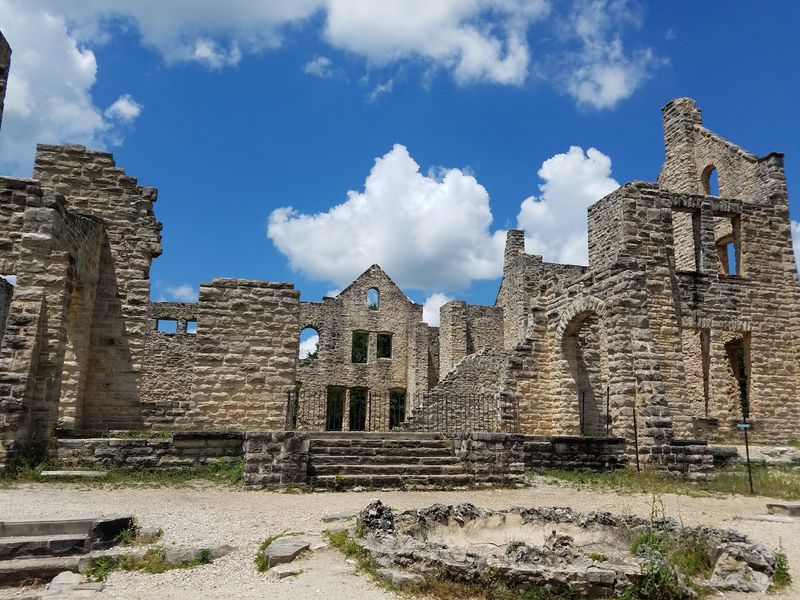
Castle ruins in the middle of Missouri sound like something somebody made up, and yet there they are, sitting on a bluff with the Lake of the Ozarks stretching out below. The stone walls still have their window openings, so you can look straight through them at the sky, which is honestly a strange and lovely thing to see in person.
A wealthy businessman started building the place as a private European-style retreat, and he hired Scottish stonemasons to get the look exactly right. He never got to enjoy it the way he imagined, and a fire later gutted the whole structure, leaving only the shell behind.
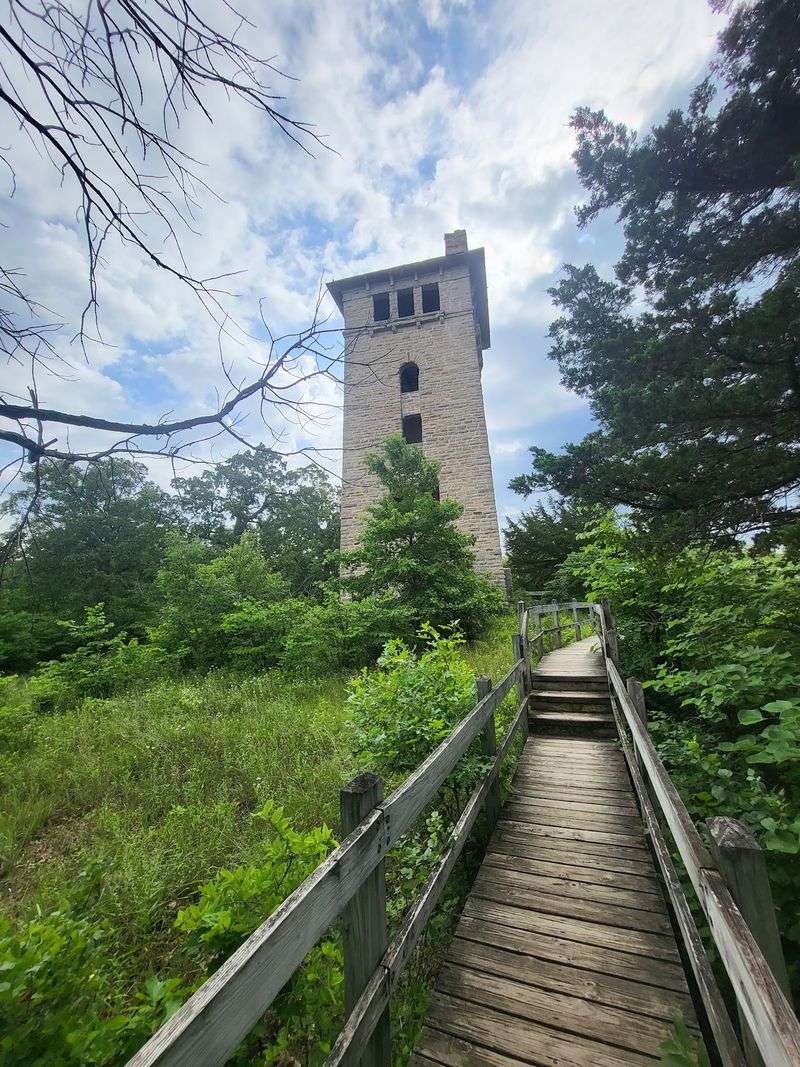
What surprises most people is how close you can get, since paved paths and overlooks wrap right around the ruins and the old water tower nearby. The walk from the upper parking area is short enough that almost anyone can manage it, and there are benches if you want to sit and take in the view.
Early morning light hitting those walls is genuinely worth setting an alarm for, especially if you want photos without crowds. You will find all of this at 1491 State Road D, Camdenton, MO 65020, tucked into the Ozark hills.
A Natural Bridge That Will Make Your Jaw Drop
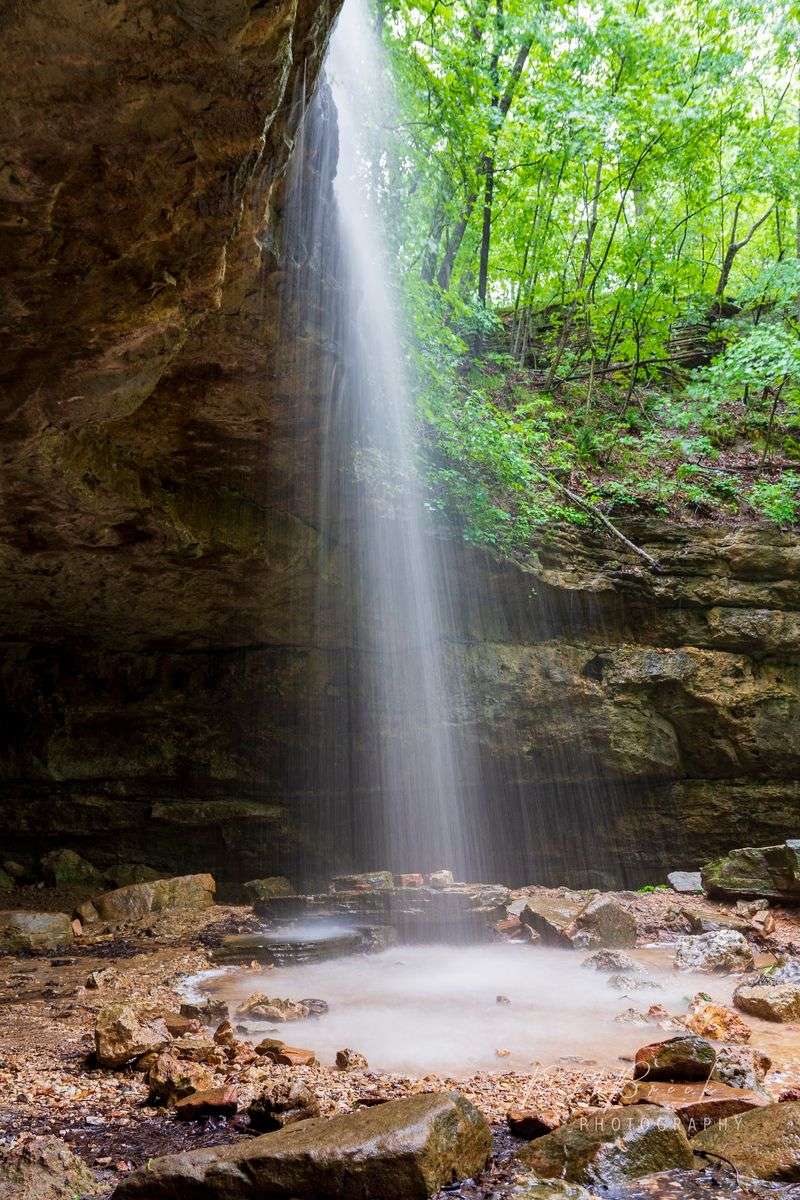
Photos really do not prepare you for the natural bridge, because scale is the whole point and a camera flattens it. The arch stretches about seventy feet wide, spans around sixty feet, and rises more than a hundred feet overhead, which means you feel very small standing underneath it.
Geologists will tell you it is what remains after an ancient cave system caved in on itself, and once you know that, the shape suddenly makes a lot more sense. The rock around it is riddled with the same kind of hollows, so the arch is basically a survivor.
You can walk right under it on the trail, and I would recommend pausing there for a minute instead of rushing through, since the light filtering down through the trees does something soft and strange to the stone. The path gets you close without any scrambling required.
It sits inside the Ha Ha Tonka Karst Natural Area, which is a protected pocket of unusual geology within the larger park in Missouri. Wear shoes with decent grip, because the ground near the arch can stay damp and slick long after rain has passed through the area.
Discovering a Network of Hidden Caves
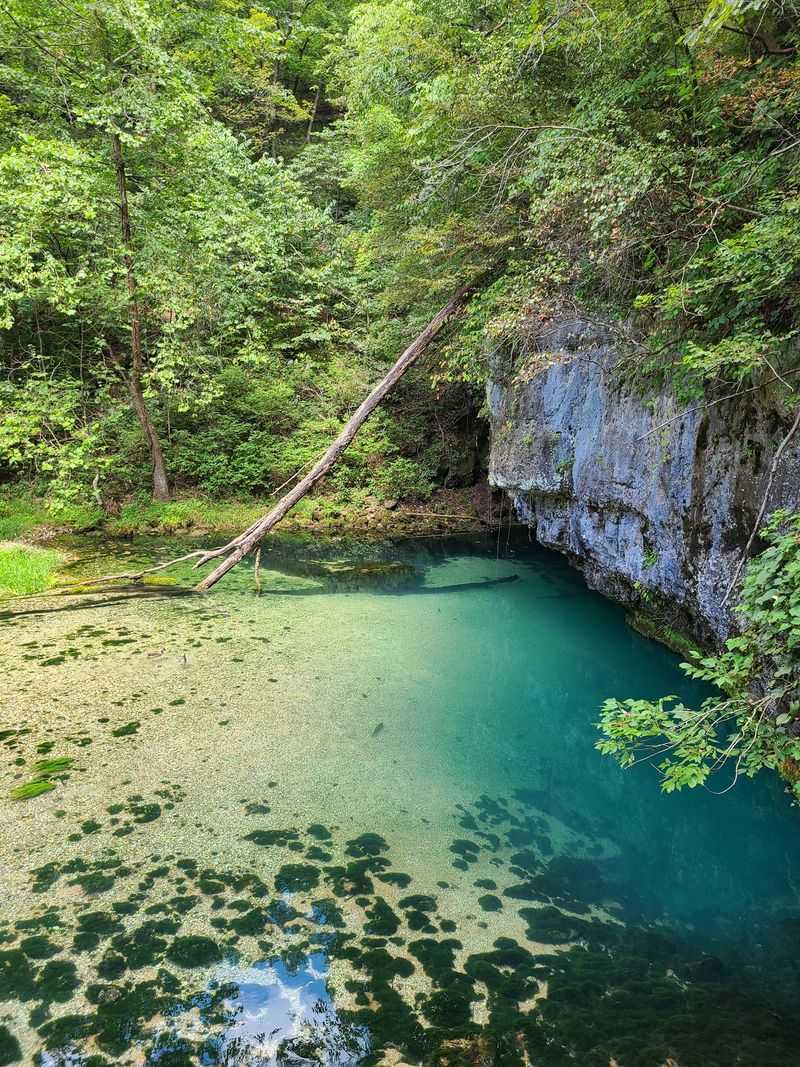
Underneath all those trails, the ground is basically hollow in places, and that is not an exaggeration. The park sits on karst terrain, which means sinkholes, underground streams, and caves have been quietly shaping the landscape for a very long time.
Some of these caves carry names that sound straight out of an old adventure story, like Counterfeiter’s Cave and Robber’s Cave, and local history says people used them as hideouts back in the early frontier days. Whether every tale is true is anybody’s guess, but the names stuck.
Here is the practical part you should know before you get your hopes up, because most of the caves are closed to the public in order to protect bats and fragile formations. Island Cave is the exception, and access there requires a permit during a limited stretch of the warmer months.
Even from the outside, the cave openings and the sinkholes along the trails are genuinely interesting to look at, and interpretive signs explain what is happening below your feet. Check with park staff about current conditions before you visit, since closures in Missouri parks can change without much warning at all.
That Unbelievable Turquoise Spring
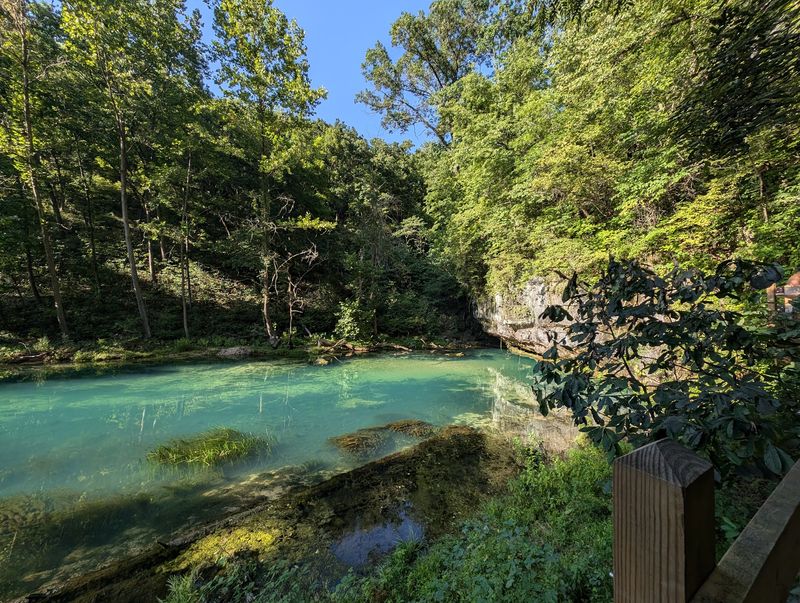
Water that blue usually means you are somewhere tropical, so seeing it in the Ozarks does mess with your brain a little. Ha Ha Tonka Spring pours out of the base of a collapsed cave chasm, and the clarity is almost unreal on a bright day.
It ranks among the largest springs in the state, pushing out tens of millions of gallons daily before the flow heads toward the Lake of the Ozarks. The volume is steady year round, which is why the color holds up even in the middle of winter.
The Spring Trail loop runs alongside the water and covers roughly a mile and a half, with boardwalks and steps carrying you through the chasm. It is scenic the entire way, though the stairs will remind your legs that they exist.
Here is a detail I love, because the name Ha Ha Tonka comes from an Osage phrase often translated as laughing waters, and standing beside the spring makes that translation feel completely earned. Plan extra time here, since most people end up lingering far longer than they intended to in this corner of Missouri.
So Many Trails and Scenic Views
Fifteen plus miles of trail sounds like a lot until you realize how many of them are short loops you can string together however you feel that day. Some paths are flat and easy, while others drop down staircases carved into the bluffs and definitely get your heart moving.
You will wander past limestone walls, open glades, sinkholes, and overlooks that frame the Lake of the Ozarks between the tree trunks. Fall color out here is ridiculous, and spring brings wildflowers across the glades.
Boardwalks connect a lot of the highlights, which makes the castle ruins and several viewpoints reachable for people who are not up for rugged hiking. Trail maps at the trailheads are clear, so you rarely have to guess where you are headed next.
Bring water and take your time, because the up and down adds up faster than the mileage suggests on paper. Give yourself a solid half day minimum if you want to see the arch, the spring, and the ruins without rushing.
The park entrance address is 1491 State Road D, Camdenton, MO 65020, and it is easy to find once you are close.
See The Park From The Water
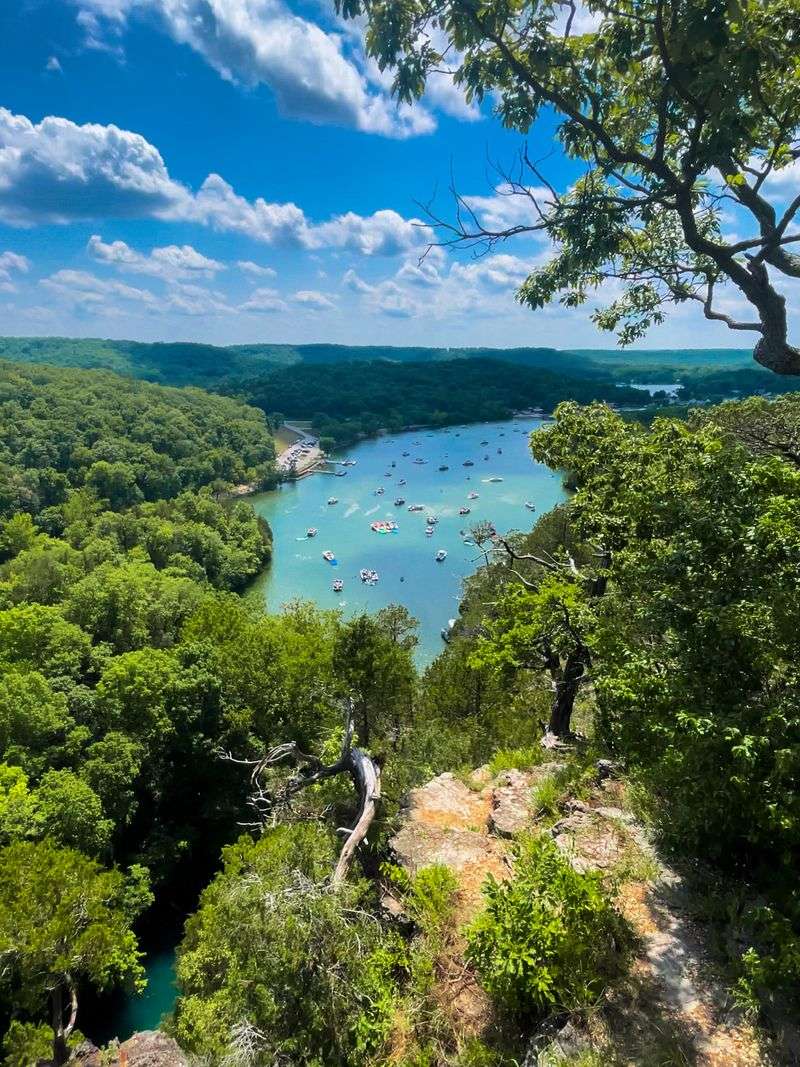
The view changes completely once you trade the trail for a kayak and push away from shore. From the water, the wooded bluffs feel taller, the coves grow quieter, and the castle ruins appear high above the Lake of the Ozarks.
One-person and two-person kayaks are available to rent at the visitor center from April through October during regular visitor center hours. You can choose a two-hour, four-hour, or all-day rental, though reserving ahead is smart when the weather looks especially inviting.
A stone launch area near the Lake Shelter makes getting onto the water fairly simple. From there, you can explore the cove at your own pace or begin paddling along the Big Niangua River Trail, which extends for more than thirteen miles toward Tunnel Dam and Lake Niangua.
You do not need to tackle the entire route to enjoy the experience. Even a short paddle reveals a calmer side of the park, with rocky shoreline, tree-covered slopes, and occasional wildlife moving near the water.
Check rental availability and lake conditions before arriving, since strong wind or changing weather can quickly turn a peaceful Missouri paddle into a harder workout than expected.
Pack Lunch And Stay Awhile
After climbing stairs, circling ruins, and staring into sinkholes, sitting beneath a shade tree starts sounding like an excellent plan. The park has twenty day-use picnic areas scattered across the grounds, so finding a place for sandwiches and a long break is rarely difficult.
Two larger shelters are available for groups. The Lake Shelter holds up to sixty people and overlooks the water, while the Post Office Shelter accommodates as many as one hundred and includes access to drinking water and a nearby playground.
Both shelters have electricity, picnic tables, and outdoor grills. They can be reserved for a daily fee, but an unreserved shelter may be used at no charge on a first-come, first-served basis.
Amenities differ between the two areas, so checking the park’s current details before planning a gathering can prevent surprises.
The Lake Picnic Area also has an accessible fishing dock for anyone hoping to cast a line into the Lake of the Ozarks. Fishing is allowed at various lake access points under statewide regulations, but not in Ha Ha Tonka Spring.
It is an easy way to slow the afternoon down before heading back to Missouri’s trails for one final overlook.
