I wasn’t expecting much when I first turned off the highway toward Schulenburg, a town so small you could miss it if you blinked. The countryside rolled past in waves of green pastures and farmland, and I started wondering if I’d made a wrong turn somewhere.
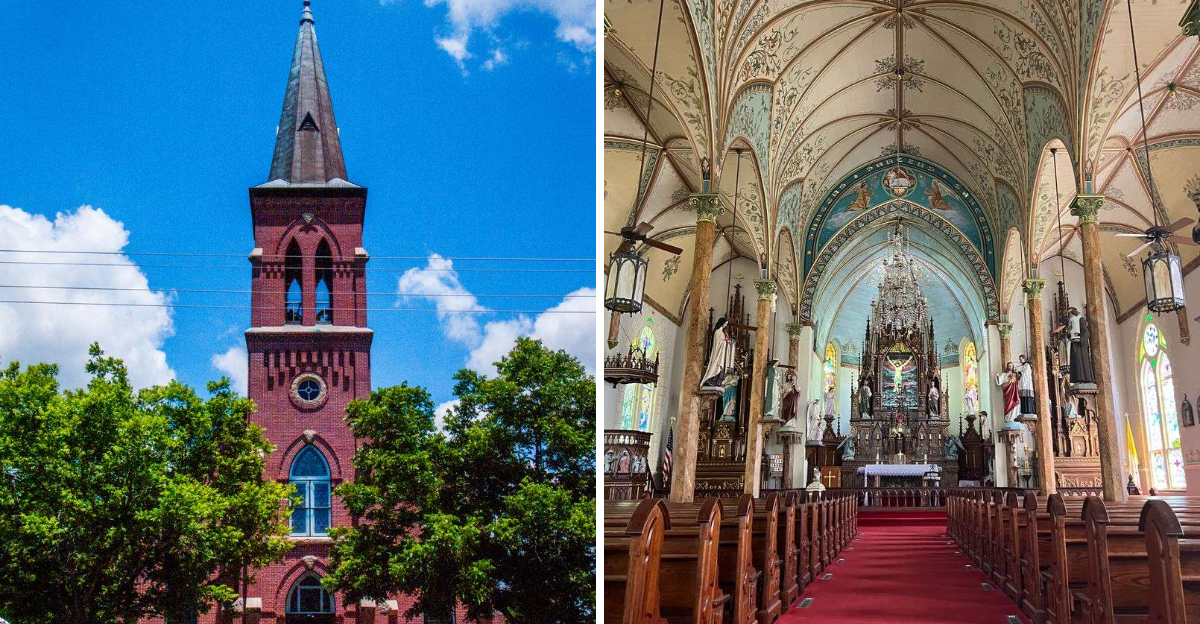
But then I saw the sign for High Hill and followed the narrow road until a towering steeple appeared above the trees, and I knew I’d found what I was looking for.
The Nativity of the Blessed Virgin Mary Catholic Church stands like a masterpiece dropped into the middle of nowhere, its painted interior so breathtaking that visitors compare it to the Sistine Chapel.
This isn’t just another small-town church, it’s a testament to faith, artistry, and the determination of Czech and German immigrants who built something extraordinary in the Texas countryside.
Arrival in a Place That Time Forgot
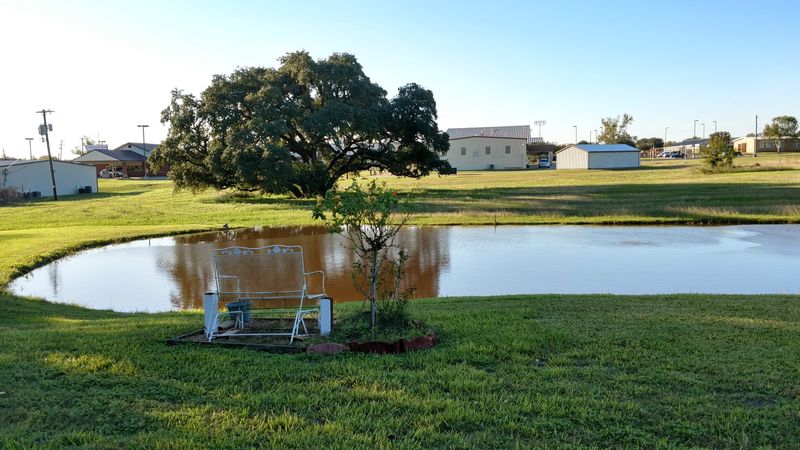
Schulenburg sits in the heart of Fayette County, where the landscape feels untouched by the rush of modern life. As I drove through, I counted more tractors than traffic lights, and the pace of everything seemed to slow down the moment I crossed into town.
The population hovers around 2,800 people, and the downtown area consists of a handful of blocks lined with historic buildings that look like they’ve been standing since the 1800s.
High Hill, where the church is located, is even smaller. It’s barely a dot on the map, just a few miles outside Schulenburg proper.
The drive out there takes you through farmland that stretches endlessly in every direction, with cattle grazing lazily under the Texas sun.
What strikes you first is the quiet. There’s no hum of highways, no distant sirens, just the sound of wind moving through the grass and the occasional call of a bird.
It’s the kind of place where you can hear yourself think, where the world feels bigger and slower all at once. The remoteness makes the church’s grandeur all the more surprising when you finally arrive.
The First Glimpse of Something Extraordinary
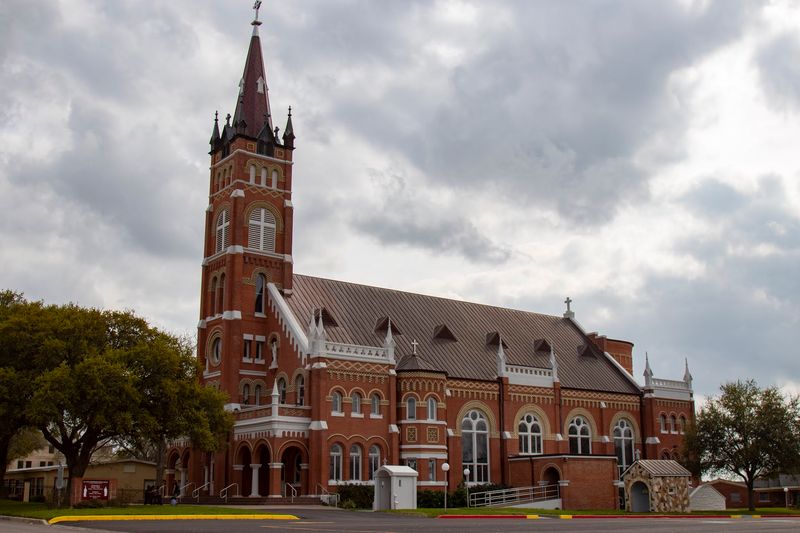
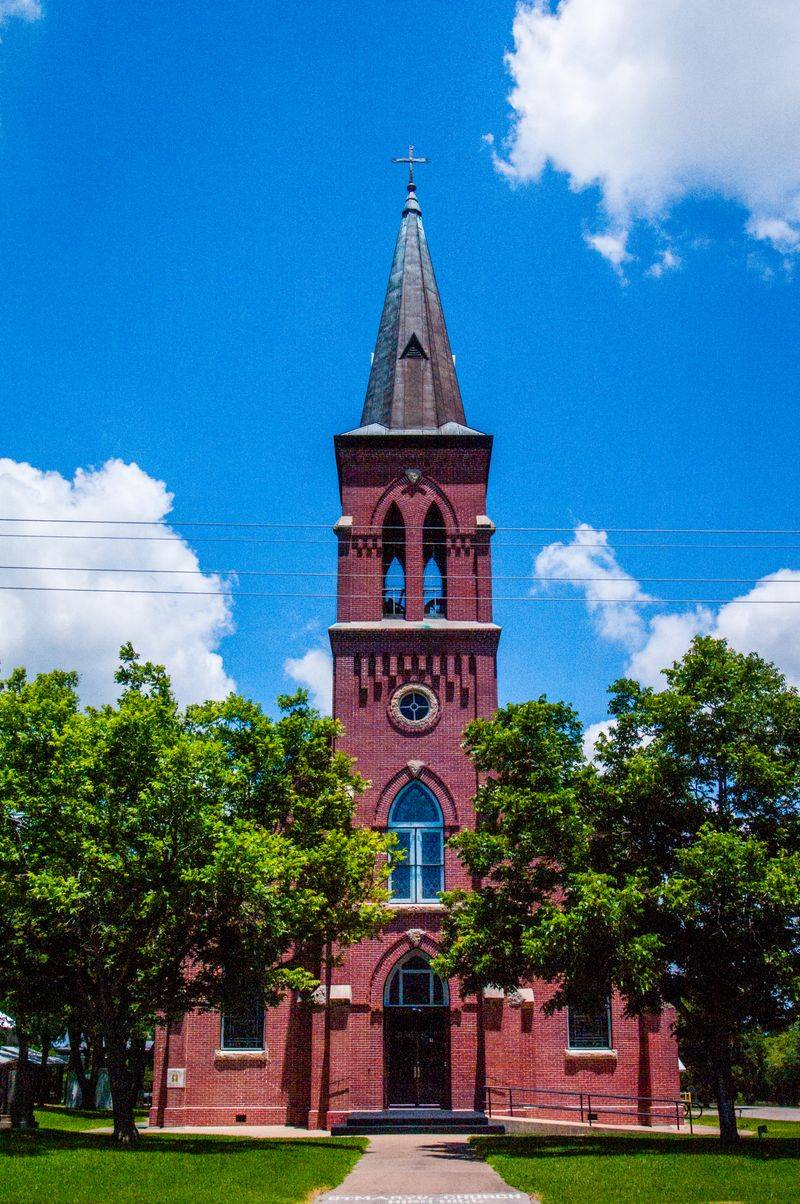
You see the steeple before anything else. It rises high above the surrounding trees, a brilliant white tower that seems to pierce the sky.
As I got closer, the full structure came into view, and I had to pull over just to take it in. The church is massive for such a remote location, built in the Gothic Revival style with twin spires that reach toward heaven.
The exterior is painted a crisp white with red trim, and the symmetry of the building is almost perfect. Tall arched windows line the sides, and the entrance is framed by ornate stonework that hints at the craftsmanship waiting inside.
Even from the parking lot, you can tell this isn’t an ordinary rural church.
There’s a sense of anticipation that builds as you walk toward the entrance. The doors are heavy and wooden, carved with intricate details that feel like a preview of what’s to come.
I stood there for a moment, my hand on the handle, knowing that whatever was inside had inspired countless visitors to make this pilgrimage. The quiet countryside around me seemed to hold its breath.
Stepping Into a Masterpiece
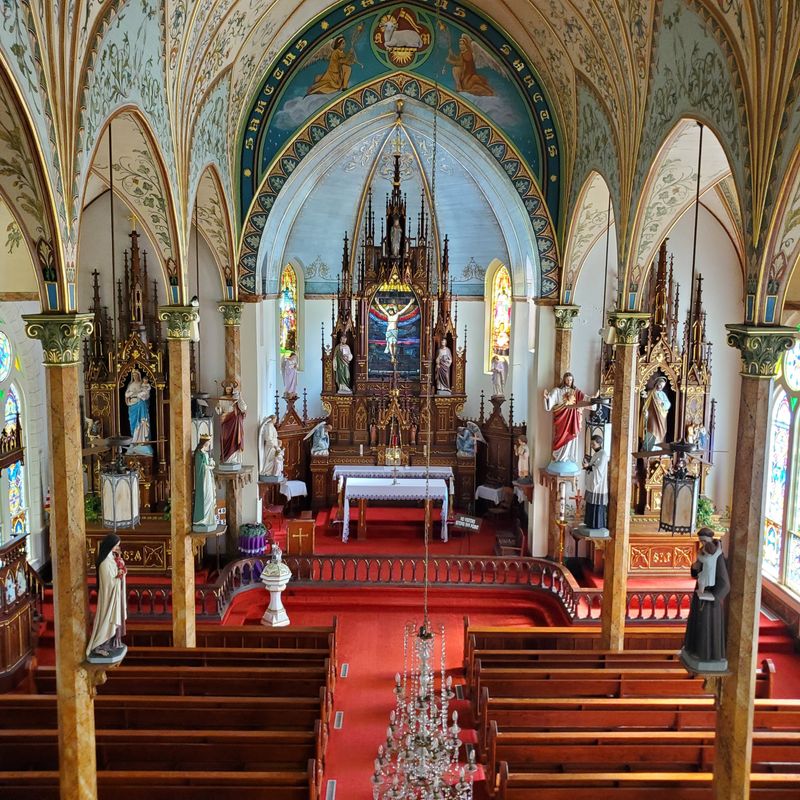
The moment you step inside, the world changes. The interior of the Nativity of the Blessed Virgin Mary Catholic Church is a riot of color and detail, every surface covered in hand-painted artwork that seems to glow in the soft light filtering through the stained glass.
My eyes didn’t know where to look first, there was simply too much beauty to absorb all at once.
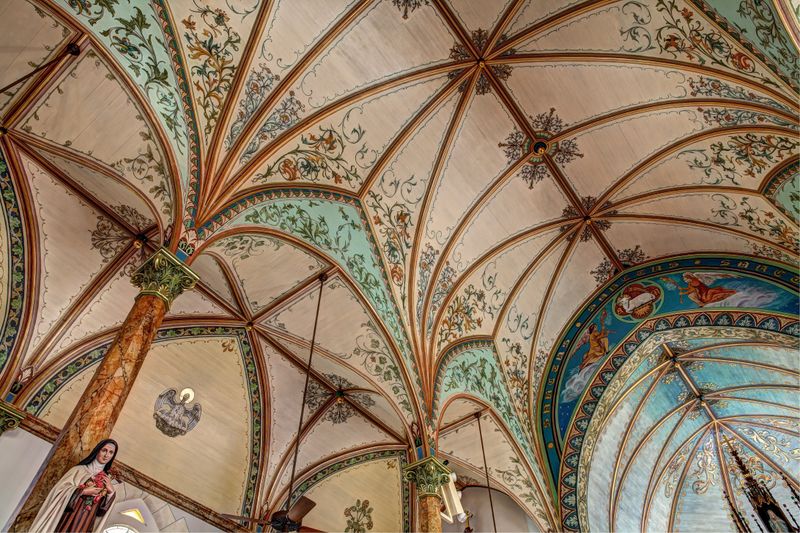
The ceiling is what people talk about most, and for good reason. It’s painted in a tapestry-like pattern with intricate stenciling that creates the illusion of depth and texture.
Blues, golds, reds, and greens blend together in designs that feel both delicate and grand. The work is so detailed that you could spend hours just studying one section and still find new details.
Trompe-l’oeil techniques are used throughout, tricking the eye into seeing three-dimensional columns, arches, and decorative elements that are actually flat paintings. The effect is stunning, making the space feel even larger and more majestic than it already is.
Every inch of the church has been considered, designed, and executed with a level of care that feels almost impossible.
The Altar That Commands Reverence
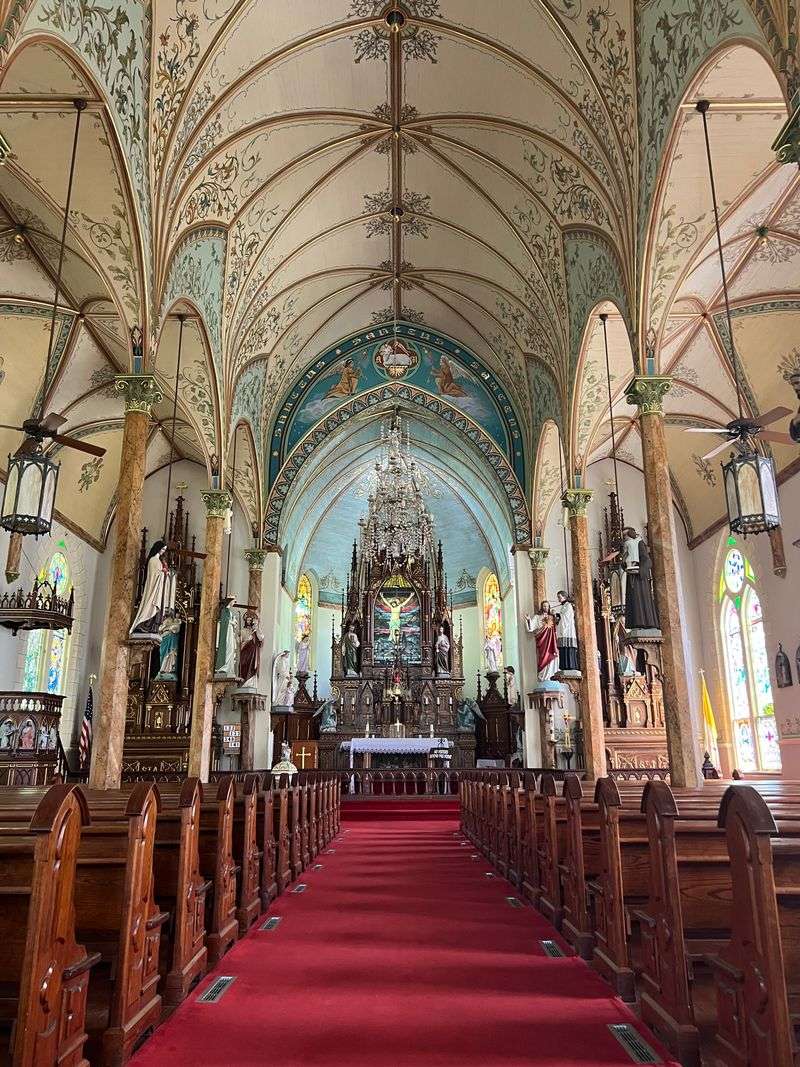
At the far end of the nave, the altar rises like a work of sacred theater. It’s an impressive structure, towering and ornate, with layers of carved wood, gilded accents, and religious statuary that draws your gaze upward.
The centerpiece features a depiction of the Nativity, honoring the church’s namesake, surrounded by angels and saints in various poses of worship and adoration.
The craftsmanship is extraordinary. Every figure is carved with incredible detail, from the folds of fabric in their robes to the expressions on their faces.
The gold leaf catches the light, creating a shimmering effect that makes the altar feel almost alive. It’s the kind of artistry that makes you pause and wonder how many hours, how many hands, went into creating something so beautiful.
Standing before it, I felt the weight of devotion that went into this place. This wasn’t built for show or tourism, it was built for worship, for a community that wanted to honor their faith with the finest work they could create.
The altar is a testament to that dedication, a focal point that anchors the entire space and reminds you why churches like this were built in the first place.
Stained Glass That Tells a Story
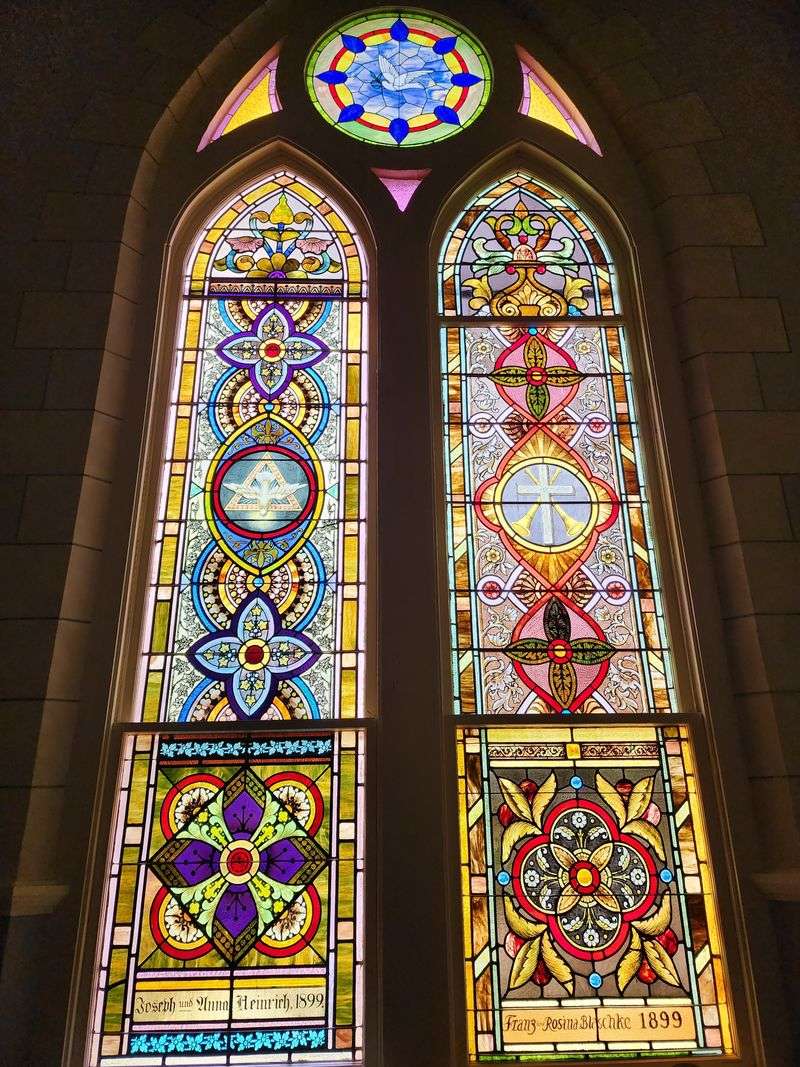
The stained glass windows at Nativity are some of the finest I’ve seen in any church, large or small. Each window depicts a different biblical scene or saint, rendered in jewel-toned glass that glows when sunlight passes through.
The colors are rich and saturated, deep blues and reds and greens that create pools of colored light on the floor and pews.
What makes these windows special is the level of detail in the imagery. Faces are expressive, gestures are dramatic, and the compositions are carefully balanced.
You can identify each scene if you know your Bible stories, from the Annunciation to the Crucifixion, each one a visual sermon in glass. The leadwork that holds the pieces together is equally impressive, forming delicate lines that add structure without overwhelming the images.
I walked slowly along the side aisles, pausing at each window to study the craftsmanship. The light changes throughout the day, and I imagine each hour brings a different mood to the space.
Morning light would be soft and golden, while afternoon sun would make the colors blaze. It’s yet another layer of beauty in a church that seems to overflow with it.
A History Built by Immigrant Hands
The story of this church begins in the mid-1800s when Czech and German immigrants settled in this part of Texas. They came seeking land and opportunity, bringing with them a deep Catholic faith and a tradition of building beautiful churches in their homeland.
High Hill became one of several communities where these settlers put down roots, and they were determined to create a place of worship that reflected their devotion.
Construction of the Nativity of the Blessed Virgin Mary Catholic Church was completed in the early 1900s, and the painted interior was added over the following years. The artwork was done by European-trained artists who traveled from church to church, creating these stunning interiors across Central Texas.
The painted churches became a distinctive feature of the region, a testament to the cultural heritage of the immigrant communities.
Learning this history adds depth to the experience of visiting. These weren’t wealthy patrons commissioning art, they were farmers and laborers who pooled their resources to create something magnificent.
The church stands as a monument to their faith, their craftsmanship, and their determination to build a better life in a new land while honoring the traditions of the old.
The Cultural Significance of a Small-Town Treasure
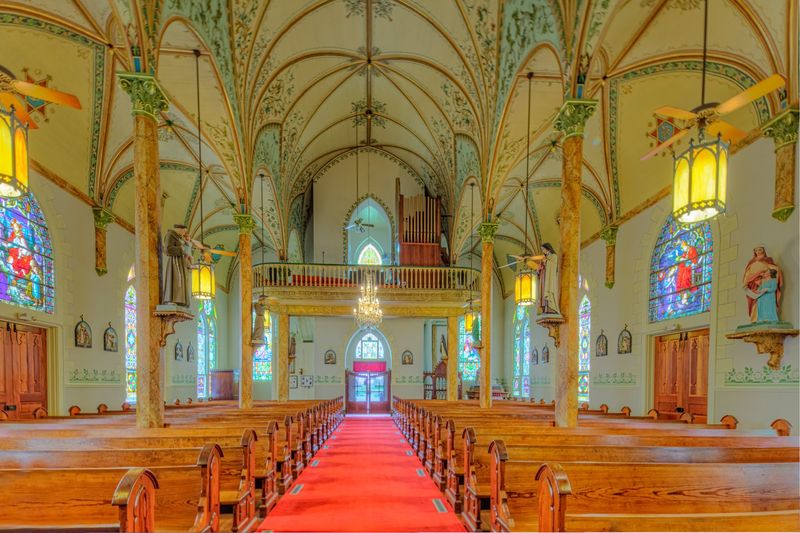
The Nativity of the Blessed Virgin Mary Catholic Church is part of the Texas Painted Churches Trail, a collection of about 20 churches scattered across Central Texas that feature similar ornate interiors.
Together, they represent one of the most unique cultural landscapes in the state, a living museum of immigrant art and architecture that continues to serve active congregations.
This particular church is often cited as the crown jewel of the trail. Visitors who tour multiple churches frequently say that if you only have time for one, this should be it.
The combination of the tapestry-like ceiling, the trompe-l’oeil effects, the dramatic altar, and the stunning stained glass creates an experience that feels complete and overwhelming in the best possible way.
The cultural importance extends beyond aesthetics. These churches are gathering places for communities that have maintained their heritage for generations.
Services are still held regularly, and the church remains a vital part of life in High Hill. It’s not a museum or a relic, it’s a living tradition, and that adds authenticity to every visit.
You’re not just looking at history, you’re standing in the middle of it.
How a Church Defines a Town
As I drove back through Schulenburg after my visit, I understood something I hadn’t before. This church isn’t just a building on the outskirts of town, it’s the heart of the community’s identity.
People here are proud of it in a way that goes beyond local boosterism. It represents who they are and where they came from.
The Schulenburg Chamber of Commerce runs tours of the painted churches, and locals will happily give you directions and recommendations for which ones to visit. There’s a sense of stewardship, a recognition that they’ve been entrusted with something precious that needs to be shared and preserved.
The church is open to visitors most days, and donations are encouraged to help with maintenance and upkeep.
Leaving High Hill, I kept glancing in my rearview mirror at the steeple growing smaller in the distance. It’s remarkable that something so beautiful exists in such an unlikely place, and that’s exactly what makes it special.
In a tiny town that most people will never visit, there stands a church that rivals the great cathedrals of Europe. It’s a reminder that beauty and devotion can flourish anywhere, and that sometimes the most extraordinary things are hidden in the most ordinary places.
Address: 2833 FM 2672, Schulenburg, TX 78956
Dear Reader: This page may contain affiliate links which may earn a commission if you click through and make a purchase. Our independent journalism is not influenced by any advertiser or commercial initiative unless it is clearly marked as sponsored content. As travel products change, please be sure to reconfirm all details and stay up to date with current events to ensure a safe and successful trip.
