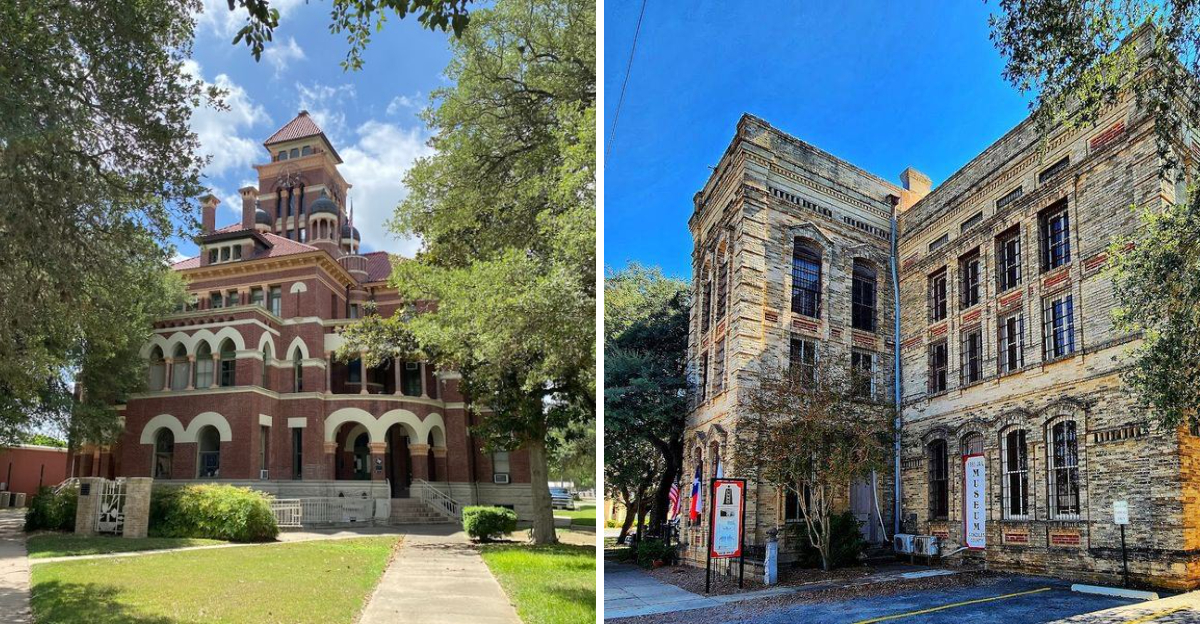
The first shot of the Texas Revolution rang out here, and the town has been quietly preserving history ever since. More than 150 historic structures still stand, from a pre Civil War jail to a newspaper office that never stopped printing.
A person could spend a whole weekend wandering past old brick storefronts, restored homes, and markers that tell stories most textbooks skip. The main street looks like a postcard from a century ago, but the shops and cafes inside are very much alive.
No admission fees for the open air history lesson, just a small town that refuses to tear down its past. This is the kind of Texas spot where every corner has a story, and the locals are happy to tell it.
Bring comfortable shoes and a camera. The buildings have been waiting a long time for visitors.
The Gonzales County Courthouse, a Romanesque Revival Landmark
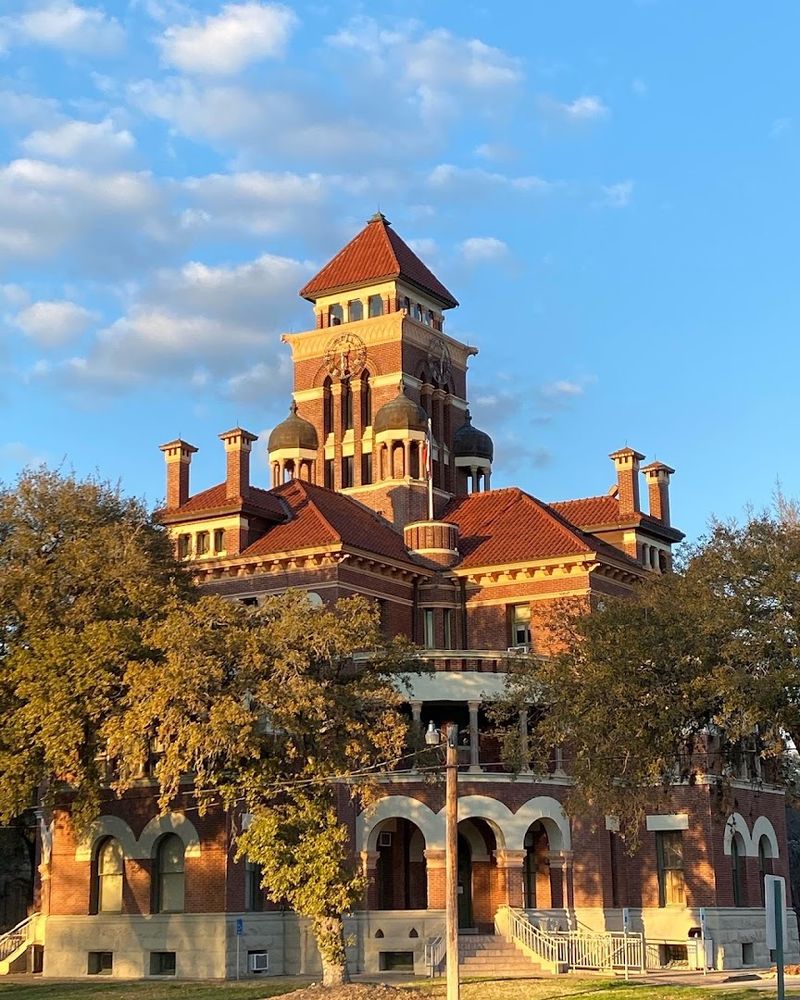
Few buildings in Texas command attention quite like the Gonzales County Courthouse. Built in 1886, this Romanesque Revival structure rises above the town square with a kind of confident authority that makes you stop and just look.
The red brick, the arched windows, the towering clock face – it all adds up to something genuinely impressive, especially for a town of this size.
The courthouse sits at the heart of Gonzales, surrounded by seven public squares that were laid out in the town’s original survey. That layout alone is unusual and worth exploring on foot.
You get a real sense of how deliberately this community was planned from its earliest days.
Inside, the courthouse still functions as an active county government building, which gives it an energy that purely museum spaces sometimes lack. Locals move through the halls with purpose, and visitors are welcome to admire the architecture up close.
The craftsmanship in the woodwork and stonework reflects a level of care that 19th-century builders brought to civic structures.
Standing near the entrance and looking out across the square, you can almost picture what Gonzales looked like when this building was brand new. The surrounding historic district keeps that visual connection alive.
It is one of those rare places where the past and present genuinely coexist without feeling forced or staged, and that makes it one of the most rewarding stops in the entire town.
The Gonzales Memorial Museum and the Come and Take It Cannon
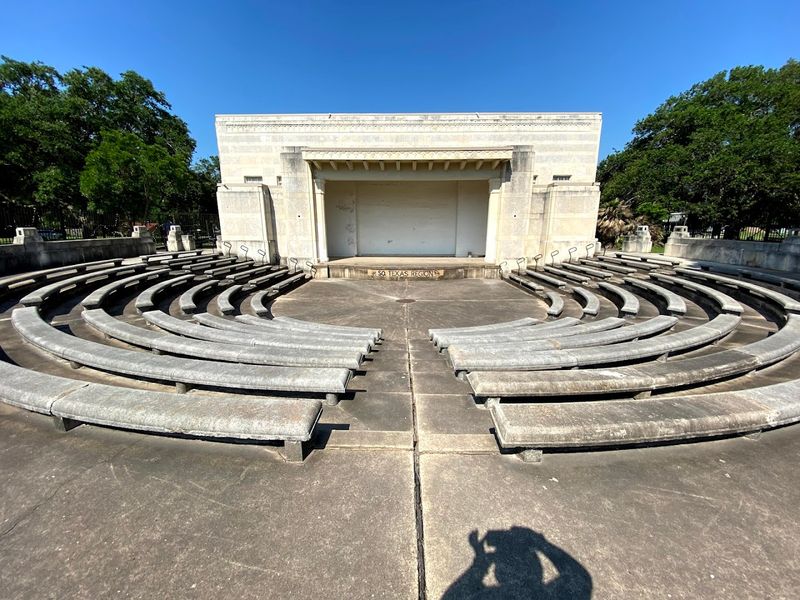
The phrase “Come and Take It” echoes through Texas history, and Gonzales is where that defiant story was born.
The Gonzales Memorial Museum, constructed between 1936 and 1937, was built specifically to honor the “Immortal 32,” the group of men from Gonzales who marched to the Alamo and never returned.
That backstory alone gives the building an emotional weight before you even step through the door.
Inside, the museum houses the original “Come and Take It” cannon, the very one that Mexican forces demanded the settlers surrender in 1835. The settlers refused.
That act of resistance sparked the Texas Revolution, making Gonzales the “Lexington of Texas.” Seeing the actual cannon up close is one of those genuinely goosebump-worthy moments.
The museum also features exhibits on Gonzales County history, local pioneer life, and the broader context of the Texas Revolution. The displays are thoughtfully arranged and accessible to visitors of all ages.
Kids especially tend to light up when they see the cannon and hear the story behind it.
The building itself is architecturally interesting, with a design that feels formal yet welcoming. It was clearly built to last, and it has.
Visiting here early in your Gonzales trip is a smart move because it gives you the historical framework that makes everything else in town feel more meaningful.
Address: 414 Smith St, Gonzales, TX 78629
The Old Jail Museum, an 1887 Italianate Treasure
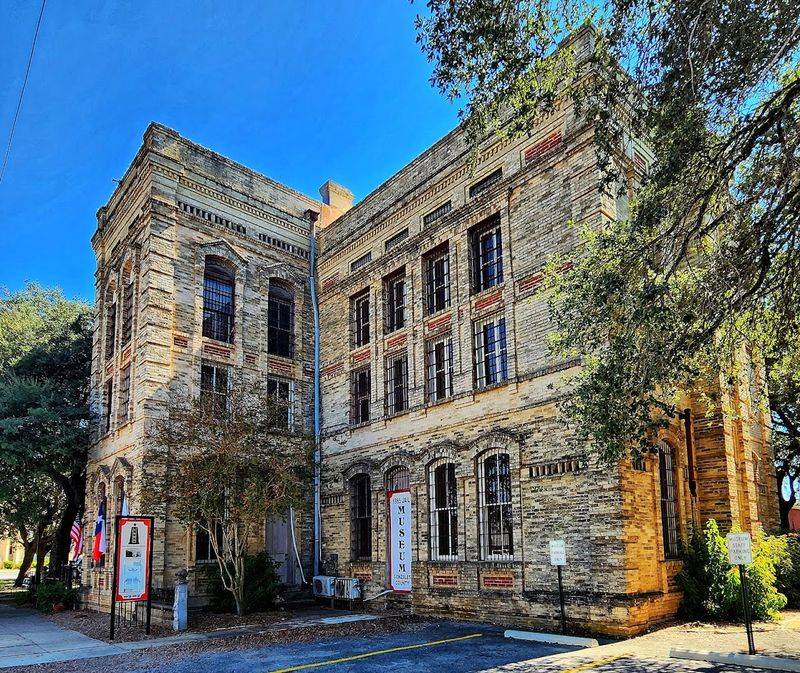
Not every jail has architectural charm, but the 1887 Gonzales County Jail is genuinely beautiful in the most unexpected way. Built in the Italianate style, this historic structure features decorative brickwork and design details that feel almost out of place for a building meant to house prisoners.
It is a wonderful contradiction, and that tension makes it fascinating to explore.
Now operating as the Gonzales County Jail Museum, the building gives visitors a window into 19th-century law enforcement and frontier justice. The original cells are still intact, and walking through them gives you a visceral sense of what life behind bars looked like in that era.
It is not glamorous, but it is genuinely educational.
The museum collection includes artifacts, photographs, and documents that tell the story of Gonzales County from its earliest settlement days through the late 1800s. The context provided by the exhibits helps connect the physical space to the broader human stories that unfolded within these walls.
That combination of architecture and storytelling is what makes this stop memorable.
One of the things I appreciated most was how well-preserved the building is. Many historic jails across Texas have been demolished or converted beyond recognition.
Gonzales kept theirs standing and made it accessible to the public, which says a lot about how seriously this town takes its own history. It is a must-visit stop on any self-guided tour of the town.
Address: 414 St. Lawrence St, Gonzales, TX 78629.
The Gonzales Pioneer Village Living History Center
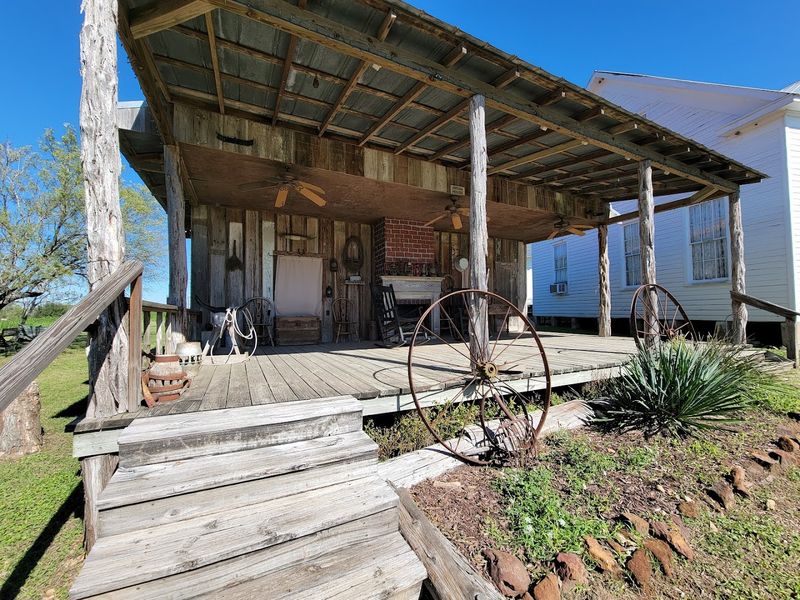
History gets a lot more real when you can walk through it rather than just read about it. The Gonzales Pioneer Village Living History Center is exactly that kind of place, a sprawling collection of authentic 19th-century structures gathered together on one site to recreate the look and feel of frontier Texas.
The moment you arrive, the scale of it is a little surprising.
The village includes historic homes, churches, schools, a blacksmith shop, and even a smokehouse, all original structures that have been carefully relocated and preserved. Each building represents a different aspect of daily life in early Gonzales County.
Together, they paint a remarkably complete picture of what it took to build a community from scratch on the Texas frontier.
What sets this place apart from a typical museum is the tactile quality of the experience. You are not looking at artifacts behind glass.
You are walking through doorways, peering into rooms, and imagining the people who actually lived and worked in these spaces. That sensory engagement makes the history stick in a way that exhibit panels often cannot.
Families with kids tend to find this spot especially rewarding. There is enough variety across the different structures to hold attention for a good stretch of time.
The grounds are also pleasant to walk, with a quiet, open atmosphere that feels refreshingly unhurried.
Address: 2122 N St Joseph St, Gonzales, TX 78629.
The Self-Guided Historic Homes Driving Tour
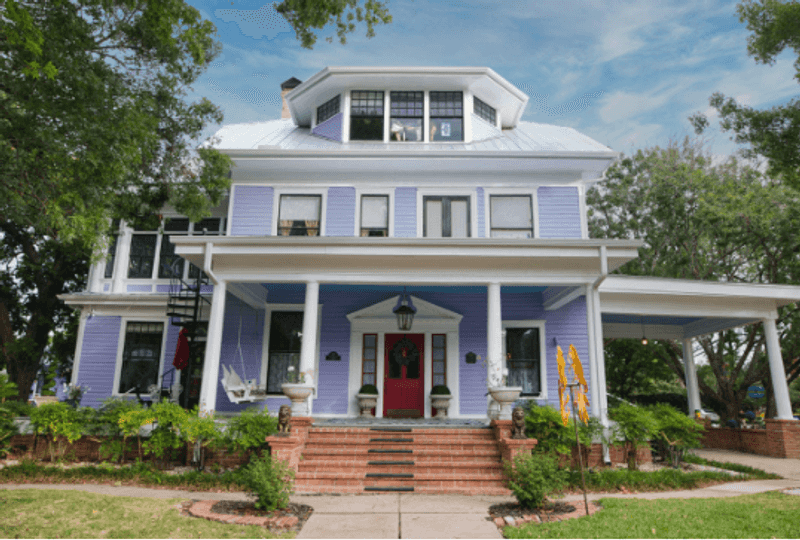
Gonzales has over 80 historic homes, and more than 70 of them are part of a self-guided driving tour that lets you explore at your own pace. That kind of freedom is a genuine gift for curious travelers who like to linger.
You can grab a tour map from the local visitor center and set off whenever you are ready.
The homes range in style from modest vernacular cottages to grand Victorian mansions, reflecting the economic diversity of Gonzales County across different eras.
Some properties are still privately owned and occupied, which gives the neighborhoods a lived-in authenticity that feels very different from a curated historic district elsewhere.
Real people still call these streets home.
Driving slowly through the residential areas, you notice details that reward attention. A wraparound porch here, a decorative gable there, an original stone foundation peeking out from beneath a later addition.
Each house has its own personality, and the tour map provides just enough context to make each stop meaningful without overwhelming you with information.
I found myself stopping more often than I expected, getting out of the car just to get a better look at a particular roofline or front door. The tour is genuinely enjoyable even for people who do not consider themselves history buffs.
Architecture has a way of telling human stories without needing a single word, and Gonzales has mastered that quiet kind of storytelling across block after block of beautiful old homes.
The Eggleston Log Cabin, Gonzales’s Oldest Standing Structure
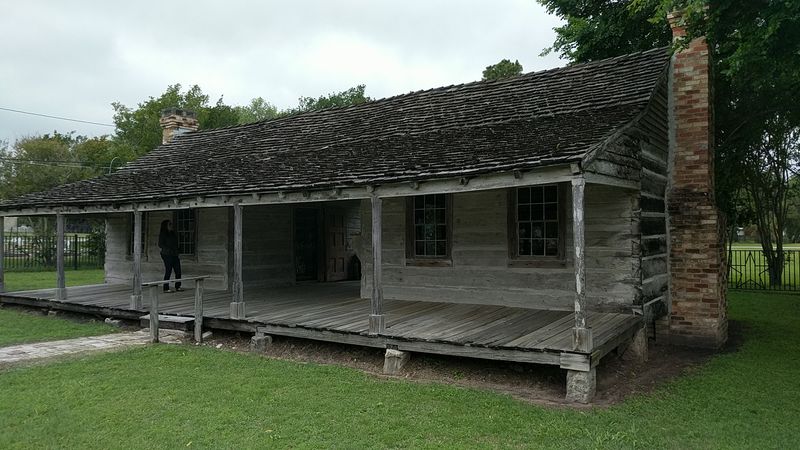
There is something humbling about standing near the oldest surviving structure in a town. The Eggleston Log Cabin carries that distinction in Gonzales, and it wears it quietly.
This simple, weathered building predates almost everything else in town, making it a tangible link to the very earliest days of European settlement in this part of Texas.
Log cabins like this one were the standard housing solution for frontier settlers who needed shelter quickly and had timber available nearby. The construction method was practical and efficient, but it was also deeply personal.
Families built these structures by hand, often with help from neighbors, and they represented the beginning of something new in an unfamiliar landscape.
Seeing the Eggleston cabin next to the more elaborate 19th-century homes and civic buildings scattered across Gonzales gives you a powerful sense of how rapidly the town developed. Within a few decades, settlers went from rough-hewn log walls to Italianate jails and Romanesque courthouses.
That arc of progress is genuinely striking when you see the starting point up close.
The cabin is modest by any measure, but that modesty is exactly what makes it so affecting. It does not try to impress.
It simply exists as evidence of the people who came before and the choices they made to put down roots in this particular patch of Texas soil. For history-minded visitors, it is one of the most quietly powerful stops in town.
Address: 1300 St Louis St, Gonzales, TX 78629
The Gonzales Commercial Historic District
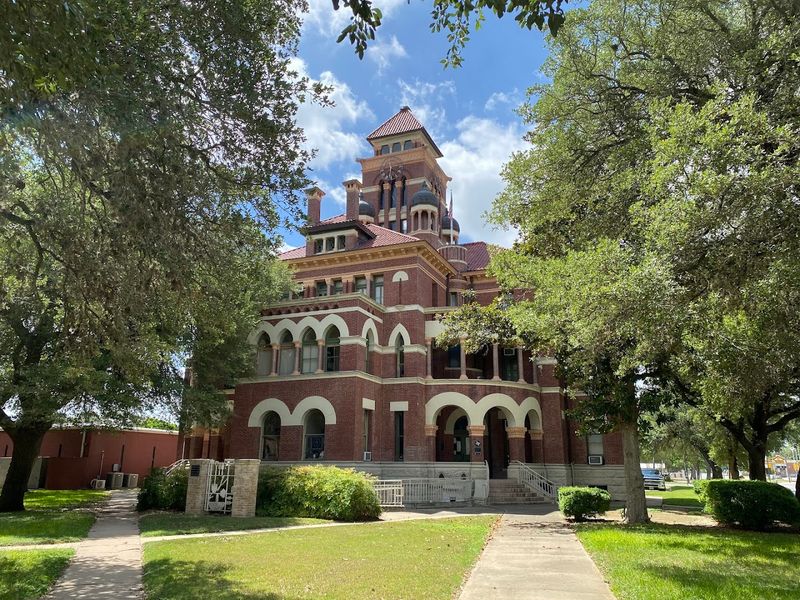
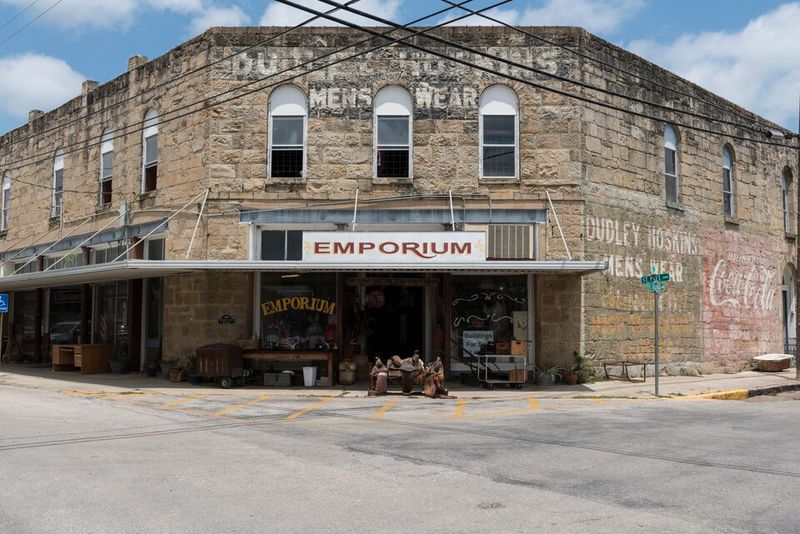
Downtown Gonzales is not just charming, it is officially significant. The Gonzales Commercial Historic District spans 15 blocks and contains over 100 buildings listed on the National Register of Historic Places.
That density of recognized historic architecture in a town this size is genuinely rare and makes a stroll through downtown feel like a walk through a living archive.
The storefronts and commercial buildings along the main streets reflect architectural styles from the late 1800s through the early 1900s. Cast-iron facades, decorative cornices, and original brick construction appear around nearly every corner.
Many of the buildings still house active businesses, which keeps the district from feeling like a ghost town dressed up for tourists.
One of the pleasures of wandering through this district is the way the human scale of everything encourages you to slow down. The streets are not overwhelming.
The buildings are not enormous. Everything feels proportioned to actual human experience rather than to spectacle, and that makes the detail work all the more visible and rewarding to notice.
Local shops, a few eateries, and community gathering spaces are hidden throughout the district, giving visitors practical reasons to stop and spend time rather than just pass through.
I ended up ducking into a couple of storefronts simply out of curiosity and came away with a much richer sense of what daily life in Gonzales actually looks like today alongside its historic past.
The Thirteen Recorded Texas Historic Landmarks
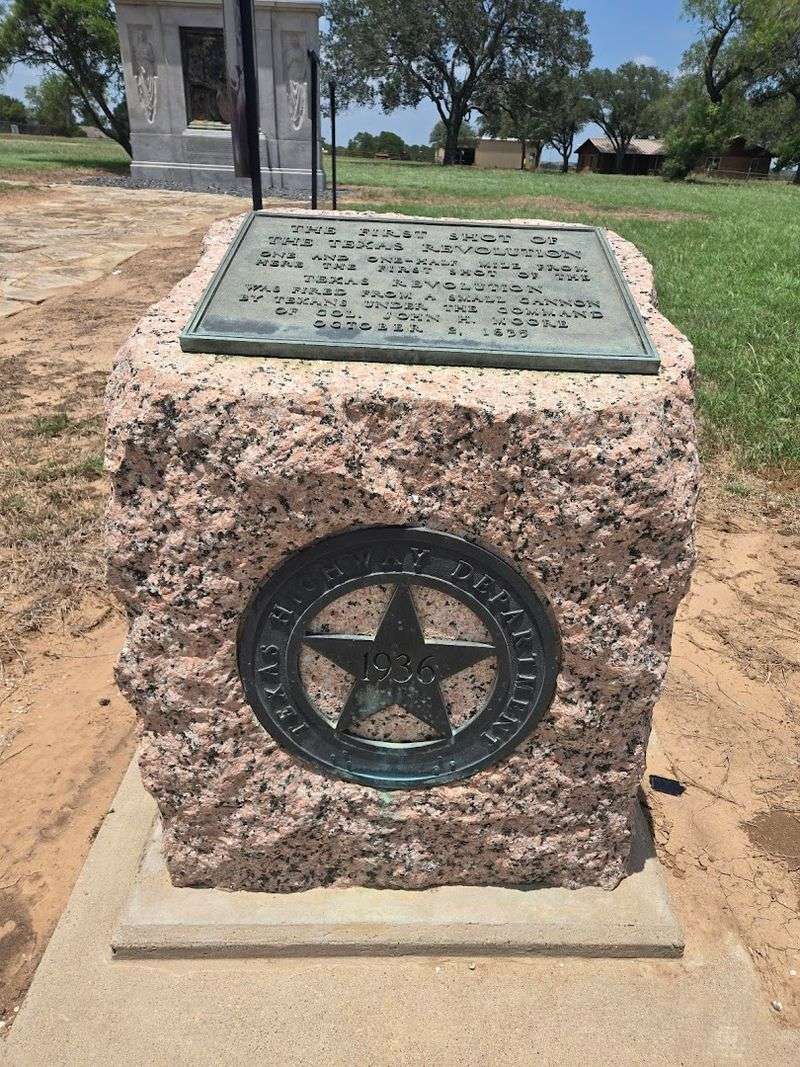
Gonzales has thirteen buildings designated as Recorded Texas Historic Landmarks, a formal recognition that goes beyond simply being old. These designations are awarded by the Texas Historical Commission to structures that retain significant historical or architectural integrity.
In a state as large and historically rich as Texas, earning that designation is not a small thing.
Scattered across the town, these landmark buildings span a variety of types, from residential to commercial to civic. Tracking them down on a self-guided walk or drive becomes a kind of treasure hunt that keeps you engaged with the town’s geography and layout.
Each landmark marker tells a short story about the building and its place in local history.
What makes this collection especially interesting is the variety. You are not looking at thirteen versions of the same type of structure.
You are encountering a cross-section of what Gonzales was and what it valued across different decades of its development. That variety keeps the experience from feeling repetitive even after you have seen several of the landmarks in quick succession.
Beyond the thirteen landmarks, Gonzales also has an additional 70 Official State Historical Markers placed throughout the town. That brings the total number of formally recognized historic sites to a number that would impress even the most well-traveled history enthusiast.
Few towns of comparable size anywhere in Texas can match that concentration of officially recognized heritage. It is a point of genuine local pride.
The Seven Public Squares and the Original Town Survey
Most towns grow organically, sprawling outward in patterns shaped by geography, economics, and chance. Gonzales was different from the start.
The original town survey laid out seven public squares surrounding the courthouse, a deliberate civic design that gave the community a structured, intentional character from its very first days. That planning is still visible today.
Walking through the squares, you notice how they create natural gathering points throughout the town center.
Each one offers a slightly different perspective on the surrounding historic buildings, and the green open spaces provide breathing room that makes the density of historic architecture feel manageable rather than overwhelming.
It is smart urban design for any era, let alone the 1800s.
The squares also function as informal landmarks that help orient visitors as they explore. Once you understand the basic layout, navigating Gonzales becomes intuitive.
You always have a reference point, and that sense of spatial clarity is genuinely pleasant in a town you are visiting for the first time. It makes exploration feel less like work and more like wandering with confidence.
Sitting on a bench in one of the squares and just watching the town move around you is one of the quieter pleasures Gonzales offers. Local residents cut through on their way to errands.
Visitors consult their maps and point at buildings. The courthouse clock marks the time overhead.
It is a simple scene, but it feels exactly right for a town that has always understood the value of its public spaces.
