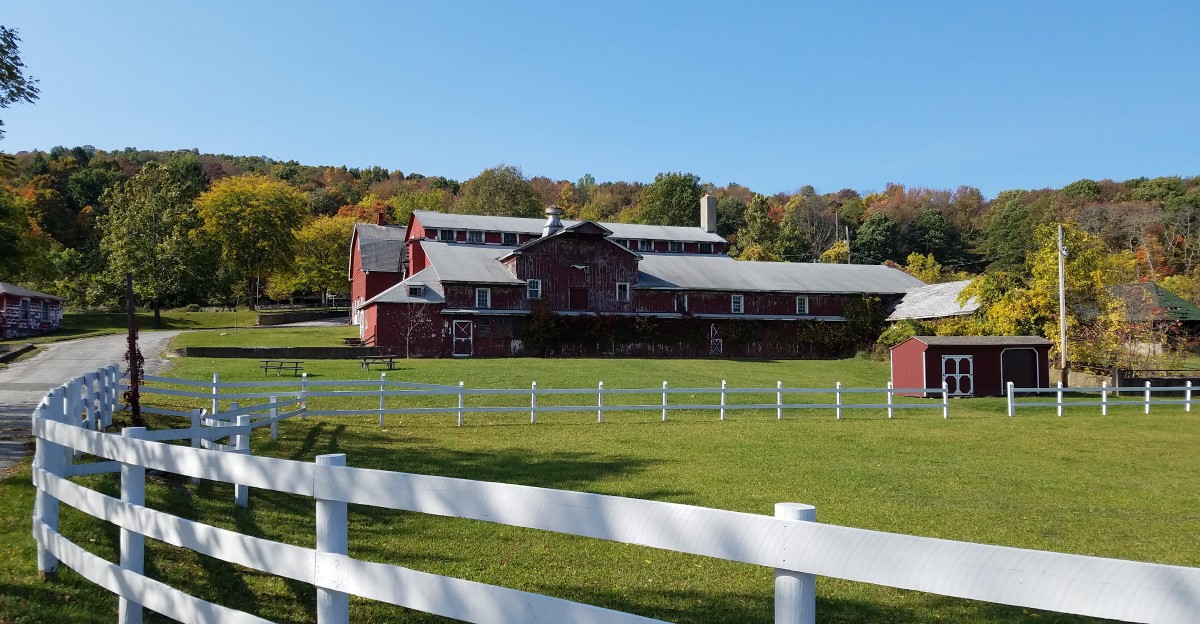
Half a million dollars was an astonishing amount of money to pour into a farm in the early 1900s, but James Turner was not interested in building an ordinary one.
Between 1914 and 1930, the Montclair stockbroker invested roughly $500,000 creating a model dairy operation built around modern agricultural research and innovative practices.
Then came the unexpected part. In 1931, he donated the property to the state so it could become an agricultural research station.
Today, the New Jersey historic site covers 578 acres, with old farm buildings, fields, trails, and mountain scenery preserving pieces of that ambitious experiment.
Turner could have kept his private country estate.
Instead, its next chapter belonged to the public. More than a century after his project began, visitors can still wander the land and see what remains of a farm built with unusually big ideas.
A Dream Built With Stock Market Money
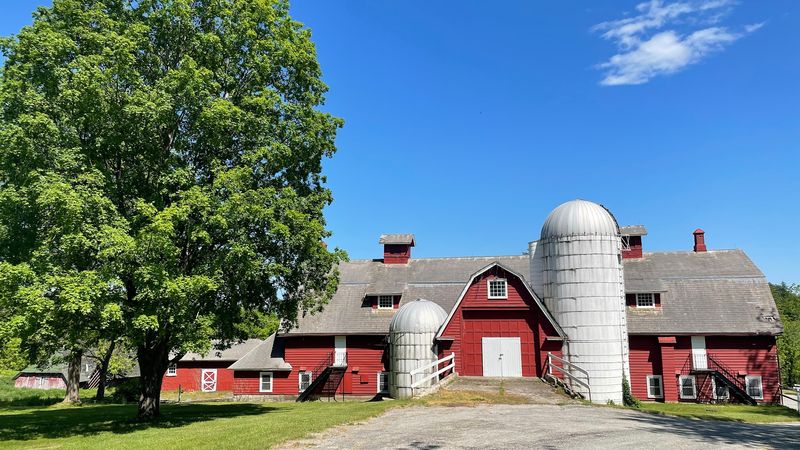
Few people today would dream of spending a fortune to build a cow farm. James Turner, a successful stockbroker from Montclair, did exactly that.
Between 1914 and 1930, he invested around $500,000 into his vision, which was a huge amount of money back then.
His goal was ambitious. Turner wanted a model dairy farm that used the best science and newest ideas of his time.
The land grew to about 1,050 acres, stretching across hills and valleys in the northern part of the state.
The barns were remarkably advanced. They had electric lights, automatic water troughs, and artificial ventilation to keep the animals healthy and comfortable.
Purebred Guernsey, Holstein, and Jersey cows lived there, which was a pretty fancy lineup for any farm.
Turner also planted five orchards and two large gardens. That made the estate feel like a small, self-sufficient world of its own.
When you look around the grounds today, you can still sense how carefully everything was planned, almost like a blueprint for what farming could become.
The Gift That Changed Everything
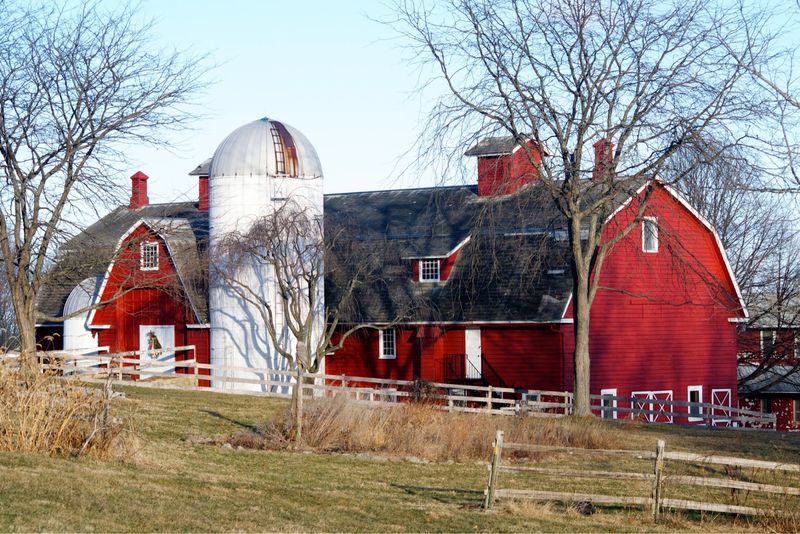
Here is the part that surprised me most. In 1931, Turner handed over the whole farm to the State of New Jersey.
He did not keep a few acres for himself or hold back the best cows.
The donation included the land, the cattle herds, the tractors, and all the farm machinery. That is a staggering amount of generosity packed into one decision.
He asked for just one thing in return.
The property had to be used to promote agricultural research, education, social progress, and welfare. Simple, but powerful.
It showed he cared more about the future of farming than about owning a pretty estate.
After the gift, the farm became the North Jersey Dairy Branch of the New Jersey Agricultural Experiment Station, run by Rutgers University. It was also called the James Turner Institute for Animal Research.
From 1931 until 1970, scientists and students worked there daily. Think of it as a giant outdoor classroom, except the lab partners had hooves and very large appetites.
Where Dairy Science Made History
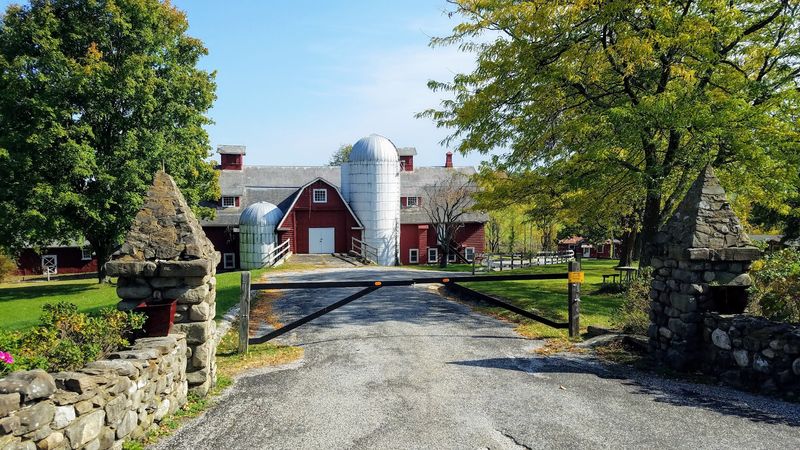
Milk on your breakfast table owes a small thank you to this farm. Lusscroft became nationally known for advances in artificial insemination for dairy cows.
That might sound like a strange thing to celebrate, but it changed farming in a big way.
Farmers no longer had to keep big, sometimes dangerous bulls on their land. That made farm life much safer.
The research also helped breed healthier cows that produced milk with higher butterfat content.
Rutgers researchers here did plenty more. They worked on grassland farming, better ways to make silage, and improvements in livestock breeding and genetics.
They also tested milk production to help keep the public milk supply safe and healthy.
About 40,000 people visited the research farm during its first twenty-five years. Graduate students came to earn advanced degrees, learning right beside the herds.
Quite a crowd for a quiet hilltop. When you stroll past the old barns, it is fun to picture lab coats, clipboards, and curious cows all sharing the same space.
Summer Days for Young Campers
Campfire smoke and kids laughing replaced the research years at one point. After the dairy station closed, the farm found a brand new purpose focused on young people.
From 1973 to 1996, it served as a 4-H Youth Center for Outdoor Education.
The center used 578 acres of the original land. That is still a lot of room to roam.
Campers explored fields, woods, and ponds while learning hands-on skills about nature and the outdoors.
Close to a thousand campers took part during that time. For many, it was probably their first real taste of farm country, mud boots and all.
The old buildings became bunk spaces, meeting rooms, and places for discovery.
The center eventually closed in 1996 because fewer kids were enrolling and the buildings cost more to maintain. Still, that chapter fits beautifully with Turner’s wish for education and social progress.
It is a nice reminder that a place can change jobs over the years and still stay true to its heart.
The Manor House and Its Grand Staircase
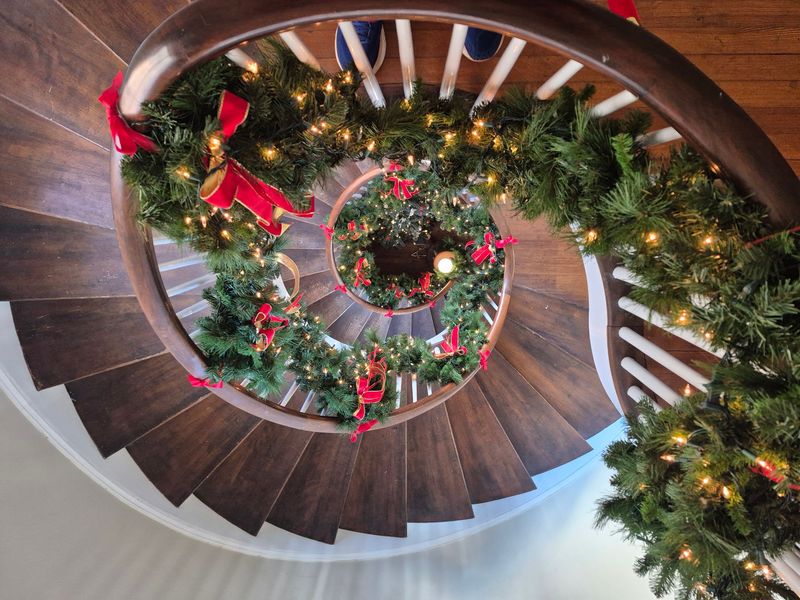
Old houses have a way of whispering their stories, and the Turner Mansion is a talker. Often called the Manor House, it is a three-story building that sets the tone for the whole property.
Inside, a grand spiral staircase curls upward like a ribbon.
The first floor has several fireplaces. I love imagining chilly winter evenings here, with crackling logs and frosty fields outside the windows.
Tours share bits of the dairy farm story and Rutgers history.
Lusscroft Farm has 23 structures in total. The Manager’s Dwelling is now known as the Holiday Cottage.
Nearby you will also find the Lusscroft Barn, the Carriage House, the Bunkhouse, and the Maple Sugar building.
Each one shows a different side of daily farm life. Some feel elegant, while others feel practical and hardworking.
Together they create a little village of history. Take your time and notice the details, like rooflines, old windows, and stonework.
Those small touches are where the past really comes alive.
A Log Cabin With Stone Animal Carvings
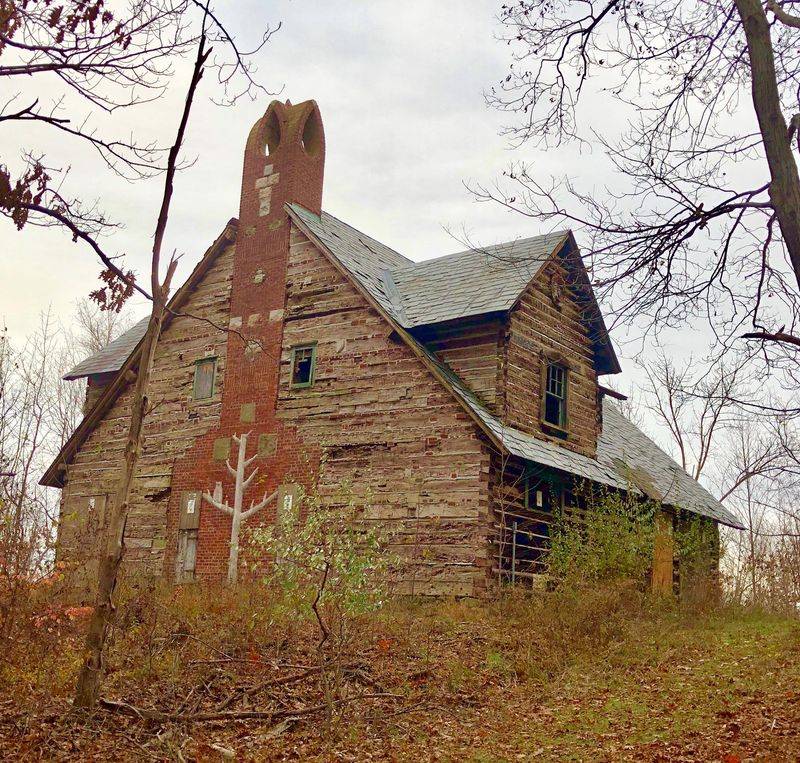
Every hike deserves a reward at the end, and Outlook Lodge is a sweet one. Built in 1930, this log cabin was made from old barn timbers.
Reusing wood like that was smart long before recycling became trendy.
What makes it truly charming are the stone animal carvings. They add a playful, storybook feeling to the rustic cabin.
Kids especially enjoy spotting each little creature.
The lodge makes a picturesque stop after walking the trails. It sits in a spot that feels peaceful and tucked away.
You can catch your breath, look around, and soak in the quiet.
For photographers, the cabin is a treasure. Rough logs, carved stone, and changing light make every season look different.
Autumn adds bright leaves, while winter frames the cabin in white.
A tip from me: bring a snack and plan a slow stop here. There is no rush.
It is the kind of place where time seems to stretch a little, and honestly, that feels pretty great.
Trails Through Fields, Woods, and Old Pastures
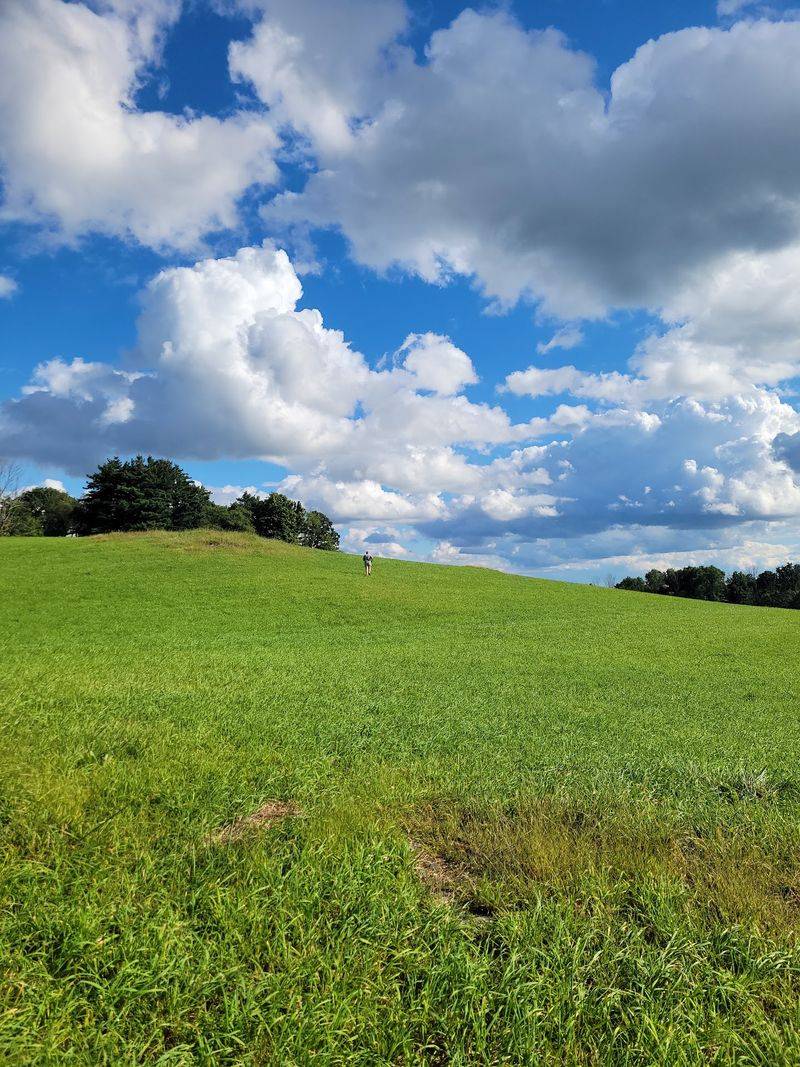
Lace up your boots, because the trails here are a real treat. Visitors can explore the grounds and hike clearly marked loop trails during daylight hours.
The paths wander through woods, open fields, and former pastures.
The scenery shifts often. One minute you are under shady trees, and the next you see wide sky and mountain views.
Birds and breezes keep you company.
Some trails even connect toward the famous Appalachian Trail. That makes Lusscroft a fun starting point for bigger adventures in the area.
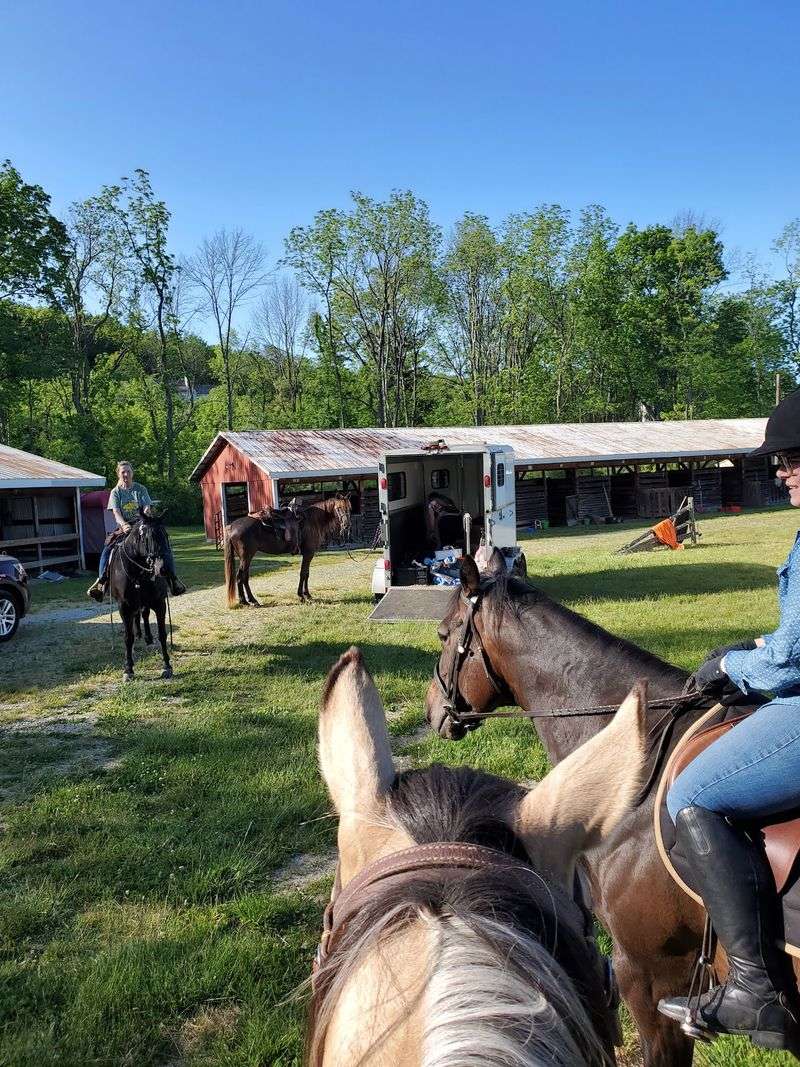
Horseback riders are welcome too, with organized rides held during the year, including one on National Trails Day.
Winter brings a quieter magic. The rolling land becomes a lovely setting for cross-country skiing when snow covers the hills.
Picture smooth white fields and the soft swish of skis.
Wear sturdy shoes and bring water, since the ground can be uneven. Check the season before you go.
Whether you walk, ride, or glide, these trails show off the farm in a calm, unhurried way.
Postcard Views Around Every Corner
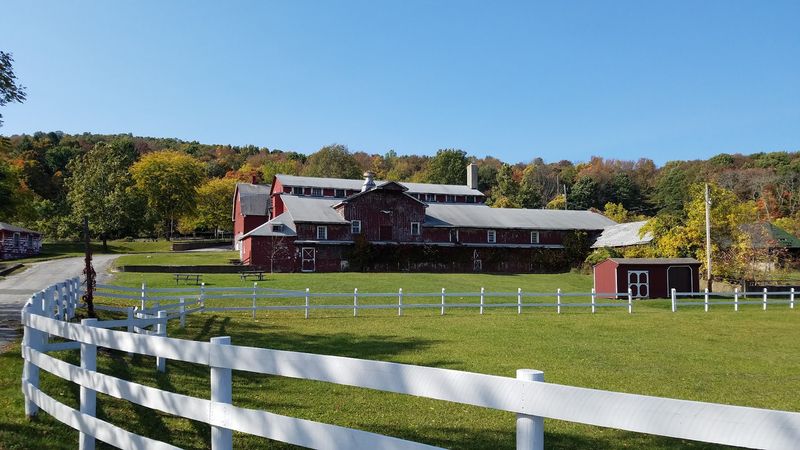
Cameras tend to stay out of pockets here. The mix of historic buildings, open land, and changing seasons gives photographers endless ideas.
Even a phone can capture something lovely.
The 578 acres include fields, pastures, ponds, and woodlands. Each area has its own mood and texture.
In spring, wildflowers spread across the ground around the old springhouse.
The Manor House makes a striking subject, especially when it is dressed up for the holidays. Inside, the spiral staircase and fireplaces create dramatic shots.
Outside, barns and rooflines look wonderful against blue or stormy skies.
Details matter too. Zoom in on the carved animals at Outlook Lodge or the grain of old wooden doors.
Small things can tell big stories.
The farm has even hosted a photography contest covering all four seasons. That says a lot about how photogenic this place is.
My advice? Visit at different times of year.
Golden fall light, crisp winter snow, and fresh spring green each reveal a totally different personality.
Helping Hands Keep the Story Alive
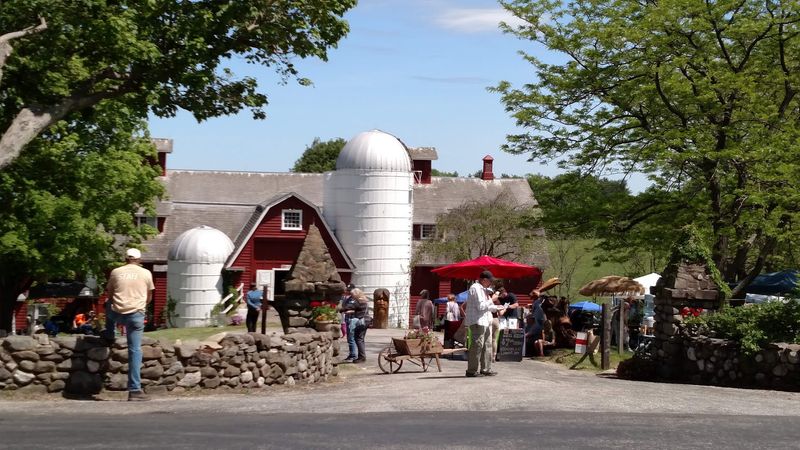
Hard work and big hearts are what keep this place standing today. Lusscroft Farm is part of High Point State Park.
It is managed through a partnership between the New Jersey Department of Environmental Protection, Division of Parks and Forestry, and the nonprofit Heritage and Agriculture Association.
The association works to stabilize and restore the historic buildings and grounds. Volunteers play a huge role in that effort.
Fundraising events help pay for repairs and projects.
The long-term goal is an agricultural heritage center. Plans focus on dairy education, outdoor recreation, history, equine trails, heirloom gardening, forestry, and maple sugaring.
That is a full plate, in the best way.
If you want to help, volunteering or donating items for barn sales are simple ways to pitch in. Even showing up for an event makes a difference.
It feels good to be part of something meaningful.
Turner’s generous gift still lives on through every repaired roof and freshly painted wall. You can visit Lusscroft Farm at 50 Neilson Rd, Wantage, NJ 07461.
